

fer


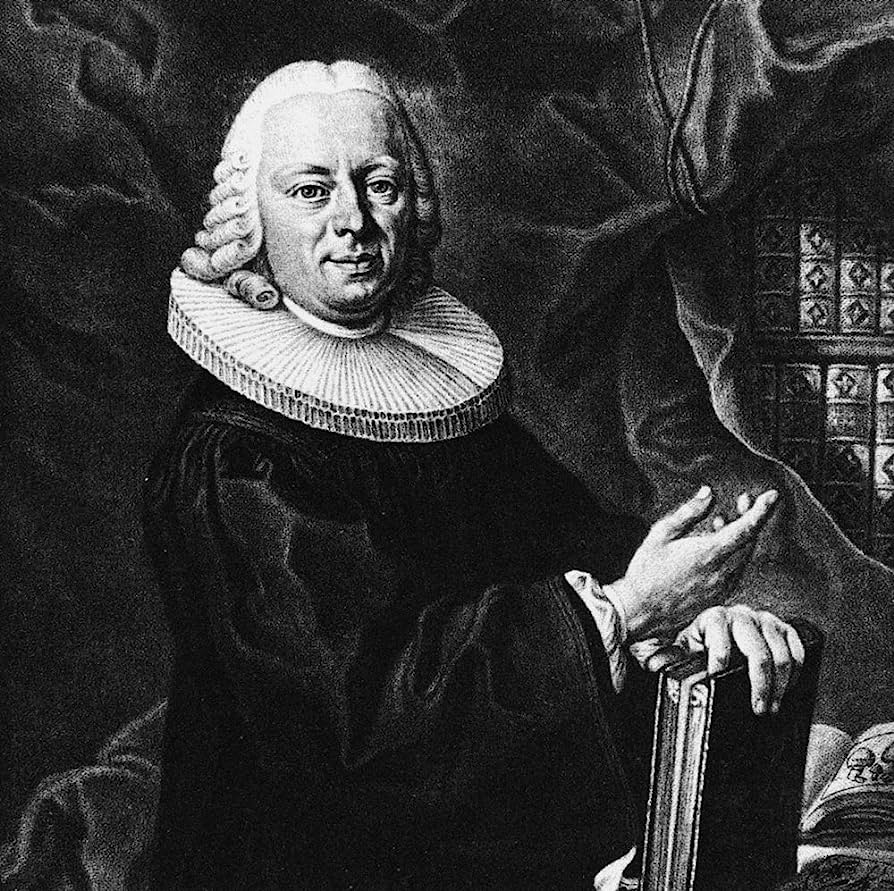
Jacob Christian Schäffer was a German inventor, naturalist, entomologist and mycologist.
Schäffer was a very versatile scientist. He is best known for his work in mycology (the study of fungi), but his most important publication was undoubtedly a book on daphnia or water fleas.
Schäffer also published reference books on pharmaceuticals and medicinal herbs. He conducted experiments on electricity, colors, and optics, and invented the manufacture of prisms and lenses. He invented the washing machine, designs for which he published in 1767, and studied ways to improve paper production.
Schäffer was a professor at the Universities of Wittenberg and Tübingen, a member of the Royal Society of London, and a correspondent of the French Academy of Sciences.


Jacob Christian Schäffer was a German inventor, naturalist, entomologist and mycologist.
Schäffer was a very versatile scientist. He is best known for his work in mycology (the study of fungi), but his most important publication was undoubtedly a book on daphnia or water fleas.
Schäffer also published reference books on pharmaceuticals and medicinal herbs. He conducted experiments on electricity, colors, and optics, and invented the manufacture of prisms and lenses. He invented the washing machine, designs for which he published in 1767, and studied ways to improve paper production.
Schäffer was a professor at the Universities of Wittenberg and Tübingen, a member of the Royal Society of London, and a correspondent of the French Academy of Sciences.


Jacob Christian Schäffer was a German inventor, naturalist, entomologist and mycologist.
Schäffer was a very versatile scientist. He is best known for his work in mycology (the study of fungi), but his most important publication was undoubtedly a book on daphnia or water fleas.
Schäffer also published reference books on pharmaceuticals and medicinal herbs. He conducted experiments on electricity, colors, and optics, and invented the manufacture of prisms and lenses. He invented the washing machine, designs for which he published in 1767, and studied ways to improve paper production.
Schäffer was a professor at the Universities of Wittenberg and Tübingen, a member of the Royal Society of London, and a correspondent of the French Academy of Sciences.

Jacob Christian Schäffer was a German inventor, naturalist, entomologist and mycologist.
Schäffer was a very versatile scientist. He is best known for his work in mycology (the study of fungi), but his most important publication was undoubtedly a book on daphnia or water fleas.
Schäffer also published reference books on pharmaceuticals and medicinal herbs. He conducted experiments on electricity, colors, and optics, and invented the manufacture of prisms and lenses. He invented the washing machine, designs for which he published in 1767, and studied ways to improve paper production.
Schäffer was a professor at the Universities of Wittenberg and Tübingen, a member of the Royal Society of London, and a correspondent of the French Academy of Sciences.
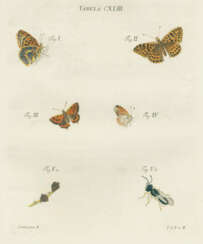

Jacob Christian Schäffer was a German inventor, naturalist, entomologist and mycologist.
Schäffer was a very versatile scientist. He is best known for his work in mycology (the study of fungi), but his most important publication was undoubtedly a book on daphnia or water fleas.
Schäffer also published reference books on pharmaceuticals and medicinal herbs. He conducted experiments on electricity, colors, and optics, and invented the manufacture of prisms and lenses. He invented the washing machine, designs for which he published in 1767, and studied ways to improve paper production.
Schäffer was a professor at the Universities of Wittenberg and Tübingen, a member of the Royal Society of London, and a correspondent of the French Academy of Sciences.

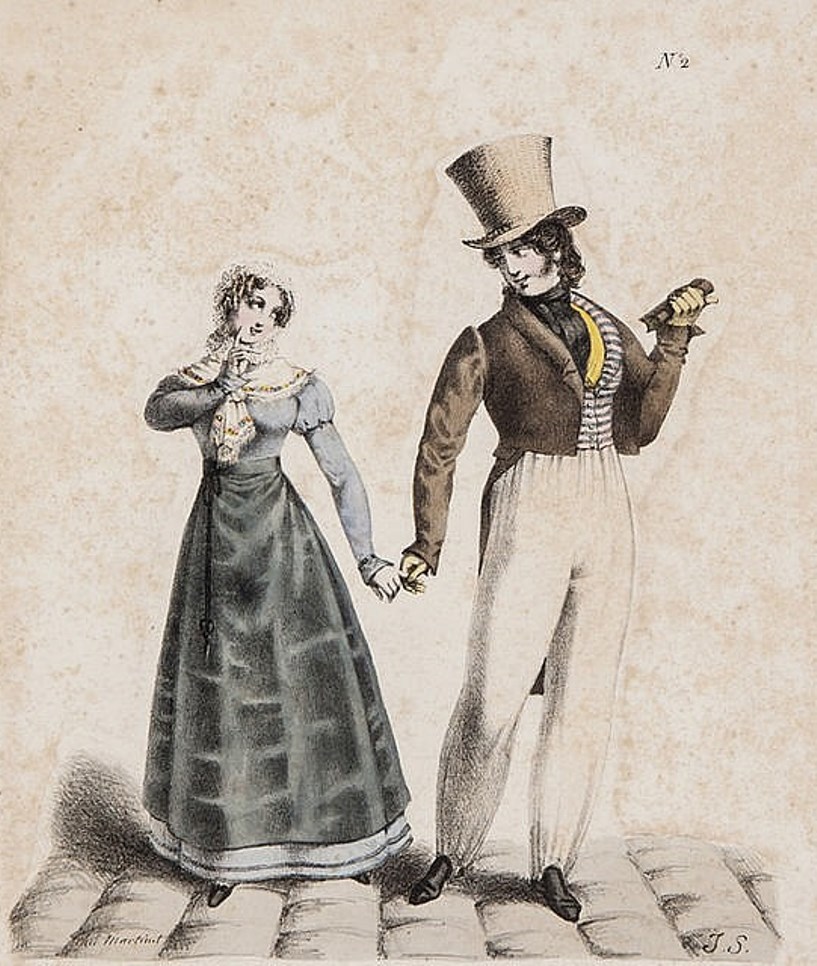
Jean Gabriel Scheffer was a Swiss-born painter and lithographer based in Paris.
Scheffer painted portraits as well, but became better known as a genre painter and lithographer. By the early 1820s, Scheffer had firmly established himself on the Parisian art scene, and from 1822 his work was exhibited at the Paris Salon. He collaborated with the printer-publisher Chez Martinet, creating the popular albums Scenes of Young People (1825), What They Say and What They Think (1829), and Little Travelers (1830).
Scheffer's illustrations, with charm and in his characteristic wryly humorous style, offered a unique perspective on typical scenes and were eagerly purchased by the general public. Jean Gabriel Scheffer captured the modern mores, customs, and costumes of Parisian society in his works.
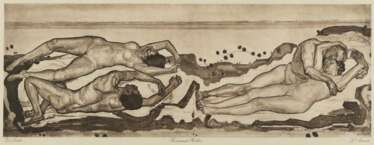

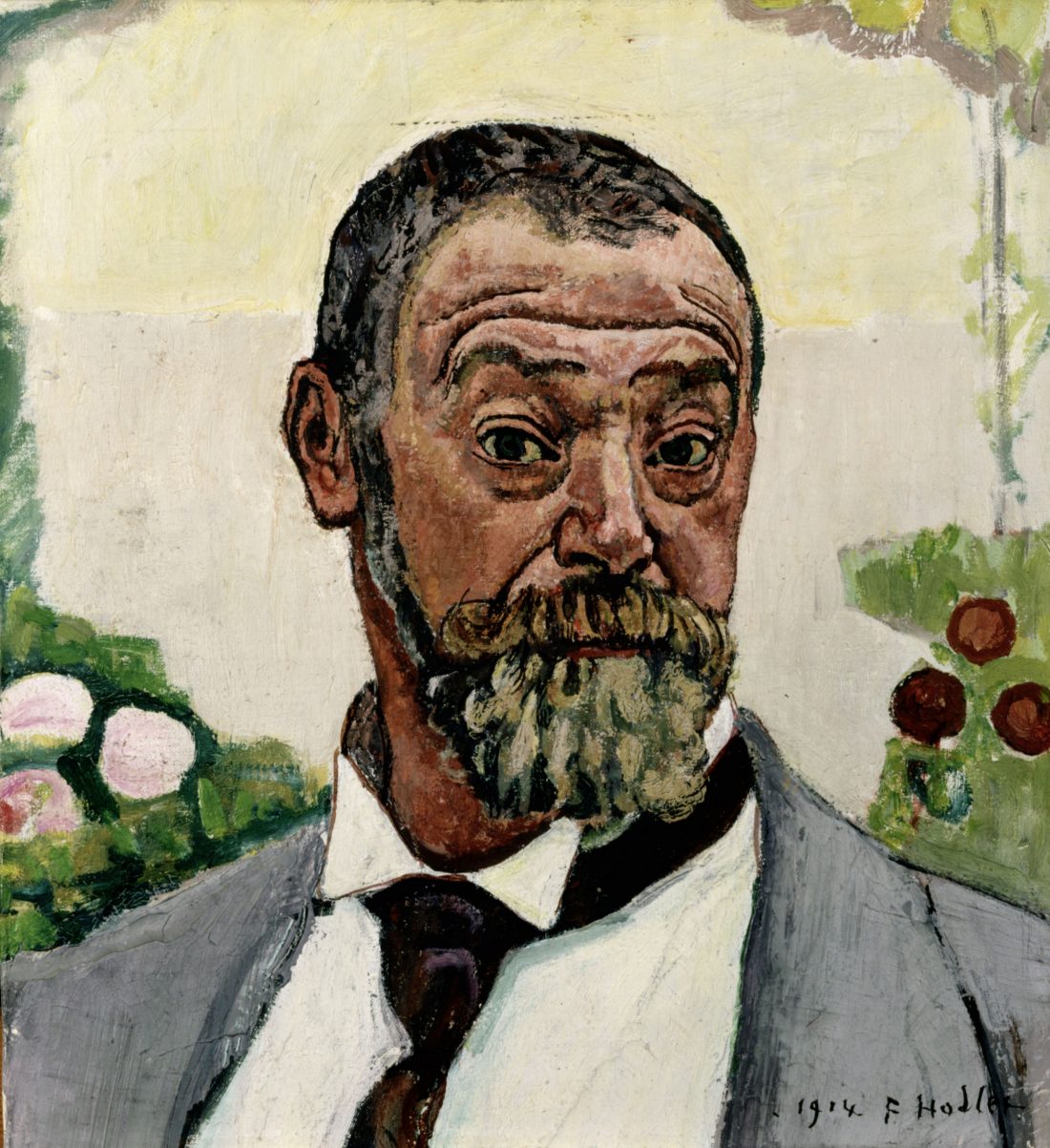
Ferdinand Hodler was one of the best-known Swiss painters of the nineteenth century. His early works were portraits, landscapes, and genre paintings in a realistic style. Later, he adopted a personal form of symbolism which he called "parallelism".
Much of Hodler's work is in public collections in Switzerland. Other collections holding major works include the Musée d'Orsay in Paris, the Metropolitan Museum of Art in New York, and the Art Institute of Chicago.
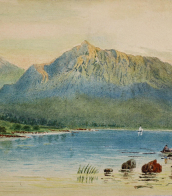
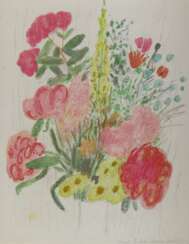

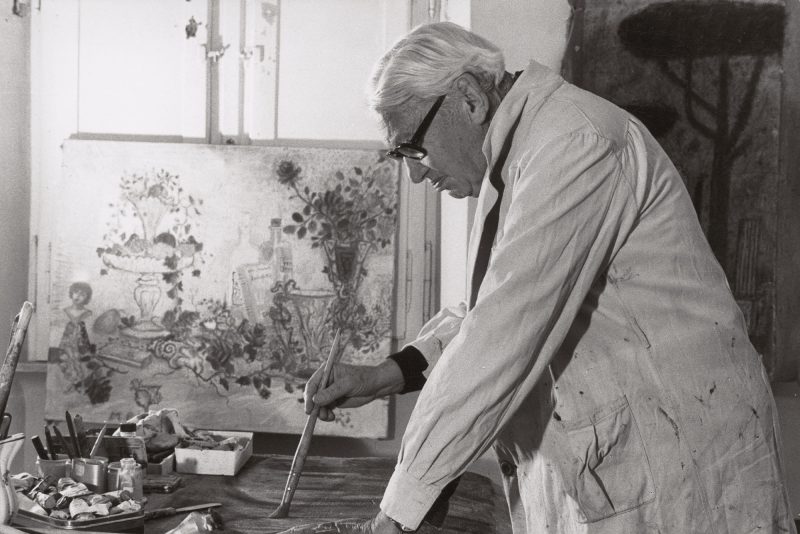
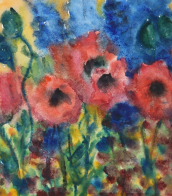
Max Peiffer Watenphul was a German artist. Described as a "lyric poet of painting", he belongs to a "tradition of German painters for whom the Italian landscape represented Arcadia." In addition to Mediterranean scenes, he regularly depicted Salzburg and painted many still lifes of flowers. As well as oil paintings, his extensive body of work encompasses watercolours, drawings, enamel, textiles, graphic art, and photographs.


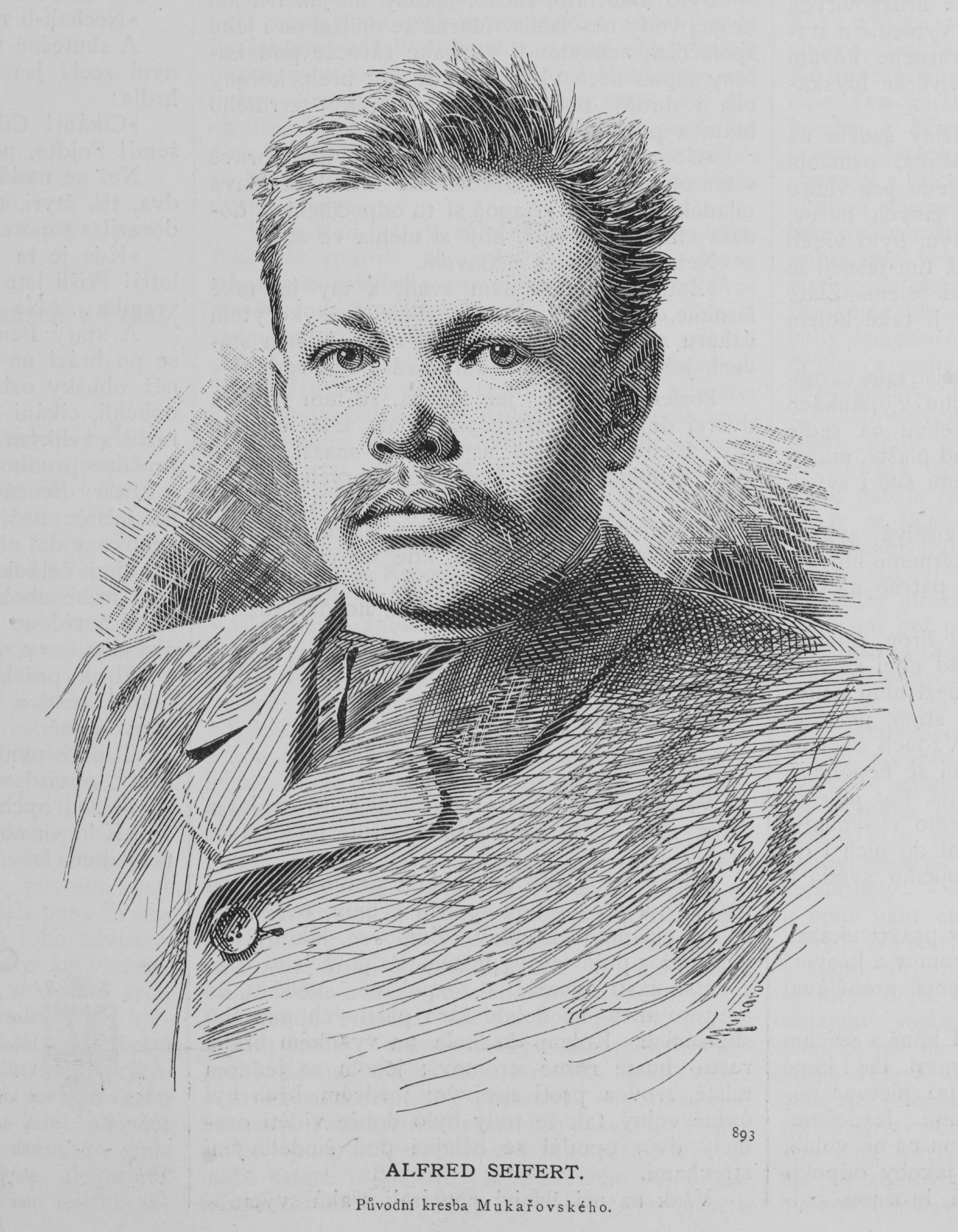
Alfred Seifert was a Czech-German painter of the last third of the 19th century. He is known as a painter of female portraits.
Seifert spent most of his career in Germany, where his paintings were very popular. He specialized in portraits of women, especially sentimentalized girls, known as the "Seifert type". His work was praised by critics for its thoughtful composition, attention to detail, harmonious colors, and pleasing atmosphere.
Seifert was a member of various art associations, including the Czech Art Association Umelecka Obeseda, the Munich Art Association, the Munich Artists' Cooperative, and the General German Art Cooperative.


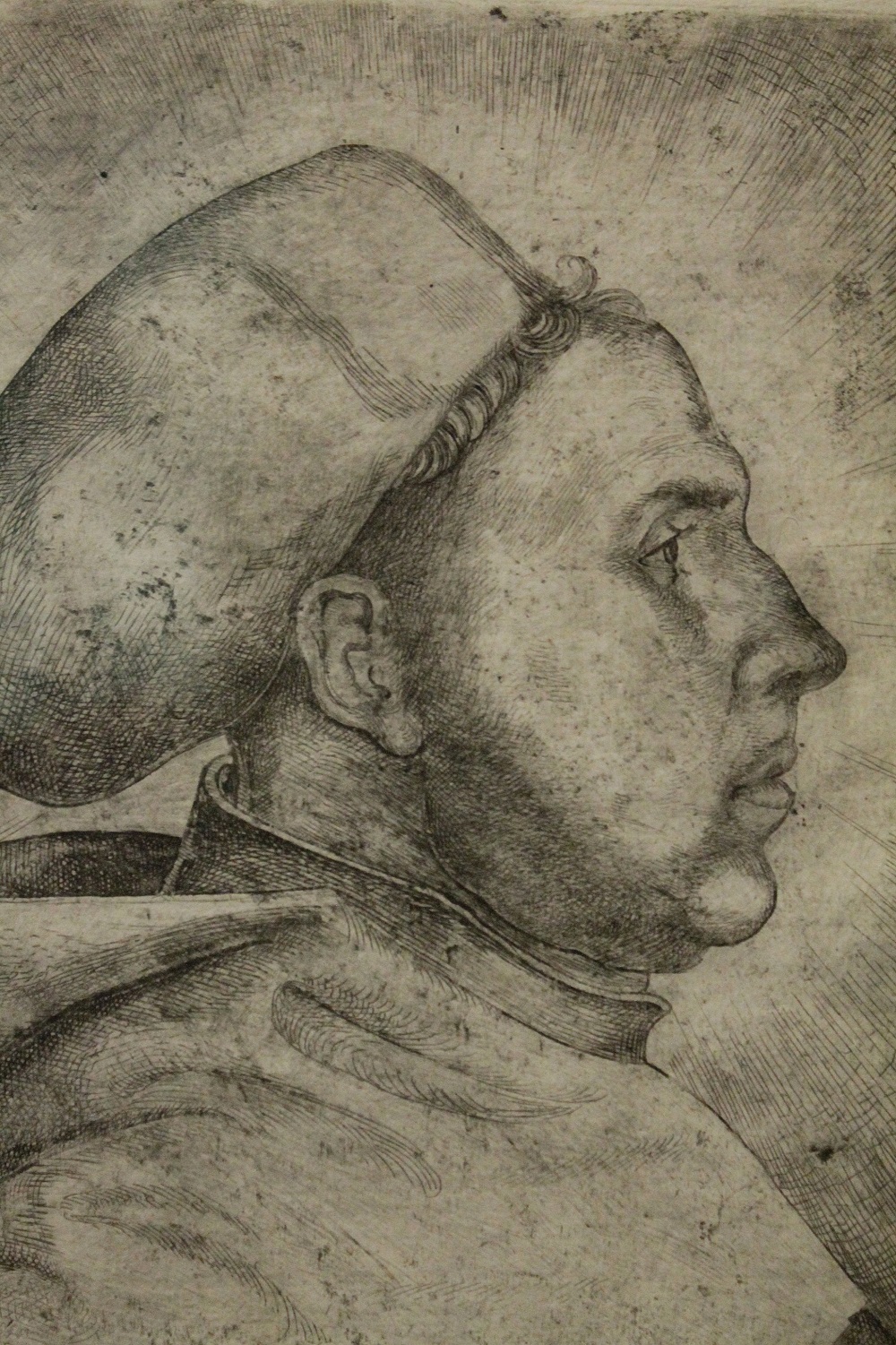
Daniel Hopfer the Elder was a German artist who is widely believed to have been the first to use etching in printmaking, at the end of the fifteenth century. He also worked in woodcut. Although his etchings were widely ignored by art historians for years, more recent scholarship is crediting him and his work with "single-handedly establishing the salability of etchings" and introducing the print publisher business model.
Unlike most later prints, etched on copper plates, Hopfer's printed etching continued to use the iron plates he was used to working with in steel plate armour, the material he was trained in, and with which he continued to work.


Daniel Hopfer the Elder was a German artist who is widely believed to have been the first to use etching in printmaking, at the end of the fifteenth century. He also worked in woodcut. Although his etchings were widely ignored by art historians for years, more recent scholarship is crediting him and his work with "single-handedly establishing the salability of etchings" and introducing the print publisher business model.
Unlike most later prints, etched on copper plates, Hopfer's printed etching continued to use the iron plates he was used to working with in steel plate armour, the material he was trained in, and with which he continued to work.


Daniel Hopfer the Elder was a German artist who is widely believed to have been the first to use etching in printmaking, at the end of the fifteenth century. He also worked in woodcut. Although his etchings were widely ignored by art historians for years, more recent scholarship is crediting him and his work with "single-handedly establishing the salability of etchings" and introducing the print publisher business model.
Unlike most later prints, etched on copper plates, Hopfer's printed etching continued to use the iron plates he was used to working with in steel plate armour, the material he was trained in, and with which he continued to work.
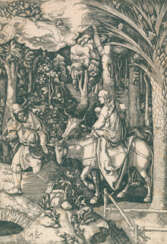

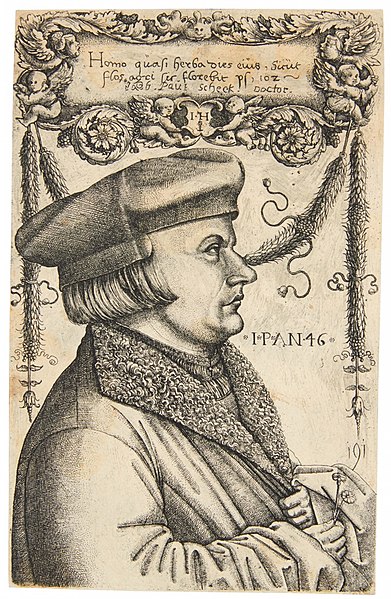



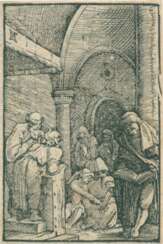

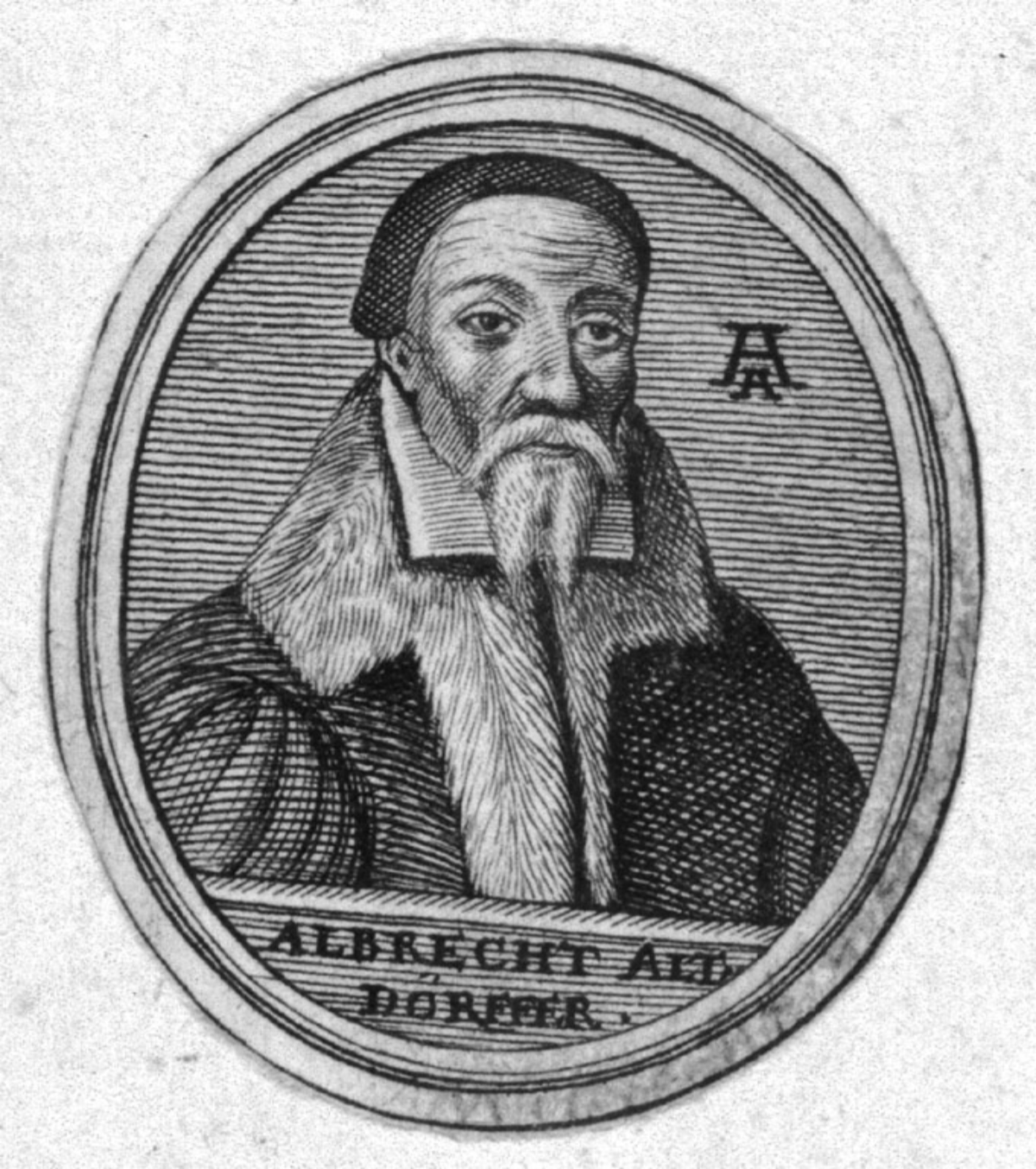
Albrecht Altdorfer, a notable German painter, engraver, and architect of the Renaissance era, was especially recognized for his contributions to landscape painting. Born around 1480, Altdorfer was a pivotal figure in the Danube School, distinguishing himself with his integration of natural landscapes into biblical and historical narratives.
His works are celebrated for their detailed and expressive landscapes, often serving as backdrops to religious and historical scenes. A hallmark of his style is the emotional intensity and vivid use of colors, which border on expressionistic in his religious scenes, particularly seen in works like the Sebastian Altar in St. Florian's Priory. Altdorfer's painting, "The Battle of Alexander at Issus," stands out for its epic portrayal of Alexander the Great's victory, showcasing Altdorfer's talent in blending historical narrative with dramatic landscape settings.
In addition to his artistic pursuits, Altdorfer was actively involved in the civic life of Regensburg, serving as its mayor in 1528. His legacy in the art world is profound, with his innovative approach to landscape painting influencing the course of European art.
For those interested in delving deeper into Albrecht Altdorfer's oeuvre or staying informed about related exhibitions and auction events, signing up for updates can provide valuable insights and opportunities.
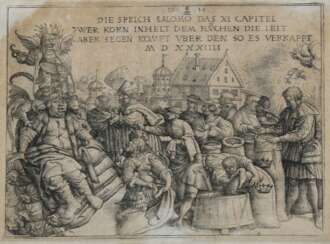

Daniel Hopfer the Elder was a German artist who is widely believed to have been the first to use etching in printmaking, at the end of the fifteenth century. He also worked in woodcut. Although his etchings were widely ignored by art historians for years, more recent scholarship is crediting him and his work with "single-handedly establishing the salability of etchings" and introducing the print publisher business model.
Unlike most later prints, etched on copper plates, Hopfer's printed etching continued to use the iron plates he was used to working with in steel plate armour, the material he was trained in, and with which he continued to work.
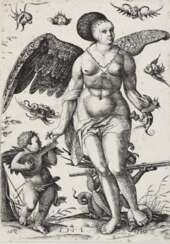

Daniel Hopfer the Elder was a German artist who is widely believed to have been the first to use etching in printmaking, at the end of the fifteenth century. He also worked in woodcut. Although his etchings were widely ignored by art historians for years, more recent scholarship is crediting him and his work with "single-handedly establishing the salability of etchings" and introducing the print publisher business model.
Unlike most later prints, etched on copper plates, Hopfer's printed etching continued to use the iron plates he was used to working with in steel plate armour, the material he was trained in, and with which he continued to work.


Daniel Hopfer the Elder was a German artist who is widely believed to have been the first to use etching in printmaking, at the end of the fifteenth century. He also worked in woodcut. Although his etchings were widely ignored by art historians for years, more recent scholarship is crediting him and his work with "single-handedly establishing the salability of etchings" and introducing the print publisher business model.
Unlike most later prints, etched on copper plates, Hopfer's printed etching continued to use the iron plates he was used to working with in steel plate armour, the material he was trained in, and with which he continued to work.
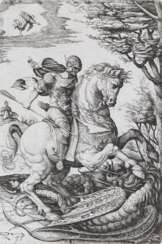

Daniel Hopfer the Elder was a German artist who is widely believed to have been the first to use etching in printmaking, at the end of the fifteenth century. He also worked in woodcut. Although his etchings were widely ignored by art historians for years, more recent scholarship is crediting him and his work with "single-handedly establishing the salability of etchings" and introducing the print publisher business model.
Unlike most later prints, etched on copper plates, Hopfer's printed etching continued to use the iron plates he was used to working with in steel plate armour, the material he was trained in, and with which he continued to work.
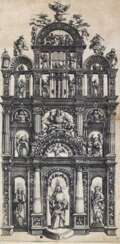

Daniel Hopfer the Elder was a German artist who is widely believed to have been the first to use etching in printmaking, at the end of the fifteenth century. He also worked in woodcut. Although his etchings were widely ignored by art historians for years, more recent scholarship is crediting him and his work with "single-handedly establishing the salability of etchings" and introducing the print publisher business model.
Unlike most later prints, etched on copper plates, Hopfer's printed etching continued to use the iron plates he was used to working with in steel plate armour, the material he was trained in, and with which he continued to work.
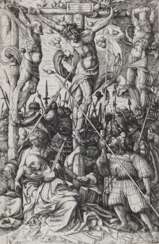

Daniel Hopfer the Elder was a German artist who is widely believed to have been the first to use etching in printmaking, at the end of the fifteenth century. He also worked in woodcut. Although his etchings were widely ignored by art historians for years, more recent scholarship is crediting him and his work with "single-handedly establishing the salability of etchings" and introducing the print publisher business model.
Unlike most later prints, etched on copper plates, Hopfer's printed etching continued to use the iron plates he was used to working with in steel plate armour, the material he was trained in, and with which he continued to work.

Max Peiffer Watenphul was a German artist. Described as a "lyric poet of painting", he belongs to a "tradition of German painters for whom the Italian landscape represented Arcadia." In addition to Mediterranean scenes, he regularly depicted Salzburg and painted many still lifes of flowers. As well as oil paintings, his extensive body of work encompasses watercolours, drawings, enamel, textiles, graphic art, and photographs.


Albrecht Altdorfer, a notable German painter, engraver, and architect of the Renaissance era, was especially recognized for his contributions to landscape painting. Born around 1480, Altdorfer was a pivotal figure in the Danube School, distinguishing himself with his integration of natural landscapes into biblical and historical narratives.
His works are celebrated for their detailed and expressive landscapes, often serving as backdrops to religious and historical scenes. A hallmark of his style is the emotional intensity and vivid use of colors, which border on expressionistic in his religious scenes, particularly seen in works like the Sebastian Altar in St. Florian's Priory. Altdorfer's painting, "The Battle of Alexander at Issus," stands out for its epic portrayal of Alexander the Great's victory, showcasing Altdorfer's talent in blending historical narrative with dramatic landscape settings.
In addition to his artistic pursuits, Altdorfer was actively involved in the civic life of Regensburg, serving as its mayor in 1528. His legacy in the art world is profound, with his innovative approach to landscape painting influencing the course of European art.
For those interested in delving deeper into Albrecht Altdorfer's oeuvre or staying informed about related exhibitions and auction events, signing up for updates can provide valuable insights and opportunities.
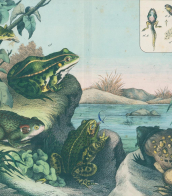
Daniel Hopfer the Elder was a German artist who is widely believed to have been the first to use etching in printmaking, at the end of the fifteenth century. He also worked in woodcut. Although his etchings were widely ignored by art historians for years, more recent scholarship is crediting him and his work with "single-handedly establishing the salability of etchings" and introducing the print publisher business model.
Unlike most later prints, etched on copper plates, Hopfer's printed etching continued to use the iron plates he was used to working with in steel plate armour, the material he was trained in, and with which he continued to work.
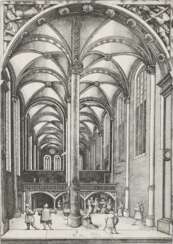

Daniel Hopfer the Elder was a German artist who is widely believed to have been the first to use etching in printmaking, at the end of the fifteenth century. He also worked in woodcut. Although his etchings were widely ignored by art historians for years, more recent scholarship is crediting him and his work with "single-handedly establishing the salability of etchings" and introducing the print publisher business model.
Unlike most later prints, etched on copper plates, Hopfer's printed etching continued to use the iron plates he was used to working with in steel plate armour, the material he was trained in, and with which he continued to work.
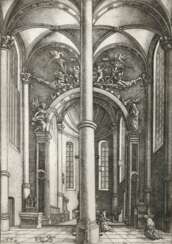

Daniel Hopfer the Elder was a German artist who is widely believed to have been the first to use etching in printmaking, at the end of the fifteenth century. He also worked in woodcut. Although his etchings were widely ignored by art historians for years, more recent scholarship is crediting him and his work with "single-handedly establishing the salability of etchings" and introducing the print publisher business model.
Unlike most later prints, etched on copper plates, Hopfer's printed etching continued to use the iron plates he was used to working with in steel plate armour, the material he was trained in, and with which he continued to work.
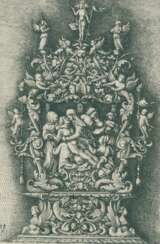

Daniel Hopfer the Elder was a German artist who is widely believed to have been the first to use etching in printmaking, at the end of the fifteenth century. He also worked in woodcut. Although his etchings were widely ignored by art historians for years, more recent scholarship is crediting him and his work with "single-handedly establishing the salability of etchings" and introducing the print publisher business model.
Unlike most later prints, etched on copper plates, Hopfer's printed etching continued to use the iron plates he was used to working with in steel plate armour, the material he was trained in, and with which he continued to work.