flash door











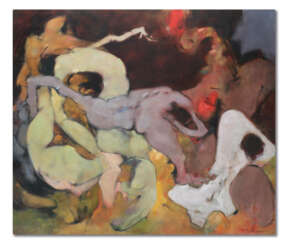

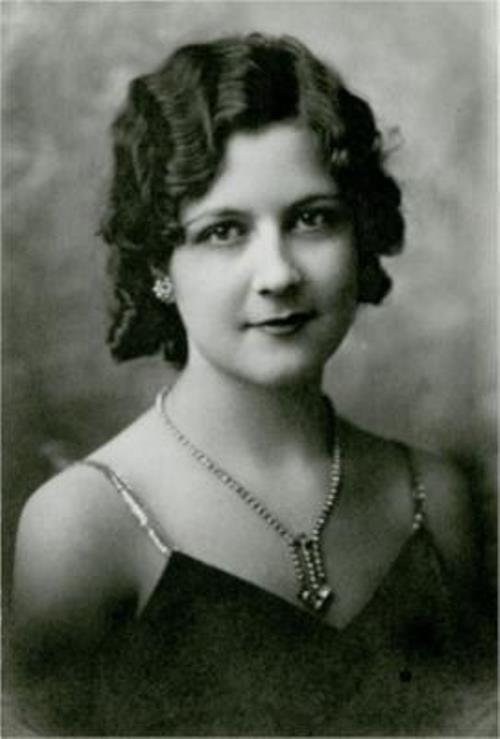
Dorothea Margaret Tanning was an American surrealist painter, printmaker, sculptor, writer and poet.
In 1935 Dorothea came to New York and worked as an advertising artist until she was inspired by the paintings of the famous Surrealists at an exhibition. She began to paint and exhibit and made numerous acquaintances among contemporary artists. In 1946 she married the artist Max Ernst, and this marriage lasted 30 years. They lived in Paris for a long time, and after his death in 1976, she returned to New York.
As an artist, Dorothea Tanning was self-taught, and her style was constantly changing. At first close to surrealism, by the late 1960s her paintings had become almost entirely abstract. Among her artistic accomplishments are paintings, prints, sculpture, stage design, costume and set designs for ballets, and her work has been exhibited at the Guggenheim Museum, the Metropolitan Museum of Art, the Tate Modern, and the Philadelphia Museum of Art.
In the late 1980s, Tanning began writing poetry, and her work has subsequently been published in various publications. Her first collection of poems, A Table of Content, was published in 2004. The multifaceted and versatile artist died in New York City at the age of 101.






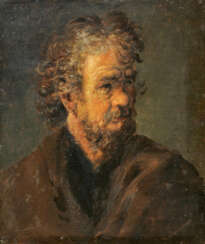


Rembrandt Harmenszoon van Rijn, a Dutch Baroque painter and printmaker, was born on July 15, 1606, in Leiden, Netherlands, and died on October 4, 1669, in Amsterdam. He is celebrated as one of the greatest storytellers in art history, acclaimed for his adept portrayal of human emotions and dramatic narratives. Rembrandt's extensive oeuvre includes portraits, self-portraits, landscapes, genre scenes, allegorical, historical, and biblical themes, as well as animal studies. His artistry shined during the Dutch Golden Age, a period marked by cultural and scientific achievements in the Netherlands.
Rembrandt's education in art began around the age of 10 when he left the Latin School in Leiden to train as an artist. He apprenticed with artists like Jacob van Swanenburg and Pieter Lastman, mastering various aspects of painting. He opened his own studio in Leiden around 1624 or 1625, sharing it with his colleague Jan Lievens. By 1631, he had moved to Amsterdam, where he achieved significant success and trained many important Dutch painters.
Among Rembrandt's notable works are "The Anatomy Lesson of Dr. Nicolaes Tulp" (1632), "The Night Watch" (1642), and "The Syndics of the Amsterdam Drapers’ Guild" (1662). He was also renowned for his self-portraits, creating around 80 over his lifetime, more than any other artist until the 20th century. These self-portraits were not just artistic endeavors but also experiments with facial expressions and lighting effects. Additionally, Rembrandt was a master etcher, transforming etching from a reproductive technique into an art form.
Rembrandt's painting style is characterized by its dramatic use of light and shadow, known as chiaroscuro. His ability to depict materials realistically was unparalleled; his portrayal of metals and fabrics was so lifelike that they appeared to glow and be tangible. He was also known for his impasto technique, applying paint thickly to the canvas, adding a three-dimensional quality to his works.
Despite his artistic prowess, Rembrandt faced financial difficulties and personal tragedies throughout his life. He declared bankruptcy in 1656, a downfall attributed partly to his extensive collection of art objects and curiosities. His masterpieces, however, continued to garner appreciation and influence generations of artists that followed.
For collectors and experts in art and antiques, Rembrandt's works represent a pinnacle of artistic achievement in the Dutch Golden Age. His mastery in portraying the human condition and his innovative techniques in painting and etching make his works highly prized and influential in the art world.
To stay updated on new product sales and auction events related to Rembrandt van Rijn, sign up for our updates. This subscription service is dedicated exclusively to news and events concerning works related to this unparalleled master of the Dutch Golden Age.