


john walker


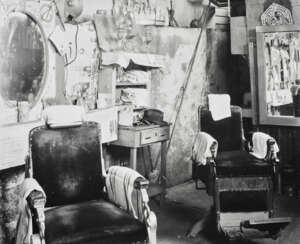
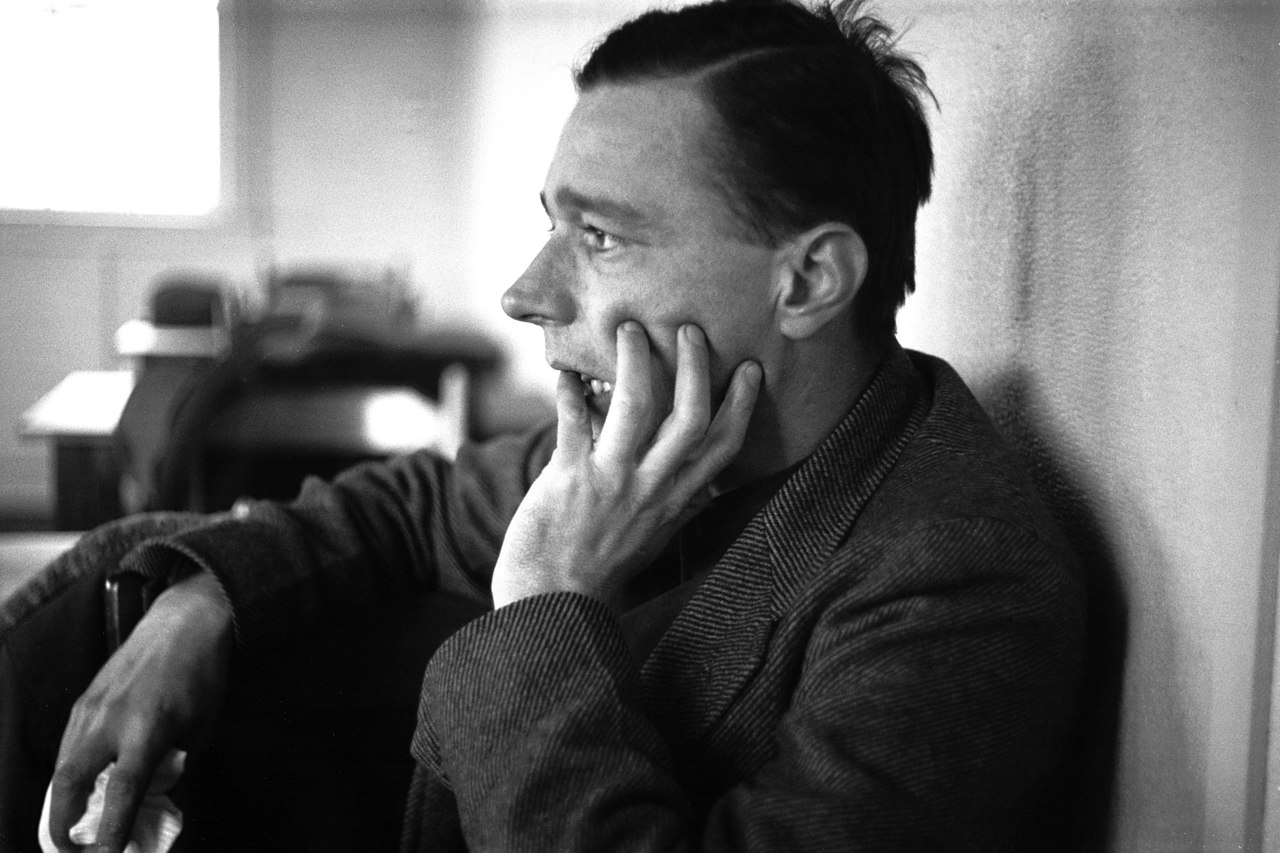
Walker Evans was an American photographer and photojournalist best known for his work for the Farm Security Administration (FSA) documenting the effects of the Great Depression. Much of Evans' work from the FSA period uses the large-format, 8×10-inch (200×250 mm) view camera. He said that his goal as a photographer was to make pictures that are "literate, authoritative, transcendent".
Many of his works are in the permanent collections of museums and have been the subject of retrospectives at such institutions as the Metropolitan Museum of Art or the George Eastman Museum.
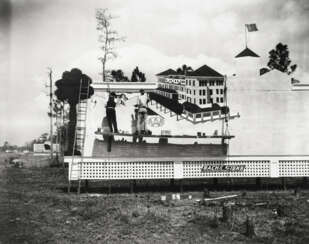

Walker Evans was an American photographer and photojournalist best known for his work for the Farm Security Administration (FSA) documenting the effects of the Great Depression. Much of Evans' work from the FSA period uses the large-format, 8×10-inch (200×250 mm) view camera. He said that his goal as a photographer was to make pictures that are "literate, authoritative, transcendent".
Many of his works are in the permanent collections of museums and have been the subject of retrospectives at such institutions as the Metropolitan Museum of Art or the George Eastman Museum.
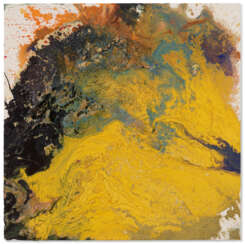

John Armleder is a Swiss performance artist, painter, sculptor, critic, and curator. His work is based on his involvement with Fluxus in the 1960s and 1970s, when he created performance art pieces, installations and collective art activities that were strongly influenced by John Cage. However, Armleder's position throughout his career has been to avoid associating his artistic practice with any type of manifesto.
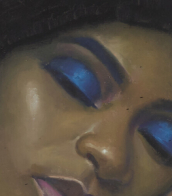
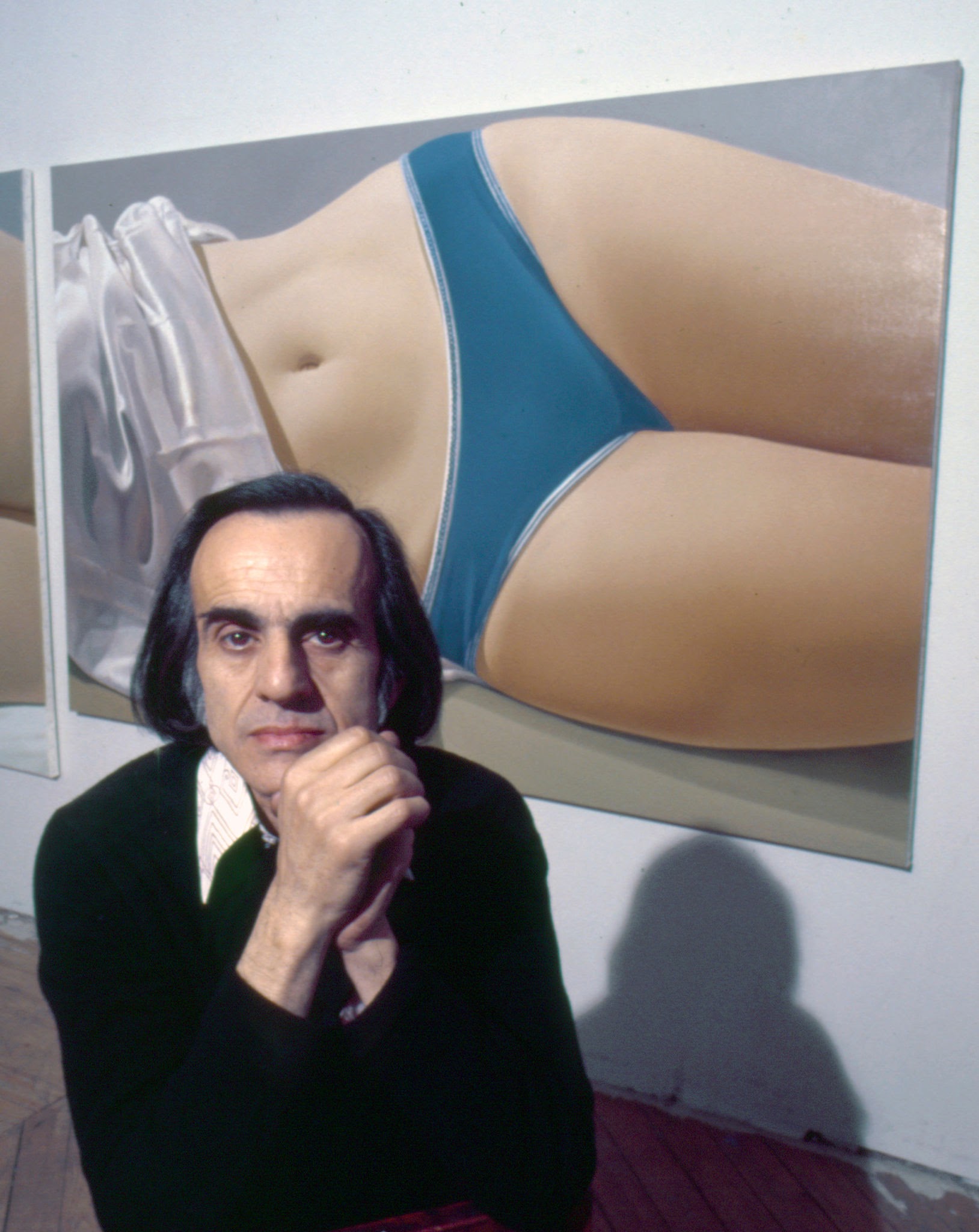
John C. Kacere was an American artist. Originally an abstract expressionist, Kacere adopted a photorealist style in 1963. Nearly all of his photorealist paintings depict the midsection of the female body. He is considered one of the original photorealists, although he rejected the term.
John C. Kacere was an American artist. Originally an abstract expressionist, Kacere adopted a photorealist style in 1963. Nearly all of his photorealist paintings depict the midsection of the female body. He is considered one of the original photorealists, although he rejected the term.


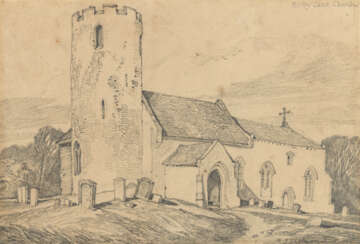
John Sell Cotman was an English marine and landscape painter, etcher, illustrator, author and a leading member of the Norwich School of painters.

Jasper Johns, an American artist, has been a pivotal figure in the art world, celebrated for his innovative contributions to painting, sculpture, and printmaking. Johns, born in 1930, has challenged and expanded the boundaries of contemporary art with his unique approach to visual expression, blending elements of Abstract Expressionism, Neo-Dada, and Pop Art. He is perhaps best known for his iconic depictions of everyday objects and symbols, such as flags, maps, numbers, and targets, which he transforms into complex, layered works that invite contemplation on themes of identity, perception, and memory.
Johns' art is distinguished by its masterful use of texture, symbolism, and an exploration of the materiality of the medium. His technique of incorporating textural elements and found objects into his canvases blurs the lines between painting and sculpture, challenging traditional distinctions in art. For instance, his piece "Flag" (1954-55) reimagines the American flag with a surface rich in encaustic paint and newspaper clippings, creating a work that is both a familiar symbol and a deeply personal expression. Similarly, "Painted Bronze" (Ale Cans) (1960) playfully interrogates the nature of representation and the art object by presenting a lifelike bronze sculpture of beer cans, furthering the dialogue on art's relationship with the everyday.
Johns' work is held in high esteem and can be found in major museums and galleries worldwide, including the Museum of Modern Art in New York and the Tate Modern in London. His influence extends beyond his own oeuvre, impacting the development of several art movements, including Pop Art and Conceptual Art. Johns' exploration of language and semiotics, particularly in works like "According to What" (1964), prefigured the Conceptual Art movement's interest in the role of language and ideas in art.
For collectors and experts in art and antiques, Jasper Johns' work represents a critical junction in the evolution of post-war American art, offering rich insights into the interplay between cultural symbols and artistic innovation. His enduring relevance and the intellectual depth of his work continue to inspire and challenge audiences, making him a central figure in discussions of contemporary art.
To stay informed about new sales, auction events, and updates related to Jasper Johns, we invite you to sign up for our newsletter. This subscription is an excellent resource for enthusiasts and collectors eager to engage with the dynamic market for Jasper Johns' works and related artistic developments.


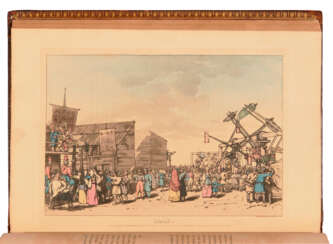
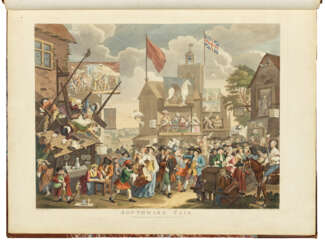
John Augustus Atkinson was a British watercolorist, illustrator and engraver.
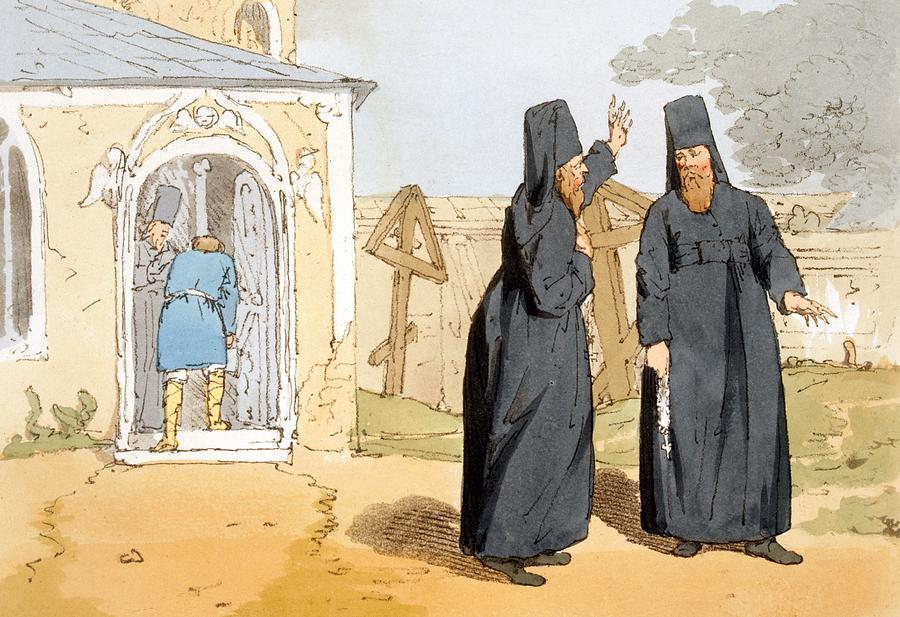
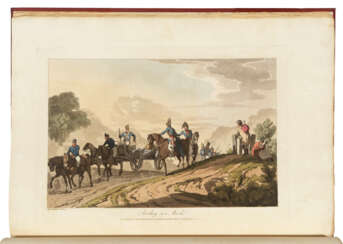
In 1784, the young Atkinson traveled to St. Petersburg, Russia, to stay with his uncle James Walker, who worked as an engraver at the court of Empress Catherine the Great. The aspiring artist learned from the work of the great Russian painters whose paintings he saw in the art galleries of St. Petersburg. Catherine and her son Paul I, noticing his talent, commissioned Atkinson to paint pictures on historical subjects.
In 1801 Atkinson returned to England and a year later published an album entitled "Pictorial representation of Russian manners, customs and amusements" on 100 plates drawn and engraved by himself. This work was a great success in Europe. Later, during the Napoleonic Wars, Atkinson created many battle scenes, including the Battle of Waterloo and naval battles. In 1808 he was elected to the Society of Watercolor Painters.




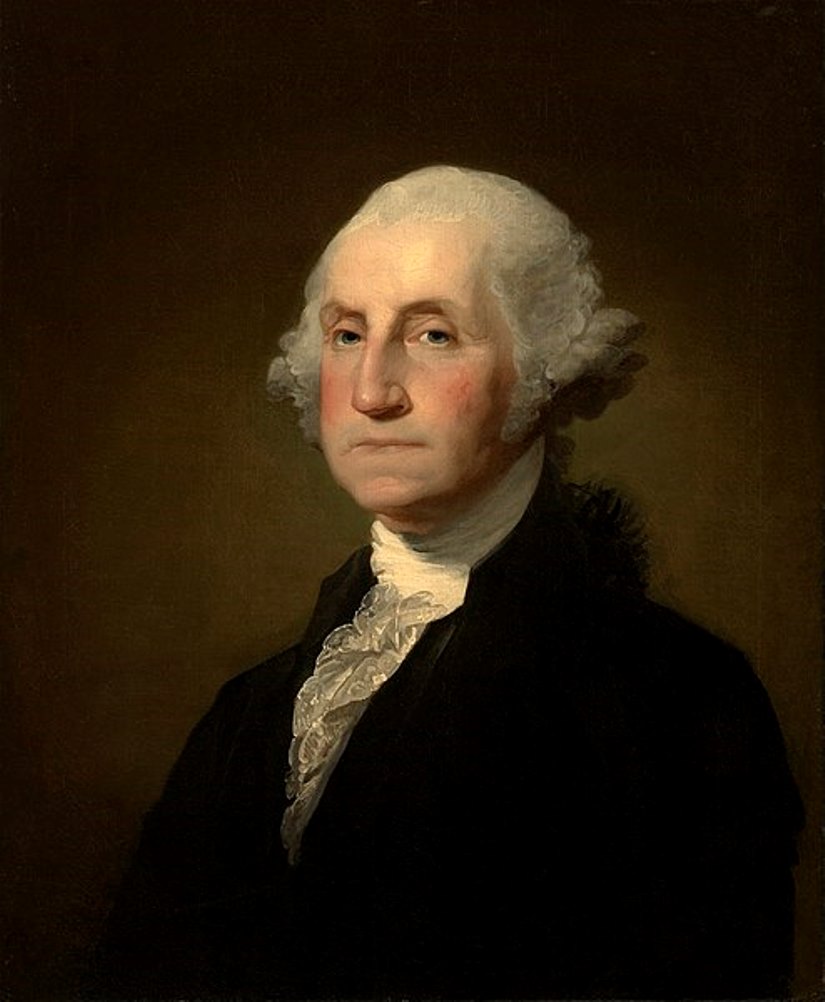
George Washington is the first popularly elected president of the United States of America and one of the founding fathers of the United States.
Born into a noble family in colonial Virginia in February 1732, George Washington served as a Virginian officer with British troops during the French-Indian War (1754-1763) from 1754-1758. This was a territorial war fought largely between the colonies of Britain and France that escalated into a worldwide conflict between the two countries. J. Washington was at the center of the conflicts in the disputed Ohio River Valley area.
In June 1775, he was elected commander-in-chief of the Continental forces in the war already for independence from Great Britain. He commanded American troops throughout the war, becoming famous for his perseverance and bravery.
In 1787, J. Washington represented the state of Virginia as a delegate to the Constitutional Convention. This convention created the Constitution of the United States. In 1789, the Electoral College unanimously elected George Washington president, and in 1792 he was re-elected for a second term. Thus George Washington was in office as President of the United States from April 30, 1789 to March 4, 1797.
As head of state, he helped to strengthen the Union, implement the principles of the Constitution and build the capital of the United States. He was engaged in the formation of the central authorities and system of government, created precedents for the institution of presidents, encouraged the development of the economy, maintained friendly relations with Congress. In foreign policy Washington avoided interference in the affairs of European states.
After leaving the post of president, George Washington lived in Mount Vernon Manor.


Dame Laura Knight was an English artist who worked in oils, watercolours, etching, engraving and drypoint. Knight was a painter in the figurative, realist tradition, who embraced English Impressionism. In her long career, Knight was among the most successful and popular painters in Britain. Her success in the male-dominated British art establishment paved the way for greater status and recognition for women artists.
In 1929 she was created a Dame, and in 1936 became the second woman elected to full membership of the Royal Academy. Her large retrospective exhibition at the Royal Academy in 1965 was the first for a woman. Knight was known for painting amidst the world of the theatre and ballet in London, and for being a war artist during the Second World War. She was also greatly interested in, and inspired by, marginalised communities and individuals, including Romani people and circus performers.


James Madison was an American politician and statesman, the fourth President of the United States (1809-1817).
Madison attended Princeton and studied history, government, and law. He participated in the drafting of the Virginia Constitution in 1776, and in 1780 was chosen to represent Virginia in the Continental Congress (1780-83 and 1786-88). James Madison contributed greatly to the ratification of the Constitution, writing, with Alexander Hamilton and John Jay, The Federalist (1788). He was later called the "father of the Constitution."
In 1792, Madison and Thomas Jefferson (1743-1826) founded the Democratic-Republican Party, which has been called America's first opposition political party. When Jefferson became the third president of the United States, Madison served as his secretary of state. In Congress, he was involved in drafting the Bill of Rights and passing the first revenue legislation. As Secretary of State to President Jefferson (1801-1809), Madison protested to warring France and Great Britain that their seizure of American ships was contrary to international law.
Madison was elected president in 1808, succeeding Jefferson. Continued British interference in shipping, as well as other grievances, led to the War of 1812. During Madison's second term as president, the war was still ongoing, and he and his wife were even forced to flee in the face of advancing British troops who set Washington, D.C. on fire. Despite this, in 1815, the United States declared its victory in the war.
After the end of his second term, Madison remained active in public affairs. He edited his Journal of the Constitutional Convention, was co-chairman of the Virginia Constitutional Convention from 1829-1830, and chancellor of the University of Virginia from 1826-36. He was also Monroe's foreign policy advisor. Although Madison was a slave owner all his life, in the last years of his life he was active in the American Colonization Society, whose mission was to resettle slaves in Africa. James Madison died at the age of 85 in 1836.

John Jay was an American lawyer and diplomat, statesman, and one of the founding fathers of the United States.
Jay came from French Huguenots, after graduating from King's College (now Columbia University) he entered law school and was admitted to the bar in 1768. After the outbreak of hostilities in the spring of 1775, Jay continued to serve both in New York and in the Continental Congress, which elected him president in late 1778.
In the fall of 1779 he was appointed minister plenipotentiary to Spain, which had recently entered into an alliance with France against England. In May 1782 he traveled to Paris, where a treaty was concluded that formally ended the war with Great Britain in 1783. Before returning to America in July 1784, Jay was appointed secretary of foreign affairs.
In 1788, Jay actively advocated for the ratification of the U.S. Constitution by the state of New York. Together with future President James Madison and economist Alexander Hamilton, he participated in the creation of the famous book The Federalist (1788). Under the new Constitution, President Washington appointed John Jay Chief Justice of the United States in 1789, and in July 1795 he became Governor of New York. After completing his second term as governor in June 1801. Jay retired to his farm in Bedford, New York.


John Milton was a British poet and writer-publicist, intellectual and politician of the English Revolutionary period.
Milton first planned to become a priest, studied at Cambridge University, and then abandoned this activity. Several years he spent reading and self-education, learning many languages. In 1638 Milton traveled around the continent for about a year and a half, spending much time in Italy, primarily in Rome and Florence. He befriended young Italian literati, and his encounter with Galileo further influenced his writing.
Milton became best known for his poem Paradise Lost in Ten Books, which declares its purpose to justify the ways of God to man, but also touches on both universal and personal themes. Milton was the first author to use the word "cosmos" in our modern sense of "outer space," and his space epic takes place in a confidently Copernican universe.
In his prose works, Milton advocated the abolition of the Church of England and the execution of Charles I. From the outbreak of the English Civil Wars in 1642 and long after the restoration of Charles II as king in 1660, he spoke out against tyranny and state-sanctioned religion in all his works. As a Protestant, Milton was often in conflict with the Roman Catholic Church. As a civil servant, Milton became the voice of the English Commonwealth after 1649 and then under Oliver Cromwell, conducting international correspondence and defending the government against polemical attacks from abroad.
John Milton is considered the most important English writer after William Shakespeare. Author of political pamphlets and religious treatises, he is one of the most famous writers of the 1650s, the vibrant era of the English Revolution (Civil War).


John Milton was a British poet and writer-publicist, intellectual and politician of the English Revolutionary period.
Milton first planned to become a priest, studied at Cambridge University, and then abandoned this activity. Several years he spent reading and self-education, learning many languages. In 1638 Milton traveled around the continent for about a year and a half, spending much time in Italy, primarily in Rome and Florence. He befriended young Italian literati, and his encounter with Galileo further influenced his writing.
Milton became best known for his poem Paradise Lost in Ten Books, which declares its purpose to justify the ways of God to man, but also touches on both universal and personal themes. Milton was the first author to use the word "cosmos" in our modern sense of "outer space," and his space epic takes place in a confidently Copernican universe.
In his prose works, Milton advocated the abolition of the Church of England and the execution of Charles I. From the outbreak of the English Civil Wars in 1642 and long after the restoration of Charles II as king in 1660, he spoke out against tyranny and state-sanctioned religion in all his works. As a Protestant, Milton was often in conflict with the Roman Catholic Church. As a civil servant, Milton became the voice of the English Commonwealth after 1649 and then under Oliver Cromwell, conducting international correspondence and defending the government against polemical attacks from abroad.
John Milton is considered the most important English writer after William Shakespeare. Author of political pamphlets and religious treatises, he is one of the most famous writers of the 1650s, the vibrant era of the English Revolution (Civil War).


Dame Laura Knight was an English artist who worked in oils, watercolours, etching, engraving and drypoint. Knight was a painter in the figurative, realist tradition, who embraced English Impressionism. In her long career, Knight was among the most successful and popular painters in Britain. Her success in the male-dominated British art establishment paved the way for greater status and recognition for women artists.
In 1929 she was created a Dame, and in 1936 became the second woman elected to full membership of the Royal Academy. Her large retrospective exhibition at the Royal Academy in 1965 was the first for a woman. Knight was known for painting amidst the world of the theatre and ballet in London, and for being a war artist during the Second World War. She was also greatly interested in, and inspired by, marginalised communities and individuals, including Romani people and circus performers.


John James Audubon was a French-American ornithologist and painter, renowned for his groundbreaking illustrations of American birds. Born in 1785 in Les Cayes, Saint-Domingue (now Haiti), Audubon is remembered for his keen observation skills and innovative artistic techniques.
Audubon's most famous work, "The Birds of America," transformed the field of ornithology by presenting birds in lifelike poses and detailed backgrounds. Published between 1827 and 1838, it contained 435 hand-colored engravings, showcasing over 489 bird species. His unique approach to illustrating birds in their natural habitats was a departure from traditional methods, which often portrayed birds in rigid poses.
Audubon used a wire armature to position freshly-killed specimens, allowing him to depict birds with a sense of movement and vitality. This innovative technique was truly revolutionary and set him apart from his contemporaries. Additionally, Audubon's artistic skill and attention to detail made his illustrations highly sought after, with surviving copies of "The Birds of America" considered valuable collectibles today.
For art collectors and enthusiasts, Audubon's work continues to be a source of inspiration and admiration. His legacy endures through his contributions to ornithology and the art world, with museums and galleries showcasing his work. If you're interested in learning more about John James Audubon and his famous illustrations, consider subscribing to our newsletter for updates on new product sales and auction events related to his work.


William Shakespeare was a British poet and playwright and writer.
William's father, John Shakespeare, was a merchant and official in Stratford. There are reports that he was a sailor for a time before joining a theater company in London. Beginning in the 1590s, Shakespeare began writing plays, and in 1593 he published a poem, Venus and Adonis, which became popular. He dedicated it to the Duke of Southampton, who was a philanthropist and patron of talent, and soon his business was booming.
From 1592 to 1600 Shakespeare wrote his dramas and romantic comedies "Richard III", "The Taming of the Shrew", "Romeo and Juliet", "A Midsummer Night's Dream" and "The Merchant of Venice", as well as the comedies "Much Ado About Nothing", "Twelfth Night" and the tragedy "Julius Caesar". The playwright's business was so successful that he even bought a large house in Stratford. In 1599, Shakespeare became one of the owners, playwright and actor of the new theater "Globe". In 1603 King James took Shakespeare's troupe under his direct patronage. In the mature period, the great playwright turned to tragedies, there were "Hamlet", "Othello", "King Lear", "Macbeth" and others.
Although in the 19th century researchers had some doubts about the authorship of many of these works, William Shakespeare is considered the greatest English playwright, one of the best playwrights in the world. His plays have been translated into all major languages and to this day form the basis of the world theatrical repertoire, most of them have been screened many times. According to the Guinness Book of Records, Shakespeare remains the world's best-selling playwright, and his plays and poems have sold more than 4 billion copies in the nearly 400 years since his death.

.jpg)
Lawrence Alma-Tadema was a Dutch-British artist renowned for his detailed and romanticized portrayals of ancient civilizations, particularly Rome and Egypt. His meticulous attention to historical accuracy and the lavish representation of marble and luxurious settings distinguished his work. Notably, his fascination with ancient cultures was sparked by his honeymoon visit to Italy and Pompeii, influencing his artistic focus for decades.
Lawrence Alma-Tadema's early work, such as "The Education of the Children of Clovis," showcased his interest in historical subjects and established his reputation. This painting, alongside others like "The Sad Father," demonstrates his commitment to historical detail and narrative depth.
After moving to England due to the Franco-Prussian War and personal reasons, Lawrence Alma-Tadema's career flourished. His works, characterized by their bright palette and refined details, resonated with Victorian audiences, earning him considerable fame and financial success. He was knighted in 1899 and continued to be a pivotal figure in Victorian art, influencing peers and future generations alike.
Lawrence Alma-Tadema's legacy experienced a decline posthumously but saw a resurgence in the 1970s. Today, he is celebrated for his contributions to the Neoclassical and Victorian art movements, with his works featured in prominent collections worldwide, including the Getty Museum and the Tate Gallery.
If you are fascinated by Lawrence Alma-Tadema's artwork and wish to stay updated on sales and auction events related to his works, consider signing up for updates. This will ensure you remain informed about new opportunities to explore and possibly acquire pieces of his illustrious legacy.


William Shakespeare was a British poet and playwright and writer.
William's father, John Shakespeare, was a merchant and official in Stratford. There are reports that he was a sailor for a time before joining a theater company in London. Beginning in the 1590s, Shakespeare began writing plays, and in 1593 he published a poem, Venus and Adonis, which became popular. He dedicated it to the Duke of Southampton, who was a philanthropist and patron of talent, and soon his business was booming.
From 1592 to 1600 Shakespeare wrote his dramas and romantic comedies "Richard III", "The Taming of the Shrew", "Romeo and Juliet", "A Midsummer Night's Dream" and "The Merchant of Venice", as well as the comedies "Much Ado About Nothing", "Twelfth Night" and the tragedy "Julius Caesar". The playwright's business was so successful that he even bought a large house in Stratford. In 1599, Shakespeare became one of the owners, playwright and actor of the new theater "Globe". In 1603 King James took Shakespeare's troupe under his direct patronage. In the mature period, the great playwright turned to tragedies, there were "Hamlet", "Othello", "King Lear", "Macbeth" and others.
Although in the 19th century researchers had some doubts about the authorship of many of these works, William Shakespeare is considered the greatest English playwright, one of the best playwrights in the world. His plays have been translated into all major languages and to this day form the basis of the world theatrical repertoire, most of them have been screened many times. According to the Guinness Book of Records, Shakespeare remains the world's best-selling playwright, and his plays and poems have sold more than 4 billion copies in the nearly 400 years since his death.


William Shakespeare was a British poet and playwright and writer.
William's father, John Shakespeare, was a merchant and official in Stratford. There are reports that he was a sailor for a time before joining a theater company in London. Beginning in the 1590s, Shakespeare began writing plays, and in 1593 he published a poem, Venus and Adonis, which became popular. He dedicated it to the Duke of Southampton, who was a philanthropist and patron of talent, and soon his business was booming.
From 1592 to 1600 Shakespeare wrote his dramas and romantic comedies "Richard III", "The Taming of the Shrew", "Romeo and Juliet", "A Midsummer Night's Dream" and "The Merchant of Venice", as well as the comedies "Much Ado About Nothing", "Twelfth Night" and the tragedy "Julius Caesar". The playwright's business was so successful that he even bought a large house in Stratford. In 1599, Shakespeare became one of the owners, playwright and actor of the new theater "Globe". In 1603 King James took Shakespeare's troupe under his direct patronage. In the mature period, the great playwright turned to tragedies, there were "Hamlet", "Othello", "King Lear", "Macbeth" and others.
Although in the 19th century researchers had some doubts about the authorship of many of these works, William Shakespeare is considered the greatest English playwright, one of the best playwrights in the world. His plays have been translated into all major languages and to this day form the basis of the world theatrical repertoire, most of them have been screened many times. According to the Guinness Book of Records, Shakespeare remains the world's best-selling playwright, and his plays and poems have sold more than 4 billion copies in the nearly 400 years since his death.


George Washington is the first popularly elected president of the United States of America and one of the founding fathers of the United States.
Born into a noble family in colonial Virginia in February 1732, George Washington served as a Virginian officer with British troops during the French-Indian War (1754-1763) from 1754-1758. This was a territorial war fought largely between the colonies of Britain and France that escalated into a worldwide conflict between the two countries. J. Washington was at the center of the conflicts in the disputed Ohio River Valley area.
In June 1775, he was elected commander-in-chief of the Continental forces in the war already for independence from Great Britain. He commanded American troops throughout the war, becoming famous for his perseverance and bravery.
In 1787, J. Washington represented the state of Virginia as a delegate to the Constitutional Convention. This convention created the Constitution of the United States. In 1789, the Electoral College unanimously elected George Washington president, and in 1792 he was re-elected for a second term. Thus George Washington was in office as President of the United States from April 30, 1789 to March 4, 1797.
As head of state, he helped to strengthen the Union, implement the principles of the Constitution and build the capital of the United States. He was engaged in the formation of the central authorities and system of government, created precedents for the institution of presidents, encouraged the development of the economy, maintained friendly relations with Congress. In foreign policy Washington avoided interference in the affairs of European states.
After leaving the post of president, George Washington lived in Mount Vernon Manor.


Giles Swayne, full name Giles Oliver Cairnes Swayne, is a British composer.
Swayne began composing music at an early age, receiving his musical training at Ampleforth College and the University of Cambridge, and then at the Royal Academy of Music. He wrote a series of relatively small pieces, mostly aimed at children or amateurs, which explored ways of conveying complex musical thought as simply as possible.
Swayne's stylistic approach to virtuosic simplicity is noted in his Symphony for Small Orchestra and Naaotwa Lala, his Mozart chamber opera The Wedding of Cherubino, written in 1984. Many other works in various genres followed, including "Silent Land" for cello and 40-part choir, Symphony No. 1 - "Small World," String Quartet No. 4 and others.


Jacques Joseph Tissot, anglicized as James Tissot, was a French painter and illustrator. He was a successful painter of fashionable, modern scenes and society life in Paris before moving to London in 1871. A friend and mentor of the Impressionist painter Edgar Degas, Tissot also painted scenes and figures from the Bible.


John Keith Vaughan was a British painter.


John Keith Vaughan was a British painter.


William-Adolphe Bouguereau was a French academic painter. In his realistic genre paintings, he used mythological themes, making modern interpretations of classical subjects, with an emphasis on the female human body. During his life, he enjoyed significant popularity in France and the United States, was given numerous official honors, and received top prices for his work. As the quintessential salon painter of his generation, he was reviled by the Impressionist avant-garde. By the early twentieth century, Bouguereau and his art fell out of favor with the public, due in part to changing tastes. In the 1980s, a revival of interest in figure painting led to a rediscovery of Bouguereau and his work. He finished 822 known paintings, but the whereabouts of many are still unknown.


Thomas Moffet was a British naturalist-naturalist and physician.
After receiving his MD degree in 1580, Thomas Moffet studied the anatomy of the mulberry silkworm in Italy, then returned to England to study arthropods in general, especially spiders. He edited and expanded the work Insectorum sive Minimorum Animalium Theatrum ("Insect Theater"), an illustrated guide to the classification and life of insects.
Moffet was also an ardent supporter of the Paracelsian system of medicine.


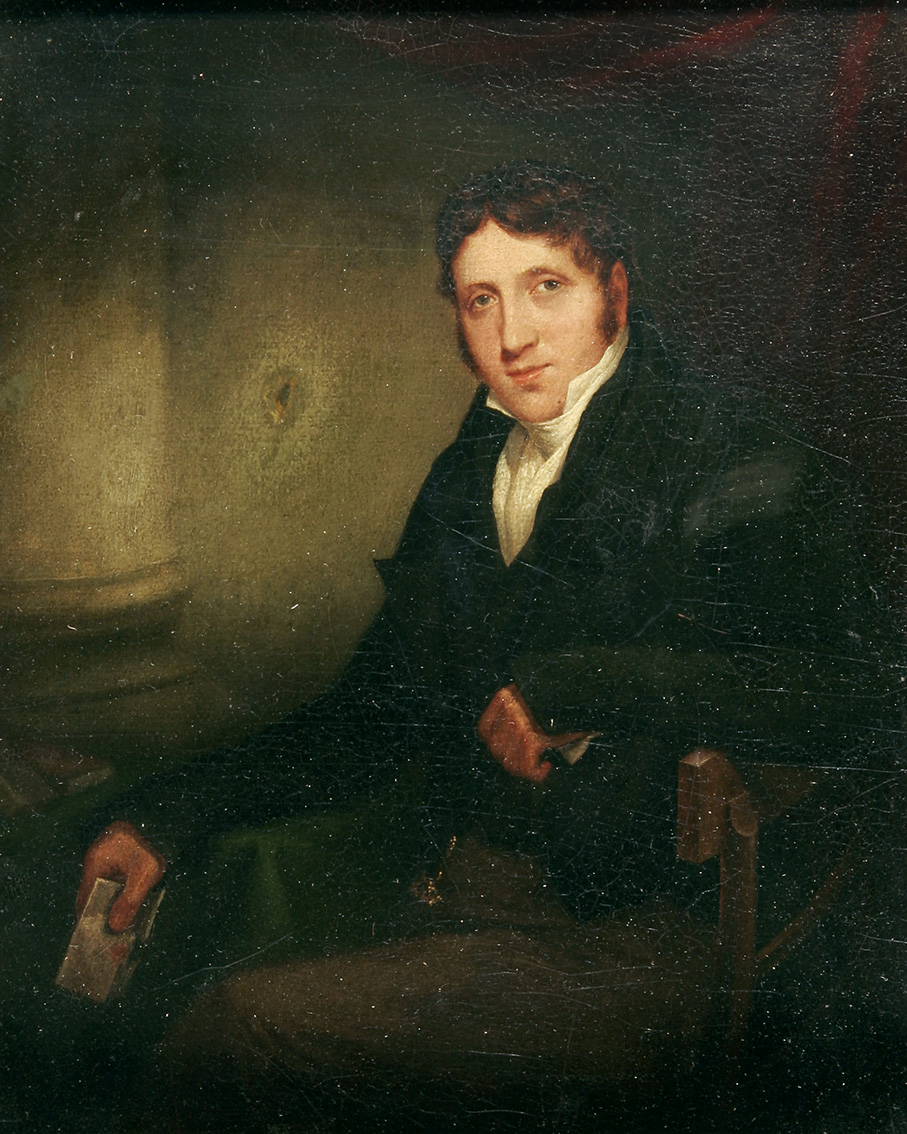
William Curtis was a British botanist and entomologist, editor of the oldest botanical publication in Great Britain.
Curtis became interested in natural history in his youth, and at the age of 25 had already published "Instructions for the Collection and Preservation of Insects", particularly butterflies. In 1779 he founded his own London botanical garden at Lambeth and published Flora Londinensis (1777-1798), a 6-volume work on urban nature.
In 1787 Curtis began publishing the later popular Botanical Magazine, which also featured hand-colored plates by artists. This magazine has changed its name several times over time, but is still continued by the Royal Botanic Gardens, Kew, as a publication for those interested in horticulture, ecology or botanical illustration. Interestingly, the magazine was entirely hand-colored until 1948.


Barbara Hepworth was an English artist and sculptor. Her work exemplifies Modernism and in particular modern sculpture. Along with artists such as Ben Nicholson and Naum Gabo, Hepworth was a leading figure in the colony of artists who resided in St Ives during the Second World War.


Rembrandt Harmenszoon van Rijn, a Dutch Baroque painter and printmaker, was born on July 15, 1606, in Leiden, Netherlands, and died on October 4, 1669, in Amsterdam. He is celebrated as one of the greatest storytellers in art history, acclaimed for his adept portrayal of human emotions and dramatic narratives. Rembrandt's extensive oeuvre includes portraits, self-portraits, landscapes, genre scenes, allegorical, historical, and biblical themes, as well as animal studies. His artistry shined during the Dutch Golden Age, a period marked by cultural and scientific achievements in the Netherlands.
Rembrandt's education in art began around the age of 10 when he left the Latin School in Leiden to train as an artist. He apprenticed with artists like Jacob van Swanenburg and Pieter Lastman, mastering various aspects of painting. He opened his own studio in Leiden around 1624 or 1625, sharing it with his colleague Jan Lievens. By 1631, he had moved to Amsterdam, where he achieved significant success and trained many important Dutch painters.
Among Rembrandt's notable works are "The Anatomy Lesson of Dr. Nicolaes Tulp" (1632), "The Night Watch" (1642), and "The Syndics of the Amsterdam Drapers’ Guild" (1662). He was also renowned for his self-portraits, creating around 80 over his lifetime, more than any other artist until the 20th century. These self-portraits were not just artistic endeavors but also experiments with facial expressions and lighting effects. Additionally, Rembrandt was a master etcher, transforming etching from a reproductive technique into an art form.
Rembrandt's painting style is characterized by its dramatic use of light and shadow, known as chiaroscuro. His ability to depict materials realistically was unparalleled; his portrayal of metals and fabrics was so lifelike that they appeared to glow and be tangible. He was also known for his impasto technique, applying paint thickly to the canvas, adding a three-dimensional quality to his works.
Despite his artistic prowess, Rembrandt faced financial difficulties and personal tragedies throughout his life. He declared bankruptcy in 1656, a downfall attributed partly to his extensive collection of art objects and curiosities. His masterpieces, however, continued to garner appreciation and influence generations of artists that followed.
For collectors and experts in art and antiques, Rembrandt's works represent a pinnacle of artistic achievement in the Dutch Golden Age. His mastery in portraying the human condition and his innovative techniques in painting and etching make his works highly prized and influential in the art world.
To stay updated on new product sales and auction events related to Rembrandt van Rijn, sign up for our updates. This subscription service is dedicated exclusively to news and events concerning works related to this unparalleled master of the Dutch Golden Age.


William Makepeace Thackeray was a British writer of satire and a master of the realist novel.
William was born in Calcutta, and after the death of his father, an administrator for the East India Company, he was sent to England at the age of five. He attended Trinity College, Cambridge, studying law and painting, then traveled with adventure, socializing, and gambling, earning a living as a journalist and illustrator.
It was not until the serial publication of his novel Vanity Fair in 1847-1848 that Thackeray gained fame and success, and from then on he became a recognized writer in Britain.
William Thackeray then lectured in the United States, which were published in the collections The English Humorists of the Eighteenth Century (1853) and The Four Georges (1860). After 1856 he settled in London, ran unsuccessfully for Parliament the following year, and in 1860 founded the Cornhill Magazine, becoming its editor.
Thackeray's other well-known works are The Story of Henry Esmond, Esquire (1852), The Virginians (1857-1859), The Widower's Trap (1860), and The Adventures of Philip (1861-62). He also wrote exquisite secular poetry, ballads, and parodies. Thackeray was considered by his contemporaries to be Dickens's only possible rival. His works are filled with wit, humor, satire and pathos. In creating them Thackeray relied on his own experience. "Vanity Fair" is still his most interesting and readable work, maintaining its place among the great historical novels in the English language.


Claes Oldenburg was a Swedish-born American sculptor, celebrated for his groundbreaking contributions to the field of public art and sculpture. With a career spanning over several decades, Oldenburg redefined the boundaries between sculpture and everyday objects, bringing a whimsical yet profound commentary on consumer culture and the urban environment. His talent for transforming the mundane into the monumental made his work not only iconic but also a vital part of the conversation about the role of art in public spaces.
Oldenburg's sculptures are characterized by their colossal scale and imaginative designs, often inspired by everyday items. Perhaps his most famous works include "Clothespin" in Philadelphia and "Spoonbridge and Cherry" in Minneapolis. These pieces are emblematic of his unique approach to sculpture, where familiar objects are reimagined in unexpected contexts, challenging viewers to see the world around them in new ways. His ability to blur the lines between art and life, combined with his playful exploration of form and material, has left an indelible mark on the art world.
For collectors and experts in art and antiques, Oldenburg's works represent not just significant artistic achievements but also compelling investments. His sculptures and installations continue to be celebrated in museums and galleries worldwide, testament to his enduring influence and relevance in the contemporary art scene. For those interested in the intersection of culture, art, and urban life, Oldenburg's legacy offers rich insights and inspiration.
To stay informed about new product sales and auction events related to Claes Oldenburg, we invite you to sign up for updates. This subscription service is designed for collectors and art enthusiasts eager to keep abreast of the latest developments and opportunities in the world of art and antiques. Join us in exploring the remarkable contributions of Claes Oldenburg to the art world.


Jacques-Louis David, a preeminent French artist of the Neoclassical movement, made a profound impact on the art world with his compelling history paintings and portraiture. Born in Paris in 1748 into a prosperous family, David's early life was marked by tragedy and ambition. Despite losing his father at a young age and facing opposition from his family, his determination to pursue art led him to become a student of Joseph-Marie Vien and later, a notable figure in the French Academy in Rome. David's artistic journey was characterized by a rigorous classical education, culminating in winning the prestigious Prix de Rome in 1774, which allowed him to study the masterpieces of classical antiquity and the Renaissance in Italy.
David's work is renowned for its classical austerity, a response to the frivolous Rococo style that preceded him. His paintings, such as "The Oath of the Horatii," reflect a blend of classical themes with a modern sense of emotion and drama, resonating with the revolutionary spirit of his times. As the French Revolution unfolded, David aligned himself with its ideals, becoming an active supporter and using his art to serve political purposes. He was closely associated with leaders of the Revolution, including Maximilien Robespierre, and later became the official painter of Napoleon, contributing significantly to the iconography of the era.
Throughout his career, David had a significant influence on French art, not only through his own works but also as a teacher. His studio was a nurturing ground for the next generation of French painters, despite his reputation for being demanding. David's move to Brussels after the fall of Napoleon marked the final phase of his career, where he continued to paint until his death in 1825.
David's legacy extends beyond his contributions to Neoclassical art. He played a crucial role in the development of modern art history, blending classical ideals with contemporary themes, and influencing not only his contemporaries but also future generations of artists. His works, housed in museums around the world, continue to be studied and admired for their technical mastery and emotional depth.
For art collectors and experts, David's oeuvre offers a fascinating insight into a transformative period in art history, where the classical and the contemporary intersected to create a new visual language. His paintings not only depict historical and mythological scenes but also embody the ideals, struggles, and aspirations of his time.
For those interested in exploring the works of Jacques-Louis David and the impact of his art on the Neoclassical movement, updates on new product sales and auction events related to David's work can provide valuable opportunities to engage with his legacy. Signing up for updates ensures access to the latest information and events, offering a deeper understanding of this pivotal artist's contributions to art and culture.


Jeffrey Lynn Koons is an American artist recognized for his work dealing with popular culture and his sculptures depicting everyday objects, including balloon animals produced in stainless steel with mirror-finish surfaces. He lives and works in both New York City and his hometown of York, Pennsylvania. His works have sold for substantial sums, including at least two record auction prices for a work by a living artist: US$58.4 million for Balloon Dog (Orange) in 2013 and US$91.1 million for Rabbit in 2019.
Critics are sharply divided in their views of Koons. Some view his work as pioneering and of major art-historical importance. Others dismiss his work as kitsch, crass, and based on cynical self-merchandising. Koons has stated that there are no hidden meanings and critiques in his works.


Herri met de Bles is a Flemish artist, along with Joachim Patinir, one of the founders of European landscape painting. He painted mainly landscapes with multi-figured compositions. Like Patinir, his style is characterized by stylized images of rocks and a careful rendering of aerial perspective.


Georgia Totto O'Keeffe was an American modernist artist. She was known for her paintings of enlarged flowers, New York skyscrapers, and New Mexico landscapes. O'Keeffe has been called the "Mother of American modernism".


Maria Anna Angelica Kauffmann was a Swiss Neoclassical painter who had a successful career in London and Rome. Remembered primarily as a history painter, Kauffmann was a skilled portraitist, landscape and decoration painter. She was, along with Mary Moser, one of two female painters among the founding members of the Royal Academy in London in 1768.


Gustave Moreau was a French artist and an important figure in the Symbolist movement. Jean Cassou called him "the Symbolist painter par excellence". He was an influential forerunner of symbolism in the visual arts in the 1860s, and at the height of the symbolist movement in the 1890s, he was among the most significant painters.


David Butler was an African American sculptor and painter from Good Hope, Louisiana. His style is epitomized by kinetic sculptures made from recycled tin or wood, which he embellished with saturated colors and geometric patterns. His work is now in the permanent collections of the Smithsonian American Art Museum, the American Folk Art Museum, and the Philadelphia Museum of Art.


David Wilkie was a Scottish painter, especially known for his genre scenes. He painted successfully in a wide variety of genres, including historical scenes, portraits, including formal royal ones, and scenes from his travels to Europe and the Middle East. His main base was in London, but he died and was buried at sea, off Gibraltar, returning from his first trip to the Middle East. He was sometimes known as the "people's painter".
He was Principal Painter in Ordinary to King William IV and Queen Victoria. Apart from royal portraits, his best-known painting today is probably The Chelsea Pensioners reading the Waterloo Dispatch of 1822 in Apsley House.


William Shakespeare was a British poet and playwright and writer.
William's father, John Shakespeare, was a merchant and official in Stratford. There are reports that he was a sailor for a time before joining a theater company in London. Beginning in the 1590s, Shakespeare began writing plays, and in 1593 he published a poem, Venus and Adonis, which became popular. He dedicated it to the Duke of Southampton, who was a philanthropist and patron of talent, and soon his business was booming.
From 1592 to 1600 Shakespeare wrote his dramas and romantic comedies "Richard III", "The Taming of the Shrew", "Romeo and Juliet", "A Midsummer Night's Dream" and "The Merchant of Venice", as well as the comedies "Much Ado About Nothing", "Twelfth Night" and the tragedy "Julius Caesar". The playwright's business was so successful that he even bought a large house in Stratford. In 1599, Shakespeare became one of the owners, playwright and actor of the new theater "Globe". In 1603 King James took Shakespeare's troupe under his direct patronage. In the mature period, the great playwright turned to tragedies, there were "Hamlet", "Othello", "King Lear", "Macbeth" and others.
Although in the 19th century researchers had some doubts about the authorship of many of these works, William Shakespeare is considered the greatest English playwright, one of the best playwrights in the world. His plays have been translated into all major languages and to this day form the basis of the world theatrical repertoire, most of them have been screened many times. According to the Guinness Book of Records, Shakespeare remains the world's best-selling playwright, and his plays and poems have sold more than 4 billion copies in the nearly 400 years since his death.


Laurie Simmons is an American artist, photographer and filmmaker. Since the mid-1970s, Simmons has staged scenes for her camera with dolls, ventriloquist dummies, objects on legs, and people, to create photographs that reference domestic scenes. She is part of The Pictures Generation, a name given to a group of artists who came to prominence in the 1970s. The Pictures Generation also includes Cindy Sherman, Barbara Kruger, and Louise Lawler.


Egbert van der Poel was a Dutch Golden Age genre and landscape painter, son of a Delft goldsmith.


Léon Spilliaert was a Belgian artist. He is known for his unique style of symbolism, with many of his works featuring dream-like landscapes, eerie still lifes, and enigmatic figures.
Spilliaert grew up in a wealthy family, and he initially studied architecture before turning to art. He was largely self-taught, and his work was heavily influenced by the Belgian symbolist movement, as well as the works of artists such as James Ensor and Edvard Munch.
Spilliaert was particularly interested in exploring the mysteries of the human psyche, and many of his works reflect a sense of unease or uncertainty. He often used strong contrasts of light and shadow to create a sense of drama and tension in his works, and his use of color was often muted and subdued.
Despite his success as an artist, Spilliaert was a deeply private individual, and he rarely exhibited his work during his lifetime. He continued to work throughout his life, however, producing a large body of haunting and enigmatic works that continue to captivate audiences today.


Nathaniel Hawthorne is an American writer and author.
Hawthorne is a recognized short story writer and a master of allegorical and symbolic narrative. One of the first fiction writers in American literature, he is best known for his works The Scarlet Letter (1850) and The House of Seven Gables (1851). Hawthorne's artistic works are considered part of the American Romantic movement and, in particular, of so-called dark Romanticism, a popular mid-19th-century fascination with the irrational, the demonic, and the grotesque.


Yoshitomo Nara is a Japanese artist. He lives and works in Nasushiobara, Tochigi Prefecture, though his artwork has been exhibited worldwide. Nara has had nearly 40 solo exhibitions since 1984. His art work has been housed at the MoMA and the Los Angeles County Museum of Art (LACMA).


![[RUSSIA] - ATKINSON, John Augustus (1775-1831), illustratore - James WALKER (1748-1808) - A Picturesque Representation of the Manners, Customs, and Amusements of the Russians, in One Hundred Coloured Plates. London: W. Bulmer e Cleveland-Row, 1803.](/assets/image/picture_1242422/29616/yaezrfeorwrcaeig4sd2-w2fmj-1oms5wsdzexirhkypjufdw-1xlxofbehvgqt1608651686jpg__fix_374_244.jpeg)
![[RUSSIA] - ATKINSON, John Augustus (1775-1831), illustratore - James WALKER (1748-1808) - A Picturesque Representation of the Manners, Customs, and Amusements of the Russians, in One Hundred Coloured Plates. London: W. Bulmer e Cleveland-Row, 1803.](https://veryimportantlot.com/assets/image/picture_1242422/29616/yaezrfeorwrcaeig4sd2-w2fmj-1oms5wsdzexirhkypjufdw-1xlxofbehvgqt1608651686jpg__fix_374_244.jpeg)







![Portrait of the first American spacewalker Edward White [Large Format]; the crew aboard the recovery ship; President Johnson in Houston after the historic mission, May-June 1965](/assets/image/picture_1218552/f5b00/28800b84c57e5d978478968b8aa7384f1604656800jpg__fix_374_244.jpeg)

![Portrait of the first American spacewalker Edward White [Large Format]; the crew aboard the recovery ship; President Johnson in Houston after the historic mission, May-June 1965](https://veryimportantlot.com/assets/image/picture_1218552/f5b00/28800b84c57e5d978478968b8aa7384f1604656800jpg__fix_374_244.jpeg)












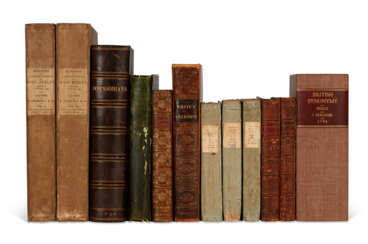
![[CURTIS, William (1746-1799)]](/assets/image/picture_2945271/4a5a1/fab7f83aa87d97bec12486d59b7eb6b71689112800jpg__fix_374_244.jpeg)
![[CURTIS, William (1746-1799)]](https://veryimportantlot.com/assets/image/picture_2945271/4a5a1/fab7f83aa87d97bec12486d59b7eb6b71689112800jpg__fix_374_244.jpeg)


![[SHAKESPEARE, William (1564-1616)]](/assets/image/picture_2279005/dc0e6/2a66369ba6dfd719d429ca4a8f57b3651657663200jpg__fix_374_244.jpeg)
![[SHAKESPEARE, William (1564-1616)]](https://veryimportantlot.com/assets/image/picture_2279005/dc0e6/2a66369ba6dfd719d429ca4a8f57b3651657663200jpg__fix_374_244.jpeg)