

Ukraine Classicism
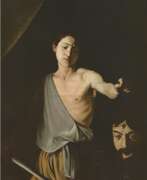

Matteo Baccelli was an Italian painter born in Lucca, Italy. He was a pupil of Pompeo Batoni and studied at the Accademia di Belle Arti di Firenze. He specialized in portrait painting and was a well-known artist in his time, receiving many commissions from members of the aristocracy and the church.
Baccelli's portraits are characterized by their realism and attention to detail, as well as their sensitive and subtle use of color. He was particularly skilled at capturing the character and personality of his subjects, and his paintings often convey a sense of psychological depth and complexity.
Baccelli's works can be found in various museums and private collections around the world, including the Uffizi Gallery in Florence, the Pinacoteca di Brera in Milan, and the Metropolitan Museum of Art in New York. He is considered an important figure in the history of Italian painting and a representative of the neoclassical style that dominated European art in the late 18th and early 19th centuries.
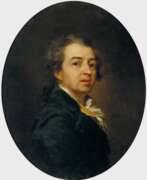

Dmitry Grigoryevich Levitzky (Russian: Дмитрий Григорьевич Левицкий) was an acclaimed Ukrainian-Russian portrait painter and academician born in May 1735, renowned for his exceptional contributions to the art of the 18th century. Originating from a family deeply rooted in the Ukrainian noble-priestly class, Levitzky's early exposure to art came from his father, Grigory Kirillovich Levitsky, a priest and an enthusiast in painting and engraving. This familial influence laid the foundation for Levitzky's artistic journey, which began in earnest when he assisted the prominent painter Alexey Antropov in Kiev, leading to his eventual move to Saint Petersburg.
Levitzky's rise to fame was marked by his unique ability to capture the essence of his subjects, combining exceptional technique with a fresh approach to portrait painting. His most notable works include portraits of significant figures from the Russian elite, such as Catherine II as the Legislatress in the Temple of the Goddess of Justice and portraits of the Smolny Institute's young ladies. Despite the grandeur and recognition that these works brought him, Levitzky faced financial struggles, spending his final years in poverty, a testament to the often-precarious nature of artistic acclaim.
His legacy, which had waned by the 19th century, was revitalized in the 20th century by art historian Alexander Benois, who positioned Levitzky among the pantheon of European Enlightenment artists. Levitzky's work is celebrated for its technical mastery and unique contribution to Russian and European portraiture, leaving an indelible mark on the artistic landscape of his time.
For collectors and experts in art and antiques, Levitzky's paintings are not just artistic achievements but also historical narratives captured in oil, reflecting the complex socio-cultural dynamics of 18th-century Russia. His portraits, housed in prestigious museums and galleries worldwide, continue to be studied and admired for their elegance, detail, and historical significance.
To stay updated on new findings and auction events related to Dmitry Grigoryevich Levitzky's works, sign up for updates. This subscription will ensure you're informed about sales and auctions where you can acquire pieces by this master portraitist, offering a unique opportunity to own a piece of art history.
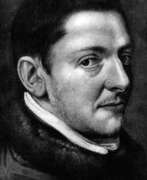

Anton Pavlovich Losenko (Russian: Антон Павлович Лосенко) was a Russian Neoclassical painter and academician of Ukrainian descent, celebrated for his historical subjects and portraits. Born in 1737 in Hlukhiv, Ukraine, and passing away in 1773 in Saint Petersburg, Russia, Losenko is recognized as a pivotal figure in the establishment of the Imperial Russian historical movement in painting. His education at the Imperial Academy of Arts and under Jean II Restout in Paris honed his skills, leading to masterpieces that blend Neoclassicism with humane narratives.
Losenko's legacy includes influential works such as the "Miraculous Catch of Fish" and the "Vladimir and Rogneda," reflecting his deep engagement with classical and biblical subjects as well as Russian history. This painter also contributed significantly to art education in Russia, authoring "Short Explanation of the Human Proportions," a textbook that educated generations of Russian artists. His students included notable names like Ivan Akimov, Grigory Ugrymov, and sculptor Mikhail Kozlovsky, indicating his lasting impact on Russian art.
His works, celebrated for their neoclassical style and emotional depth, are essential for understanding the evolution of Russian and European art. Losenko's role as a founder of Russian historical painting and his innovative approach to art education mark him as a key figure in art history. His paintings can be found in prominent museums and galleries, showcasing his significant contribution to the art world.
For collectors and experts in art and antiques, Losenko's work represents a fascinating intersection of Russian history, neoclassicism, and pedagogy in art. To stay updated on sales and auction events related to Losenko's works, signing up for updates can provide exclusive access to the latest information on this influential artist's pieces.


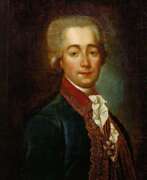

Leontiy Semenovich Miropolskiy (Russian: Леонтий Семёнович Миропольский) was a Russian painter, portraitist, copyist, and icon painter, prominent in the late 18th and early 19th centuries. He became an academician of the Imperial Academy of Arts after demonstrating his skills with a portrait of Gabriel Ignatievich Kozlov, an adjunct professor at the academy. His works include portraits that are highly individualized and closely resemble those of his teacher, Dmitry Levitsky.
Miropolskiy's contributions to Russian art extend beyond portraits; he was also an accomplished icon painter. He crafted icons for St. Andrew's Cathedral in Kronstadt, which, although the cathedral itself has since been destroyed, marks a significant part of his legacy in religious art. His paintings are housed in prestigious locations such as the State Russian Museum and the State Tretyakov Gallery, reflecting his lasting impact on Russian cultural heritage.
For art collectors and enthusiasts interested in exploring more about Miropolskiy's works or potential acquisition opportunities, consider signing up for updates related to his paintings. This subscription will keep you informed about new discoveries and auction events specifically tied to Miropolskiy's artistry.
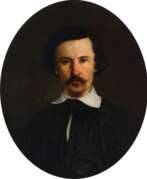

Edward Pawłowicz was a Polish-Lithuanian-Belarusian artist of the second half of the nineteenth and early twentieth centuries. He is known as a painter and graphic artist, public figure, memoirist and educator.
As an artist, Edward Pawłowicz painted portraits and landscapes in a style that critics define as transitional from classicism to romanticism. He also wrote several books of memoirs.