Animalists
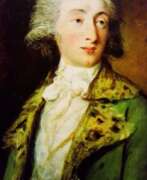

Carl Daniel David Friedrich Bach was a German artist of the late eighteenth and early nineteenth centuries, the Baroque period. He is known as a painter, graphic artist and printmaker.
Bach worked in the historical genre, was a portraitist, animalist, created canvases on allegorical subjects in the spirit of his era. In his works he combined elements of baroque and classicism. The artist often worked in the etching needle technique.
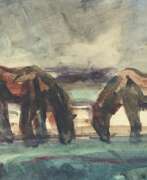

Unica Bachmann-Calcoen (Dutch: Unica Bachmann-Calcoen) was a German-Dutch artist who worked with portraits and depictions of animals, especially horses. She was a pupil of Marie de Jonge (1872-1951) and Martin Monnickendam (1874-1943).
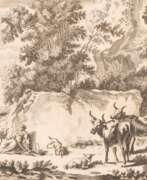

Elias Baeck called "Heldenmuth", was a German painter and engraver from Augsburg. Baeck worked for some time in Rome, then in Laybach, but finally returned to Augsburg, where he died in 1747. His chief works — both in painting and engraving — were portraits and landscapes. His engravings are sometimes signed "E.B.a.H.", standing for "Elias Baeck, alias Heldenmuth".


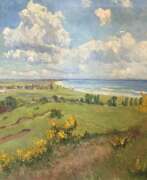

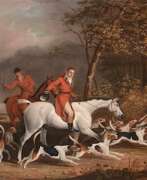

James Barenger is a British animal artist and illustrator.
He was born James Barenger Sr. James Barenger was a metal chaser and naturalist painter. Barenger specialized in depicting horses, dogs, and other animals, as well as noblemen's hunting scenes, which were consistently successful in the 19th century.
Barenger's patrons included the Duke of Grafton, the Marquis of Londonderry and the Earl of Derby. The artist produced entire series of prints depicting hunting, shooting, bullfighting and horse racing, which were published in sporting publications.
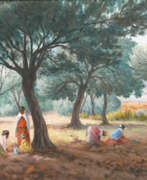

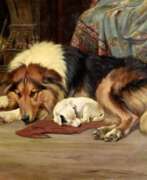


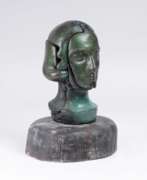

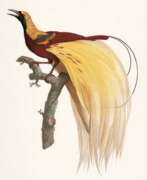

Jacques Barraband was a French zoological and botanical illustrator, renowned for his lifelike renderings of tropical birds. His pictures were based on mounted specimens and his illustration was considered the most accurate ones made during the early 1800s.
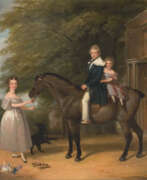

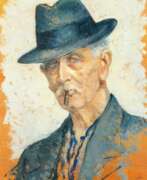


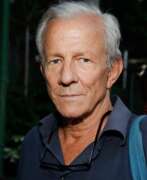

Peter Hill Beard was an American artist, photographer, diarist, and writer who lived and worked in New York City, Montauk and Kenya. His photographs of Africa, African animals and the journals that often integrated his photographs, have been widely shown and published since the 1960s.
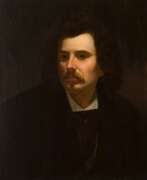

William Holbrook Beard was an American artistic painter who is known best for his satirical paintings of beasts performing human-like activities.
Beard was a prolific artist. His humorous treatment of bears, cats, dogs, horses and monkeys, generally with some human occupation and expression, usually satirical, gave him a great vogue at one time, and his pictures were much reproduced.
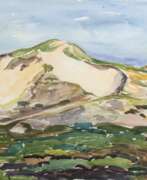

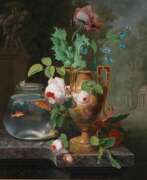

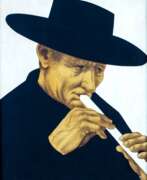

Arne Besser is a contemporary American artist. He received training as an artist at the Art Center School, Los Angeles. There he studied with John Audubon Tyler and Lorser Feidelsson. Beser’s approach to Photo-Realism is to draw from the urban landscape and nature a succinct “set like” image of reality. His city scenes depict New York street life alive with trading and traders, prostitutes and junkies looking for a fix. These visual images iconify the underside of urban life in a way that elevates this point of view to an almost mythic level.
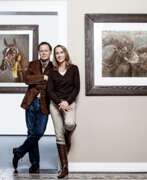


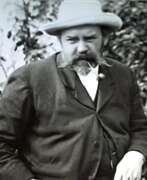

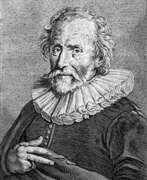

Abraham Bloemaert was a Dutch painter, draughtsman, and printmaker from the Golden Age of Dutch painting, one of the founders of the Guild of St. Luke in Utrecht. Bloemart was a caravagist. He painted mainly landscapes, mythological and biblical scenes, and pastoral works.
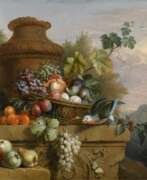


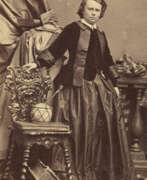

Rosa Bonheur, born Marie-Rosalie Bonheur, was a French artist known best as a painter of animals (animalière). She also made sculpture in a realist style. Her paintings include Ploughing in the Nivernais, first exhibited at the Paris Salon of 1848, and now in the Musée d'Orsay in Paris, and The Horse Fair, which was exhibited at the Salon of 1853 (finished in 1855) and is now in the Metropolitan Museum of Art in New York City. Bonheur was widely considered to be the most famous female painter of the nineteenth century.
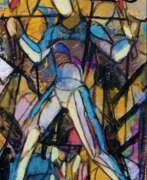

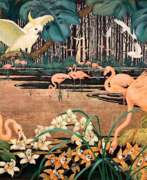

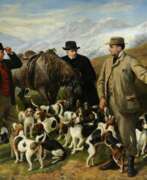

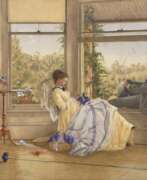

Emma Minnie Boyd, born Emma Minnie Beckett, was an Australian artist. She exhibited publicly between 1874 and 1932 with the Victorian Society of Artists, the International Centenary Exhibition of 1888 (Melbourne), the Royal Academy of Arts (London) and in a joint exhibition with her husband at Como House in Melbourne in 1902.
Emma Minnie Boyd had a talent for watercolour landscapes, although she painted in both watercolour and oil, depicting interiors, figures, portraits, still lifes and floral studies. She is part of the Boyd artistic dynasty that began with Emma and her husband Arthur.
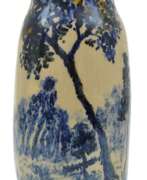

Doris Lucy Eleanor Bloomfield Boyd was an Australian artist, painter and ceramicist. Doris Gough studied under Bernard Hall and Frederick McCubbin at the National Gallery School where she met Merric Boyd, a fellow student and potter. In 1915, she married Boyd. Doris decorated many of Merric Boyd's works between 1920 and 1930. These were mostly pieces for domestic use, featuring Australian flora and fauna.
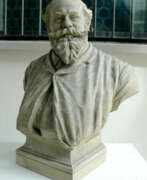

Anton Braith was a German painter of the second half of the nineteenth and early twentieth centuries. He is known as a painter, landscape painter and animalist.
Anton Braith was active for a total of 53 years. His creative path consists of four periods. At first, the artist imitated Dutch painting, then specialized in portraits of animals surrounded by nature. Between 1874 and 1894 he produced his most outstanding works, characterized by vividness and drama. In his last years he focused on animal scenes in mountain meadows, gradually retiring from active artistic endeavors.
Braith was professor of painting at the Munich Academy of Painting and an honorary member of the Royal Academy of Fine Arts Munich.


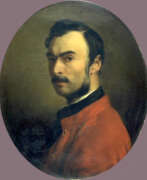

Jacques Raymond Brascassat was a French painter known for his landscapes and animal paintings.
Jacques Raymond Brascassat was a member of the Académie des Beaux-Arts since 1846. Among his pupils was Charles-François Daubigny.



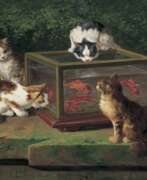

Alfred-Arthur Brunel de Neuville was a French painter known mainly for paintings of still life and animals, especially cats. His works are in museums at Béziers, Brest, Chateau Thierry, and Louviers.


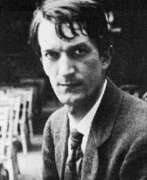
Arthur Brusenbauch was an Austrian painter. Arthur Brusenbauch learned from Johann Kautsky and then worked as a stage decorator himself. He studied in Vienna at the Staatsgewerbeschule and the Academy of Fine Arts, interrupted by military service and imprisonment. In 1920 he became a member of the Vienna Secession, and in 1939 he moved to the Künstlerhaus. In 1928 he had represented Austria in the art competitions of the 1928 Olympic Games. From 1937 to 1941 he participated in all major German art exhibitions in Munich with seven oil paintings. There, in 1939, Hitler acquired the picture of Melk an der Donau in festive decorations. Brusenbauch, who is attributed to late impressionism, dealt with fresco painting and graphics.
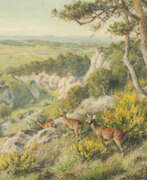



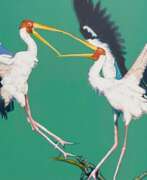

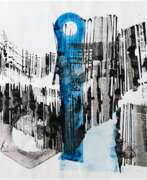
Fran Bull is an American sculptor, painter, and print-maker living and working in Brandon, Vermont and Barcelona, Spain. Bull became known originally for her Photorealism paintings made in the mid 1970s and 80s. In the late 1980s, Bull’s art began to develop towards abstraction, or neo-abstract expressionism. Sparked by her newfound approach to painting, in the mid-1990s Bull began to explore other media. Since that time her artistic output has included performance art, sculpture, mixed media, and printmaking, as well as painting. She has been especially prolific in the area of printmaking. Bull has produced many diverse series of etchings that continue to be exhibited worldwide.
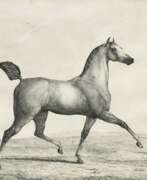

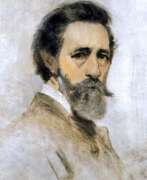

Anton Burger was a German painter, draftsman and etcher. He was a prolific and versatile painter, producing works in almost every genre. His paintings sold very well and, in the area around Kronberg, it was considered a sign of good taste to have a "Burger" in one's home. In 1861, he and Jakob Fürchtegott Dielmann (an old friend from his days at the Städelschule) founded the Kronberg Artists' Colony, where he remained until his death. He was highly regarded and came to be known as the "King of Kronberg".