

Animalists

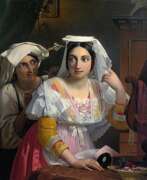

Jan Baptist Lodewyck Maes was a Belgian genre painter active in Italy. Maes studied at the Academy of Ghent. He exhibited for the first time at that city's fair in 1810. He won prizes in all the competitions he entered and in 1820 received a grant from the city of Ghent. Thanks to the Belgian Rome Prize received in 1821, he first visited Paris and then went on to Italy. In 1822 he copied works by old masters in the Uffizi Museum. In 1824 he settled in Rome. Maes kept in touch with his hometown and regularly sent works to Belgian salons. He was a corresponding member of the Royal Netherlands Academy of Sciences.


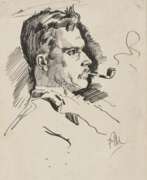

Francis Prout Mahony, also known as Frank Mahony was an Australian painter, watercolorist and illustrator. Mahony became known for his excellent drawings of horses. He worked for The Antipodean, The Sydney Mail and the Australian Town and Country Journal. In addition to his periodical work, he illustrated numerous books, including Where the Dead Men Lie, and Other Poems by Barcroft Boake, While the Billy Boils by Henry Lawson and Dot and the Kangaroo, a children's book by Ethel Pedley. His oils were moderately successful. He is best remembered as a capable painter of animals and is represented in the Sydney, Hobart and Wanganui, New Zealand galleries.


Christian Friedrich Mali was a German painter of the second half of the nineteenth and early twentieth centuries of Dutch origin. He is known as an animalist, landscape painter and genre painter of the Munich school.
Mali focused more on landscapes early in his career, favoring the landscapes of Garmisch-Partenkirchen and the Swabian Alps. After traveling to Italy, he pursued architectural painting. He later moved to Paris, where he became interested in animalistic painting, creating genre images depicting domestic animals.

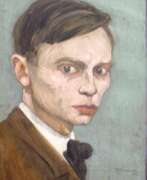


Andrew Mansfield is a British Painter, born in Leicester, who studied at Loughborough College of Art and Design, 1970-3, and Portsmouth Polytechnic, 1976-9. In 1987 he was an artist-in-residence in Lisbon. His solo shows included Spacex Gallery, Exeter, 1984; Winchester Gallery in Winchester, 1985; Midland Group, Nottingham, the same year; and Anthony Reynolds, 1986.
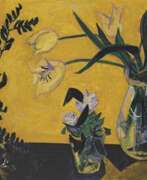

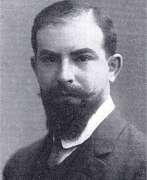


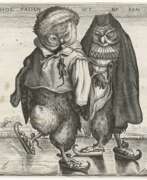


John Mather was a Scottish-Australian plein-air painter and etcher. As a painter, Mather was involved in the bohemian Artists' Camps of Sydney. In 1912 along with Frederick McCubbin, Max Meldrum, Walter Withers Mather formed the breakaway Australian Art Association. Three of Mather's own paintings, Autumn in the Fitzroy Gardens in oils, and Morning, Lake Omeo and Wintry Weather, Yarra Glen, both watercolours, were purchased by the National Gallery of Victoria.
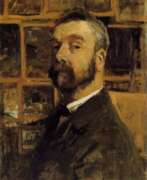

Anton Rudolf Mauve was a Dutch realist painter who was a leading member of the Hague School.
His best-known paintings depict peasants working in the fields. His paintings of flocks of sheep were especially popular with American patrons, so popular that a price differential developed between scenes of "sheep coming" and "sheep going".
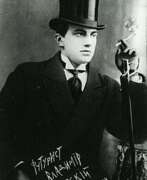


Salomon "Sal" Meijer was a Dutch painter, primarily known for his paintings of cats and Amsterdam city views. Works by Meijer are on view at the Jewish Historical Museum and the Kattenkabinet cat museum in Amsterdam, among others. In his youth, he worked in the diamond industry while studying art. He devoted himself full-time to painting in 1914. His first one-man exhibition was in 1926. Meijer's work was included in the 1939 exhibition and sale Onze Kunst van Heden (Our Art of Today) at the Rijksmuseum in Amsterdam. Due to the simplicity of Meijer's paintings and his modest attitude - he did not regard his paintings as works of art but as craftmanship - his work was often labeled as "naive" and "primitive". However, a re-evaluation of his work began in 1957 with the article by Kasper Niehuis.


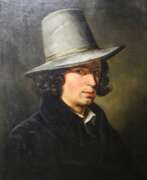


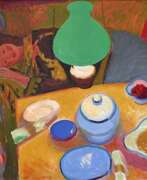
Yevgeny Pavlovich Melnikov (Russian: Евгений Павлович Мельников) was a Soviet artist of the second half of the twentieth and early twenty-first centuries. He is known as a painter, teacher and poet who had a great influence on the development of the national school of modern painting in Uzbekistan.
Yevgeny Melnikov excelled in portrait painting, still life, landscape and animalistic compositions. His works were characterized by painterly temperament, energy of stroke and non-standard compositional solutions. In his works one can find both traditional elements of still life (fruits, flowers) and unusual objects (organ pipes, fish). The master also introduced into his compositions fragments from the works of his favorite French post-impressionists.
Melnikov's works are in museums and private collections in Russia, France, Germany, Holland, Sweden and many other countries.

Johann Michael Mettenleiter was a German artist, born in 1765, who left an indelible mark in the fields of drawing, etching, copper engraving, and lithography. His dedication to art was not just confined to creating works but also extended to establishing a lithographic institution and field printing office for the Russian Tsar Alexander I in Warsaw in 1818, a feat that earned him the prestigious Saint Stanislaus Order.
In 1824, Johann Michael Mettenleiter's contributions to art were further recognized when he was honored as an honorary member of the Royal Bavarian Academy of Fine Arts. Despite a severe accident in 1844, his influence continued until his death in 1853 in Passau. His legacy is carried on through his pupils, including his stepsons and his nephew, Johann Evangelist Mettenleiter.
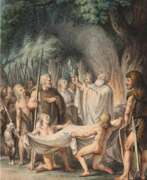
One of Johann Michael Mettenleiter's notable works, "Ariovistus in confrontatie met Caesar, 58 v.C.," created in 1808, captures a historical scene with precision and is housed in the Rijksmuseum. His artworks, like this one, offer a glimpse into the depth and diversity of his skills, showcasing his mastery in capturing historical narratives through art.
For art collectors and enthusiasts, Johann Michael Mettenleiter's works represent a fascinating blend of historical storytelling and artistic prowess. His pieces, whether in private collections or public museums, continue to inspire and captivate audiences, underscoring the timeless appeal of his artistry.
If Johann Michael Mettenleiter's fusion of history and art intrigues you, sign up for updates and stay informed about upcoming sales, exhibitions, and auctions featuring his works. Delve deeper into the world of a visionary artist who bridged the gap between the past and the present through his captivating creations.


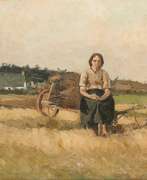

Isidore Meyers is a Belgian landscape painter and draftsman. Around 1850 he studied at the Academy of Fine Arts in Antwerp with Jacob Jacobs. In Paris, where he studied at the École des Beaux-Arts, between 1855 and 1858 Meyers became acquainted with the French painters of the Barbizon school, which opposed formal academicism in landscape painting. In 1858, after returning to Brussels, he began to study in Campina, from where he graduated in October 1861. The Kalmpthout school was born there. In 1865 he became a professor at the Dendermonde Academy, famous for its harmonies of gray tones.
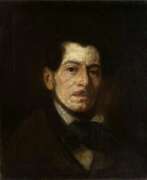

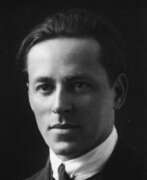

Gustave Miklos was a sculptor, painter, illustrator and designer of Hungarian origin. An influential sculptor involved with Cubism and early developments in Art Deco, Miklos exhibited at the Salon d'Automne and the Salon des Indépendants during the 1910s and 1920s, and in 1925 showed at the International Exposition of Modern Industrial and Decorative Arts; the exhibition from which the term "Art Deco" was derived. He became a naturalized French citizen in 1922, and a member of The French Union of Modern Artists (UAM) in 1930. In addition to his painting and sculptural works, Miklos illustrated over thirty books, designed close to 200 bookbindings, numerous posters, in addition to furniture designs.


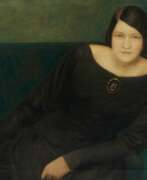

Gabrielle Montald (Canivet) is a Belgian painter. Nothing is known of the artistic training of Canivet, obviously a self-taught artist. On August 9, 1892, Canivet married Constant Montald in Ghent. At that time, Montald was already a renowned painter who won several prizes with his canvases and murals. Unlike Montald, Canivet painted on silk and exhibited only briefly, between 1906 and 1934. Her presence in the art world was rather limited and she was invariably linked to her husband. Canivet knew different materials and techniques such as textiles, pencil, book binding and painting on silk and ceramics. She is known for her paintings on fabric, which she transforms into clothing accessories, but at the same time she also paints porcelain dishes. Mainly during the First World War, she worked on a series of ornamental fish, mushrooms and birds on silk, according to a process known only to her and which allows the fabric to retain all its flexibility. His compositions often include exotic flowers and a snail, which is almost his signature. Symbolism and Art Nouveau, which reached their peak at the end of the century, had a major influence on the conception of his work. His style therefore presents similarities with the idealistic aspirations of the art of the time.
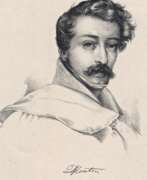

Dietrich Heinrich Maria Monten was a German painter and lithographer.
Dietrich studied painting at the Düsseldorf Art Academy and the Academy of Fine Arts in Munich. He mastered various techniques and took on any genre, but his main subjects were historical, battle and genre themes. He created many large-scale works on important historical events. During his lifetime, Dietrich Monten, together with his colleague Heinrich Ambros Eckert (1807-1840) and others, published more than 1,000 illustrations of the uniforms of European armies in the form of color lithographs collected in separate volumes.
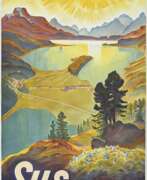

Carl Moos, otherwise Karl Franz Moos was a German and Swiss artist and illustrator, notable for his Art Deco travel and sporting posters, particularly of skiing. He trained in commercial art in Munich and worked as an illustrator for, among others, the Münchener Tagespresse. He also established himself as a creator of postcards and posters. He was a member of the Munich commercial artists' group Die Sechs, which aimed to improve the standing of advertising and poster graphics. His posters are highly sought after in the art market.


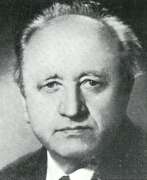


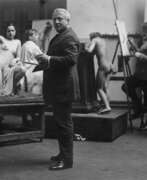

Richard Müller was a German painter and graphic artist. His artistic talent was evident early on. In 1893 he became self-employed as a painter in Dresden. In the fall of 1894, Müller exhibited landscape and animal studies for the first time in the Ernst Arnold Art Salon. In 1895 he met Max Klinger, who encouraged him to study etching techniques. In 1896 he was represented by Arnold at the exhibition "Hand Drawings of German Artists" and won the Grand Rome Prize of the Prussian Academy of Arts, endowed with 6000 gold marks, for his etching "Adam and Eve". In 1900 he received a professorship at the academy, meanwhile as well known in Dresden as Klinger. Müller was highly valued as a painter during the National Socialist era.




Émile Munier was a French academic painter, a pupil of William-Adolphe Bouguereau.
During the 1860s Émile Munier won three medals at the École Nationale Supérieure des Beaux-Arts, and in 1869 he exhibited at the Paris Salon.
Emile Meunier painted peasants and created paintings on mythological and religious themes; he also depicted animals, fishing scenes, landscapes and marinas. In many of his works he used his children as models.


Count Vladimir Leonidovich Muraviov (Russian: Владимир Леонидович Муравьёв) was a Russian painter born in 1861 in St. Petersburg. Known for his evocative landscapes and hunting scenes, Muraviov studied under the distinguished landscape painters Mikhail Klodt and Julius von Klever at the Imperial Academy of Arts in St. Petersburg. His works are celebrated for their atmospheric qualities and his use of mixed media to capture the vastness and beauty of the Russian countryside.
Muraviov's paintings often depict serene natural settings, infused with a poetic appreciation for the Russian landscape. His notable works include "Forest at Twilight" and "An Elk in Snowy Landscape," which exemplify his mastery in portraying the tranquility and grandeur of nature. These pieces have been featured in prominent auctions, fetching significant prices, and are sought after by collectors for their detailed and immersive quality.
For those interested in Russian art and Muraviov’s exquisite depictions of nature, subscribing to updates can provide valuable information on new product sales and auction events related to his work. Stay informed about opportunities to acquire pieces by this distinguished artist. Sign up now to ensure you don't miss out on future offerings!

