Architects Switzerland

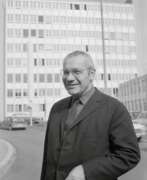

Max Bill, a Swiss artist, architect, painter, typeface designer, industrial designer, and graphic designer, emerged as a key figure in 20th-century art and design. Born in Winterthur, Switzerland, in 1908, Bill's education at the Bauhaus under luminaries like Wassily Kandinsky, Paul Klee, and Oskar Schlemmer profoundly influenced his multidisciplinary approach. His work spans from graphic design, where he was instrumental in shaping Swiss design from the 1950s, to product design with iconic creations like the Ulmer Hocker, a versatile stool designed in 1954.
Bill's contributions to concrete art and his role in founding the Ulm School of Design alongside Inge Aicher-Scholl and Otl Aicher in 1953, mark him as a pioneer who blurred the lines between art, design, and architecture. His theoretical writings and teaching at the Ulm School further underscored his commitment to integrating art with science, shaping a generation of designers and artists.
Noteworthy among his architectural works are his own house and studio built in Zurich-Höngg in the early 1930s and a series of public sculptures that challenge perceptions and engage public spaces in innovative ways. His legacy also includes influential roles in politics, contributions to the field of education, and the establishment of foundations to preserve his work and ideals.
Bill's extensive oeuvre, which also includes timepieces designed for Junghans and a multitude of sculptures, demonstrates his belief in the unity of form and function and the possibility of art to embody the principles of the new physics of the 20th century. His works are not only held in high regard for their aesthetic and functional qualities but also for their ability to convey complex theoretical ideas in tangible forms.
For collectors and experts in art and antiques, Max Bill remains a figure of immense importance, whose works continue to inspire and influence contemporary design and art practices. Sign up for updates related to Max Bill to stay informed about new product sales and auction events showcasing his remarkable contributions to modern art and design.


Mario Botta, a Swiss architect born in 1943, is celebrated for his profound contributions to contemporary architecture. His work is characterized by a robust geometric style and profound respect for historical context, often integrating modern elements with traditional designs. Botta's designs are known for their distinct use of brick and strong shapes, such as circles, squares, and triangles, which make his buildings instantly recognizable.
Among his notable projects are the San Francisco Museum of Modern Art and the Cathedral of the Resurrection in Evry, France. These structures exemplify his approach to blending new construction technologies with classical forms. The museum, in particular, showcases his ability to manipulate space and light, creating dynamic environments for displaying art. His buildings are not just structures but are often considered sculptural works that enhance their surroundings.
Mario Botta's influence extends beyond architecture into design and education, where he has mentored generations of architects. His work is displayed in numerous exhibitions worldwide and serves as a testament to the enduring power of integrating contemporary design with traditional elements. Collectors and experts in architecture appreciate Botta’s unique ability to transform ordinary spaces into extraordinary places.
For those interested in the innovative work of Mario Botta, consider signing up for updates on new project unveilings and auction events related to his creations. This subscription ensures you stay informed about the latest developments and opportunities to engage with Botta's influential designs.

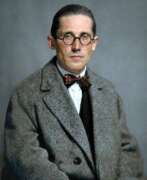

Le Corbusier, born Charles-Édouard Jeanneret in Switzerland, was a visionary French architect, designer, and writer who profoundly influenced modern architecture and urban planning. His innovative ideas blended functionalism with bold sculptural expressionism, embodying the essence of the International Style of architecture. Notably, Le Corbusier's designs, such as the Villa Savoye and the master plan for Chandigarh, India, are celebrated for their revolutionary approaches to living spaces and urban environments.
Le Corbusier's early life in La Chaux-de-Fonds, Switzerland, where he was immersed in the art and craft of watchmaking, significantly shaped his design principles. His architectural journey began without formal training, starting with his education in decorative arts and leading to significant collaborations across Europe. Le Corbusier's philosophy was deeply rooted in the belief that architecture should improve living conditions, particularly in crowded cities. This belief drove his contributions to the Congrès International d'Architecture Moderne and his development of influential architectural principles, such as the Five Points of Architecture, which are exemplified in Villa Savoye.
Villa Savoye, located in Poissy, France, stands as a testament to Le Corbusier's innovative approach, featuring pilotis (reinforced concrete stilts), a functional roof garden, an open floor plan, horizontal windows, and a free façade design. These elements collectively embody his vision of a "machine for living," integrating the house with its environment and the modern lifestyle. Despite facing issues with structural durability and weather resistance, Villa Savoye remains a pivotal work in architectural history, symbolizing the transition to modern architectural thought.
Le Corbusier's legacy is multifaceted, extending beyond architecture to furniture design and painting, showcasing his broad artistic talents. His work continues to inspire and provoke discussion, reflecting both his groundbreaking contributions to modern architecture and the complexities of his ideologies and methodologies.
If you are inspired by Le Corbusier's visionary approach to architecture and design, and wish to stay informed about related updates, consider signing up for our newsletter. This subscription will keep you in the loop about new product launches, sales, and auction events that are directly related to Le Corbusier's enduring legacy. Dive deeper into the world of architecture and design, and ensure you don't miss out on opportunities to engage with Le Corbusier's influential work. Sign up now to connect with the past, present, and future of architectural excellence.
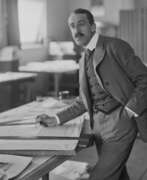


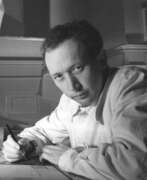

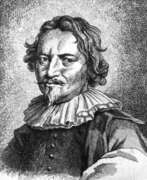



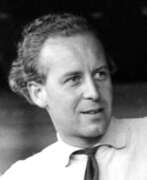

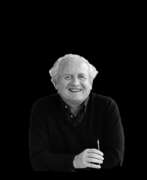

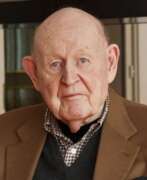


Bernhard Hoetger is a German painter, sculptor, graphic artist and architect. He studied at the Dusseldorf Academy of Art.
In 1937, as part of the Nazi "Degenerate Art" campaign, many works by Bernhard Hoetger were destroyed.
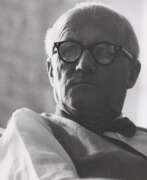

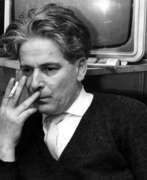

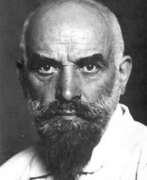

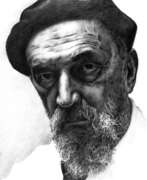

Ivan Meštrović was a Croatian sculptor of the twentieth century. He is known as a master of monumental fine art. Meštrović was also an architect and a writer, and at the beginning of his professional career he painted oil paintings.
Throughout his life, Ivan Meštrović traveled extensively around the world and studied the works of famous sculptors of various eras. In his works, he combined elements of all kinds of art styles, from antiquity and the Renaissance to Art Nouveau and Symbolism.


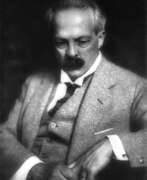




Not Vital is a Swiss artist living and working between his hometown, Beijing and Rio de Janeiro.
Not Vital's art is inspired by his nomadic lifestyle and experiences traveling the world, reflecting on habitats, nature and animals, as well as on the relationship between sculpture and architecture. To define his large-scale constructions, in 2009 Vital coined the term "SCARCH" - the union of sculpture and architecture. Central to his work is an exploration of the spatial, economic and cultural context of homes and workplaces.
Vital has opened studios in New York, Lucca, Beijing and Agadez. Over the course of his career, he has realized many structures for contemplation around the world, including a tunnel on the island of NotOne in Patagonia, Chile.