

Artists Proto-Renaissance
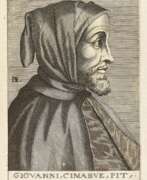

Cimabue, a preeminent Italian painter and mosaicist from the late 13th century, remains a pivotal figure in the transition from the Byzantine to the early Renaissance art style. Born before 1251 and passing in 1302, his works are celebrated for their innovative departure from the Italo-Byzantine conventions, introducing more naturalistic forms and expressions into Western European painting. This transformative approach is evident in his frescoes in the Basilica of San Francesco, Assisi, and the Santa Trinita 'Maestà' now housed in the Uffizi Gallery, Florence.
Cimabue's significance in art history is underscored by his role in laying the groundwork for the evolution of Italian painting, marking a critical moment when artists began exploring the depiction of three-dimensional space and the naturalistic rendering of forms. His influence extended to his contemporaries and successors, notably Giotto, who is often credited with advancing the Renaissance style that Cimabue initiated.
One of Cimabue's most notable works, the Santa Trinita 'Maestà', exemplifies his mature style with its refined use of perspective and more humanistic portrayal of figures, moving away from the rigid Byzantine models. This painting, alongside his frescoes in Assisi and the mosaic of 'Saint John the Evangelist' in Pisa's cathedral, demonstrates his pioneering role in the early Italian Renaissance. Despite being eventually eclipsed by Giotto, Cimabue's legacy as a bridge between Byzantine traditions and the nascent Renaissance cannot be understated.
Cimabue's artwork not only represents a crucial pivot in art history but also continues to captivate collectors and experts in art and antiques for its historical significance and the foundational role it played in the development of Western art. For those keen on exploring the origins of Renaissance art, Cimabue's works offer invaluable insights into the period's artistic evolution.
For aficionados and connoisseurs deeply engaged in the realms of art history and antique collection, particularly those with a keen interest in the seminal period that bridges the Byzantine and Renaissance eras, staying informed on Cimabue's artistic legacy is invaluable. To this end, we cordially invite you to subscribe to our dedicated updates. This subscription service is designed to provide enthusiasts with exclusive notifications about new discoveries, forthcoming sales, and prestigious auction events directly related to Cimabue's remarkable oeuvre. Engage with us to ensure you remain at the forefront of significant developments and opportunities to enhance your collection with works from this foundational figure in art history.
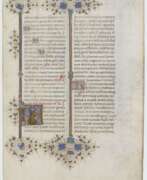


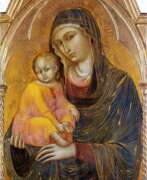

Barnaba da Modena, born Barnaba Agocchiari, was an influential Italian painter from Modena who played a pivotal role in the art scene of mid-14th-century Italy. His work is renowned for embodying the Byzantine art style, making him the first notable Lombard painter. Throughout his career, Barnaba was predominantly active in Lombardy, Piedmont, and even ventured into Pisa in Tuscany, showcasing his diverse geographical influence.
Barnaba's painting style was deeply rooted in Byzantine traditions, characterized by the use of gold highlights and golden backgrounds. He was adept at creating compositions that adhered to the older, more traditional styles of painting, which remained exceedingly popular in Genoa. This adherence to Byzantine painting techniques contributed significantly to his success in Genoa, as it resonated with the stylistic preferences of the time. His work often featured religious themes, executed with a depth of feeling and a refined technique that distinguished him from his contemporaries.
His extensive body of work includes about 50 known pieces, many of which are held in high regard for their technical and artistic quality. Notable works by Barnaba da Modena are preserved in prestigious institutions, including the National Gallery in London and The Courtauld, London. These works, such as "Virgin and Child" and "Pentecost," reflect his profound influence on the Genoese and possibly Pisan art scenes of the late 14th century. His follower, Nicolò da Voltri, continued Barnaba's stylistic legacy well into the 15th century, particularly in Liguria.
For collectors and experts in art and antiques, Barnaba da Modena's paintings offer a unique window into the transition between Medieval and Renaissance art, marked by his exceptional blending of Byzantine and Italian Gothic elements. His ability to convey religious narratives through meticulous detail and vibrant gold accents make his works a valuable addition to any collection.
To stay informed about new discoveries, sales, and auction events related to Barnaba da Modena's works, signing up for updates is advisable. This subscription will provide exclusive access to the latest information on this masterful painter, enriching your collection with significant pieces from the mid-14th century Italian art scene.
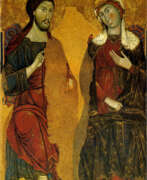

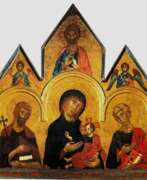

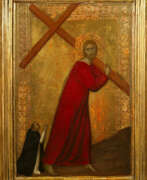

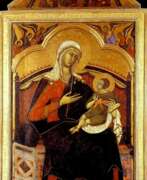


Giotto di Bondone, an Italian painter and architect, emerged as a pivotal figure in the transition from medieval to Renaissance art. His mastery in painting is best exemplified in the Scrovegni Chapel in Padua, also known as the Arena Chapel, where his fresco cycle depicting the Life of the Virgin and the Life of Christ is considered a seminal work of the Early Renaissance. This chapel, completed around 1305, highlights Giotto's innovative approach to art, breaking away from the Byzantine style that dominated the period. His techniques in depicting life and emotion in his works were revolutionary, setting a new direction in Western art.
Despite his acclaimed works, many aspects of Giotto's life remain shrouded in mystery and controversy, including his exact birthplace and the full extent of his apprenticeship. Traditionally believed to have been born in a farmhouse in either Colle di Romagnano or Romignano, recent research suggests he was born in Florence, the son of a blacksmith. His birth year is also uncertain, with estimates ranging from 1266/67 to 1276.
Giotto's early life, as narrated by Giorgio Vasari, is filled with anecdotal charm. He was supposedly discovered by the renowned Florentine painter Cimabue while drawing pictures of his sheep on a rock, so lifelike that Cimabue immediately recognized his talent. This encounter led to Giotto's apprenticeship under Cimabue, although this story, like many others about his early life, is debated by scholars.
In addition to the Scrovegni Chapel, Giotto's notable works include the decoration of various chapels and churches across Italy, such as in Assisi, Rome, Florence, and Naples. His Crucifixion panel and the Nativity scene are particularly celebrated for their depth and emotional intensity. Giotto was also an architect; in 1334, he was chosen to design the campanile of the Florence Cathedral, reflecting his reputation as a foremost artist.
Giotto's influence extended beyond his lifetime, inspiring future Renaissance artists with his naturalistic representation of human figures and his skill in conveying perspective and emotion. His works in the Peruzzi Chapel in Florence, particularly the Life of St. John the Baptist, are examples of this legacy.
In summary, Giotto di Bondone stands as a monumental figure in art history, his contributions marking the dawn of the Renaissance and forever altering the course of Western art. His ability to infuse his works with realism and emotional depth set a new standard in artistic expression, influencing generations of artists to come.
For those interested in the art and history of Giotto di Bondone, updates on new product sales and auction events related to his work are available. Sign up to stay informed about these opportunities and to deepen your appreciation of this pivotal artist's legacy.


Duccio di Buoninsegna, a master Italian painter from the late 13th and early 14th centuries, is celebrated as a pivotal figure in the Sienese school of painting. His birth and career in Siena profoundly influenced Italian medieval art, especially through his integration of the Italo-Byzantine tradition's formality with the Gothic style's emerging spirituality.
Duccio di Buoninsegna’s artworks are predominantly wood panel paintings, utilizing egg tempera and gold leaf, reflective of the period's artistic practices. His innovative approach is noted for its delicacy and precision in tempera, a marked contrast to the techniques of his contemporaries. Duccio di Buoninsegna is credited with softening the rigid lines of Byzantine art, rendering figures more rounded and three-dimensional, and employing modeling to enhance light and shadow effects, lending depth and realism to his subjects.
Among Duccio di Buoninsegna’s most significant works are the "Rucellai Madonna" at the Galleria degli Uffizi and the "Maestà", an altarpiece for Siena Cathedral. These dated and major public commissions, particularly the Maestà, created between 1308 and 1311, stand out as extraordinary achievements. The Maestà is a large and complex altarpiece, painted on both sides with about eighty separate scenes, showcasing Duccio di Buoninsegna’s intricate and detailed style.
Duccio di Buoninsegna's influence extended to numerous artists, including Simone Martini and the brothers Ambrogio and Pietro Lorenzetti. He had several followers, ranging from actual pupils in his workshop to artists simply inspired by his style. This includes artists from the first generation of followers active between 1290 and 1320, and a second generation active between about 1300 and 1335. His influence continued to shape Sienese and Tuscan painting well after his death.
For art collectors and experts, Duccio di Buoninsegna’s work represents a critical moment in Western art's evolution. His nuanced approach to religious themes and pioneering techniques make his works highly valued in the art and antiques world.
If you are passionate about the history and works of Duccio di Buoninsegna, consider signing up for updates. This subscription will keep you informed about new product sales and auction events related to Duccio di Buoninsegna's art, ensuring you stay connected to the legacy of this remarkable Sienese master.


Tino di Camaino was an Italian sculptor.
He was a pupil of Giovanni Pisano, whom he helped work on the façade of the Cathedral of Siena. Later Tino followed his master to Pisa, where in 1311 he became responsible for the work on the cathedral.
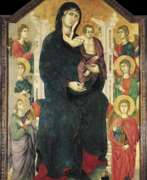

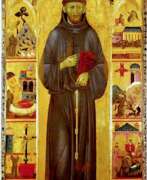


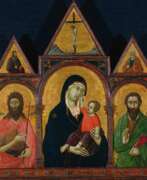


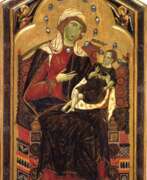

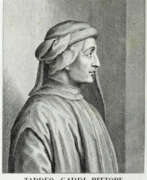

Taddeo Gaddi was a renowned medieval Italian painter and architect. He was a pupil and a most faithful follower of the illustrious Florentine master Giotto. Despite lacking Giotto’s comprehensive aesthetic vision, Gaddi emerged as the leading Florentine painter for three decades following his mentor's death.
Taddeo Gaddi’s most acclaimed work is the cycle of 'Stories of the Virgin' in the Baroncelli Chapel of the Basilica of Santa Croce in Florence, created between 1328 and 1338. This work is celebrated for its dynamism, pronounced foreshortening, dramatic effects of light, and an interest in narrative, showcasing his expertise in both painting and architectural elements. He is also credited with painting the cabinet tiles in the sacristy of the same church, now divided among several museums including the Galleria dell'Accademia in Florence, and museums in Munich and Berlin.
Taddeo Gaddi's style shows a clear influence from his master Giotto, yet he added his own experimentation, particularly in architectural backgrounds. His works, such as the ‘Madonna in Bern’, ‘Adoration of the Magi in Dijon’, and ‘Stories of Job’ in Pisa, demonstrate his mastery of Giotto's new style. He also contributed works like 'The Stigmatization of Saint Francis' to Harvard Art Museums, and 'Madonna del Parto' and 'Polyptych in Santa Felicita's sacristy' in Florence.
Taddeo Gaddi enjoyed a comfortable economic situation throughout his life, especially in his later years. He passed away in 1366 and was buried in Santa Croce, leaving behind a legacy as one of the most influential men in Florentine artistic culture. His work in the Basilica Santa Croce provides a canonical viewing of Gaddi’s style and his proficiency with color and light.
For collectors and experts in art and antiques, Taddeo Gaddi's works offer an important perspective on the transition from medieval to Renaissance art in Florence. His blend of Giotto's influence with his unique approach to color and narrative makes his works a valuable addition to any collection that values the rich history of Florentine art.
To stay updated on sales, exhibitions, and auction events related to Taddeo Gaddi's art, consider signing up for updates. This subscription will provide you with the latest information on acquiring pieces from this influential Florentine artist.
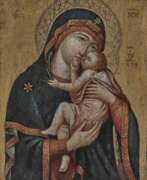

Pietro Lorenzetti was an Italian painter whose innovative contributions to the Sienese school of art marked a significant departure from the Byzantine style of the medieval period. Born in Siena, Lorenzetti was known for his detailed and expressive approach to painting, which helped lay the groundwork for the Italian Renaissance.
Renowned for his mastery in depicting light, shadow, and space, Lorenzetti introduced a sense of depth and realism previously unseen in Italian art. His works are characterized by a rich color palette and a keen observation of the human condition, rendering scenes with emotional depth and a tangible sense of atmosphere.
Among his most celebrated works is the "Birth of the Virgin" fresco in the Siena Cathedral, a masterpiece that showcases his ability to weave narrative and decoration into a cohesive whole. Lorenzetti's religious paintings, which are housed in various museums and churches, remain pivotal in understanding the evolution of European art during the 14th century.
For collectors and experts in art and antiques, Pietro Lorenzetti represents a fascinating study in the transition from medieval to Renaissance art. His contributions not only enriched the Italian artistic heritage but also influenced generations of artists to come.
To explore the legacy of Pietro Lorenzetti and stay informed about the latest research, exhibitions, and auction events featuring his work, signing up for updates is essential. This subscription will ensure that aficionados and collectors alike are always connected to the vibrant world of Sienese painting, offering exclusive insights and opportunities to appreciate the art of this pioneering master.
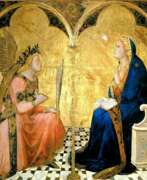

Ambrogio Lorenzetti or Ambruogio Laurati was an Italian painter of the Sienese school. He was active from approximately 1317 to 1348. He painted The Allegory of Good and Bad Government in the Sala dei Nove (Salon of Nine or Council Room) in Siena's Palazzo Pubblico. His elder brother was the painter Pietro Lorenzetti.


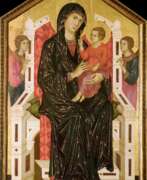

Master Badia a Isola (Italian: Maestro di Badia a Isola) was an Italian anonymous painter of the Sienese school who worked in and around Siena in the late 13th and early 14th centuries.
The conditional name of the master comes from the large icon "Madonna on the throne with a child and two angels" (Maesta), which used to be in the church of St Salvatore and Sirin in Badia a Isola in Monteriggioni.
Researchers believe that the Master of Badia a Isola belonged to the inner circle of the great Duccio di Buoninsegna, and was in the first rank of his pupils and followers. It is assumed that he worked in the workshop in the early period of Duccio's work. His works have direct parallels with those of Ugolino di Nerio, especially in the delicate contours of the figures and the sweet faces of the Madonnas.


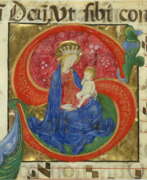


Andrea Orcagna was a distinguished Florentine artist renowned for his multifaceted skills in painting, sculpture, architecture, and administration. His real name was Andrea di Cione, but he was popularly known as Orcagna, a local slang for "Archangel" (Arcangelo).
Andrea Orcagna's artwork is notable for its amalgamation of various artistic styles. As a painter, his work, particularly the "Altarpiece of the Redeemer" (1354-57) located in the Strozzi Chapel of Santa Maria Novella, is acclaimed as the most powerful Florentine painting of its time. This piece marked a shift from the naturalism introduced by Giotto back to the hieratic ideals of Byzantine art, characterized by resplendent colors and a lavish use of gold. Additionally, the fresco trilogy in Santa Croce, including the "Triumph of Death", "Last Judgement", and "Hell", is often attributed to him, although it remains partially fragmentary.
In sculpture and architecture, Andrea Orcagna is best known for the tabernacle in Or San Michele, finished in 1359. This ornate structure houses a painting by Bernardo Daddi and is considered a significant work of Italian Gothic art. His role as capomaestro of Orvieto Cathedral from 1358 to 1362, where he oversaw the mosaic decoration of the façade, further cements his legacy as an influential architect of the period.
Andrea Orcagna's influence extended to his family as well, with his brothers Jacopo di Cione and Nardo di Cione also being notable painters. Jacopo continued Orcagna's style well into the end of the 14th century, even completing Orcagna's "St Matthew altarpiece" during his illness in 1368.
For art collectors and experts, Andrea Orcagna's works offer an insightful glimpse into 14th-century Florentine art, blending the Byzantine style with emerging Renaissance trends. His legacy in painting, sculpture, and architecture makes his works a valuable addition to any collection appreciative of this pivotal period in art history.
To stay updated on sales, exhibitions, and auction events related to Andrea Orcagna's works, consider signing up for updates. This subscription will provide you with the latest information on opportunities to acquire pieces from this master of Renaissance art.