

Artists Rococo
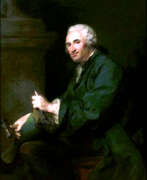

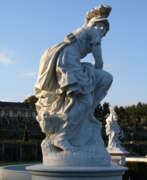

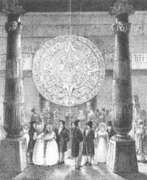


Balthasar Augustin Albrecht was a German painter of the first half of the 18th century. He is known as a painter who worked in portrait, historical and religious genres.
Albrecht began his career in 1719. He was appointed court painter at the court of the Elector of Bavaria and inspector-custodian of the Picture Gallery in Munich. In addition to portraits and paintings, he created frescoes and altarpieces in churches in Munich and other German cities.
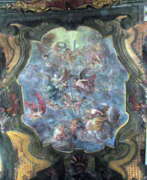


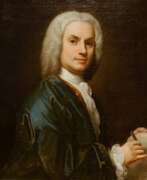

Jacopo Amigoni, also named Giacomo Amiconi, was an Italian painter of the late-Baroque or Rococo period, who began his career in Venice, but traveled and was prolific throughout Europe, where his sumptuous portraits were much in demand.


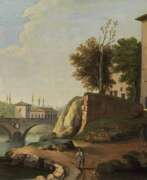

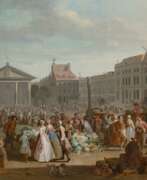

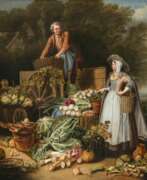

Pieter Angellis, also known as Pieter van Angellis, Peter van Angellis or Peter Angelles, was a French-born painter. He worked in Flanders, Germany, Italy, England, and France and is known for his landscapes and genre paintings of urban life. Angelles was a member of the Guild of St. Luke in Antwerp and Düsseldorf.
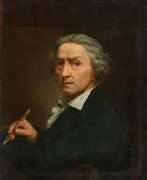

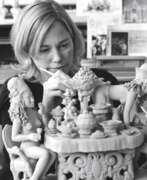

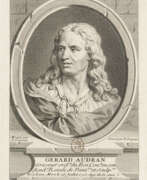

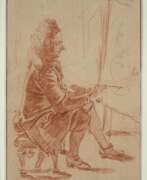

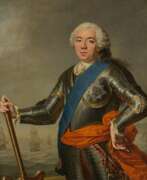

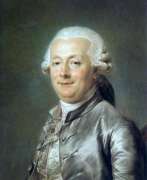

Jean-Jacques Bachelier was a French painter and innovator of porcelain and a member of the Royal Academy of Painting and Sculpture.
Originally a still-life painter, he later became world-renowned for his significant contributions to applied art. In 1765, Bachelier founded an art and crafts school in Paris with his own funds. He was in charge of the painters at the porcelain manufactory in Vincennes, where figures were produced from unglazed porcelain - biscuit. For many years Bachelier was the Director of Sevres porcelain manufactory and in fact became the creator of the Sevres style.
Bachelier also conducted research on encaustic painting (a painting technique in which the binding substance of paints is wax) and published works on art education.
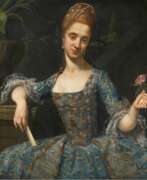

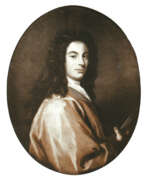

Antonio Balestra, an Italian painter, is celebrated for his contributions to the Baroque art movement. Initially training in his hometown, Balestra's artistic journey took him to Venice and Rome, where he honed his skills and absorbed diverse artistic influences. By 1694, his talents were recognized with a prestigious award from the Accademia di San Luca in Rome, underscoring his growing reputation.
Antonio Balestra's works, characterized by their adherence to classical artistic standards, are found in various Italian cities, including Venice, Bologna, and Verona. He was known for his religious paintings, such as "The Miracle of Saint Nicholas" and "The Annunciation," as well as his contributions to church decorations and altarpieces.
Despite his traditional approach, Antonio Balestra's legacy is cemented in the art world, with works displayed in notable museums and his influence extending to pupils and subsequent generations of artists. His devotion to the established norms of academic painting reflected a broader dialogue within the art community about innovation versus tradition during his time.
For art collectors and enthusiasts, Antonio Balestra's works offer a glimpse into the Baroque era's rich artistic heritage, showcasing a blend of devout religiosity and meticulous craftsmanship. To stay informed about Antonio Balestra's art and related auction events, consider subscribing to updates, ensuring you remain connected to the enduring appeal of his artistic legacy.
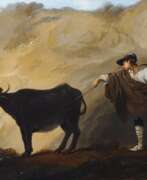

Jean Barbault was a French painter, etcher and printmaker, who worked in Rome for most of his life. He is noted for paintings of local people, wearing traditional costumes or Oriental costumes and for his work documenting iconic Roman monuments and antiquities which were published in two volumes.
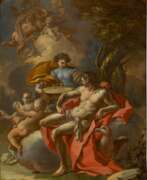

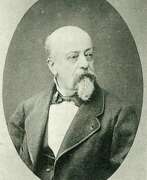

Henri Charles Antoine Baron was a French painter, printmaker and illustrator.
Henri studied painting with Jean Gigoux (1806-1894) and traveled with him in Italy. The Baron returned with a large number of sketches, which became a constant source of inspiration for many of his later works. He first successfully exhibited at the Paris Salon in 1840. Baron was subsequently honored with several gold medals for his work at this Salon.
Henri Baron was the author of historical scenes of social life, oriental and allegorical compositions. He painted charming Italian genre scenes and depicted Parisian social life. The artist was also recognized as a skilled watercolorist, exhibiting his watercolors continuously at the Society of French Watercolorists since 1879. Baron also illustrated works by Balzac, Boccaccio, J. J. Rousseau, Perrault's fairy tales and many others.
In addition, in collaboration with his friend F.-L. France and Célestin Nantey (1813-73), he published a three-volume edition of Ancient and Modern Painters (1848-62), a collection of lithographs based on the works of modern artists.
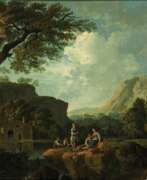

George Barret the Elder was an Irish landscape painter.
He arrived in London in 1762, and soon became known in society and became a leading painter of the period. Barret exhibited at the Society of Artists of Great Britain and gained the patronage of many art collectors. In 1768, he co-founded the Royal Academy. During his lifetime Barret painted many fine landscapes of Wales, the Lake District, the Thames, views of castles and palaces, which were much sought after by the nobility.
His son, George Barret the Younger (1767-1842), also became a landscape painter, and he may even have surpassed his father in skill.
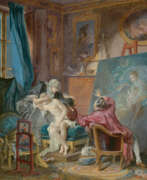

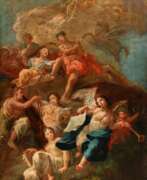

Johann Wolfgang Baumgartner was an Austrian-German Rococo painter.
He worked as a glass painter. The ceiling painting in the Sanctuary of the Holy Cross of the former Klosters Mountains is considered as his largest and most important work.
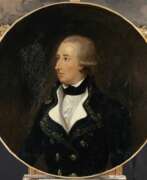

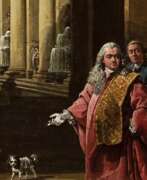

Bernardo Bellotto was an Italian painter, celebrated for his urban landscapes and detailed vedute, particularly of European cities like Dresden, Vienna, and Warsaw. He was born in Venice in 1722 and exhibited prodigious talent from a young age. Under the tutelage of his uncle, the renowned Canaletto, Bellotto honed his skills in capturing the essence of cityscapes with a unique style characterized by a cooler palette and a distinct use of impasto, especially in depicting skies and horizon lines.
In 1747, Bernardo Bellotto's career took him to Dresden, where he served as Court Painter to Augustus III of Poland and Elector of Saxony. His stay in Dresden was marked by the creation of panoramic views, highlighting his knack for architectural detail and the interplay of light and shadow. Following his tenure in Dresden, Bellotto spent the last 16 years of his life in Warsaw, where his works played a significant role in the city's post-World War II reconstruction.
Bernardo Bellotto's works are lauded for their precision and the manner in which they blend his Venetian roots with influences from Dutch landscape painting. His later works in Warsaw, characterized by their vibrant color palette and historical themes, underscore his evolution as an artist. Today, Bellotto's paintings are celebrated for their historical value and artistic merit, housed in prestigious collections in cities like Dresden and Warsaw.
For those interested in exploring the fascinating world of Bellotto's art and its impact on European cultural heritage, signing up for updates on new product sales and auction events related to Bernardo Bellotto is an excellent way to stay informed.
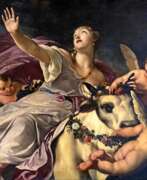

Antonio Bellucci was an Italian painter and decorator, celebrated for his contributions to the Rococo movement, blending classical elements with a distinctive Rococo flair. Born in Pieve di Soligo in 1654, he initially trained with Domenico Difnico in Venetian Dalmatia, modern-day Croatia, before establishing himself in Venice and across Europe. Bellucci's works are known for their baroque joyfulness, pictorial finesse, and a palette of soft, nuanced colors, making him a key precursor to artists like Tiepolo. His paintings are characterized by their soft, virtuoso brushwork, often incorporating chiaroscuro effects learned from the Tenebrism movement, with clearly contoured figures reminiscent of Veronese, especially in the portrayal of women.
Throughout his career, Antonio Bellucci's international presence grew, especially in German-speaking regions, due to his extensive work abroad. He spent significant periods in Vienna, painting allegorical ceilings for Palais Liechtenstein, and in Düsseldorf, working for Johann Wilhelm, Elector of the Palatinate. From 1716 to 1722, Bellucci worked in England, where he created notable ceiling paintings for James Brydges, 1st Duke of Chandos, and painted the Nativity and the Descent from the Cross at St Lawrence, Whitchurch.
Antonio Bellucci's notable works include "The King's Sick Son" at Gemäldegalerie Alte Meister in Kassel, "The Rape of Europa," and "Ascension of Jesus Christ" at Great Witley Church, Worcestershire. His mastery in portraying biblical scenes and mythological themes, alongside his adeptness in capturing the essence of his subjects, has left a lasting impact on the art world.
For art collectors and experts, Antonio Bellucci's works offer a glimpse into the transition from Baroque to Rococo styles, showcasing his ability to blend dramatic intensity with delicate beauty. His legacy continues to be celebrated in museums and galleries worldwide, testament to his influence and artistry.
To stay informed about new product sales and auction events related to Antonio Bellucci, sign up for updates. This subscription ensures you're always in the know regarding opportunities to acquire pieces by this distinguished artist.
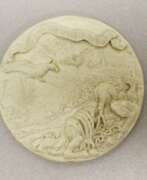

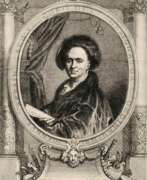

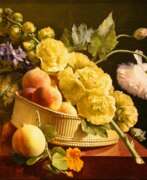


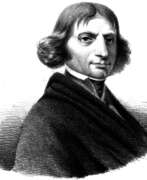

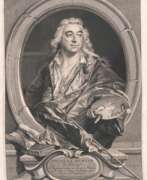

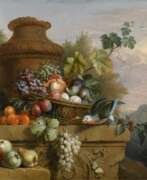


Louis-Léopold Boilly was a French painter and draftsman. A gifted creator of popular portrait paintings, he also produced a vast number of genre paintings vividly documenting French middle-class social life. His life and work spanned the eras of monarchical France, the French Revolution, the Napoleonic Empire, the Bourbon Restoration and the July Monarchy. His 1800 painting Un Trompe-l'œil introduced the term trompe-l'œil ("trick the eye"), applied to the technique that uses realistic imagery to create the optical illusion that the depicted objects exist in three dimensions, though the "unnamed" technique itself had existed in Greek and Roman times.
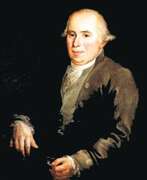

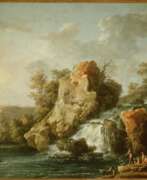


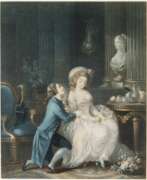

Louis-Marin Bonnet (French: Louis-Marin Bonnet) is a French draftsman and engraver, an outstanding master of metal engraving using the “pencil style” technique. Since 1757, Louis-Marais Bonnet was a student of Jean-Charles Francois, then of Gilles Demarteau. He became famous for his color engravings reproducing drawings by A. Watteau, F. Boucher, Sh.-A. Van Loo, J.-B. Yue. Bonnet reproduced mainly complex pastel drawings, using up to eighty boards per engraving. He used opaque paints that gave a matte tone and tinted paper. He reproduced the spaces by printing with white from a separate board. Bonnet even imitated the golden frames bordering the original drawings. This technique is called “pastel style”. In 1769, Bonnet described his technique in detail in the book Pastel in Engraving, Invented and Executed by Louis Bonnet. In 1765-1767, the French master worked in St. Petersburg, where he completed several engraving portraits in the “pencil style” of Catherine II and the heir Pavel Petrovich based on drawings by Jean-Louis de Velli, then returned to Paris and opened his own workshop.


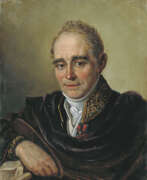

Vladimir Lukich Borovikovsky (Russian: Влади́мир Луки́ч Боровико́вский), a distinguished Russian artist of Ukrainian Cossack origin, was renowned for his mastery in portrait painting and ecclesiastical art. Born in Mirgorod, now Myrhorod, Ukraine, in 1757, Borovikovsky lived in Ukraine until the age of 31 before moving to St. Petersburg. His journey into the art world began under unusual circumstances when Empress Catherine II was impressed by his allegorical paintings, leading him to relocate to Saint Petersburg and adopt the more aristocratic surname Borovikovsky.
Borovikovsky's work epitomizes the sentimentalism era, capturing the essence and inner beauty of his subjects with a unique sensitivity and elegance. His ability to convey the nuanced emotions and dignified personalities of his sitters through intimate and detailed portraiture earned him acclaim, particularly among the Russian imperial family and nobility. Throughout his career, he produced about 500 portraits, with 400 surviving today, including notable figures such as Catherine II, Paul I, and Alexander Kurakin, as well as the celebrated "Portrait of M.I. Lopukhina".
In his later years, Borovikovsky's focus shifted towards religious painting, contributing significantly to the Kazan Cathedral and other ecclesiastical sites in St. Petersburg. Despite facing challenges, including court intrigues and a personal struggle with mental discord and alcohol, he left a lasting legacy through his art, which remains highly regarded for its depth, sincerity, and technical skill.
Collectors and experts in art and antiques cherish Borovikovsky's work for its historical significance and profound emotional resonance. His paintings, a fusion of classicist and sentimental styles, continue to inspire and captivate audiences, preserving the legacy of one of Russia's most gifted portraitists.
For updates on exhibitions and auction events featuring Vladimir Lukich Borovikovsky's work, sign up for our newsletter. Stay informed about the latest discoveries and opportunities to add a piece of history to your collection.


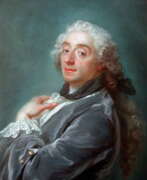

François Boucher, a French artist, is celebrated for his significant contributions to the Rococo style of painting. His works are renowned for their idyllic and voluptuous themes, which include classical subjects, decorative allegories, and pastoral scenes. Boucher's talent in creating intricate and charming paintings made him a favorite in the French court, especially with Madame de Pompadour.
François Boucher's skills were not confined to painting alone; he was also an adept draftsman and tapestry designer. His designs for the Beauvais tapestry workshops were highly successful, influencing decorative arts across Europe. Moreover, Boucher's influence extended to porcelain, with his designs being replicated on tableware and decorative pieces at the Vincennes and Sèvres factories.
Despite the later criticism of his style as overly frivolous and disconnected from the emerging Neoclassical trends, François Boucher's works continue to be admired for their aesthetic beauty and historical significance. His ability to blend various elements into a cohesive and appealing visual narrative demonstrates his mastery and enduring legacy in the art world.
For art collectors and enthusiasts, François Boucher's oeuvre offers a fascinating glimpse into 18th-century French art and culture, reflecting the opulence and delicate tastes of the Rococo period. His paintings and designs continue to be celebrated and studied for their artistic merit and historical context.
To stay updated on the latest exhibitions, sales, and events related to François Boucher's works, consider subscribing to updates from reliable art and antique sources. This way, you'll remain informed about opportunities to engage with the art of one of Rococo's most distinguished masters.
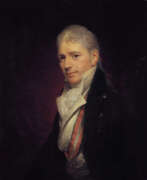

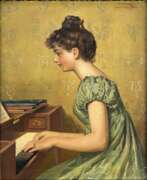


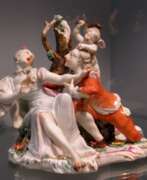

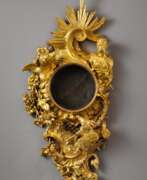


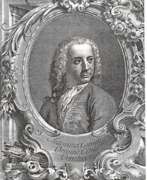

Canaletto, born Giovanni Antonio Canal, was an illustrious Italian painter celebrated for his masterful cityscapes, particularly of Venice and London. Emerging as a topographical painter after 1719, Canaletto became renowned for his detailed and atmospheric views, known as vedute, which captured the essence of Venice and London with a unique blend of accuracy and artistic embellishment. Despite using a camera obscura to achieve precision in his architectural details, Canaletto often infused his paintings with creative adjustments to enhance their appeal.
His early works, such as "The Stonemason's Yard," are particularly prized for their vivid portrayal of Venice's daily life and architectural beauty. Canaletto's paintings were highly sought after by English aristocrats during their Grand Tours, leading him to spend a significant period in England, where he continued to produce esteemed works capturing the English landscape and urban scenes.
Despite his international success, Canaletto's work was less appreciated in his native Venice during his lifetime, only gaining broader recognition and appreciation in later years. His legacy, however, has had a lasting impact on landscape painting, influencing future generations of artists.
If you're interested in staying updated on art exhibitions and auctions featuring Canaletto's work, consider signing up for newsletters from art galleries or auction houses that specialize in historical artworks. This way, you'll be informed about new sales and exhibition events related to Canaletto without any exaggerated language or promises.
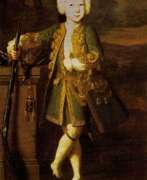

Louis Caravaque was a French portrait painter renowned for his contributions to Russian art during the early 18th century. Born in 1684 in Marseilles, France, Caravaque embarked on his artistic journey influenced by his family's background in decorative painting. His talent soon caught the attention of influential figures, leading to a pivotal contract in 1715 that took him to Russia. There, he famously painted Peter the Great and became a favored artist at the Russian court.
Caravaque's work is distinguished by his detailed and expressive portraiture, which earned him the position of the first court painter during Anna Ioannovna's reign. He played a significant role in the cultural exchanges between France and Russia, melding Western European techniques with Russian traditions. His notable works, which include portraits of Russian royalty and nobility, are held in prestigious collections such as the Hermitage and the Russian Museum in St. Petersburg.
Among his most celebrated paintings are the portraits of Peter the Great, Empress Elizabeth as an Olympic goddess, and Catherine II, showcasing his skill in capturing the grandeur and intricacy of his subjects. These artworks not only highlight his mastery of oil painting but also reflect the rich historical and cultural milieu of his time.
For collectors and art experts, the legacy of Louis Caravaque offers a fascinating glimpse into the intersection of French artistic influence and Russian imperial identity. His works remain a testament to his skill and the cultural bridge he helped forge between two distinct worlds.
For more information and to stay updated on exhibitions featuring Louis Caravaque’s work, consider signing up for updates related to this remarkable artist.


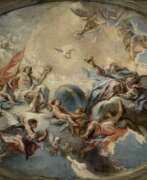

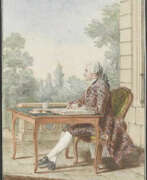

Louis Carrogis, better known as Carmontelle was a French artist, garden designer, architect, playwright and inventor.
Carmontelle was of simple origins but versatilely gifted. He wrote several plays and three novels, and created portraits of historical figures. He became famous for his painting of little Mozart at the clavier. In the service of Louis-Philippe I, Duke of Orléans, he was responsible for the theatrical performances for the family as stage designer and stage director.
Carmontelle is the planner and designer of one of the earliest examples of a French landscape garden in Paris, now known as Parc Monceau. In designing the garden, Carmontel rejected many of the fashionable trends in landscape design at the time, drawing inspiration from Japanese pleasure gardens and insisting on incorporating illusion and fantasy.
Carmontelle is also credited as the inventor of animated images. Translucent tape with landscapes depicted on it was slowly rolled from one roll to another against a backdrop of daylight, thus creating the illusion of walking through a garden.


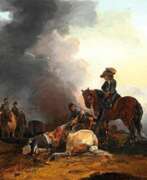

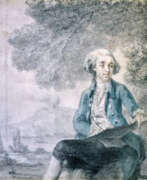

Louis-François Cassas was a distinguished French landscape painter, sculptor, architect, archeologist and antiquary.
Besides his architectural and archaeological drawings and sketches, he drew numerous costumes studies, views and processions, as well as scenes from daily life, plants and animals of all sorts. He also exhibited views of his travels at the "Salons", which were periodic art exhibitions sponsored by the French Académie Royale, in 1804 and 1814, and published Picturesque views of the Principal Sites and Monuments of Greece, of Sicily, and of the Seven Hills of Rome, of which thirty parts had already been published by 1813.
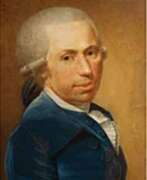

Andreas Joseph Chandelle is a German painter and art collector. He is known for his mastery of pastels. He created many paintings in this technique - portraits, genre scenes, images of religious and historical events.


Jean Siméon Chardin was an 18th-century French painter. He is considered a master of still life, and is also noted for his genre paintings which depict kitchen maids, children, and domestic activities. Carefully balanced composition, soft diffusion of light, and granular impasto characterize his work.


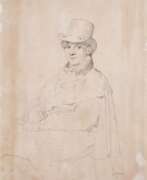

Pierre-Athanase Chauvin was a French painter active in Italy.
Chauvin was a student of the landscape painter Pierre-Henri de Valenciennes. He began his career at the Paris Salon in 1793 and won the First Class Medal in 1819 with his painting Charles VIII’s entry into Acquapendente. The painting was commissioned by Louis XVIII of France for the Galerie de Diane at the Palace of Fontainebleau.
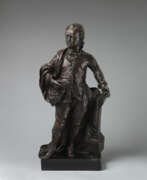

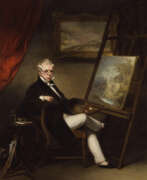

George Chinnery was a British painter best known for his work in India and China.
George studied at the Royal Academy schools, painting portraits and sketches, but in 1802, shortly after his marriage, trying to straighten out his family's financial situation, he traveled to India. In Calcutta, Chinnery became the leading artist of the British community in India. And in 1825 he went to China and lived in Macau for the rest of his life.
Chinnery painted portraits of Chinese and Western merchants, visiting sea captains and their families. Chinnery also painted landscapes (both in oil and watercolor) and made many vivid drawings of Macau residents of the time engaged in their daily activities. Among the heroes of his portraits are the Scottish opium merchants who patronized him. In addition to their artistic value, Chinnery's paintings also have historical value, as he was the only Western artist living in South China during the early to mid-19th century.
There are still many architectural sites in Macau recognizable from his sketches that have changed little since then. Today, Chinnery's paintings are in public and private collections around the world. The Macau Museum and the Macau Art Museum have a good selection of his work.
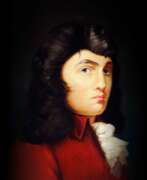

Thomas Chippendale was a cabinet-maker in London, designing furniture in the mid-Georgian, English Rococo, and Neoclassical styles. In 1754 he published a book of his designs in a trade catalogue titled The Gentleman and Cabinet Maker's Director — the most important collection of furniture designs published in England to that point which created a mass market for furniture—upon which success he became renowned. According to the Victoria and Albert Museum, «so influential were his designs, in Britain and throughout Europe and America, that "Chippendale" became a shorthand description for any furniture similar to his Director designs».
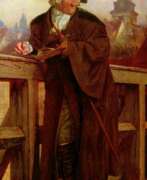

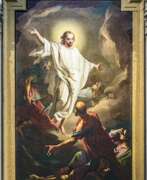

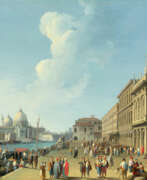

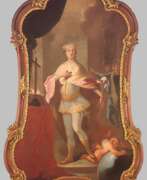

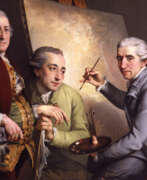

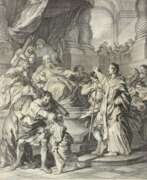

Charles-Nicolas Cochin the Elder was a French painter and line engraver.
Charles-Nicolas Cochin the Elder painted until the age of twenty-two, and then devoted himself entirely to engraving. In 1731 he became an academician, and on the occasion of his reception engraved portraits of Jacques Sarracen and Estache Le Sueur. He then turned his attention to the fanciful subjects of Watteau, Lancret, and Chardin, after which he executed several fine works.


Charles-Nicolas Cochin was a French engraver, designer, writer, and art critic. To distinguish him from his father of the same name, he is variously called Charles-Nicolas Cochin the Younger, Charles-Nicolas Cochin the son, or Charles-Nicolas Cochin II.
More than fifteen hundred works by Cochin can be identified. They include historical subjects, book illustrations, and portraits in pencil and crayon. The richest collection of his engravings, apparently selected by himself, is in the Royal Library, now part of the Bibliothèque nationale.


William Collins was a British artist of the first half of the 19th century. He is known as a master of landscape and domestic painting. During his career Collins also painted a number of pictures of the religious genre, but these works can not be attributed to the best masterpieces of his work. The master's biography is full of numerous travels through the British Isles and the countries of Europe.
William Collins, at the height of his career, held the prestigious position of curator of the library of the Royal Academy of Arts, and was also elected a full member of the Royal Academy of Arts. He was able to pass on his love of art to his children as well. His eldest son William Wilkie Collins was a famous English writer, and his youngest son Charles Allston Collins was a talented painter closely associated with the Pre-Raphaelite Brotherhood.
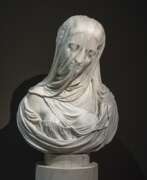

Antonio Corradini was an Italian painter and sculptor of the Baroque period.
He was a pupil of the sculptor Antonio Tarsia (1663 - c. 1739) and worked in Venice, Dresden and St. Petersburg. In Vienna, he was court sculptor to Holy Roman Emperor Charles VI for 10 years.
Corradini became famous for his sculptures "under the veil", through which the contours of the face and body are discernible. Contemporaries were delighted by this inscrutable art. In 1716-1717 Antonio Corradini executed eighteen busts and two statues for the Summer Garden in St. Petersburg by special order of the Russian Tsar Peter the Great.
Then the master was followed by orders from all over Europe, he created many more sculptures on religious, mythical and allegorical subjects. His works can still be seen in many museums and private collections around the world.
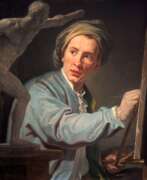



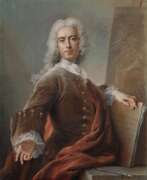

Charles-Antoine Coypel was a multifaceted French Rococo artist, known for his contributions as a painter, designer, playwright, and art critic. Born into a family with a significant artistic legacy, Coypel rose to prominence in the French court, eventually serving as the court painter and the director of the Académie Royale. His work, which often blended dramatic narrative with intricate detail, played a pivotal role in the development of Rococo art in France, reflecting the opulent and expressive tendencies of the period.
Coypel's artistic output includes a range of subjects, from religious themes, as seen in his etching "The Virgin and Child," to theatrical history paintings that convey operatic passions and high drama. His ability to infuse his compositions with emotional depth and narrative complexity, alongside his mastery of the Rococo style's playful and ornamental characteristics, distinguishes his work within the era. Notably, Coypel was also involved in the design of tapestries for the Gobelins Manufactory, illustrating scenes from Miguel de Cervantes's "Don Quixote," which remained influential through the end of the 18th century.
His artworks, such as "The Virgin and Child," showcase not only his technical skill but also his sensitivity to composition and form, contributing to his reputation as one of the leading painters in the French court during the 18th century. Coypel's legacy is preserved in his paintings, etchings, and tapestry designs, which continue to be celebrated for their artistic and historical significance.
For collectors and experts in art and antiques, Charles-Antoine Coypel's work represents an essential connection to the Rococo period's rich cultural and aesthetic traditions. His contributions to French art history, particularly through his role at the Académie Royale and his influence on the development of Rococo style, make his work a valuable study for those interested in the dynamics of French art and culture during the 18th century.
To stay informed about updates related to Charles-Antoine Coypel, including new discoveries, sales, and auction events of his works, consider signing up for updates. This service will provide tailored notifications to enthusiasts and collectors eager to explore and acquire pieces by Coypel, ensuring they remain at the forefront of developments in the field of Rococo art.
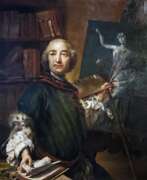


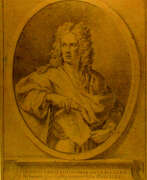

Donato Creti was an Italian painter of the Rococo period, active mostly in Bologna.
One memorable conceit in Creti's output is a series of small canvases depicting celestial bodies, disproportionately sized and illuminated, above nocturnal landscapes.
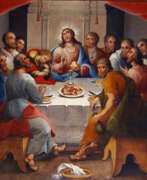

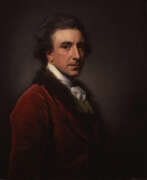

Nathaniel Dance-Holland is a British portrait painter and politician.
Dance-Holland studied painting in Italy. There he painted several historical and classical paintings. Upon his return to England, he became a successful portrait painter.
Nathaniel Dance-Holland was one of the founders of the Royal Academy of Arts and a member of the British Parliament.
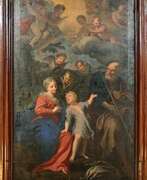

Ottaviano Dandini was the son of Pietro Dandini, and painted history in the style of his father. Some fresco paintings in the cloister of San Spirito, a picture of several Saints in San Lorenzo, and his works in the church of the Magdalene at Pescia, evince the respectability of his talent. He afterward entered the Society of Jesus, and died about 1750.
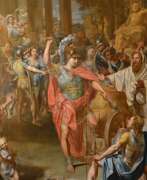

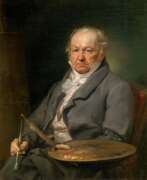

Francisco José de Goya y Lucientes was a Spanish romantic painter and printmaker, celebrated as the most pivotal Spanish artist of the late 18th and early 19th centuries. Born in Fuendetodos, Aragon, Spain, on March 30, 1746, Goya's work reflects a tumultuous period of history, intertwining the personal, political, and social upheavals of his time with a bold and innovative artistic vision. His early career was marked by portraits of the Spanish aristocracy and royalty, as well as Rococo style tapestry cartoons for the royal palace. However, following a severe illness in 1793 that left him deaf, his art took on a darker and more pessimistic tone.
Goya's oeuvre is vast, encompassing around 700 paintings, 280 prints, and several thousand drawings, through which he depicted a wide range of subjects from the whimsical to the macabre. Notable among his works are "The Naked Maja," "The Clothed Maja," "The Family of Charles IV," "The Third of May 1808: The Execution of the Defenders of Madrid," and "Saturn Eating His Children." His etchings, particularly the series "Los Caprichos" and "The Disasters of War," are celebrated for their intricate detail, emotional depth, and critical social commentary.
Goya's contribution to art goes beyond his mastery of painting and printmaking. He is often considered the bridge between the Old Masters and modern art, introducing themes and techniques that would influence countless artists in the centuries to follow. His ability to capture the essence of his era, the human condition, and the complexities of his own psyche, makes his work universally relatable and enduringly relevant.
His most famous paintings are housed in prestigious museums worldwide, including the Museo del Prado in Madrid, which holds an extensive collection of his works. The Prado's collection serves as a testament to Goya's significant impact on art and culture, offering insight into the artist's unique perspective on the world around him.
For collectors and experts in art and antiques, Francisco de Goya's legacy is a beacon of artistic innovation and historical significance. His works not only adorn the walls of museums but also continue to inspire and provoke thought among audiences across the globe.
For updates related to Francisco de Goya, including new product sales and auction events related to his works, sign up for our newsletter. Stay informed on the latest offerings and opportunities to add to your collection of this legendary artist's works.


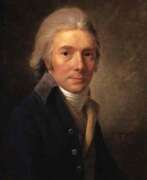

Jean Balthasar de la Traverse was a French painter and actor who worked in Russia during the 18th century. Born in 1752, he arrived in Saint Petersburg in 1773, joining a theatrical troupe and becoming a painter. He was patronized by Count Alexander Stroganov, for whom he created an album depicting views of Russian Empire cities.
De la Traverse is also known for his battle scenes from the Russo-Turkish War. His work, including landscapes and watercolors, was highly esteemed by contemporaries. The last records of him date to 1808.
Jean Balthasar de la Traverse's art continues to intrigue collectors and art historians. His mastery in depicting nature and historical events makes him a significant figure in art history. Subscribe for updates on new sales and auctions related to his works.


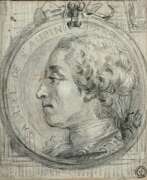

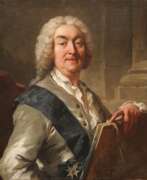

Jean-François de Troy was a French Rococo easel and fresco painter, draughtsman and tapestry designer. One of France's leading history painters in his time, he was equally successful with his decorative paintings, genre scenes and portraits. He was the inventor of the tableaux de modes ('paintings of fashions'), which attempted to provide a spirited portrayal of contemporary fashions, pastimes and manners.
He was the Director of the French Academy in Rome from 1738.


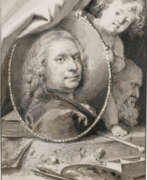

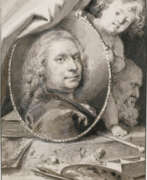

Jacob de Wit was a Dutch painter, decorator and collector, a member of the Guild of St. Luke in Antwerp.
De Wit studied at the Royal Academy in Antwerp, where he began to study the work of Peter Paul Rubens and became his follower. De Wit made copies of many of Rubens' works, notably his ceiling paintings in the Jesuit church in Antwerp.
Later, from the 1720s Jacob de Wit began working in Amsterdam, where he received regular commissions, both public and private. He created many ceiling and wall paintings in the Rococo style, in which he used grisaille - gray and white painting, creating the illusion of three-dimensionality, or bas-relief. Some of them can still be seen in their original places in the 21st century.
Jacob de Wit amassed a large art collection during his lifetime, including works by Rubens, Antoni van Dyck, as well as Dutch and Flemish contemporaries and old masters.


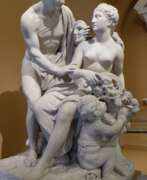


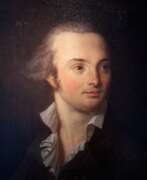

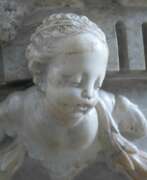

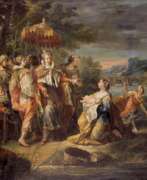

Gaspare Diziani was an Italian late Baroque and early Rococo painter, decorator, draftsman, and engraver.
He painted a series of canvases and murals for churches, and worked as a set designer for theaters and opera houses in Venice, Munich, and Dresden. His engravings illustrate the 1757 edition of The Divine Comedy.
Gaspare Diziani was one of the founders of the Venice Academy of Fine Arts.


Gabriel-François Doyen was a French painter who was born in Paris.
He became an artist against his father's wishes, becoming a pupil at the age of twelve of Charles-André van Loo. Making rapid progress, he obtained at twenty the Grand Prix de Rome, and in 1748 set out for Rome. He studied the works of Annibale Carracci, Pietro Berrettini da Cortona, Giulio Romano and Michelangelo, then visited Naples, Bologna and, crucially, Venice. While in the latter city Doyen was greatly influenced by the work of the famous colourists, such as Titian.


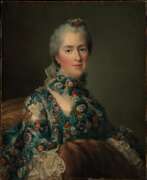

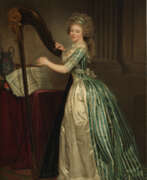

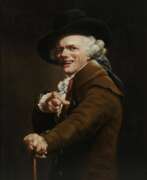


Moritz Michael Daffinger was an Austrian painter of the first half of the 19th century. Moritz Daffinger is known as a master of the portrait genre. He painted not on traditional canvas, but on more exotic materials: porcelain, ivory, or paper. The best masterpieces of his work today are in the private collections of patrons of the arts and members of the European high nobility, and his biography is closely linked to Vienna, where he lived all his life.
Moritz Daffinger was a master of miniature painting techniques and was noted for his extraordinary capacity for work. He created more than 1,000 portraits, and at the end of his life he was interested in floristry and left for posterity more than 400 watercolor works with images of flowers.
Moritz Michael Duffinger is rightly considered one of the best masters of portrait miniatures in the history of European painting. And his masterpieces still amaze art lovers with the refinement of images.


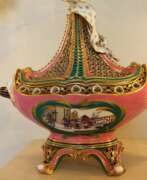

Jean-Claude Chambellan Duplessis was a goldsmith, sculptor and ceramics modeller, bronze-founder and decorative designer working in the Rococo manner. He served as artistic director of the Vincennes porcelain manufactory and its successor at Sèvres from 1748 to his death in 1774 and as royal goldsmith (orfèvre du Roi) from 1758 to 1774.

