

Batalists Animalistic
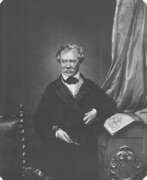

Albrecht Adam was a Bavarian painter of the first half of the 19th century. He is best known for the fact that as a member of Napoleon's Grand Army he took part in the campaign against Russia in 1812 as the official artist of the headquarters of the IV (Italian) Corps. Throughout the campaign, the artist made sketches and drawings, capturing many of the important events of the campaign. Later, many of these sketches became the basis for full-fledged paintings, and to subjects from the Napoleonic wars, which he witnessed, Adam addressed until the end of his very long life.
Albrecht Adam was also the author of memoirs, in which he described in detail the Battle of Borodino and a number of other key events of the War of 1812.
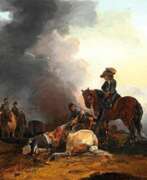

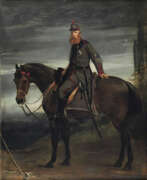


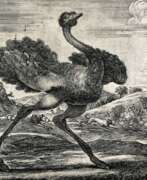

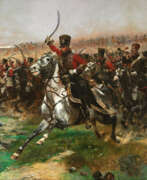

Jean-Baptiste Édouard Detaille was a French academic painter and military artist noted for his precision and realistic detail. He was regarded as the "semi-official artist of the French army". Detaille made his debut as an artist at the Salon—the official art exhibition of the Académie des Beaux-Arts—of 1867 with a painting of Meissonier's studio. At the Salon of 1868, he exhibited his first military painting, The Drummers Halt, which was based solely on his imagination of the French Revolution. Detaille enlisted in the 8th Mobile Bataillon of the French Army when the Franco-Prussian War broke out in 1870; by November he was seeing and experiencing the realities of war. This experience allowed him to produce his famed portraits of soldiers and historically accurate depictions of military manoeuvres, uniforms, and military life in general. He eventually became the official painter of the battles. He published a book called L'Armée Française in 1885, which contains over 300 line drawings and 20 color reproductions of his works.
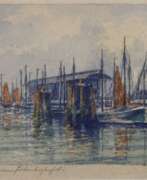

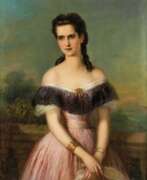

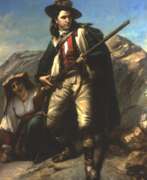

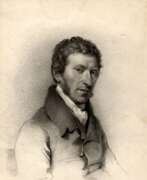
Johannes Hinderikus Egenberger was a Dutch painter, photographer and art educator. From 1840 to 1848, he studied at the Royal Academy of Fine Arts in Amsterdam with Jan Willem Pieneman. During these years, he focused on painting scenes from Dutch history. In 1854, he collaborated with Barend Wijnveld to produce a massive canvas depicting the heroic defense of Haarlem led by Kenau Hasselaer in 1573. Later, he would turn to landscapes, domestic scenes and portraits, including a series for the Rijksuniversiteit. In 1857, he was appointed Headmaster of the Academie Minerva in Groningen. In addition to his work there, he became a photographer and, in 1864, opened the first photography studio in Groningen. The following year, he resigned his position as Headmaster to devote himself entirely to photography.
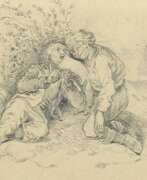

Otto Clemens Fikentscher the Elder was a German painter, draughtsman and illustrator of the Düsseldorf School. Although it is unclear whether he is related to the artist Otto Fikentscher, who was married to Jenny Fikentscher, Otto Fikentscher (the Elder) studied at the Düsseldorf Art Academy and specialised in historical painting and the depiction of horses in battle scenes. He was a member of the artists' association Malkasten and served as a war correspondent during conflicts such as the German-Danish War and the Franco-Prussian War. Fikentscher's works were reproduced in popular magazines and showed his lively and dynamic style.
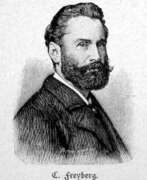

Conrad Freyberg was a German artist of the second half of the nineteenth and early twentieth centuries. He is known as a painter and sculptor.
Freyberg specialized in equestrian portraits and group portraits of horsemen, combining realistic likeness with delicate rendering. Inspired by the wars of 1866 and 1870-1871, the artist created battle paintings, including The Battle of Sadov and The Battle of Skalica. He later became a portrait painter and also worked in the genres of historical painting, animalistic painting and sports scenes. For his achievements, he received the title of court painter. The master was one of the creators of the bronze monument to Prince Albrecht of Prussia in Berlin's Charlottenburg district in 1901.
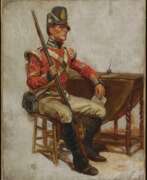

Emile Edwin Ganz is a Swiss-Belgian painter, specializing in the representation of horses and military scenes. In his early days, Ganz mainly drew military scenes, a genre that only a few 19th-century artists mastered. His masterpiece in the genre is The Attack of Scherpenheuvel, a report on the maneuvers of the grenadiers in 1894. In 1901 he entered the service of Princess Clémentine as a painter; he held this position until 1903. In 1903, he also brushed some of King Leopold II's horses. From that moment, he was no longer interested only in the horse itself, but in the regional draft horse, as well as in the people and the rural world: newspaper sellers, old horses in a depot, the harvest in the fields , beet harvest, landscape. Many of his designs for military uniforms were printed in color lithograph.
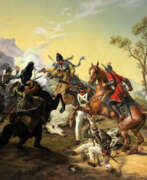

Otto Grashof was a German painter of the mid-nineteenth century. He is known as a draftsman, engraver, and portrait painter. He also did historical painting, battle-painting, animal studies, and landscape art. Grashof is considered one of the founders of Chilean painting.
Grashof went to St. Petersburg in 1838, where he carried out portrait commissions for the aristocracy, and some of his works ended up in the collection of Emperor Nicholas I. Later he visited Chile as well as Brazil. He held the titles of "painter to the Russian emperor and Brazilian court painter."
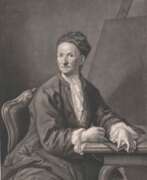

Johann Jakob Haid, a prominent German engraver and portraitist, was renowned for his work in Augsburg during the 18th century. Born into a family of artists, Haid's legacy is particularly noted for his exquisite mezzotint portraits. His career also involved a stint in England, where he was influenced by the works of English mezzotint engraver Robert Robinson.
Haid's artistic prowess was not limited to portraiture. He ventured into botanical illustration, contributing significantly to Johann Wilhelm Weinmann's "Phytanthoza iconographia". This collaboration showcases his versatility and technical skill in different art forms.
Collectors and experts in art and antiques often seek Haid's works for their unique artistic value and historical significance. His contributions to the art world, especially in mezzotint engraving, continue to be appreciated and studied. His works are a testament to the rich cultural and artistic heritage of Germany.
For those interested in the world of art and antiques, particularly in the realm of engraving and painting, Johann Jakob Haid remains a figure of significance. To stay updated on new product sales and auction events related to Johann Jakob Haid, sign up for our updates. This subscription is an excellent way to stay informed about the latest developments and opportunities in the field.
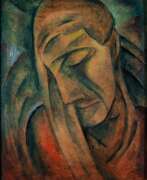

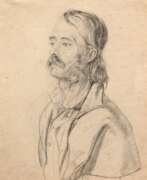

Carl Adolph Heinrich Hess was a German animalist, battalionist and teacher. He studied the works of the old masters at the Dresden Gallery.
Carl Adolph Heinrich Hess travelled extensively in Russia, Hungary, Turkey and Britain, studying different breeds of horses and achieved mastery in their portrayal.
He lived in Vienna from 1808, where he taught at the Academy of Fine Arts. In 1825 he published a collection of life-size lithographs of horse heads.
He was an honorary member of the Berlin Academy of Arts.
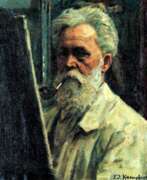

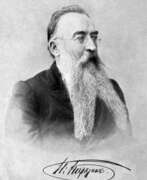

Nikolay Nikolaevich Karazin (Russian: Николай Николаевич Каразин) was a Russian military officer, painter, and writer, known for his depictions of wars and exotic places. Born in 1842 in Kharkov (now Ukraine), Karazin came from a family of prominent intellectuals, including his grandfather Vasily Karazin, who founded Kharkiv University.
Karazin's career began in the military, where he participated in campaigns against the January Uprising in Poland and in Central Asia. His firsthand experiences in battles, such as the 1868 Bukhara campaign and the 1873 Khiva campaign, greatly influenced his later work as a painter and writer. After retiring from the military, he focused on creating large canvases depicting military actions in Turkestan, as well as writing numerous adventure and ethnographic stories and novels.
Karazin's works, which include "In the Distant Confines" (1875) and "From Orenburg to Tashkent" (1886), reflect his deep engagement with the landscapes and cultures of Central Asia. His children's book "Cranes Flying South" remains popular for its vivid storytelling and illustrations. Karazin also contributed significantly to the visual arts, participating in early designs for the Moscow Metro and becoming an academician of the Imperial Academy of Arts in 1904.
To stay updated on new product sales and auction events related to Nikolay Karazin's works, sign up for our updates. This subscription will keep you informed about the latest opportunities to acquire pieces of his illustrious legacy.
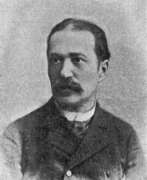

Pavel Osipovich Kovalevsky (Russian: Павел Осипович Ковалевский) was a Russian painter renowned for his battle scenes and genre paintings. Born in Kazan in 1843, Kovalevsky studied at the Imperial Academy of Arts in St. Petersburg under the mentorship of B.P. Villevalde. His early work earned him multiple accolades, including gold medals for significant paintings such as "Persecution of Turkish Foragers by Cossacks" and "First Day of the Battle of Leipzig in 1813".
Kovalevsky’s artistic journey took him across Europe as an academic scholar, visiting cities like Munich, Vienna, Rome, and Paris. His experiences and observations during these travels significantly influenced his work. During the Russo-Turkish War of 1877–1878, he served as a war artist attached to the Russian Army, documenting the campaign under Grand Duke Vladimir Alexandrovich. His notable works from this period include "The Staff of the 12th Battalion in Bulgaria" and "Captured Turks," which are housed in the State Russian Museum.
In addition to his battlefield illustrations, Kovalevsky contributed to the education of future artists by leading the workshop for military painting at the St. Petersburg Academy of Arts from 1897 until his death in 1903. His legacy includes numerous works depicting historical and military scenes, which continue to be celebrated for their detailed representation and historical accuracy.
For collectors and enthusiasts, keeping abreast of new acquisitions and auction events featuring works by Pavel Osipovich Kovalevsky is essential. Sign up for updates to stay informed about the latest sales and exhibitions related to his art.

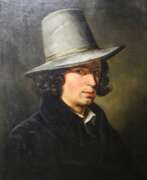

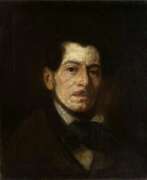

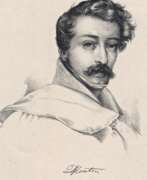

Dietrich Heinrich Maria Monten was a German painter and lithographer.
Dietrich studied painting at the Düsseldorf Art Academy and the Academy of Fine Arts in Munich. He mastered various techniques and took on any genre, but his main subjects were historical, battle and genre themes. He created many large-scale works on important historical events. During his lifetime, Dietrich Monten, together with his colleague Heinrich Ambros Eckert (1807-1840) and others, published more than 1,000 illustrations of the uniforms of European armies in the form of color lithographs collected in separate volumes.
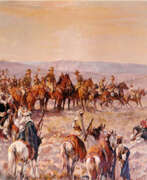

Harold Septimus Power, usually known as H. Septimus Power or H. S. Power, was a New Zealand-born Australian artist, who was an official war artist for Australia in World War I. He exhibited in 1899 with the Melbourne Art Club and soon after moved to Adelaide where he worked as an illustrator and political cartoonist. In 1904, he was commissioned by the trustees of the Art Gallery of South Australia to paint an animal scene. He was a member of the Royal Institute of Oil Painters and the Society of Animal Painters. He also exhibited at the Royal Academy of Arts. After war broke out in the summer of 1914, the Australian government appointed official war artists to depict the activities of the Australian Imperial Force in the European theater of war. Power was appointed in 1917 and was attached to the 1st Division, A.I.F. from September to December of that year and then again in August the following year. Official War Artist during the First World War and was renowned for his depiction of animals, in particular horses, on the field of battle.
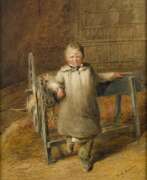


Alexander Ivanovich Sauerweid (Russian: Александр Иванович Зауервейд) was a Baltic German painter born on February 19, 1783, in the Duchy of Courland and Semigallia. He is best known for his detailed battle scenes and military portraits, which earned him significant acclaim in the 19th century. His early education in the arts took place at the Dresden Academy of Fine Arts, where he developed a strong foundation in painting.
Sauerweid's talent for depicting military subjects brought him to the attention of prominent figures of his time, including Napoleon and Tsar Alexander I of Russia. Invited to Saint Petersburg in 1814, Sauerweid became the official painter of the Russian General Staff and later a professor at the St. Petersburg Imperial Academy of Arts. His role involved teaching battle painting and producing works that depicted various military uniforms and scenes, a specialty that set him apart from his contemporaries.
Among his notable works are "The Battle of Leipzig" and "The Siege of Varna," which showcase his ability to capture the dynamism and drama of military engagements. Many of Sauerweid's paintings are housed in Russian Imperial Palaces, reflecting their historical and artistic value.
For collectors and enthusiasts, keeping abreast of Alexander Ivanovich Sauerweid's works is essential. Subscribe to our updates to be the first to know about new product sales and auction events related to this distinguished artist. Sign up now!
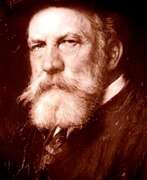

Adolf Schreyer was a German painter of the second half of the 19th century. He is known as an orientalist, landscape, battle and animalist, a representative of the Düsseldorf School of Art. Schreyer served in the Austrian army and participated in a military expedition to Wallachia during the Crimean War.
Schreyer also traveled to Egypt, Syria, and Algeria, where he painted many Orientalist paintings as well as images of horses with riders. His paintings of battle scenes, including events of the Crimean campaign, as well as genre paintings and landscapes, are characterized by vivid colors, vigorous movement, and drama.
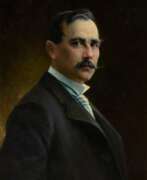


Christian Jacob Sell, auch Christian Sell der Ältere, war ein deutscher Maler der Düsseldorfer Schule. Er studierte an der Düsseldorfer Kunstakademie bei Ferdinand Theodor Hildebrandt und Friedrich Wilhelm von Schadow und spezialisierte sich auf militärische Genre- und Schlachtszenen. Sein Sohn Christian Sell der Jüngere wurde ebenfalls Maler.
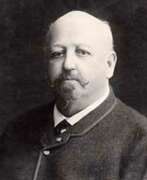

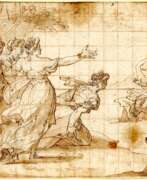

Lazzaro Tavarone was an Italian painter of the late-Renaissance and Mannerist period, active mainly in his native Genoa and in Spain. He was the pupil of the painter Luca Cambiasi. Tavarone accompanied Cambiaso to Spain in 1583, and helped decorate the Escorial for the Spanish King, including the chaotic battle painting of Battle of La Higueruela. He returned to Genoa in 1594, where he became well known both as portrait and history painter.



Evgeny Alexandrovich Tikhmenev (Russian: Евгений Александрович Тихменев) was a Russian artist, born in 1869 and passed away in 1934. Renowned for his depictions of natural scenes and hunting expeditions, his works encapsulate the essence of rural Russian life during his time. Tikhmenev's artwork, such as "Before the Hunt," captures moments of anticipation and interaction with nature, often featuring meticulous detail and vibrant settings.
His pieces are cherished in art circles for their historical value and their ability to convey the story of an era when hunting was not only a sport but a significant aspect of rural survival and culture. Notably, Tikhmenev's paintings have been sold at various auctions, with some pieces fetching substantial prices, highlighting their desirability among collectors and art enthusiasts.
For collectors and experts in art and antiques, Tikhmenev's works present a valuable investment, both culturally and financially. To stay updated on new sales and auction events featuring Evgeny Alexandrovich Tikhmenev’s work, signing up for timely updates is recommended, ensuring enthusiasts don't miss out on acquiring a piece of Russian art history.
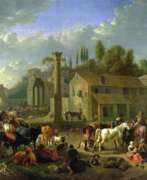


Jan van Huchtenburgh was a Dutch painter of the Dutch Golden Age who specialised in battle scenes and landscapes.
Jan van Huchtenburgh was known for his ability to create dramatic and dynamic battle scenes, often depicting historical events of the 17th and 18th centuries. His work is noted for its precision and attention to detail, as well as his use of light and shadow to create a sense of depth and drama.
In addition to battle scenes, Huchtenburg was also a skilled landscape painter. He often depicted scenes of the Dutch countryside with rolling hills, winding rivers and expansive skies.
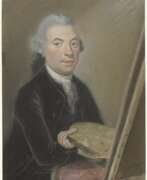

Jan van Os was a Dutch painter and a member of the renowned Van Os family of artists. He was born in Middelharnis. He was taught by Aert Schouman in The Hague, where he would spend the rest of his life. In 1773, he recorded in the painters' confraternity. Van Os is mostly known for his fruit and flower still life paintings, though he started his career painting seascapes. His floral still lifes were painted in the style of Jan van Huysum, with the flowers usually presented on a marble ledge against a green background. He was the father of artists Pieter van Os, Maria Margaretha van Os, and Georgius Jacobus Johannes van Os and grandfather to the painter Pieter Frederik van Os.
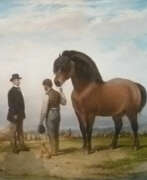


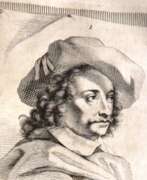

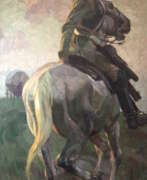

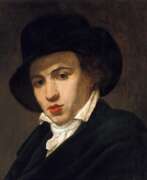

Wilhelm von Kobell was a German painter of the first half of the 19th century. He is known as a landscape painter, animalist and battle painter.
Von Kobell initially produced landscapes and animal paintings, but later focused mainly on battle painting. He visited Vienna and Paris between 1809 and 1810 to study this genre. His battle paintings, based on extensive research, are characterized by striking realism. They are important for the study of military history.
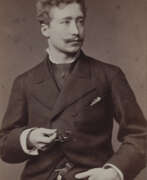

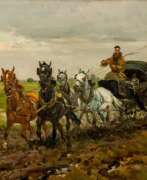

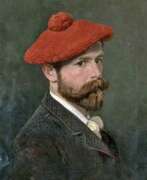

Alexander Bogdanovich Willewalde (Russian: Александр Богданович Виллевальде) was a Russian painter of German origin, known for his specialization in battle scenes and animal art. Born in 1857 in St. Petersburg, he followed in the footsteps of his father, the renowned battle painter Bogdan (Gottfried) Willewalde. Willewalde's works are celebrated for their detailed and dynamic depictions of military uniforms and horses, capturing the essence of military life and the nobility of animals.
Willewalde's contributions to art include a series of paintings that are prominently featured in several prestigious collections. His works are housed in the State Hermitage Museum in St. Petersburg and the State Museum of Horse Breeding in Moscow. These collections underscore his prominence in Russian art, showcasing his ability to blend precision with artistic elegance.
For collectors and art enthusiasts, Willewalde's paintings represent a valuable intersection of historical significance and artistic skill. To stay updated on new sales and auction events related to Alexander Bogdanovich Willewalde, sign up for our exclusive updates. This subscription will ensure you never miss an opportunity to acquire or learn more about his remarkable works.