

Graphic artists Naïve art
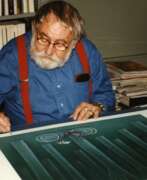

Jan Balet was a German/US-American painter, graphic artist and illustrator. Affected by the style naive art he worked particularly as a graphic artist and as an Illustrator of children's books. Besides this he painted pictures in the style of naive art. Referred to as a "naïve" painter, his works exhibit a dry wit and refreshingly candid, satirical view of life.
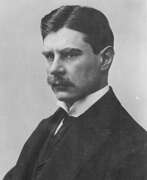

Hans Baluschek, full name Alphons Anton Alexander Hans Ernst Karl Maria Baluschek, was a German painter, graphic artist and writer, representative of the New Materiality style.
Baluschek studied at the Royal Academy of Arts, and in 1900 became a member of the Berlin Secession, a group of artists that also included Ernst Barlach, Max Beckmann, and Wassily Kandinsky. Baluschek was always socially critical, which was reflected in the subjects of his paintings. Many of his paintings are dedicated to the working class of Berlin, he addressed the gray everyday life of Berlin: gray air, gray walls, gray people. Baluschek is often categorized as a German Expressionist because of his emotional style, but his style has something of New Objectivity, Impressionism, and naive painting. He also drew illustrations for the popular children's book Little Peter's Trip to the Moon, and collaborated with periodicals as an illustrator.
World War I instilled patriotic feelings in Baluschek, and he painted a number of subjects on this theme. After the war, he joined the Social Democratic Party and became involved in labor movements. In 1926 he helped establish an artists' relief fund and later became director of the annual Berlin Exhibition. The German Nazis, who came to power in 1933, declared Baluschek a Marxist and a "degenerate artist," suspended him from all positions, and banned him from exhibiting.


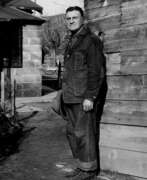

James Castle was an American artist born in Garden Valley, Idaho. Although Castle did not know about the art world outside of his small community, his work ran parallel to the development of 20th-century art history. His works have been collected by major institutions. The Philadelphia Museum of Art organized a retrospective of Castle's work which toured nationally in 2008-09. Castle's work entered the international arena with a major exhibition in Madrid, Spain at the Museo Nacional Centro de Arte Reina Sofía in 2011 and was included in the 2013 Venice Biennale exhibition The Encyclopedic Palace. In 2014 The Smithsonian American Art Museum featured their recent acquisition in the exhibition Untitled: The Art of James Castle and the Whitney Museum of American Art included their acquired collection of Castle's work in the 2017 exhibition Where We Are.
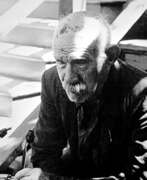

Henry Joseph Darger was an American writer, novelist and artist who worked as a hospital custodian in Chicago, Illinois. He has become famous for his posthumously discovered 15.145-page fantasy novel manuscript called The Story of the Vivian Girls, in What Is Known as the Realms of the Unreal, of the Glandeco-Angelinian War Storm, Caused by the Child Slave Rebellion, along with several hundred drawings and watercolor illustrations for the story.
The visual subject matter of his work ranges from idyllic scenes in Edwardian interiors and tranquil flowered landscapes populated by children and fantastic creatures, to scenes of horrific terror and carnage depicting young children being tortured and massacred. Much of his artwork is mixed media with collage elements. Darger's artwork has become one of the most celebrated examples of outsider art.
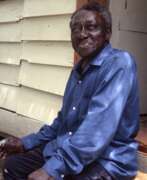

Thomas "Sam" Doyle was an African-American artist from Saint Helena Island, South Carolina. His colorful paintings on sheet metal and wood recorded the history and people of St. Helena’s Gullah community.
Doyle's paintings and sculptures are held in the permanent collections of American Folk Art Museum, the High Museum of Art, the Smithsonian American Art Museum, the Gibbes Museum of Art and the Los Angeles County Museum of Art and Penn Center (Penn School on St. Helena Island).


Marcel Dzama is a contemporary artist from Winnipeg, Manitoba, Canada who currently lives and works in New York City. His work has been exhibited internationally, in particular his ink and watercolor drawings. Dzama works extensively in sculpture, painting, collage, and film. The artist is also known for his intricate dioramas and large scale polyptychs that draw from his talents across a range of media. Dzama works in multiple disciplines to bring his cast of human figures, animals, and imaginary hybrids to life, and has developed an international reputation and following for his art that depicts fanciful, anachronistic worlds.
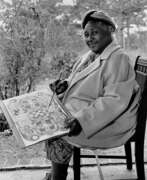

Minnie Eva Evans was an African American artist who worked in the United States from the 1940s to the 1980s. Evans used different types of media in her work such as oils and graphite, but started with using wax and crayon. She was inspired to start drawing due to visions and dreams that she had all throughout her life, starting when she was a young girl. She is known as a southern folk artist and outsider artist as well as a surrealist and visionary artist.


Madge Gill was a British artist.
Gill was born into a large family and was raised in poverty. She suffered from various health problems throughout her life, including blindness in one eye and later the loss of her son, which led her to experience bouts of depression.
Despite her challenging circumstances, Gill was a prolific artist, creating thousands of drawings and embroideries over the course of her life. Her work was often inspired by spiritualism and included intricate and highly detailed patterns and symbols.
Gill's work was first discovered by chance in 1963, two years after her death. Her work has since been exhibited in major galleries and museums around the world, including the Hayward Gallery in London and the American Folk Art Museum in New York City.
Today, Gill is considered an important figure in the history of outsider art and is celebrated for her unique and distinctive style. Her work continues to inspire and captivate art lovers and collectors around the world.
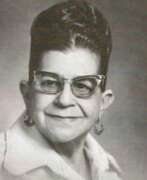



Hector Hyppolite was a Haitian painter. Considered as the "Grand Maître of Haitian Art".
Hyppolite, a prolific painter, typically depicted Vodou scenes and created between 250 and 600 paintings during the last three years of his life. Much of his work was influenced by his devotion to his work as a priest.
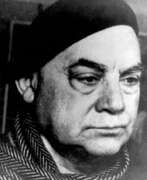

Iosif Artemievich Karalyan was a Soviet artist, member of the USSR Union of Artists and Honoured Artist of the Armenian SSR.
Karalyan's creative work is a kind of nostalgia for the country of childhood, which you can visit only in dreams and imagination, as it no longer exists, because childhood of every person, like his era, is unique, the unrepeatable sensations experienced, they are preserved visually only in the fine arts.
His works are kept in the Museum of Modern Art (Yerevan), National Gallery of Armenia (Yerevan), State Tretyakov Gallery (Moscow), Museum of Oriental Art (Moscow), home-museum of Hovhannes Tumanyan (Yerevan), the funds of the Ministry of Culture of Armenia and numerous private collections in Armenia and abroad.


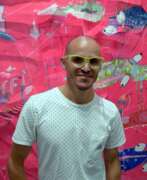


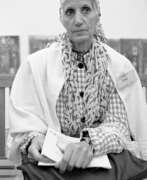

Baya Mahieddine (Arabic: باية محي الدين) or Fatima Haddad (Arabic: فاطمة حداد) was an Algerian artist who is best known for her vibrant and colorful paintings that often featured bold shapes and figures. At the age of sixteen Baya had her first exhibition, in Paris, where she gained notice from renowned artists such as Pablo Picasso and André Breton.
Baya's work is often associated with Surrealism, as she was heavily influenced by Breton and other Surrealist artists. However, she also drew inspiration from traditional Algerian art and culture, incorporating elements such as calligraphy and geometric patterns into her work.
Throughout her career, Baya's work was exhibited in Algeria and France, and she received widespread critical acclaim for her unique style and approach to painting. In addition to her paintings, she also created tapestries, ceramics, and other works of art.
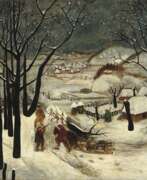

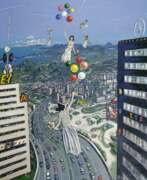

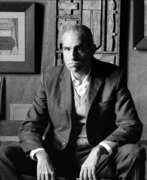


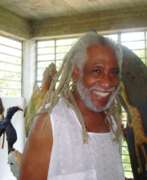

Manuel Mendive Hoyos is one of the leading Afro-Cuban artists to emerge from the revolutionary period, and is considered by many to be the most important Cuban artist living today.
Mendive's work incorporates several art mediums and genres. His art consists of drawing, painting, body painting, wood carving, sculpture, and performance that integrates loosely choreographed dance with rhythmic music.
Mendive's art is strongly influenced by the Santería religion. In fact, Santería permeates every form of his art from body painting to events performed in public spaces.
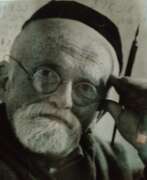


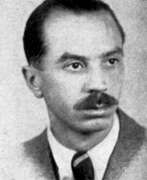

István Pekáry is a Hungarian painter, graphic artist, scenographer and textile designer.
István trained at the Budapest Academy of Fine Arts, then studied in Rome for several years. He painted in oils, designed tapestries, sets and frescoes. In 1936, Pekary founded a weaving workshop in Buda, where he created tapestries inspired by folk art. Between 1933 and 1962, in Hungary and abroad, he designed set and costume designs for several theater and opera productions (Municipal Theater, National Theater, Schiller Theater in Berlin, Teatro del Opera in Rome; Staatsoper in Vienna).
Istvan Pekary's work is characterized by the deliberate naivety of the fairytale world. However, this deliberate primitiveness is not a superficial influence of folklore, but has its roots in the artist's exploration of folk art. The technique of using colors is characteristic of eggshell painting.


Horace Pippin was an African-American artist of the second quarter of the twentieth century. He is known as a self-taught artist who painted in the style of naive art.
Pippin painted in a variety of genres, from landscapes and still lifes to biblical subjects and political statements. Some of his work draws on personal military and family experiences, with subjects inspired by Pippin's service in the Army during World War I and the history of slavery and racial segregation in the United States.


Maria Oksentiyivna Prymachenko (Russian: Мария Авксентьевна Примаченко) was a Soviet and Ukrainian artist of the twentieth century. She is known as a bright representative of primitivism. Self-taught Maria Prymachenko painted more than 800 paintings during her long life.
Maria Prymachenko drew inspiration from folk folklore and filled her works with symbolic content. She achieved international recognition early on, but refused to move to the capital and lived all her life in her native village. In addition to painting, the artist was fond of embroidery and painted ceramics, as well as illustrated books by Ukrainian writers and poets.
People's Artist was in favor of the authorities. She was awarded with numerous honorary titles, orders and medals. Maria Prymachenko was constantly visited by well-known cultural workers. Her paintings were constantly exhibited at international exhibitions. Most of Prymachenko's paintings are now kept in the National Museum of Ukrainian Decorative Folk Art.


Jaune Quick-to-See Smith is a Native American visual artist and curator.
She is also an art educator, art advocate, and political activist. She has been prolific in her long career, and her work draws from a Native worldview and comments on American Indian identity, histories of oppression, and environmental issues.
In the mid-1970s, Smith gained prominence as a painter and printmaker, and later she advanced her style and technique with collage, drawing, and mixed media. Her works have been widely exhibited and many are in the permanent collections of prominent art museums.
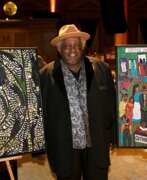

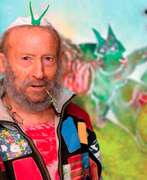


Eun Nim Ro is a South Korean artist who has worked in Germany.
She moved to Germany as a nurse in 1970, where she had the opportunity to exhibit her first works and receive art education. Eun Nim Ro developed an intuitive style of painting that combined Korean brush and ink drawings with the expressiveness of Western art. Naively drawn signs of fish, birds, trees and human figures became the artist's symbols. Eun Nim Ro's creative work is not limited to painting, she has also worked in other disciplines such as performance, calligraphy, painting, ceramics or installation. She has designed the windows of St. Johannes Church in Altona, among others, as well as light walls for government buildings in Seoul.
In 1990, Eun Nim Ro took up a professorship at the Hamburg University of Applied Sciences. In 1995, the artist became an honorary citizen of Seoul, and in 2015 she was also awarded the title of professor in Korea.
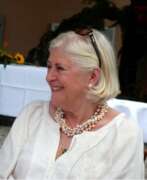

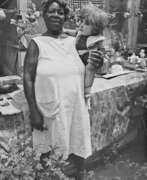

Nellie Mae Rowe was an African-American artist from Fayette County, Georgia. Although she is best known today for her colorful works on paper, Rowe worked across mediums, creating drawings, collages, altered photographs, hand-sewn dolls, home installations and sculptural environments. She was said to have an "instinctive understanding of the relation between color and form." Her work focuses on race, gender, domesticity, African-American folklore, and spiritual traditions.


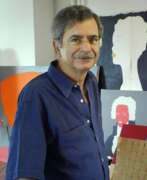

Ernesto Tatafiore is an Italian artist, one of the forerunners of the Italian Transavantgarde that emerged in the early 1980s.
Naples, where Tatafiore's studio is located and which is a favorite place for his work, has a decisive influence on his work. Vesuvius is an obsessive image of the artist and a source of his inspiration. The theme of the French Revolution is also a recurring theme in his work.


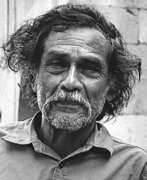

Francisco Benjamín López Toledo was a Mexican Zapotec painter, sculptor, and graphic artist. In a career that spanned seven decades, Toledo produced thousands of works of art and became widely regarded as one of Mexico's most important contemporary artists. An activist as well as an artist, he promoted the artistic culture and heritage of Oaxaca state. Toledo was considered part of the Breakaway Generation of Mexican art.
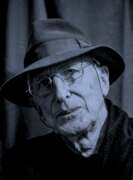

Jean-Thomas "Tomi" Ungerer was an Alsatian artist and writer. He published over 140 books ranging from children's books to adult works and from the fantastic to the autobiographical. He was known for sharp social satire and witty aphorisms. Ungerer is also famous as a cartoonist and designer of political posters and film posters.
Ungerer received the international Hans Christian Andersen Medal in 1998 for his "lasting contribution" as a children's illustrator.


Raymond-Émile Waydelich is a French-Alsatian painter, sculptor and action artist. He lives and works in Hindisheim/Alsace.
Waydelich's extensive oeuvre includes paintings, sculptures and sculptures in ceramic or bronze, assemblages, works on paper as well as public art actions and performances. The artistic techniques of his colourful, playful, witty and whimsical graphics range from drawing, watercolour, lithography, etching and monotype to overpaintings of found paper objects.
He is one of France's best-known living artists. His works are in numerous public and private collections worldwide. His watercolour collages have become particularly famous, showing real-life creatures (crocodile, cat, pig) ghostly alienated within landscapes, which the artist painted on antique letters, some of which he acquired on journeys (e.g. to Crete). His style, which often takes up perspectives, motifs and elements of prehistoric cave paintings or Greek mythology, approaches fantastic realism.
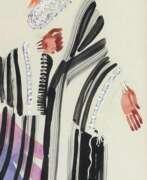

Pola Weizman was a Polish-born Israeli artist, known for her distinctive style of naive art and graphic design. Born in 1939 in Poland, Weizman survived the Holocaust and later emigrated to Israel, where she continued to develop her artistic skills. She studied at the Polytechnic College under notable instructors such as Narkis, Lipman, and Dan Karman, which significantly influenced her approach to art.
Weizman's art often depicted whimsical and vibrant scenes, reflecting the colorful street life of her adopted homeland, Israel. Her works were characterized by their simplicity and the joyful depiction of everyday life, which resonated with many art lovers and collectors. She had a notable one-woman exhibition at the Tel-Aviv Museum in 1970, which helped establish her reputation in the Israeli art scene.
Her artworks have been presented in various auctions, with her paintings often fetching prices that reflect her growing recognition in the art world. Her works are appreciated not only for their artistic value but also for their cultural and historical significance, capturing the spirit of a postwar Israeli society.
Weizman's legacy continues through the circulation of her artworks in galleries and auctions, offering collectors and art enthusiasts opportunities to own a piece of her unique artistic perspective. Her contributions to Israeli art are celebrated for their heartfelt portrayal of life and culture through the lens of a survivor and immigrant.
For those interested in exploring more about Pola Weizman's life and works, staying informed about upcoming auctions and exhibitions can provide valuable insights into her artistic journey and the impact of her works in the realms of naive art and Israeli cultural history.




Hu Yungkai is a Chinese artist known for his figurative paintings depicting scenes of traditional Chinese life and culture.
Hu's paintings are characterised by bright colours, delicate brushwork and attention to detail. He often depicts women in traditional Chinese clothes surrounded by objects and symbols related to Chinese culture, such as flowers, birds and calligraphy.
He is currently a member of the Chinese Artists Association. He previously taught at the Shanghai Academy of Fine Arts and the Chinese University of Hong Kong. Hu Yongkai is an artist with a unique style that blends and expresses characteristics of the East and West in his paintings, and skillfully blends the beauty of the lines of traditional Chinese painting with the colours of modern painting.
Hu's paintings have been exhibited internationally and are part of major collections around the world, including the National Art Museum of China in Beijing and Guangdong Art Museum in Guangzhou.