Philosophers Renaissance



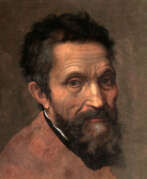

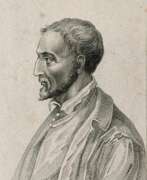
Michelangelo di Lodovico Buonarroti Simoni, known simply as Michelangelo, was an Italian sculptor, painter, architect, and poet who played a significant role in the High Renaissance period. Born on March 6, 1475, in Caprese, Italy, Michelangelo's works are a testament to his mastery in various artistic realms, defining him as a quintessential Renaissance man.
Michelangelo's fame began early in his career, most notably with his sculptures "Pietà" (1499) and "David" (1501), both completed before he turned thirty. Despite his self-perception primarily as a sculptor, Michelangelo made an indelible mark in painting, particularly with the frescoes in the Sistine Chapel. These works include the scenes from Genesis on the chapel's ceiling and "The Last Judgment" on its altar wall, showcasing his innovative use of physical realism and psychological tension.
Among his most famous works, the "David" statue, now housed in the Accademia Gallery in Florence, and the "Pietà," located in St. Peter's Basilica, stand out for their intricate detail and emotional depth. Michelangelo's ability to imbue life into marble and his thoughtful consideration of light and shadow in painting were revolutionary. His techniques in fresco painting, such as the buon fresco method used in the Sistine Chapel, where he painted on wet plaster, were groundbreaking for their time.
Despite his temperamental nature, Michelangelo was deeply religious and dedicated to his art, often eschewing the use of assistants. His works were not only recognized and admired in Italy but also attracted attention from abroad, including the Ottoman Empire. Michelangelo's influence extended beyond his lifetime, significantly impacting the development of Mannerism and the Baroque style.
For art collectors and experts, Michelangelo's works remain a pinnacle of artistic achievement. His ability to blend realism with expressive physicality in both sculpture and painting set new standards in art. His works in major museums and galleries worldwide continue to inspire and awe viewers, reflecting the enduring legacy of his genius.
For those interested in the world of art and antiques, staying informed about Michelangelo's works and their influence on modern art is essential. To receive updates on new product sales and auction events related to Michelangelo, sign up for our newsletter. This subscription is an excellent opportunity for enthusiasts and experts alike to stay connected with the ongoing legacy of one of history's greatest artists.



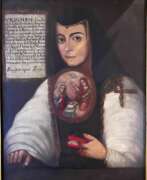

Juana Inés de la Cruz or Juana of Asbaje, real name Juana Inés de Asbaje Ramírez de Santillananota, was a Mexican poet, scholar, and writer of the Latin American colonial period and the Spanish Baroque, and a Jerónimo nun.
Juana Ramírez was born into a poor family (Spanish father and Creole mother) and from an early age showed a burning thirst for knowledge and giftedness, but as a woman she was almost entirely self-taught. By her teens, she had already learned Greek logic and taught Latin to young children. She also learned Nahuatl, an Aztec language spoken in Central Mexico, and wrote several short poems in the language. At the age of 16, the girl was introduced to the court, and her intelligence impressed even Viceroy Antonio Sebastian de Toledo, Marquis de Mancera, and in 1664 he invited her to serve as maid of honor.
In 1669, at the age of 21, she took her tonsure at the Convent of Santa Paula of the Hieronymite Order in Mexico City, where she remained a recluse for the rest of her life. In the convent, Sister Juana enjoyed exceptional freedom: she continued to socialize with scholars and senior members of the court, amassed one of the largest private libraries in the New World, as well as a collection of musical and scientific instruments. Her plays in verse, poetry, and compositions for state and religious festivals were frequently and successfully performed at the palace.
Sister Juana was an outstanding representative of Spain's Golden Age: she was the last significant writer of the Latin American Baroque and the first great exponent of colonial Mexican culture. Sister Juana wrote sonnets, romances, and ballads, drawing on a vast store of classical, biblical, philosophical, and mythological sources. She also composed moral, satirical, and religious texts, as well as many poems praising courtiers, but she also defended women's right to education.
At the end of her life, due to pressure from religious dogmatists, Sister Juana had to sell her extensive library of some 4,000 volumes and return to strict reclusiveness. In 1695, the plague struck the convent and, while caring for her sisters, Juana died of the disease at about the age of forty-four.
Today, Juana Inés de la Cruz is a national icon of Mexico and Mexican identity as a prominent writer of the Spanish-American colonial period. The former convent where she lived is a center of higher education, and her image adorns Mexican currency.
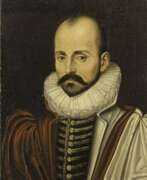

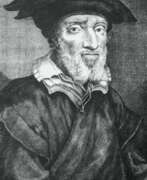

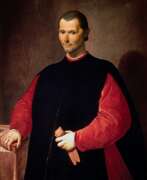

Niccolò di Bernardo Machiavelli was an Italian philosopher, politician and diplomat, historian and Renaissance writer.
As a young man, Niccolò Machiavelli faced financial difficulties due to his father's debts, but had access to a rich library. Machiavelli's early life and career began during a period of political upheaval in Italy. After the expulsion of the Medici family in 1494, for 14 years Niccolo Machiavelli served as a diplomat to the Florentine Republic. During this service, he gained a reputation as a cunning and unconventional thinker. However, when the Medici returned to power in 1512, Machiavelli was dismissed, imprisoned, and temporarily removed from political life.
During this period Machiavelli wrote his famous work The Sovereign, which has become one of the key works in the history of political philosophy. This book epitomizes the Machiavellian approach to politics, where the means justify the end, and where a leader should use any method to consolidate his power. The treatise drew criticism from the Pope, who condemned it for supporting rule through deceit and fear. Nevertheless, The Sovereign is still an important work of political literature, and Machiavelli has come to be called "the father of modern political theory."
Machiavelli lived the rest of his life in a small village near Florence, where he continued his creative endeavors, writing On the Art of War, as well as poems and plays. His literary legacy has become an integral part of the history of political philosophy.
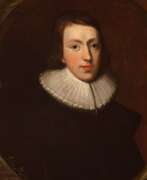

John Milton was a British poet and writer-publicist, intellectual and politician of the English Revolutionary period.
Milton first planned to become a priest, studied at Cambridge University, and then abandoned this activity. Several years he spent reading and self-education, learning many languages. In 1638 Milton traveled around the continent for about a year and a half, spending much time in Italy, primarily in Rome and Florence. He befriended young Italian literati, and his encounter with Galileo further influenced his writing.
Milton became best known for his poem Paradise Lost in Ten Books, which declares its purpose to justify the ways of God to man, but also touches on both universal and personal themes. Milton was the first author to use the word "cosmos" in our modern sense of "outer space," and his space epic takes place in a confidently Copernican universe.
In his prose works, Milton advocated the abolition of the Church of England and the execution of Charles I. From the outbreak of the English Civil Wars in 1642 and long after the restoration of Charles II as king in 1660, he spoke out against tyranny and state-sanctioned religion in all his works. As a Protestant, Milton was often in conflict with the Roman Catholic Church. As a civil servant, Milton became the voice of the English Commonwealth after 1649 and then under Oliver Cromwell, conducting international correspondence and defending the government against polemical attacks from abroad.
John Milton is considered the most important English writer after William Shakespeare. Author of political pamphlets and religious treatises, he is one of the most famous writers of the 1650s, the vibrant era of the English Revolution (Civil War).