

Poets
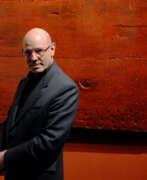


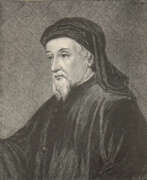

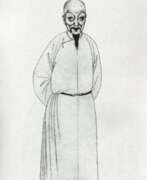

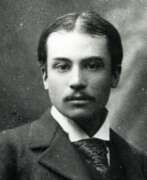


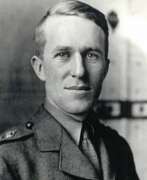

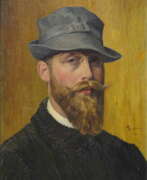
Thomas Edward Lawrence was a British scholar-archaeologist, military intelligence and strategist, writer and poet.
Thomas studied at the High School and Jesus College, Oxford, studying medieval military architecture in particular, researching Crusader castles in France and in Syria and Palestine. Then in the early 1900s he took part in an excavation, though more likely a cartographic reconnaissance from Gaza to Aqaba for strategic military purposes. The study was published in 1915 under the title The Wilderness of Zin (The Wilderness of Zin).
At the outbreak of World War I, Lawrence became a member of the cartographic staff of the War Office in London, tasked with producing a militarily useful map of Sinai. From 1914, with the rank of lieutenant, he was already active in various operations in Cairo and other Arab countries. It is believed that Lawrence made a significant contribution to the victory of the Arab revolt against the Ottoman Empire, and locals gave him the nickname Lawrence of Arabia.
Lawrence had time to work on his war memoirs as well, publishing a book about his activities, The Seven Pillars of Wisdom, in 1926. Also of interest are his poignant service chronicle "The Mint" and a considerable amount of correspondence. He was commissioned by book designer Bruce Rogers to translate Homer's Odyssey into English. Lawrence also wrote over 100 poems, which were published in the collection Minorities in 1971.
After World War I, Lawrence worked for the British Foreign Office and served in the Royal Air Force. He died in a motorcycle accident in May 1935 at the age of 46.



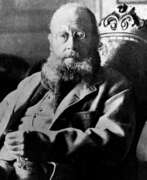



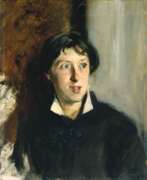

Vernon Lee, real name Violet Paget, was an English writer, translator, and author of numerous essays on art. She is best known for fantasy stories and works on aesthetic theory.
Vernon Lee wrote more than 30 books during her lifetime, including works of various genres: short stories, historical novels, mystical stories. Her art studies, written on a wide range of topics such as Shakespeare, Renaissance culture, etc., are also noted for their excellence. No less popular were her numerous travel notes on her journeys in Europe - Germany, France, Switzerland.
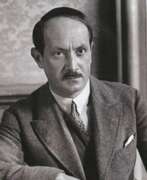







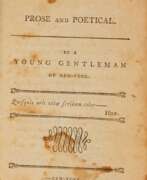

John Blair Linn is an American priest and poet.
Linn graduated from Columbia College and later became a priest. While in college, he published in magazines and newspapers, later writing a play and several collections of poetry and prose.
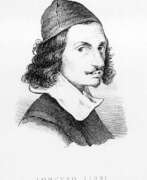

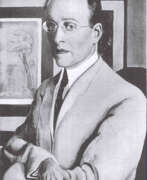

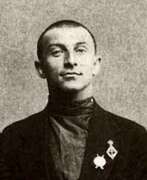

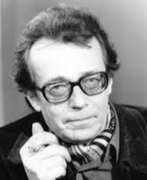

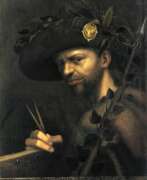

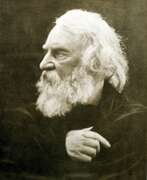

Henry Wadsworth Longfellow was the most popular American poet of the nineteenth century.
Longfellow is one of the most revered poets in the United States. His poems "Paul Revere's Ride", "Evangeline", "The Tale of Acadia" (1847) and "Psalm of Life" were included in elementary and high school curricula and have long been remembered by generations of readers who studied them as children. Longfellow revitalized American literary life by linking American poetry to European traditions outside of England.


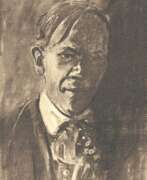

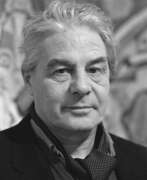
Karl Lorenz was a German expressionist painter and poet. In the 1920s he edited several expressionist journals and worked on publications with representatives of the Hamburg Secession. However, as an artist, he was self-taught.
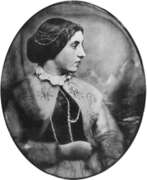

Jane Webb Loudon, full name Jane Wells Webb Loudon, is an English futurological writer, one of the pioneers of the science fiction genre, an artist and amateur botanist.
At the age of 20, Loudon wrote the novel that brought her fame, "The Mummy!" (1827). Set in the year 2126, the novel describes an England filled with advanced technology, including automated lawyers and steam-powered surgeons, coffee makers, and an information highway resembling the modern Internet.
Loudon was married to the well-known horticulturist John Claudius Loudon, and they wrote several books together, and she also published her own very successful series of books with titles such as Gardening for Women, A Lady's Companion to the Flower Garden.
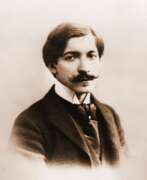

Pierre Louÿs, real name Pierre Félix Louis, was a French poet and writer.
He specialized in erotic and ancient themes in the Art Nouveau style. Louÿs's most famous work is The Songs of Bilitis. It is a collection of erotic poetry with strongly lesbian themes, written in the manner of Sappho. Although Louÿs claimed that these poems had a Greek source, this ultimately proved to be a hoax.
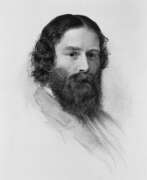

James Russell Lowell was an American poet, educator, and diplomat.
From 1845 to 1850, he wrote about 50 articles against slavery for periodicals. Two of Lowell's other two most important works were also published in 1848: the poem "Sir Launfal's Vision," praising the brotherhood of man, and "A Fable for Critics," a witty appraisal of contemporary American authors. These books, together with the publication in the same year of a second series of his poems, made Lowell the most popular new figure in 19th-century American literature.

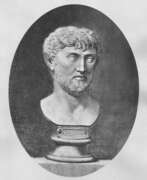

Titus Lucretius Carus was a Roman Epicurean poet and philosopher.
Lucretius is considered one of the most prominent adherents of atomistic materialism, a follower of the teachings of Epicurus. He is the author of a six-book Latin didactic poem on Epicurean physics, De rerum natura ("The Nature of Things" or "On the Nature of the Universe").
This poem is an extended exposition of the Epicurean worldview, a naturalistic explanation of the physical origin, structure, and destiny of the universe. It includes theories of the atomic structure of matter and the origin and evolution of life forms - ideas that eventually became the most important foundation and framework for the development of Western science. In addition to his literary and scientific influence, Lucretius served as an inspiration to a number of modern philosophers, including Gassendi, Bergson, Spencer, Whitehead, and Teilhard de Chardin.