Poets


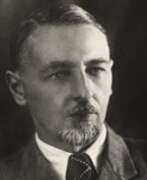
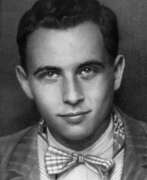
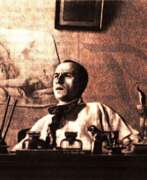
Arthur Adamov, born Arthur Adamian, is a French novelist and playwright, translator of Armenian origin.
Adamov was close to the Surrealists and was friends with Artaud and Giacometti. He wrote poetry and published the surrealist magazine "The Gap". In 1938 he had a nervous breakdown. In 1941 he was arrested for his hostile statements against the Vichy government, and was held in a camp in Argeles until the end of the war.
After the war, in a state of extreme depression, he began to write confessional prose and turned to drama.
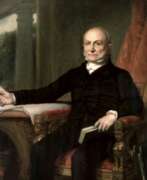

John Quincy Adams was an American politician and statesman, the sixth President of the United States (March 4, 1825 - March 4, 1829).
John Quincy Adams was the son of John Adams, the second President of the United States, and, of course, public service was his destiny. As a child, in 1778 he traveled to France with his father, who was then U.S. Commissioner to France. At the age of 14, Adams became personal secretary to Francis Dana, the U.S. Minister to Russia, serving as his father's secretary as well during the negotiation of the Treaty of Paris (1783). In 1787, the twenty-year-old Adams graduated from Harvard University and, after studying law, began practicing in Boston.
In addition to numerous diplomatic appointments, Quincy Adams served as a U.S. Senator from Massachusetts from 1803 to 1808. President James Madison appointed Adams U.S. minister to Russia in 1809, and Adams served until 1814. And under President James Monroe, he served as Secretary of State from 1817 to 1825 and is considered one of the best Secretaries of State in U.S. history.
John Quincy Adams won the 1824 presidential election in a four-way race against Henry Clay, William Crawford, and Andrew Jackson. As president, Adams supported a program to modernize the U.S. economy. But his popularity declined because of his approach to Native Americans, whom he supported against the demands of settlers from the west.
After losing the 1828 presidential election to Andrew Jackson, John Quincy Adams was elected to the House of Representatives, where he served as a representative from Massachusetts for the next 17 years. In the House of Representatives, Adams became one of the most vocal opponents of slavery. He consistently defended abolitionist views and policies, denouncing slavery as an immoral institution and attacking the interests of Southern slaveholders. During the U.S.-Mexican War of 1848, Adams was a leading opponent of the annexation of Texas, farsightedly predicting that it would lead to civil war.
After suffering two strokes, Adams died on February 23, 1848, at the age of 80. Had fate not predestined him to pursue politics, John Quincy Adams would have become a famous poet. He spent his life composing poems in various genres. After his death, many of his poems were collected and published in Poems on Religion and Society (1848).


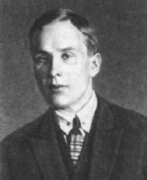

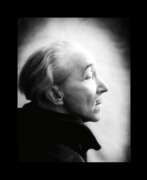

Hans Henning Otto Harry Baron von Voigt, best known by his nickname Alastair, was a German artist, composer, dancer, mime, poet, singer and translator. He is best known as an illustrator.
His drawings, which are often decadent in spirit and have the look of Art Nouveau, are influenced somewhat by the drawings of the English artist Aubrey Beardsley.
His drawings were in black and white ink, sometimes with one colour added. Alastair's illustrations show a strong influence from the Decadent movement in art and poetry that had begun decades earlier, with the "perverse and sinister" a recurring theme. Intricate decorative elements and fine detail are apparent in his works.
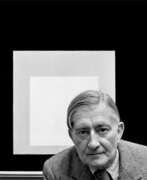

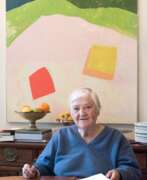
Josef Albers was a German-born artist and educator. The first living artist to be given a solo shows at MoMA and at the Metropolitan Museum of Art in New York, he taught at the Bauhaus and Black Mountain College, headed Yale University's department of design, and is considered one of the most influential teachers of the visual arts in the twentieth century.
As an artist, Albers worked in several disciplines, including photography, typography, murals and printmaking. He is best known for his work as an abstract painter and a theorist. His book Interaction of Color was published in 1963.
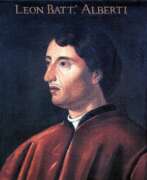

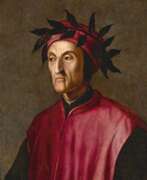

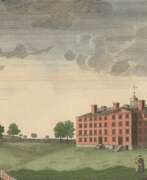

Paul Allen is an American editor, historian, and poet.
He attended Brown University and later moved to Philadelphia, where he was editor of The Port Folio, The Gazette of the United States, and The Federal Republican. Success came to Allen in Baltimore, where he served as editor until his death at the Baltimore Morning Chronicle newspaper. Paul Allen also joined the Delphic Club, and his epic poem Noah (1821) was a success.
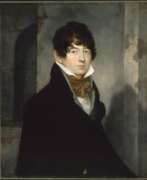

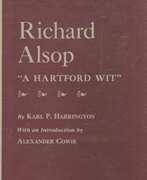

Richard Alsop was an 18th-century American writer and poet.
Alsop was one of the founders of the later famous literary group, the Hartford Witters. He wrote poetry in the journals The Political Greenhouse and The Echo, the latter soon becoming primarily concerned with satirical parodies of public speeches and articles of a political nature.
Alsop also published various translations from French and Italian.
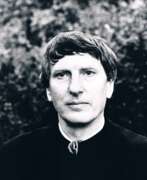



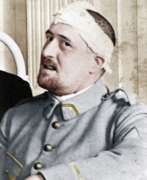

Guillaume Apollinaire, real name Wilhelm Albert Vladimir Apollinaris de Wąż-Kostrowicki, a French poet of Polish descent, was a towering figure in the early 20th century's literary and art scenes. Known for his experimental verse and support of avant-garde art movements like Cubism and Surrealism, Apollinaire's work pushed the boundaries of traditional aesthetics and inspired a generation of artists and writers.
Guillaume Apollinaire's literary contributions were vast and varied. He was an early advocate for Cubism, a relationship most prominently seen in his collaborations with artists like Pablo Picasso. He not only wrote about art but also collected it, surrounding himself with works by modernist masters such as Henri Rousseau and Georges Braque. His Paris apartment was a small museum of modern art, filled with pieces he often sold to support his literary endeavors. This vibrant artistic environment fueled his creativity, leading to major works such as Alcools and Calligrammes, which explored the possibilities of poetic form and typography to represent visual and verbal content in a unified way.
Despite his innovative work in poetry and art criticism, Guillaume Apollinaire's life was marked by personal challenges, including a grievous injury during World War I. Yet, even these difficulties did not hinder his prolific output. Among his notable works during this period was the play Les Mamelles de Tirésias, which was performed in 1917 and is considered a precursor to theatrical Surrealism.
Apollinaire's influence extended beyond his lifetime, particularly through his mentoring of future Surrealist leaders like André Breton. His forward-thinking approach to art and literature made him a central figure in the transition from traditional to modernist forms in both fields.
For collectors and experts in art and antiques, Guillaume Apollinaire's work represents a nexus of literary brilliance and pivotal artistic movements. His life and work provide fascinating insights into the dynamic and transformative world of early 20th-century art and literature.
Sign up for updates on auctions and sales events featuring items related to Guillaume Apollinaire. Stay informed about opportunities to acquire unique artifacts that celebrate his legacy in the realms of poetry and art.


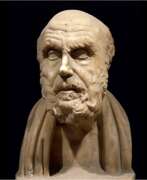

Aratus Solensis was an ancient Greek didactic poet.
It is known that he was a native of the ancient city of Soli in Cilicia, and studied under the famous philosophers of his time in Ephesus, Cos and Athens. Around 276 BC, Aratus was invited to the court of the Macedonian king Antigonus II Gonatus and expounded in verse his victory over the Gauls. Here he also wrote his most famous work in modern times, the hexameter poem Phenomena, which sets forth the astronomical knowledge of the time. He then spent some time at the court of Antiochus I Soter of Syria and returned to Macedonia.
The poet's second extant poem is Diosemeia ("On the Omens of the Weather"). These two poems by Aratus were very popular in both the Greek and Roman worlds. He was translated and quoted by Ovid and Cicerone, and a translation into Arabic was made in the 9th century.
In addition to poetry, Aratus practiced medicine, grammar, and philosophy.
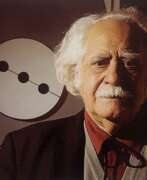


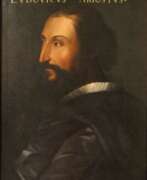

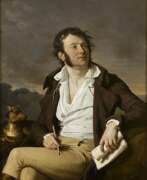

Antoine Vincent Arnault was a French playwright, fable poet and statesman.
Arnault was one of the most popular playwrights of the French Revolution and the First Empire and, like many writers of the time, he was also politically active. He carried out commissions for Napoleon Bonaparte and served him faithfully throughout his life.
Arnault wrote many plays and poems, among which his poem "Listok" about the fate of the emigrant was especially popular, it was repeatedly translated into different languages, including Russian.
His son was the playwright Lucien Arnault (1787-1863).
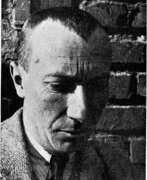

Jean Arp, born Hans Peter Wilhelm Arp, was a German and French poet, painter, graphic artist and sculptor. one of the founders of the Dada movement in Zurich.
Arp used abstract forms in his work and experimented with different materials such as wood, metal and stone. He was also known for his poetic works, in which he applied a method of randomly selecting words, called the "clutter method". Arp believed that this method helped him express his thoughts more precisely and originally. Arp's influence on the arts is still significant today.


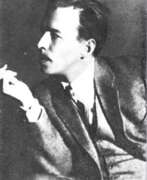

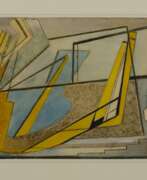

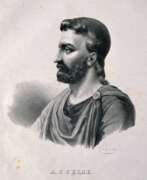

Cornelius Gerardi Aurelius, also called Goudanus, was a Dutch humanist scholar, writer, and historian.
Aurelius was a permanent canon (monk) of the Augustinian monastic order and is one of the first humanists of the Netherlands in the 16th century. He wrote poetry, historiography, hagiography, political and theological works. Aurelius also corresponded with many of the famous men of his day, especially Erasmus.
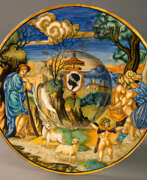

Francesco Xanto Avelli was an Italian ceramicist. He is best known for his painted maiolica works.
Xanto's signed works all date from between 1530 and 1542. Each bears his name and the date of the piece; many also were given ambitious tags explaining their meanings. The surviving pieces appear to be similar in nature, with the exception of the signatures, to most other maiolica ware produced in Urbino at the time. Xanto signed his works with a number of different variants of his own name; besides those with his full name, pieces signed fra Xanto in his hand are known to exist.
Besides being a ceramicist, Xanto was also a poet; in the 1530s he wrote a sequence of sonnets in praise of Francesco Maria I della Rovere, then duke of Urbino. An elegant fair copy survives in the Vatican Library.