

Black & white photo 19th century
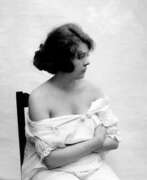

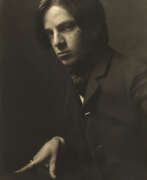

Alvin Langdon Coburn was an American photographer and artist who was best known for his pioneering work in the field of pictorial photography. He was a member of the Photo-Secession movement, which was a group of photographers who sought to elevate photography to the status of fine art.
Coburn was born in Boston, Massachusetts, and grew up in England. He began taking photographs when he was just eight years old and later studied photography in New York City. He went on to become one of the leading photographers of his time, and his work was exhibited widely in Europe and the United States.
Coburn is perhaps best known for his innovative use of the "vortograph," a technique he developed in 1917 that involved photographing objects through a triangular arrangement of mirrors. The resulting images were highly abstract and geometric, and anticipated the work of many later artists, including the Surrealists.
In addition to his work in photography, Coburn was also an accomplished painter and printmaker. He continued to work as an artist throughout his life, and his work is now held in the collections of many major museums around the world.
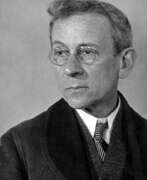

Lewis W. Hine was not an artist in the traditional sense, but rather a photographer and social documentary photographer who used his camera as a tool for social change. He is best known for his work in the early 20th century, documenting the living and working conditions of children in the United States.
Hine's photographs were instrumental in bringing about changes in child labor laws in the United States, and his images were used as evidence in court cases and Congressional hearings. He believed that photography could be a powerful tool for social reform, and he used his camera to highlight the injustices and hardships faced by working-class Americans.
In addition to his work as a photographer, Hine was also a teacher and an advocate for the arts. He taught at the Ethical Culture School in New York City, where he encouraged his students to use photography as a means of social commentary.
Hine's legacy as a photographer and social activist continues to inspire generations of artists and advocates for social justice. His photographs are considered a valuable historical record of life in the early 20th century, and his commitment to using art as a means of social change remains a powerful example of the role that artists can play in shaping society.
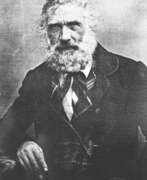

Johann Baptist Isenring was a Swiss landscape painter and printmaker, one of the first photographers in 19th-century Switzerland.
Johann studied painting and aquatint at the Munich Academy of Fine Arts, opened an art studio in St. Gallen in 1828 and soon began publishing his lithographic collection of picturesque views of Switzerland's most remarkable cities and towns.
In 1839, Isenring, fascinated by the discoveries of Niépce and Daguerre, bought equipment for "daguerreotype" and a year later organized an exhibition in his studio in Multtertor, which was probably the first photographic exhibition in the world. Isenring even gave up painting for a while and worked as a photographer for two years, settling in Munich. He made portraits, photographs of architecture, reproductions of paintings and developed a coloring method for his prints, which he patented in America.
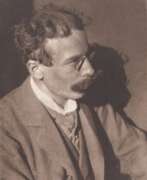

Carl Christian Heinrich Kühn was an Austrian–German photographer and photography pioneer.
Heinrich Kühn is regarded one of the forefathers of fine art photography, the movement that helped photography to establish itself as an art on its own. His photographs closely resemble impressionist paintings, with their frequent use of soft lighting and focus. Kühn was part of the pictorialist photographic movement.
Kühn mainly used the gum bichromate technique, applied in several layers, and thus allowing for previously unseen color tonalities.


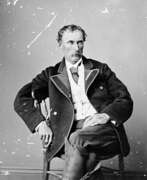

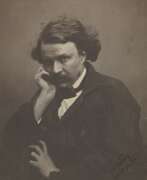

Gaspard-Félix Tournachon, known by his pen name Nadar, is a French photographer, cartoonist, journalist, writer and balloonist.
Throughout his career, Nadar shot portraits of many famous personalities, including writers, artists, musicians and politicians. Among them were Victor Hugo and Charles Baudelaire, Sarah Bernhardt and George Sand. Nadar's portraits were in great demand as he had a unique ability to reveal the inner essence of his subjects, revealing their character and emotions.
In addition to portraiture, Nadar was an aerial photographer, using hot air balloons to capture breathtaking images from high above. His boldness and adventurous spirit led him to explore new perspectives and techniques, making a significant contribution to the development of aerial photography. In 1858, he became the first person to take aerial photographs.
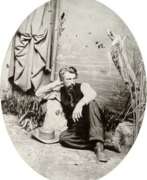




Baron Wilhelm Ivan Friederich August von Gloeden, commonly known as Baron von Gloeden, was a German photographer who lived and worked in Italy. One of the greatest masters of male nudity, a precursor of homosexual photography and a forerunner of performance art.
Wilhelm von Gloeden is mainly known for his pastoral photographs of nude Sicilian boys, which usually feature props such as wreaths or amphorae, suggestive of ancient Greece or Italy. From a contemporary perspective, his work is commendable for its controlled use of lighting, as well as the often elegant poses of his models. His innovations include the use of photofilters and special cosmetics (a mixture of milk, olive oil and glycerine) to mask skin imperfections.