Auction price


















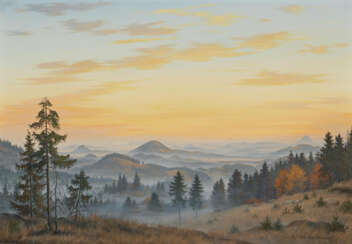

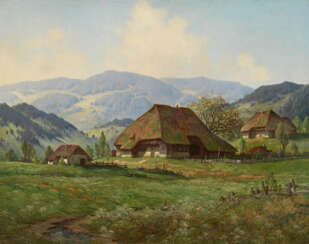

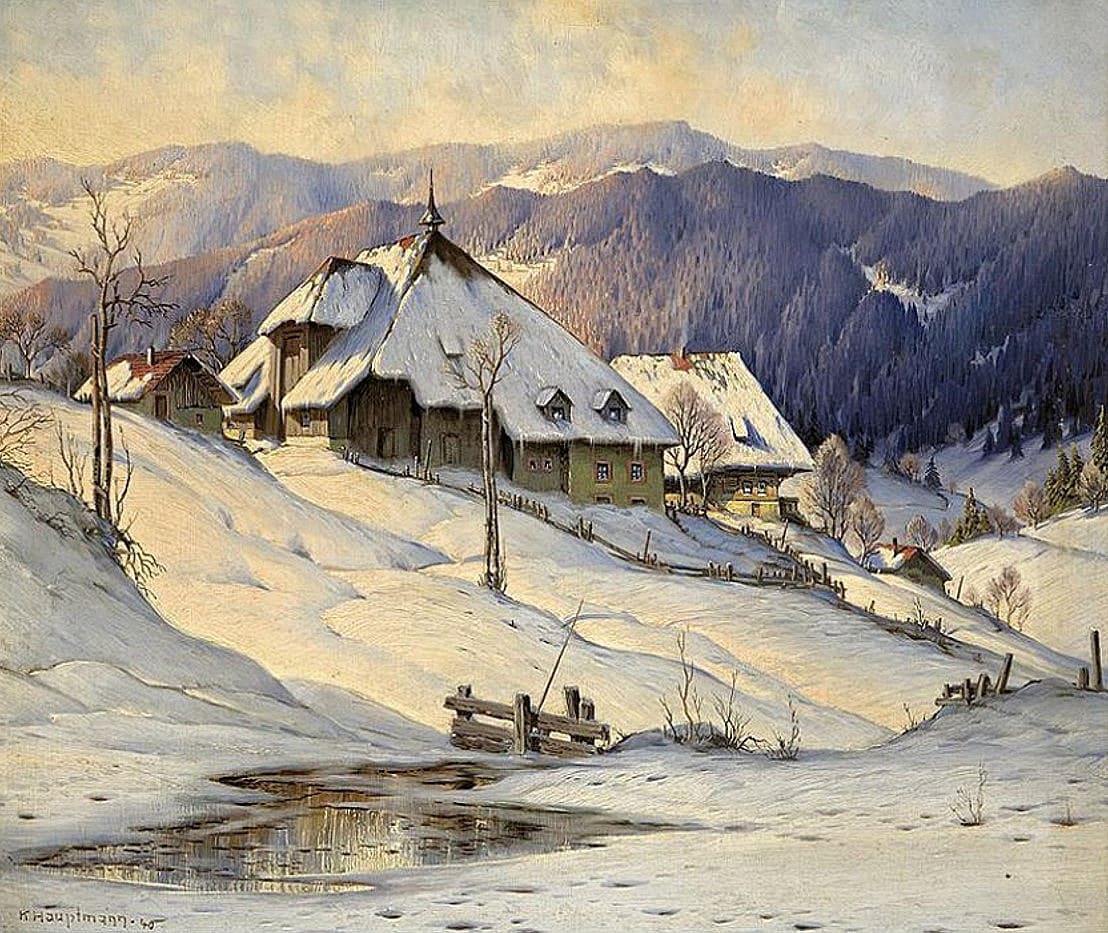
Karl Hauptmann was a German landscape painter who specialised in mountain views.
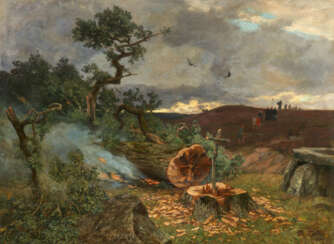

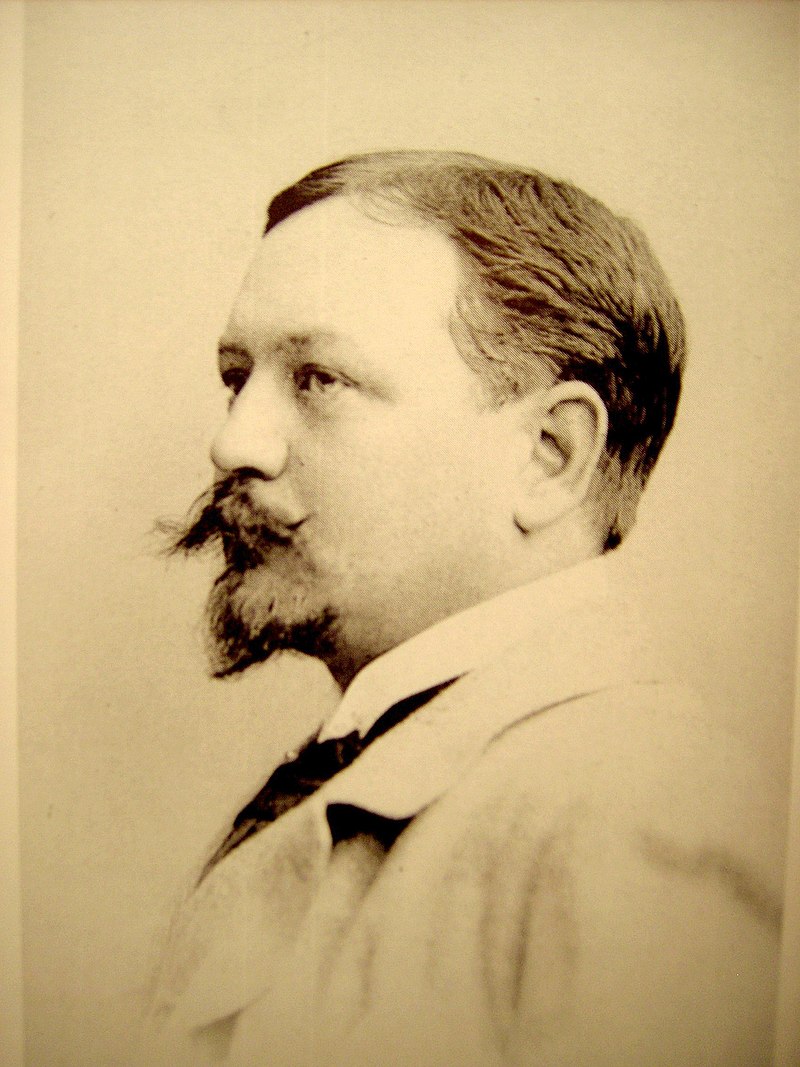
Fritz von Wille, real name Friedrich Gustav August Julius Philipp Rudolf von Wille is a German painter, member of the Malkasten group.
Fritz von Wille is known for his landscapes in the Impressionist style. To avoid confusion with his father, the painter August von Wille, he took a short name. His son Otto (1901-1977) also became a painter.
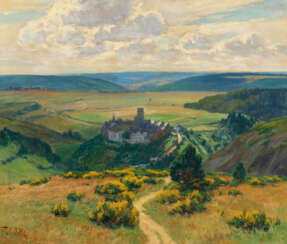

Fritz von Wille, real name Friedrich Gustav August Julius Philipp Rudolf von Wille is a German painter, member of the Malkasten group.
Fritz von Wille is known for his landscapes in the Impressionist style. To avoid confusion with his father, the painter August von Wille, he took a short name. His son Otto (1901-1977) also became a painter.
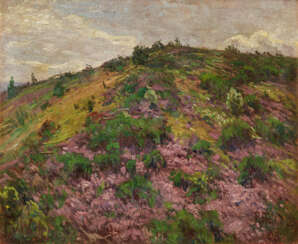

Fritz von Wille, real name Friedrich Gustav August Julius Philipp Rudolf von Wille is a German painter, member of the Malkasten group.
Fritz von Wille is known for his landscapes in the Impressionist style. To avoid confusion with his father, the painter August von Wille, he took a short name. His son Otto (1901-1977) also became a painter.
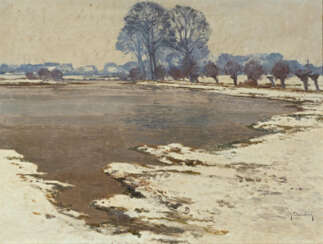

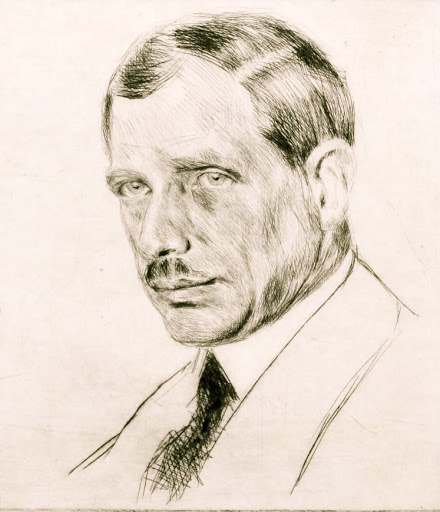
Max Clarenbach was a German painter of the first half of the twentieth century. He is known as a painter, landscape painter, genre painter and teacher and is considered one of the most important representatives of Rhenish painting of his time.
Max Clarenbach made study trips to Italy and Holland early in his career, where he formed his genre preferences and became a landscape painter. His work reflected the influence of the Hague School and the French Barbizonians. The artist skillfully depicted winter scenes and the nature of western Germany. He also painted sports and street scenes.
Clarenbach was one of the organizers of the Düsseldorf Sonderbund and taught at the Düsseldorf Academy of Art.
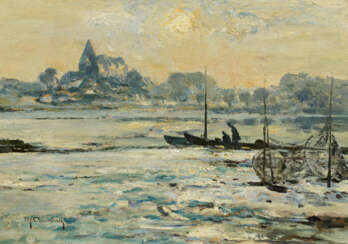

Max Clarenbach was a German painter of the first half of the twentieth century. He is known as a painter, landscape painter, genre painter and teacher and is considered one of the most important representatives of Rhenish painting of his time.
Max Clarenbach made study trips to Italy and Holland early in his career, where he formed his genre preferences and became a landscape painter. His work reflected the influence of the Hague School and the French Barbizonians. The artist skillfully depicted winter scenes and the nature of western Germany. He also painted sports and street scenes.
Clarenbach was one of the organizers of the Düsseldorf Sonderbund and taught at the Düsseldorf Academy of Art.


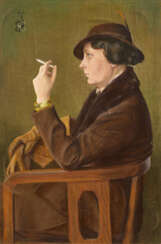

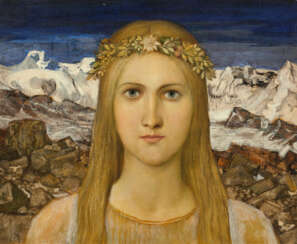

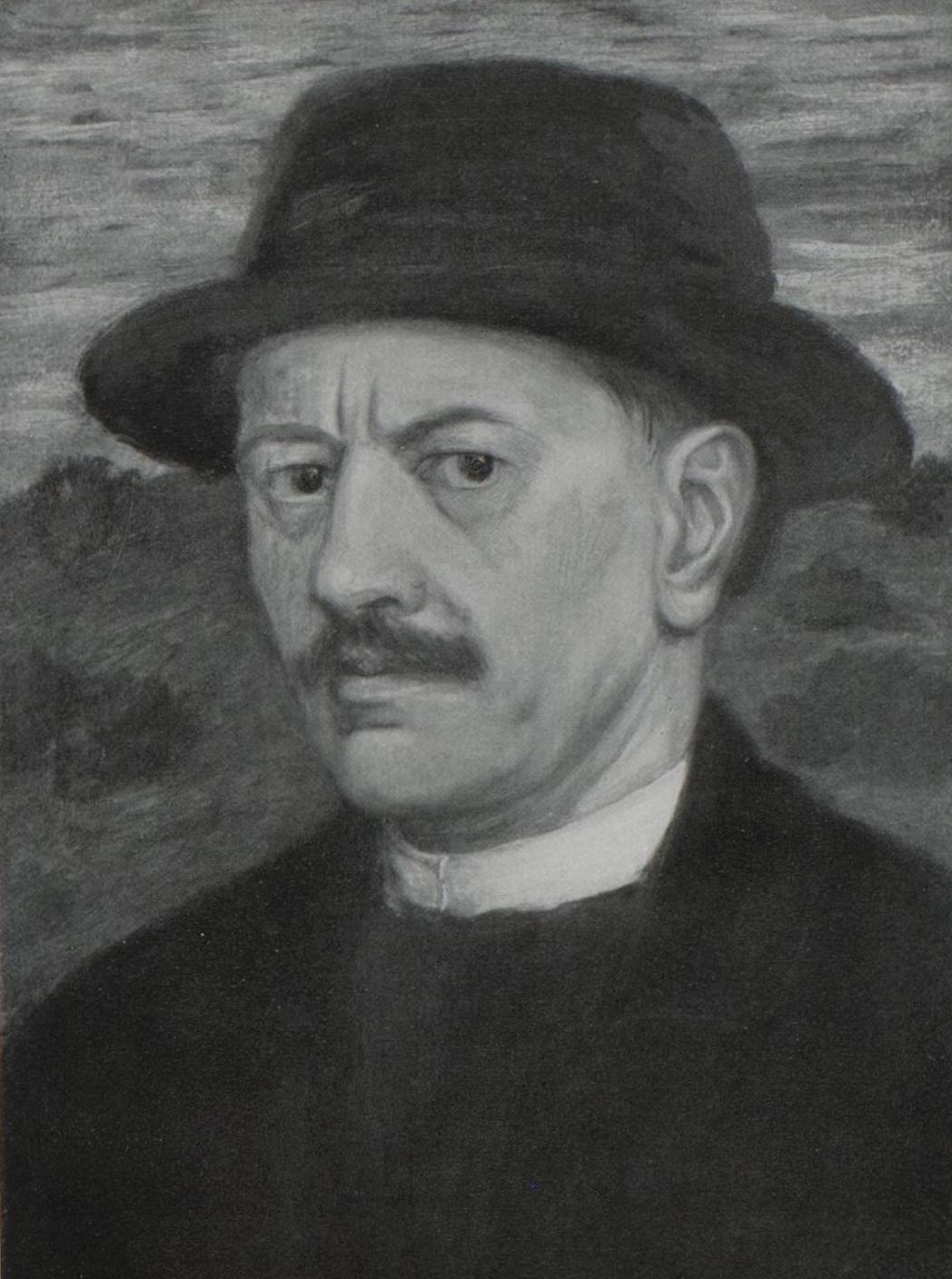
Matthäus Schiestl was a German painter and graphic artist.


Matthäus Schiestl was a German painter and graphic artist.

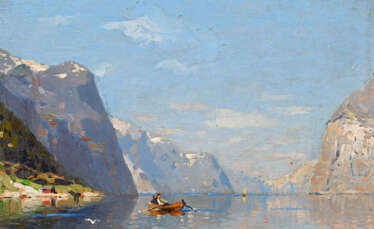

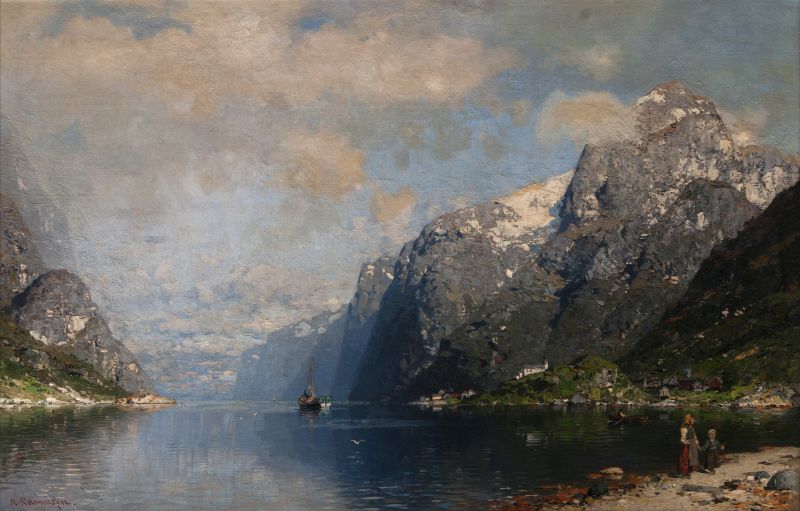

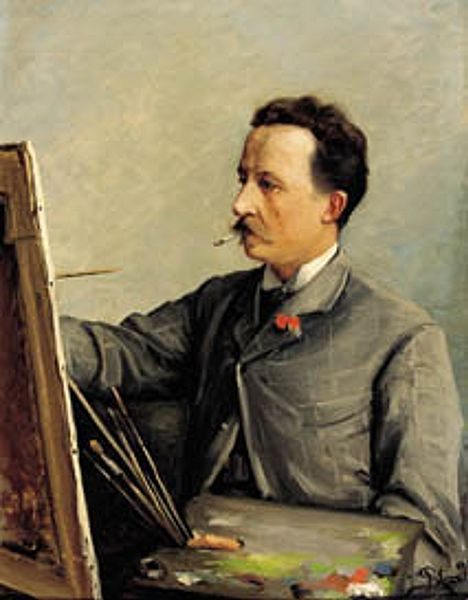
Peder Mork Monsted (Danish: Peder Mørk Mønsted) was a Danish realist painter, representative of the Golden Age of Danish painting.
Monsted studied at the Royal Academy of Fine Arts and gradually developed his own style of academic naturalism, almost photorealistic. During his long career, P. Monsted traveled extensively, often visiting Switzerland, Italy, North Africa, Greece, where he was a guest of the royal family and for a year painted their portraits.
Favorite themes of the artist were Danish landscapes - snowy winter or summer landscapes with boats on the water, forest. From the beginning of the XX century and until his death P. Monsted was one of the most popular and wealthy artists. He was especially popular in Germany among the Munich public.





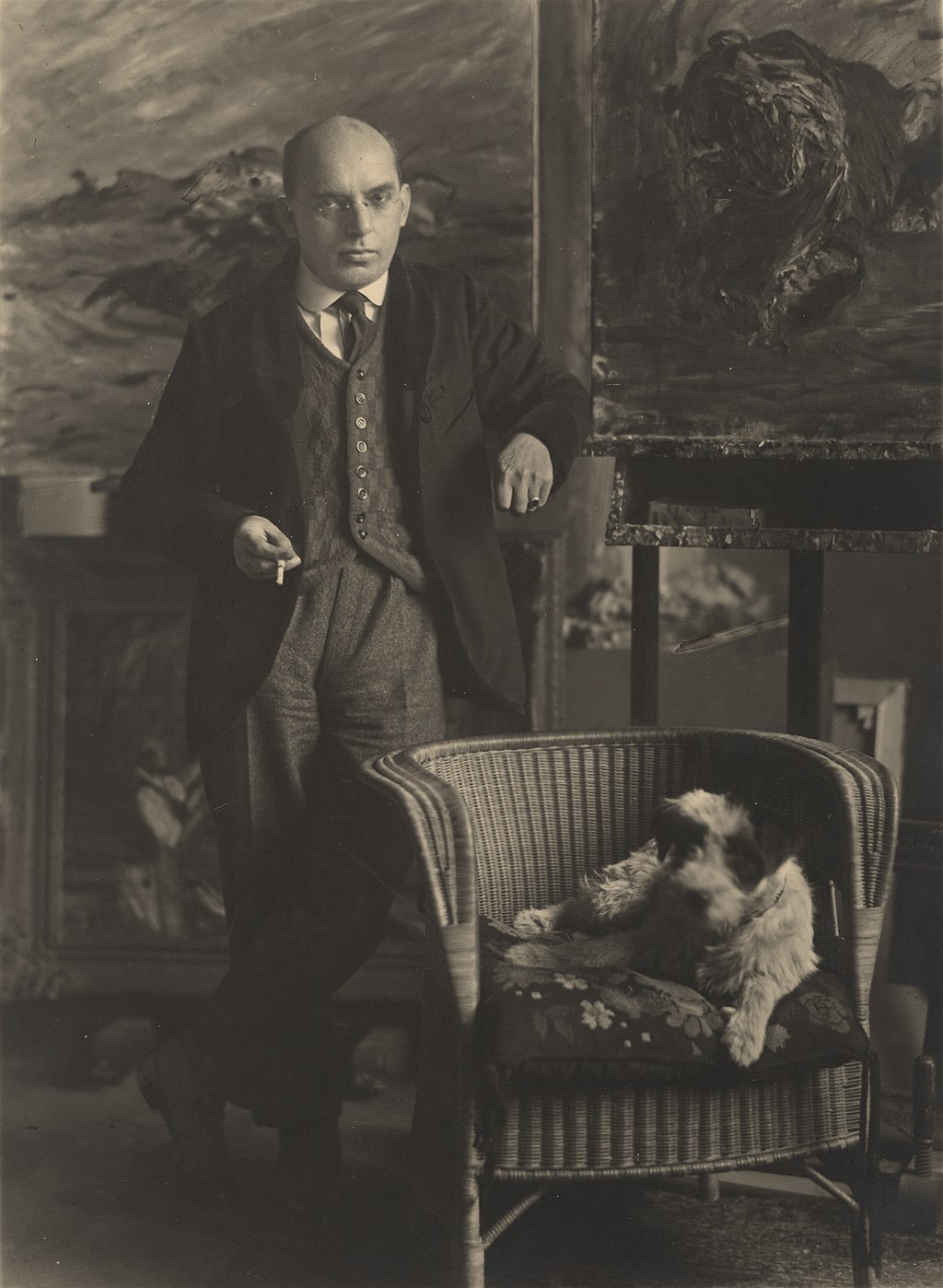
Otto Dill was a German painter. His work was part of the art competitions at the 1928 Summer Olympics and the 1932 Summer Olympics.

Otto Dill was a German painter. His work was part of the art competitions at the 1928 Summer Olympics and the 1932 Summer Olympics.


Otto Dill was a German painter. His work was part of the art competitions at the 1928 Summer Olympics and the 1932 Summer Olympics.


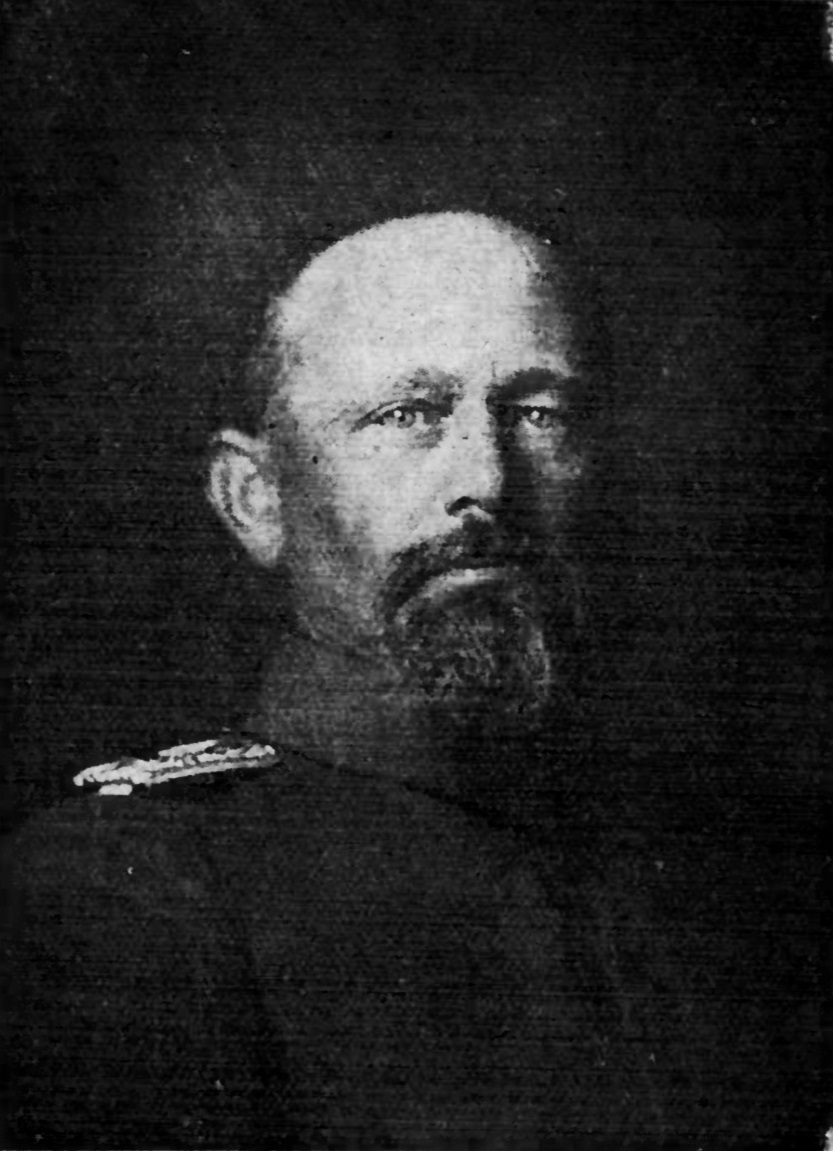
Hans am Ende was a German Impressionist painter.
In 1889 he co-founded the artists' colony in Worpswede with Fritz Overbeck, Otto Modersohn, and Heinrich Vogeler. In 1895 this group exhibited in the Kunsthalle Bremen and at the Glaspalast in Munich, which brought them national recognition. In 1900 the poet Rainer Maria Rilke travelled to Worpswede and befriended the artist's colony, eventually writing essays about each of its members.


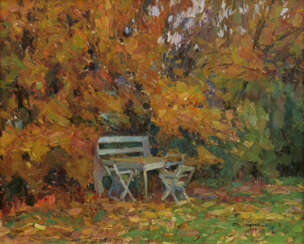

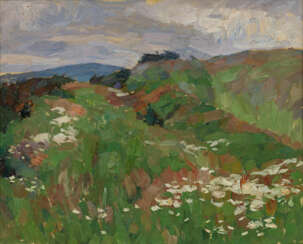



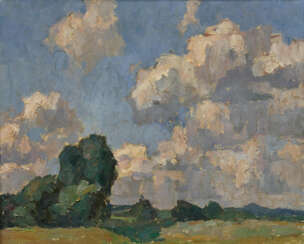



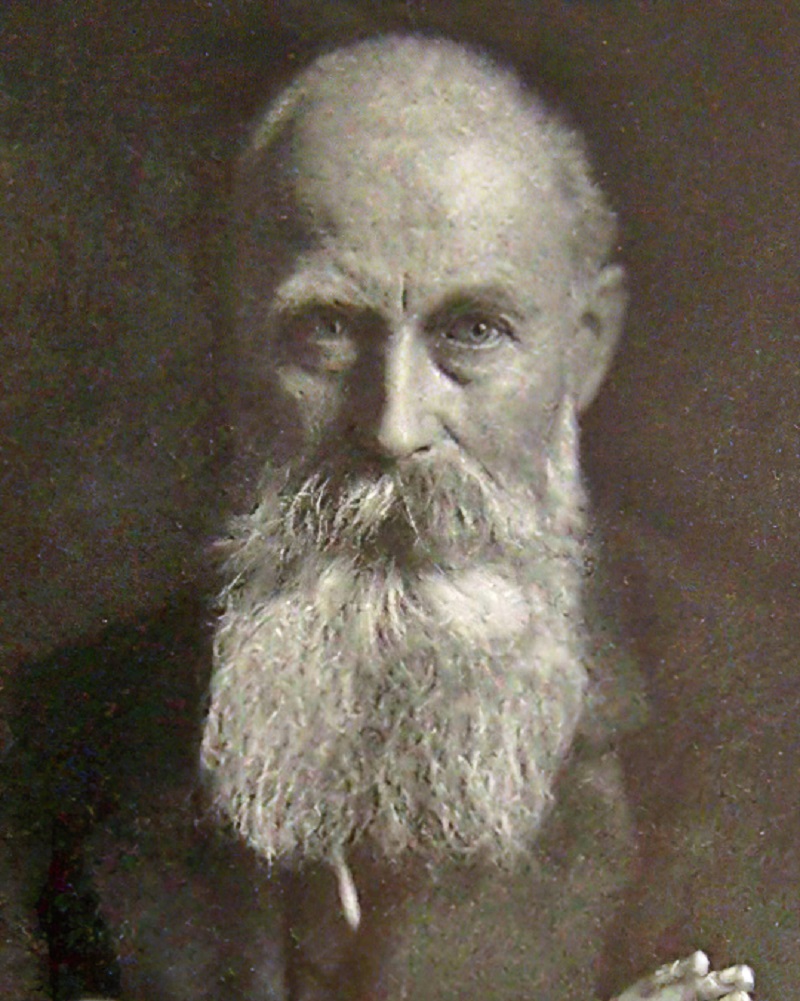
Eugen Felix Prosper Bracht was a German landscape painter.
A late Romanticist painter, Bracht was known for his moody landscapes and coastal scenes in North Germany, and began a sketching trip through Syria, Palestine and Egypt from 1880 to 1881. In 1882, he became a Professor of Landscape Painting at the Prussian Academy of Arts.
Later, Bracht became a representative of German Impressionism.
In 1901, he obtained a teaching position at the Dresden Academy of Fine Arts that he held until 1919.


Eugen Felix Prosper Bracht was a German landscape painter.
A late Romanticist painter, Bracht was known for his moody landscapes and coastal scenes in North Germany, and began a sketching trip through Syria, Palestine and Egypt from 1880 to 1881. In 1882, he became a Professor of Landscape Painting at the Prussian Academy of Arts.
Later, Bracht became a representative of German Impressionism.
In 1901, he obtained a teaching position at the Dresden Academy of Fine Arts that he held until 1919.
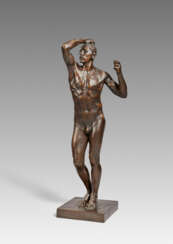

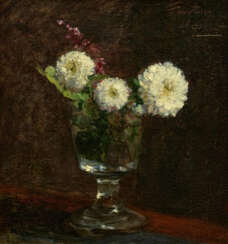



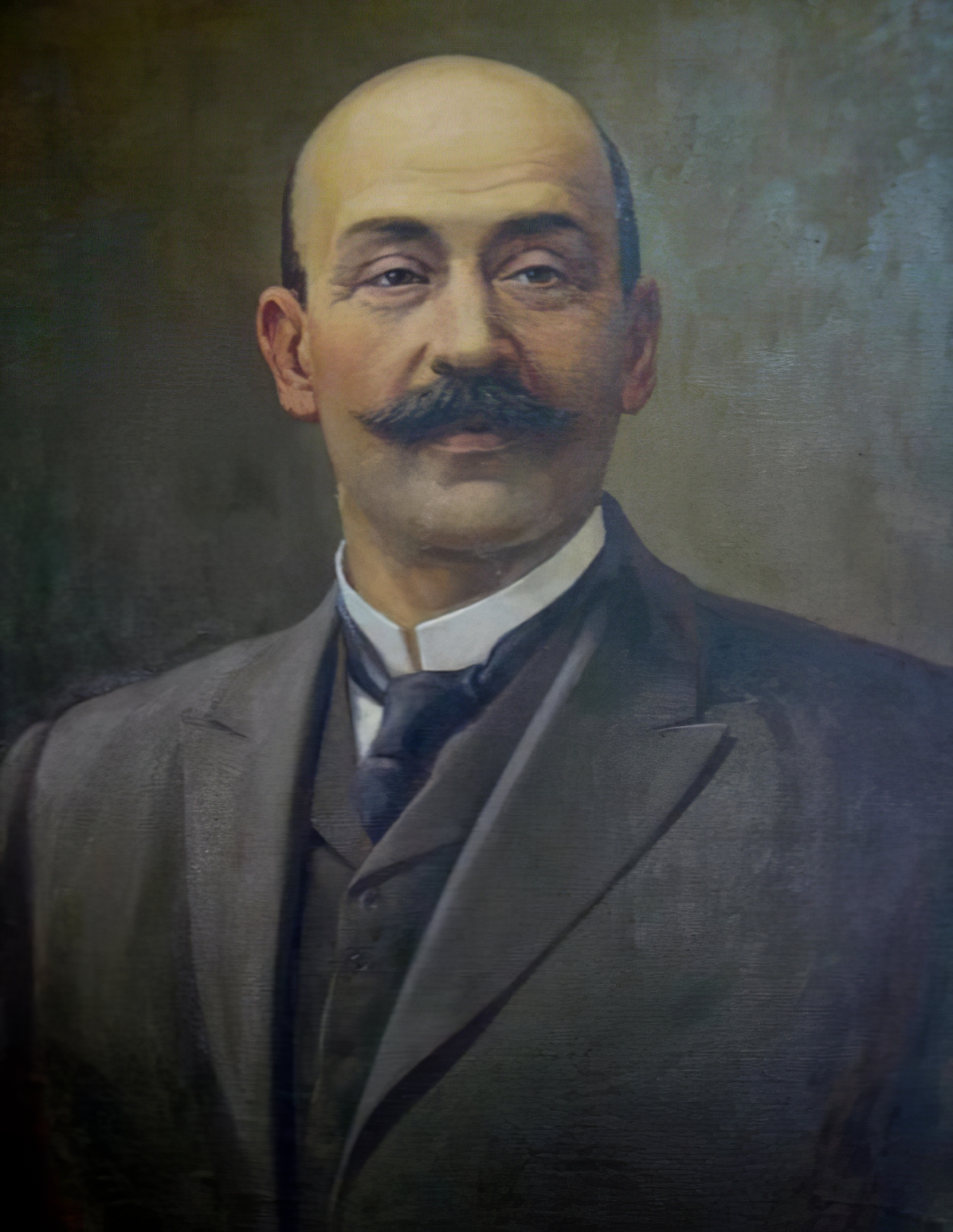
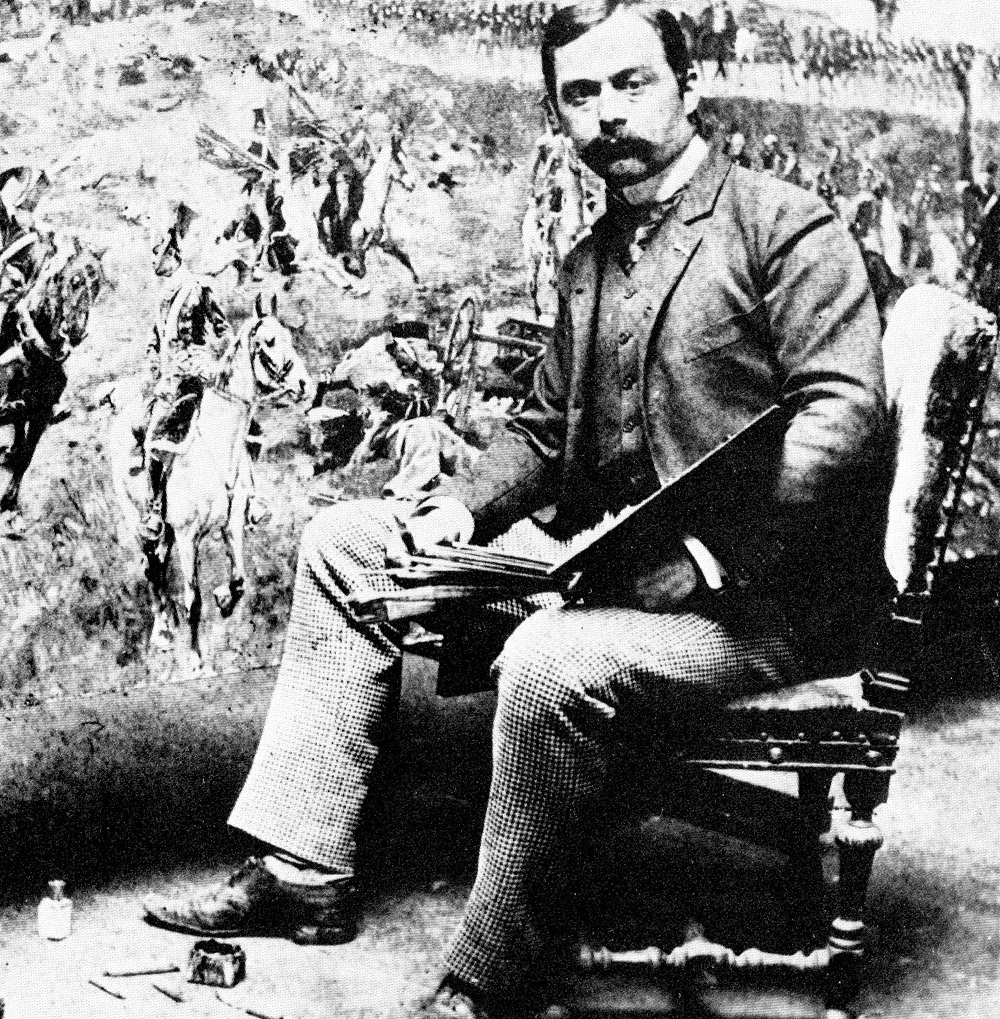
Franz Roubaud (Russian: Франц Алексеевич Рубо) was a Russian painter, known for his panoramic paintings and battle scenes. Born in Odessa in 1856, Roubaud studied at the Imperial Academy of Arts in St. Petersburg and furthered his education in Munich. His works are celebrated for their meticulous detail and dynamic composition.
One of his most famous works is the "Siege of Sevastopol," a monumental panorama depicting a key event from the Crimean War. This masterpiece is housed in the Panorama Museum in Sevastopol and stands as a testament to Roubaud's ability to convey historical grandeur and emotional intensity.
Roubaud's contributions to Russian art extend beyond his canvases, as he was also a respected professor at the Academy of Arts in St. Petersburg. His legacy continues to influence modern Russian painters, and his works are sought after by collectors and art enthusiasts worldwide.
Stay updated on new product sales and auction events related to Franz Roubaud (Rubo) by signing up for our newsletter. Don’t miss the chance to own a piece of history!
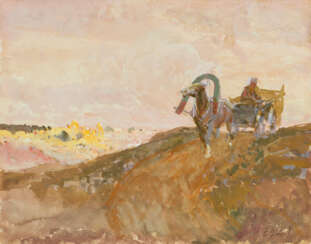

Franz Roubaud (Russian: Франц Алексеевич Рубо) was a Russian painter, known for his panoramic paintings and battle scenes. Born in Odessa in 1856, Roubaud studied at the Imperial Academy of Arts in St. Petersburg and furthered his education in Munich. His works are celebrated for their meticulous detail and dynamic composition.
One of his most famous works is the "Siege of Sevastopol," a monumental panorama depicting a key event from the Crimean War. This masterpiece is housed in the Panorama Museum in Sevastopol and stands as a testament to Roubaud's ability to convey historical grandeur and emotional intensity.
Roubaud's contributions to Russian art extend beyond his canvases, as he was also a respected professor at the Academy of Arts in St. Petersburg. His legacy continues to influence modern Russian painters, and his works are sought after by collectors and art enthusiasts worldwide.
Stay updated on new product sales and auction events related to Franz Roubaud (Rubo) by signing up for our newsletter. Don’t miss the chance to own a piece of history!
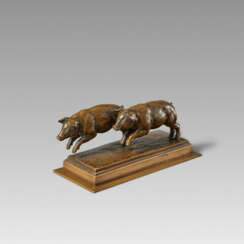

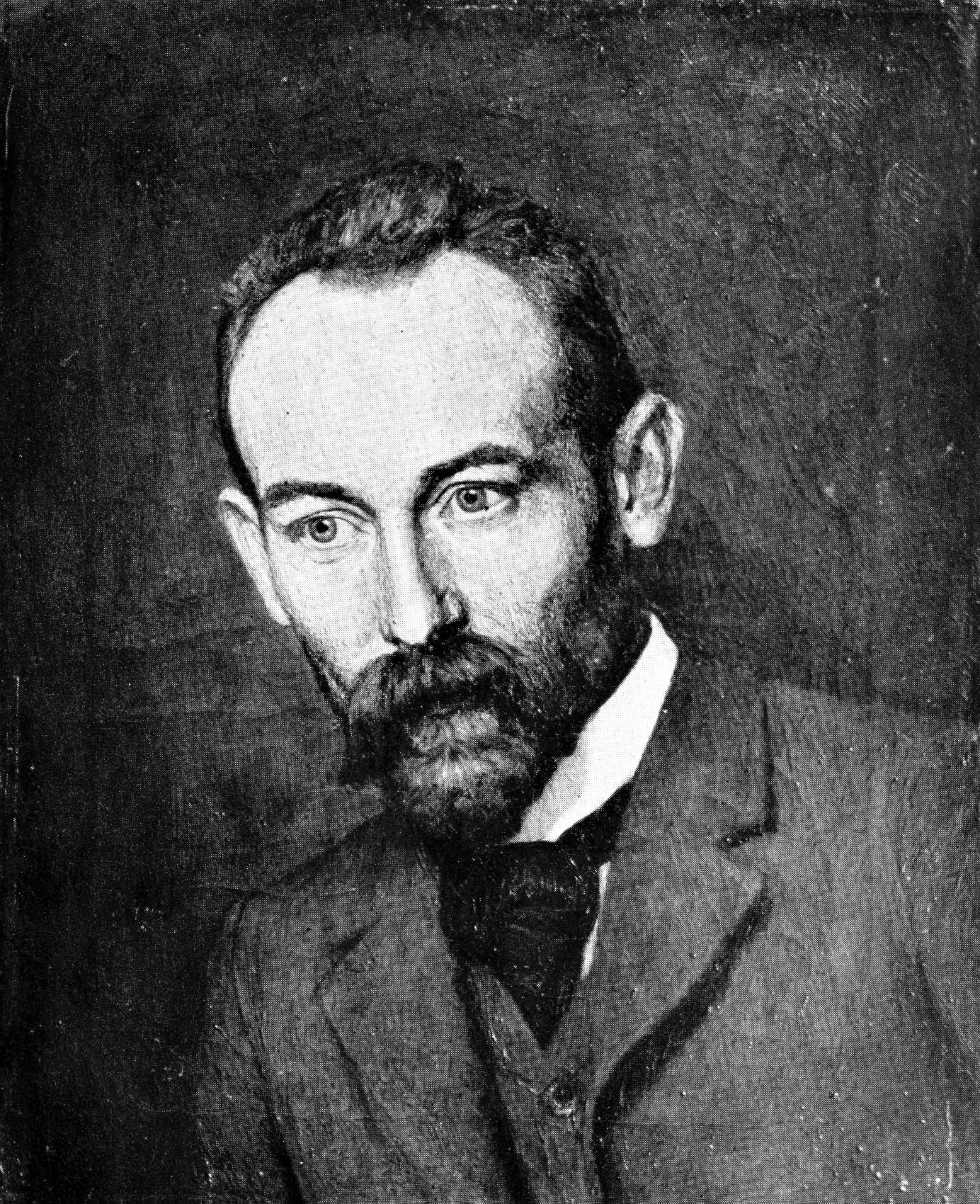





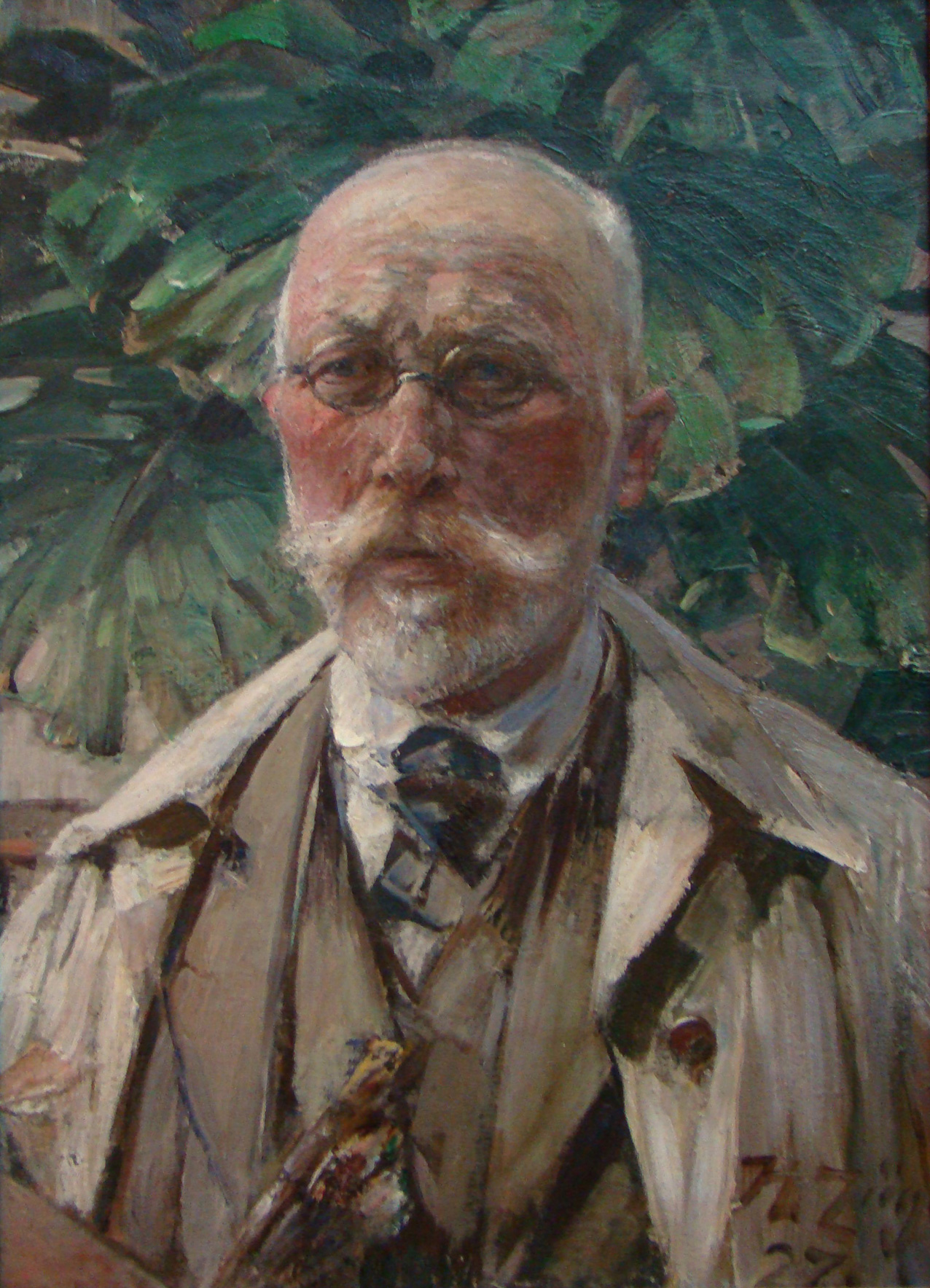
Heinrich Johann von Zügel was a German painter of the late nineteenth century and the first half of the twentieth century. He is known as a painter who specialized in depicting farm animals in dramatic and humorous situations.
Von Zügel invested more than 40 years in the subject of "Hard Labor," depicting mostly the work of oxen. By creating 24 versions of this subject, the artist demonstrated the evolution of his skill from realistic detailing to cubic and monumental interpretation. Von Zügel also created light impressionist paintings, including a self-portrait at the age of 77. In addition to animals, he also painted portraits and cityscapes.
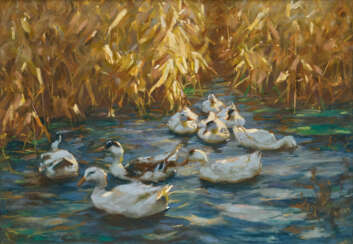

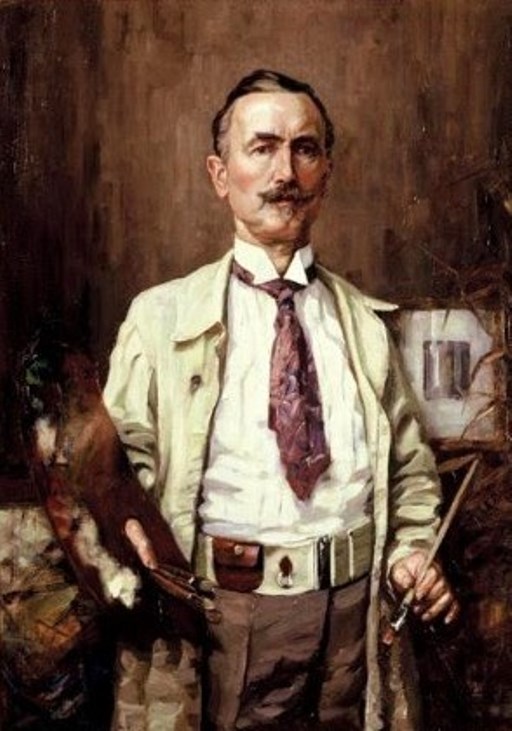
Alexander Max Koester was a German painter. He depicted coastal landscapes and still lifes with flowers. After the artist first presented one of his landscapes with a family of ducks in Berlin in 1899, he earned the nickname "Duck Koester." The "duck" paintings were extremely popular with art lovers.
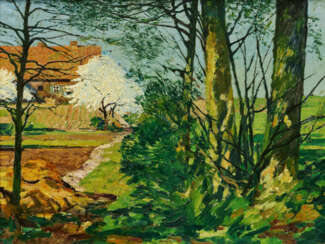

Max Clarenbach was a German painter of the first half of the twentieth century. He is known as a painter, landscape painter, genre painter and teacher and is considered one of the most important representatives of Rhenish painting of his time.
Max Clarenbach made study trips to Italy and Holland early in his career, where he formed his genre preferences and became a landscape painter. His work reflected the influence of the Hague School and the French Barbizonians. The artist skillfully depicted winter scenes and the nature of western Germany. He also painted sports and street scenes.
Clarenbach was one of the organizers of the Düsseldorf Sonderbund and taught at the Düsseldorf Academy of Art.
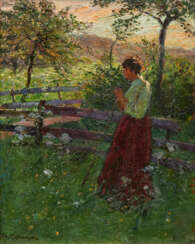

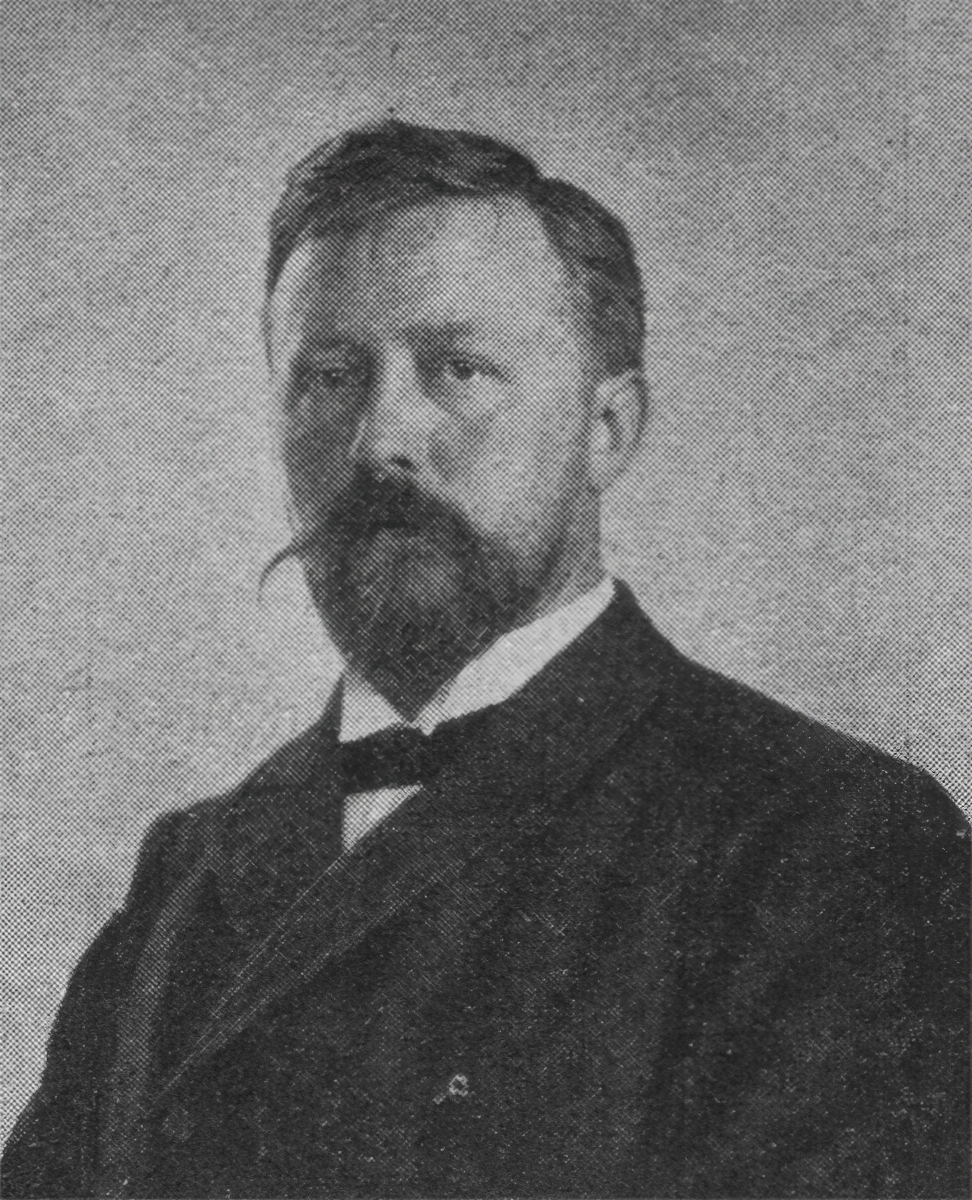
Friedrich Kallmorgen was a German Impressionist painter who specialized in landscapes and cityscapes.


Friedrich Kallmorgen was a German Impressionist painter who specialized in landscapes and cityscapes.


Friedrich Kallmorgen was a German Impressionist painter who specialized in landscapes and cityscapes.


Peder Mork Monsted (Danish: Peder Mørk Mønsted) was a Danish realist painter, representative of the Golden Age of Danish painting.
Monsted studied at the Royal Academy of Fine Arts and gradually developed his own style of academic naturalism, almost photorealistic. During his long career, P. Monsted traveled extensively, often visiting Switzerland, Italy, North Africa, Greece, where he was a guest of the royal family and for a year painted their portraits.
Favorite themes of the artist were Danish landscapes - snowy winter or summer landscapes with boats on the water, forest. From the beginning of the XX century and until his death P. Monsted was one of the most popular and wealthy artists. He was especially popular in Germany among the Munich public.


Peder Mork Monsted (Danish: Peder Mørk Mønsted) was a Danish realist painter, representative of the Golden Age of Danish painting.
Monsted studied at the Royal Academy of Fine Arts and gradually developed his own style of academic naturalism, almost photorealistic. During his long career, P. Monsted traveled extensively, often visiting Switzerland, Italy, North Africa, Greece, where he was a guest of the royal family and for a year painted their portraits.
Favorite themes of the artist were Danish landscapes - snowy winter or summer landscapes with boats on the water, forest. From the beginning of the XX century and until his death P. Monsted was one of the most popular and wealthy artists. He was especially popular in Germany among the Munich public.


Peder Mork Monsted (Danish: Peder Mørk Mønsted) was a Danish realist painter, representative of the Golden Age of Danish painting.
Monsted studied at the Royal Academy of Fine Arts and gradually developed his own style of academic naturalism, almost photorealistic. During his long career, P. Monsted traveled extensively, often visiting Switzerland, Italy, North Africa, Greece, where he was a guest of the royal family and for a year painted their portraits.
Favorite themes of the artist were Danish landscapes - snowy winter or summer landscapes with boats on the water, forest. From the beginning of the XX century and until his death P. Monsted was one of the most popular and wealthy artists. He was especially popular in Germany among the Munich public.

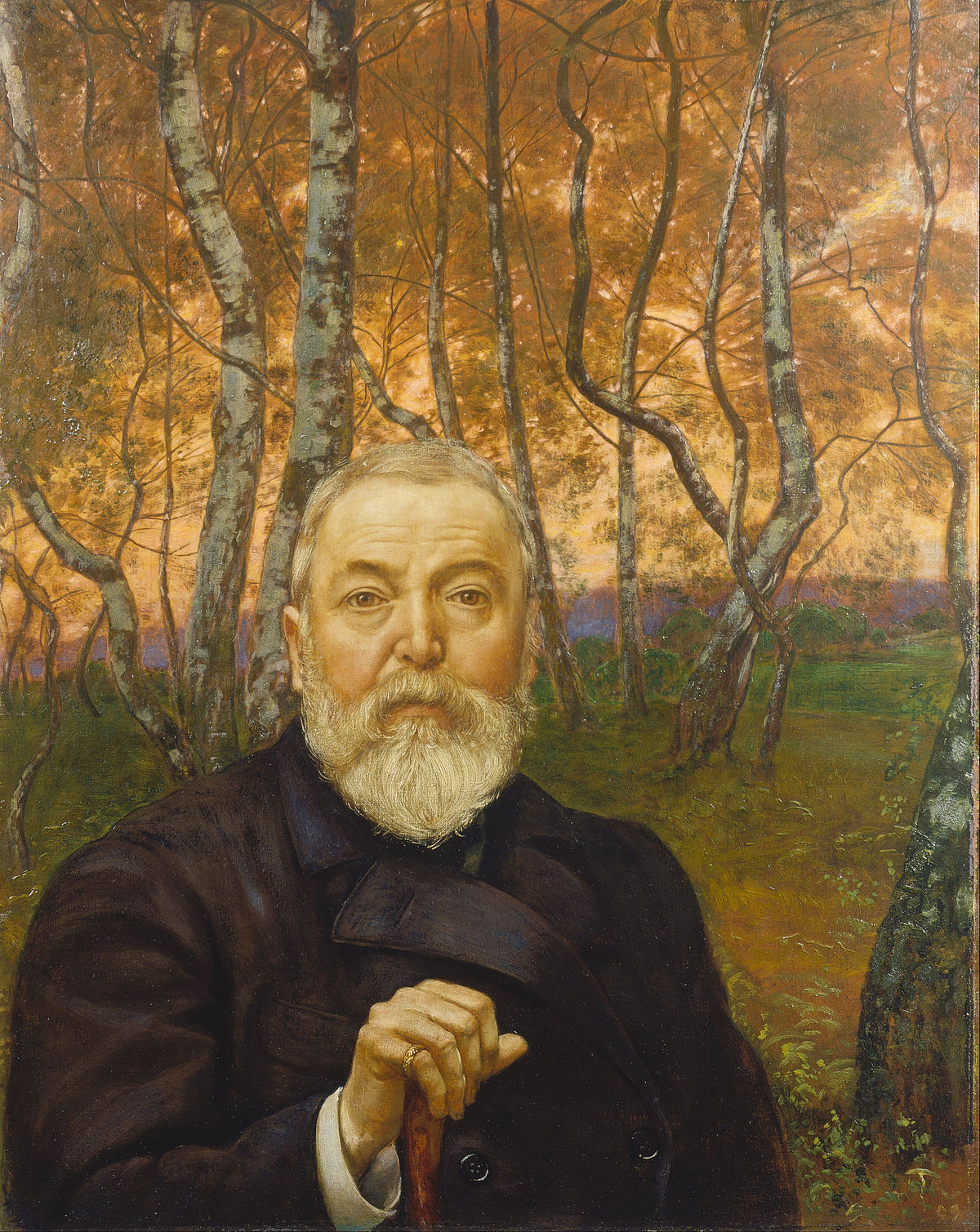
Hans Thoma was a German painter.
In spite of his studies under various masters, his art has little in common with modern ideas, and is formed partly by his early impressions of the simple idyllic life of his native district, partly by his sympathy with the early German masters, particularly with Albrecht Altdorfer and Lucas Cranach the Elder. In his love of the details of nature, in his precise drawing of outline, and in his predilection for local coloring, he has distinct affinities with the Pre-Raphaelites.

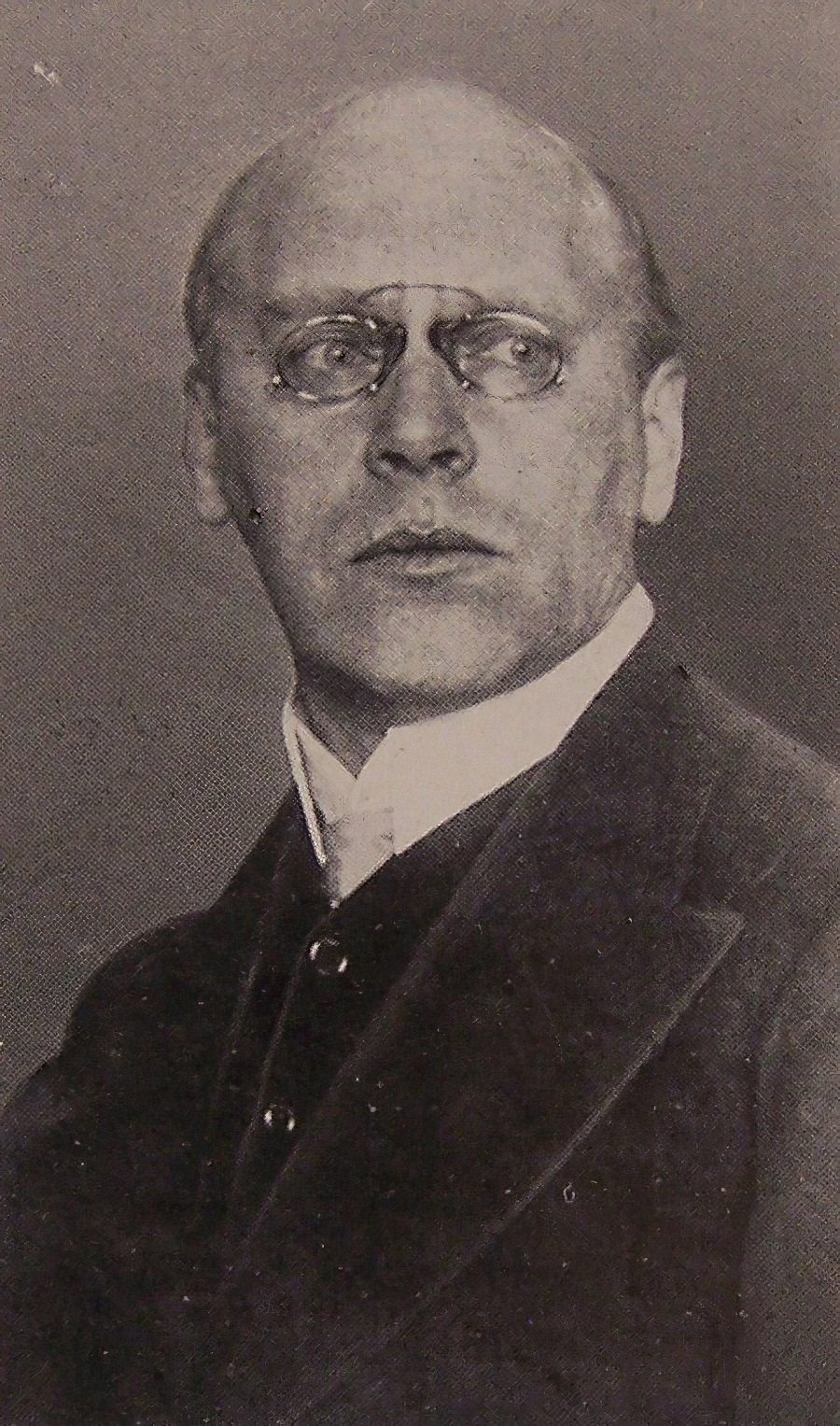
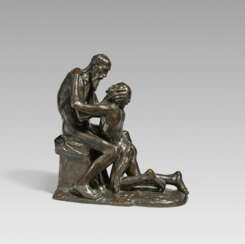
Ludwig von Hofmann is a German painter, graphic artist and designer. The influence of Historicism, Art Nouveau, Symbolism and New Realism can be felt in the works of Ludwig von Hofmann at different periods of his art.
Ludwig von Hoffmann studied painting at the academies of fine arts in Dresden, Karlsruhe and Munich. Since 1898 he was a member of the cultural movement Berlin Secession.
After the National Socialists came to power in Germany, some of his works were classified as degenerate art, but most of them continued to be exhibited in museums in Germany.

.jpg)
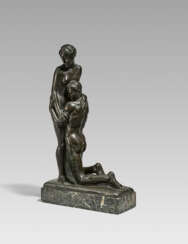
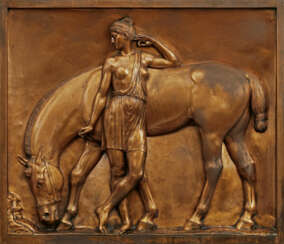
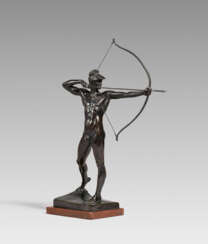
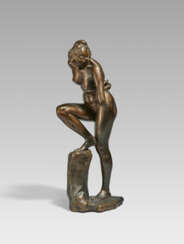
Constantin Meunier was a 19th-century Belgian painter and sculptor. He is known as a master of social realism. Meunier's oeuvre can be considered a vivid reflection of the political and social developments of the industrial age. The heroes of his paintings and sculptures were usually simple toilers. The artist's biography is closely linked to his native Brussels.
In the beginning of his career, Constantin Meunier specialized in painting religious and historical genres, but he did not achieve much success. On the other hand, his paintings and sculptures, executed in a spirit of realism, brought him fame.
The turning point in Meunier's work was his trip to his ancestral homeland, the mining district of Borinage. Shocked by the harsh conditions in which miners had to work, the artist decided to devote himself to realistic art. And the heroes of his paintings were miners, metallurgists and dockers, and the palette of colors acquired a characteristic gloomy-dark accent. For the same reason Meunier turned to sculpture - in bronze he saw greater opportunities to embody the heroic images of workers.





 Макс Клингер. Никола Першайд. Фотографический портрет Макса Клингера, 1913.jpg)
Max Klinger was a German painter, graphic artist and sculptor and a symbolist.


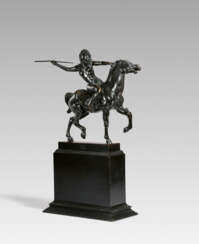

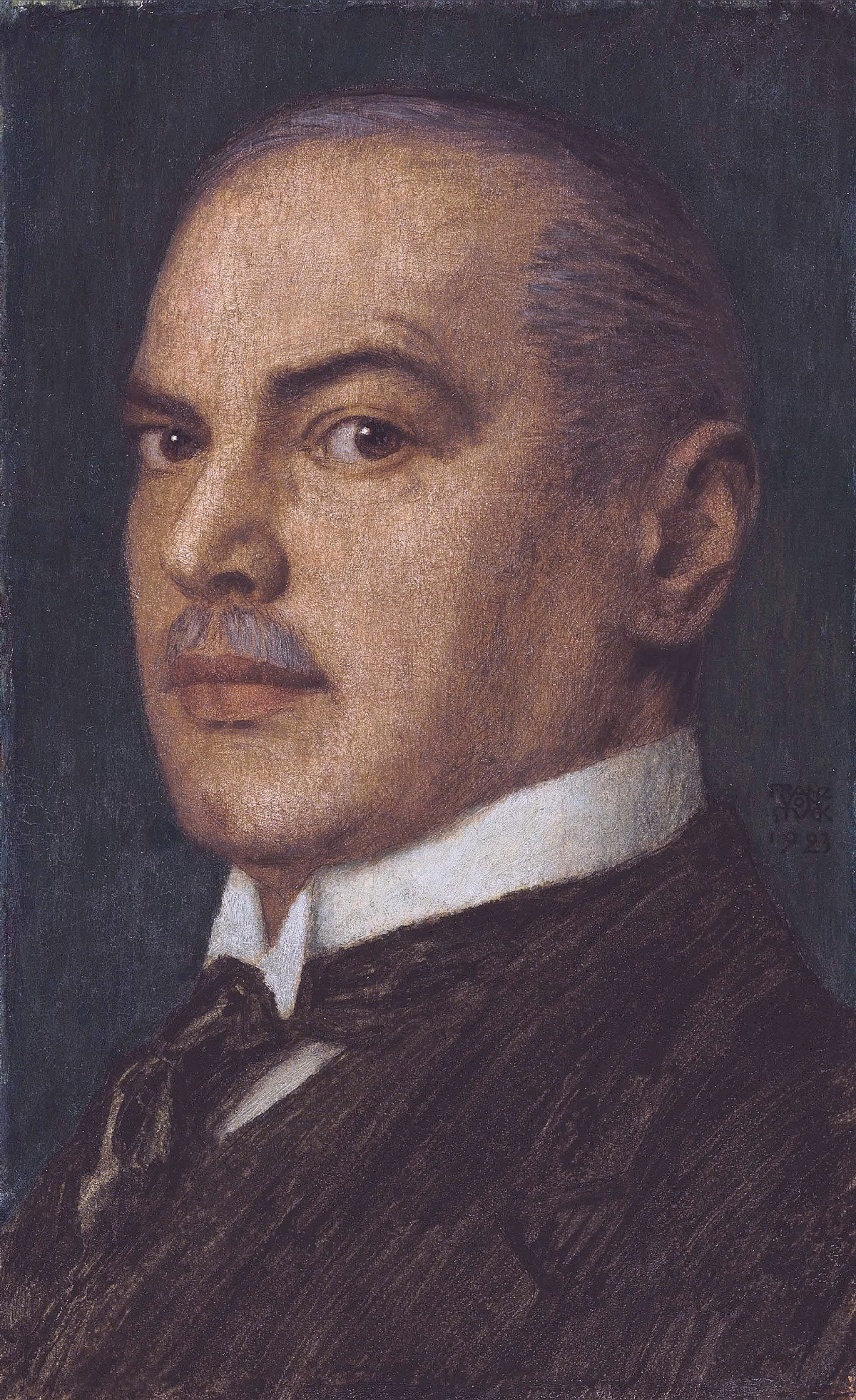
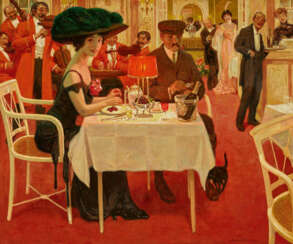
Franz von Stuck was a German painter, sculptor, printmaker, and architect. Stuck was best known for his paintings of ancient mythology, receiving substantial critical acclaim with The Sin in 1892.
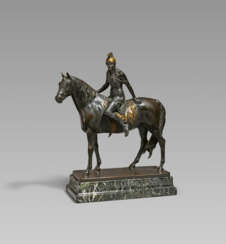

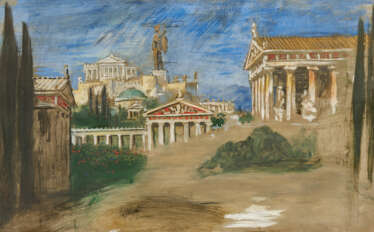

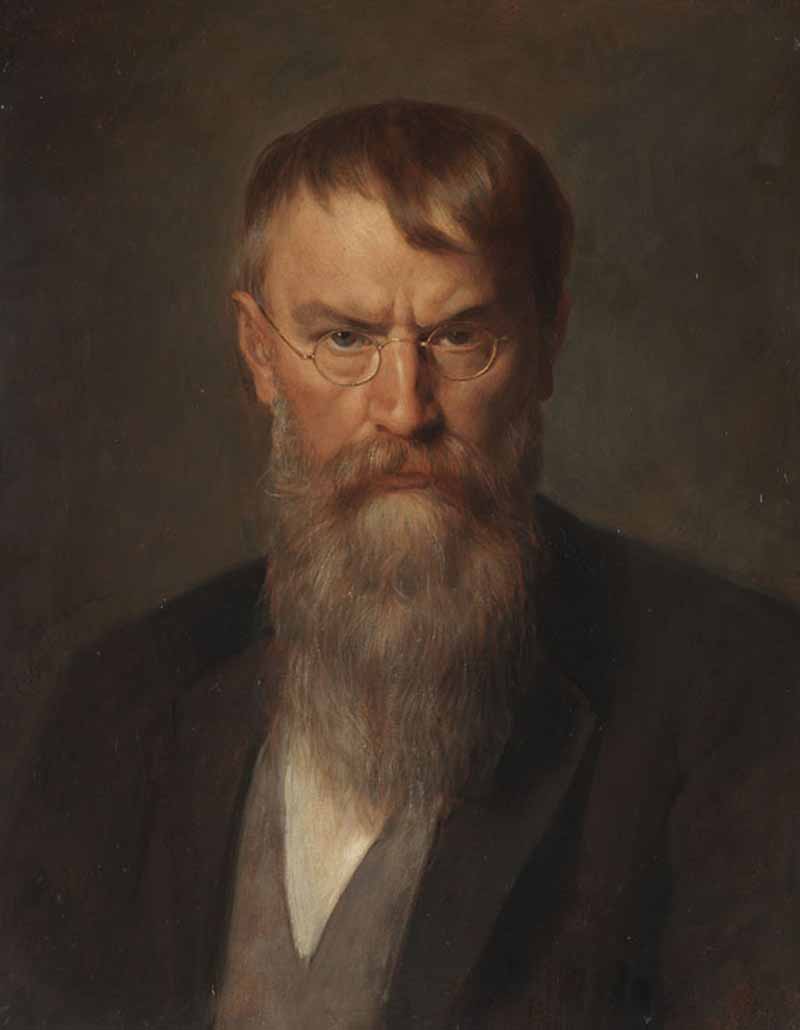
Franz Seraph Lenbach was a German painter known primarily for his portraits of prominent personalities from the nobility, the arts, and industry. Because of his standing in society, he was often referred to as the "Malerfürst" (Painter Prince).
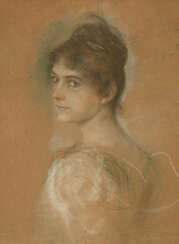

Franz Seraph Lenbach was a German painter known primarily for his portraits of prominent personalities from the nobility, the arts, and industry. Because of his standing in society, he was often referred to as the "Malerfürst" (Painter Prince).
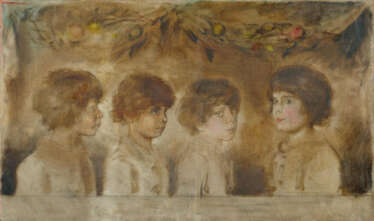

Franz Seraph Lenbach was a German painter known primarily for his portraits of prominent personalities from the nobility, the arts, and industry. Because of his standing in society, he was often referred to as the "Malerfürst" (Painter Prince).
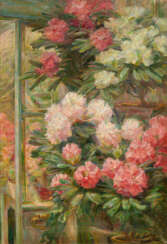

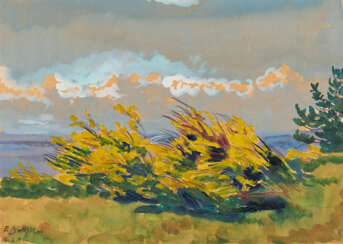

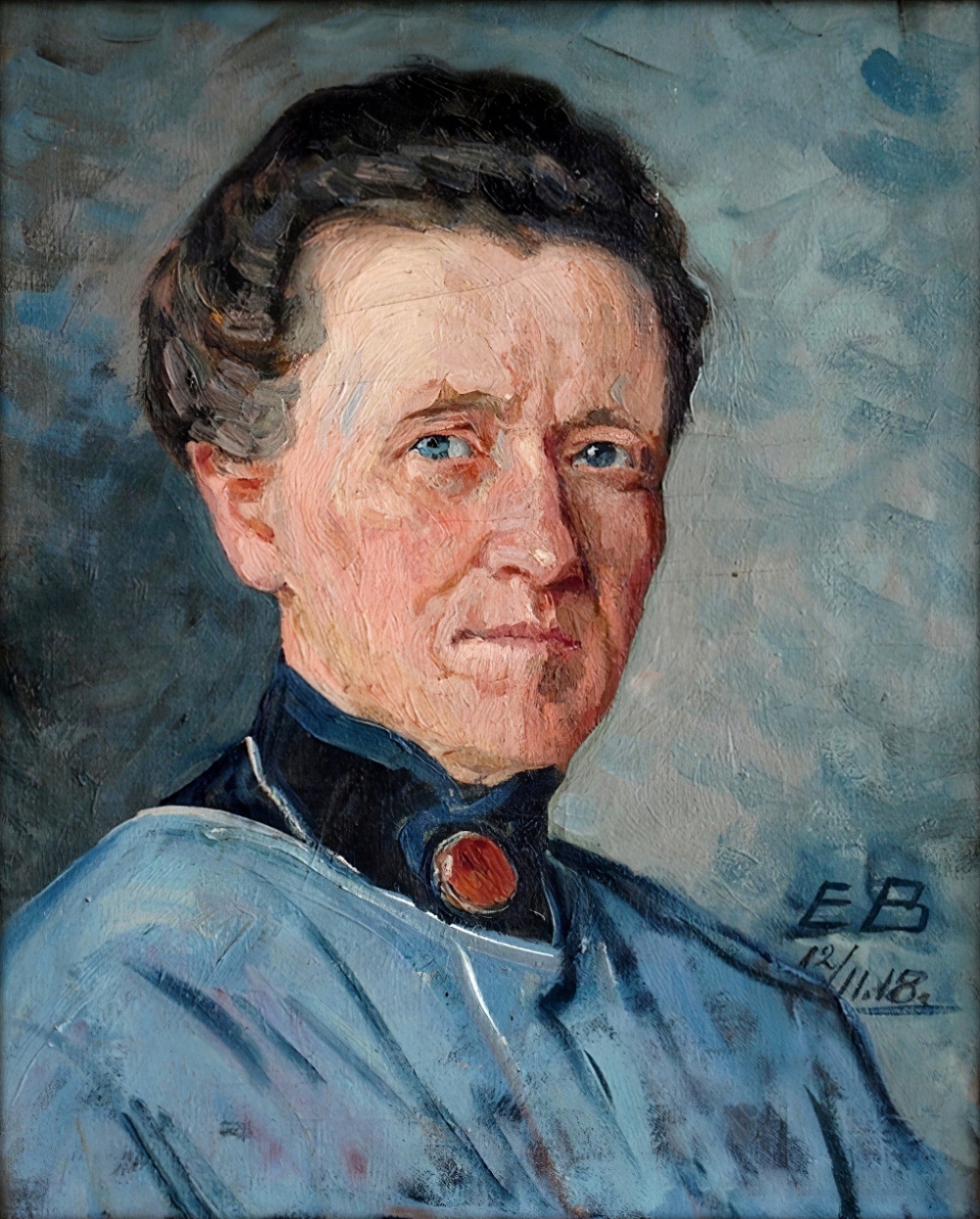
Elisabeth Büchsel, full name Elisabeth Charlotte Helene Emilie Büchsel, was a German artist. She studied painting in Berlin, Dresden, Paris and Munich.
Elisabeth Büchsel painted mainly portraits and landscapes of Rügen and Stralsund. From 1904 she lived and worked on the island of Hiddensee from spring to autumn.
Büchsel was a member of the Association of Visual Artists of Germany.


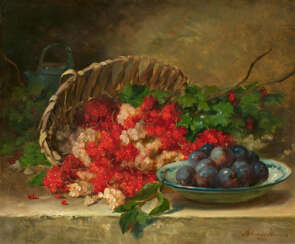

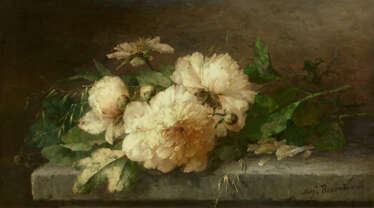

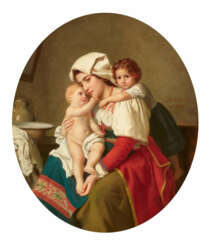

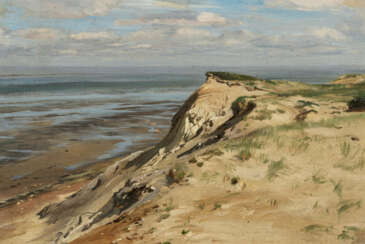

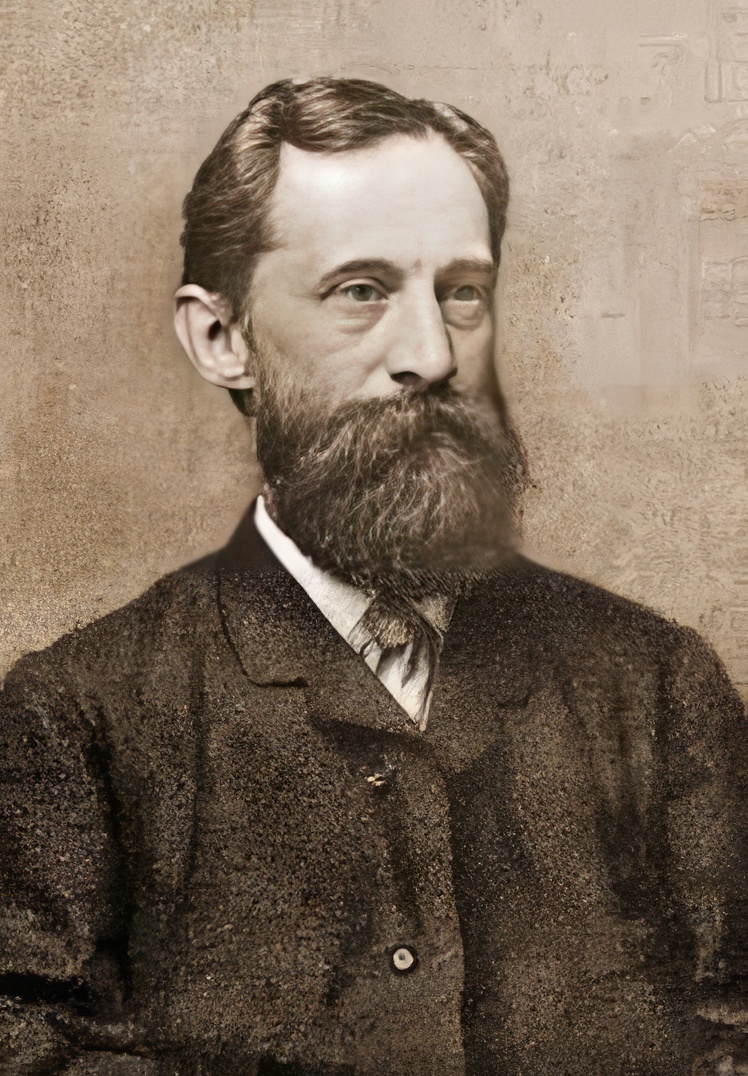
Eugen Gustav Dücker was a Baltic German painter, in the Romantic style, associated with the Düsseldorfer Malerschule.
Despite his career's roots in Germany, he spent much of his time in Estonia, where he painted idyllic landscapes of the sea and the countryside. He also made numerous trips to Holland, Belgium, France and Italy.


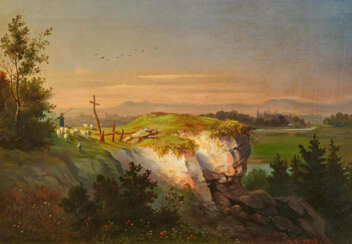



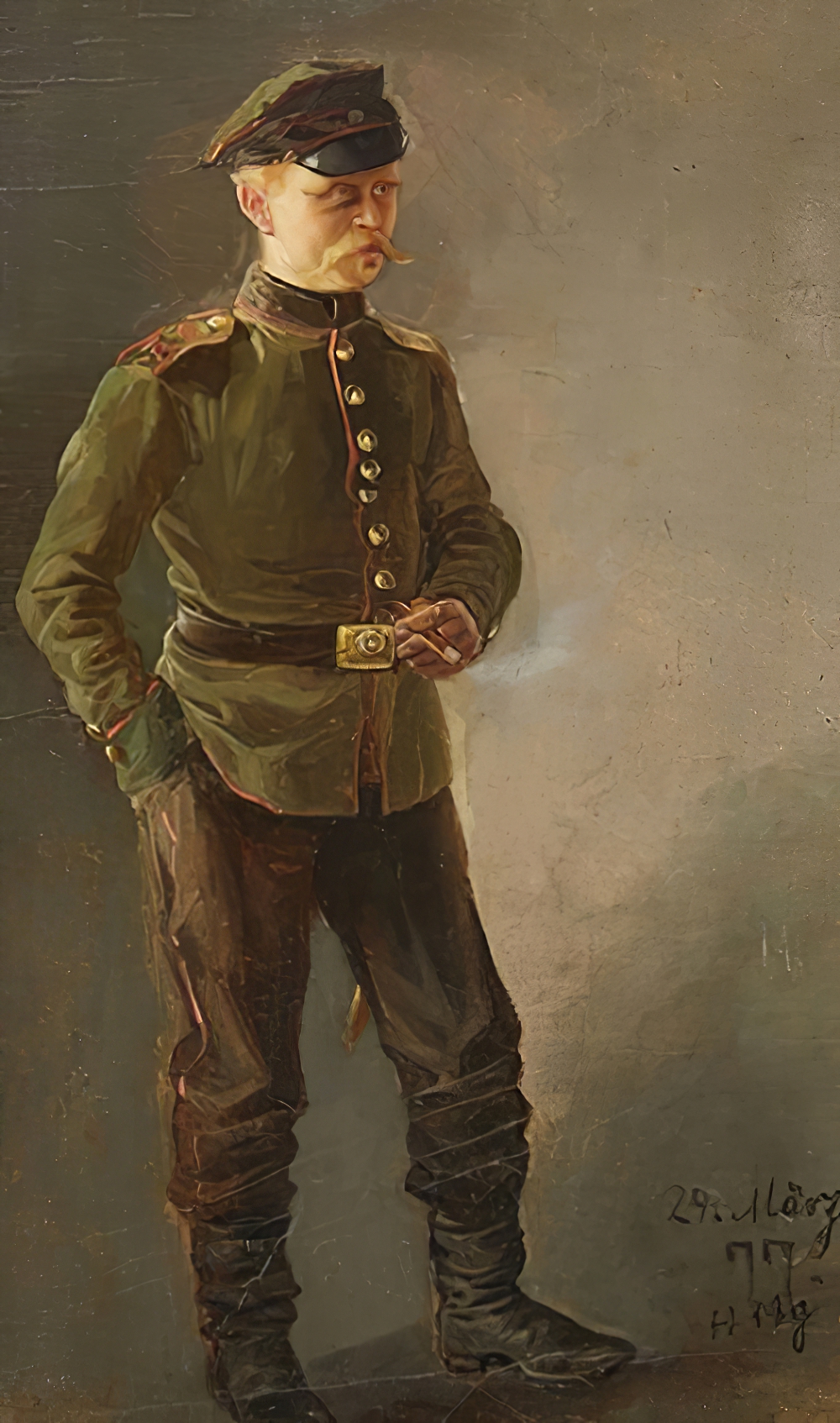
Hugo Mühlig was a German Impressionist painter. From 1881, he lived in Düsseldorf as a painter of landscapes and genre scenes.


Hugo Mühlig was a German Impressionist painter. From 1881, he lived in Düsseldorf as a painter of landscapes and genre scenes.
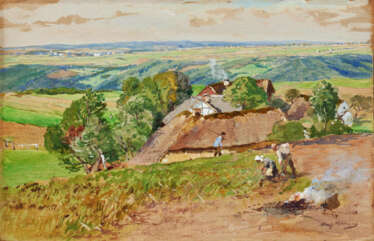

Hugo Mühlig was a German Impressionist painter. From 1881, he lived in Düsseldorf as a painter of landscapes and genre scenes.
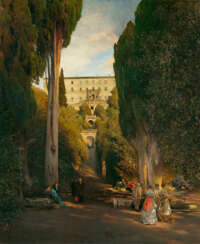



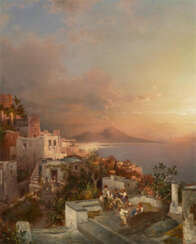

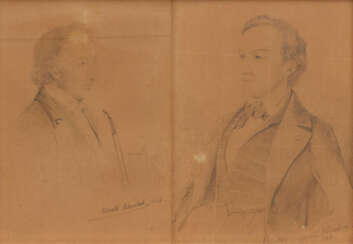

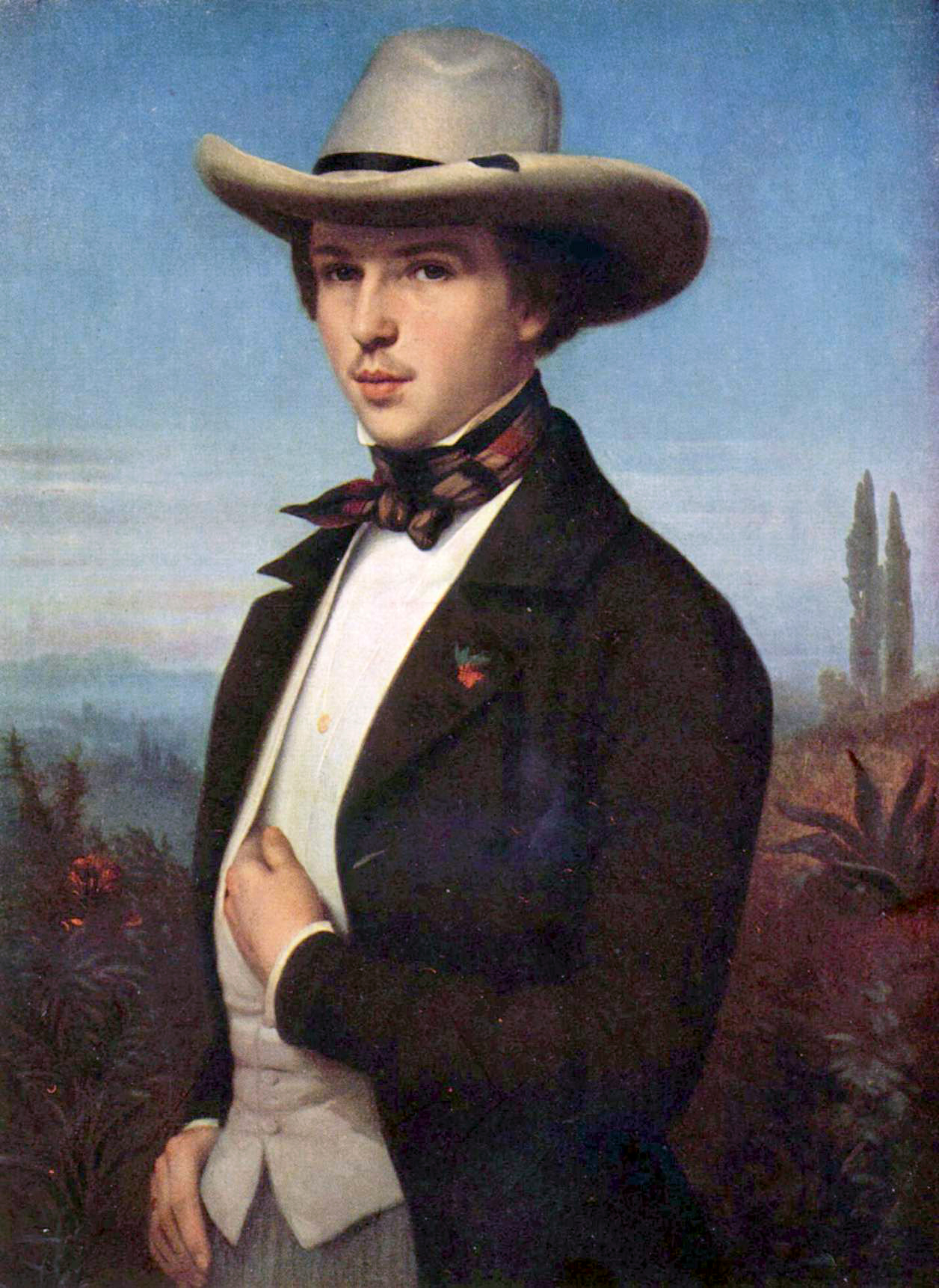
Oswald Achenbach was a German painter associated with the Düsseldorf school of painting. Though little known today, during his lifetime he was counted among the most important landscape painters of Europe. Through his teaching activities, he influenced the Kunstakademie Düsseldorf. His brother, Andreas Achenbach, who was twelve years older, was also among the most important German landscape painters of the 19th century. The two brothers were humorously called "the A and O of Landscapes" (a reference to their initials matching a common German reference to the Alpha and Omega).

Oswald Achenbach was a German painter associated with the Düsseldorf school of painting. Though little known today, during his lifetime he was counted among the most important landscape painters of Europe. Through his teaching activities, he influenced the Kunstakademie Düsseldorf. His brother, Andreas Achenbach, who was twelve years older, was also among the most important German landscape painters of the 19th century. The two brothers were humorously called "the A and O of Landscapes" (a reference to their initials matching a common German reference to the Alpha and Omega).
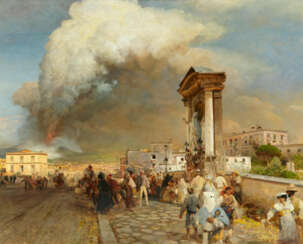

Oswald Achenbach was a German painter associated with the Düsseldorf school of painting. Though little known today, during his lifetime he was counted among the most important landscape painters of Europe. Through his teaching activities, he influenced the Kunstakademie Düsseldorf. His brother, Andreas Achenbach, who was twelve years older, was also among the most important German landscape painters of the 19th century. The two brothers were humorously called "the A and O of Landscapes" (a reference to their initials matching a common German reference to the Alpha and Omega).
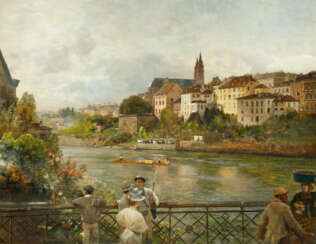

Oswald Achenbach was a German painter associated with the Düsseldorf school of painting. Though little known today, during his lifetime he was counted among the most important landscape painters of Europe. Through his teaching activities, he influenced the Kunstakademie Düsseldorf. His brother, Andreas Achenbach, who was twelve years older, was also among the most important German landscape painters of the 19th century. The two brothers were humorously called "the A and O of Landscapes" (a reference to their initials matching a common German reference to the Alpha and Omega).
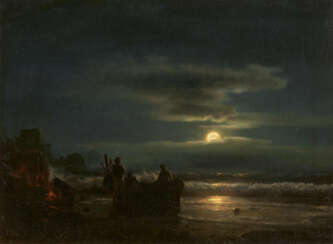

Oswald Achenbach was a German painter associated with the Düsseldorf school of painting. Though little known today, during his lifetime he was counted among the most important landscape painters of Europe. Through his teaching activities, he influenced the Kunstakademie Düsseldorf. His brother, Andreas Achenbach, who was twelve years older, was also among the most important German landscape painters of the 19th century. The two brothers were humorously called "the A and O of Landscapes" (a reference to their initials matching a common German reference to the Alpha and Omega).
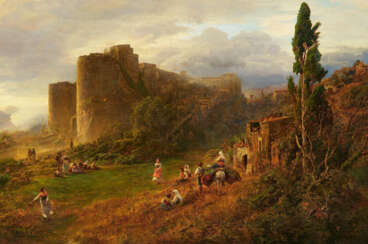

Oswald Achenbach was a German painter associated with the Düsseldorf school of painting. Though little known today, during his lifetime he was counted among the most important landscape painters of Europe. Through his teaching activities, he influenced the Kunstakademie Düsseldorf. His brother, Andreas Achenbach, who was twelve years older, was also among the most important German landscape painters of the 19th century. The two brothers were humorously called "the A and O of Landscapes" (a reference to their initials matching a common German reference to the Alpha and Omega).
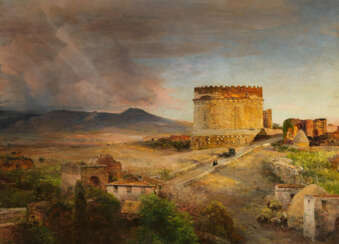

Oswald Achenbach was a German painter associated with the Düsseldorf school of painting. Though little known today, during his lifetime he was counted among the most important landscape painters of Europe. Through his teaching activities, he influenced the Kunstakademie Düsseldorf. His brother, Andreas Achenbach, who was twelve years older, was also among the most important German landscape painters of the 19th century. The two brothers were humorously called "the A and O of Landscapes" (a reference to their initials matching a common German reference to the Alpha and Omega).
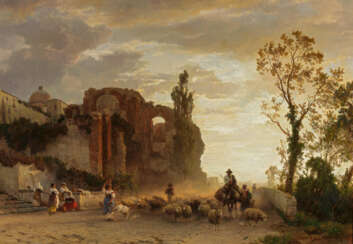

Oswald Achenbach was a German painter associated with the Düsseldorf school of painting. Though little known today, during his lifetime he was counted among the most important landscape painters of Europe. Through his teaching activities, he influenced the Kunstakademie Düsseldorf. His brother, Andreas Achenbach, who was twelve years older, was also among the most important German landscape painters of the 19th century. The two brothers were humorously called "the A and O of Landscapes" (a reference to their initials matching a common German reference to the Alpha and Omega).


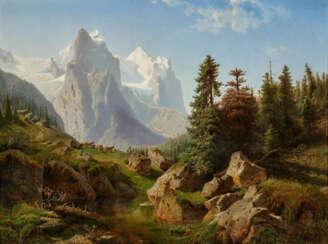

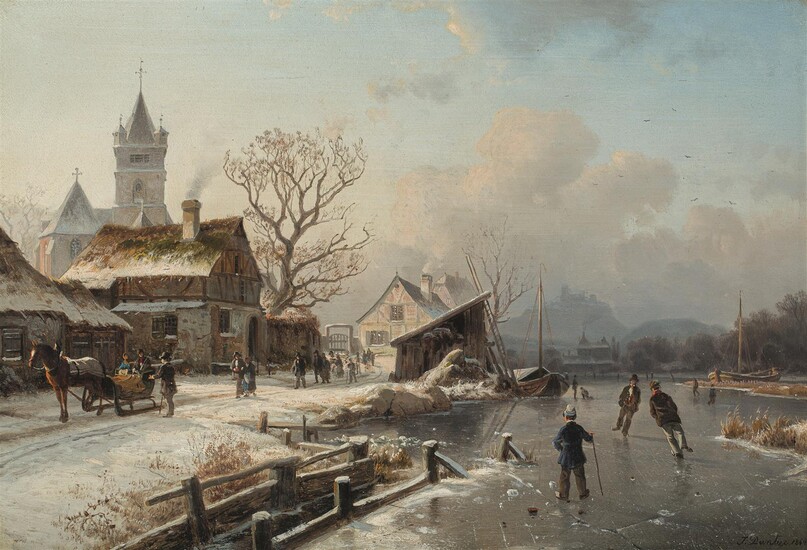
Johannes Bartholomäus Duntze was a German landscape painter.









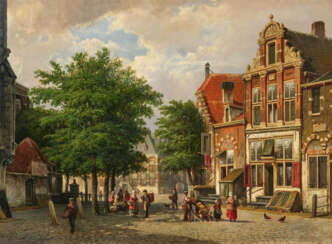

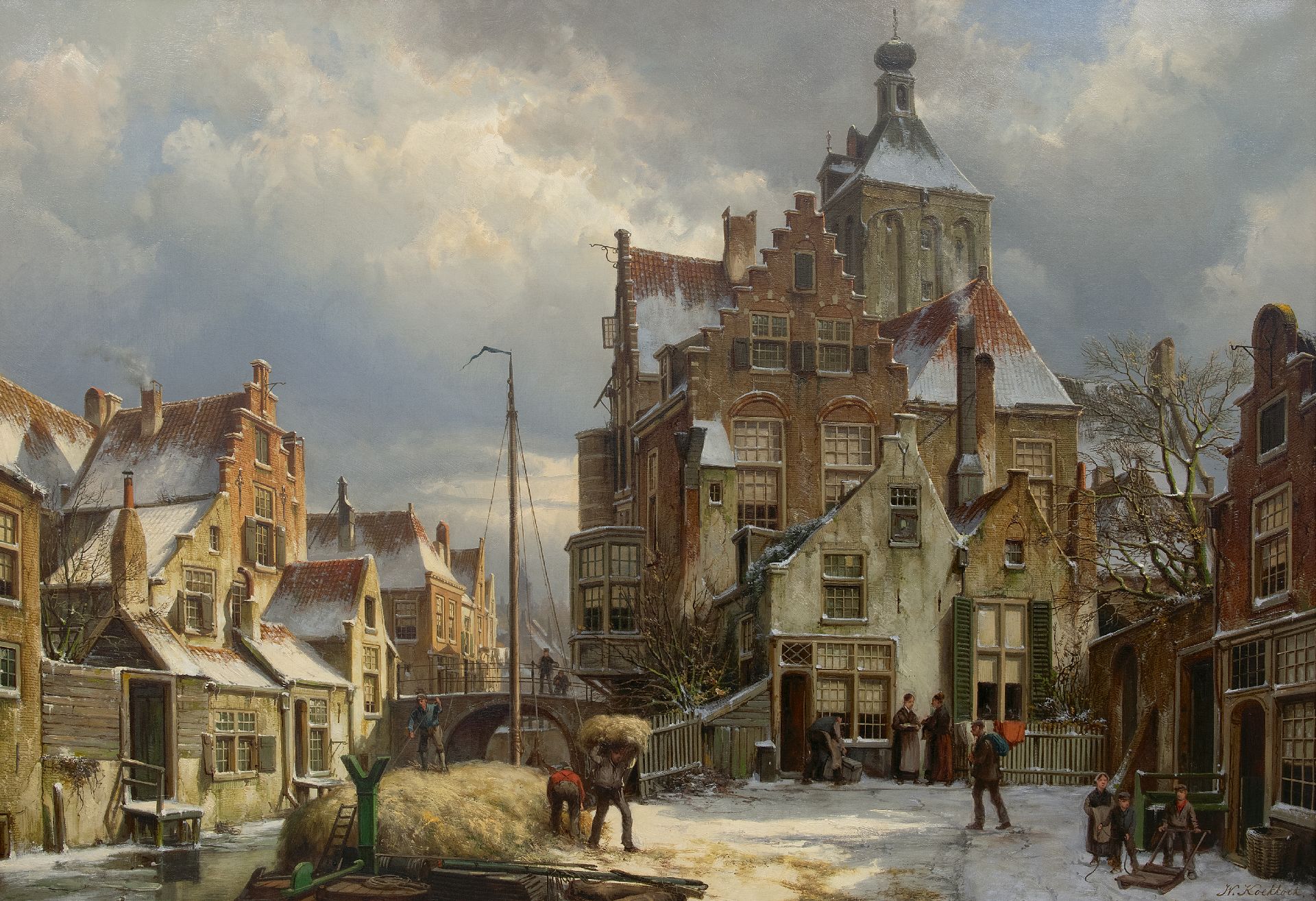
Willem Koekkoek was a Dutch painter of the urban landscape.
Following in the family tradition, his father gave all four brothers their first art lessons. Willem also received training as an architect, but practiced that profession for only a short time. It did, however, leave a lasting influence on his choice of subject matter.


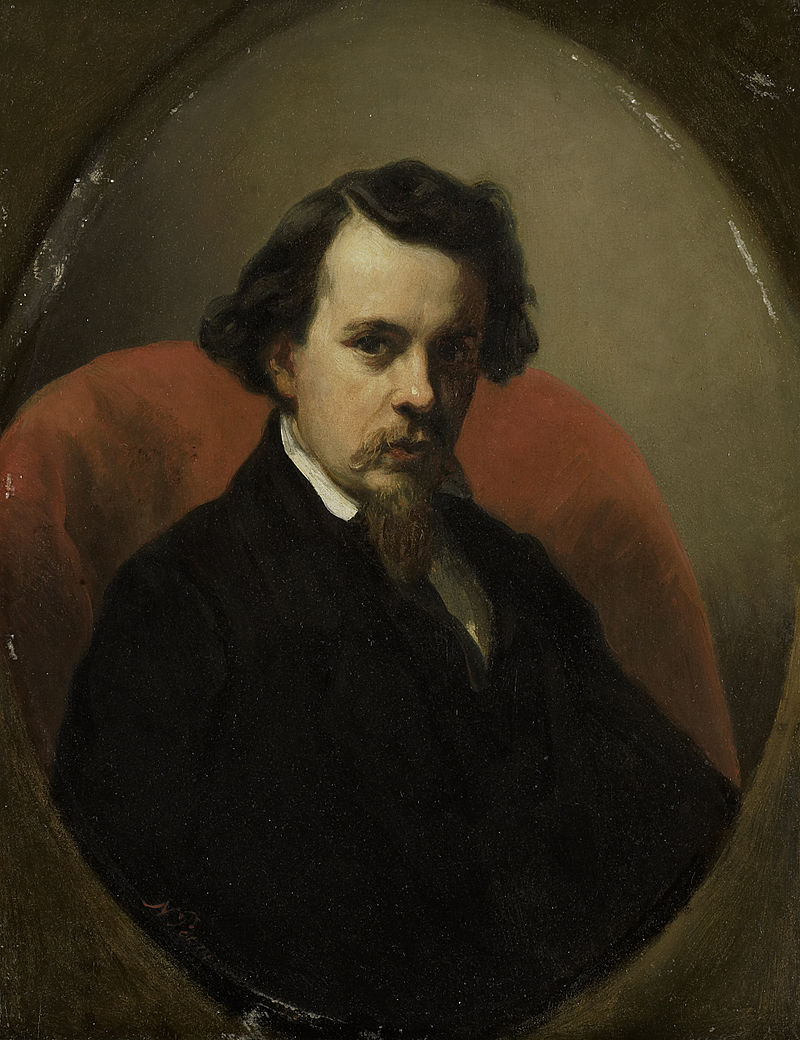
Charles Henri Joseph Leickert was a Belgian painter of Dutch landscapes. As a specialist in winter landscapes, he explored the nuances of the evening sky and the rosy-fingered dawn.