launch












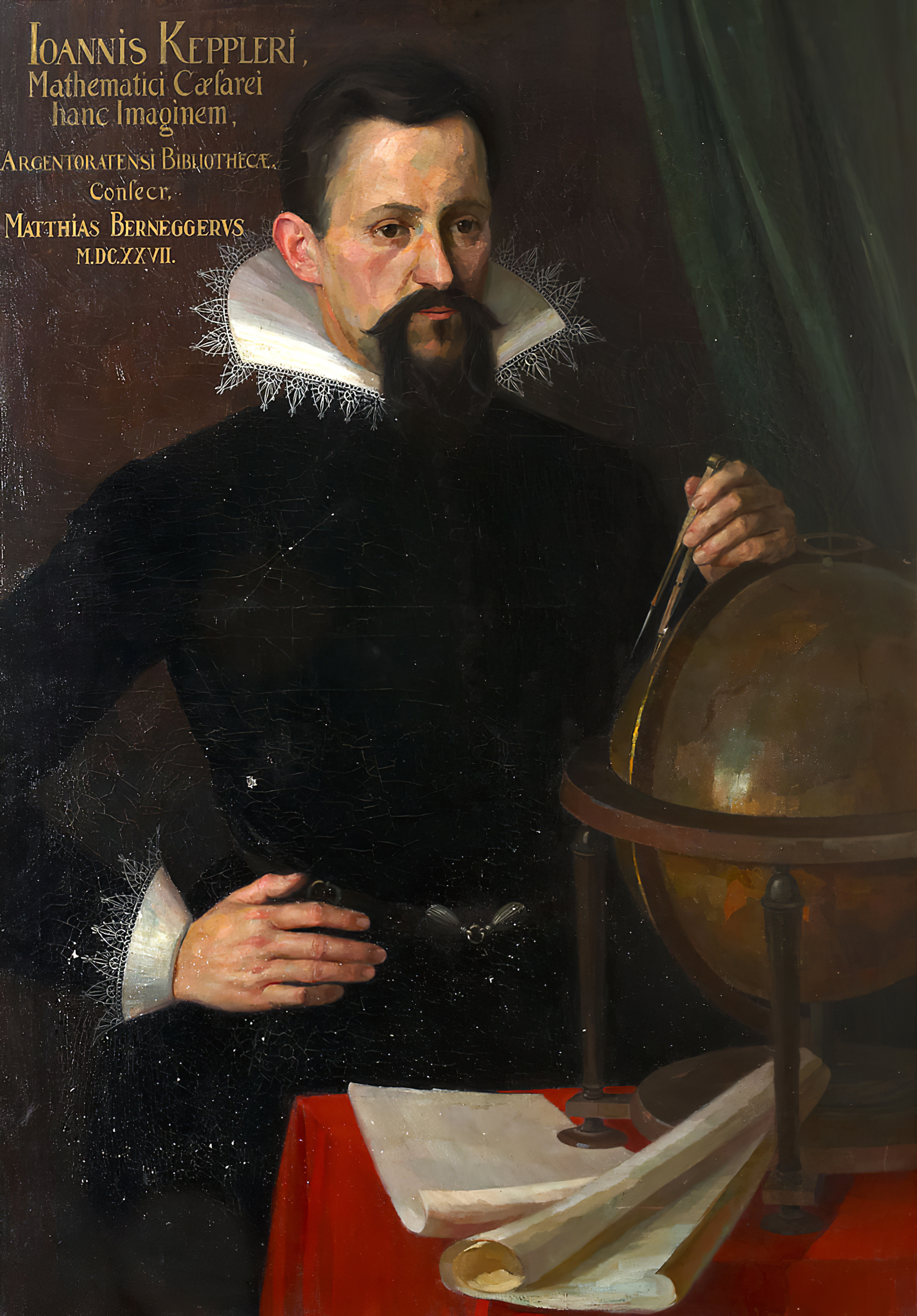
Johannes Kepler was a German mathematician and astronomer who discovered that the Earth and planets move around the Sun in elliptical orbits.
Kepler created the three fundamental laws of planetary motion. He also did seminal work in optics and geometry, calculated the most accurate astronomical tables, and made many inventions and discoveries in physics on which further scientific discoveries by advanced scientists were based.


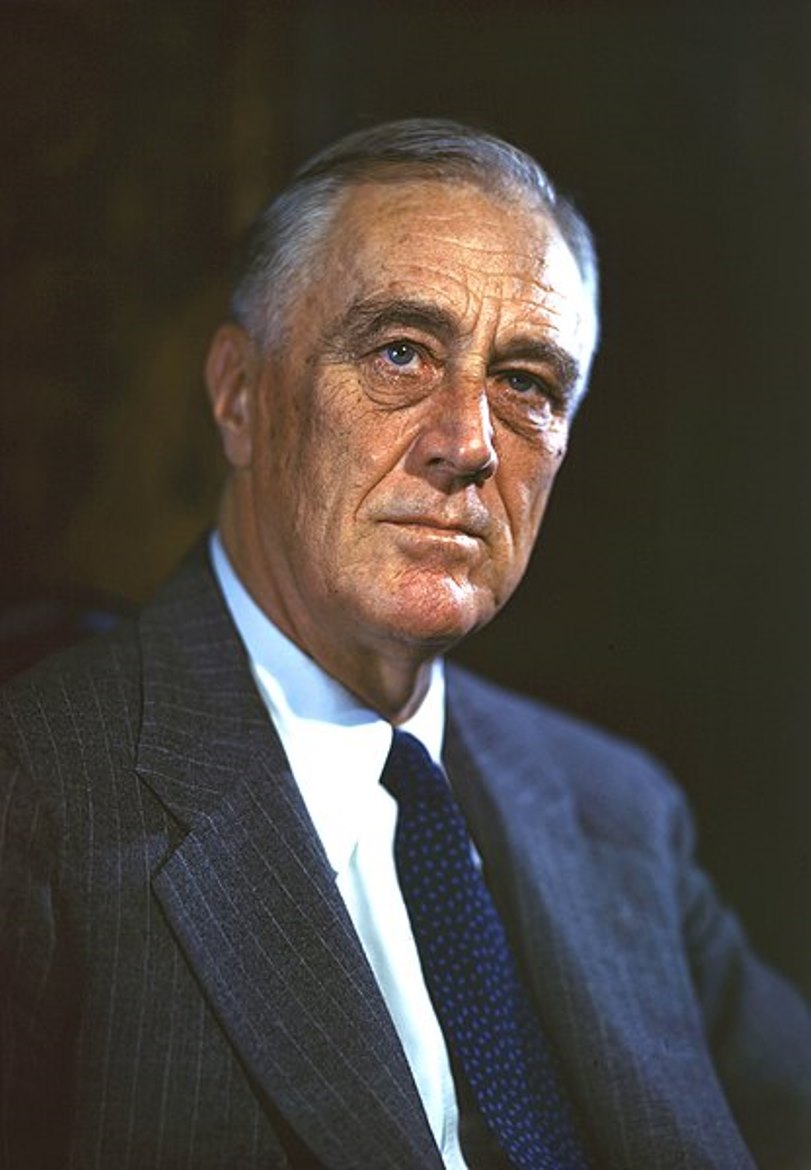
Franklin Delano Roosevelt was an American politician and statesman, the 32nd President of the United States (1932-1945).
Franklin was educated at Harvard University and Columbia Law School. His cousin was President Theodore Roosevelt, and Franklin also went into public service, but as a Democrat. He was elected to the New York Senate in 1910, President Wilson appointed him Assistant Secretary of the Navy, and Roosevelt became Governor of New York in 1928.
In November 1932, Franklin D. Roosevelt was elected president of the United States. Taking office in the midst of the Great Depression, Franklin D. Roosevelt, with his "Hundred Days" and "New Deal" programs, helped the American people regain faith in themselves. In 1936, he was re-elected by a large margin. During this difficult political period, he sought through neutrality legislation to keep the U.S. out of the war in Europe, but at the same time to strengthen countries that were threatened or attacked. Japan's surprise attack on Pearl Harbor on December 7, 1941, drew the country into the war.
In 1944, as Hitler's Germany was nearing its collapse, an ailing Roosevelt managed to win the presidency again. The following February, he met with Churchill and Stalin at the famous Yalta Conference. His health was deteriorating, and on April 12, 1945, Franklin Roosevelt died of a cerebral hemorrhage. He was the only U.S. president to be elected to office four times. Roosevelt successfully led the United States through two of the greatest crises of the 20th century: the Great Depression and World War II.


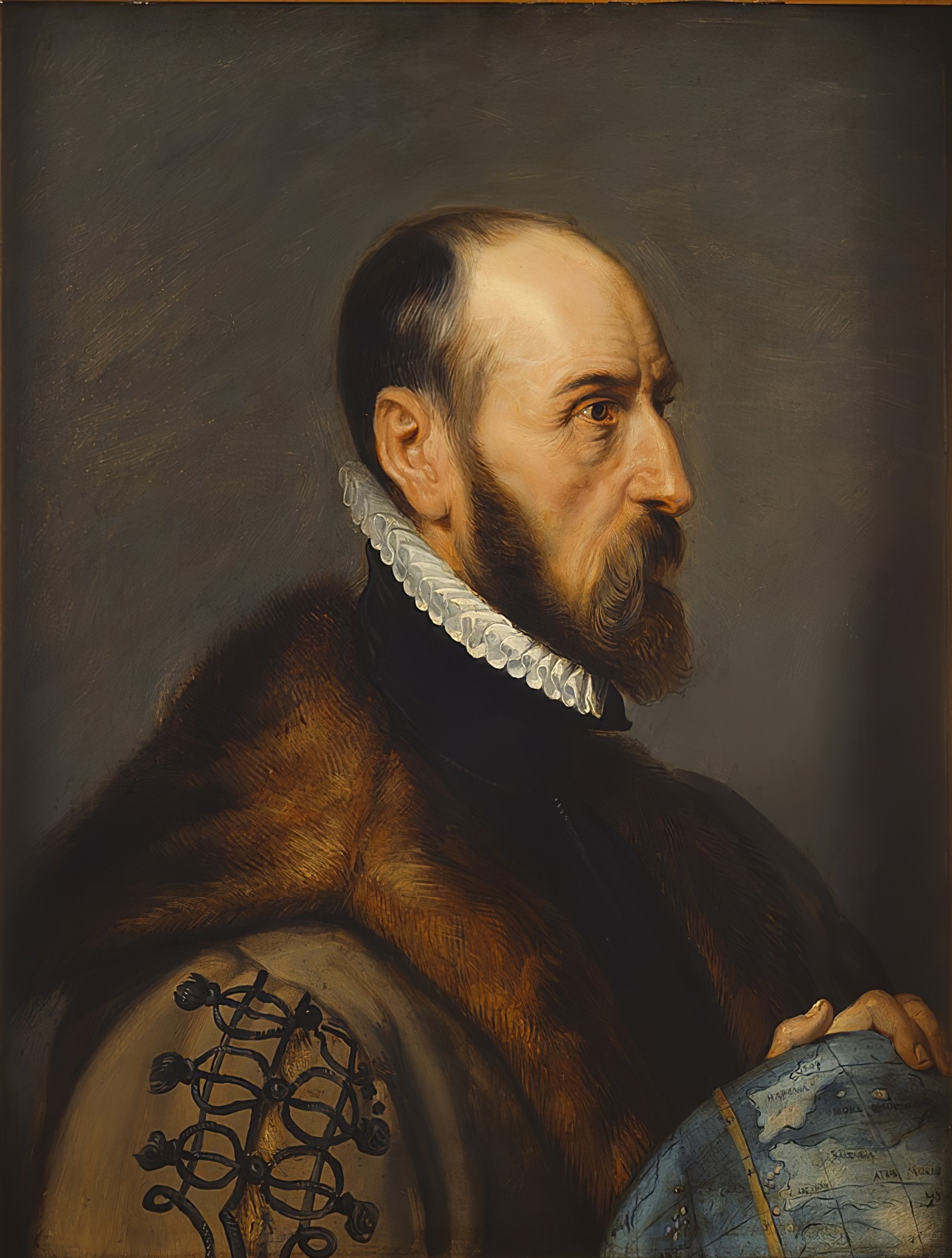
Abraham Ortelius (Ortels) was a Brabantian cartographer, geographer, and cosmographer. He is recognized as the creator of the first modern atlas, the Theatrum Orbis Terrarum (Theatre of the World). Along with Gemma Frisius and Gerardus Mercator, Ortelius is generally considered one of the founders of the Netherlandish school of cartography and geography. He was a notable figure of this school in its golden age (approximately 1570s–1670s) and an important geographer of Spain during the age of discovery. The publication of his atlas in 1570 is often considered as the official beginning of the Golden Age of Netherlandish cartography. He was the first person proposing that the continents were joined before drifting to their present positions. Beginning as a map-engraver, in 1547 he entered the Antwerp Guild of Saint Luke as an illuminator of maps. In 1560 when travelling with Mercator to Trier, Lorraine, and Poitiers, he seems to have been attracted, largely by Mercator's influence, towards the career of a scientific geographer. In 1564 he published his first map, Typus Orbis Terrarum, an eight-leaved wall map of the world. On 20 May 1570, Gilles Coppens de Diest at Antwerp issued Ortelius's Theatrum Orbis Terrarum, the "first modern atlas" (of 53 maps).