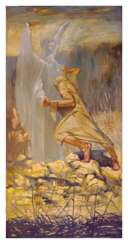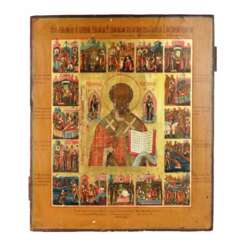
life of christ


Joseph Mallord William Turner, a seminal figure in British painting, was born in 1775 and left an indelible mark on the Romantic movement. Known for his expressive coloration, imaginative landscapes, and turbulent marine paintings, Turner's work transcends the traditional boundaries of art to capture the sublime force of nature. His career was distinguished by early talent, evidenced by his acceptance into the Royal Academy at the young age of 14, and a prolific output that included over 2,000 paintings and 19,000 drawings and sketches.
William Turner's unique approach to landscape painting, characterized by dramatic skies and atmospheric effects, set a new standard for capturing mood and emotion on canvas. His innovative use of light and color influenced countless artists, elevating landscape painting to rival the status of history painting. Turner's legacy is also marked by his eccentricity and reclusiveness, traits that only added to the mystique surrounding his artistic genius.
Among his most famous works are "The Fighting Temeraire," symbolizing the passing of the old world, and "Rain, Steam and Speed," capturing the Industrial Revolution's impact. These paintings not only showcase William Turner's technical skill but also his philosophical engagement with the changing world around him.
For collectors and experts in art and antiques, William Turner's works represent the pinnacle of Romantic art, offering insight into the 19th-century aesthetic and philosophical landscape. His influence on subsequent generations of artists underscores his position as a pivotal figure in the history of Western art.
To stay informed about Joseph Mallord William Turner's works and related events, signing up for updates from reputable art institutions can provide valuable insights into new discoveries and auction events related to this master of the British landscape.


Albert Einstein was a German-born theoretical physicist, widely acknowledged to be one of the greatest and most influential physicists of all time. Einstein is best known for developing the theory of relativity, but he also made important contributions to the development of the theory of quantum mechanics. Relativity and quantum mechanics are together the two pillars of modern physics. His mass–energy equivalence formula E = mc2, which arises from relativity theory, has been dubbed "the world's most famous equation". His work is also known for its influence on the philosophy of science. He received the 1921 Nobel Prize in Physics "for his services to theoretical physics, and especially for his discovery of the law of the photoelectric effect", a pivotal step in the development of quantum theory. His intellectual achievements and originality resulted in "Einstein" becoming synonymous with "genius".


Albert Einstein was a German-born theoretical physicist, widely acknowledged to be one of the greatest and most influential physicists of all time. Einstein is best known for developing the theory of relativity, but he also made important contributions to the development of the theory of quantum mechanics. Relativity and quantum mechanics are together the two pillars of modern physics. His mass–energy equivalence formula E = mc2, which arises from relativity theory, has been dubbed "the world's most famous equation". His work is also known for its influence on the philosophy of science. He received the 1921 Nobel Prize in Physics "for his services to theoretical physics, and especially for his discovery of the law of the photoelectric effect", a pivotal step in the development of quantum theory. His intellectual achievements and originality resulted in "Einstein" becoming synonymous with "genius".


Philippe Rousseau was a French painter, acclaimed for his detailed still life and landscape paintings. Born in Paris in 1816, Rousseau's artistic journey was nurtured under the tutelage of Baron Antoine-Jean Gros and Jean-Victor Bertin at the École des Beaux-Arts. Initially venturing into landscapes, his artistry soon blossomed to encompass still life and animal subjects, earning him significant recognition at the Paris Salon from as early as 1834.
Philippe Rousseau's work is characterized by its meticulous attention to detail and a masterful use of light and shadow, which brought everyday objects and scenes to life with remarkable realism. His still lifes, often compared to those of the 18th-century French master Jean Siméon Chardin, demonstrate Rousseau's skill in creating texture and depth, making mundane subjects captivating through his lens. This skill earned him accolades, including medals at the Salon and the honor of being made a Knight of the Legion of Honor in 1852, later promoted to Officer in 1870.
His notable works span from early landscapes to intricate still lifes, reflecting his evolution as an artist. Among these, "Still Life with Ham" and "Still Life with Oysters" are celebrated examples housed in prestigious institutions like The Metropolitan Museum of Art and The National Gallery, London, showcasing his ability to elevate the still life genre to new heights. Another significant piece, "Still Life with Asparagus," illustrates his continued exploration of texture and light, held by the Cleveland Museum of Art.
Philippe Rousseau's legacy lies in his ability to merge the traditional with the innovative, influencing the art world well beyond his passing in 1887. His paintings, rich in detail and steeped in cultural significance, continue to attract art collectors and experts in art and antiques, offering a window into the refined aesthetic of 19th-century French art.
For those captivated by the elegance and historical depth of Philippe Rousseau's work, signing up for updates can provide exclusive access to new sales and auction events featuring his art. This opportunity invites collectors and enthusiasts alike to further explore the nuanced world Philippe Rousseau depicted, ensuring they remain at the forefront of the market for these timeless pieces.


George Clausen was a British artist working in oil and watercolour, etching, mezzotint, dry point and occasionally lithographs. He was knighted in 1927.


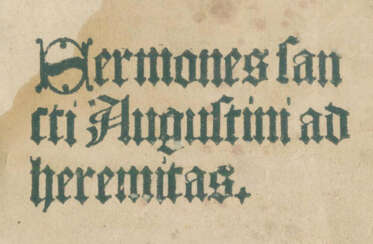
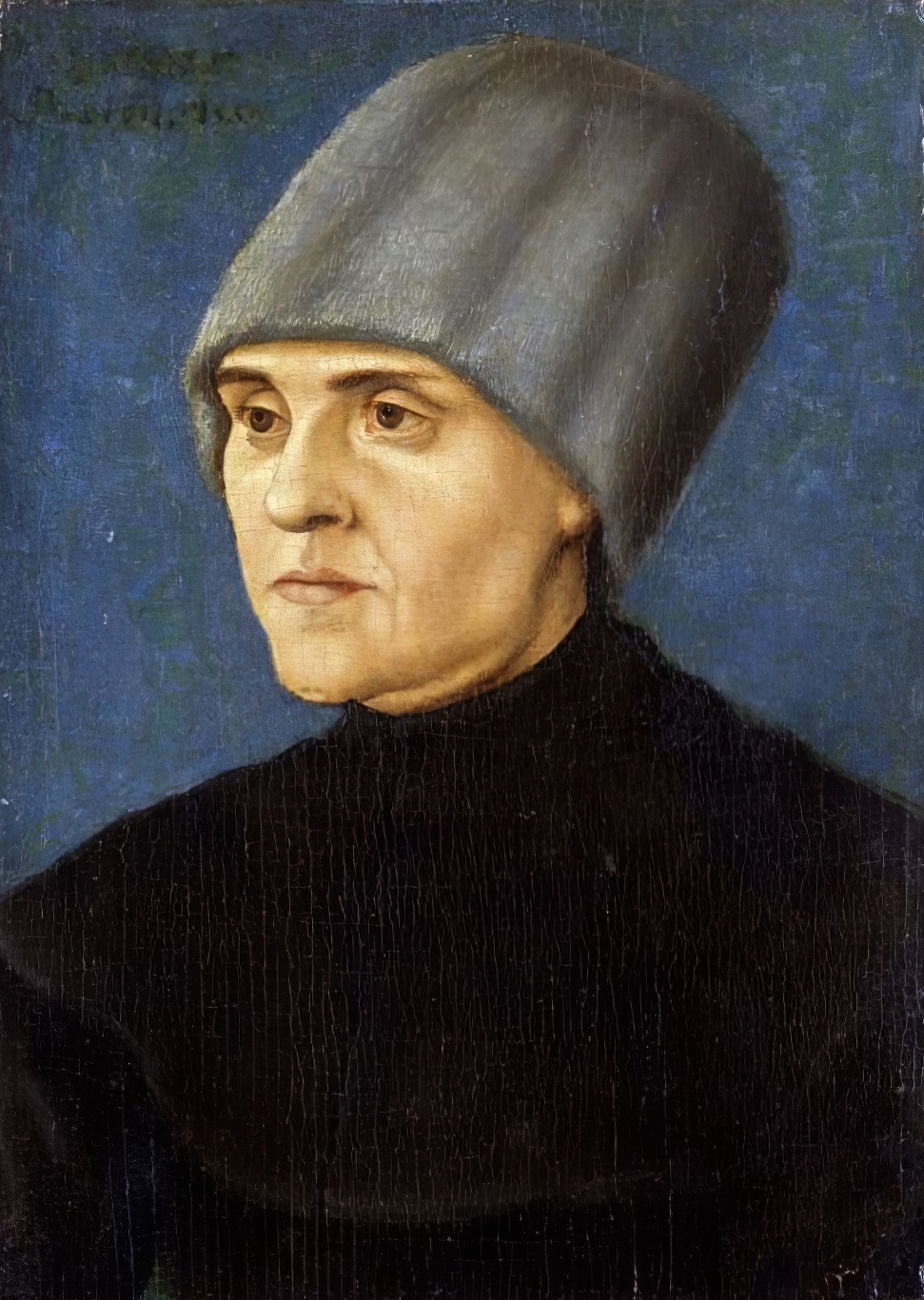
![EDWARDES [or EDGUARD], David (c.1502-c.1542)](/assets/image/picture_5109073/a4217/23dd2d502cfd3dcd27538436be5e0cc01765321200jpg__fix_374_244.jpeg)
![EDWARDES [or EDGUARD], David (c.1502-c.1542)](https://veryimportantlot.com/assets/image/picture_5109073/a4217/23dd2d502cfd3dcd27538436be5e0cc01765321200jpg__fix_374_244.jpeg)