

485 Items by auctions and galleries:
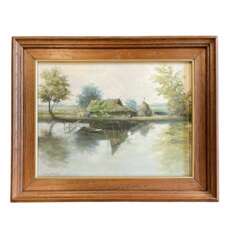
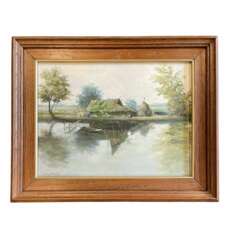
village



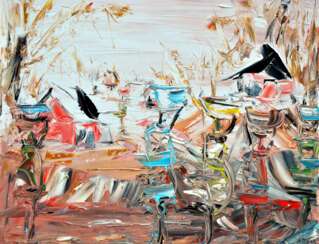





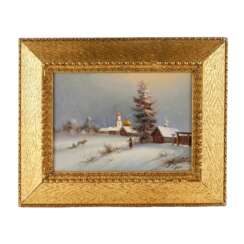





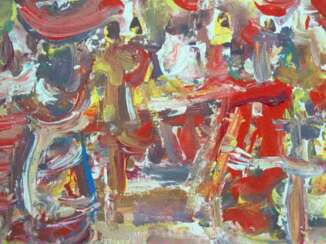
Storm's coming!
Artyom Ukhov (b. 1982)  Shop Ukhov Artyom
Artyom Ukhov
20.01.1982
Russia
Artist and designer, has 15 exhibitions and 3 rewards
Ухов Артем Евгеньевич,
1982 г.р., г. Череповец, Вологодской области,
КОНТАКТЫ:
vk.com: uae82
Exhibitions:
Personal exhibition in Ustuzhna district library of K.N.Batushkov, June – August 2018, Ustuzhna town;
Art-Start, young modern art, Krasny most gallery, May, 30th – July 1st, Vologda city;
Russian Art Week, XXIV International Exhibition & Competition of Modern and Contemporary Art, Moscow, April, 23rd – 29th,
Vologda Regional Exhibition “Orthodoxian Vologda” April, 25th – June 2nd2018, Vologda city.
Vologda Regional Exhibition dedicated to the 870th anniversary of Vologda city, September, 22nd – October, 30th 2017, Vologda city.
“Shire krug 8” Annual art exhibition of young artist of Vologda city Nov, 1st, 2016 – Feb, 5th, 2017;
“Shire krug 7” Annual art exhibition of young artist of Vologda city Dec, 23rd, 2015 -Feb,20th, 2016;
Personal exhibition in Ustuzhna district library of K.N.Batushkov, Dec, 2015 — Jan, 2016;
«ArtExpoSPb 2016», October, 21st-23rd 2016, Saint Petersburg, Russian Federation.
Personal art exhibition in Vologda State Technical University Library, October-november 2012;
Prizes:
2nd place in “Painting” nomination of Russian Art Week, XXIV International Exhibition & Competition of Modern and Contemporary Art, Moscow, April, 23rd – 29th, 2018.
1st place in “subject picture” nomination of Saint-Petersburg Art Week, X International Exhibition & Competition of Contemporary Arts, Saint-Petersburg, April, 28th – May, 3rd, 2018.
3nd place in “genre picture” nomination of Russian Art Week, XXVI International Exhibition & Competition of Modern and Contemporary Art, Moscow, April, 8rd – 14th, 2019.
Artist shop
Ukhov Artyom
Russia
Number of products: 62


SUNRISE SAN GIULIANO TERME, ITALY
Ekaterina Zhuchenko RedHeadKat (b. 1979)  Shop Zhuchenko RedHeadKat Ekaterina
Ekaterina Zhuchenko RedHeadKat
12.08.1979
Byelorussia
EN/RU
.
My name is Ekaterina Zhuchenko, creative pseudonym RedHeadKat.
I have been an artist from an early age. Dad's sketchbook was the greatest treasure. Then I had not dreamed of writing yet
oil. A large set of watercolors in a white plastic box was often secretly taken from the shelf for my
naive art. The thick squirrel brush gave an unforgettable tactile sensation.
But I was able to forget about it "becoming an adult".
I am grateful to the people who helped me return everything. At some point, I realized that I couldn’t stop it. The same set of watercolors, already replenished with new shades. It
became my frequent joy. And oil painting is my discovery and a way to restore connection with my family and father.
.
1996-1999: Minsk Technological College. Fashion designer with a course in painting and acaemic drawing, in-depth study of fashion illustration
2020 to the present day: studying painting in the Graphics studio, Minsk
2021 course of painting with a palette knife at the St. Petersburg School of Oil Painting
Меня зовут Жученко Екатерина, творческий псевдоним RedHeadKat
Я была художником с малых лет. Папин этюдник был самой большой сокровищницей, хоть я тогда и не мечтала писать маслом. Большой набор акварельных красок в белой пласт-
ковой коробке часто в тайне был взят с полки для моего наивного детского искусства, а толстая кисть-белка дарила незабываемые тактильные ощущения.
Но я смогла забыть об этом "став взрослой".
Я благодарна людям, которые помогли мне всё вернуть. В какой-то момент я поняла, что не писть я уже не смогу. Тот самый набор акварели, уже пополненный новыми оттенками, стал моей частой радостью. А живопись маслом — моим способом восстановления связи с родом и отцом.
.
.
.
Artist shop
Zhuchenko RedHeadKat Ekaterina
Byelorussia
Number of products: 21
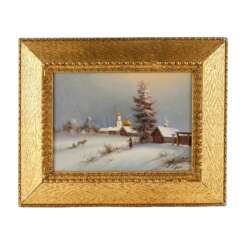







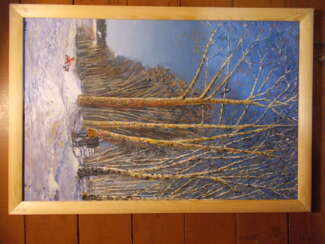

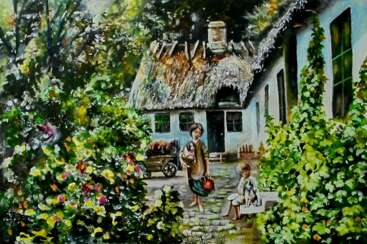
Our village poplars
Artyom Ukhov (b. 1982)
Shop Ukhov Artyom
Artyom Ukhov
20.01.1982
Russia
Artist and designer, has 15 exhibitions and 3 rewards
Ухов Артем Евгеньевич,
1982 г.р., г. Череповец, Вологодской области,
КОНТАКТЫ:
vk.com: uae82
Exhibitions:
Personal exhibition in Ustuzhna district library of K.N.Batushkov, June – August 2018, Ustuzhna town;
Art-Start, young modern art, Krasny most gallery, May, 30th – July 1st, Vologda city;
Russian Art Week, XXIV International Exhibition & Competition of Modern and Contemporary Art, Moscow, April, 23rd – 29th,
Vologda Regional Exhibition “Orthodoxian Vologda” April, 25th – June 2nd2018, Vologda city.
Vologda Regional Exhibition dedicated to the 870th anniversary of Vologda city, September, 22nd – October, 30th 2017, Vologda city.
“Shire krug 8” Annual art exhibition of young artist of Vologda city Nov, 1st, 2016 – Feb, 5th, 2017;
“Shire krug 7” Annual art exhibition of young artist of Vologda city Dec, 23rd, 2015 -Feb,20th, 2016;
Personal exhibition in Ustuzhna district library of K.N.Batushkov, Dec, 2015 — Jan, 2016;
«ArtExpoSPb 2016», October, 21st-23rd 2016, Saint Petersburg, Russian Federation.
Personal art exhibition in Vologda State Technical University Library, October-november 2012;
Prizes:
2nd place in “Painting” nomination of Russian Art Week, XXIV International Exhibition & Competition of Modern and Contemporary Art, Moscow, April, 23rd – 29th, 2018.
1st place in “subject picture” nomination of Saint-Petersburg Art Week, X International Exhibition & Competition of Contemporary Arts, Saint-Petersburg, April, 28th – May, 3rd, 2018.
3nd place in “genre picture” nomination of Russian Art Week, XXVI International Exhibition & Competition of Modern and Contemporary Art, Moscow, April, 8rd – 14th, 2019.
Artist shop
Ukhov Artyom
Russia
Number of products: 62


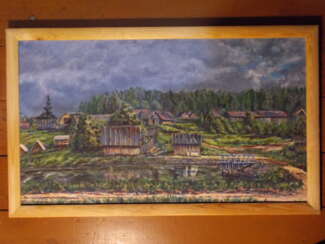
Somewhere in the village.
Sergiy Roy (b. 1958) 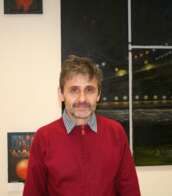 Shop Roy Sergiy
Sergiy Roy
04.04.1958
Ukraine
EXHIBITIONS:
INTERNATIONAL ART EXHIBITION,
MOSKOW, RUSSIA, WARSAW, POLAND, 1984
BASHKIRTSEV’S ART EXHIBITION, MUSEUM OF FINE ART, POLTAVA, UKRAINE, 1988
AVAN/ART IN ROVANIEMI, FINLAND, 1990
ANNUAL NATIONAL ART EXHIBITION, KYIV, UKRAINE, 1990
AVAN/ART, MUSEUM OF FINE ART, MURMANSK, RUSSIA, 1990
AVAN/ART IN JACKSONVILLE, KENT GALLERY, JACKSONVILLE, FLORIDA, USA, 1991
AVAN/ART IN JACKSONVILLE, DAWNTOWN GALLERY, JACKSONVILLE, FLORIDA, USA, 1991
ME+ME+ME+ME+…/AVAN CENTER OF CULTURE MURMANSK, RUSSIA, 1992
NATIONAL EXHIBITION ART GALLERY, KIYV, UKRAINE, 1993
PAN-UKRAINE, DNIPROPETROVSK, UKRAINE, 1995
EXHIBITION MODERN ART GALLERY, POLTAVA, UKRAINE, 2003
REGIONAL EXHIBITION MODERN ART GALLERY, POLTAVA, UKRAINE, 2005
REGIONAL EXHIBITION MODERN ART GALLERY, POLTAVA, UKRAINE, 2007
KYIV-ART. 2008 HOUSE OF TEACHER ,KYIV , UKRAINE 2008
M-ART GALLERY KHARKIV, UKRAINE 2010
IN GARDENS OF VICTORY GALLERY , ODESSA, UKRAINE 2011
Florence Design Week "Crossing People" Exhibition,FLORENCE,ITALY,2013
Gallery Fine ART, POLTAVA,UKRAINE,2013
Gallery " TRYPTYH", KYIV,UKRAINE,2014
Fine ART Gallery ,POLTAVA,UKRAINE,2014
Ukrainian Free Universety, MUNKHEN,GERMANY,2014-2015
ARTGESCHOSS, internationale kunstausstellung, Salzgitter Bad,GERMANY,2017
Art Revolution Taipei,Taiwan , 台北新藝術博覽會,2018
Private collections:
Mr. Roman Kupchinsky (USA, New York)
Dr. Ulf Bethmann (Germany, Hamburg)
Ms. Monika Platek (Poland, Krakov)
Museums and collection:
Jacksonville College (Florida, USA);
Khmelnitsckiy National Art Museum (Ukraine);
Poltava Art Museum (Ukraine);
Modern Art Gallery Poltava (Ukraine);
Austria, Australia, Dubai, USA, Germany, England, Russia, Israel, Irland, New Seland, Taiwan, Ukraine,Poland.
Artist shop
Roy Sergiy
Ukraine
Number of products: 211
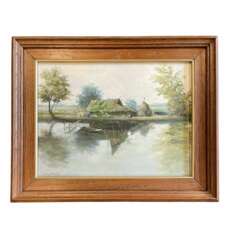

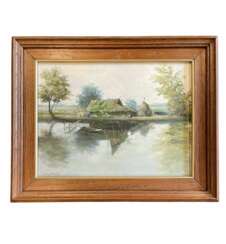



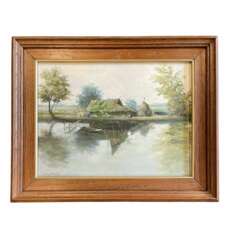



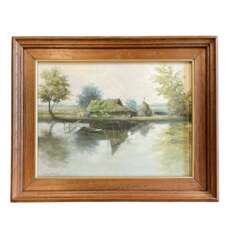







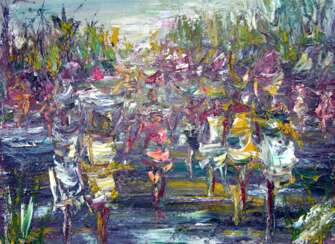





Morning
Vitaly Varyakin (b. 1975)  Shop Varyakin Vitaly
Vitaly Varyakin
04.09.1975
Ukraine
I am an artist who lives and works in Ukraine. I like drawing since my childhood. And I took up painting when I was 20 years old. I have been trying various painting techniques: gouache, acrylic, oil. Most of all I like the oil and use it at work quite often. Sometimes I use acrylic modeling paste to diversify the texture of canvases for paintings. I use flat bristles, flat and round synthetic brushes and a palette knife.
Artist shop
Varyakin Vitaly
Ukraine
Number of products: 9