remotion

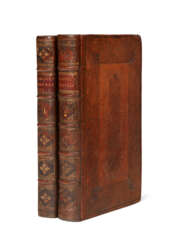

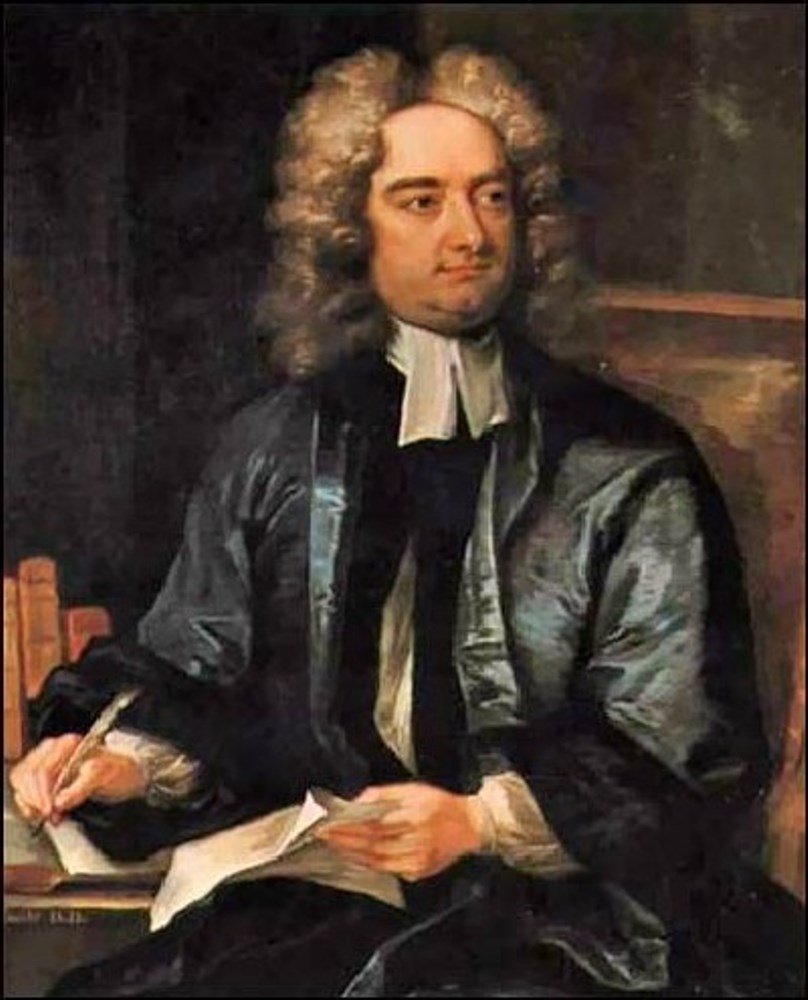
Jonathan Swift was a British-Irish writer, essayist, philosopher, and author of the world-famous satirical novel Gulliver's Travels.
Swift also wrote numerous works, including The Tale of the Barrel (1704), An Argument Against the Abolition of Christianity (1712), and A Modest Proposal (1729). Almost all of Swift's satirical works were published anonymously, giving the author wide latitude in expressing his talent as a satirist.
Swift was a clergyman, made a career in London, became the chief pamphleteer and political writer of the Tories and headed the Tory journal "The Inspector", and then returned to Ireland, where he created his major life's work.
The four-part novel Gulliver's Travels, Jonathan Swift's greatest satire, was first published in 1726 and has since been reprinted hundreds of times in many languages around the world. The author describes in an engaging style the different races and societies that Gulliver encounters on his travels to ridicule the many errors, follies, weaknesses and vices to which people and society at large are subject. The author's boundless imagination, bitter irony, keen intellect and brilliant language give this work a world-class scope.

Jonathan Swift was a British-Irish writer, essayist, philosopher, and author of the world-famous satirical novel Gulliver's Travels.
Swift also wrote numerous works, including The Tale of the Barrel (1704), An Argument Against the Abolition of Christianity (1712), and A Modest Proposal (1729). Almost all of Swift's satirical works were published anonymously, giving the author wide latitude in expressing his talent as a satirist.
Swift was a clergyman, made a career in London, became the chief pamphleteer and political writer of the Tories and headed the Tory journal "The Inspector", and then returned to Ireland, where he created his major life's work.
The four-part novel Gulliver's Travels, Jonathan Swift's greatest satire, was first published in 1726 and has since been reprinted hundreds of times in many languages around the world. The author describes in an engaging style the different races and societies that Gulliver encounters on his travels to ridicule the many errors, follies, weaknesses and vices to which people and society at large are subject. The author's boundless imagination, bitter irony, keen intellect and brilliant language give this work a world-class scope.





























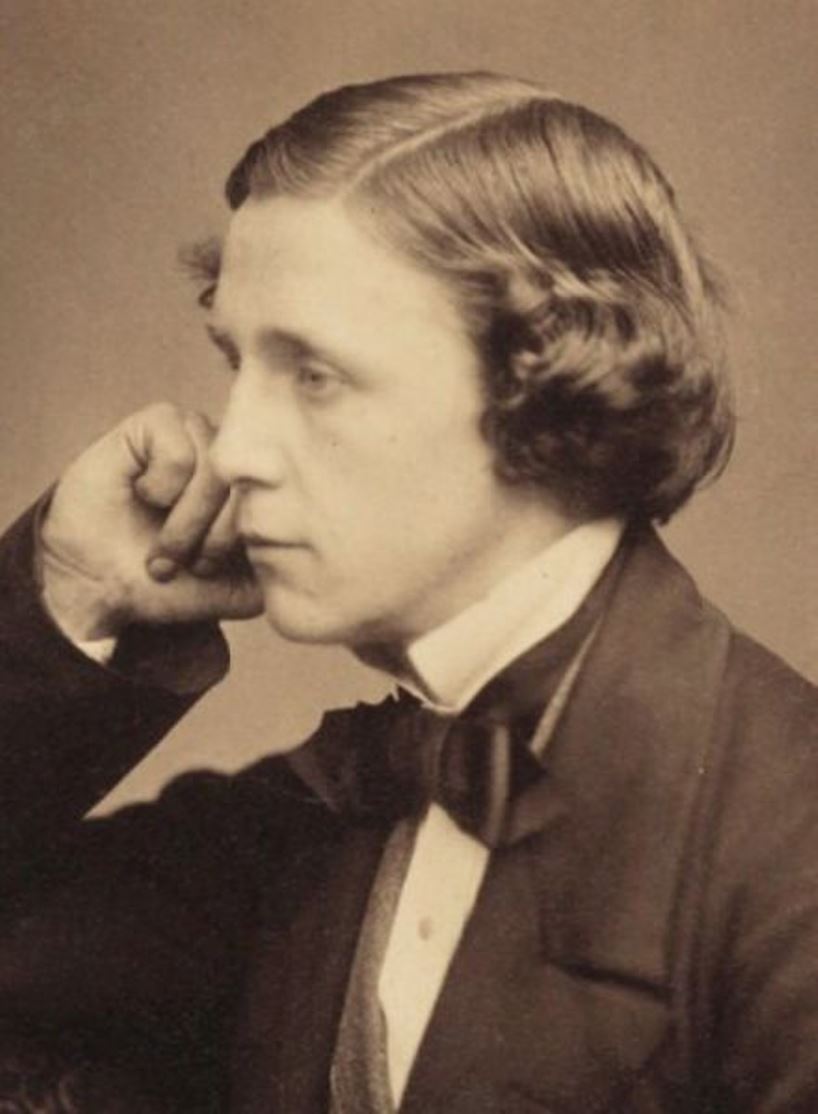
Lewis Carroll, real name Charles Lutwidge Dodgson, was a British writer and photographer, philosopher and logician, and professor of mathematics.
In 1851 Lewis entered one of the best colleges in Oxford - Christ Church. Showing an extraordinary aptitude for mathematics, soon he was able to give lectures himself, and for the next quarter of a century he was a professor of mathematics at Oxford. In parallel with his studies, the young man began to compose short stories and poems, publishing them under a pseudonym.
And then he wrote the famous "Alice's Adventures in Wonderland" (Alice's Adventures in Wonderland, 1865) and "Alice in Looking-Glass" (Through the Looking-Glass, and What Alice Found There, 1871). These books quickly became popular, they were translated into numerous languages, and then repeatedly screened. The prototype of the main character was four-year-old Alice Liddell, the daughter of the new dean of the college where Carroll taught. Lewis Carroll also wrote "The Knotty Story", a humorous poem "Hunting the Snark", "Mathematical Curiosities", "Sylvia and Bruno" and other books. Carroll himself considered his main work a slightly absurd novel-tale "Sylvia and Bruno" (1889-1893).
Under his real name, the writer-mathematician published scientific works on mathematics and logic, he also owns a number of popular books on entertaining mathematics. Lewis Carroll left Oxford only once - in 1867, visiting Russia as part of a delegation of the Anglican Church on the route St. Petersburg-Moscow-Nizhny Novgorod. This was Carroll's only overseas trip, and he described it in his Diary of a Trip to Russia 1867. Lewis Carroll was also a talented chess player and amateur inventor. Photography was also a big part of the writer's life.














Lewis Carroll, real name Charles Lutwidge Dodgson, was a British writer and photographer, philosopher and logician, and professor of mathematics.
In 1851 Lewis entered one of the best colleges in Oxford - Christ Church. Showing an extraordinary aptitude for mathematics, soon he was able to give lectures himself, and for the next quarter of a century he was a professor of mathematics at Oxford. In parallel with his studies, the young man began to compose short stories and poems, publishing them under a pseudonym.
And then he wrote the famous "Alice's Adventures in Wonderland" (Alice's Adventures in Wonderland, 1865) and "Alice in Looking-Glass" (Through the Looking-Glass, and What Alice Found There, 1871). These books quickly became popular, they were translated into numerous languages, and then repeatedly screened. The prototype of the main character was four-year-old Alice Liddell, the daughter of the new dean of the college where Carroll taught. Lewis Carroll also wrote "The Knotty Story", a humorous poem "Hunting the Snark", "Mathematical Curiosities", "Sylvia and Bruno" and other books. Carroll himself considered his main work a slightly absurd novel-tale "Sylvia and Bruno" (1889-1893).
Under his real name, the writer-mathematician published scientific works on mathematics and logic, he also owns a number of popular books on entertaining mathematics. Lewis Carroll left Oxford only once - in 1867, visiting Russia as part of a delegation of the Anglican Church on the route St. Petersburg-Moscow-Nizhny Novgorod. This was Carroll's only overseas trip, and he described it in his Diary of a Trip to Russia 1867. Lewis Carroll was also a talented chess player and amateur inventor. Photography was also a big part of the writer's life.








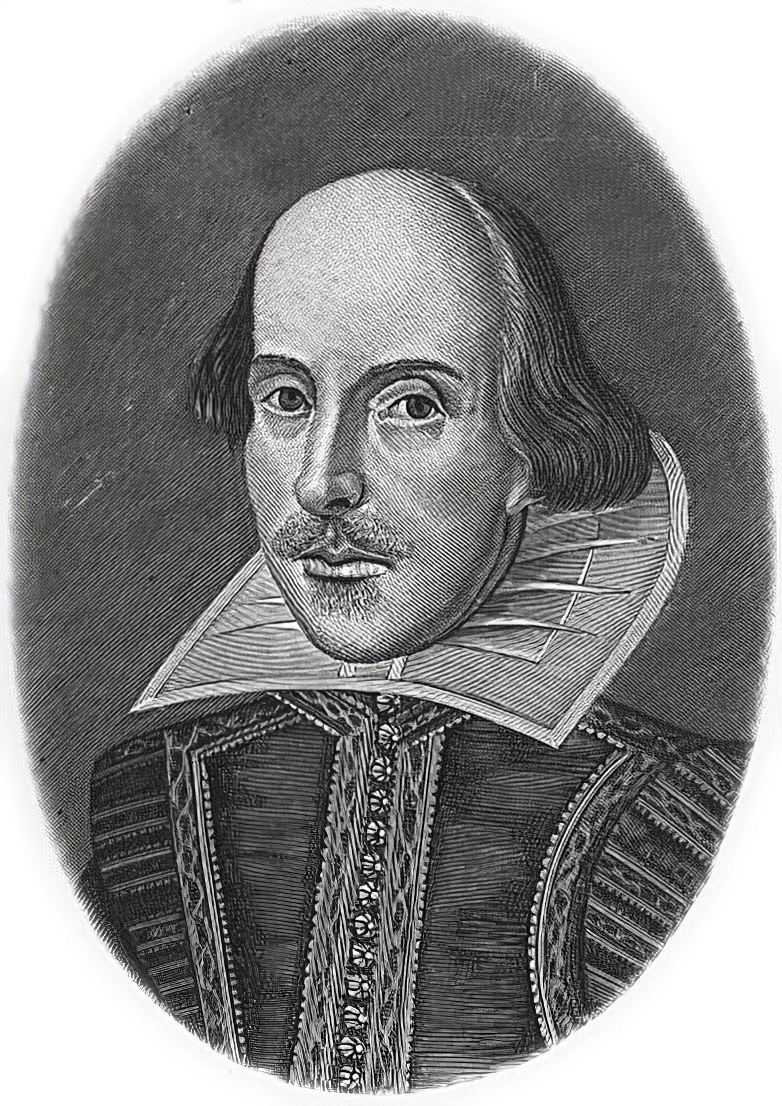
William Shakespeare was a British poet and playwright and writer.
William's father, John Shakespeare, was a merchant and official in Stratford. There are reports that he was a sailor for a time before joining a theater company in London. Beginning in the 1590s, Shakespeare began writing plays, and in 1593 he published a poem, Venus and Adonis, which became popular. He dedicated it to the Duke of Southampton, who was a philanthropist and patron of talent, and soon his business was booming.
From 1592 to 1600 Shakespeare wrote his dramas and romantic comedies "Richard III", "The Taming of the Shrew", "Romeo and Juliet", "A Midsummer Night's Dream" and "The Merchant of Venice", as well as the comedies "Much Ado About Nothing", "Twelfth Night" and the tragedy "Julius Caesar". The playwright's business was so successful that he even bought a large house in Stratford. In 1599, Shakespeare became one of the owners, playwright and actor of the new theater "Globe". In 1603 King James took Shakespeare's troupe under his direct patronage. In the mature period, the great playwright turned to tragedies, there were "Hamlet", "Othello", "King Lear", "Macbeth" and others.
Although in the 19th century researchers had some doubts about the authorship of many of these works, William Shakespeare is considered the greatest English playwright, one of the best playwrights in the world. His plays have been translated into all major languages and to this day form the basis of the world theatrical repertoire, most of them have been screened many times. According to the Guinness Book of Records, Shakespeare remains the world's best-selling playwright, and his plays and poems have sold more than 4 billion copies in the nearly 400 years since his death.