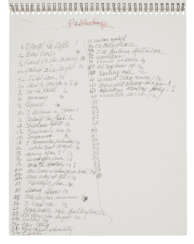
drawing list



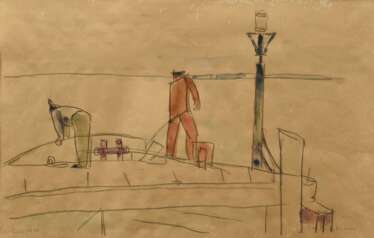


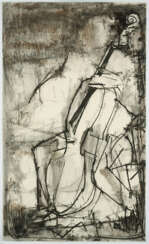

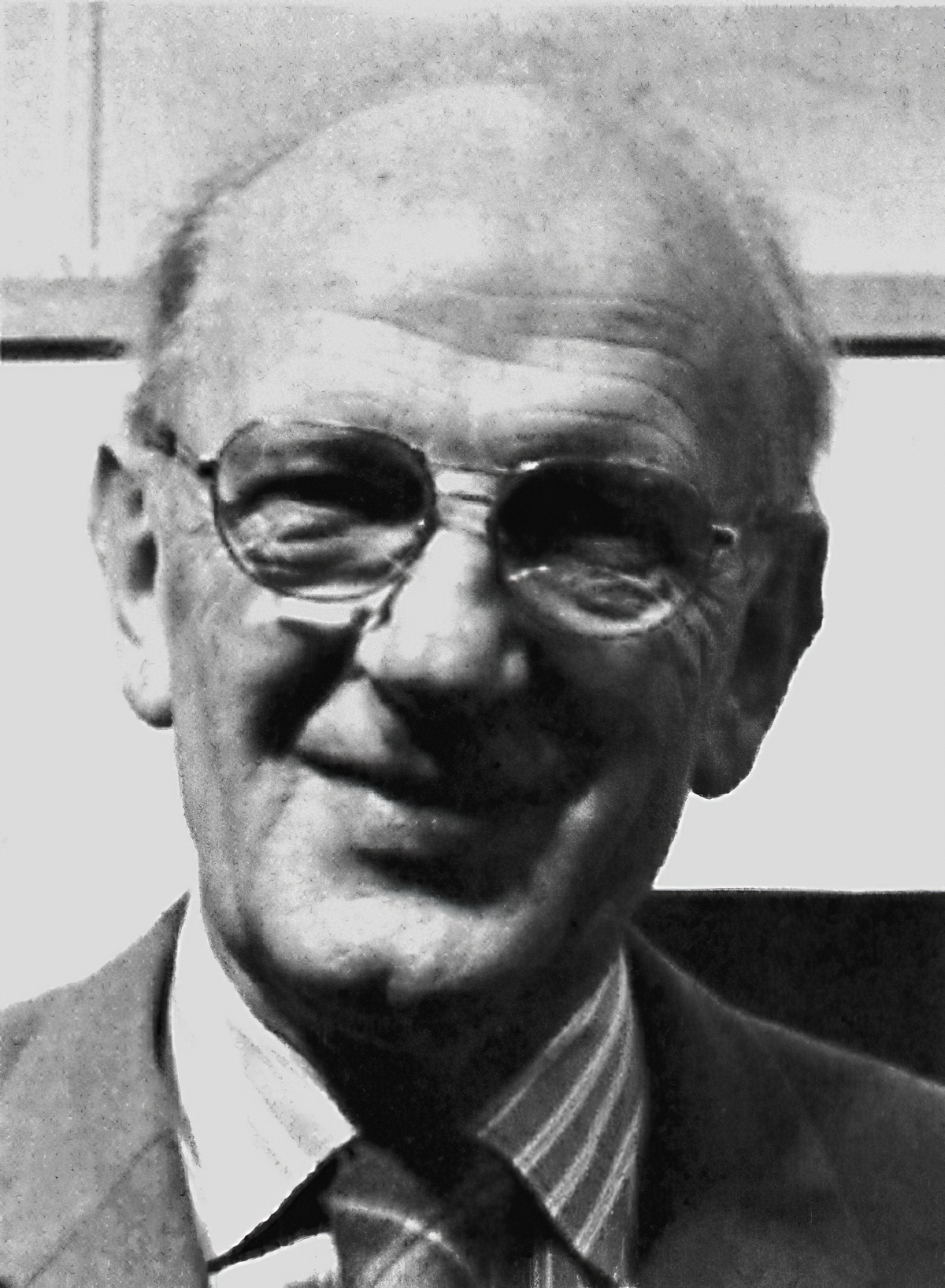
Georg Meistermann was a German painter and draftsman who was also famous for his stained glass windows in the whole of Europe.
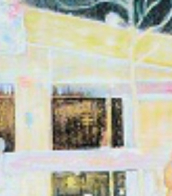


Georg Meistermann was a German painter and draftsman who was also famous for his stained glass windows in the whole of Europe.

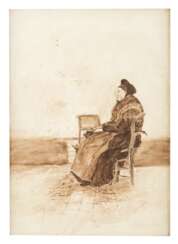

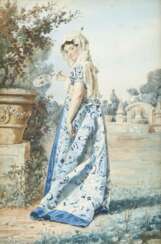

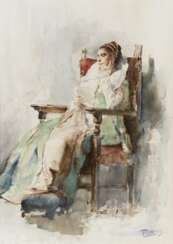












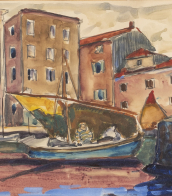
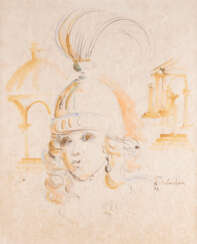

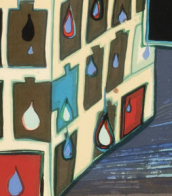
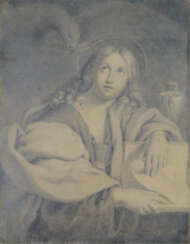

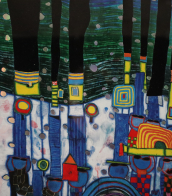
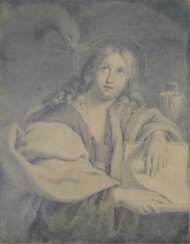

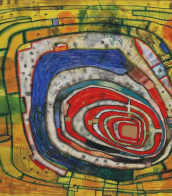
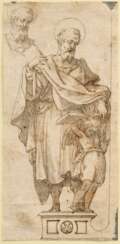











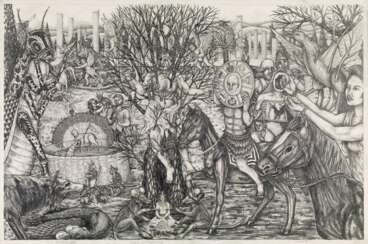


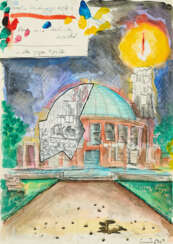

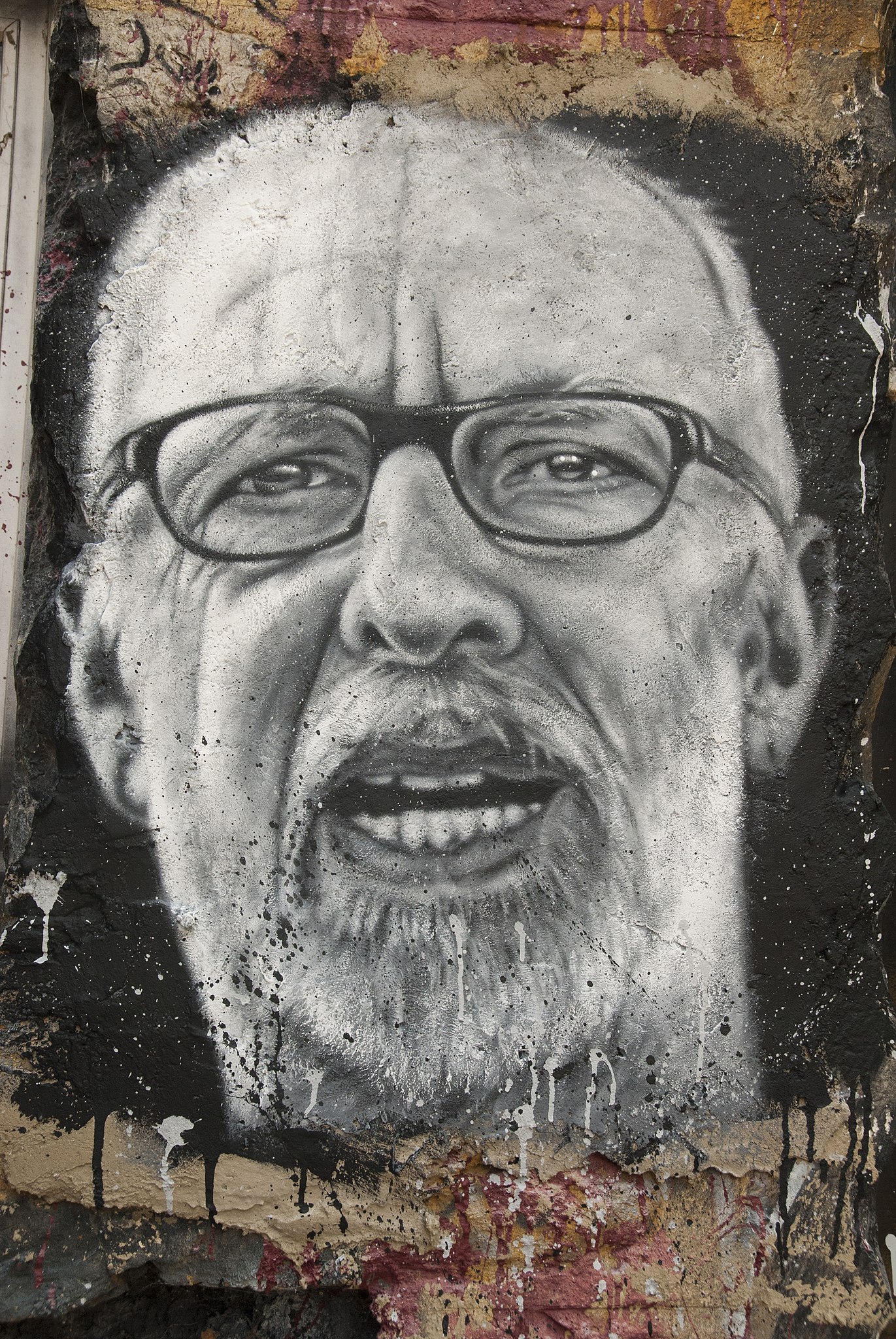
Jörg Immendorff was a German painter and sculptor, stage designer and decorator, and a member of the New Wild movement.
Immendorff painted in cycles that often lasted for years and were political in nature. His series of sixteen large paintings, Café Deutschland (1977-1984), is well known. In these colorful paintings, numerous disco lovers symbolize the conflict between East and West Germany.
Immendorff prepared several stage productions and designed sets for the operas Elektra and The Rider's Voyage. 25 of Immendorf's paintings were selected in 2006 for the illustrated Bible.
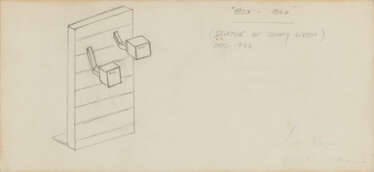





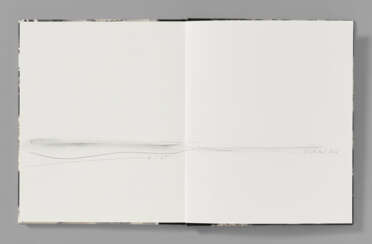

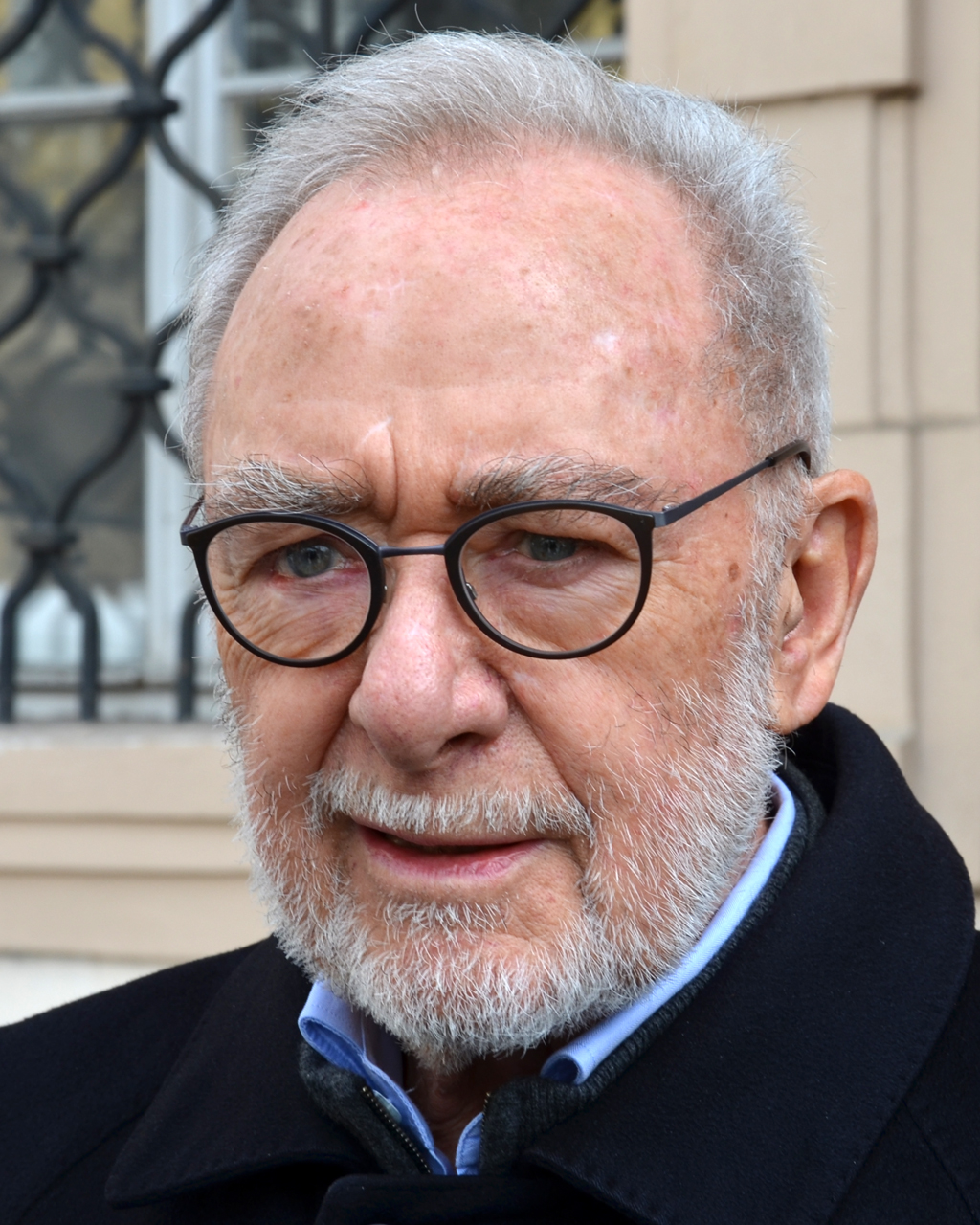
Gerhard Richter is a German visual artist. Richter has produced abstract as well as photorealistic paintings, and also photographs and glass pieces. He is widely regarded as one of the most important contemporary German artists and several of his works have set record prices at auction.





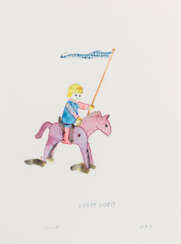

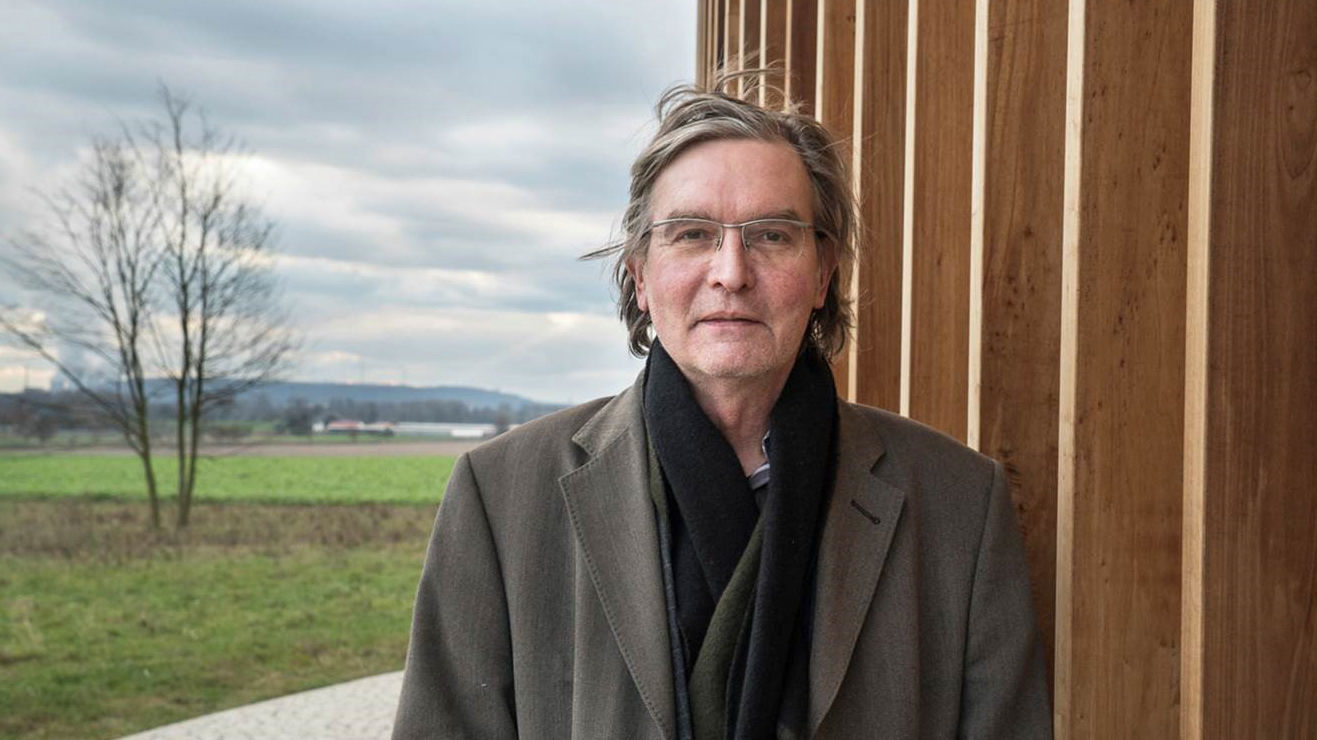
Thomas Schütte is a German contemporary artist. He sculpts, creates architectural designs, and draws. He lives and works in Düsseldorf.


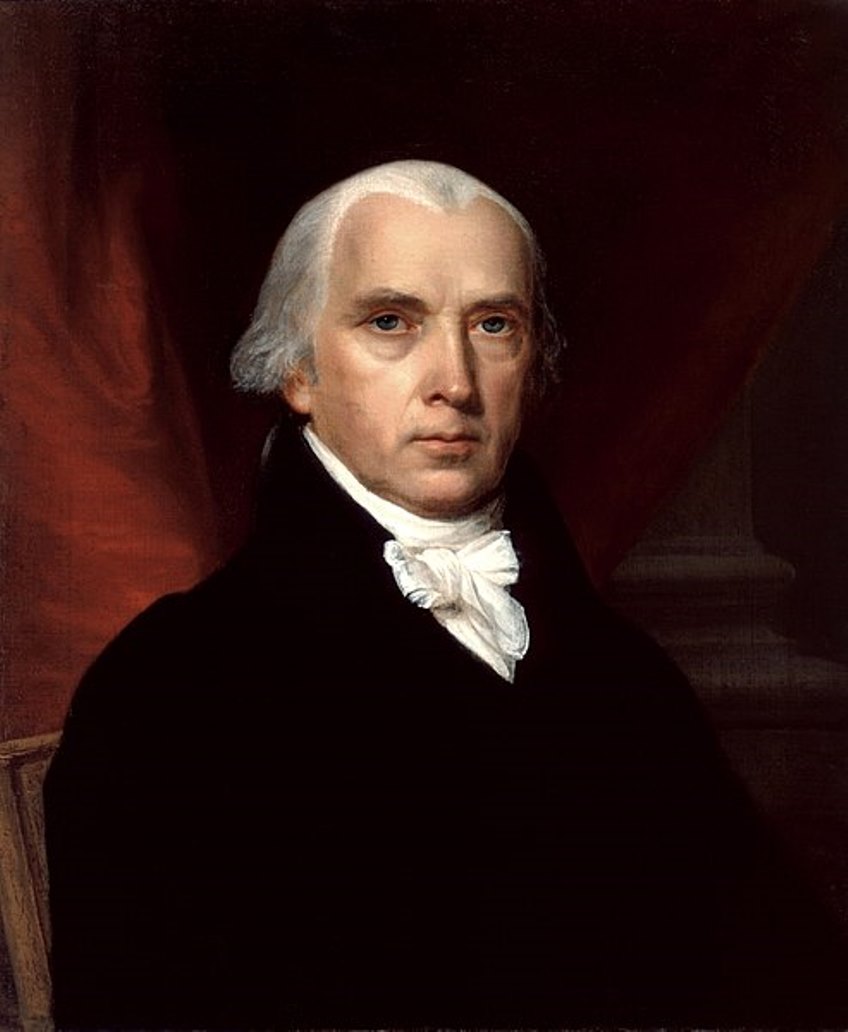
James Madison was an American politician and statesman, the fourth President of the United States (1809-1817).
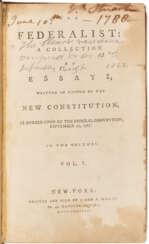
Madison attended Princeton and studied history, government, and law. He participated in the drafting of the Virginia Constitution in 1776, and in 1780 was chosen to represent Virginia in the Continental Congress (1780-83 and 1786-88). James Madison contributed greatly to the ratification of the Constitution, writing, with Alexander Hamilton and John Jay, The Federalist (1788). He was later called the "father of the Constitution."
In 1792, Madison and Thomas Jefferson (1743-1826) founded the Democratic-Republican Party, which has been called America's first opposition political party. When Jefferson became the third president of the United States, Madison served as his secretary of state. In Congress, he was involved in drafting the Bill of Rights and passing the first revenue legislation. As Secretary of State to President Jefferson (1801-1809), Madison protested to warring France and Great Britain that their seizure of American ships was contrary to international law.
Madison was elected president in 1808, succeeding Jefferson. Continued British interference in shipping, as well as other grievances, led to the War of 1812. During Madison's second term as president, the war was still ongoing, and he and his wife were even forced to flee in the face of advancing British troops who set Washington, D.C. on fire. Despite this, in 1815, the United States declared its victory in the war.
After the end of his second term, Madison remained active in public affairs. He edited his Journal of the Constitutional Convention, was co-chairman of the Virginia Constitutional Convention from 1829-1830, and chancellor of the University of Virginia from 1826-36. He was also Monroe's foreign policy advisor. Although Madison was a slave owner all his life, in the last years of his life he was active in the American Colonization Society, whose mission was to resettle slaves in Africa. James Madison died at the age of 85 in 1836.
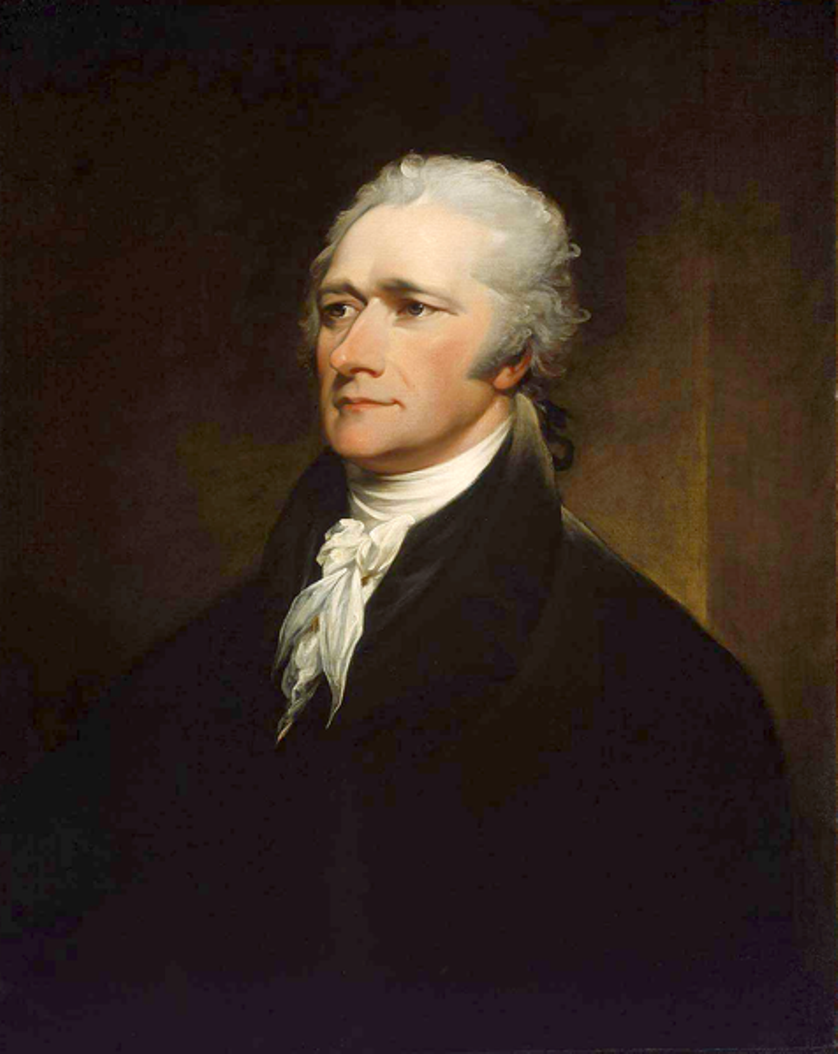
Alexander Hamilton was an American politician and statesman, the founder of the American financial system.
A native of Great Britain, Hamilton arrived in continental America in late 1772 and enrolled at King's College in New York. He became captain of an artillery company in 1776 and fought in the battles of Kips Bay, White Plains, Trenton, and Princeton during the American War of Independence. For four years he served on George Washington's staff as adjutant with the rank of lieutenant colonel. And in 1782, Hamilton was chosen by New York as a delegate to the Confederate Congress.
Alexander Hamilton was also one of New York's delegates to the Constitutional Convention in Philadelphia in 1787. He was a passionate advocate of the Constitution and, along with future President James Madison and John Jay, contributed to the famous book The Federalist (1788), writing most of the essays for it. After George Washington was elected the nation's first president in 1789, he appointed Hamilton Secretary of the Treasury. As the first Secretary of the Treasury (1789-1795), Hamilton developed plans to finance the national debt, secure federal credit, encourage the expansion of manufacturing, and organize a federal bank. In 1801, Hamilton founded the New York Evening Post newspaper.
On July 11, 1804, Hamilton was mortally wounded in a duel with his personal and political rival, Vice President Aaron Burr. Today, Alexander Hamilton is revered as one of the founding fathers of the United States, he is known for his role in creating America's financial system, and his portrait is on the ten dollar bill.
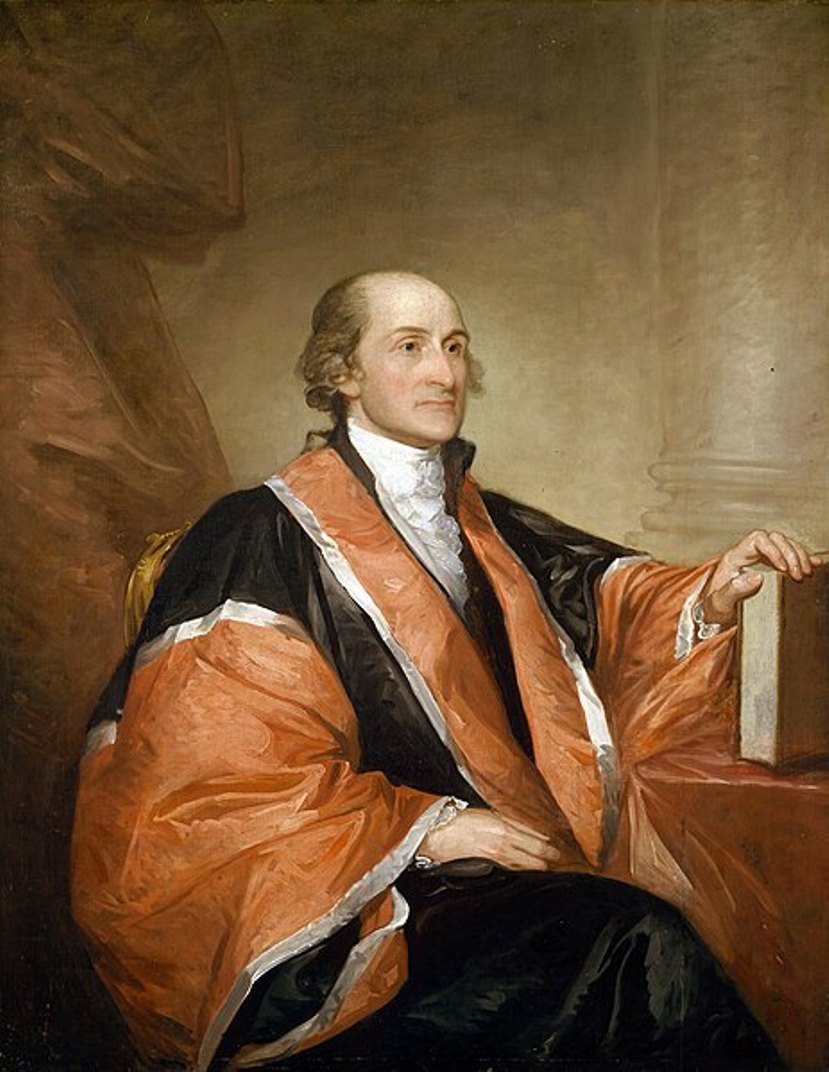
John Jay was an American lawyer and diplomat, statesman, and one of the founding fathers of the United States.
Jay came from French Huguenots, after graduating from King's College (now Columbia University) he entered law school and was admitted to the bar in 1768. After the outbreak of hostilities in the spring of 1775, Jay continued to serve both in New York and in the Continental Congress, which elected him president in late 1778.
In the fall of 1779 he was appointed minister plenipotentiary to Spain, which had recently entered into an alliance with France against England. In May 1782 he traveled to Paris, where a treaty was concluded that formally ended the war with Great Britain in 1783. Before returning to America in July 1784, Jay was appointed secretary of foreign affairs.
In 1788, Jay actively advocated for the ratification of the U.S. Constitution by the state of New York. Together with future President James Madison and economist Alexander Hamilton, he participated in the creation of the famous book The Federalist (1788). Under the new Constitution, President Washington appointed John Jay Chief Justice of the United States in 1789, and in July 1795 he became Governor of New York. After completing his second term as governor in June 1801. Jay retired to his farm in Bedford, New York.
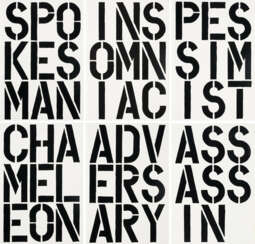

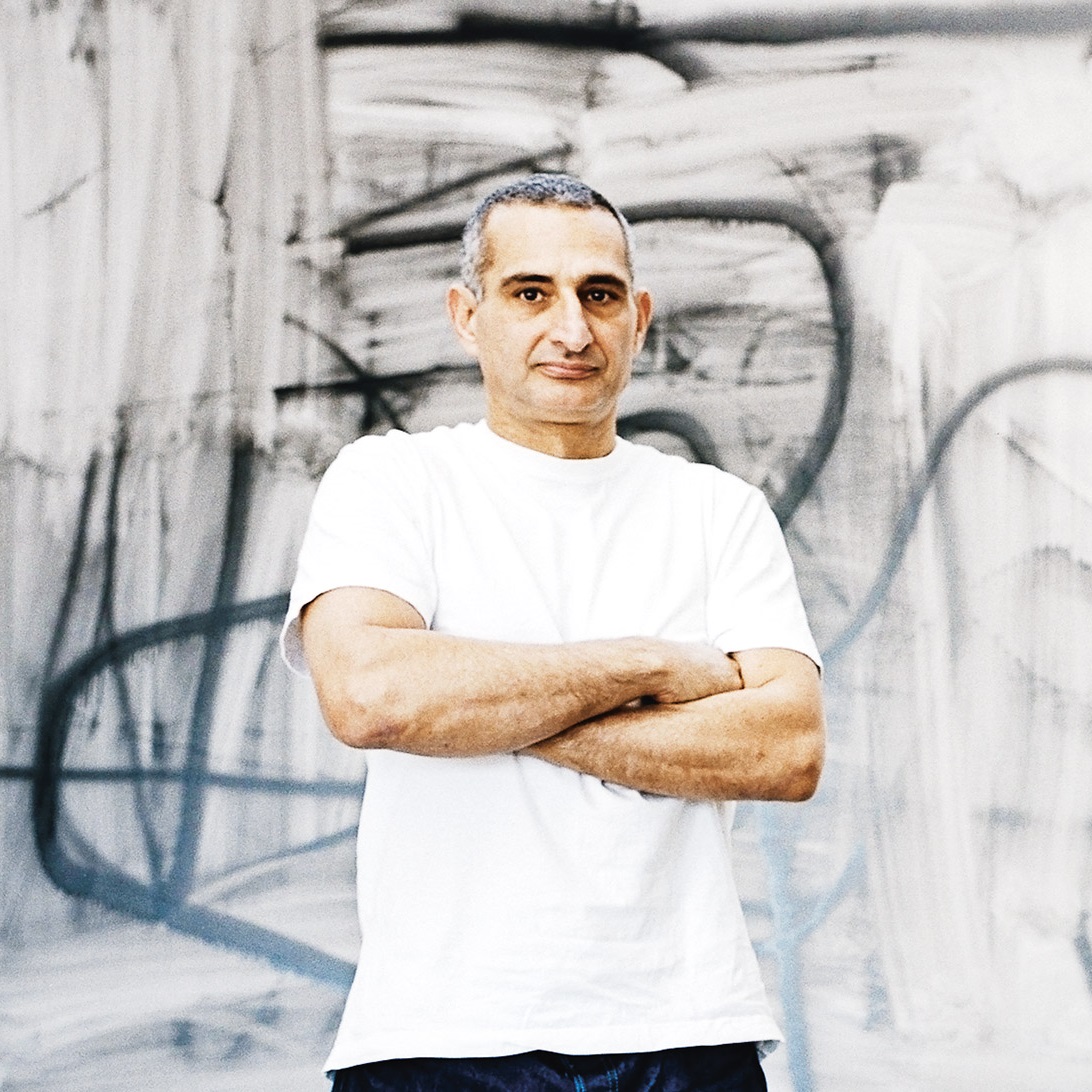
Christopher Wool is an American artist. Since the 1980s, Wool's art has incorporated issues surrounding post-conceptual ideas. He lives and works in New York City and Marfa, Texas, together with his wife and fellow painter Charline von Heyl.
Wool is best known for his paintings of large, black, stenciled letters on white canvases. Wool began to create word paintings in the late 1980s, reportedly after having seen graffiti on a brand new white truck. Using a system of alliteration, with the words often broken up by a grid system, or with the vowels removed (as in 'TRBL' or 'DRNK'), Wool's word paintings often demand reading aloud to make sense.

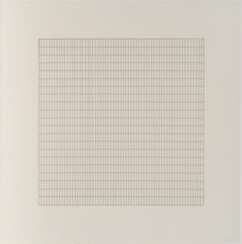

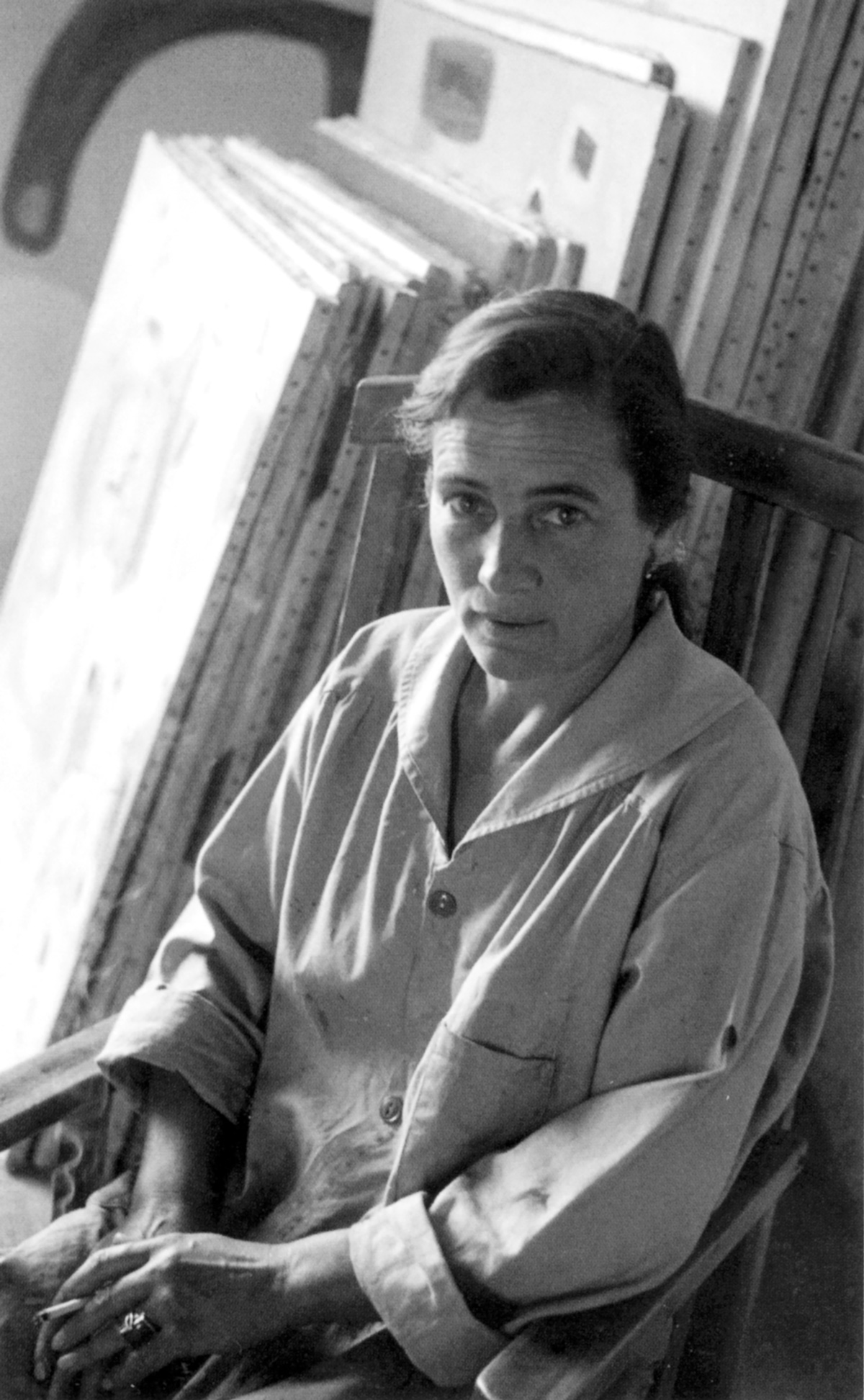
Agnes Martin was an American abstract painter. Her work has been defined as an "essay in discretion on inward-ness and silence". Although she is often considered or referred to as a minimalist, Martin considered herself an abstract expressionist and was one of the leading practitioners of Abstract Expressionism in the 20th century. She was awarded a National Medal of Arts from the National Endowment for the Arts in 1998. She was elected to the Royal Canadian Academy of Arts in 2004.
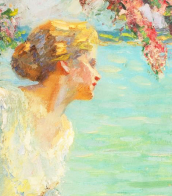
























Victor Vasarely, a seminal figure in the Op art movement, was a Hungarian-French artist celebrated for his pioneering contributions to geometric abstract art. Born Győző Vásárhelyi in Pécs, Hungary, in 1906, Vasarely's artistic journey led him to Paris, where he honed a distinctive style marked by optical illusions and kinetic art. By the late 1940s, he had developed his iconic approach, utilizing geometric shapes and a limited color palette to create artworks that seemed to move and vibrate. His work "Zebra," created in 1937, is often cited as one of the earliest examples of Op art, showcasing his fascination with creating the illusion of depth and movement on a flat surface.
Throughout the 1950s and 1960s, Vasarely's exploration into optical effects deepened, leading to significant series like his "Vega" works. These pieces are characterized by their illusionary three-dimensional space, seemingly pushing and pulling the viewer into the canvas. His dedication to optical and geometric abstraction was not just a pursuit of aesthetic innovation but also an exploration of the viewer's perception, making the observer an integral part of the artwork.
Vasarely's influence extended beyond the canvas, impacting architecture, sculpture, and even space exploration. In 1970, he founded the first museum dedicated to his works in Gordes, followed by the establishment of the Fondation Vasarely in Aix-en-Provence in 1976, showcasing his vision of integrating art with the environment. His artworks have found homes in prestigious institutions like the Museum of Modern Art and have been celebrated in exhibitions worldwide.
For collectors and experts in art and antiques, Vasarely's works offer a mesmerizing blend of scientific precision and artistic expression, encapsulating a moment in art history where the boundaries between viewer and artwork blurred. His legacy is a testament to the power of visual perception and the endless possibilities of abstract art.
For those interested in delving deeper into Victor Vasarely's visionary world and perhaps acquiring a piece of this history, signing up for updates on new product sales and auction events related to Vasarely's works is highly recommended. Stay informed and embrace the opportunity to own a part of the optical and geometric abstraction movement that Vasarely so brilliantly pioneered.