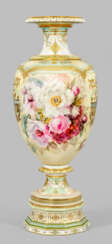
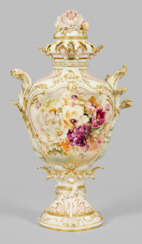
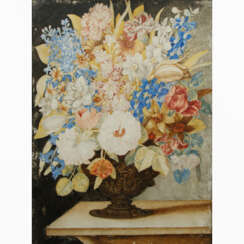
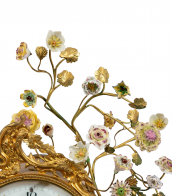
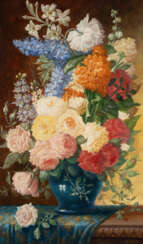
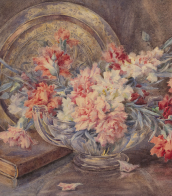
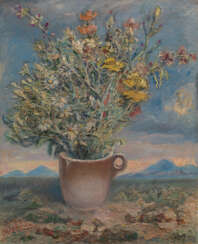
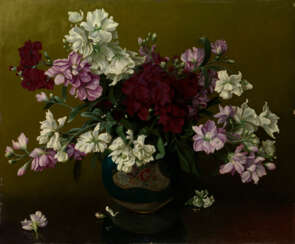
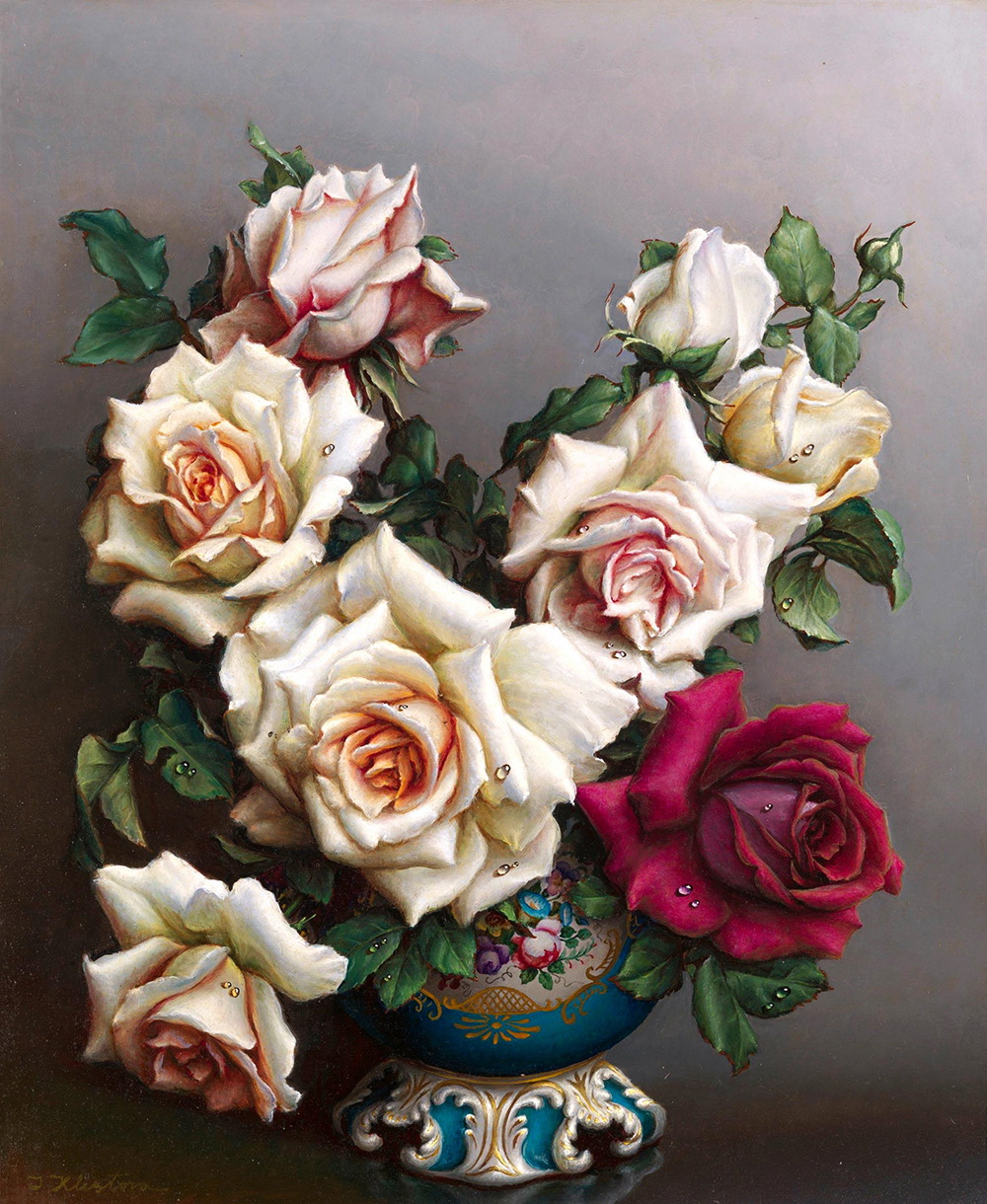
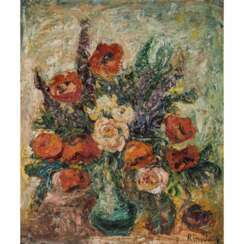
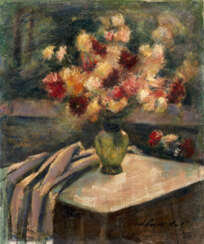
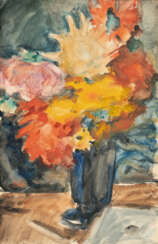
flowers in vase








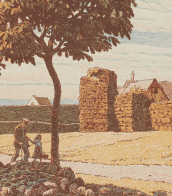


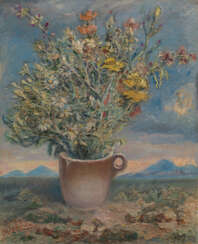

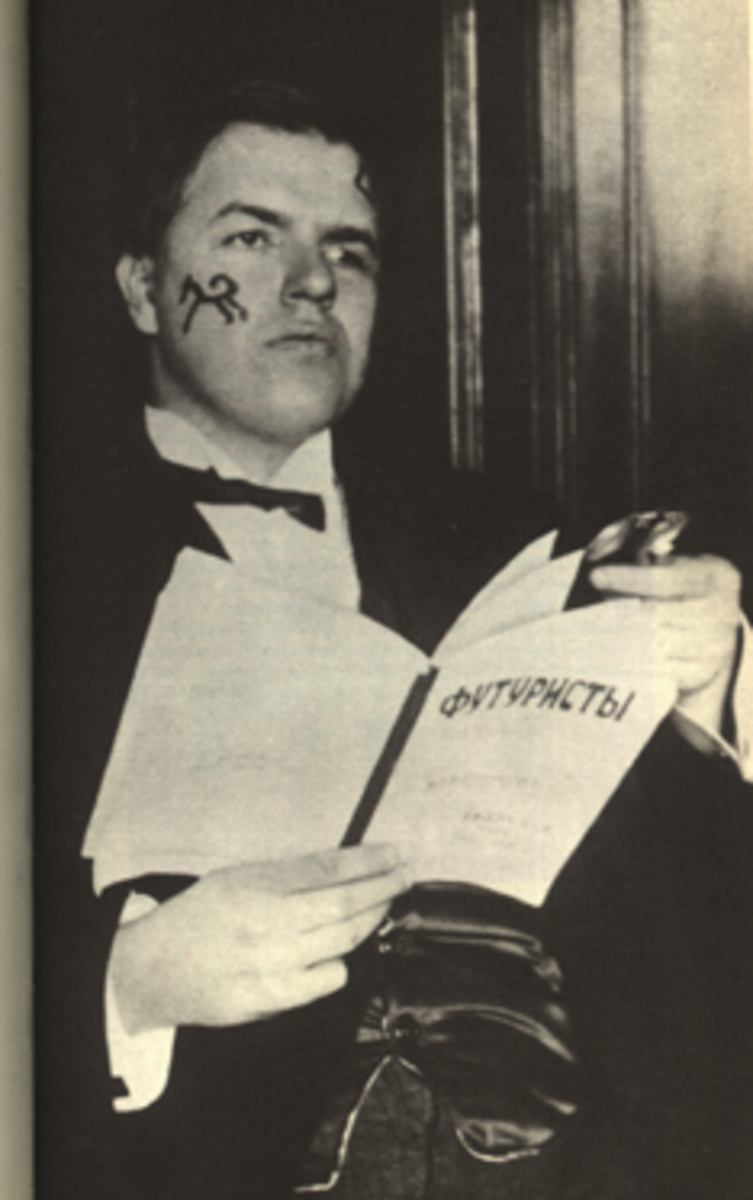
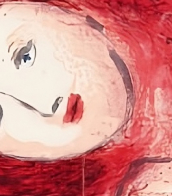
David Davidovich Burliuk (Russian: Давид Давидович Бурлюк), a pioneering figure of the Russian Futurist movement, was a Ukrainian poet, artist, and publicist, born in 1882 in Semirotovshchina, Kharkov, Ukraine, and died in 1967 on Long Island, N.Y., U.S. Known for his eclectic contributions that spanned poetry, painting, criticism, and publishing, Burliuk's work was instrumental in introducing the Russian avant-garde to Europe and the United States. Despite having a lesser volume of work in poetry and painting compared to his contemporaries, Burliuk's knack for discovering talent and promoting it was unparalleled. He was among the first to publish the works of Velimir Khlebnikov and to recognize the genius of Vladimir Mayakovsky, significantly contributing to their renown.
Burliuk's artistic journey was marked by his involvement with the Futurist and Neo-Primitivist movements. His early work, including an exhibition with the group Zveno ("The Link") in Kiev in 1908 and his participation in the Hylaea group, set the stage for his later achievements. He was a co-author of the influential Futurist manifesto "A Slap in the Face of Public Taste" in 1912, advocating for a break from traditional art forms and the embrace of modernity. Burliuk's commitment to Futurism was evident in his publishing endeavors and his collaborations with notable artists of the time.
In his later years, after emigrating to the United States in 1922, Burliuk continued to engage with the art world, contributing to pro-Soviet groups and publishing his works and those of his contemporaries. His efforts were recognized in several exhibitions, including a significant show at the Brooklyn Museum's 1926 International Exhibition of Modern Art. Despite facing challenges, such as being denied permission to visit his homeland by the Soviet government, Burliuk's influence remained steadfast. His legacy as a central figure in Russian Futurism and his contributions to the broader art movement are celebrated to this day.
To stay informed about updates and events related to David Davidovich Burliuk, including sales of his works and auction events, sign up for our newsletter. This subscription will ensure you're the first to know about new discoveries and opportunities to engage with Burliuk's enduring legacy.

David Davidovich Burliuk (Russian: Давид Давидович Бурлюк), a pioneering figure of the Russian Futurist movement, was a Ukrainian poet, artist, and publicist, born in 1882 in Semirotovshchina, Kharkov, Ukraine, and died in 1967 on Long Island, N.Y., U.S. Known for his eclectic contributions that spanned poetry, painting, criticism, and publishing, Burliuk's work was instrumental in introducing the Russian avant-garde to Europe and the United States. Despite having a lesser volume of work in poetry and painting compared to his contemporaries, Burliuk's knack for discovering talent and promoting it was unparalleled. He was among the first to publish the works of Velimir Khlebnikov and to recognize the genius of Vladimir Mayakovsky, significantly contributing to their renown.
Burliuk's artistic journey was marked by his involvement with the Futurist and Neo-Primitivist movements. His early work, including an exhibition with the group Zveno ("The Link") in Kiev in 1908 and his participation in the Hylaea group, set the stage for his later achievements. He was a co-author of the influential Futurist manifesto "A Slap in the Face of Public Taste" in 1912, advocating for a break from traditional art forms and the embrace of modernity. Burliuk's commitment to Futurism was evident in his publishing endeavors and his collaborations with notable artists of the time.
In his later years, after emigrating to the United States in 1922, Burliuk continued to engage with the art world, contributing to pro-Soviet groups and publishing his works and those of his contemporaries. His efforts were recognized in several exhibitions, including a significant show at the Brooklyn Museum's 1926 International Exhibition of Modern Art. Despite facing challenges, such as being denied permission to visit his homeland by the Soviet government, Burliuk's influence remained steadfast. His legacy as a central figure in Russian Futurism and his contributions to the broader art movement are celebrated to this day.
To stay informed about updates and events related to David Davidovich Burliuk, including sales of his works and auction events, sign up for our newsletter. This subscription will ensure you're the first to know about new discoveries and opportunities to engage with Burliuk's enduring legacy.

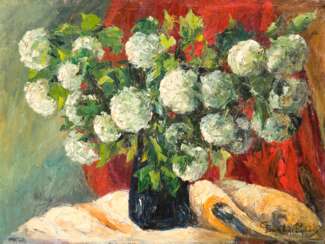

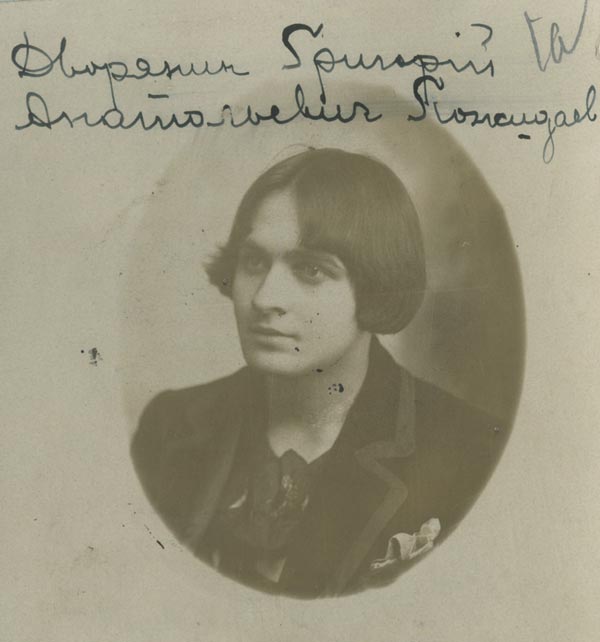
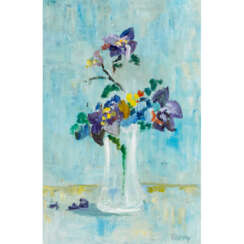

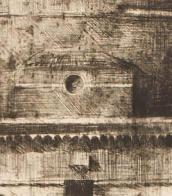
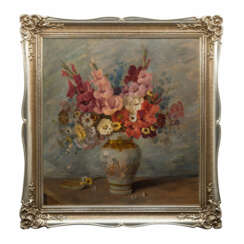

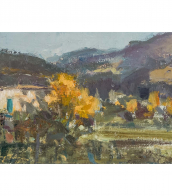

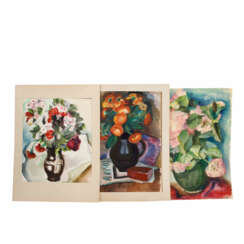

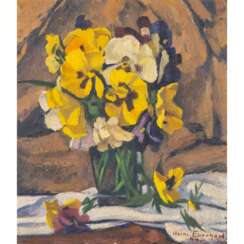

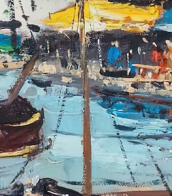
Heinrich Eberhard was a German modernist painter.
Eberhard studied at the Royal Academy of Fine Arts in Stuttgart, and was decisively influenced in his artistic development by the modernist pioneer Adolf Helzel (1853-1934). In 1920 he became a member of the Stuttgart "Üecht Group", which also included Willy Baumeister and Oskar Schlemmer, and was a member of the legendary Hölzelkreis.
Eberhard's oeuvre includes oil paintings, drawings, prints and stained glass windows and is characterized by a stylistic pluralism between expressive naturalism, cubist influences and abstraction.
During the Nazi "Degenerate Art" campaign in Germany in 1937, some of the artist's paintings were removed from galleries and destroyed, but in 1943 he was allowed to exhibit one canvas that met the tastes of the authorities. After the war, Eberhard continued to create with success, participating in exhibitions.


Heinrich Eberhard was a German modernist painter.
Eberhard studied at the Royal Academy of Fine Arts in Stuttgart, and was decisively influenced in his artistic development by the modernist pioneer Adolf Helzel (1853-1934). In 1920 he became a member of the Stuttgart "Üecht Group", which also included Willy Baumeister and Oskar Schlemmer, and was a member of the legendary Hölzelkreis.
Eberhard's oeuvre includes oil paintings, drawings, prints and stained glass windows and is characterized by a stylistic pluralism between expressive naturalism, cubist influences and abstraction.
During the Nazi "Degenerate Art" campaign in Germany in 1937, some of the artist's paintings were removed from galleries and destroyed, but in 1943 he was allowed to exhibit one canvas that met the tastes of the authorities. After the war, Eberhard continued to create with success, participating in exhibitions.
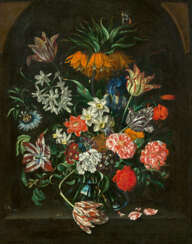

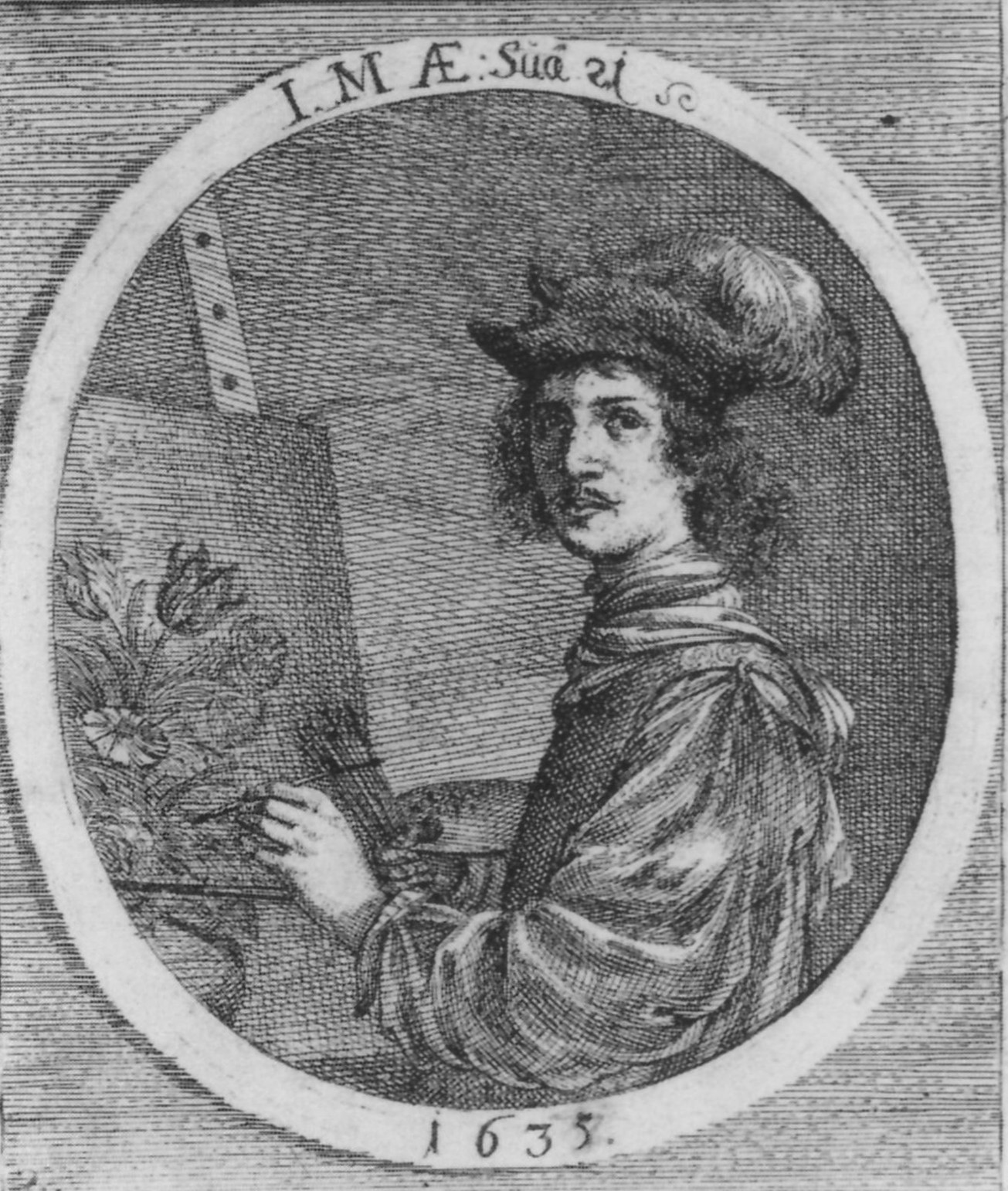
Jakob Marrel was a German still life painter active in Utrecht during the Dutch Golden Age.
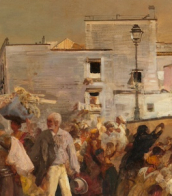


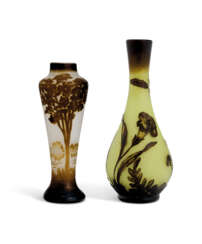

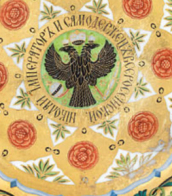



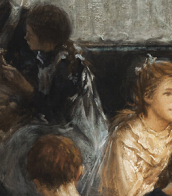

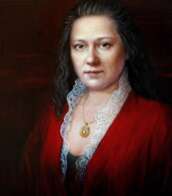
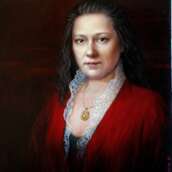



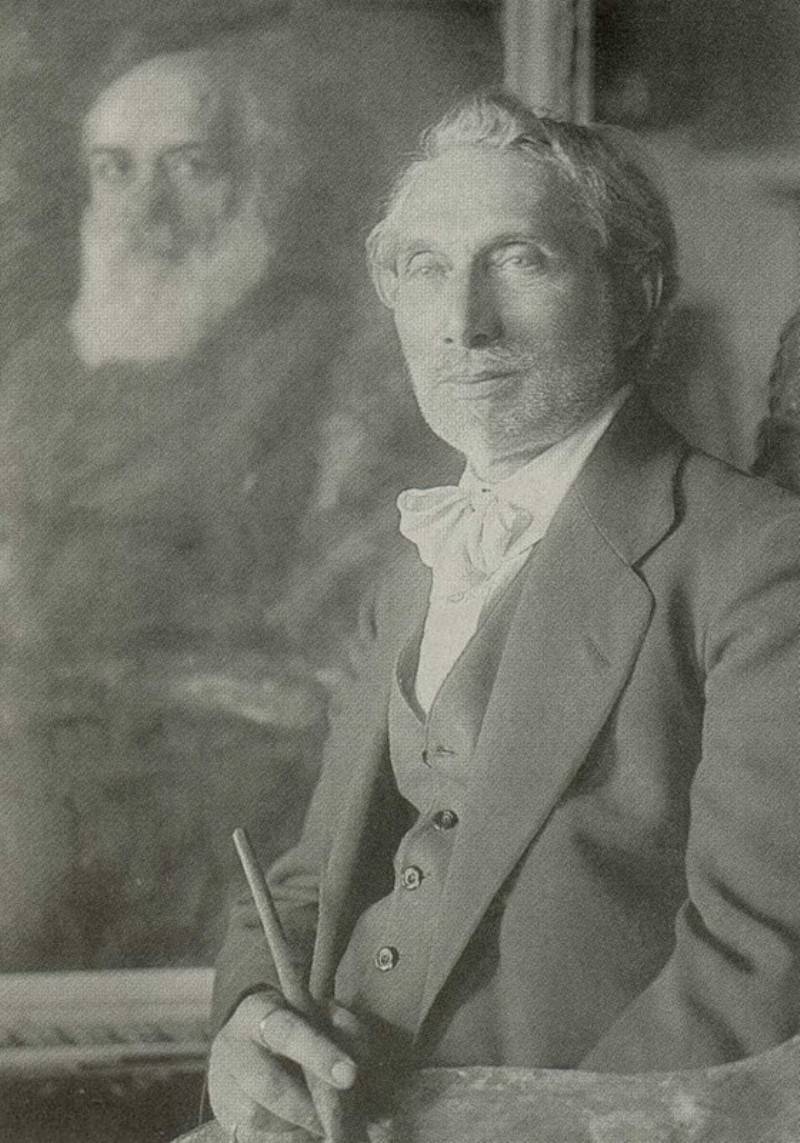
Leonid Osipovich Pasternak (Russian: Леонид Осипович Пастернак), a distinguished Russian painter, was celebrated for his significant contributions to art, especially his remarkable impressionist works. Born in Odessa, Pasternak's artistic journey led him to the prestigious Imperial Academy of Arts, reflecting his mastery and innovation in the realm of painting. His profound association with illustrious figures like Leo Tolstoy, for whom he created memorable illustrations, underscores his influence in Russian cultural circles. Pasternak's works, characterized by their vibrant expression and emotional depth, earned him accolades, including a medal at the World Fair in Paris in 1900. His dedication to teaching at the Moscow School of Painting, Sculpture and Architecture further solidified his legacy in art education.
Despite facing adversity, including a pivotal surgery in Berlin that led to his decision not to return to Russia amid political turmoil, Pasternak's resolve remained unshaken. His works continued to captivate audiences, as evidenced by his successful exhibitions in Europe and significant recognition, including his portrayal of Albert Einstein. The latter years of his life, spent in Oxford due to the Nazi regime's threat, were marked by personal loss but also by continued artistic production until his passing in 1945.
Leonid Osipovich Pasternak's art is held in high esteem, with pieces residing in prestigious museums and collections worldwide, including the Tretyakov Gallery, the Russian Museum, the Musee d'Orsay, and the Tate Gallery. His narrative extends beyond his paintings, encompassing his extensive correspondence and memoirs, which provide insight into his rich inner world and the historical context of his time. Posthumous exhibitions and publications, such as the comprehensive catalogue "The Russian Years, 1875-1921," have further cemented his place in the annals of art history, showcasing his enduring influence and the timeless appeal of his work.
For art collectors and enthusiasts eager to explore the rich tapestry of Russian Impressionism, the legacy of Leonid Osipovich Pasternak offers a compelling journey through the nuances of light, color, and emotion. Sign up for updates related to new product sales and auction events featuring Pasternak's works to deepen your appreciation and understanding of this pivotal artist's contributions to the world of art.