ivan &


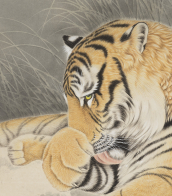
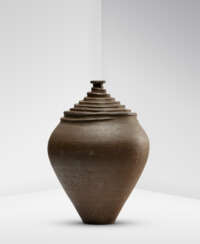

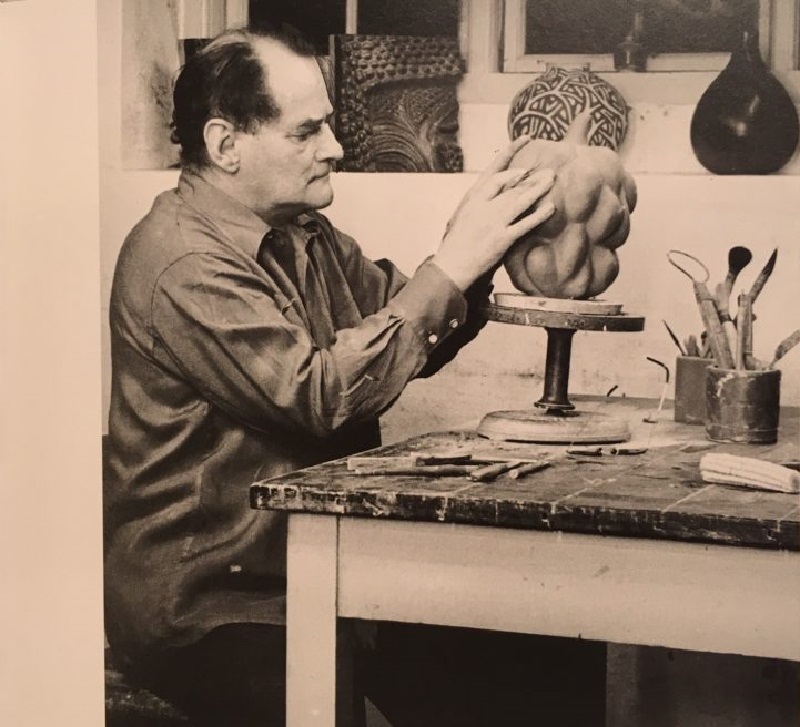
Axel Johannes Salto was an internationally renowned Danish ceramic artist. He studied at the Royal Danish Academy of Fine Arts from 1909 to 1914.
Axel Salto visited Paris in 1916, where he met Pablo Picasso and Henri Matisse. This meeting was a landmark for Salto's creative ambitions and his influence on the innovative ideas of the time.
Throughout the 1920s his artistic focus shifted from painting to ceramics, and between 1923 and 1950 he created around 3,000 different ceramic pieces.
From the mid-1930s he worked mainly at the Royal Porcelain Factory in Copenhagen. Here Salto developed his ceramics, experimenting with unusually rich glazes and organic shapes.



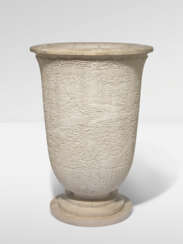

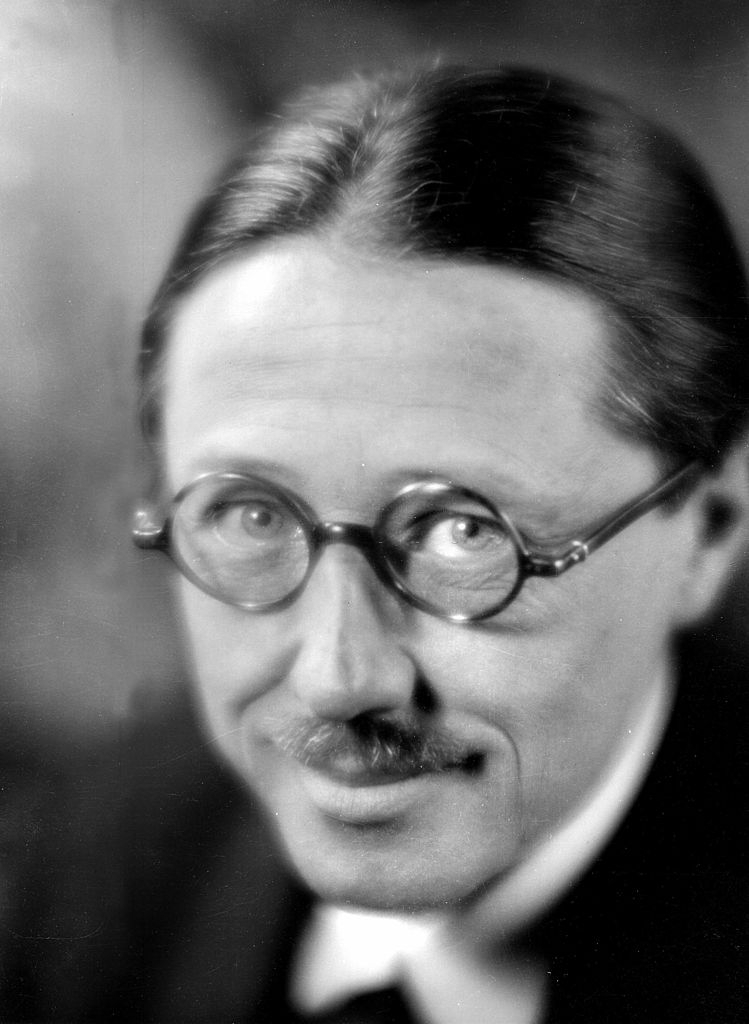
Émile-Jacques Ruhlmann, (sometimes called Jacques-Émile Ruhlmann), was a French furniture designer and interior decorator, who was one of the most important figures in the Art Deco movement. His furniture featured sleek designs, expensive and exotic materials and extremely fine craftsmanship, and became a symbol of the luxury and modernity of Art Deco. It also produced a reaction from other designers and architects, such as Le Corbusier, who called for simpler, functional furniture.





.jpg)
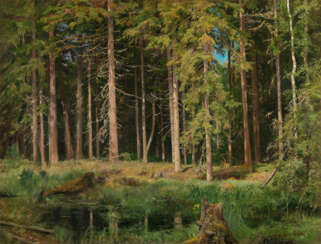
Ivan Ivanovich Shishkin (russian: Ива́н Ива́нович Ши́шкин), a Russian Artist, stood out in the 19th century for his mastery in landscape painting, immortalizing Russia's vast forests and nature through his precise and detailed work. His specialization in painting, coupled with a deep appreciation for his homeland's natural beauty, positioned him as a pivotal figure in Russian culture and art.
Shishkin's technique, characterized by its attention to detail and use of light, brought the Russian wilderness to life on canvas. His works, such as "Morning in a Pine Forest" and "The Rye Field," are celebrated for their realism and ability to evoke the spirit of Russia's landscapes. These paintings, held in prestigious museums like the Tretyakov Gallery in Moscow, serve not only as artistic achievements but also as cultural artifacts that offer insight into the Russian soul.
For art collectors and experts, Shishkin's oeuvre represents an intersection of artistic mastery and cultural heritage. His contributions to the world of painting continue to inspire and captivate audiences, making his works highly sought after in the realms of art collection and preservation.
We invite enthusiasts and connoisseurs to sign up for updates on new product sales and auction events related to Ivan Ivanovich Shishkin. This subscription is your gateway to owning a piece of Russian art history and staying informed about opportunities to acquire works by this illustrious painter.
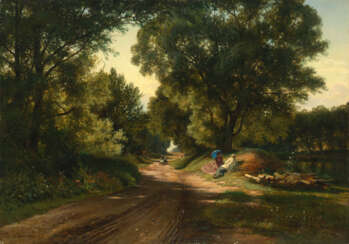

Ivan Ivanovich Shishkin (russian: Ива́н Ива́нович Ши́шкин), a Russian Artist, stood out in the 19th century for his mastery in landscape painting, immortalizing Russia's vast forests and nature through his precise and detailed work. His specialization in painting, coupled with a deep appreciation for his homeland's natural beauty, positioned him as a pivotal figure in Russian culture and art.
Shishkin's technique, characterized by its attention to detail and use of light, brought the Russian wilderness to life on canvas. His works, such as "Morning in a Pine Forest" and "The Rye Field," are celebrated for their realism and ability to evoke the spirit of Russia's landscapes. These paintings, held in prestigious museums like the Tretyakov Gallery in Moscow, serve not only as artistic achievements but also as cultural artifacts that offer insight into the Russian soul.
For art collectors and experts, Shishkin's oeuvre represents an intersection of artistic mastery and cultural heritage. His contributions to the world of painting continue to inspire and captivate audiences, making his works highly sought after in the realms of art collection and preservation.
We invite enthusiasts and connoisseurs to sign up for updates on new product sales and auction events related to Ivan Ivanovich Shishkin. This subscription is your gateway to owning a piece of Russian art history and staying informed about opportunities to acquire works by this illustrious painter.

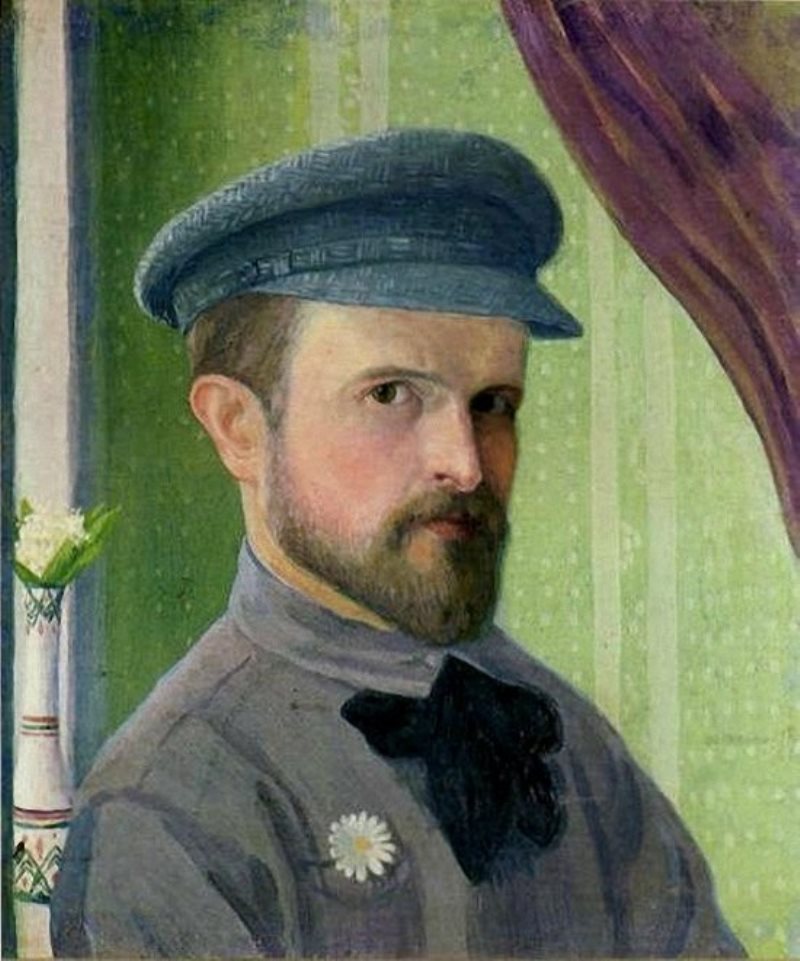
Ivan Vasilievich Kliun (Russian: Иван Васильевич Клюн) was a seminal figure in the Russian Avant-Garde movement, a painter, sculptor, and art theorist associated with Suprematism, a movement that sought to break down art into its basic geometric components. Born in Bolshiye Gorki, Kliun was deeply involved with the avant-garde circles that revolutionized Russian art in the early 20th century. His journey into the art world took him through studies in Kiev, Warsaw, and Moscow, culminating in a long-standing collaboration and friendship with Kazimir Malevich.
Kliun's artistic contributions were vast, ranging from his exploration of color theories to his pioneering Suprematist works that featured geometric shapes against stark backgrounds. Despite the changing tides of political and artistic favor in Soviet Russia, Kliun remained committed to his abstract and purist visions, even when abstraction fell out of favor with the Soviet authorities in the late 1920s.
His works, characterized by a unique integration of light and color to enhance the depth and intensity of the abstract forms, are significant for their experimental approach to Suprematism. Unlike many of his contemporaries who shifted towards Socialist Realism under state pressure, Kliun continued his abstract explorations discreetly. Today, his works are recognized for their innovation and contribution to the avant-garde movement, with pieces displayed in prestigious collections like the Costakis collection and international exhibitions.
For enthusiasts and collectors interested in the avant-garde movement and Kliun's groundbreaking work, staying updated on exhibitions and sales of his art is essential. Sign up for updates to stay informed about new product sales and auction events related to Ivan Vasilievich Kliun and explore the depths of Russian Avant-Garde art.
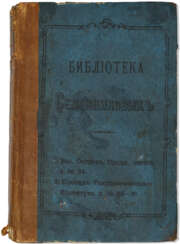

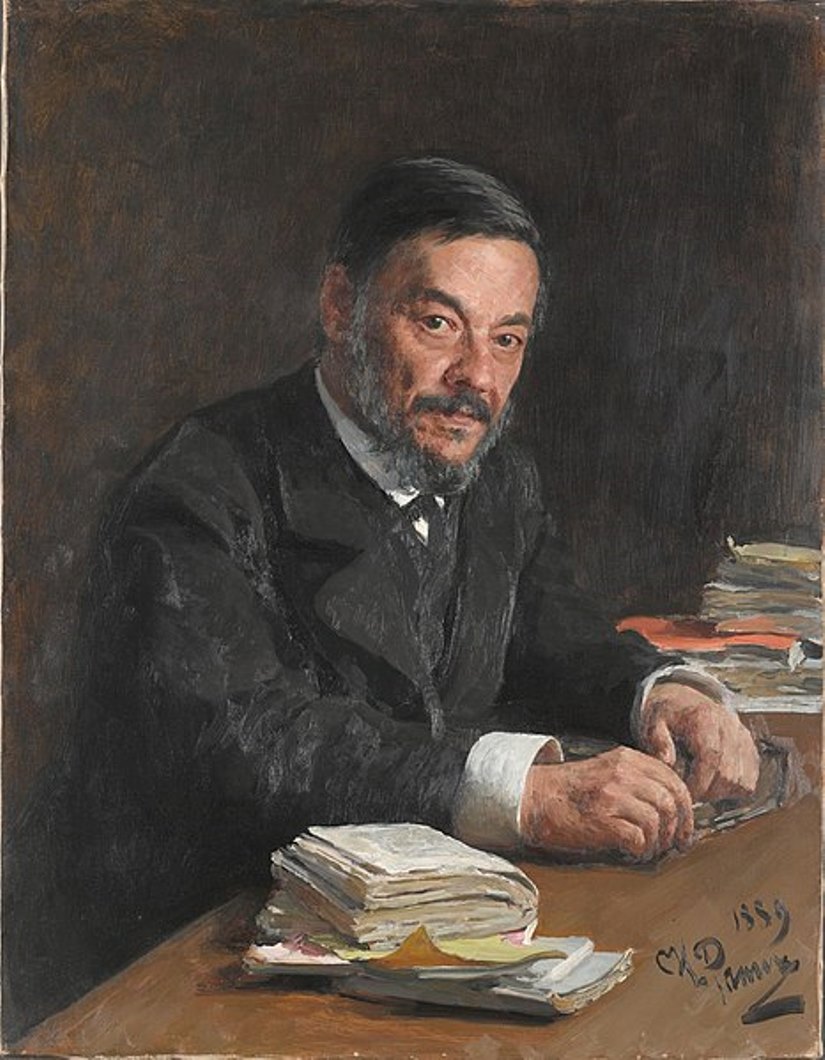
Ivan Mikhailovich Sechenov (Russian: Иван Михайлович Сеченов) was a Russian natural scientist, psychologist and physiologist, teacher and educator.
Ivan Mikhailovich was born into an impoverished noble family in the village of Teply Stan, Kurmysh uyezd, Simbirsk province (now the village of Sechenovo, Nizhny Novgorod region), graduated from the Main Military Engineering School, then from the Medical Faculty of Moscow University. For three and a half years Sechenov studied in Germany, engaged not only in biological disciplines, but also in physics and analytical chemistry. Abroad he became friends with S. P. Botkin, D. I. Mendeleev, A. P. Borodin, and the artist A. Ivanov.
In 1860 in St. Petersburg at the Imperial Academy of Medicine and Surgery Sechenov defended his dissertation on "Materials for the Physiology of Alcoholic Intoxication" and received the degree of Doctor of Medicine. Soon he received the post of extraordinary professor at this academy and organized one of the first physiological laboratories in Russia in his department. His record includes work in the laboratory of D. I. Mendeleev, head of the Department of Physiology at Odessa Novorossiysk University, teaching at St. Petersburg University, and professor in the Department of Physiology at Moscow University. Sechenov gave much effort to the development of women's education. He participated in the organization and work of the Higher Women's Courses in the capital, taught at women's courses at the Society of Educators and Teachers in Moscow.
Ivan Sechenov is the founder of the doctrine of mental regulation of behavior, the creator of the first physiological scientific school in Russia. For the first time in history he substantiated the reflex nature of conscious and unconscious activity. He showed that the basis of mental phenomena is physiological processes, substantiated the importance of metabolic processes in the realization of the body's reactions to stimuli. He laid the foundations of physiology of labor, age, comparative and evolutionary physiology. He studied the respiratory function of blood.
Sechenov's main works: "Reflexes of the brain" (1863), "Physiology of the nervous system" (1866), "Elements of thought" (1878), "Sketch of human working movements" (1901), etc. In addition, Sechenov edited "The physiology of the nervous system" (1866). In addition, Sechenov edited translations of books by foreign scientists. Thus, in 1871-1872 under his editorship in Russia was published a translation of Charles Darwin's work "The Origin of Man and Sexual Selection". Among his students were Ilya Mechnikov, Ivan Pavlov, Kliment Timiryazev, Nikolai Vvedensky, and Ivan Tarkhanov, who became famous scientists.
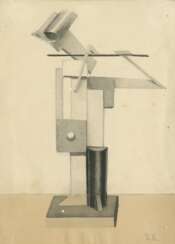

Ivan Vasilievich Kliun (Russian: Иван Васильевич Клюн) was a seminal figure in the Russian Avant-Garde movement, a painter, sculptor, and art theorist associated with Suprematism, a movement that sought to break down art into its basic geometric components. Born in Bolshiye Gorki, Kliun was deeply involved with the avant-garde circles that revolutionized Russian art in the early 20th century. His journey into the art world took him through studies in Kiev, Warsaw, and Moscow, culminating in a long-standing collaboration and friendship with Kazimir Malevich.
Kliun's artistic contributions were vast, ranging from his exploration of color theories to his pioneering Suprematist works that featured geometric shapes against stark backgrounds. Despite the changing tides of political and artistic favor in Soviet Russia, Kliun remained committed to his abstract and purist visions, even when abstraction fell out of favor with the Soviet authorities in the late 1920s.
His works, characterized by a unique integration of light and color to enhance the depth and intensity of the abstract forms, are significant for their experimental approach to Suprematism. Unlike many of his contemporaries who shifted towards Socialist Realism under state pressure, Kliun continued his abstract explorations discreetly. Today, his works are recognized for their innovation and contribution to the avant-garde movement, with pieces displayed in prestigious collections like the Costakis collection and international exhibitions.
For enthusiasts and collectors interested in the avant-garde movement and Kliun's groundbreaking work, staying updated on exhibitions and sales of his art is essential. Sign up for updates to stay informed about new product sales and auction events related to Ivan Vasilievich Kliun and explore the depths of Russian Avant-Garde art.
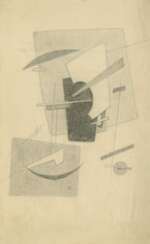

Ivan Vasilievich Kliun (Russian: Иван Васильевич Клюн) was a seminal figure in the Russian Avant-Garde movement, a painter, sculptor, and art theorist associated with Suprematism, a movement that sought to break down art into its basic geometric components. Born in Bolshiye Gorki, Kliun was deeply involved with the avant-garde circles that revolutionized Russian art in the early 20th century. His journey into the art world took him through studies in Kiev, Warsaw, and Moscow, culminating in a long-standing collaboration and friendship with Kazimir Malevich.
Kliun's artistic contributions were vast, ranging from his exploration of color theories to his pioneering Suprematist works that featured geometric shapes against stark backgrounds. Despite the changing tides of political and artistic favor in Soviet Russia, Kliun remained committed to his abstract and purist visions, even when abstraction fell out of favor with the Soviet authorities in the late 1920s.
His works, characterized by a unique integration of light and color to enhance the depth and intensity of the abstract forms, are significant for their experimental approach to Suprematism. Unlike many of his contemporaries who shifted towards Socialist Realism under state pressure, Kliun continued his abstract explorations discreetly. Today, his works are recognized for their innovation and contribution to the avant-garde movement, with pieces displayed in prestigious collections like the Costakis collection and international exhibitions.
For enthusiasts and collectors interested in the avant-garde movement and Kliun's groundbreaking work, staying updated on exhibitions and sales of his art is essential. Sign up for updates to stay informed about new product sales and auction events related to Ivan Vasilievich Kliun and explore the depths of Russian Avant-Garde art.


Ivan Vasilievich Kliun (Russian: Иван Васильевич Клюн) was a seminal figure in the Russian Avant-Garde movement, a painter, sculptor, and art theorist associated with Suprematism, a movement that sought to break down art into its basic geometric components. Born in Bolshiye Gorki, Kliun was deeply involved with the avant-garde circles that revolutionized Russian art in the early 20th century. His journey into the art world took him through studies in Kiev, Warsaw, and Moscow, culminating in a long-standing collaboration and friendship with Kazimir Malevich.
Kliun's artistic contributions were vast, ranging from his exploration of color theories to his pioneering Suprematist works that featured geometric shapes against stark backgrounds. Despite the changing tides of political and artistic favor in Soviet Russia, Kliun remained committed to his abstract and purist visions, even when abstraction fell out of favor with the Soviet authorities in the late 1920s.
His works, characterized by a unique integration of light and color to enhance the depth and intensity of the abstract forms, are significant for their experimental approach to Suprematism. Unlike many of his contemporaries who shifted towards Socialist Realism under state pressure, Kliun continued his abstract explorations discreetly. Today, his works are recognized for their innovation and contribution to the avant-garde movement, with pieces displayed in prestigious collections like the Costakis collection and international exhibitions.
For enthusiasts and collectors interested in the avant-garde movement and Kliun's groundbreaking work, staying updated on exhibitions and sales of his art is essential. Sign up for updates to stay informed about new product sales and auction events related to Ivan Vasilievich Kliun and explore the depths of Russian Avant-Garde art.
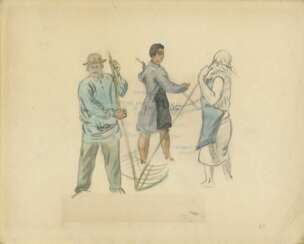

Ivan Vasilievich Kliun (Russian: Иван Васильевич Клюн) was a seminal figure in the Russian Avant-Garde movement, a painter, sculptor, and art theorist associated with Suprematism, a movement that sought to break down art into its basic geometric components. Born in Bolshiye Gorki, Kliun was deeply involved with the avant-garde circles that revolutionized Russian art in the early 20th century. His journey into the art world took him through studies in Kiev, Warsaw, and Moscow, culminating in a long-standing collaboration and friendship with Kazimir Malevich.
Kliun's artistic contributions were vast, ranging from his exploration of color theories to his pioneering Suprematist works that featured geometric shapes against stark backgrounds. Despite the changing tides of political and artistic favor in Soviet Russia, Kliun remained committed to his abstract and purist visions, even when abstraction fell out of favor with the Soviet authorities in the late 1920s.
His works, characterized by a unique integration of light and color to enhance the depth and intensity of the abstract forms, are significant for their experimental approach to Suprematism. Unlike many of his contemporaries who shifted towards Socialist Realism under state pressure, Kliun continued his abstract explorations discreetly. Today, his works are recognized for their innovation and contribution to the avant-garde movement, with pieces displayed in prestigious collections like the Costakis collection and international exhibitions.
For enthusiasts and collectors interested in the avant-garde movement and Kliun's groundbreaking work, staying updated on exhibitions and sales of his art is essential. Sign up for updates to stay informed about new product sales and auction events related to Ivan Vasilievich Kliun and explore the depths of Russian Avant-Garde art.
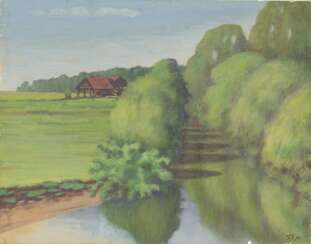

Ivan Vasilievich Kliun (Russian: Иван Васильевич Клюн) was a seminal figure in the Russian Avant-Garde movement, a painter, sculptor, and art theorist associated with Suprematism, a movement that sought to break down art into its basic geometric components. Born in Bolshiye Gorki, Kliun was deeply involved with the avant-garde circles that revolutionized Russian art in the early 20th century. His journey into the art world took him through studies in Kiev, Warsaw, and Moscow, culminating in a long-standing collaboration and friendship with Kazimir Malevich.
Kliun's artistic contributions were vast, ranging from his exploration of color theories to his pioneering Suprematist works that featured geometric shapes against stark backgrounds. Despite the changing tides of political and artistic favor in Soviet Russia, Kliun remained committed to his abstract and purist visions, even when abstraction fell out of favor with the Soviet authorities in the late 1920s.
His works, characterized by a unique integration of light and color to enhance the depth and intensity of the abstract forms, are significant for their experimental approach to Suprematism. Unlike many of his contemporaries who shifted towards Socialist Realism under state pressure, Kliun continued his abstract explorations discreetly. Today, his works are recognized for their innovation and contribution to the avant-garde movement, with pieces displayed in prestigious collections like the Costakis collection and international exhibitions.
For enthusiasts and collectors interested in the avant-garde movement and Kliun's groundbreaking work, staying updated on exhibitions and sales of his art is essential. Sign up for updates to stay informed about new product sales and auction events related to Ivan Vasilievich Kliun and explore the depths of Russian Avant-Garde art.


Ivan Ivanovich Shishkin (russian: Ива́н Ива́нович Ши́шкин), a Russian Artist, stood out in the 19th century for his mastery in landscape painting, immortalizing Russia's vast forests and nature through his precise and detailed work. His specialization in painting, coupled with a deep appreciation for his homeland's natural beauty, positioned him as a pivotal figure in Russian culture and art.
Shishkin's technique, characterized by its attention to detail and use of light, brought the Russian wilderness to life on canvas. His works, such as "Morning in a Pine Forest" and "The Rye Field," are celebrated for their realism and ability to evoke the spirit of Russia's landscapes. These paintings, held in prestigious museums like the Tretyakov Gallery in Moscow, serve not only as artistic achievements but also as cultural artifacts that offer insight into the Russian soul.
For art collectors and experts, Shishkin's oeuvre represents an intersection of artistic mastery and cultural heritage. His contributions to the world of painting continue to inspire and captivate audiences, making his works highly sought after in the realms of art collection and preservation.
We invite enthusiasts and connoisseurs to sign up for updates on new product sales and auction events related to Ivan Ivanovich Shishkin. This subscription is your gateway to owning a piece of Russian art history and staying informed about opportunities to acquire works by this illustrious painter.


Ivan Vasilievich Kliun (Russian: Иван Васильевич Клюн) was a seminal figure in the Russian Avant-Garde movement, a painter, sculptor, and art theorist associated with Suprematism, a movement that sought to break down art into its basic geometric components. Born in Bolshiye Gorki, Kliun was deeply involved with the avant-garde circles that revolutionized Russian art in the early 20th century. His journey into the art world took him through studies in Kiev, Warsaw, and Moscow, culminating in a long-standing collaboration and friendship with Kazimir Malevich.
Kliun's artistic contributions were vast, ranging from his exploration of color theories to his pioneering Suprematist works that featured geometric shapes against stark backgrounds. Despite the changing tides of political and artistic favor in Soviet Russia, Kliun remained committed to his abstract and purist visions, even when abstraction fell out of favor with the Soviet authorities in the late 1920s.
His works, characterized by a unique integration of light and color to enhance the depth and intensity of the abstract forms, are significant for their experimental approach to Suprematism. Unlike many of his contemporaries who shifted towards Socialist Realism under state pressure, Kliun continued his abstract explorations discreetly. Today, his works are recognized for their innovation and contribution to the avant-garde movement, with pieces displayed in prestigious collections like the Costakis collection and international exhibitions.
For enthusiasts and collectors interested in the avant-garde movement and Kliun's groundbreaking work, staying updated on exhibitions and sales of his art is essential. Sign up for updates to stay informed about new product sales and auction events related to Ivan Vasilievich Kliun and explore the depths of Russian Avant-Garde art.
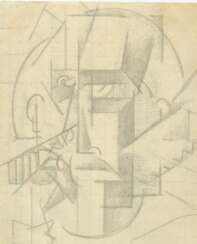

Ivan Vasilievich Kliun (Russian: Иван Васильевич Клюн) was a seminal figure in the Russian Avant-Garde movement, a painter, sculptor, and art theorist associated with Suprematism, a movement that sought to break down art into its basic geometric components. Born in Bolshiye Gorki, Kliun was deeply involved with the avant-garde circles that revolutionized Russian art in the early 20th century. His journey into the art world took him through studies in Kiev, Warsaw, and Moscow, culminating in a long-standing collaboration and friendship with Kazimir Malevich.
Kliun's artistic contributions were vast, ranging from his exploration of color theories to his pioneering Suprematist works that featured geometric shapes against stark backgrounds. Despite the changing tides of political and artistic favor in Soviet Russia, Kliun remained committed to his abstract and purist visions, even when abstraction fell out of favor with the Soviet authorities in the late 1920s.
His works, characterized by a unique integration of light and color to enhance the depth and intensity of the abstract forms, are significant for their experimental approach to Suprematism. Unlike many of his contemporaries who shifted towards Socialist Realism under state pressure, Kliun continued his abstract explorations discreetly. Today, his works are recognized for their innovation and contribution to the avant-garde movement, with pieces displayed in prestigious collections like the Costakis collection and international exhibitions.
For enthusiasts and collectors interested in the avant-garde movement and Kliun's groundbreaking work, staying updated on exhibitions and sales of his art is essential. Sign up for updates to stay informed about new product sales and auction events related to Ivan Vasilievich Kliun and explore the depths of Russian Avant-Garde art.
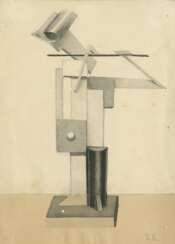

Ivan Vasilievich Kliun (Russian: Иван Васильевич Клюн) was a seminal figure in the Russian Avant-Garde movement, a painter, sculptor, and art theorist associated with Suprematism, a movement that sought to break down art into its basic geometric components. Born in Bolshiye Gorki, Kliun was deeply involved with the avant-garde circles that revolutionized Russian art in the early 20th century. His journey into the art world took him through studies in Kiev, Warsaw, and Moscow, culminating in a long-standing collaboration and friendship with Kazimir Malevich.
Kliun's artistic contributions were vast, ranging from his exploration of color theories to his pioneering Suprematist works that featured geometric shapes against stark backgrounds. Despite the changing tides of political and artistic favor in Soviet Russia, Kliun remained committed to his abstract and purist visions, even when abstraction fell out of favor with the Soviet authorities in the late 1920s.
His works, characterized by a unique integration of light and color to enhance the depth and intensity of the abstract forms, are significant for their experimental approach to Suprematism. Unlike many of his contemporaries who shifted towards Socialist Realism under state pressure, Kliun continued his abstract explorations discreetly. Today, his works are recognized for their innovation and contribution to the avant-garde movement, with pieces displayed in prestigious collections like the Costakis collection and international exhibitions.
For enthusiasts and collectors interested in the avant-garde movement and Kliun's groundbreaking work, staying updated on exhibitions and sales of his art is essential. Sign up for updates to stay informed about new product sales and auction events related to Ivan Vasilievich Kliun and explore the depths of Russian Avant-Garde art.
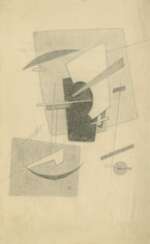

Ivan Vasilievich Kliun (Russian: Иван Васильевич Клюн) was a seminal figure in the Russian Avant-Garde movement, a painter, sculptor, and art theorist associated with Suprematism, a movement that sought to break down art into its basic geometric components. Born in Bolshiye Gorki, Kliun was deeply involved with the avant-garde circles that revolutionized Russian art in the early 20th century. His journey into the art world took him through studies in Kiev, Warsaw, and Moscow, culminating in a long-standing collaboration and friendship with Kazimir Malevich.
Kliun's artistic contributions were vast, ranging from his exploration of color theories to his pioneering Suprematist works that featured geometric shapes against stark backgrounds. Despite the changing tides of political and artistic favor in Soviet Russia, Kliun remained committed to his abstract and purist visions, even when abstraction fell out of favor with the Soviet authorities in the late 1920s.
His works, characterized by a unique integration of light and color to enhance the depth and intensity of the abstract forms, are significant for their experimental approach to Suprematism. Unlike many of his contemporaries who shifted towards Socialist Realism under state pressure, Kliun continued his abstract explorations discreetly. Today, his works are recognized for their innovation and contribution to the avant-garde movement, with pieces displayed in prestigious collections like the Costakis collection and international exhibitions.
For enthusiasts and collectors interested in the avant-garde movement and Kliun's groundbreaking work, staying updated on exhibitions and sales of his art is essential. Sign up for updates to stay informed about new product sales and auction events related to Ivan Vasilievich Kliun and explore the depths of Russian Avant-Garde art.
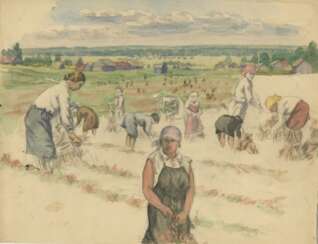

Ivan Vasilievich Kliun (Russian: Иван Васильевич Клюн) was a seminal figure in the Russian Avant-Garde movement, a painter, sculptor, and art theorist associated with Suprematism, a movement that sought to break down art into its basic geometric components. Born in Bolshiye Gorki, Kliun was deeply involved with the avant-garde circles that revolutionized Russian art in the early 20th century. His journey into the art world took him through studies in Kiev, Warsaw, and Moscow, culminating in a long-standing collaboration and friendship with Kazimir Malevich.
Kliun's artistic contributions were vast, ranging from his exploration of color theories to his pioneering Suprematist works that featured geometric shapes against stark backgrounds. Despite the changing tides of political and artistic favor in Soviet Russia, Kliun remained committed to his abstract and purist visions, even when abstraction fell out of favor with the Soviet authorities in the late 1920s.
His works, characterized by a unique integration of light and color to enhance the depth and intensity of the abstract forms, are significant for their experimental approach to Suprematism. Unlike many of his contemporaries who shifted towards Socialist Realism under state pressure, Kliun continued his abstract explorations discreetly. Today, his works are recognized for their innovation and contribution to the avant-garde movement, with pieces displayed in prestigious collections like the Costakis collection and international exhibitions.
For enthusiasts and collectors interested in the avant-garde movement and Kliun's groundbreaking work, staying updated on exhibitions and sales of his art is essential. Sign up for updates to stay informed about new product sales and auction events related to Ivan Vasilievich Kliun and explore the depths of Russian Avant-Garde art.
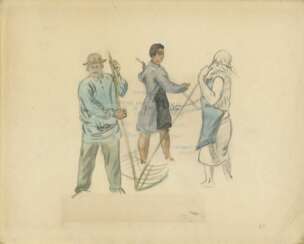

Ivan Vasilievich Kliun (Russian: Иван Васильевич Клюн) was a seminal figure in the Russian Avant-Garde movement, a painter, sculptor, and art theorist associated with Suprematism, a movement that sought to break down art into its basic geometric components. Born in Bolshiye Gorki, Kliun was deeply involved with the avant-garde circles that revolutionized Russian art in the early 20th century. His journey into the art world took him through studies in Kiev, Warsaw, and Moscow, culminating in a long-standing collaboration and friendship with Kazimir Malevich.
Kliun's artistic contributions were vast, ranging from his exploration of color theories to his pioneering Suprematist works that featured geometric shapes against stark backgrounds. Despite the changing tides of political and artistic favor in Soviet Russia, Kliun remained committed to his abstract and purist visions, even when abstraction fell out of favor with the Soviet authorities in the late 1920s.
His works, characterized by a unique integration of light and color to enhance the depth and intensity of the abstract forms, are significant for their experimental approach to Suprematism. Unlike many of his contemporaries who shifted towards Socialist Realism under state pressure, Kliun continued his abstract explorations discreetly. Today, his works are recognized for their innovation and contribution to the avant-garde movement, with pieces displayed in prestigious collections like the Costakis collection and international exhibitions.
For enthusiasts and collectors interested in the avant-garde movement and Kliun's groundbreaking work, staying updated on exhibitions and sales of his art is essential. Sign up for updates to stay informed about new product sales and auction events related to Ivan Vasilievich Kliun and explore the depths of Russian Avant-Garde art.
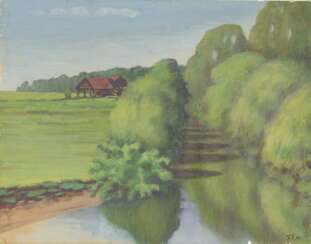

Ivan Vasilievich Kliun (Russian: Иван Васильевич Клюн) was a seminal figure in the Russian Avant-Garde movement, a painter, sculptor, and art theorist associated with Suprematism, a movement that sought to break down art into its basic geometric components. Born in Bolshiye Gorki, Kliun was deeply involved with the avant-garde circles that revolutionized Russian art in the early 20th century. His journey into the art world took him through studies in Kiev, Warsaw, and Moscow, culminating in a long-standing collaboration and friendship with Kazimir Malevich.
Kliun's artistic contributions were vast, ranging from his exploration of color theories to his pioneering Suprematist works that featured geometric shapes against stark backgrounds. Despite the changing tides of political and artistic favor in Soviet Russia, Kliun remained committed to his abstract and purist visions, even when abstraction fell out of favor with the Soviet authorities in the late 1920s.
His works, characterized by a unique integration of light and color to enhance the depth and intensity of the abstract forms, are significant for their experimental approach to Suprematism. Unlike many of his contemporaries who shifted towards Socialist Realism under state pressure, Kliun continued his abstract explorations discreetly. Today, his works are recognized for their innovation and contribution to the avant-garde movement, with pieces displayed in prestigious collections like the Costakis collection and international exhibitions.
For enthusiasts and collectors interested in the avant-garde movement and Kliun's groundbreaking work, staying updated on exhibitions and sales of his art is essential. Sign up for updates to stay informed about new product sales and auction events related to Ivan Vasilievich Kliun and explore the depths of Russian Avant-Garde art.