

tête synonyme

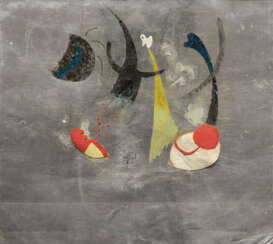

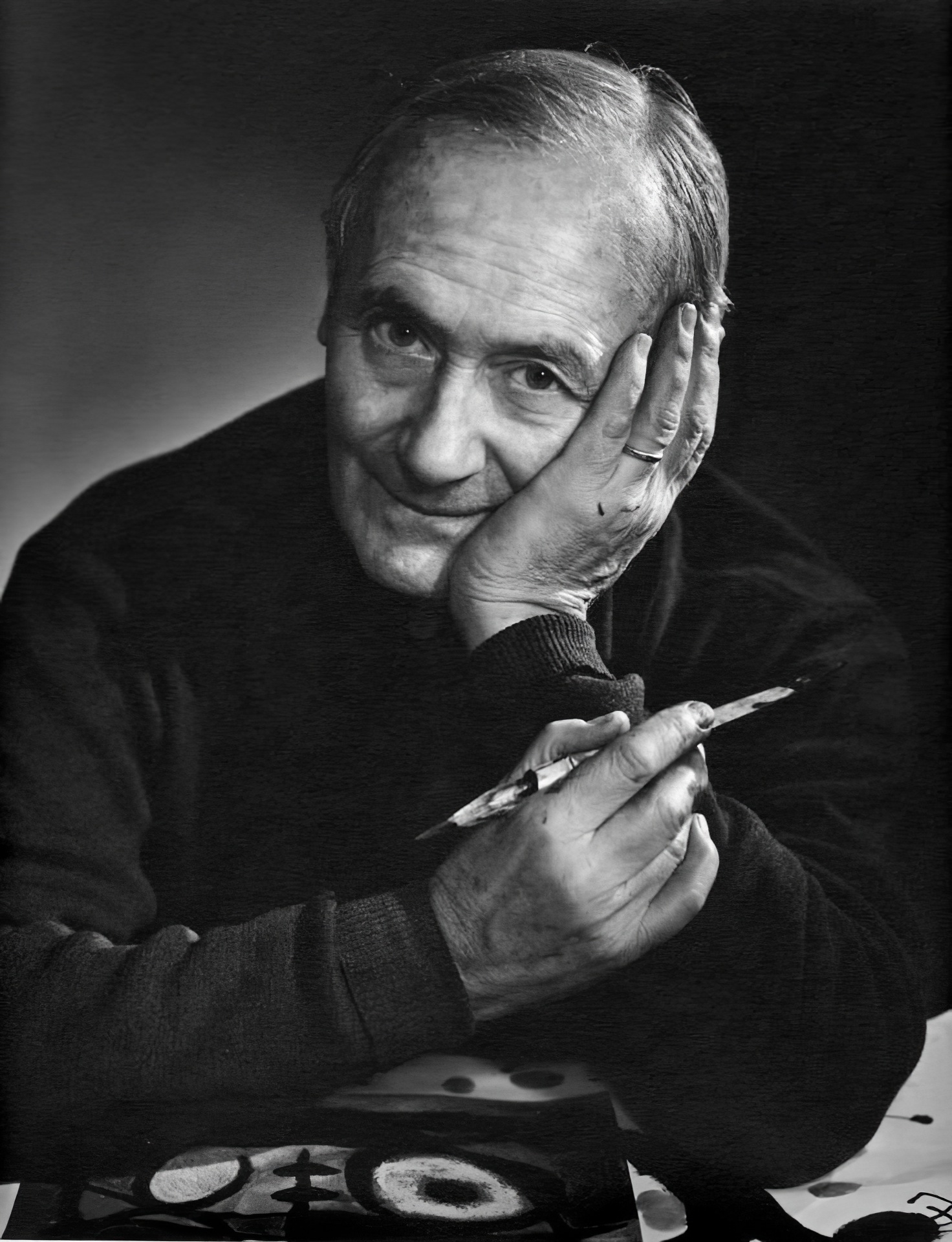
Joan Miró, a celebrated Spanish artist, was a master in painting, sculpture, and ceramics, renowned for his unique style that blurred the lines between Surrealism, Fauvism, and Expressionism. Born in Barcelona to a family of a goldsmith and a watchmaker, Miró grew up immersed in the rich cultural heritage of the Barri Gòtic neighborhood. His artistic journey began with drawing classes at the age of seven and continued at the prestigious La Llotja art academy. Despite an initial venture into the business world, Miró's passion for art prevailed, leading him to abandon his clerical career after a nervous breakdown.
Miró's work is noted for its exploration of the subconscious, often depicting a childlike perspective. This approach was both a critique of traditional painting methods and a means of expressing Catalan pride. His art, challenging to categorize, often featured symbolic elements and nationalistic qualities. One of his notable early works, "The Farm," reflects a transition to a more individual style, blending elements of his Catalan roots with broader artistic influences. This piece, later purchased by Ernest Hemingway, encapsulated the essence of Spain in its imagery.
In Paris, Miró joined the Surrealist movement in 1924, where his work began to reflect the influence of automatism, emphasizing spontaneous, automatic, or subconscious creation. He experimented with various mediums, including painting-poetry and collage, and even ventured into set and costume design for Sergei Diaghilev's Ballets Russes.
During World War II, Miró remained in Spain, and his work from this period, including the 22 Constellations series, reflected an interest in the night, music, and stars. His forms became increasingly abstracted, and he experimented with various techniques, often incorporating primary colors and evocative titles.
Miró's career spanned several decades, during which he continually evolved his style and explored new mediums. His contributions to art were recognized with numerous awards and retrospectives, including a major career retrospective at MoMA in 1941 and the Spanish Gold Medal for Fine Arts in 1980. Among his last major works was a tapestry for the World Trade Center in New York City, created in 1974.
For art collectors and enthusiasts, Joan Miró remains a figure of immense interest, not only for his distinct style and contributions to Surrealism but also for his ability to blend poetic imagery with political commentary. To stay updated on new product sales and auction events related to Joan Miró, sign up for our updates and immerse yourself in the world of this extraordinary artist.
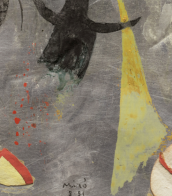
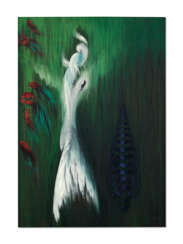

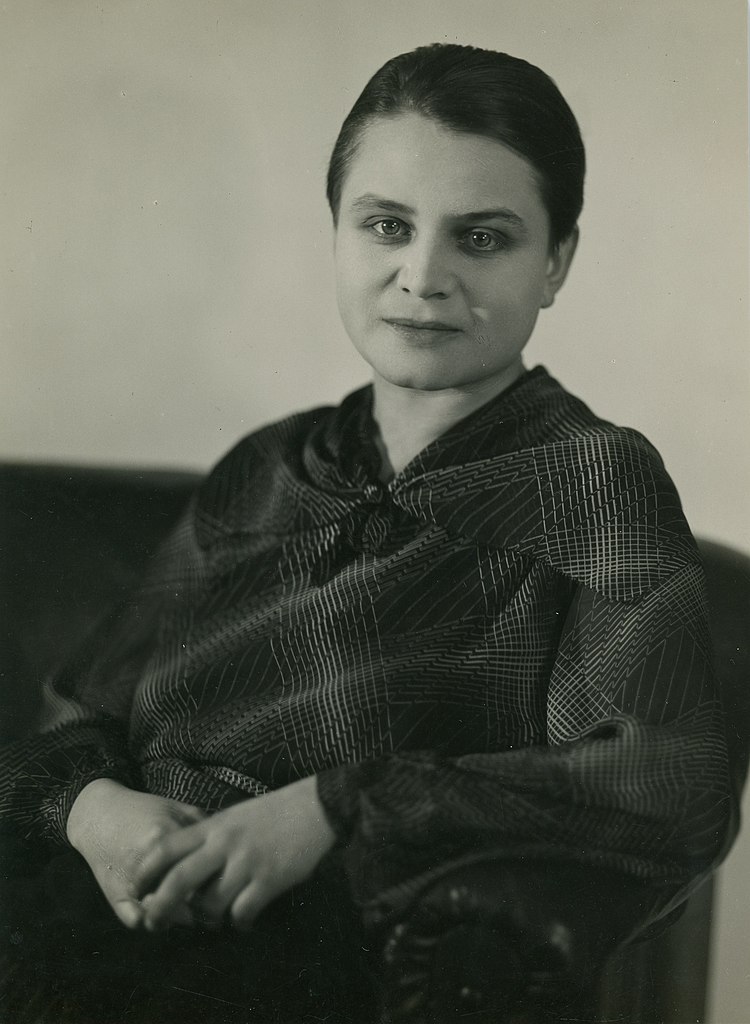
Toyen, born Marie Čermínová, was a prominent Czech artist known for her significant contribution to the Surrealist movement. Her work challenged conventions and explored the depths of the subconscious.
Toyen was known for her unique and evocative style, combining elements of fantasy, eroticism and dreams. Her work often features enigmatic figures, distorted landscapes, and symbolic motifs, executed with meticulous detail and a sense of mystery. She utilised a variety of techniques including painting, drawing and printmaking, thus demonstrating her versatility and artistic skill.
Throughout her career, Toyin collaborated with other Surrealist artists, including André Breton and Salvador Dalí. She actively participated in Surrealist exhibitions and contributed to various publications, demonstrating her artistic vision and ideological stance.

.jpg)
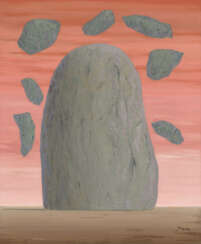
René Magritte, a Belgian artist, was renowned for his significant contributions to the Surrealist movement. His art, known for merging ordinary objects with bizarre, dream-like contexts, captivated the art world. Born on November 21, 1898, in Lessines, Belgium, Magritte's early artistic pursuits were impressionistic, transitioning through Cubism and Futurism influenced by artists like Jean Metzinger. However, his encounter with Giorgio de Chirico's work in 1922 steered him towards Surrealism.
Magritte's career was marked by various phases, each showcasing his evolving style and thematic focus. His initial foray into Surrealism began in 1926 with "The Lost Jockey" and was further solidified during his time in Paris, where he mingled with other prominent Surrealists like André Breton. Despite facing initial criticism and financial challenges, Magritte's unique blend of familiar imagery in unfamiliar contexts, like in "The Empire of Light" and "Time Transfixed," earned him acclaim.
Magritte's distinct visual language, characterized by recurring motifs like bowler hats and apples, and his exploration of reality and illusion, remain influential. His works are displayed in major galleries worldwide, continuing to inspire and intrigue art collectors and enthusiasts.
For collectors and experts in art and antiques, staying informed about Magritte's works and related auction events is crucial. Signing up for updates ensures you're alerted to new sales and events focusing on René Magritte's art, offering unique opportunities to acquire or learn more about his remarkable creations. This subscription will exclusively cover new product sales and auction events related to Magritte, keeping you updated on the most relevant information in the art world.
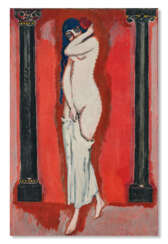

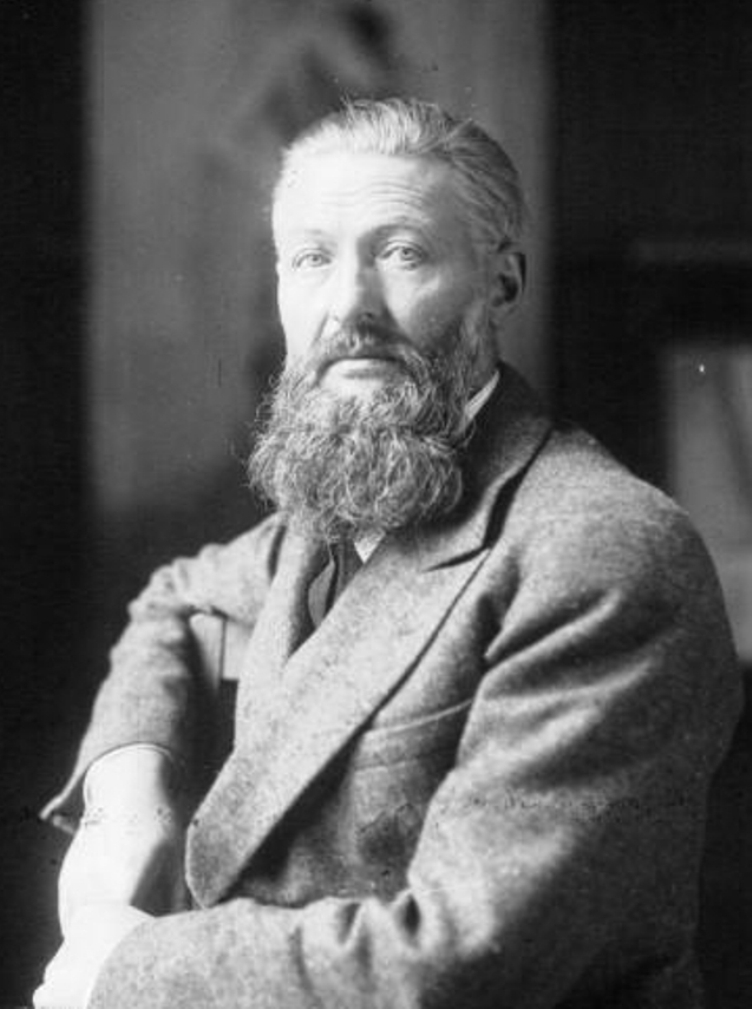
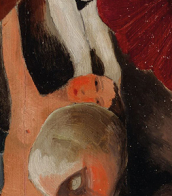
Kees van Dongen was a Dutch-French painter renowned for his vivid and expressive works that placed him at the forefront of the Fauvist movement. Born in 1877 in Delfshaven, Netherlands, van Dongen's journey into the art world began with his education at the Akademie voor Beeldende Kunsten in Rotterdam. His move to Paris in 1897 marked a pivotal moment in his career, immersing him in the bustling avant-garde scene and connecting him with influential circles, including Pablo Picasso and the Fauves. Van Dongen's art, characterized by its striking use of color and bold brushwork, captured the essence of his subjects with a unique blend of realism and abstraction.
Van Dongen's work evolved significantly over time, initially influenced by the dark tones of his Dutch heritage and the works of Rembrandt. His encounter with Fauvism around 1906 brought a dramatic shift towards brighter, more vibrant colors, marking his most iconic phase. His ability to capture the sensuousness and personality of his subjects made him a sought-after portraitist among the French bourgeoisie and celebrities of his time. Notable works include "Femme aux bas noirs" (Woman with Black Stockings), "Les lutteuses" (Lutteuses du Tabarin), and "The Dancer Anita," showcasing his fascination with the human figure, particularly sensuous depictions of women.
Beyond his remarkable contributions to Fauvism, van Dongen's ventures into illustration and his role as a society portraitist underscore his diverse talents and adaptability to the changing tastes of the art market. His works are celebrated in major collections worldwide, including the Hermitage Museum and the National Gallery of Denmark, affirming his lasting impact on the art world.
Collectors and art experts continue to appreciate van Dongen's work for its bold experimentation with color, form, and the evocative portrayal of his subjects. His legacy lives on as a testament to the vibrancy and dynamism of early 20th-century modern art.
For those keen to explore van Dongen's captivating works further and stay informed about new discoveries, exhibitions, and auction events related to his art, signing up for updates is a must. This ensures direct access to the latest sales and scholarly insights into the painter's rich oeuvre, a valuable resource for collectors and enthusiasts alike.