

Severe Style
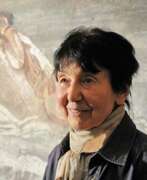

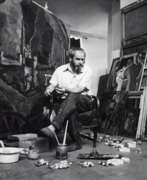

Nikolai Ivanovich Andronov (Russian: Николай Иванович Андронов) was a Soviet artist of the second half of the twentieth century. He is known as a painter, muralist and teacher, considered one of the founders of the "severe style" in the art of the USSR.
Nikolai Andronov actively worked to liberalize the Soviet art scene. At the beginning of his career, he created thematic paintings, later focusing on landscapes. The artist was also involved in the decoration of buildings, including the clubhouse of the Soviet Embassy in the United States, the Paveletsky Railway Station and subway stations in Moscow. From 1992, he taught at the Surikov Moscow Art Institute and headed the composition department.
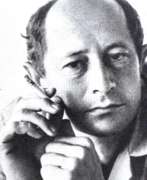

Stanislav Gennadievich Babikov (Russian: Станислав Геннадьевич Бабиков) was a Soviet and Turkmen artist of the mid-twentieth century. He is known as a painter, graphic artist, publicist, scenographer, as well as the son and pupil of Gennady Babikov, the founder of the Turkmen industrial landscape genre.
Stanislav Babikov is considered a continuator of the ideas of Russian Cezannism. He was a member of the informal Turkmen group "Seven", which sought to synthesize national elements and Western modernism in art. The master was also an author of articles on fine arts. His style reflects the influence of nature and climate of Turkmenistan and is characterized by bright color and expressiveness of color.
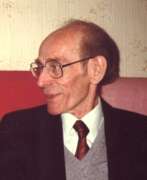

Boris Georgievich Birger (Russian: Борис Георгиевич Биргер) was a Soviet artist of the second half of the twentieth century of Jewish origin. He is known as a portrait painter, a representative of "unofficial art", a follower of symbolism.
Boris Birger developed his individual style of portrait painting, recognizable by his colorism. He often portrayed representatives of the liberal creative intelligentsia and was twice expelled from the Union of Artists of the USSR because of his criticism of official cultural policy.
In the 1970s his work was recognized abroad, especially in Germany, and from 1990 he lived in that country.
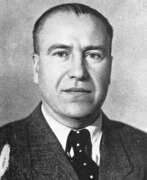

Aleksandr Aleksandrovich Deyneka (Russian: Алекса́ндр Алекса́ндрович Дейне́ка) was a Soviet Russian artist, celebrated for his significant contribution to the world of modernist figurative painting in the first half of the 20th century. Born into a Ukrainian origin, Deyneka's artistry spanned painting, graphic design, and sculpture, leaving an indelible mark on Russian modernism. His works, characterized by vivid movement and an innovative portrayal of the Soviet lifestyle, include iconic pieces such as "The Defense of Sevastopol," "Collective Farmer on a Bicycle," and "Future Pilots," which showcase the dynamism and spirit of the Soviet era. Deyneka's commitment to Social Realism—a style aimed at the accessible portrayal of everyday life—earned him both national and international acclaim. His murals and mosaics for public buildings and metro stations in Moscow, like the Mayakovskaya station, underline his influence on the Soviet visual landscape and contribute to his legacy as a pioneer of a style that bridged European innovation with Soviet themes.
Deyneka's journey began with his education at the VHUTEMAS, where he was influenced by figures such as Mayakovsky, which shaped his approach to art as a tool for societal influence and expression. His artworks, permeated with themes of labor, sports, and a forward-looking optimism, reflect the Soviet Union's utopian ambitions and the complexities of its societal structure. Notably, Deyneka's "Mother" stands out as a powerful symbol of the Soviet woman, intertwining high social awareness with the natural role of motherhood, highlighting the artist's nuanced approach to depicting Soviet life.
Throughout his career, Deyneka remained a formidable figure in art, navigating through various artistic societies and contributing to magazines and posters that defined the visual narrative of the Soviet Union. His travels to Italy, France, and the US broadened his perspective, enriching his work with international influences while retaining his distinct stylistic identity. Deyneka's decorations for the Moscow Metro not only won prestigious awards but also immortalized his vision of Soviet progress and optimism, capturing the essence of an era poised between grand aspirations and complex realities.
For art collectors and enthusiasts of Russian modernism, Deyneka's works offer a window into the vibrancy and ideological fervor of the Soviet Union, embodying the era's aesthetic and thematic aspirations. His contributions to the public and artistic spheres underscore the role of art in shaping and reflecting societal values, making his oeuvre a vital point of study for anyone interested in the intersections of art, history, and society.
To stay informed about exhibitions and auctions featuring Aleksandr Aleksandrovich Deyneka's work, sign up for updates. This subscription ensures you're always in the know about new sales and events related to this iconic artist, allowing you to deepen your appreciation and possibly enhance your collection.
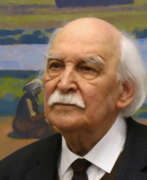

Victor Ivanovich Ivanov (Russian: Виктор Иванович Иванов) was a distinguished Russian painter, recognized for his significant contributions to the "severe style" of painting, a movement that emerged post-World War II. Born on August 2, 1924, in Moscow, Ivanov was an ardent student of art from a young age, training at notable institutions such as the Moscow secondary art school V. I. Surikov and the Moscow Government Art Institute V. I. Surikov.
Ivanov's works often revolve around the themes of rural life and the connection between humans and nature, depicting the life of peasants and their interaction with their environment. His painting "Women Harvesting" is an exemplary work that showcases his style and thematic focus. This piece, which is part of the Tretyakov Gallery's collection, epitomizes Ivanov's ability to blend colors and forms to capture the essence of peasant life, with a particular emphasis on the harmony and solemnity of rural labor.
Throughout his career, Ivanov's art was celebrated not only in the Soviet Union but also internationally, with exhibitions across Russia, Ukraine, and even in Cuba. His artistic philosophy was deeply rooted in realism, through which he believed one could express the spiritual and moral values of the common people. Ivanov's contributions to art were recognized with numerous awards, including the title of People's Artist of the USSR and membership in the Russian Academy of Arts.
For collectors and enthusiasts interested in the profound and evocative works of Victor Ivanovich Ivanov, staying informed about upcoming sales, exhibitions, and auction events is essential. Subscribe for updates exclusively related to Ivanov's works, ensuring you never miss an opportunity to engage with the legacy of this influential artist.
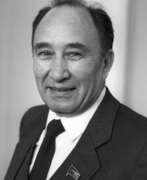

Izzat Klychev (Russian: Иззат Назарович Клычев) was a prominent figure in Turkmen and Soviet art, widely celebrated for his significant contributions to the realm of fine arts. Born on October 10, 1923, in Turkmenistan, Klychev was not only an esteemed painter but also a notable public figure who played a crucial role in nurturing several generations of Turkmen artists. His works, which often focused on the daily lives of people, the beauty of Turkmenistan, and its cultural heritage, received recognition for their vibrant colors and expressive storytelling. Klychev's artistic journey was marked by his innovative use of color and his ability to capture the spirit of his times, blending national and international themes.
Klychev's portfolio includes a broad spectrum of subjects, from landscapes and still lifes to portraits and historical themes, showcasing his versatility as an artist. Notably, his series "My Turkmenistan" earned him the USSR State Prize in 1967, highlighting his profound impact on Soviet and Turkmen art. His style, characterized by a harmonious perception of diverse cultures, was recognized and praised internationally. Klychev's paintings have been exhibited worldwide, in countries ranging from the USA to Japan, and are part of collections in prestigious museums, including the State Tretyakov Gallery and the State Museum of Oriental Art in Moscow.
Beyond his artistic achievements, Klychev's legacy includes his charitable activities and his leadership within the Artists Union of Turkmenistan, where he actively supported young artists and contributed to the formation of an artistic community known as "The Seven". His commitment to art education and his role as a mentor to future generations underscored his dedication to the cultural and artistic development of Turkmenistan.
In summary, Izzat Klychev stands out as a figure who not only enriched Soviet and Turkmen art with his creative vision but also played a pivotal role in shaping the artistic landscape of his country, leaving a lasting legacy that continues to inspire. His life's work reflects a deep connection to his heritage and a broad engagement with the world, making him a key figure in the history of 20th-century art.
For those interested in the history of art and cultural heritage, Klychev's contributions represent an essential chapter in understanding the evolution of Soviet and Turkmen artistic expressions. Collectors and experts in art and antiques are encouraged to explore his works further and sign up for updates related to Izzat Klychev, ensuring they stay informed about new sales and auction events featuring his remarkable creations.
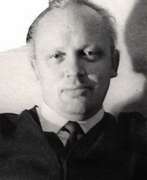

Boris Vasilievich Korneev (Russian: Бори́с Васи́льевич Корне́ев) was a prominent Soviet Russian artist and educator, born on February 15, 1922, in Petrozavodsk, and passed away on December 24, 1973, in Leningrad (now Saint Petersburg). As an Honored Artist of the Russian Federation and a professor at the Leningrad Institute of Painting, Sculpture and Architecture named after Ilya Repin, Korneev made significant contributions to the Leningrad school of painting, specializing in genre painting and portraits.
Korneev's art is notable for its vivid representation of Soviet life and his ability to capture the spirit of his times through thematic and portrait painting. His works often reflected the heroism and the everyday lives of Soviet people, featuring a variety of subjects from workers to landscapes. His painting "Main Street in Biysk" and the portrait of artist M. A. Kozlovskaya are among his notable works. His art is displayed in various museums and is also part of private collections worldwide.
For those interested in exploring the works of Boris Korneev and learning more about his contributions to Soviet art, subscribing to updates on exhibitions and auctions can be enriching. By signing up, you can stay informed about new discoveries of his works and opportunities to view or purchase them at upcoming events. Sign up today to explore the legacy of Boris Korneev and his influence on Soviet art history!
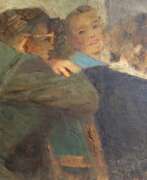

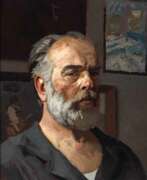

Geliy Mikhailovich Korzhev (Russian: Гелий Михайлович Коржев), a Soviet and Russian painter born on July 7, 1925, is remembered for his dedication to the Socialist Realism style, and his artworks echo the significant historical events of 20th-century Russia. His upbringing in a family deeply embedded in the arts, with a father who was a pioneer in Soviet landscape architecture and a mother who taught literature for four decades, undoubtedly shaped his artistic journey. Korzhev's formal art education began at the Moscow State Art School, under renowned tutors such as Vasily Pochitalov and Sergey Gerasimov, followed by the Moscow State Art Institute.
Korzhev's career was marked by his unwavering commitment to Communist ideals, even refusing a state award in the late 1990s from the Russian Federation, to stay true to his beliefs formed under the Soviet Union. This principled stance, alongside his detailed diaries and reflections, offers a deep insight into the man behind the canvas. His masterpieces, such as "Clouds of 1945" and "Conversation," not only demonstrate his skill but also his capacity to encapsulate complex historical and philosophical themes within his art.
The legacy of Korzhev's work is divided between prestigious Russian institutions and private collections worldwide, making his contributions to art a subject of both national pride and global appreciation. As collectors and experts in art and antiques, understanding Korzhev's influence requires recognizing both his artistic prowess and his deep-seated ideological beliefs that informed his work throughout his life.
For those intrigued by the intersection of art, history, and ideology, Korzhev's oeuvre offers a compelling study. Sign up for updates to stay informed about new product sales and auction events related to Geliy Mikhailovich Korzhev's remarkable art.
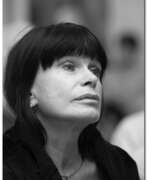


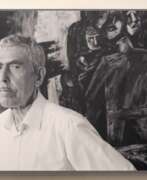

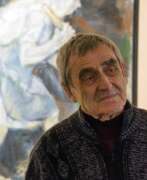


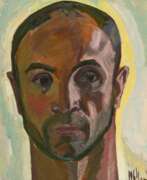

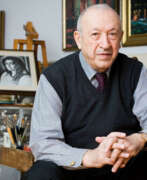

Tahir Salahov (Russian: Таир Теймурович Салахов) was an esteemed Soviet and Azerbaijani painter and draughtsman, celebrated for his pivotal role in the art world. Born in Baku, Azerbaijan, Salahov's journey into the arts commenced at the Azimzade Art College before advancing to the Surikov Moscow Art Institute. Early in his career, his work, particularly "The Shift is Over," garnered significant attention and acclaim, marking his prominence in the art scene.
Salahov's artistry is renowned for its embodiment of the "severe style," a movement within Soviet art in the 1960s that sought to provide a realistic, publicist view in contrast to the polished, idealized portrayal prevalent during the Stalin era. His masterpieces, notably portraits and scenes depicting the life of Baku oil workers, are lauded for their powerful expression and lack of idealization. Salahov's work underwent an evolution over the years, with his later pieces showcasing more peaceful, lyrical contemplations with evident Eastern influences, as seen in "Portrait of Grandson Dan." This transition is marked by smoother lines and a more sophisticated palette, highlighting his versatility and depth as an artist.
Salahov's contributions extended beyond his paintings; he was a key figure in several art academies and organizations worldwide, including the Artists' Union of the USSR and the Russian Academy of Arts. His achievements have been recognized with numerous awards, such as the People's Artist of the USSR and the Order "For Merit to the Fatherland." Salahov's legacy is cemented not only through his artworks but also through his significant impact on the cultural and artistic heritage of Azerbaijan and the broader Soviet and post-Soviet space.
For collectors and art enthusiasts, Salahov's work represents a crucial junction in the narrative of 20th-century art, bridging the gap between realism and the thematic, stylistic diversities of Soviet and Azerbaijani art. His paintings and drawings, many of which reside in prestigious museums, continue to inspire and captivate audiences worldwide.
If you're keen on exploring the life and works of Tahir Salahov further, consider signing up for updates. Subscribers will be alerted to new product sales and auction events related to Salahov's art, ensuring you stay informed about opportunities to engage with the legacy of this monumental artist.
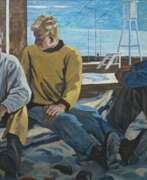


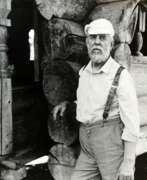

Andrei Vladimirovich Vasnetsov (Russian: Андре́й Влади́мирович Васнецов) was a prominent Russian painter, muralist, and a veteran of World War II. He was a key figure in the development of the "Severe Style" in Soviet art, which emerged as a significant movement during the mid-20th century. Vasnetsov's artistic heritage includes a diverse range of works including portraits, landscapes, still lifes, and monumental art such as frescoes and mosaics for public buildings across the USSR.
Born into a family of artists, Andrei was deeply influenced by his grandfather, Victor Vasnetsov, a celebrated master of historical painting. This familial legacy enriched his approach to art, combining traditional themes with a modernist vigor that defined his contributions to Russian art. Vasnetsov's education at the Moscow Institute of Applied Art and the Leningrad Higher School of Art and Industry further honed his skills, particularly in monumental painting.
His works are part of several prestigious collections, including the State Tretyakov Gallery and the Russian Museum, underscoring his significance in the Russian art scene. His commitment to art extended beyond creation; he was an influential mentor and educator, inspiring future generations of artists.
For art collectors and enthusiasts wishing to explore or acquire works by Andrei Vasnetsov, staying informed about upcoming auctions and private sales can be essential. Sign up to receive updates on new artwork sales and auction events featuring Vasnetsov's works, ensuring you never miss an opportunity to own a piece of this influential artist's legacy.
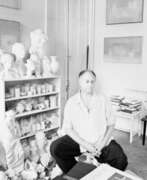

Vladimir Grigorievich Veisberg (Russian: Владимир Григорьевич Вейсберг) was a mid-twentieth-century Soviet artist of Jewish origin. He is known as a painter, teacher, and art theorist, considered a representative of "unofficial art".
Vladimir Veisberg began his career in the 1940s and quickly developed a unique style, creating still lifes and psychological portraits. In the 1960s he moved on to working with plaster geometric figures, creating a variety of compositions. Later he painted portraits, combining the model's vision with subjective experience. He also developed a deep interest in philosophy, literature, art and music, which influenced his own theory of painting, known as "white on white" and "invisible painting".