Artists Neo-expressionism

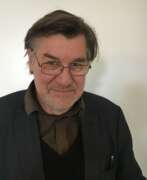

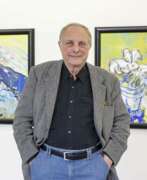

Christian Ludwig Attersee, born Christian Ludwig, is an Austrian media artist living in Vienna and Semmering in Lower Austria.
The artist took his middle name, Attersee, from the area where he spent his youth. He studied at the Vienna Academy of Applied Arts and his work was characterized early on by flamboyant sexualization. He is known not only as a visual artist, but also as a musician, writer, object artist, designer, stage designer and film director. In the 1960s and 1970s he also created series on themes of food, everyday objects, beauty and cosmetics.
Attersee is known above all as one of the leading representatives of objective painting in Europe in the last 50 years. In the second half of the seventies he became the founder of the "New Austrian Painting". From 1990 to 2009, Atterse held a chair at the Vienna University of Applied Arts.



Jennifer Bartlett was an American artist. She was known for paintings and prints that combine the system-based aesthetic of conceptual art with the painterly approach of Neo-Expressionism. Many of her pieces were executed on small, square, enamel-coated steel plates that are combined in grid formations to create very large works.


Georg Baselitz is a German painter, sculptor and graphic artist. In the 1960s he became well known for his figurative, expressive paintings. In 1969 he began painting his subjects upside down in an effort to overcome the representational, content-driven character of his earlier work and stress the artifice of painting. Drawing from myriad influences, including art of Soviet era illustration art, the Mannerist period and African sculptures, he developed his own, distinct artistic language.


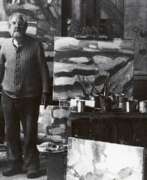


Jean-Charles Blais is a French artist best known for his paintings and drawings exploring themes of identity, memory and representation.
Jean-Charles Blaise studied at the École des Beaux-Arts in Rennes before moving to Paris in the 1980s. Blais' early work was influenced by the Neo-Expressionist movement of the 1980s, and his paintings and drawings were often characterised by bold, gestural strokes and figurative imagery. Over time, however, his style evolved to become more minimalist and abstract, with an emphasis on simplified forms and lines.
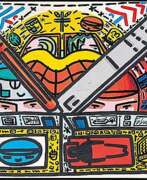

Francois Boisrond is a contemporary French painter. He studied from 1977 to 1980 at the National School of decorative Arts. In 1981 he became involved in the Free Figuration movement. Inspired by visual products (advertising products, posters, stickers, video games etc.), cartoon characters, and by using acrylic paint, Francois Boisrond’s works are colourful, figurative and enigmatic, and his simplified shapes are often outlined in black. He portrays mainly characters, frequently symbolic in everyday situations, but he also depicts urban, maritime or rural landscapes. Besides this Boisrond creates humanitarian and publicity posters. Since the 1990’s the artist has become interested in an imaginary public and the everyday life that invades each and every one of us.
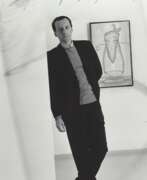


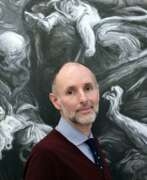


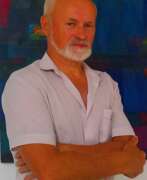

Mikola Bushchik, née Nikolai Vladimirovich Bushchik (Russian: Николай Владимирович Бущик) is a modern Belarusian artist. He is known as a painter and graphic artist working in the expressionist style.
Mikola Bushchik is the author of more than 500 watercolor paintings and about 1000 oil paintings. In the early period of his career he created realistic portraits and landscapes. In the 1990s-2000s, the artist moved away from realism and turned to "color fantasies." Critics often compare the master's paintings to jazz improvisations.
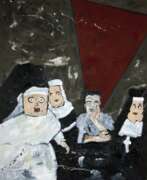


Niclas Castello, real name Norbert Zerbs, is a German painter and sculptor, representative of Pop Art.
Niclas studied art in Germany, Paris and New York. In the 1990s in West Berlin he discovered street art, which became the basis of his career. He is known for a series of sculptures titled "Kiss Sculptures" and the works "Cube Painting-Sculpture". Castello also uses an unusual technique to capture the moment the work emerges: at the end of the realization, the artist takes the piece and compresses it to place it in a box.


Sobral Centeno is a Portuguese artist. He is known for his deep and complex abstract works that are characterised by an innovative use of form and texture.
Sobral Centeno's paintings are characterized by bright colours, bold and dynamic compositions, often featuring geometric shapes and patterns.
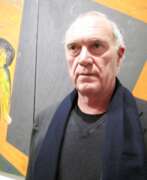

Sandro Chia is an Italian painter and sculptor. In the late 1970s and early 1980s he was, with Francesco Clemente, Enzo Cucchi, Nicola De Maria, and Mimmo Paladino, a principal member of the Italian Neo-Expressionist movement which was baptised Transavanguardia by Achille Bonito Oliva.
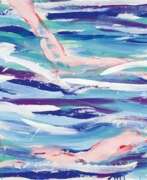

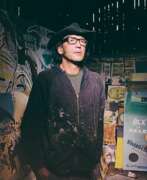

Andrzej Cisowski is a Polish multimedia artist and graphic artist.
Cisowski graduated from the Academy of Fine Arts in Warsaw and was initially associated with the Neue Wilde movement (Neo-Fauvism). Over time he developed his own individual style on the border of figurative painting and new expression. The artist also created paintings based on old photographs.
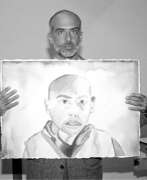

Francesco Clemente is an Italian contemporary artist. He has lived at various times in Italy, India and New York City. Some of his work is influenced by the traditional art and culture of India. He has worked in various artistic media including drawing, fresco, graphics, mosaic, oils and sculpture. He was among the principal figures in the Italian Transavanguardia movement of the 1980s, which was characterised by a rejection of Formalism and conceptual art and a return to figurative art and Symbolism.
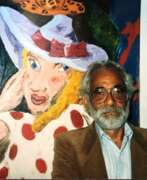

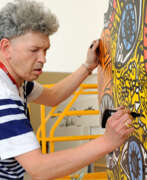

Robert Combas is a French painter and sculptor. He lives and works in Paris.
He is widely recognized as a progenitor of the figuration libre movement that began in Paris around 1980 as a reaction to the art establishment in general and minimalism and conceptual art in particular.
Figuration libre is often regarded as having roots in Fauvism and Expressionism and is linked to contemporary movements such as Bad Painting and Neo-expressionism. It draws on pop cultural influences such as graffiti, cartoons and rock music in an attempt to produce a more varied, direct and honest reflection of contemporary society, often satirizing or critiquing its excesses.


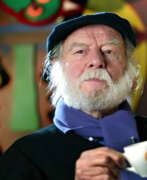

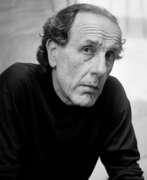

Enzo Cucchi is an Italian painter. He was a key member of the Italian Transavanguardia movement, along with his countrymen Francesco Clemente, Mimmo Paladino, Nicola De Maria, and Sandro Chia. The movement was at its peak during the 1980s and was part of the worldwide movement of Neo-Expressionist painters.
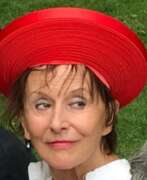

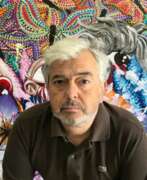

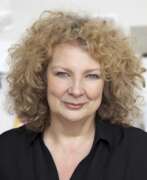

Marlene Dumas is a Dutch artist of South African origin. She is known for her figurative paintings that explore themes of identity, race, gender, and sexuality.
Dumas studied at the University of Cape Town and later moved to the Netherlands, where she earned a degree from the Ateliers '63 in Haarlem. Her early work was heavily influenced by the political and social climate in South Africa during the apartheid era.
Dumas' paintings often depict people in various states of vulnerability, intimacy, and emotion. Her works are characterized by loose, gestural brushstrokes, and a limited color palette. She frequently draws inspiration from popular culture, news media, and art history, often appropriating and reimagining images from these sources.
Dumas has exhibited her work extensively, including at the Museum of Modern Art in New York, the Stedelijk Museum in Amsterdam, and the Tate Modern in London. She has also received numerous awards and honors for her work, including the Johannes Vermeer Award in 2012 and the Premium Imperiale in 2018.
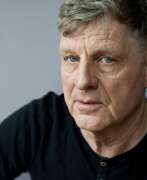

Rainer Fetting is a German painter and sculptor.
Rainer Fetting was one of the co-founders and main protagonists of the Galerie am Moritzplatz in Berlin, founded in the late 1970s by a group of young artists (mainly painters) from the class of Karl Horst Hödicke at the former Berliner Hochschule für Bildende Künste (Berlin Art Academy, today known as Universität der Künste). Fetting is now one of the internationally best known contemporary German artists, having created a large oeuvre of expressive figurative paintings covering many different kinds of subject-matter, as well as many bronze sculptures.


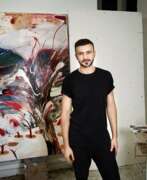

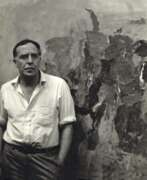

Philip Guston, born Phillip Goldstein, was a Canadian American artist, muralist, printmaker and draftsman. He was one of the most important exponents of abstract expressionism. He is considered a forerunner of the New Figurative Painting.
Philip Gaston was a member of the New York School, which included many representatives of abstract expressionism, such as Jackson Pollock and Willem De Kooning.
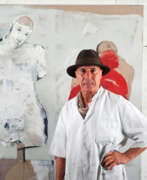

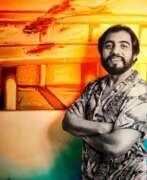
Bahram Hajou is a Kurdish painter whose works can be classified as Neo-Expressionism. He lives and works in Münster as a freelance artist. In 1974 Bahram emigrated to Germany, where he studied at the Münster Art Academy from 1978 to 1984. Since 1981 he has taken part in exhibitions at home and abroad.
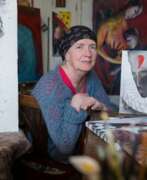


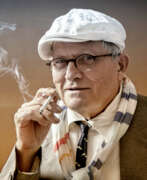

David Hockney, a British artist, has been a prominent figure in the art world for over six decades, renowned for his contributions to painting, drawing, printmaking, photography, and video art. His exploration of these mediums has made significant impacts on the Pop Art movement and beyond, making him one of the most influential artists of the 20th and 21st centuries. Hockney's work is celebrated for its vibrant color palette, emotional depth, and innovative use of technology in art.
One of Hockney's most distinctive features is his ability to blend traditional techniques with modern technology, notably in his iPad drawings and photographic collages. This fusion not only showcases his skillful adaptation to contemporary mediums but also highlights his ongoing quest to explore the nature of seeing and representation in art. Hockney's landscapes and portraits, characterized by their bright colors and meticulous detail, invite viewers to see the world through his unique perspective.
Significant works by Hockney, such as "A Bigger Splash" and "Portrait of an Artist (Pool with Two Figures)," are housed in major museums and galleries worldwide, attesting to his global influence and appeal. These pieces, among others, demonstrate Hockney's mastery over space, light, and narrative, securing his position as a pivotal figure in modern and contemporary art.
For collectors and experts in art and antiques, Hockney's oeuvre presents a fascinating study in the evolution of visual arts. His work not only offers insight into the artist's personal vision but also reflects broader cultural and technological shifts in society. As interest in Hockney's art continues to grow, keeping abreast of new sales and auction events becomes increasingly valuable.
To stay informed about the latest David Hockney sales and auction events, sign up for our updates. This subscription ensures that you receive timely notifications about new product sales and auction events related to David Hockney, offering unique opportunities for collectors and enthusiasts alike.
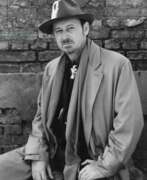

Karl Horst Hödicke is a German artist, a pioneer of German Neo-Expressionism and new figuration, and one of the most important representatives of German post-war painting.
After moving to Berlin in 1957, Hödicke encountered the eventful history of Berlin - the construction of the Berlin Wall, the Cold War, and reunification - and reflected it in his paintings.
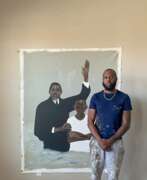

Jammie Holmes is an American painter and public artist. As a painter, he is known for work that represents scenes of Black life in the American deep south, paying particular attention to the contrast of Louisiana as a hub of hospitality and as a place with a deep history of poverty and racism. He has been described as a self-taught painter.
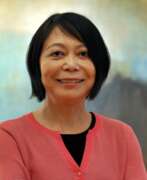

She studied art in Japan, Spain and Germany.
Leiko Ikemura's work encompasses painting, sculpture, video and photography. She works in a variety of techniques, including oil painting, ceramic and bronze sculpture, printmaking and watercolor. She currently works in Cologne and Berlin and teaches painting at the Hochschule für Kunst in Berlin.
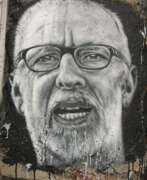

Jörg Immendorff was a German painter and sculptor, stage designer and decorator, and a member of the New Wild movement.
Immendorff painted in cycles that often lasted for years and were political in nature. His series of sixteen large paintings, Café Deutschland (1977-1984), is well known. In these colorful paintings, numerous disco lovers symbolize the conflict between East and West Germany.
Immendorff prepared several stage productions and designed sets for the operas Elektra and The Rider's Voyage. 25 of Immendorf's paintings were selected in 2006 for the illustrated Bible.


Erich Isenburger was a German-born American artist who considered himself a neo-expressionist. The painter's oeuvre includes landscapes, still lifes, interiors and portraits.
Erich Isenburger held a long-time teaching position at the National Academy of Design in New York.


Alexander Kanoldt was a German painter of the first half of the twentieth century. He is known as a painter, landscape and portrait painter, a representative of the New Materiality movement.
Alexander Kanoldt was one of the founders of the New Munich Art Association and the Blue Rider group. His style evolved from Neo-Impressionism to magic realism, to depicting plants, objects, landscapes and people in angular forms. During the Nazi regime, he tried to adapt to the styles in demand, but many of his works were confiscated as belonging to "degenerate art."
Kanoldt was a professor at the Berlin Academy of Art and director of the State School of Art in Berlin until his retirement in 1936.
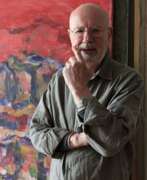


Anselm Kiefer, a German artist born in 1945, is renowned for his profound contributions to painting and sculpture. He is distinguished by his use of unconventional materials such as straw, ash, clay, lead, and shellac, which he selects for their symbolic and alchemical properties. Anselm Kiefer's works often delve into themes of German history, mythology, and the Holocaust, using these materials to evoke a range of emotions and reflections on past and present.
One of his notable pieces, "Margarete," inspired by Paul Celan's poem "Death Fugue," employs straw to symbolize various themes, including racial purity and the fragility of life. Another significant work, "The High Priestess/Zweistromland," features an installation of lead books, reflecting on the transmission and preservation of knowledge. "Shevirat Ha-Kelim" is a sculpture that explores themes from the Kabbalah, representing the fragmentation of divine attributes.
Anselm Kiefer's art is not just visually impactful but also intellectually stimulating, encouraging viewers to ponder complex historical and philosophical questions. His works are displayed in prestigious venues worldwide, including the Centre Georges Pompidou in Paris and private collections.
For art collectors and experts, Anselm Kiefer's oeuvre offers a compelling blend of historical depth, material innovation, and philosophical inquiry. If you're intrigued by Kiefer's unique approach to art and wish to stay informed about new works and auction events related to Anselm Kiefer, consider signing up for updates to ensure you don't miss out on the opportunity to engage with his profound and evocative creations.


Martin Kippenberger was a German artist known for his extremely prolific output in a wide range of styles and media, superfiction as well as his provocative, jocular and hard-drinking public persona.
Kippenberger was "widely regarded as one of the most talented German artists of his generation," according to Roberta Smith of the New York Times. He was at the center of a generation of German enfants terribles including Albert Oehlen, Markus Oehlen, Werner Büttner, Georg Herold, Dieter Göls, and Günther Förg.


Gustav Kluge was a German painter and graphic artist and professor of painting.
Kluge studied painting at the Hamburg University of Fine Arts and later taught painting at the State Academy of Fine Arts in Karlsruhe. The artist works and lives in Hamburg and Karlsruhe.
In his works, Kluge deals with fundamental themes: life and death, power and violence. In addition to original inventions, he takes into account various suggestions of historical, cultural and religious traditions. His paintings and drawings, especially his woodcuts, are prime examples of Neo-Expressionism. Using rich material, layered colorful applications, Kluge paints his paintings, as he himself puts it, "on top of each other."


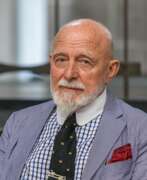

Markus Lüpertz is a German painter, sculptor, graphic artist, and writer. He also publishes a magazine, and plays jazz piano. He is one of the best-known German contemporary artists. His subjects are characterized by suggestive power and archaic monumentality. Lüpertz insists on capturing the object of representation with an archetypal statement of his existence. His art work is associated to neo-expressionism. Known for his eccentricity, German press has stylized him as a «painter prince».


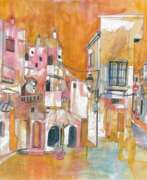

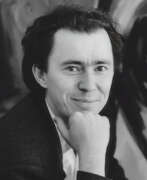

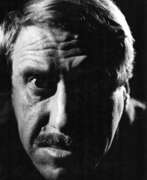

Mattia Moreni is an Italian painter and sculptor, a representative of the abstract trend in Italian art.
The artist is interesting because he went through all the significant phases in the art of the 20th century. Beginning with figurative fovea and expressionism, he turned to post-cubism and then to abstract-concrete forms. Later Moreni turns to informal and neo-expressionism. Decay, death and splendor become the themes of his work. After anthropoid watermelons, the decline of the human species is captured by the artist through other images: sterile female macros and sets of symbols, including the relationship between humanoid computer and humanoid computer.
Moreni's paintings have received wide international acclaim.
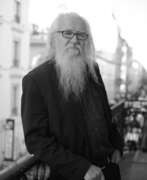


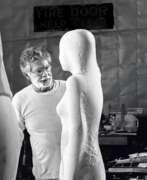

Manuel John Neri the Younger was an American sculptor who is recognized for his life-size figurative sculptures in plaster, bronze, and marble. In Neri's work with the figure, he conveys an emotional inner state that is revealed through body language and gesture. Since 1965 his studio was in Benicia, California; in 1981 he purchased a studio in Carrara, Italy, for working in marble. Over four decades, beginning in the early 1970s, Neri worked primarily with the same model, Mary Julia Klimenko, creating drawings and sculptures that merge contemporary concerns with Modernist sculptural forms.
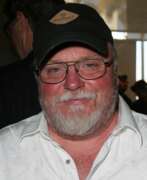

Udo Nöger is a German and American artist working between San Diego, Miami and Geneva.
Nöger, who grew up in Enger, Germany, emigrated to the United States in the early 1990s. Early in his career, he was known for his expressive figurative paintings. These mixed-media works often feature enigmatic archaic figures and symbolically charged imagery inspired by his travels. On one such trip to the South Pacific, Nöger discovered ancient writings consisting of images of animals, figures and symbols used by the Easter Islanders centuries ago. Over time, he began to incorporate this ancient iconography into his work, eventually creating his own pictorial language that gradually became more and more abstract.
By the mid-nineties, Nöger began to focus exclusively on the interplay of light, space and color. The artist creates luminous monochrome paintings that capture light, movement and energy expressed in extremely minimalist compositions. Nöger uses an almost architectural approach to create works that seem to radiate light from within. The paintings consist of three layers of canvas mounted on stretchers set at a distance from each other.
Udo Nöger has exhibited many times around the world, and his works are in the permanent collections of the Metropolitan Museum of Art (New York), the Museum of Contemporary Art (Denver), the Art Institute of Chicago and others.


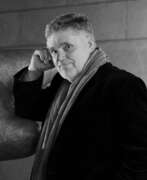

Markus Oehlen is a German artist and musician.
Markus Oehlen graduated from the Düsseldorf Academy of Fine Arts, where his mentor was Alfonso Hüppi. Oehlen was one of the main members of the German "New Wilde" (Neue Wilde) art movement, which flourished in the 1980s and was characterized by the use of punk style elements in opposition to the then prevalent minimalism.
Oelen is constantly refining the technique of his paintings and also working in parallel on sculptures and musical projects. His new works are increasingly influenced by the perceptual experiments of op-art with their interference of printed images, which emerge as lattice patterns from below and above the image layers. Alongside forms oriented towards a computer aesthetic, this brings elements of the avant-garde into his images. By rearranging the individual compositional elements of the canvas, Oelen creates surrealist still lifes, playing with the notion of chance and suggesting bizarre narratives.
Markus Oehlen has been a professor at the Academy of Fine Arts in Munich since 2002.
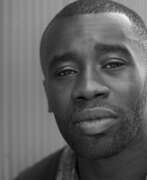

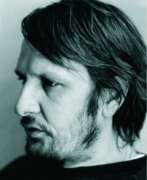


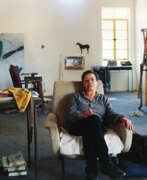


David Salle is a Pictures Generation American painter, printmaker, photographer, and stage designer. Salle was born in Norman, Oklahoma, and lives and works in East Hampton, New York. He earned a BFA and MFA from the California Institute of the Arts, Valencia, California, where he studied with John Baldessari. Salle’s work first came to public attention in New York in the early 1980s.


Salomé (born as Wolfgang Ludwig Cihlarz) is a German artist. His paintings are in renowned museums and collections all over the world. Salomé became known as one of the members of the art group Junge Wilde (Wild Youth) or Neue Wilde (New Wild Ones). He also is recognized as a sculptor and Punk singer.
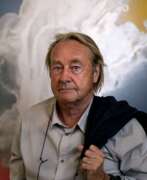

Hubert Scheibl is an Austrian painter, draughtsman, and photographer, one of the most important Austrian representatives of abstract painting.
Hubert Scheibl studied with Arnulf Rainer at the Academy of Fine Arts in Vienna, lived in New York for several years, which influenced his work. In the 1980s he was a member of the Neue Wilden group.
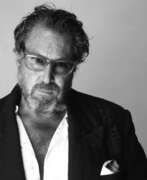

Julian Schnabel is an American painter and filmmaker. In the 1980s, he received international attention for his "plate paintings" — with broken ceramic plates set onto large-scale paintings. Since the 1990s, he has been a proponent of independent arthouse cinema. Schnabel directed Before Night Falls, which became Javier Bardem's breakthrough Academy Award-nominated role, and The Diving Bell and the Butterfly, which was nominated for four Academy Awards. For the latter, he won the Cannes Film Festival Award for Best Director and the Golden Globe Award for Best Director, as well as receiving nominations for the Academy Award for Best Director and the César Award for Best Director.


Peter Stauss is a German artist, painter and sculptor who lives and works in Berlin. The peculiarity of the artist's works is that they combine important philosophical themes with questions of the genesis of form in painting and sculpture. Stauss' vivid sculptures and paintings combine images from historical, religious and philosophical sources to "recreate the fables of our time."



Lambert Maria Wintersberger was a German artist.
With other artists such as Markus Lüpertz, Karl Horst Hödicke, and Bernd Koberling, he helped found the Gallery "Großgörschen 35" in Berlin.
Lambert Maria Wintersberger was the laureate of the Centre Européen d'Actions Artistique Contemporaines in Strasbourg in 1992, and in 2005 and 2006, he was the guest artist at the Majolika Ceramic Factory in Karlsruhe.