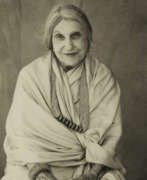
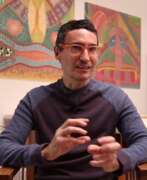
Artists Dadaism
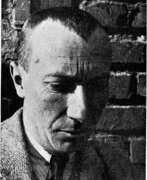

Jean Arp, born Hans Peter Wilhelm Arp, was a German and French poet, painter, graphic artist and sculptor. one of the founders of the Dada movement in Zurich.
Arp used abstract forms in his work and experimented with different materials such as wood, metal and stone. He was also known for his poetic works, in which he applied a method of randomly selecting words, called the "clutter method". Arp believed that this method helped him express his thoughts more precisely and originally. Arp's influence on the arts is still significant today.
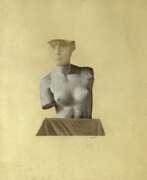

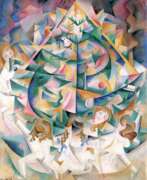

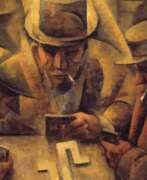

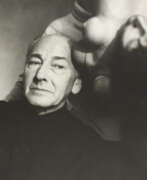

Hans Bellmer was a German graphic artist, sculptor, photographic artist, illustrator, and writer who spent most of his life in France.
In the 1930s Bellmer began working on the eroticized image of the deformed doll, contrasting it with the aesthetics of the "classical" body in Hitler's Germany. His graphic and literary explorations focus on the dismemberment and liberation of bodies. Bellmer's surrealist works are violent and provocative: they include puppet sculptures composed of the bodies of nude models, photographs, and prints.
In 1934, 18 photographs of dolls were published in the Parisian surrealist magazine Minotaur, and the Nazi regime declared Bellmer's art degenerate. In 1938, Bellmer emigrated to France.
After the end of the war, the artist continued his work, adding poetry to painting. He also authored illustrations for many works, particularly on erotic themes.
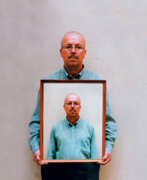

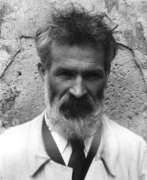

Constantin Brâncuși was a Romanian sculptor, painter, and photographer who made his career mainly in France, becoming one of the pivotal figures of modern sculpture and a pioneer of modernism. Born in 1876 in Hobița, Romania, Brâncuși displayed a talent for carving from a young age, a skill honed during his early life as a shepherd in the Carpathian Mountains. His work evolved from traditional forms to groundbreaking abstract sculptures that sought to capture the essence rather than the literal representation of his subjects.
After moving to Paris in 1904, Brâncuși's unique style began to take shape. He worked briefly in the studio of Auguste Rodin, but soon left to pursue his own vision, stating that "Nothing can grow under big trees." This decision marked the beginning of his pursuit to distill forms to their simplest essence, a philosophy that would define his career. Brâncuși's sculptures, such as "The Kiss" and "Bird in Space," are celebrated for their smooth, simplified forms that evoke the core of the subject matter with minimal detail. His work in wood, bronze, and marble often carried a serene, timeless quality, blending modernist aesthetics with a touch of his Romanian heritage.
Brâncuși's contributions to art were not limited to sculpture. He was also an accomplished photographer, using his camera to capture the spatial relationships and compositions of his studio and sculptures, an extension of his artistic vision. His works are held in high regard worldwide and are featured in prominent collections, such as the Museum of Modern Art in New York and the Tate in the United Kingdom.
The legal battle over "Bird in Space" in 1927 highlighted the challenges Brâncuși faced in having his work recognized as art by traditional standards. This case, which eventually ruled in his favor, established a precedent for modern art's recognition beyond traditional forms and representations.
For art collectors and experts, Brâncuși's oeuvre represents a bridge between the tactile craftsmanship of earlier periods and the conceptual, form-driven concerns of modern art. His legacy is a testament to the power of innovation, vision, and the enduring appeal of simplicity in form.
For those interested in the evolution of sculpture and the role of art in transcending cultural and temporal boundaries, Constantin Brâncuși's work offers profound insights. We invite you to sign up for updates on new product sales and auction events related to Brâncuși's work, ensuring you stay informed about opportunities to engage with the legacy of this pioneering artist.
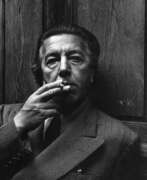

André Breton was a French writer, poet, and anti-fascist, renowned as the principal founder and leading theorist of Surrealism, an influential movement that sought to release the creative potential of the unconscious mind. Born in Tinchebray, France, in 1896, Breton's work was deeply influenced by the theories of Sigmund Freud and was characterized by a fascination with dreams, the irrational, and the workings of the mind. As a cultural icon, his contributions extended beyond literature into the realms of art, sculpture, and painting, making him a pivotal figure in 20th-century artistic movements.
Breton's seminal work, the "Manifesto of Surrealism" (1924), outlined the principles of the movement, advocating for the expression of the subconscious and the importance of dreams as a source of artistic inspiration. His leadership and writings not only shaped Surrealism but also had a lasting impact on the broader culture of art, influencing countless artists, painters, and sculptors. Breton's ability to merge poetry with visual arts led to collaborations with prominent artists like Salvador Dalí, Max Ernst, and Joan Miró, further cementing his legacy as a central figure in modern art.
Notably, André Breton's works and personal collection, which included art pieces and surreal objects, have been displayed in museums and galleries worldwide, showcasing his eclectic taste and profound influence on the art world. His Paris apartment was a gathering place for artists and intellectuals, becoming a hub of Surrealist activity and thought. For collectors and experts in art and antiques, Breton's contributions represent a fascinating intersection of literary prowess and visual creativity, highlighting the enduring relevance of Surrealism.
For those interested in exploring the depths of Surrealism and André Breton's groundbreaking contributions, signing up for updates can provide exclusive access to new product sales and auction events related to this pivotal artist and thinker. This subscription is an invaluable resource for collectors and enthusiasts keen to deepen their understanding of Breton's influence and the broader cultural movements he shaped.


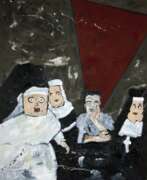

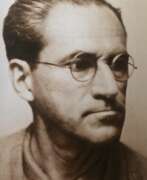

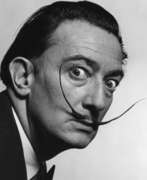

Salvador Dalí, a Spanish Surrealist painter and printmaker, is celebrated for his vivid and imaginative works that delve into subconscious imagery. Born on May 11, 1904, in Figueres, Catalonia, Spain, Dalí's early exposure to Impressionism and Renaissance masters significantly influenced his artistic development. His education in fine arts in Madrid further shaped his style, leading him to experiment with Cubism and avant-garde movements. In the late 1920s, Dalí embraced Surrealism, joining the Surrealist group in 1929 and rapidly becoming one of its most prominent figures.
Dalí's most famous work, "The Persistence of Memory," completed in 1931, epitomizes the Surrealist movement with its iconic melting clocks symbolizing the fluidity of time. His artistic repertoire was diverse, including painting, graphic arts, film, sculpture, design, and photography, often incorporating themes of dreams, the subconscious, sexuality, religion, and science. Despite his remarkable artistic contributions, Dalí's eccentric and flamboyant public persona often overshadowed his work. He faced criticism for his public support of the Francoist regime and the authenticity of some of his late works.
Dalí's legacy is preserved in major museums, notably the Dalí Theatre-Museum in Figueres and the Salvador Dalí Museum in St. Petersburg, Florida. These institutions showcase his extensive and varied body of work, illustrating his profound impact on Surrealism, pop art, and contemporary artists.
If you're captivated by the surreal world of Salvador Dalí and want to stay informed about new sales and auction events featuring his works, sign up for our updates. Our service is tailored specifically for art collectors and experts, providing timely information and insights into the vibrant market of Dalí's art. Remember, this subscription is focused solely on bringing you the latest in product sales and auction events related to Salvador Dalí. Don't miss out on the opportunity to enrich your collection with pieces from one of the most influential surrealists of all time. Sign up now and be the first to know about these exclusive events.
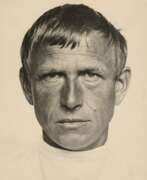

Wilhelm Heinrich Otto Dix was a German artist whose work stands as a stark, unyielding reflection of the societal tumult and trauma of the early 20th century. Born in 1891 in Untermhaus, Germany, Dix's early life was steeped in the arts, his ambition to become an artist nurtured by both familial influence and formal education in Dresden. His experiences as a soldier in World War I deeply influenced his artistic direction, leading him to vividly depict the horrors of war and the decay of the Weimar Republic with a brutal realism that became his signature style.
Dix's association with the Dada movement and the New Objectivity (Neue Sachlichkeit) further honed his critical, often cynical portrayal of post-war society. His works, such as "The Trench" and "War Cripples," expose the visceral aftermath of conflict, while his engagement with the Dadaists imbued his art with a disruptive, confrontational energy against societal norms and the art establishment.
Perhaps most notable is Dix's ability to capture the psychological depth and societal critiques through his portraits and landscapes, which ranged from the grotesque to the surreal. Paintings like "Portrait of the Journalist Sylvia von Harden" and the triptychs "Metropolis" and "War" are emblematic of his keen observation and stark depiction of the era's social and political unrest.
Despite facing significant adversity, including being labeled a degenerate artist by the Nazi regime and facing professional and personal setbacks, Dix's legacy as a painter and printmaker endures. His works are not only historical documents but also profound reflections on humanity, war, and society, resonating with collectors and art experts alike.
For enthusiasts of culture, art, and history, Dix's oeuvre offers an unflinching look into the human condition under the strain of societal and political upheaval. His contributions to painting and printmaking continue to be celebrated in museums and galleries worldwide, underscoring the enduring relevance of his work.
For those interested in exploring the profound depth and historical significance of Otto Dix's work, signing up for updates on new product sales and auction events related to his art can provide invaluable insights. This subscription is a gateway to staying informed about opportunities to engage with the tangible pieces of Dix's enduring legacy.


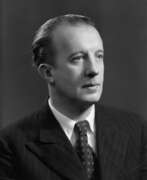

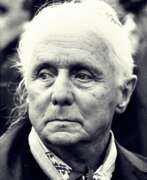

Max Ernst was a pivotal figure in the 20th-century art world, whose work transcended the boundaries of nationality and genre to leave an indelible mark on culture, art, sculpture, and painting. Born in Germany on April 2, 1891, and later becoming a naturalized American and French citizen, Ernst's career was a testament to his relentless innovation and creativity. Known primarily as an artist and painter, Ernst was a founding member of the Dada movement in Cologne before becoming a major proponent of Surrealism in Paris. His early encounters with the works of Pablo Picasso, Vincent van Gogh, and Paul Gauguin at the Sonderbund exhibition in 1912 deeply influenced his artistic direction, infusing it with elements of Cubism and Expressionism. Despite his lack of formal artistic training, Ernst's experimentation with techniques such as collage and frottage showcased his unique ability to blend the absurd with the sublime, making him a central figure in the artistic avant-garde of his time.
Ernst's work is notable for its exploration of the unconscious, using dreamlike imagery and symbolic figures to critique societal norms and delve into the chaos of the human psyche. His experiences in World War I profoundly impacted his worldview, leading to a deep skepticism of Western culture and an enduring search for meaning through art. This is evident in works such as "Europe After the Rain II," which reflects the devastation of war and "The Fireside Angel," inspired by the political turmoil of the Spanish Civil War, showcasing his ability to address contemporary issues through a surreal lens.
Ernst's contributions to art are preserved in major museums and galleries worldwide, including the Tate in the United Kingdom and the Museum of Modern Art in New York. His sculptures, paintings, and collages continue to be celebrated for their innovative techniques and imaginative scope, marking him as a revolutionary figure in modern art. Among his most significant works are "Ubu Imperator," "The Elephant Celebes," and "The Virgin Spanking the Christ Child before Three Witnesses," each reflecting his mastery over a diversity of mediums and themes.
For collectors and experts in art and antiques, Max Ernst remains a symbol of artistic freedom and exploration. His ability to navigate through various artistic movements while maintaining a distinct, innovative voice is a testament to his enduring legacy in the art world. To stay updated on new product sales and auction events related to Max Ernst, signing up for updates is a valuable opportunity for those deeply invested in the nuances of modern and surreal art.
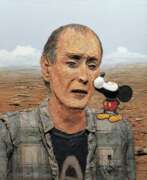


Otto Griebel was a German artist of the twentieth century. He is known as a painter and graphic artist who worked in the directions of "new subject matter" and socialist realism.
Griebel joined the Dadaists after World War I and was a member of the Dresden Dadaist group. He participated in various artistic associations, including the Dresden Secession Group, the Aktion group of artists, the Association of Free Artists of Saxony, and others. In 1933, the artist was arrested by the Gestapo and his work was recognized as "degenerate art". Most of the master's work was lost during the bombing of Dresden in 1945.
Griebel was also a talented puppet theater artist and created sets for puppet shows.
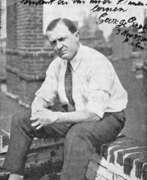

George Grosz was a twentieth-century German painter, graphic artist, and cartoonist. In his work one can find features of various styles of avant-garde art, including Dadaism, Expressionism, and Futurism.
George Grosz drew in every style in a sharp-grotesque and satirical spirit, ridiculing the vices of society. The erotic theme, which occupied a prominent place in Gross's work, was executed in the same spirit.
Grosz devoted more than 20 years to teaching at the Art Students League of New York, and was elected an honorary member of the American and Berlin Academies for his outstanding services to the arts.
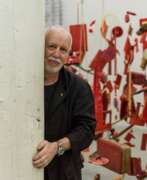


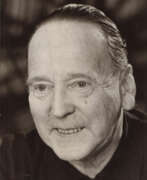

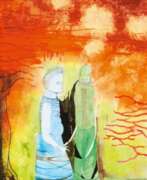

Lothar Hempel is a German media artist living and working in Berlin.
Lothar studied at the Academy of Fine Arts Düsseldorf and works in a wide range of media, combining the abstract and figurative in dramatic stage sets. Drawing from a variety of styles - Dadaism, Constructivism, the Bauhaus school - Hempel creates works in the fields of sculpture, drawing and painting, video, performance and installation. He utilizes visual metaphors, including images or found objects.
Lothar Hempel has been exhibiting regularly since 1991.
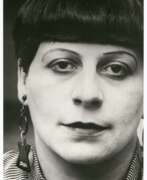


Hannah Höch was a German Dada artist. She is best known for her work of the Weimar period, when she was one of the originators of photomontage. Photomontage, or fotomontage, is a type of collage in which the pasted items are actual photographs, or photographic reproductions pulled from the press and other widely produced media.
Höch's work was intended to dismantle the fable and dichotomy that existed in the concept of the "New Woman": an energetic, professional, and androgynous woman, who is ready to take her place as man's equal. Her interest in the topic was in how the dichotomy was structured, as well as in who structures social roles.
Other key themes in Höch's works were androgyny, political discourse, and shifting gender roles. These themes all interacted to create a feminist discourse surrounding Höch's works, which encouraged the liberation and agency of women during the Weimar Republic (1919-1933) and continuing through to today.


Heinrich Hoerle was a notable German artist, distinguished for his contributions to the constructivist movement and the New Objectivity movement. Born in Cologne, Heinrich Hoerle was largely self-taught, developing a unique style after his experiences in World War I and his involvement in the Cologne Dada scene. His works often depicted generic figures in rigid poses or profiles, reflecting his influences from Russian constructivism, French cubism, and the Dutch De Stijl movement. Hoerle co-founded the artist group Stupid and published influential series like the Krüppelmappe (Cripples Portfolio), exploring themes of disability and war's human toll.
His art, which includes pieces like "Denkmal der unbekannten Prothesen," is preserved in various public collections, including Museum Ludwig in Cologne and the Von der Heydt Museum in Wuppertal. Despite facing condemnation by the Nazis, Hoerle's legacy endures through his thought-provoking works that continue to be celebrated and discussed in academic circles, as evidenced by events like the gallery talk at Harvard Art Museums focusing on his Cripple Portfolio series.
For collectors and art enthusiasts, understanding Heinrich Hoerle's impact on modern art provides a valuable perspective on the interplay between art, society, and history. If you're keen on delving deeper into Heinrich Hoerle's artistic journey and wish to stay updated on related auctions and exhibitions, consider subscribing for updates on new product sales and auction events pertaining to his works.
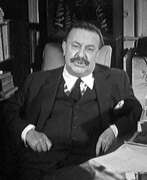

Adolf Hoffmeister (1902-1973) was a Czech artist, writer, journalist, playwright, translator, and diplomat, renowned for his multifaceted contributions to culture and art. His early career saw him collaborate with significant figures in the art world, including Philippe Soupault and Jaroslav Ježek. In 1928, Hoffmeister made his mark with a solo exhibition in Paris and became involved in various literary and artistic publications, such as Lidové noviny and Literární noviny.
Hoffmeister's art often intersected with his political views. He set up the anti-fascist magazine Simplicus in the 1930s and was a member of the Mánes Association of Fine Arts, where he defended the anti-Nazi artwork of John Heartfield. His life was dramatically affected by World War II; fleeing Nazism, he was interned in Paris and a Moroccan concentration camp before reaching New York in 1941. After the war, he returned to Prague and engaged in diplomacy and academia but faced political ostracization following his pro-reform activities in 1968.
Hoffmeister's work in collage was notable, especially his illustrations for Jules Verne's "Around the World in Eighty Days." He was also known for his libretto for the children's opera "Brundibar" and translating James Joyce’s "Anna Livia Plurabelle." His pieces, such as "Demonstration" (1963) and "Greek village by Syrakus" (1960), are preserved in archives like the Ruth and Marvin Sackner Archive of Concrete and Visual Poetry, illustrating his unique approach to visual storytelling.
For collectors, auctioneers, and art and antiques experts, Hoffmeister's works represent a compelling blend of artistic innovation and historical context. His legacy continues to inspire, and keeping informed about exhibitions or sales of his work is essential for those interested in 20th-century European art and literature.
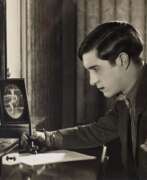


Marcel Janco was a Romanian-born Israeli artist and architect. He was one of the founding members of the Dada movement and a prominent figure in the European avant-garde.
Janco studied at the Academy of Fine Arts in Bucharest and later moved to Paris in 1919, where he became involved with the Dada movement. He co-founded the Dadaist journal "Contimporanul" and was a member of the Dada group in Zurich. In 1922, Janco moved to Israel and settled in Tel Aviv, where he became a leading figure in the city's avant-garde art scene.
Janco's work often combined abstract and figurative elements, and he experimented with a variety of media, including painting, sculpture, and collage. He was also a prolific architect and helped to design several important buildings in Israel, including the Habima Theater in Tel Aviv.
In addition to his work as an artist and architect, Janco was also a writer and educator. He founded the Ein Hod Artists' Village in Israel in 1953, and was a professor of art at the Bezalel Academy of Art and Design in Jerusalem from 1962 to 1974.
Janco's work has been exhibited in museums and galleries around the world, and he is widely considered one of the most important figures in the development of modern art in Israel.


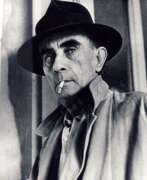

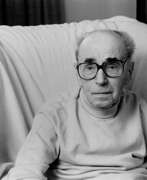

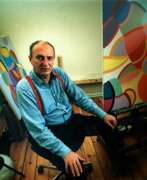

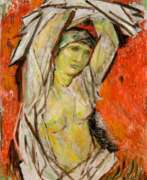

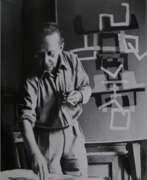

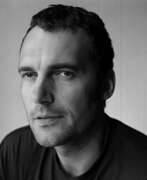

Volker Via Lewandowsky is a German artist who works with installation, sculpture, object art, photography, performance, painting and drawing.
Via Lewandowsky works in diverse artistic media. He is most familiar for his sculptural-installation works and exhibition scenographies with architectonic influences.
His preference for tragicomedy, absurdity and paradox as well as the Sisyphean drama of continuous repetition and futility of action link Via Lewandowsky's art with Dadaism, Surrealism and Fluxus.
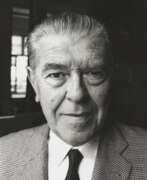

René Magritte, a Belgian artist, was renowned for his significant contributions to the Surrealist movement. His art, known for merging ordinary objects with bizarre, dream-like contexts, captivated the art world. Born on November 21, 1898, in Lessines, Belgium, Magritte's early artistic pursuits were impressionistic, transitioning through Cubism and Futurism influenced by artists like Jean Metzinger. However, his encounter with Giorgio de Chirico's work in 1922 steered him towards Surrealism.
Magritte's career was marked by various phases, each showcasing his evolving style and thematic focus. His initial foray into Surrealism began in 1926 with "The Lost Jockey" and was further solidified during his time in Paris, where he mingled with other prominent Surrealists like André Breton. Despite facing initial criticism and financial challenges, Magritte's unique blend of familiar imagery in unfamiliar contexts, like in "The Empire of Light" and "Time Transfixed," earned him acclaim.
Magritte's distinct visual language, characterized by recurring motifs like bowler hats and apples, and his exploration of reality and illusion, remain influential. His works are displayed in major galleries worldwide, continuing to inspire and intrigue art collectors and enthusiasts.
For collectors and experts in art and antiques, staying informed about Magritte's works and related auction events is crucial. Signing up for updates ensures you're alerted to new sales and events focusing on René Magritte's art, offering unique opportunities to acquire or learn more about his remarkable creations. This subscription will exclusively cover new product sales and auction events related to Magritte, keeping you updated on the most relevant information in the art world.
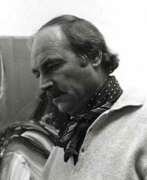

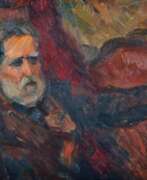

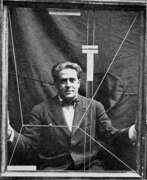

Francis Picabia, born Francis-Marie Martinez de Picabia, was a French avant-garde painter, poet, and typographist, whose work is celebrated for its diversity and innovation. His journey through various art movements, including Impressionism, Cubism, Dadaism, and Surrealism, showcases his refusal to be confined by any one style. Picabia's art is known for its eclectic nature, often blending mechanical elements with organic forms, thereby challenging traditional perceptions of art and beauty.
Picabia's significant contribution to the art world lies not just in his varied artistic output but also in his philosophical approach to creation. He believed in the freedom of expression, often using his art to critique societal norms and the art establishment itself. This rebellious spirit made him a pivotal figure in the Dada movement, where his works were celebrated for their irony and disdain for conventional art values.
Among his notable works, "Amorous Parade" and "I See Again in Memory My Dear Udnie" stand out, housed in prestigious institutions like the Museum of Modern Art in New York. These pieces exemplify Picabia's mastery over blending different elements of art movements, creating works that remain influential to this day. His legacy is not just in the pieces he created but also in his attitude towards art, encouraging future generations to challenge and redefine the boundaries of creativity.
For collectors and experts in art and antiques, Picabia's works represent not only significant artistic achievements but also valuable insights into the evolution of modern art. To stay informed about new product sales and auction events related to Francis Picabia, sign up for updates. This subscription is an essential resource for enthusiasts looking to enrich their collections with pieces from one of the most innovative artists of the 20th century.
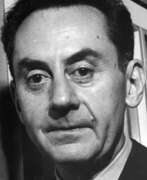

Man Ray, born Emmanuel Radnitzky, was an American visual artist who played a significant role in the Dada and Surrealist movements. His pioneering efforts in photography, alongside his work in painting and sculpture, have cemented his place as a major figure in modern art. Known for his innovative techniques and the ability to convey complex ideas through simple, striking visuals, Man Ray's contribution to the art world is profound.
Throughout his career, Man Ray was celebrated for his avant-garde approach and his ability to transcend traditional boundaries between different artistic mediums. His photography, characterized by experimental techniques such as solarization and rayographs (cameraless photographs), challenged conventional perceptions of photography as merely a means of representation. These artistic innovations made him a central figure in both Parisian and American art circles.
Man Ray's works are housed in some of the world's most prestigious museums and galleries, including the Museum of Modern Art in New York and the Centre Pompidou in Paris. His pieces, such as "Le Violon d'Ingres" and "Noire et Blanche," are iconic images that continue to influence artists today. His ability to blend the abstract with the realistic, and the humorous with the serious, has left a lasting legacy in the world of art.
For collectors and experts in art and antiques, the work of Man Ray offers a glimpse into the revolutionary changes that shaped the visual arts in the 20th century. His unique perspective and pioneering techniques continue to inspire and challenge those interested in the boundaries of creativity and expression.
If you're passionate about the avant-garde, or simply wish to explore the fascinating world of Man Ray further, sign up for our updates. You'll receive alerts on new product sales and auction events related to Man Ray, ensuring you never miss an opportunity to engage with the legacy of this extraordinary artist.
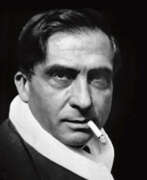


Georges Ribemont-Dessaignes was a French writer and artist associated with the Dada movement.
In addition to numerous early paintings, Ribemont-Dessaignes wrote plays, poetry, manifestos and opera librettos. He contributed to the Dada (and later surrealist) periodical Literature.
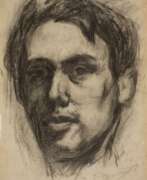

Johannes Siegfried Richter (German: Johannes Siegfried Richter) or Hans Richter was a German painter, graphic artist, avant-garde film director and film theorist.
Hans Richter studied at the Berlin Academy of Fine Arts, then at the Weimar Academy. He was close to the expressionist group Sturm, influenced by cubism. He had his first solo exhibition in Munich in 1916. From 1916 to 1918, he was a member of the "Dada" group in Zurich. In 1922, came to Berlin. Made several films, where he tried to convey rhythm and movement by abstract means. In 1933 the Nazis ransacked Richter's studio in Berlin, confiscating or destroying his work. He was stripped of his German citizenship and called a "degenerate" artist and a "cultural Bolshevik". In 1940 he moved to the United States. Taught film in New York, continued his film experiments.
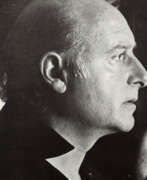

Domenico (Mimmo) Rotella was an Italian artist considered an important figure in post-war European art. Best known for his works of décollage and psychogeographics, made from torn advertising posters. He was associated to the Ultra-Lettrists an offshoot of Lettrism and later was a member of the Nouveau Réalisme, founded in 1960 by the art critic Pierre Restany.


Christian Schad was a German painter and photographer. He was associated with the Dada and the New Objectivity movements. Considered as a group, Schad's portraits form an extraordinary record of life in Vienna and Berlin in the years following World War I.
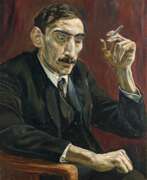

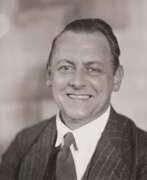

Kurt Schwitters (1887–1948) was a German artist renowned for his multifaceted contributions to modern art, encompassing painting, poetry, graphic design, and installation art. Born in Hanover, Germany, Schwitters developed a unique artistic vision that led to the creation of "Merz," a term he coined to describe his one-of-a-kind approach to art.
The concept of Merz originated from a fragment of the word "Kommerz" (commerce), which Schwitters incorporated into his early collages. This term came to represent his artistic philosophy, characterized by the assemblage of found objects and everyday materials into cohesive compositions. Through Merz, Schwitters sought to blur the boundaries between traditional art forms, integrating elements of Dadaism, Constructivism, and Surrealism.
One of Schwitters' most significant projects was the "Merzbau," an ambitious, evolving installation within his Hanover home. This project began around 1923 and transformed his living space into a labyrinthine structure filled with collages, sculptures, and found objects. The Merzbau was a physical manifestation of his Merz philosophy, embodying the synthesis of art and life. Unfortunately, the original Merzbau was destroyed during a British air raid in 1943.
In addition to his visual art, Schwitters made notable contributions to literature and sound art. His poem "An Anna Blume," published in 1919, is a seminal work that exemplifies his playful use of language and nonsensical style, aligning with the Dada movement's principles. Moreover, his "Ursonate," a sound poem composed between 1922 and 1932, showcases his innovative exploration of phonetic expression and rhythm, pushing the boundaries of traditional poetry.
The rise of the Nazi regime in Germany had a profound impact on Schwitters' life and work. Classified as a "degenerate" artist by the Nazis, he fled to Norway in 1937 to escape persecution. Following the German invasion of Norway in 1940, he sought refuge in the United Kingdom. During his internment at the Hutchinson Internment Camp on the Isle of Man, Schwitters continued to create art, producing over 200 works during his 16 months of confinement.
After his release, Schwitters settled in the Lake District of England, where he embarked on a new Merz construction known as the "Merzbarn." Although he was unable to complete this project due to his death in 1948, the Merzbarn stands as a testament to his unwavering commitment to his artistic vision. Today, Kurt Schwitters is celebrated as a pioneer of modern art, whose innovative techniques and ideas have left an indelible mark on the art world.
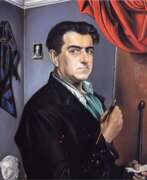


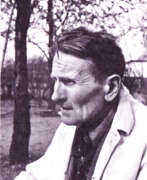

Heinrich Steinhagen, full name Heinrich August Friedrich Johannes Steinhagen, was a German painter, graphic artist and sculptor.
Heinrich began as a self-taught painter with paintings and miniatures in Impressionist and Expressionist styles. He also worked with elements of Cubism and Dadaism and eventually arrived at simplistic monumentality. Steinhagen was a co-founder of the Hamburg Secession and a member of the Hamburg Artists' Association. In 1937, Steinhagen, like many other artists, was persecuted during the Nazi campaign and spent several months in a concentration camp in 1944. This undermined his health and in 1948 he died of lung cancer.
Heinrich Steinhagen's creative legacy amounted to about a thousand works: oil paintings, pen and ink drawings, etchings, watercolors, woodcuts and sculptures in glazed clay, stone and wood.




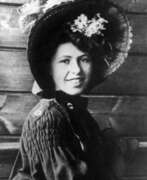


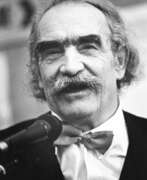

Jean Tinguely, a Swiss sculptor born in Fribourg, Switzerland, in 1925, carved a unique niche in art history with his kinetic sculptures, integrating movement and self-destruction into his works. Notably, his pieces extend the Dada tradition into the latter part of the 20th century, satirizing automation and the technological overproduction of material goods. Tinguely's innovative approach is exemplified in his Metamatic drawing machines, allowing viewers to create abstract images automatically, and his spectacular self-destroying sculpture "Homage to New York" at MoMA in 1960, showcasing his flair for blending performance and art.
His artistry evolved through collaboration with other artists, including his wife Niki de Saint Phalle, leading to vibrant, large-scale projects like the colorful "Stravinsky Fountain" near the Centre Pompidou in Paris. Tinguely's works, characterized by their use of scrap metal and mechanical parts, not only challenge the conventional boundaries of art but also engage with themes of destruction, renewal, and the intersection of art and life. His significant contributions to kinetic art and his involvement with the Nouveau Réalisme group highlight his pioneering role in post-war European art.
Tinguely's legacy is preserved in the Museum Tinguely in Basel, dedicated to his life and work, ensuring his innovative spirit continues to inspire. His works, such as "Méta-Harmonie" and the "Carnival Fountain" in Basel, remain influential, blending artistic exploration with mechanical invention.
For art collectors and experts, Tinguely's creations represent not only significant artistic achievements but also compelling investments, as his works continue to command high prices at auctions, reflecting their enduring appeal and historical importance.
To stay updated on sales and auction events featuring Jean Tinguely's art, sign up for updates. This subscription will ensure you're informed about new opportunities to explore and acquire pieces by this visionary artist, bringing the dynamic energy of kinetic art into your collection.
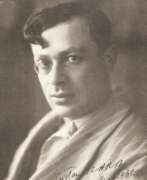

Tristan Tzara, originally named Sami (Samuel) Rosenstock, was a Romanian and French artist and writer best known as a founding figure of the Dada movement. Born in 1896 in Moinești, Romania, Tzara's influence extends across poetry, performance, and manifesto writing, marking him as a pivotal personality in 20th-century art and culture. His work challenged conventional norms and sought to disrupt the traditional boundaries of art, making him a central figure in the avant-garde community.
Dada, the movement with which Tzara is most closely associated, emerged as a reaction against the horrors of World War I, advocating for irrationality and anti-bourgeois protest. Tzara's contributions, including his manifestos, poetry, and performances, were instrumental in shaping Dada's legacy. His art and writings emphasized the importance of spontaneity and chaos, challenging the status quo and the very definition of art itself. Tzara's approach was not confined to a single medium; he explored poetry, playwriting, and critical theory, leaving a diverse and impactful body of work.
Though Tzara is not widely known for sculpture or painting in the traditional sense, his influence on these and other art forms is undeniable. His work and ideas laid the groundwork for later avant-garde movements, including Surrealism. While specific works of Tzara in museums or galleries were not detailed in the research, his legacy is preserved through the collections of major institutions worldwide, reflecting his enduring impact on the arts.
For collectors and experts in art and antiques, understanding Tzara's contributions provides insight into the radical shifts in culture and art in the early 20th century. His work remains a testament to the power of art to challenge, provoke, and transform. To stay informed about new product sales and auction events related to Tristan Tzara, sign up for our updates. This subscription ensures you're alerted to unique opportunities to engage with the history and legacy of a key figure in modern art.


Otto van Rees is an artist, Dutch citizen. He started his career in Paris, where he moved in October 1904. His first grand exhibition of 48 paintings was held in 1908 in Rotterdam at the Oldenzeel gallery. In 1912-1916 the art of Van Rees went through changes. His neo-impressionistic experiments to capture sunlight, depth and perspective in color were of the past. He was concentrating on volume and form. His work evolved from physic cubism to analytic cubism. Otto held the famous exposition of November 1915 at the gallery Tanner in Zürich. This exposition is now seen as the beginning of Dada in Zürich. Many public buildings in Holland: churches, railway station, courthouse, ministry, theatres were embellished by his mural paintings.
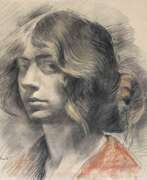

Adrienne (Adya) van Rees-Dutilh was a Dutch textile artist, painter and graphic artist. She was part of the Dada movement in Zurich and was one of the early signatories of the first Berlin Dada manifesto. In November 1915 she participated in a Dada group exhibition at the Galerie Tanner in Zurich. Adya exhibited her embroidery. Rees-Dutilh moved to Paris and became involved with the art group Cercle et Carré (Circle and Square). She spent the war years in Switzerland where she concentrated on embroidering historic and religious subjects.


Elsa Baroness von Freytag-Loringhoven was a German-born avant-garde visual artist and poet, who was active in Greenwich Village, New York, from 1913 to 1923, where her radical self-displays came to embody a living Dada. She was considered one of the most controversial and radical women artists of the era. Her provocative poetry was published posthumously in 2011 in Body Sweats: The Uncensored Writings of Elsa von Freytag-Loringhoven. The New York Times praised the book as one of the notable art books of 2011. Elsa worked on assemblage, sculptures and paintings, creating art out of the rubbish and refuse she collected from the streets. She was known to construct elaborate costumes from found objects, creating a "kind of living collage" that erased the boundaries between life and art.
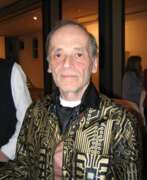

Petrus Wandrey (German: Petrus Wandrey, full name Ulrich Carl Peter Wandrey) is a German digital artist.
In his youth he was influenced by Surrealism, the Pop Art movement and Dadaism. But later Wandrey became so impressed by the culture of science, technology and digital images that he became one of the pioneers of the digitalization movement. In his work, Wandrey often uses digital combinations, pixel sequences and even computer trash.
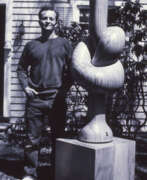

Horace Clifford (Cliff) Westermann was an American sculptor and printmaker. His sculptures frequently incorporated traditional carpentry and marquetry techniques. From the late 1950s until his death in 1981, Westermann worked with a number of materials and formal devices to address a range of personal, literary, artistic, and pop-cultural references. The artist's sculptural oeuvre is distinguished by its intricate craftsmanship, in which wood, metal, glass, and other materials are laboriously hand-tooled, and by its ability to convey an offbeat, often humorous, individualistic sensibility.
Westermann's sculptures reveal not only the influence of craft traditions, but also of varied art historical precedents. The artist's ability to convey subtle and uncanny effects through the presentation of seemingly simple objects has often led critics to compare his work to that of Surrealist-inspired artists such as Joseph Cornell. However, Westermann's work encompasses elements from a broad and diverse range of artistic practices, including Assemblage, Dada, and Folk Art. His sculptures, moreover, point to minimal and post-minimal art of the late 1960s and beyond, in terms of their rigorous craftsmanship, formal sophistication, unconventional use of materials, and sense of humor.