Ceramists Germany
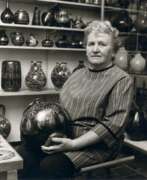

Elfriede Balzar-Kopp is a German ceramic artist.
She trained at the state ceramics engineering workshop in Höhr, worked in Karlsruhe at the State Maiolica Manufactory, and founded her own pottery workshop in Höhr in 1927.
Elfriede Balzar-Kopp initially focused on local Baroque vessels in her work and combined them with other styles. Her unique ceramic animal figurines, jugs, and genre scenes are sought after by collectors, and many of the objects she created adorn galleries around the world. Her son Heiner Balzar (born 1937) is one of the outstanding ceramic artists of the second half of the 20th century.




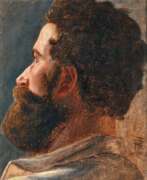

Hans Christiansen was a German painter, representative of classical modernism, decorator and illustrator.
Christiansen trained as a decorative painter in Flensburg and then at the School of Applied Arts in Munich, later studying at the Académie Julian in Paris. After a study trip to Italy in 1889, he moved to Hamburg, where he taught at the Technical University.
At the same time, Christiansen worked as a freelance decorative artist and was active in the Volkskunst-Verein, and was one of the founders and first residents of the Darmstadt artists' colony of the late 19th and early 20th century. Together with Josef Olbrich and Peter Behrens, he designed furniture, ceramics, tapestries, stained glass and graphic posters. He also designed his own house in the colony, which he called "Villa Rose," which was destroyed during World War II.
During this time, the versatile artist also wrote regularly for the magazine Jugend, creating many illustrations and covers. From 1911 he lectured at the Wiesbaden School of Arts and Crafts and was a member of the Wiesbaden Free Artists Association.
In 1933, Christiansen's work was banned by the Nazi Party of Germany because of his Jewish wife, and he was almost forgotten until his death in 1945.
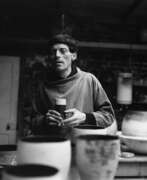

Hans Coper was an influential German-born British studio potter. His work is often coupled with that of Lucie Rie due to their close association, even though their best known work differs dramatically, with Rie's being less sculptural, while Coper's was much more abstract, but also always functional.
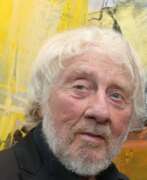

Dieter Crumbiegel is a German painter-painter and ceramist.
He studied ceramics at the Academy of Fine Arts in Kassel and opened his own studio in Fulda in 1964. Dieter Crumbiegel's paintings, on the other hand, convey messages that are only revealed to him while he is painting. These works have no titles; instead, they are assigned an ordinal number.
Since 1961, Crumbiegel's works have been widely exhibited both in Germany and abroad, in Australia, Ireland, Italy, Japan, Spain and Taiwan.
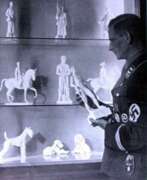

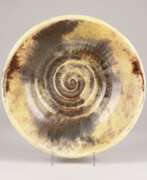

Otto D. Douglas-Hill or Otto Douglas Douglas-Hill is a German painter, sculptor, and ceramist.
He studied at the Academy of Fine Arts in Berlin, in 1926 he founded his own workshop Douglas-Hillsche, where he produced vases, garden ceramics and tableware. Douglas-Hillsche also taught at the United State Schools of Liberal and Applied Arts in Berlin. In the 1930s he won the favor of the Nazi elite and worked for them, so after World War II he had to flee to Chile, and then he moved to Spain, where he lived for the rest of his days. Douglas-Hill mainly created prefabricated vessels with glazes of his own design.
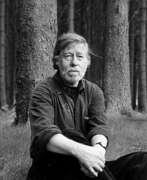

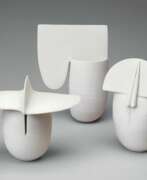

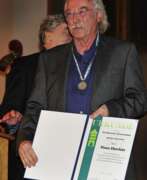

Klaus Eberlein was a German graphic artist, illustrator and ceramic sculptor. He initially completed training as a chromolithographer. From 1962 to 1968 he attended the Academy of Fine Arts in Munich, and from 1968 he was a master student of Hermann Kaspar, receiving a final diploma from the academy. Eberlein was a member of the Association for Original Etching, the Dachau Artists' Association and the Munich Artists' Association. In 2013 he was accepted into the South German literary association Münchner Turmschreiber.


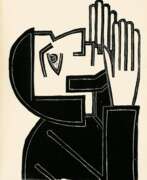

Werner Gothein was a German painter, sculptor, printmaker and ceramicist-designer.
Gothein studied art in Berlin and mastered the techniques of painting, sculpture and wood engraving. In the 1920s, he began designing ceramic objects for the Karlsruhe State Maiolica Manufactory and the Felten-Vordamm ceramic factories.
In 1937, as part of the Nazi "Degenerate Art" campaign, Gothein's graphics were withdrawn from German museums and collections, most of them later destroyed. After the end of World War II, the artist continued to create woodcuts.
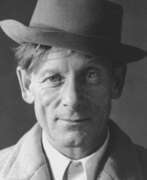

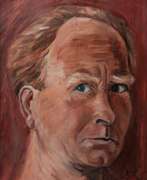

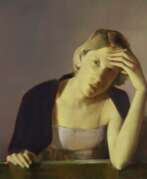

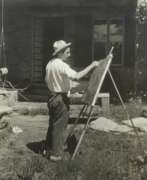

Manfred Henninger was a German painter, draughtsman, graphic artist, ceramist and university lecturer. As an artist, he belongs to the lost generation.
His works often revolve around the themes of the human figure and landscape and can be described as late impressionist.
Manfred Henninger was a member of the Deutscher Künstlerbund.
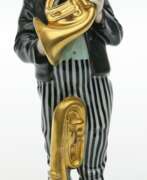

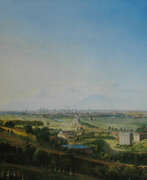

Johann Heinrich Hintze was a German painter of the mid-nineteenth century. He is known as a master of landscape and architectural painting and is considered one of the leading German architectural painters of his time.
Heinrich Hintze was commissioned by the Grand Duke of Mecklenburg-Schwerin in the early 1820s, then concentrated on architectural landscapes of Berlin and its environs. His artistic legacy includes landscapes and architectural views from Holstein, the Alps, Vienna, Prague and elsewhere. The master paid special attention to cityscapes, using both oil and watercolor.
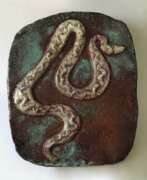

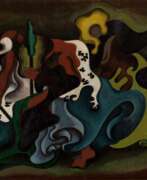


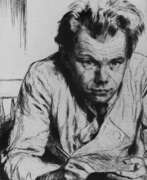

Hermann Kätelhön was a German artist of the first half of the twentieth century. He is known as a realist painter, graphic artist, woodcarver and ceramicist.
Kätelhön created works depicting the people and nature of middle Germany, including portraits of peasants and sketches of fieldwork scenes. His graphic series "Work" as well as his drawings on the theme "Mining Leaders" explore the labor of miners. The artist later turned to depicting nature, especially water, including springs, rivers, glaciers, and seas.
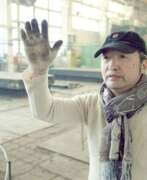

Matsumaro Khan (Russian: Мацумаро Хан), also known as Victor Khan (Виктор Хан), is a Russian sculptor and media artist of Korean descent. His artistic approach is eye-catching, especially when he works with fired and heat-treated materials, which gives his work an unpredictable visual effect. For Matsumaro, fire is not only a tool but also an ally in creating unique works of art.
Tireless in his creativity, Matsumaro experiments with and is inspired by unusual objects such as mugs and pots, creating masterpieces that seem to open the door to an alien world. His work is a perfect blend of tradition and modernity, which makes his art recognizable and in demand both in Russia and abroad.
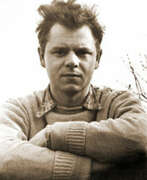


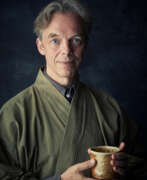

Jan Kollwitz is a German ceramic artist.
In his youth Kollwitz became interested in pottery, studying it with recognized masters Horst Kerstan and Yutaka Nakamura. In 1988, the Japanese kiln builder Tatsuo Watanabe built a traditional Japanese anagama kiln in his workshop in Sismar (Ostholstein). Since then Jan Kollwitz has been firing his ceramics here, the roots of which can be found deep in Zen Buddhism and the Japanese tea ceremony.
Since 1990, Jan Kollwitz's work has been shown in numerous exhibitions. The artist's work can be found in the Boston Museum of Fine Arts, the Museum of Asian Art in Berlin and other European museums and collections.
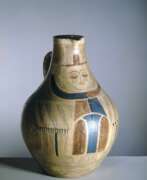

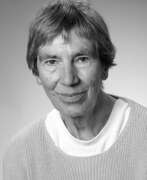

Beate Kuhn is a German ceramic sculptor.
She had an unprecedented influence on the development of German ceramics after the war, when in the mid-1960s she abandoned utilitarian ceramics in favor of free art.
After graduating from the Werkkunstschule in Wiesbaden, she founded her own workshop in Düdelsheim in 1957, developing a style that was already unmistakably her own. Here Beate Kuhn's sculptures were created from individual hand-carved and chiseled elements, which she assembled into a coherent whole. She transferred this stylistic principle of stringing geometric bodies to her designs of large-scale ceramic fountains. The artist's characteristic work can be found in every outstanding collection. The enormous number of prizes awarded to her underscores the recognition and appreciation she has enjoyed.


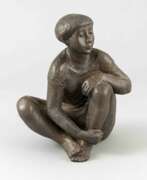

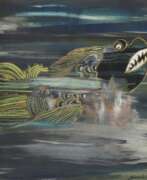

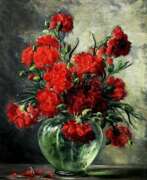

Clara Augusta Amalie Emma Lobedan is a German painter and ceramist.
She studied painting in Berlin and became known for her exquisite still life and ceramic works. Lobedan painted in oils, watercolors, and pastels, and regularly participated in various exhibitions around the world.
Lobedan also directed the Women's Painting School and the Studio for Artistic Domestic Ceramics in Berlin.
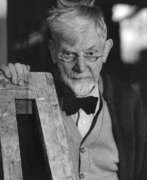

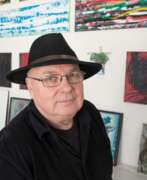

Dietrich Lusici, born Dietrich Schade, is a German painter, graphic and poster artist, sculptor and ceramicist.
He studied graphic design at the Technical School of Advertising and Design in Berlin, then studied at the Academy of Fine Arts in East Berlin. Lusici has created painted books and posters, does bas-reliefs and ceramics, and paints figurative paintings.


Hedwig Marquardt, full name Hedwig Frieda Käthe Marquardt, was a German expressionist painter and ceramicist.
She studied art at the Magdeburg Art School and then at the academy in Munich, and worked at the majolica manufactory in Karlsruhe, Kieler Kunst Keramik. At the beginning of her artistic career, Hedwig Marquardt preferred pure abstraction, but later achieved a fusion of abstraction and naturalism. Her work also combines cubist and futuristic, art deco and expressionist techniques.
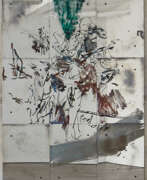


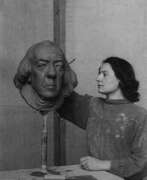


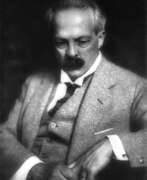

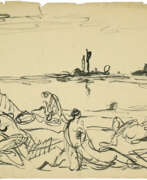

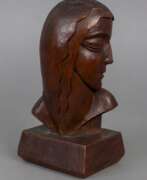

Karl Opfermann, a German sculptor and graphic artist born in 1891 in Rødding (now Denmark), carved a niche for himself in the realms of art and culture. His initial training as an ornament creator led him to the influential circles of Hamburg and Berlin, where he honed his artistic skills under the guidance of Heinz Wedding, Fritz Heit, and Richard Luksch. Opfermann's artistic journey was deeply intertwined with notable groups like the "Hamburgische Sezession" and the "Novembergruppe" in Berlin, where he played a pivotal role in shaping the local sculptural landscape from 1919 to 1933.
Tragically, Karl Opfermann's works became a target during the "Entartete Kunst" (Degenerate Art) action in 1937 by the Nazis, leading to their removal and destruction from German museums. A significant portion of his oeuvre was further lost in a bombing in 1943, which destroyed his studio in Hamburg. Despite these challenges, Opfermann's legacy persists, with efforts to reconstruct his life and works focusing on the years before 1943, the period before the destruction wrought by the Nazis and World War II.
Karl Opfermann's artistic expression was rooted in German Expressionism, a movement born out of resistance and reaction, emphasizing emotion and individual experience. His works, spanning various mediums including wood, stone, and ceramics, reflect a profound emotional depth and a unique exploration of human form and expression.
For collectors and experts in art and antiques, Karl Opfermann's work offers a compelling glimpse into the turbulent yet artistically rich period of early 20th-century Germany. His sculptures and graphic art, held in various collections throughout Germany, including Hamburg and Flensburg, stand as a testament to his enduring impact on German Expressionism.
To delve deeper into the world of Karl Opfermann and stay informed about new sales or auction events related to his work, consider signing up for updates. This subscription is an opportunity to explore and appreciate the profound legacy of this influential artist.
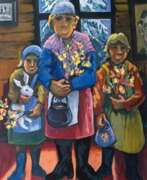


Eun Nim Ro is a South Korean artist who has worked in Germany.
She moved to Germany as a nurse in 1970, where she had the opportunity to exhibit her first works and receive art education. Eun Nim Ro developed an intuitive style of painting that combined Korean brush and ink drawings with the expressiveness of Western art. Naively drawn signs of fish, birds, trees and human figures became the artist's symbols. Eun Nim Ro's creative work is not limited to painting, she has also worked in other disciplines such as performance, calligraphy, painting, ceramics or installation. She has designed the windows of St. Johannes Church in Altona, among others, as well as light walls for government buildings in Seoul.
In 1990, Eun Nim Ro took up a professorship at the Hamburg University of Applied Sciences. In 1995, the artist became an honorary citizen of Seoul, and in 2015 she was also awarded the title of professor in Korea.


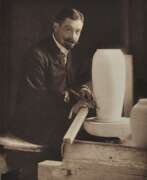

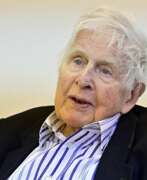


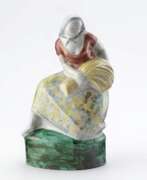

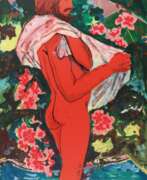


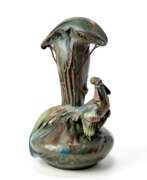

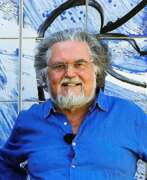

Stefan Szczesny is a German expressionist painter, draftsman and ceramic sculptor, co-founder of the Neue Wilde movement.
Szczesny's vivid paintings and figurative works are inspired by the spirit of the Caribbean and the colorful, sensual Mediterranean way of life. One of his famous works is Living Planet.
The talented and versatile artist has also worked on the entire island of Mainau: he has created numerous ceramics of various shapes and sizes, large glass steles and many other objects, including a bridge and a painted NT airship, turning the island into a real work of art.