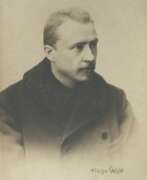
Composers Austria
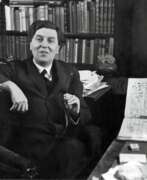

Alban Berg, full name Alban Maria Johannes Berg, was an Austrian composer, representative of expressionism in music, teacher and music critic.
A meeting with composer Arnold Schoenberg (1874-1951) in September 1904 played a decisive role in Berg's life. The latter saw talent in the young man and taught him free of charge for six years. In 1907 Berg performed his "Sonata for Piano" for the first time.
Alban Berg was very self-critical and worked on pieces for a long time. He composed orchestral music (including "Five Orchestral Songs," 1912), chamber music, songs, and two groundbreaking operas, "Wozzeck" (1925) and "Lulu" (1937). "Wozzeck," the most frequently performed theater work in the atonal idiom, is Berg's first attempt to address social issues within the framework of opera. However, its premiere turned into a scandal, with critics even calling the composer a musical fraud.
Only a few years after his death, Alban Berg was widely recognized as a composer of expression. He broke with tradition and mastered a radical technique, but at the same time he combined the old and the new and created, together with Schoenberg and Webern, the New Viennese School of the 20th century. Alban Berg was also an outstanding teacher of composition.
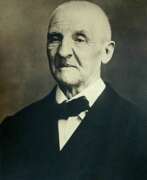

Anton Bruckner, full name Joseph Anton Bruckner, was an Austrian composer, organist and music educator.
Bruckner was born into a poor family, which prevented him from receiving an education suited to his musical talent. His father taught him to play the violin and organ, and he worked as a teacher and organist for many years. Already after the age of 30, he began composing organ and choral works, including the Solemn Mass (1854). In 1855 he became organist at Linz Cathedral and took a five-year course in harmony and counterpoint with the Viennese teacher Simon Sechter. A little later Bruckner studied orchestration with Otto Kitzler, who in 1863 introduced him to the music of Wagner - a powerful impetus for him to begin composing significant compositions.
After moving to Vienna in 1686, Bruckner taught at the Conservatory and the University of Vienna and composed at the same time. Over the next 28 years he wrote most of his famous works: symphonies Nos. 2-9, a string quintet and the Te Deum. But it was not until the premiere of his Seventh Symphony in Leipzig in 1884 that he received the recognition he deserved. Until his death, he continued to compose new works and rework his earlier works.
Anton Bruckner was an outstanding virtuoso organist and a superb teacher. His symphonies are often considered symbolic of the final phase of Austro-German Romanticism, and he also composed much sacred secular choral music and chamber works.
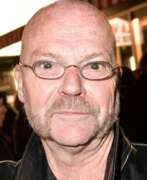

Wolfgang Flatz is a contemporary Austrian artist, stage designer, musician and composer. Currently lives and works in Munich, Germany.
After engaging with contemporary art movements such as Heppening and Viennese Actionism, Flatz creates works using a variety of media - painting, sculpture, performance, video, computer, film, photography, theatre, music, design and architecture. Subjects include voyeurism, the body, violence, aggression, pain, love, politics and audience interaction.
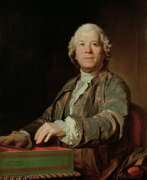

Christoph Willibald Gluck was a German classical composer and reformer of the opera genre.
Christoph showed a talent for music early on, playing violin and cello, leaving home and studying music with various teachers in Prague, Vienna and Milan. In 1741, Gluck had his first significant success with his first opera, Artasers, at the Milan theater. In 1745 Gluck, by then already well known as an opera composer, was invited to England, but in 1750 he settled in Vienna, where he lived for the rest of his life. While in Paris in 1773-79, he won the favor of Louis XVI's wife Marie Antoinette.
Christoph Gluck played a historic role in the formation of a new operatic style, becoming the main reformer in the transition from baroque to classical opera.
During his career, Christoph Gluck composed about 40 operas. Of these, his first "reformist" opera was Orpheus and Eurydice, staged in Vienna in 1762. Next were "Alceste" (1767), "Parida et Helena" (1770), "Iphigenia in Aulida" (1774), a French version of "Orpheus" (1774), and "Iphigenia in Tauris" (1779). He also wrote five ballets, of which Don Giovanni (1761) was one of the first successful action ballets.
Gluck spent the last eight years of his life in Vienna, continuing to work tirelessly. During these years he met several times with Wolfgang Mozart, who by then had already become a bright star.
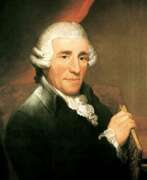

Franz Joseph Haydn was an Austrian composer of the classical school, who created the string quartet and symphony forms.
Haydn discovered unusual musical abilities very early, but the poverty of his family did not favor the development of his talents. He was a singer, interrupted earnings and engaged in musical self-education. Fate led young Haydn to Prince Pal Antal Esterhazy, whose wealthy and influential family of the Austrian Empire maintained his own orchestra. In 1766, Haydn became music director at the Esterhazy court and remained in that service for the rest of his life. In addition to his operas for the court, Haydn composed symphonies, string quartets and other chamber music. On one of his visits to Vienna, Haydn met Wolfgang Mozart, and their interactions brought many benefits to both great composers and musicians.
In the 1760s, Haydn's fame began to spread throughout Europe. In 1792, he met the young Ludwig van Beethoven and foreshadowed his greatest fame as a composer.
Haydn was an extremely prolific composer. He created 108 symphonies, many quartets, oratorios, sonatas, concertos, etc. As a true representative of the Enlightenment, Haydn was the most famous composer in Europe in the 18th century.
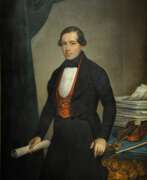

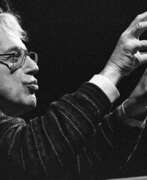

György Ligeti, full name György Sándor Ligeti, was a Hungarian and Austrian composer and musicologist.
Ligeti was born into a Jewish family, but his mother tongue was Hungarian and from an early age he was exposed to Romanian and Hungarian folk music. His first significant work was the Romanian Concerto, which he wrote in 1951. In 1956 Ligeti emigrated from Hungary to Austria, receiving Austrian citizenship in 1968.
In 1957 in Cologne, Ligeti met the experimental composers Karlheinz Stockhausen and Gottfried König and worked with them in the field of academic electronic music, but soon switched to instrumental music. He gained recognition from the Western avant-garde in 1961 with his work Visions and others, in which he used sonorics and the micropolyphony technique he had invented. In 1965 Ligeti completed one of his major works, Requiem.
During his life, Ligeti changed his compositional style and technique several times, ranging from electronic music and sonoricism (1950s and 1960s) to neoromanticism (1980s and 1990s). He has also written many theoretical articles on new currents in music.
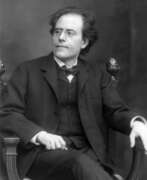

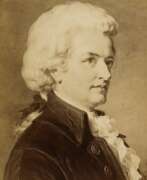

Wolfgang Amadeus Mozart, full name Johann Chrysostomus Wolfgang Amadeus Mozart, was an Austrian composer and virtuoso musician. Mozart is one of the greatest composers in music history on par with Beethoven and Haydn.
Wolfgang was born into the family of violinist and composer Leopold Mozart (1719-1787), at the age of five he had already begun composing and gave his first public performance. His older sister Maria Anna (1751-1829) was also a prodigy, and from 1763 Leopold and his children began traveling around Europe with performances.
Mozart had a phenomenal musical ear, memory and was a superb improviser. Unlike any other composer in music history, he was versatile and wrote in all musical genres of his time. During his short life, Mozart composed more than 800 works, many of which are recognized as the pinnacle of the symphonic, concert, chamber, opera and choral repertoire. The general public is familiar with the composer's three operas: The Marriage of Figaro, Don Giovanni and The Magic Flute.
Society did not immediately appreciate the scale of Mozart's genius. It was only many years later that the vivid image of a prodigy, a refined salon composer who could miraculously think through an entire work in his head, gave way to the image of a serious, meticulous and brilliant creator of music.
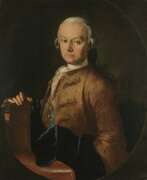

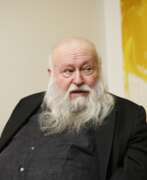

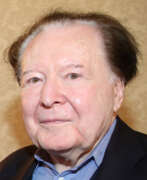

Gerhard Rühm is an Austrian author, composer and visual artist.
His artistic production is inspired by August Stramm, Kurt Schwitters, Gertrude Stein, Carl Einstein und Paul Scheerbart. Rühm's works are often located at the border between music, language, gestures and the visual. His audible works are outstanding examples of innovative radio plays and acoustic art. During a sojourn in Lebanon he became interested in eastern musical styles.
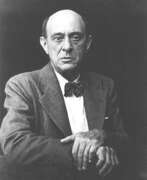

Arnold Schoenberg, real name Arnold Franz Walter Schönberg, was an Austrian and American composer, representative of musical expressionism, teacher, musicologist and conductor.
Schoenberg came from a Jewish family and began studying the violin at the age of eight and later the cello. While working as a bank clerk, he simultaneously studied composition with Alexander Zemlyansky (1871-1942) and soon wrote his first string quartet (1897) to acclaim. With the help of Richard Strauss, he obtained a teaching position in Berlin, and lived for a time in two cities. In 1904, Alban Berg and Anton Webern began studying with Schoenberg, and this largely determined their future artistic careers.
Around 1906, through much experimentation, Schoenberg came to the conclusion that tonality should be abandoned. He created new methods of music-making and composition involving atonality. In the subsequent period of "free atonality" from 1907 to 1916, he composed the monodrama "Reason", "Five Orchestral Pieces", "Pierrot Lunaire" and other works.
In 1933, due to the rise of National Socialism in Germany, Schoenberg was expelled from the country and emigrated to the USA, in 1941 he took American citizenship and taught at the University of California at Los Angeles until 1944. The works of this period demonstrate the composer's ever-increasing skill and freedom in the use of the 12-tone method.
Although Schoenberg was never accepted by the general public, he nevertheless had a significant influence on 20th century music, being the founder of the New Viennese School of Composition.
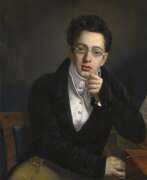

Franz Peter Schubert was an Austrian composer who combined classical and romantic music.
Franz was born into a musical family, where a quartet played at home and his father founded a music school. The future composer played the violin, piano and organ. At the age of 10, the young Schubert won a place in the Vienna Imperial Court Chapel Choir and quickly gained a reputation as an aspiring composer, writing several light string quartets. In 1814 Schubert began teaching, but at the same time he continuously composed a wide variety of works. These included 145 songs, the Second and Third Symphonies, two sonatas and a number of miniatures for solo piano, two masses and other short choral works, four stage works, a string quartet, and much more.
Soon the popularity of Schubert's dance music and songs grew so much that musical evenings known as "Schubertiades", where Schubert performed his own compositions while accompanying himself on the piano, became fashionable in Vienna. The talented composer effortlessly composed many masterpieces, including the song cycles Lonely Müllerin and Winterreise, as well as the Eighth ("Unfinished") and Ninth ("Great") Symphonies, the Octet for winds, three string quartets, two piano trios, the String Quintet, the Wanderer Fantasia and six sonatas for solo piano.
Despite his boundless talent, Franz Schubert was always insecure, indecisive and reserved, causing him to be tormented by lack of money throughout his life. The composer was able to buy his own piano almost at the end of his short life - with the royalties from his first and only public concert in March 1828. Eight months later, the brilliant musician died of illness at the age of 31.
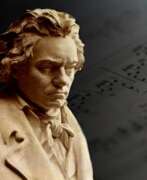

Ludwig van Beethoven was a German composer, pianist, and conductor, one of the most famous and celebrated composers in world history.
Beethoven showed an aptitude for music at a very early age; from the age of four his father began to teach him. Beethoven's early works - piano sonatas and symphonies - were composed under the strong influence of the music of the great classical composers Joseph Haydn and Wolfgang Amadeus Mozart. As Beethoven matured, however, he began to experiment with new forms and harmonic sequences, and his music became more complex and emotionally charged.
Unfortunately, at the height of his talent, Beethoven began to gradually lose his hearing, to the point of complete deafness by the end of his life. Despite this, he continued to compose and conduct, using special devices to feel the vibrations of the music.
Beethoven's work is considered pivotal in classical music and is a bridge between the classical and Romantic eras. His works vividly express a wide range of emotions, from triumph and joy to sadness and despair. Beethoven was also one of the first composers to include soloists and chorus in his symphonies. Beethoven's best-known works include nine symphonies, 32 piano sonatas, 16 string quartets and the heroic opera Fidelio. These and many other works have cemented Beethoven's place in music history as one of the greatest composers of all time. His music continues to be played and studied by musicians and music lovers around the world.