Designers Germany

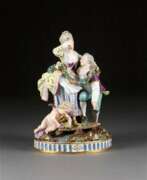

Michel Victor Acier was a French porcelain sculptor and model-maker who worked at the famous Saxon porcelain manufactory in Meissen from 1765 to 1779. With his work in the activities of the manufactory is associated with the period of neoclassicism. Michel-Victor was the maternal great-grandfather of the composer Pyotr Ilyich Tchaikovsky.
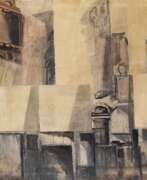

Peter Ackermann was a German painter and graphic artist. He became known for his alienation of architectural subjects. Ackermann was a representative of fantastic realism. The preferred subject of his work was classical Italian architecture, which he drew on site. He put together columns, portals and walls with machine parts, ruins and desolate parts of the city, which were piled up threateningly and thus alienated. In his etchings he showed references to the techniques of the old masters, his pictorial conception is compared with that of Giovanni Battista Piranesi and Canaletto.
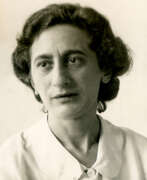

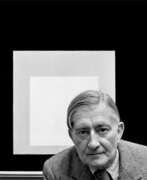

Josef Albers was a German-born artist and educator. The first living artist to be given a solo shows at MoMA and at the Metropolitan Museum of Art in New York, he taught at the Bauhaus and Black Mountain College, headed Yale University's department of design, and is considered one of the most influential teachers of the visual arts in the twentieth century.
As an artist, Albers worked in several disciplines, including photography, typography, murals and printmaking. He is best known for his work as an abstract painter and a theorist. His book Interaction of Color was published in 1963.
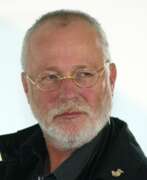

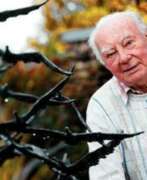




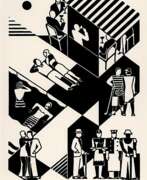

Gerd Arntz was a 20th-century German artist known for his skillful woodcut prints. A member of the Cologne Progressives—a group concerned not just with social and political issues, but also with the public’s ability to understand these concepts—Arntz sought to use his art as a method of delivering crucial information to the masses. Over the course of his life, he designed approximately 4,000 pictograms known as ISOTYPEs, or International System of Typographic Picture Education, a unique form of symbolized data from industries, politics, and economic phenomena intended for use by those who could not read.
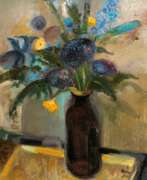


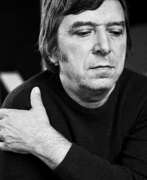

Hermann Bachmann is a German artist, graphic designer and teacher.
Hermann studied at the School of Applied Arts Offenbach am Main and served in the army during World War II. In 1945, Bachmann returned to his hometown and joined the artists of the Halle School. And in 1953 he fled to West Berlin, whose creative atmosphere was closer to him.
In 1957 Hermann Bachmann became a teacher and later a professor at the University of Fine Arts in Berlin, among his students many famous artists. He was a member of the Association of German Artists.
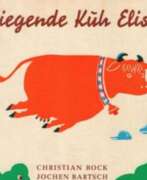

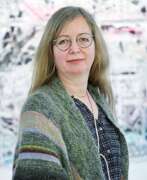

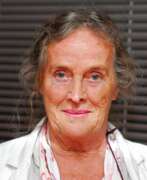

Mary Hildegard Ruth Bauermeister was a German artist who worked in sculpture, drawing, installation, performance, and music. Influenced by Fluxus artists and Nouveau Réalisme, her work addresses esoteric issues of how information is transferable through society. Beginning in the 1970s, her work concentrated on the themes surrounding New Age spirituality, specifically geomancy, the divine interpretation of lines on the ground.
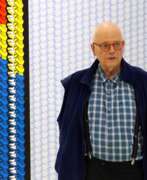

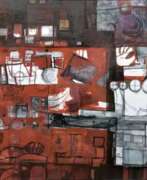

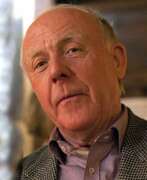



Marcus Behmer, full name Marcus Michael Douglas Behmer, known by the pseudonyms Marcotino und Maurice Besnaux, is a German artist, graphic designer and illustrator.
Marcus was the son of the painter Hermann Behmer, participated in World War I and painted miniature portraits of fellow soldiers. From 1900 he began to collaborate with Munich periodicals and book publishers. Bemer drew hundreds of drawings and illustrations and published a series of engravings that were recognized and successful. He also designed typefaces.
In 1936, Behmer was convicted of homosexuality and spent a year and a half in prison, where the artist also found the strength to draw. During World War II, almost all of Bemer's creations were lost or destroyed.
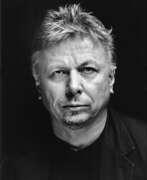

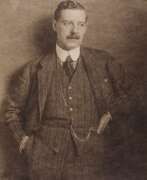

Peter Behrens was a seminal figure in modern design and architecture, heralded as the first industrial designer and a pioneer in modernist architecture. Born in Hamburg, Germany, Behrens's influence spanned across various domains, including architecture, industrial design, and graphic design. His holistic design approach was revolutionary, encompassing everything from architectural projects to corporate identities.
Behrens's association with AEG (Allgemeine Elektrizitäts-Gesellschaft) marked a significant chapter in his career. Hired as an artistic consultant in 1907, he crafted a comprehensive corporate identity for AEG, including the iconic AEG Turbine Factory (1909), a hallmark of industrial classicism and modernism. This work is celebrated for its pioneering approach to industrial architecture and design, integrating form and function with unprecedented clarity and coherence.
His architectural ventures displayed a versatility and an evolution of style, from the monumental, stripped classical form seen in the German Embassy in St Petersburg (1912) and the Administration Building for Continental AG in Hannover (1912-1914), to the expressive Brick Expressionism of the Technical Administration Building of Hoechst AG in Frankfurt (1920-1924). Behrens's work in the 1920s, including the design for the 'New Ways' house in Northampton, UK, and contributions to the Weissenhof Estate in Stuttgart, underscored his shift towards New Objectivity and modernist principles.
Moreover, Behrens's educational contributions were profound, with his teaching stints at the Academy of Fine Arts Vienna influencing a new generation of architects, including luminaries such as Ludwig Mies van der Rohe, Le Corbusier, and Walter Gropius, who would themselves go on to define the course of 20th-century architecture.
Behrens's legacy is a testament to the transformative power of design, illustrating how integrated and forward-thinking approaches can redefine our built environment and the objects we use daily. His work remains an essential study for collectors, experts in art and antiques, and anyone interested in the evolution of modern design and architecture.
For updates on exhibitions and auctions featuring Peter Behrens's work, sign up for our newsletter. Stay informed about new discoveries, sales, and events related to this pivotal figure in modern architecture and design.


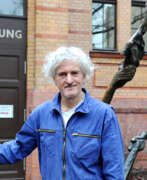

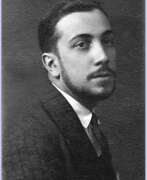

Boris Konstantinovich Bilinsky (Russian: Борис Константинович Билинский) was a Russian-born artist and designer, renowned for his significant contributions to set and costume design in theater, cinema, and ballet, as well as his accomplishments as a graphic artist. Bilinsky's career took him across Europe, from Russia to Germany, France, and eventually Italy, reflecting a life influenced by political and social upheavals of the early 20th century. His departure from Russia in 1920 marked the beginning of a prolific period in Berlin where he collaborated with prominent Russian emigre movie directors and theater companies. By 1923, Bilinsky had moved to Paris, becoming an integral part of the French cinema scene, notably designing posters and publicity material for the French release of Fritz Lang’s "Metropolis" in 1927, a commission that solidified his reputation as a leading cinema poster artist.
Bilinsky's creative vision extended beyond the cinema to the world of ballet and opera, where he made significant contributions, including designing for the Teatro alla Scala in Milan. His work for the "Follie viennesi" ballet in 1947, with music by Johann Strauss, showcased his ability to blend artistic freedom with the thematic requirements of the productions, employing vibrant colors and shapes that echoed the circular motion of a waltz.
Throughout his career, Bilinsky's versatility and talent were evident in the range of his work, from cinema posters to set and costume designs for prestigious theater productions. His legacy is preserved through collections and exhibitions, ensuring his artistic contributions continue to inspire and influence.
For collectors and experts in art and antiques, Boris Konstantinovich Bilinsky remains a figure of great interest due to the breadth of his work and the artistic prowess he displayed across various mediums. His contributions to the visual arts, particularly in the realm of set and costume design, cement his place in history as a versatile and innovative artist whose work transcends time and geographic boundaries.
Sign up for updates on Boris Konstantinovich Bilinsky to stay informed about new product sales, auctions, and exhibitions related to this remarkable artist. Your subscription will ensure you are the first to know about these exclusive events and opportunities.
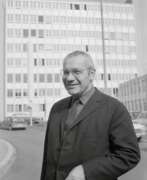

Max Bill, a Swiss artist, architect, painter, typeface designer, industrial designer, and graphic designer, emerged as a key figure in 20th-century art and design. Born in Winterthur, Switzerland, in 1908, Bill's education at the Bauhaus under luminaries like Wassily Kandinsky, Paul Klee, and Oskar Schlemmer profoundly influenced his multidisciplinary approach. His work spans from graphic design, where he was instrumental in shaping Swiss design from the 1950s, to product design with iconic creations like the Ulmer Hocker, a versatile stool designed in 1954.
Bill's contributions to concrete art and his role in founding the Ulm School of Design alongside Inge Aicher-Scholl and Otl Aicher in 1953, mark him as a pioneer who blurred the lines between art, design, and architecture. His theoretical writings and teaching at the Ulm School further underscored his commitment to integrating art with science, shaping a generation of designers and artists.
Noteworthy among his architectural works are his own house and studio built in Zurich-Höngg in the early 1930s and a series of public sculptures that challenge perceptions and engage public spaces in innovative ways. His legacy also includes influential roles in politics, contributions to the field of education, and the establishment of foundations to preserve his work and ideals.
Bill's extensive oeuvre, which also includes timepieces designed for Junghans and a multitude of sculptures, demonstrates his belief in the unity of form and function and the possibility of art to embody the principles of the new physics of the 20th century. His works are not only held in high regard for their aesthetic and functional qualities but also for their ability to convey complex theoretical ideas in tangible forms.
For collectors and experts in art and antiques, Max Bill remains a figure of immense importance, whose works continue to inspire and influence contemporary design and art practices. Sign up for updates related to Max Bill to stay informed about new product sales and auction events showcasing his remarkable contributions to modern art and design.
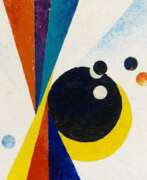

Joseph Binder, full name Joseph Friedrich Gustav Binder, was a German avant-garde painter, designer and graphic artist.
In the early 1930s, Joseph Binder worked on major brand commissions for Knorr, Reemtsma, Tekrum, Elida, Minera, Dujardin, Stella and Mercedes-Benz and earned fame as a style-defining industrial designer. In all, by the early 1960s, Binder had created more than 2,000 stamps and posters.
In painting, Binder favored cubism: geometrically stylized form is of great importance to the painter. He was also influenced by the Bauhaus school of art and the Blue Rider group.
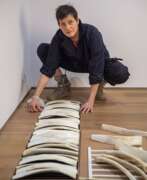

Alexandra Bircken is a German artist, designer and installer who graduated from the Central Saint Martin's College of Art and Design.
The main theme in Alexandra Birkcen's work is the shell. She explores and combines a variety of materials - wool, concrete, wood, bone, everyday objects and clothing, and creates sculptural objects from them. The artist also uses objects that she encounters in everyday life: cars, motorcycles, surgical shirts, rocking horses, skis. However, she strips them of their familiar contexts and surprises us with unusual combinations.

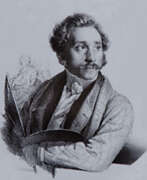

Gottlieb Bodmer was a German painter of the first half of the nineteenth century. He is known as a portrait painter, designer and lithographer.
Bodmer practiced portrait painting for several years, then took up lithography. His most important work of the time was a lithograph of the Sistine Madonna. For some time the artist stayed in Paris, where he improved his technique. He copied engravings, and was especially fond of reproducing paintings by artists of the Munich art school. Bodmer's achievements in lithography laid the foundation for the Bavarian lithographic school, which made Munich famous as the "lithographic capital of Germany".
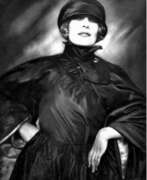

Kseniya Leonidovna Boguslavskaya (Russian: Ксения Леонидовна Богуславская) was a twentieth-century Russian artist who lived and worked in Germany and France for most of her career. She is known as a painter, graphic artist, theatrical artist and designer, and poetess.
Kseniya Boguslavskaya was a representative of the avant-garde school. She created semi-abstract cubo-futuristic compositions, including landscapes, still lifes, genre scenes, and images of interiors. In the same style, the artist drew sketches for articles of applied art. She also illustrated covers of publications and worked as a scenographer.


Andreas Böhm is a German painter, graphic artist and art teacher at Brunsbüttel Upper Secondary School from 1980. He lives and works in Dingen, Schleswig-Holstein.
For a long time Andreas Bem was known for his stencil drawings, which are like silhouettes with just two or three thick layers of paint. As an artist, he continued to play with shapes, but now adapted the free lines of wildlife.
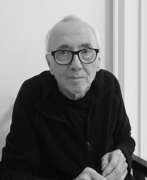


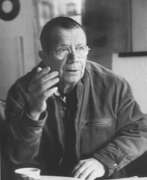


Christian Brandl is a German artist who lives and works in Leipzig.
He studied painting at the Leipzig Academy of Fine Arts.
Brandl's static paintings are reminiscent of 1950s psychological thrillers or even cartoons. They depict people without emotion, often in situations that are difficult to explain, the events on the canvases and the subjects are difficult to recognize.
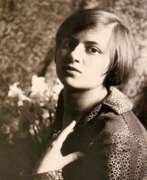

Marianne Brandt was a German painter, sculptor, photographer, metalsmith, and designer who studied at the Bauhaus art school in Weimar and later became head of the Bauhaus Metall-Werkstatt (Metal Workshop) in Dessau in 1928. Today, Brandt's designs for household objects such as lamps and ashtrays are considered timeless examples of modern industrial design. She also created photomontages.


Benjamin Bronni is a German artist, sculptor, and architect.
He studied at the Stuttgart State Academy of Art and Design and works on a symbiosis of painting, sculpture and installations. Bronny has a strong interest in architecture, so he often develops site-specific works. In paper works, paintings and plastic wall objects, Benjamin Bronni explores the rhythmic fusion of form and space. The artist performs his work by hand, but also uses digital processes such as 3D rendering.


Max Burchartz, full name Max Hubert Innozenz Maria Burchartz, was a German advertising photographer, designer and avant-garde artist.
Burchartz studied at the Art Academy in Düsseldorf and the Academy of Fine Arts in Munich, experimenting with Impressionism. After World War I, he resumed painting and his pictures reflected the quiet rural life of Germany but retained abstract influences.
In 1924 Burchartz devoted himself fully to the new design in typography and advertising, mixing typography, photography and photo collages. Together with Johannes Canis he founded the advertising agency werbe-bau in Bochum, and from 1926 to 1933 he taught commercial art and photography at the Volkwangschule in Essen.
Max Burchartz had a significant influence on the development of typography and advertising design in Germany. In 1928 he became a member of the board of the Society of New Advertising Designers (Ring neuer werbegestalter) and participated in the International Press Exhibition in Cologne. Burchartz also designed furniture and fittings. He is now considered a pioneer of modern design.
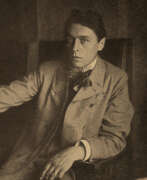




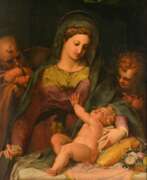

Peter Candid was a Flemish painter, tapestry designer, draughtsman and sculptor.
Pieter Candide worked mainly in Italy and Germany. He was an artist at the court of the Medici in Florence and at the Bavarian court of Duke Wilhelm V and his successor Maximilian I in Munich.
His paintings range from historical paintings, portraits, mythological scenes and allegories. He created large altarpiece images as well as complex decorative designs.
Candide's style was characterised by a combination of Italian and Flemish influences, with a particular emphasis on detailed, realistic depictions of the human form.


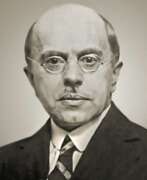

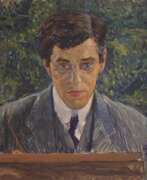

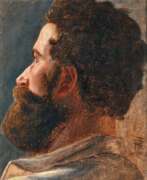

Hans Christiansen was a German painter, representative of classical modernism, decorator and illustrator.
Christiansen trained as a decorative painter in Flensburg and then at the School of Applied Arts in Munich, later studying at the Académie Julian in Paris. After a study trip to Italy in 1889, he moved to Hamburg, where he taught at the Technical University.
At the same time, Christiansen worked as a freelance decorative artist and was active in the Volkskunst-Verein, and was one of the founders and first residents of the Darmstadt artists' colony of the late 19th and early 20th century. Together with Josef Olbrich and Peter Behrens, he designed furniture, ceramics, tapestries, stained glass and graphic posters. He also designed his own house in the colony, which he called "Villa Rose," which was destroyed during World War II.
During this time, the versatile artist also wrote regularly for the magazine Jugend, creating many illustrations and covers. From 1911 he lectured at the Wiesbaden School of Arts and Crafts and was a member of the Wiesbaden Free Artists Association.
In 1933, Christiansen's work was banned by the Nazi Party of Germany because of his Jewish wife, and he was almost forgotten until his death in 1945.




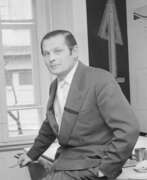

Roman Clemens is a German production designer, designer and scenographer.
Roman Clemens was a student of the Bauhaus, then worked as a scenographer in Dessau and at the Zurich Opera House. Since 1945 he has been involved in various spatial theater projects, worked as a designer for the famous Studio 4 cinema in Zurich, and has done numerous scenic works for the Zurich Opera House.
In the 1970s and 1980s Clemens created paintings in the style of constructivism and abstraction.
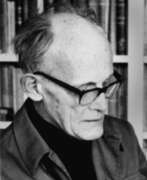

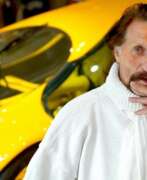

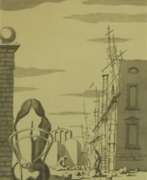

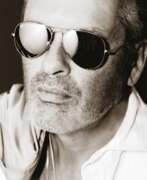

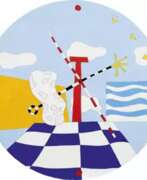

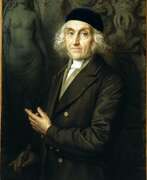



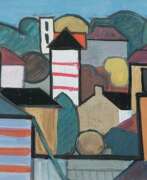

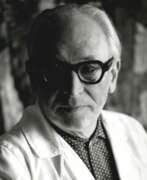

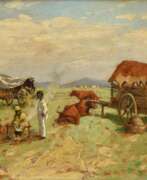


Luitpold Domberger was a graphic designer and pioneer of artistic screen printing in Germany. In 1949, he founded his first print shop in Stuttgart. Domberger's skill as a stencil artist gained international renown and paved the way for many collaborations with international artists. Domberger also promoted the professionalisation of screen printing and assisted many young artists in their careers in his studio. Domberger specialised in the intricate hand-cutting of stencils and made extensive use of fluorescent inks and other new materials in his collaborations. In addition to creating works from sketches by other artists, Domberger made a number of his own stencils in a rigid style reminiscent of works associated with the minimalist and op-art movements.
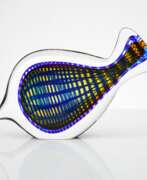

Hanne Dreutler is a German glass artist and designer based in Sweden.
Hanne Dreutler studied at the Graduate School of Art in Basel, Switzerland, after which she moved to Stockholm and studied at the College of Art. From 1966 to 1977, she worked as an independent silversmith in Stockholm and at the glassworks of Moleros and Flugsfors.
In the early 1970s Hanne Dreutler met Arthur Zirnsack (1944) in Kosta Boda, where they worked under the supervision of Vike Lindstrand. Dreutler and Zirnsack married, and in 1977 the couple opened their own glassworks, Studio Ahus, in Ahus in southeastern Sweden, continuing the renowned tradition of Scandinavian glassmaking. After Hanne Dreutler's death, Studio Ahus continues to operate under the management of their son Martin Cirnzak and Lennart Nissmark.
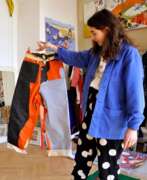

Johanna Dumet is a French and German artist and designer living and working in Berlin.
She graduated in fashion design from La Calade, Marseille, France. Dumet uses a variety of techniques, such as gouache-dyed paper glued to canvas, and creates paper sculptures as well. She is known for painting impulsively, with a strong sense of flow and without limitations.


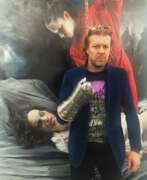

Martin Eder is a German artist.
From 1986 until 1992, he studied at the Augsburg University of Applied Sciences, and from 1993 until 1995 continued his studies at the Academy of Fine Arts Nuremberg, attending the University of Kassel in 1995 and 1996. From 1996 until 1999 he studied under Eberhard Bosslet at the Dresden Academy of Fine Arts and was a master student under Professor Bosslet from 1991 until 2001. Eder lives and works in Berlin. He plays in his own experimental rock band under the name Richard Ruin et Les Demoniaques.
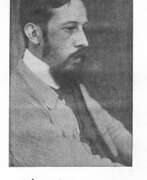

Fritz Helmuth Ehmcke was a German graphical designer, typographer and illustrator. Ehmcke was educated as a lithographer in Berlin during 1893–1897. In 1900, he was a co-founder of Steglitzer Werkstatt. From 1903, he taught at the Kunstgewerbeschule in Düsseldorf, from 1913 to 1938 in Munich, during 1920-1921 also in Zürich. During 1946 to 1948, he was professor at the Academy of Fine Arts, Munich. He designed a number of typesets, notably Ehmcke-Antiqua and Ehmcke-Kursiv in 1909/10 (adopted for English-language typesetting by Stephenson Blake under the name Carlton).


Barbara Ehrmann is a German artist, designer and sculptor living and working in Ravensburg.
She studied sculpture at the Stuttgart State Academy of Fine Arts, then trained in design and graphics. Barbara Ehrmann finds inspiration in prehistoric art, Stone Age cave paintings and ancient mythology. Her passion is expressed in drawing, printmaking, painting, and the artist makes wax collages, spatial installations, and videos.
Since 2013 Barbara Ehrmann has been making experimental short films underwater in Lake Constance, the Mediterranean and the Red Sea. In her pictorial work she conveys the aesthetics of the underwater world as well as mental and physical moods.

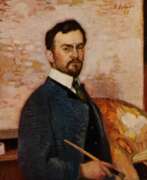

Fritz Erler was a German painter, graphic designer and scenic designer. Although most talented as an interior designer, he is perhaps best remembered for several propaganda posters he produced during World War I.
During the National Socialist period Erler's portraits of Adolf Hitler, Franz von Epp, and Wilhelm Frick were very remunerative.
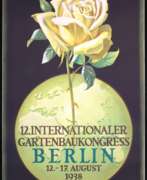

Max Eschle was a German commercial artist. He was a member of the second group of The Six, one of the first artists' groups to market advertising commissions, specifically posters. In 1935 the Deutsche Reichspost issued three stamps designed by Eschle for the Winter Olympics in Garmisch-Partenkirchen and in 1936 another eight stamps for the Summer Olympics in Berlin. In addition to numerous posters for events, there are well-known works by the Sonthofen mountain troops. He also made a number of advertising stamps, which were common and common before the First World War, as well as various oil paintings of mostly Bavarian or Austrian landscapes, some of which were printed as postcards. Eschle was represented in 1943 with the oil painting Peasant Woman at War at the Great German Art Exhibition in Munich. In 1936 he designed the poster for the National Socialist inflammatory propaganda exhibition "Bolshevism", which took place in the Deutsches Museum.
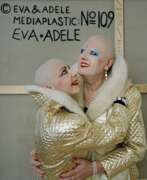

Eva & Adele are an artistic couple who claim to have "landed their time machines" in Berlin after the Wall fell in 1989, claiming to be "hermaphrodite twins from the future". Both refuse to tell their real name or age. They are famous mainly for sharing an invented gender, which is neither male nor female.
They are also known for their performance art, they have been represented by an art gallery since 1997, as they make paintings, video art, photography and costume design. They also have their own perfume line and a watch with Swatch.
They have been recognized as the world's longest running performance art duo and are often photographed as fashion icons at art events, like Art Basel Miami Beach and the Venice Biennale.
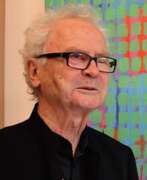


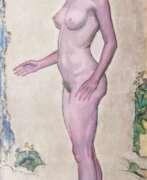

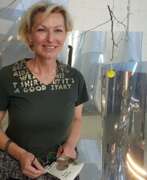

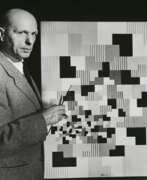

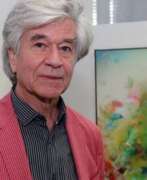




Ellen Fuhr is a German artist and graphic designer.
Ellen studied painting and graphics at the Dresden University of Fine Arts and the Academy of Fine Arts of the GDR, and was a member of Pankow's group of artists. The main theme of the artist's work was the big city with its chaos, disturbing dynamics, and pulsating nervousness.
Ellen Fuhr is one of the outstanding artists of East Berlin, she was a participant of numerous solo and group exhibitions in Germany and Europe.
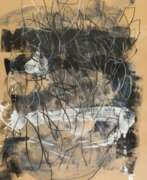

Christoph M. Gais is a German abstractionist painter and designer. He studied painting at the Academy of Fine Arts in Stuttgart and at the Hochschule für Kunst in Berlin, where he received his master's degree. Christoph M. Geiss's paintings are based on the tradition of gestural abstract painting. His work also includes several art projects in architecture, such as the design of the Louise Schroeder Hall at the Red City Hall in Berlin.
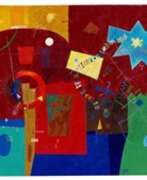

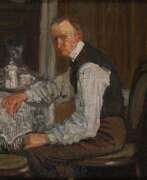

Alexander Gerbig was a German expressionist painter, graphic artist and decorative artist.
Gerbig worked successfully as a decorative painter, studied at the Royal School of Arts and Crafts in Dresden and later at the Royal Academy of Arts in Dresden, traveled Europe on study tours, and won various awards for his paintings.
He served as a soldier during World War I and made numerous sketches of the events he witnessed. In the 1920s Gerbig held several successful exhibitions and actively socialized with almost all art associations of the time. During the years of National Socialist rule in Germany, Gerbig's work was declared degenerate, his paintings were withdrawn from museums and he was forbidden to paint. In 1945, however, he became honorary chairman of the visual arts section of the Zuhl Cultural Association.
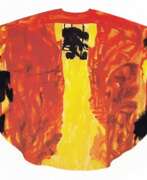

W. Gies, born Maria Wilhelm Friedrich Gies, was a German painter, sculptor, and designer.
He studied free and mural painting at the Cologne Academy (Kölner Werkschulen). His works include paintings, sculptures and drawings. Gies worked on the artistic design of churches in Hamburg and Frankfurt, Belgium, for which he received several awards.
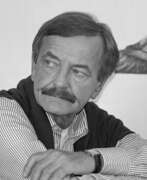

Rolf Gith is a German painter, draughtsman and designer. He studied painting at the University of Fine Arts in Hamburg. He was involved in teaching at various institutions of higher education. Git is a member of the Association of German Artists.
Rolf Git worked in different genres: he was fond of nudes, painted portraits of the people around him as well as numerous self-portraits. Since 1996 colour and light have been central themes in his work.
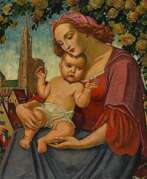

Franz Paul Glass is a German commercial artist, illustrator and type designer. From 1909 to 1910 he lived in Italy. Then he settled in Munich as a freelance artist, graphic artist, advertising designer and interior designer. In 1914, Glass, together with Valentin Zietara, Friedrich Heubner, Karl Moos, Emil Praetorius and Max Schwarzer, founded the group of artists "Six", and was also a member of the second formation of this group, founded in 1924. He was a member of the German Society for Christian Art, the Munich Association of Artists Der Bund, the Munich Cooperative Society of Artists, the Munich Art Association, the Association of German Imperial Artists and the Conference of Christian Art in Munich. In 1922 he was a member of the artists' committee of the German Trade Exhibition in Munich. Glass designed exhibition and advertising posters, including for the association of Munich poster artists "Six", the luxury car company "Dion Monopoly", the German exhibition of the brewery in Munich, etc.
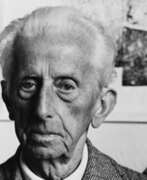

Hermann Glöckner, German artist, sculptor, and designer, is considered one of the most prominent artists among the avant-garde German Classic Modernists. Glöckner initially created his works from objects that he had at hand: scraps of wood, twine, cardboard, matchboxes... He combined these things in a unique way to create something completely new. Despite the unfavorable political circumstances under the National Socialist dictatorship and its successor GDR regime in East Germany, he worked continuously in isolation in Dresden for decades as a "noncomformist.
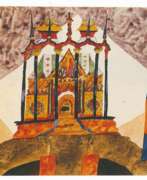

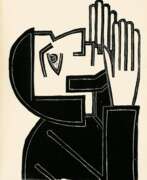

Werner Gothein was a German painter, sculptor, printmaker and ceramicist-designer.
Gothein studied art in Berlin and mastered the techniques of painting, sculpture and wood engraving. In the 1920s, he began designing ceramic objects for the Karlsruhe State Maiolica Manufactory and the Felten-Vordamm ceramic factories.
In 1937, as part of the Nazi "Degenerate Art" campaign, Gothein's graphics were withdrawn from German museums and collections, most of them later destroyed. After the end of World War II, the artist continued to create woodcuts.
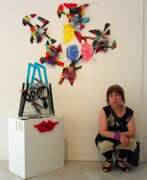

Elena Graure-Manta is a Romanian glass and porcelain artist based in Germany.
Elena studied under the glass and porcelain artist Clausenburg (Romania), at the Romanian Academy of Fine Arts, and worked as a designer for the Avrig glass manufactory. In her work, she takes objects from everyday life as a basis and, endowing them with her imagination, creates glass works of art from them. In this way Elena Graure-Manta created a series of glass shoes and handbags, and later glass "luxury cars". Graure-Manta's glass objects are very colorful and contain many details, making each piece unique and interesting.
From 1995-2005, the artist owned the Vitrumex glass manufactory in Romania and works in her own studio in Erftstadt, Germany, near Cologne.


Kostantin Grčić is a German industrial designer known for creating mass-manufactured items, such as furniture and household products. He has participated in leading design shows and his work can be seen in major museums. Described as having a pared down aesthetic, his functional designs are characterized by geometric shapes and unexpected angles.
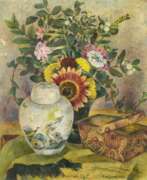

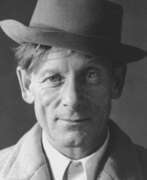

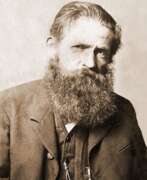

Johann Georg Grimm was a German painter of the mid-nineteenth century. He is known as a landscape painter and designer, most famous for his works created during his stay in the Brazilian Empire.
Georg Grimm is recognized as the preeminent master of Brazilian art and is considered a leader of modernism in that country. He had a significant influence on the development of modern painting in Brazil, founding a plein air school and becoming a teacher. His naturalistic landscapes are recognized as a valuable legacy and many are in private collections. In Germany he remained little known.
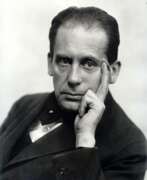

Walter Adolph Georg Gropius was a German-American architect, recognized as one of the founding masters of modern architecture and the pioneer behind the Bauhaus School. Born in Berlin, Gropius was immersed in an environment that nurtured his architectural interests from an early age, thanks to his well-connected family and architect great-uncle, Martin Gropius. His education took him from Munich to Berlin, where he honed his architectural vision, eventually joining the office of Peter Behrens, where he worked alongside future luminaries such as Ludwig Mies van der Rohe and Le Corbusier.
Gropius's early career saw him co-found an architectural practice with Adolf Meyer, with whom he created the Fagus Factory, a landmark in modern industrial architecture that emphasized the form follows function principle and showcased modernist design through its glass curtain walls. This period was marked by his contributions to the Deutscher Werkbund, advocating for the fusion of art with industrial design, and his leadership at the Bauhaus School, where he fostered an interdisciplinary approach to art and design education.
His relocation to the United States led to significant projects, such as the Harvard Graduate Center and the Josephine M. Hagerty House, marking his influence on American architecture and the broader acceptance of International Modernism. Gropius's legacy is not only in his buildings but also in his philosophy of integrating art, design, and architecture, a vision that continues to inspire architects worldwide.
For those interested in exploring the works and impact of Walter Gropius further, visiting exhibitions at museums or galleries that feature his work and the Bauhaus movement can offer deeper insights. Collectors and experts in art and antiques might find his approach to design and architecture particularly enlightening, given its enduring influence on modern and contemporary art.
If you're captivated by the innovation and ideas of Walter Gropius and wish to stay informed about sales, auctions, or exhibitions related to his work, consider signing up for updates. This subscription will ensure you're always in the know about events and opportunities related to this pioneering figure in modern architecture.
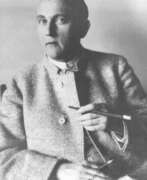


Ulrich Hachulla is a German painter and graphic artist, representative of the New Objectivity movement, who lives and works in Leipzig.
He was educated at the Academy of Fine Arts in Leipzig and, in addition to painting, has mastered many graphic techniques.
Hahulla's portraits and self-portraits depict a man in solitude, unsociable, coldly detached - these are numerous types of the respective times. The artist also creates paintings with mythological and allegorical references.
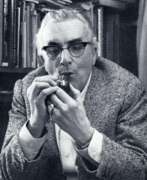

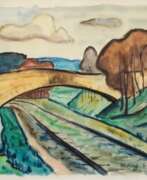

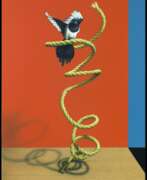


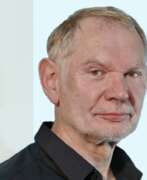

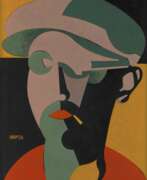

Karl Hermann Haupt was a German painter, graphic artist and designer.
He studied painting at the Art School in his native Halle from 1920 to 1923. From 1923 to 1924 he attended courses at the Bauhaus in Weimar, where his teachers included Josef Albers, Laszlo Mohoy-Nagy, Wassily Kandinsky, Paul Klee and Walter Gropius. After his studies at the Bauhaus, Haupt returned to Halle, where he worked as a painter until 1926. He then moved to Krefeld to begin a career as a textile painter. Haupt remained in Krefeld for most of the 1930s, combining painting with his studies with Johannes Itten at the Krefeld School of Textile Decoration.
After military service during World War II, Haupt worked for the regional government of Saxony-Anhalt until 1951, when he was appointed lecturer at the School of Applied Art in Berlin. From 1953 he worked as a scientific illustrator and photographer at the Academy of Sciences in Berlin until his death.
Haupt's paintings and graphics often depicted urban scenes and industrial landscapes, and he was particularly interested in the human figure and the impact of modern society on the individual. His work was known for its sharp, crisp lines and attention to detail.
Today, Haupt's work is recognized as an important contribution to modern art in Germany, and his paintings and drawings are in the collections of major museums around the world.
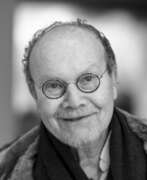

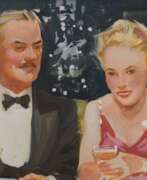

Kurt Heiligenstaedt, born on 13 August 1890 in Roßleben, Germany, was a distinguished artist known for his contributions as a poster designer, commercial graphic artist, and caricaturist. He is particularly recognized for his work with the German magazine "Simplicissimus," where he regularly contributed his drawings starting from 1923/1924 and then more consistently from 1935 onwards. In total, "Simplicissimus" published 428 of his drawings, highlighting his prolific output and significant role in the magazine.
Heiligenstaedt specialized in naturalistic yet elegantly drawn erotic scenes in contemporary costumes, which were among the first Pin-up images in Germany. His work for the successor magazine to "Simplicissimus" in 1959 was notable for causing a rare seizure action at the time due to the depiction of suggested nipples on a cover image.
He passed away in 1964 at the age of 73 in Berlin and was buried at the Waldfriedhof Zehlendorf, although his grave is no longer preserved. Heiligenstaedt's artistic style and his contributions to graphic design and caricature make him a notable figure in the history of German art.
Kurt Heiligenstaedt's work remains relevant for collectors, auctioneers, and experts in art and antiques, reflecting a unique blend of commercial artistry and illustrative skill. His legacy continues to inspire contemporary artists and designers.
For those interested in staying updated on events and sales related to Kurt Heiligenstaedt’s works, signing up for relevant newsletters and updates would be beneficial. This ensures staying informed about new discoveries and opportunities related to his art.
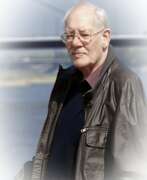

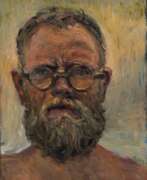

Anton Henning is a German self-taught artist, designer, sculptor and installer.
He lives and works in Berlin, London and New York and has established himself as a talented and extraordinary furniture and interior designer. Henning is inspired by views of world capitals while developing his own avant-garde styles. He also wittily analyzes art history through his installations, sculptures and paintings.
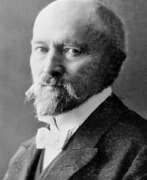

Johann Caspar Herterich was a German painter of the last third of the nineteenth century. He is known as a historical and genre painter, as well as a teacher at the Royal Academy of Fine Arts in Munich.
Herterich created a number of portraits in addition to canvases on historical, religious and genre themes. His works included dramatic scenes, sentimental genre scenes from family life. The artist actively participated in the Arts and Crafts movement and was involved in designing chandeliers and other decorative elements. Among the master's pupils was his younger brother Ludwig von Herterich, who also became a famous artist.
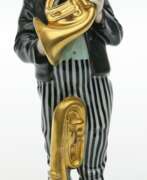

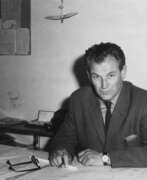

Herbert Hirche was a German architect, interior and furniture designer and educator.
Hirche studied at the famous Bauhaus school in Dessau and Berlin, where Ludwig Mies van der Rohe and Wassily Kandinsky taught. Trained as a carpenter, he first worked for Mies, Egon Eiermann and Hans Scharun before being appointed professor of applied art at the University of Applied Arts in Berlin-Weißensee in 1948. Four years later he became professor of interior and furniture design at the Stuttgart State Academy of Fine Arts. During his years of teaching, Hirche has educated generations of designers.
In addition to teaching, Hirche designed many homes and interiors. He designed furniture for Walter Knoll, Wilkhahn, Holzäpfel and Wilde+Spieth, as well as several projects for Braun, including the HM5-7 music cabinet and the HF1 television set. Hirche's simple and elegant models were exhibited at various Milan Triennales and the 1958 World Exhibition in Brussels. His work had a great influence on the development of product and interior design in Germany and the world.
Hirche was one of the founders of the Deutscher Werkbund (German Association of Craftsmen) in Berlin, was president of the Verband Deutscher Industrie-Designer (Society of Industrial Designers) for ten years, and was a member of the Rat für Formgebung (German Design Council).


Inge Höck was an Austrian painter. Inge Höck attended the Toni Kirchmayr painting school in Innsbruck and then studied nine semesters at the Academy of Fine Arts in Vienna with Herbert Boeckl. Since then she has lived in Innsbruck. Her works include drawings, figurative and abstract paintings, stained glass windows, sgraffiti and mosaics, among other things as facade designs as part of the art in architecture campaign of the state of Tyrol.
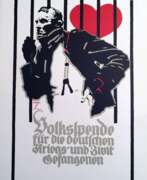


Tom Walter Hops was a German artist, landscape painter, mosaic artist and graphic artist.
In 1945 Tom Hops joined the Hamburg Group of Artists and became a member of the Rotary Club of Hamburg. His paintings received flattering reviews, and numerous awards confirm his success: in 1943 he received the Dürer Prize of Nuremberg, in 1959 - the Ernst Reuter Prize in Berlin, in 1960 - the Edwin Scharff Prize in Hamburg. In 1954 Tom Hops became the first Hamburg artist to have his works exhibited in a New York gallery after the war. In 1974 he was awarded the title of professor.
In addition to colorful landscapes and city views, Hops also created art in public spaces: glass mosaic windows, murals, tile stele and ceramic mosaics.
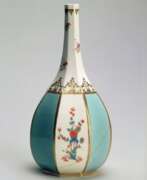

Johann Gregor Höroldt was a German porcelain artist who developed the Meissen porcelain style. Höroldt was trained as a miniature and enamel painter.
Between 1719 and 1720 he worked at the porcelain manufactory in Vienna, recently founded by Du Pacquier, and then moved to Meissen and began his collaboration with the Meissen Porcelain Manufactory. In 1724 he was appointed court painter. In 1731, Höroldt became an arcanist (a chemist, a key figure in porcelain production), and was simultaneously appointed head of the entire painting department and court commissioner.
Höroldt influenced virtually all European porcelain and faience manufactories. He specialized in the fashionable and popular chinoiserie design, but also introduced European landscapes, harbor and battle scenes, still lifes, and bird images as porcelain decoration.
The artist also significantly expanded the palette of colors used in Meissen: in the early XVIII century. was available only five paints for glaze, and Höroldt by 1731 increased the palette to 16 colors. He attached great importance and the original form for porcelain, trying to make it different from the usual dishes.