Painters Conceptual art
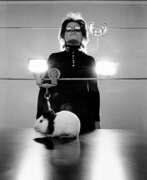

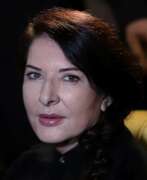

Marina Abramović is a Serbian conceptual and performance artist. Her work explores body art, endurance art, feminist art, the relationship between the performer and audience, the limits of the body, and the possibilities of the mind. Being active for over four decades, Abramović refers to herself as the "grandmother of performance art". She pioneered a new notion of identity by bringing in the participation of observers, focusing on "confronting pain, blood, and physical limits of the body". In 2007, she founded the Marina Abramović Institute (MAI), a non-profit foundation for performance art.


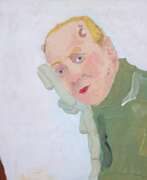

Richard Aldrich is a Brooklyn-based contemporary American conceptual artist and painter who exhibited in the 2010 Whitney Biennial. Aldrich received his BFA degree from the Ohio State University in 1998. Although mostly abstract and casual, Aldrich's paintings also betray a distinctly literary sensibility, even as he targets what he has called the essential "unwordliness of experience." He addresses his own personal history and the way that humans organize information through the formal language of painting, freely citing various aesthetic tropes with humor and irreverence. Aldrich is best known for his loose, abstract compositions, moving freely from gestural mark-making, text-based printing, and cutting the canvas to reveal stretcher bars underneath.
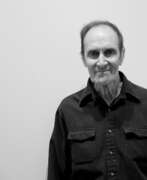

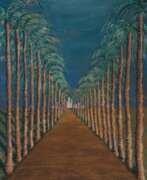

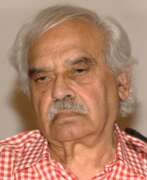

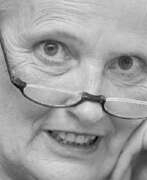




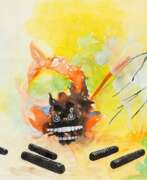

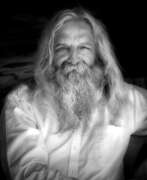


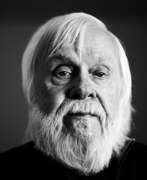

John Baldessari was an American conceptual artist known for his work featuring found photography and appropriated images. He lived and worked in Santa Monica and Venice, California.
Initially a painter, Baldessari began to incorporate texts and photography into his canvases in the mid-1960s. In 1970 he began working in printmaking, film, video, installation, sculpture and photography. He created thousands of works which demonstrate — and, in many cases, combine — the narrative potential of images and the associative power of language within the boundaries of the work of art. His art has been featured in more than 200 solo exhibitions in the U.S. and Europe. His work influenced that of Cindy Sherman, David Salle, Annette Lemieux, and Barbara Kruger among others.


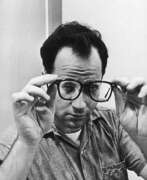


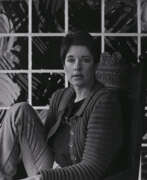

Jennifer Bartlett was an American artist. She was known for paintings and prints that combine the system-based aesthetic of conceptual art with the painterly approach of Neo-Expressionism. Many of her pieces were executed on small, square, enamel-coated steel plates that are combined in grid formations to create very large works.
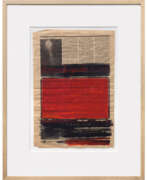

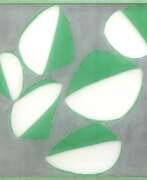

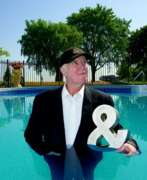

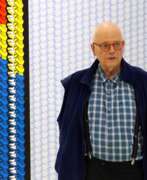

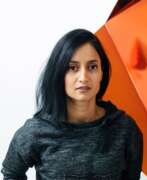


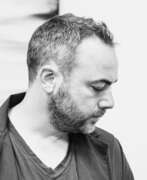

Walead Beshty is an American conceptual artist, photographer, sculptor and writer who lives and works in Los Angeles.
Born in London, Great Britain, he studied at Bard College and received a Master of Fine Arts degree from Yale University in 2002, and holds academic positions at universities across the United States.
Beschty is best known for his work in photography, but his creative interest spans a wide range, including sculpture, painting, installation and video. For example, in one of his popular works, the artist mails a series of glass windows of various sizes in cardboard boxes, and then displays the cracked and broken windows, damaged in transit, over the boxes in which they were packed.
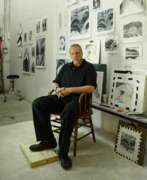

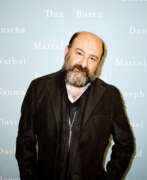

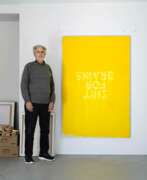

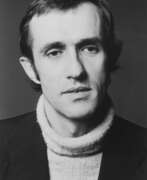

Alighiero Fabrizio Boetti, known as Alighiero e Boetti, was an Italian conceptual artist, considered to be a member of the art movement Arte Povera.
Perhaps best known is Boetti's series of large embroidered maps of the world, called simply Mappa.
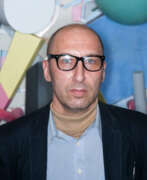

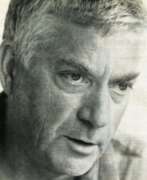

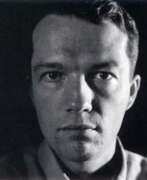


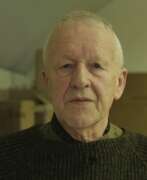

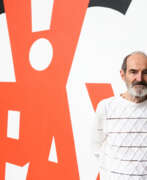

Erik Vladimirovich Bulatov (Russian: Эрик Владимирович Булатов) is a Soviet and Russian avant-garde artist of the XX-XXI centuries. His paintings are an experimental confrontation of modernist style and traditional painting. The main principle of Bulatov's paintings is the confrontation of the real space and the pictorial plane.
Since 1989, Bulatov lived in New York, and in 1992, he moved to the capital of France, where he lives and works to this day, sometimes visiting Russia.
Bulatov's works are in constant demand at auctions of contemporary art, he is considered one of the most expensive contemporary Russian artists. For example, his work "Soviet Cosmos" was sold for about $1.6 million at the Phillips auction.
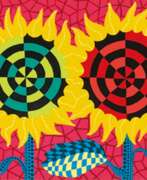


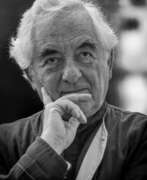

Daniel Buren is a French conceptual artist. He is one of the founders of the art group BMPT. Considered to be one of the most 'expensive' living French artists.
Since 1966, Daniel Buren created an aesthetic form which allowed him to concentrate exclusively on the position of the artwork in space: he focused on a series of alternating white and coloured stripes. This creative strategy became his hallmark.
Buren's striped columns (composition "Two Levels"), installed in 1986 in the courtyard of the Parisian Palais-Royal, which provoked protest from Parisians, later became a prominent landmark in the French capital.
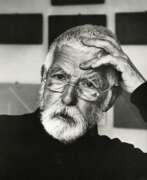


Piero Pizzi Cannella is an Italian artist and painter living and working in Rome.
Cannella is known for his conceptual works, he became part of the New Roman School. The artist's continuous research has led him to create cycles of works on various subjects: for example, Turkish dresses, jewelry, flowers, furnishings, all in isolation from the human being.


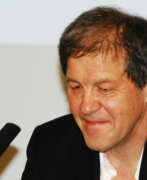

Ernst Caramelle is an Austrian artist. He is known for his conceptual art, which often involves the use of painting and drawing as a means of exploring the relationship between perception and representation.
Caramelle studied at the University of Applied Arts in Vienna and later taught at the Academy of Fine Arts Vienna. His work is characterized by a playful approach to art-making, often blurring the boundaries between painting, drawing, and installation.
Caramelle's work often involves the use of trompe-l'oeil techniques and other visual illusions, inviting viewers to question their perception of the art object and the space in which it is displayed. He frequently incorporates architectural elements into his work, creating site-specific installations that engage with the surrounding environment.
Caramelle has exhibited his work internationally, including at the Venice Biennale, the Documenta in Kassel, and the Museum of Modern Art in New York. He has also been awarded numerous awards and honors, including the Grand Austrian State Prize for Visual Arts in 2013.
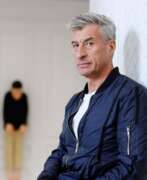


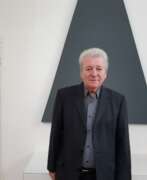

Alan Charlton is a British conceptual artist living and working in London.
Alan studied at Camberwell School of Art and the Royal Academy School, and from the very beginning of his artistic journey, since 1969 he has worked with only one color - gray. For Charlton, it is the most important as well as emotional color in existence, being, for example, the color of melancholy. "I am an artist who makes a gray picture" - this principle he follows all his life.
Alan Charlton creates simple, monochromatic gray abstractions based on rectangular shapes placed in space in a planned way. His conceptual works, uniformly painted in different shades of gray, often consist of simple geometric shapes broken down into modular elements.
Charlton's work has been exhibited at the Stedelijk Museum in Amsterdam, Castello di Rivoli in Turin and the Tate in London.
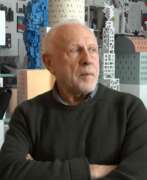


Marieta Cirulescu is a Romanian-German artist known for her abstract and conceptual paintings. She studied at the Academy of Fine Arts in Bucharest and at the Academy of Fine Arts in Nuremberg, Germany.
Cirulescu's work is characterised by calm colours and minimal compositions, often featuring repeating patterns and forms reminiscent of organic forms and structures found in nature. She is interested in the interplay of the organic and geometric, and her works often evoke a sense of movement and growth.
Cirulescu has exhibited her work extensively in Europe and the United States, including exhibitions at the Museum of Modern Art in Frankfurt, the Kunstmuseum Bonn and the New Museum in New York. She was also included in the Romanian pavilion at the 2013 Venice Biennale.
Cirulescu is the recipient of numerous awards and grants, including the Villa Romana Prize in 2004 and the Berlin Senate Fellowship in 2009. She currently lives and works in Berlin.
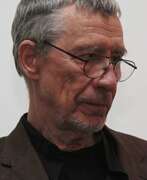


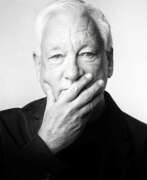

Michael Craig-Martin is an Irish-born contemporary conceptual artist and painter. He is known for fostering and adopting the Young British Artists, many of whom he taught, and for his conceptual artwork, An Oak Tree. He is Emeritus Professor of Fine Art at Goldsmiths. His memoir and advice for the aspiring artist, On Being An Artist, was published by London-based publisher Art / Books in April 2015.
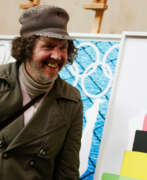


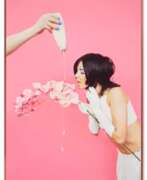

Alex Da Corte is an American conceptual artist who works in painting, sculpture, installation, and video. Da Corte often uses surreal imagery and everyday objects in his practice and explores ideas of consumerism, pop culture, mythology, and literature. He has shown internationally at Bodega, Gió Marconi, Josh Lilley Gallery, Maccarone, Herning Museum of Contemporary Art, Massachusetts Museum of Contemporary Art, and Institute of Contemporary Art. Da Corte has worked on a number of collaborative projects with other visual artists, writers, and musicians including Jayson Musson, Dev Hynes, Sam Mckinniss, and Annie Clark. In February 2021, his works were selected for inclusion in the Metropolitan Museum of Art's roof garden collection.
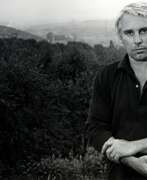

Karl Fred Dahmen is a German artist, one of the most important representatives of German post-war art and the Informel movement. In 1967 he took up the post of Professor of Fine Arts at the Munich Academy.
He painted expressive abstract pictures with a tectonic structure, and since the mid-1950s, relief paintings and collages on the damage to the local landscape caused by open-pit mining. Later in Dahmen's oeuvre, glazed object boxes appear, recounting the impressions of his daily working life.
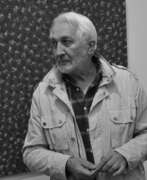


Hanne Darboven was a German conceptual artist known for her large-scale installations, drawings, and writings that explore the intersections of mathematics, language, and time.
Darboven studied at the Hochschule für Bildende Künste in Hamburg. In the 1960s, she became associated with the Conceptual Art movement, creating works that often involved systems of numerical and textual notation.
In the 1970s, Darboven began to produce her signature installations, which combined writing, drawing, and found objects to create immersive environments that explored complex systems of meaning and structure. One of her most famous works is "Kulturgeschichte 1880-1983", a monumental installation consisting of 1,590 framed sheets of paper, each containing a series of numbers, letters, and symbols that chart the course of modern history.
Throughout her career, Darboven continued to explore the relationship between language, numbers, and time, often drawing inspiration from her own life and experiences. She exhibited her work widely in Europe and the United States, and was the subject of numerous retrospectives and solo exhibitions.
Her legacy as a pioneering conceptual artist continues to be recognized and celebrated by the art world today.
.
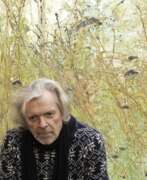

Jiří David is a contemporary Czech artist working in various techniques, including painting, sculpture, installation and photography. Co-founder of the art group Tvrdohlaví . His most famous media work is the neon heart over Prague Castle at the end of the last term of President Václav Havel.
Jiří David studied at the Prague Academy of Fine Arts. His work is characterised by a conceptual approach and a critical engagement with art history and social issues. He often creates large-scale installations that engage the viewer and explore the relationship between art and its audience.
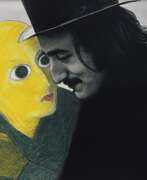

Gino De Dominicis was an Italian artist.
Controversial protagonist of Italian art after the Second World War, he used various techniques and defined himself as a painter, sculptor, philosopher and architect. His work tends to become independent of both fashions and neo-avant-garde groups. Therefore, it cannot be framed in a specific artistic current: neither in Arte Povera, nor in the Transavanguardia, nor in the conceptual art, which rejected.
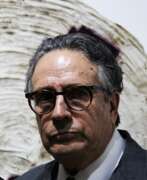

Juan Manuel de la Rosa is a painter, engraver, and ceramicist known for his works on handmade paper. He studied lesser-known techniques for painting and papermaking from Japan, Egypt, Fiyi and France; his handmade paper is typically made of linen, cotton, or hemp. With these traditional approaches, he creates layers and adds new dimensions to his artworks.
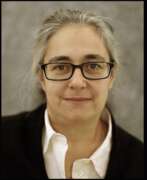

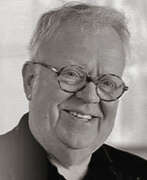


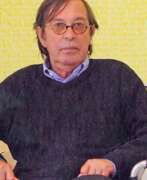

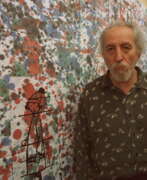

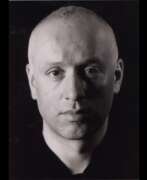


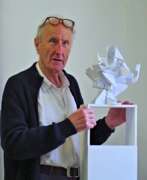

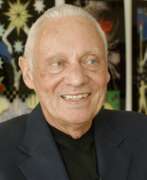

Ugo Dossi is a German conceptual artist.
Typical of his work is the use of forms of representation of the infinite, which lead the mind to the perception of the infinite and incomprehensible, which lies behind everything.
His installations have been shown twice at Documenta (Documenta 6 and Documenta 8), the Venice Biennale (1986 and 2011), Paris (1975) and Buenos Aires (2000) as well as numerous solo exhibitions in international museums and institutions.
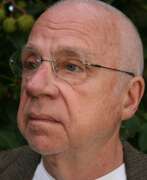

Peter Dreher was a German artist and academic teacher. He painted series of landscapes, interiors, flowers and skulls, beginning his series Tag um Tag guter Tag in 1974. As a professor of painting, he influenced artists including Anselm Kiefer. His works have been exhibited internationally.
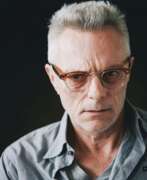

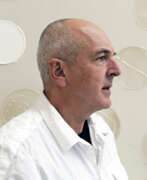


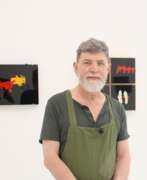

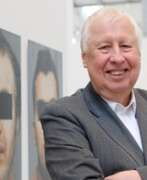

Hans-Peter Feldmann is a German visual artist. Feldmann's approach to art-making is one of collecting, ordering and re-presenting.
Hans-Peter Feldmann is a figure in the conceptual art movement and practitioner in the artist book and multiple formats.


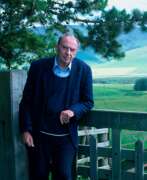

Ian Hamilton Finlay was a Scottish poet, writer, artist and gardener.
Finlay's work is notable for a number of recurring themes: a penchant for classical writers (especially Virgil); a concern with fishing and the sea; an interest in the French Revolution; and a continual revisiting of World War II and the memento mori Latin phrase Et in Arcadia ego.
Finlay was nominated for the Turner Prize in 1985. He was awarded honorary doctorates from Aberdeen University in 1987, Heriot-Watt University in 1993 and the University of Glasgow in 2001, and an honorary and/or visiting professorship from the University of Dundee in 1999. The French Communist Party presented him with a bust of Saint-Just in 1991. He received the Scottish Horticultural Medal from the Royal Caledonian Horticultural Society in 2002, and the Scottish Arts Council Creative Scotland Award in 2003.


René Francisco is a Cuban contemporary artist living in Havana.
René Francisco is an artist who has done a lot for the cause of conceptual art and community development. His commitment to El Romerillo, one of Havana's most notorious slums, extends beyond artistic interest. In 2003 he received a grant from a foundation in Berlin that he decided to use to give an art project to the foundation and help residents of El Romerillo at the same time. He renovated Rosa Estévez's house and his Casa de Rosa pictures were exhibited in Berlin late in 2003. In 2004, René Francisco turned the yard of Marcelina Ochoa, who everyone in El Romerillo called “Nin”, into a garden. He also provided her medical treatments. He exhibited his documentation of El Patio de Nin at the 52nd Venice Biennial in 2007.
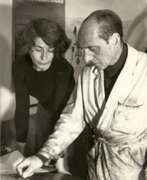

Johnny Friedlaender was a leading German/French 20th-century artist, whose works have been exhibited in Germany, France, Netherlands, Italy, Japan and the United States. He has been influential upon other notable artists, who were students in his Paris gallery. His preferred medium of aquatint etching is a technically difficult artistic process, of which Friedlaender has been a pioneer.


Steve Galloway is an American contemporary surrealist and conceptual artist. He graduated from the California Institute of Arts in 1974. Galloway was the recipient of a prestigious National Endowment for the Arts grant in 1987, as well as a Pollock-Krasner Grant in 2017. His original works in assemblage are in the permanent collections of the Contemporary Museum, Honolulu, Hawaii; the Franklin Mint, Philadelphia; the French National Collection (FRAC); and the Colas Foundation, France.
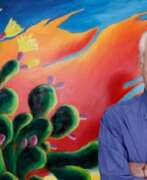

Nicolás García Uriburu was an Argentine contemporary artist, landscape architect, and ecologist. His work in land art was aimed at raising consciousness about environmental issues such as water pollution.
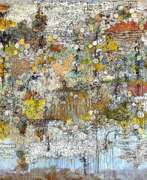


Alain Gazier is a French painter known for his desert interior paintings. His technique of superimposing points, proportions, projections and plans is reminiscent of an architect's drawing. It is as if the artist invites the viewer into this uninhabited silent world, where he plays with light and perspective.




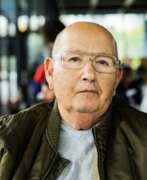

Moshe Gershuni (Hebrew משה גרשוני) was an Israeli painter and conceptual artist. He was born in Tel Aviv, Israel and studied art at the Avni Institute of Art and Design in Tel Aviv.
Gershuni's early work was characterized by abstract expressionism and gestural painting, but he later turned to conceptual art, exploring themes of identity, memory, and politics. He often used text, photography, and found objects in his works, which were highly personal and expressive.
Gershuni was also a prominent member of the Israeli art community, and he was involved in various cultural and political movements. He was a vocal critic of Israel's treatment of the Palestinians and used his art to address issues of conflict and human rights.
In 1995, Gershuni represented Israel at the Venice Biennale, where he presented a series of works that addressed the Holocaust and the Israeli-Palestinian conflict. He continued to exhibit his work extensively throughout his career, both in Israel and internationally.
Gershuni's legacy as an artist is significant, and his work has been the subject of numerous exhibitions and publications. He is regarded as one of the most important Israeli artists of the 20th century, and his influence on the development of Israeli art and conceptual art more broadly is widely acknowledged.
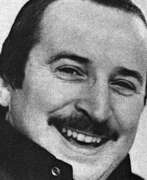

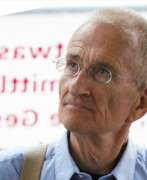

Jochen Gerz is a German conceptual artist who lived in France from 1966 to 2007. His work involves the relationship between art and life, history and memory, and deals with concepts such as culture, society, public space, participation and public authorship. After beginning his career in the literary field, Gerz has in the meantime explored various artistic disciplines and diverse media. Whether he works with text, photography, video, artist books, installation, performance, or on public authorship pieces and processes, at the heart of Gerz's practice is the search for an art form that can contribute to the res publica and to democracy. Gerz lives in Sneem, County Kerry, Ireland, since 2007.
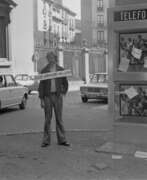


Louise Giovanelli is a British painter.
Giovanelli received a Bachelor's degree from the Manchester School of Art in 2015, and completed postgraduate studies at the Städelschule in Frankfurt am Main in 2020.
Her work is included in the collections of the Manchester Art Gallery, the Akzo Nobel Art Foundation, Amsterdam and the United Kingdom Government Art Collection.


Raimund Girke is a German artist known for his minimalist and monochromatic abstract paintings. He was at the origin of analytical painting, participated in the 1977 edition of Documenta VI in Kassel, Germany, and is widely known for his explorations of white.
Raimund Hirke belonged to a generation of young European artists who overcame the subjectivism of abstract expressionism and sought new, objective, reductive expressions based on scientific and mathematical principles. Girke's paintings were characterized by loose compositions and a limited colour palette, often with subtle variations in shades of white or grey.


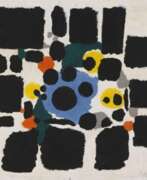


Félix González-Torres was a Cuban-born American visual artist. He lived and worked primarily in New York City between 1979 and 1995 after attending university in Puerto Rico. González-Torres was known for his minimalist installations and sculptures composed of everyday materials such as strings of lightbulbs, clocks, stacks of paper, or packaged hard candies. In 1987, he joined Group Material, a New York-based group of artists whose intention was to work collaboratively, adhering to principles of cultural activism and community education, much of which was influenced by the artist's experience as an openly gay man. González-Torres is known for having made significant contributions to the field of conceptual art in the 1980s and 1990s. His practice continues to influence and be influenced by present-day cultural discourses.
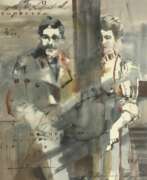


Ekkeland Götze is a German painter, printmaker and conceptual artist. After a training as a screen printer he educated himself as an industrial engineer through a correspondence course. Götze painted in his spare time, but he was not allowed to exhibit because of regulations in East Germany - formally he was a printmaker, not a painter. Because of these restrictions he filed an application for an exit permit 1985 which was granted in 1988. In 1989 Götze started to work on a project called "Erde" ("Earth"). He collects soil samples at extraordinary sites of human history around the world and applies them to paper, lime mortar or other backgrounds, making use of a standardized, self-developed technique he calls "terragraphy": He grinds the soil, mixes it with a binder and then applies it making use of a technique similar to screen printing. All backgrounds are square and of identical size. For each site the resulting works of art are given an individual name that reflects the importance of the site. According to Götze, the pictures capture th "spirit and energy" of the place where the soil was gathered. Götze runs a studio in Sendling. He is a member of the Neue Gruppe, an association of Munich artists regularly exhibiting at the Haus der Kunst museum. In 2018 Götze has been awarded the Seerosenpreis, a yearly award assigned to visual artists by the city of Munich.
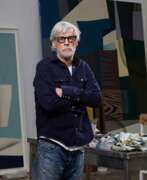

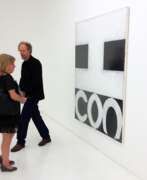

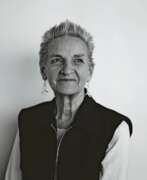







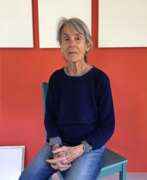

Marcia Jean Hafif was an American artist known for her contributions to the Minimalist and Conceptual art movements. She began her artistic career in the 1950s, exploring various mediums and styles before finding her distinctive voice.
Hafif's work often focused on the exploration of color, light, and the essence of materials. She was particularly interested in the interplay between perception, process, and the physicality of paint. In the 1970s, Hafif embarked on her groundbreaking series titled "The Inventory," where she meticulously painted a series of monochromatic works, each dedicated to exploring a specific color. These paintings emphasized the qualities and variations of a single hue, challenging traditional notions of representation and expanding the possibilities of color as a subject matter.
Later in her career, Hafif extended her exploration of color to include a broader range of media, such as photography, film, sound, text, installation, and printmaking. She continued to push boundaries and experiment with different materials and processes, always striving to deepen her understanding of color's impact on perception and experience.
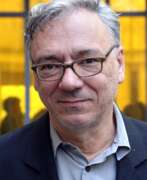

Peter Halley is an American artist and a central figure in the Neo-Conceptualist movement of the 1980s. Known for his Day-Glo geometric paintings, Halley is also a writer, the former publisher of index Magazine, and a teacher; he served as director of graduate studies in painting and printmaking at the Yale University School of Art from 2002 to 2011. Halley lives and works in New York City.
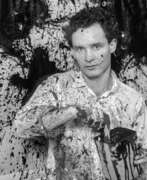

Richard Art Hambleton was a Canadian artist known for his work as a street artist.He was a surviving member of a group that emerged from the New York City art scene during the booming art market of the 1980s, which also included Keith Haring and Jean-Michel Basquiat. While often associated with graffiti art, Hambleton considered himself a conceptual artist who made both public art and gallery works.