


man

Heinrich Siepmann was a painter and belonged to the second generation of Constructivism.


Karl Kaufmann was an Austrian landscape and architectural painter.


Gregor von Bochmann was a Baltic-German landscape and genre painter.

Gregor von Bochmann was a Baltic-German landscape and genre painter.


Josef Hoffmann, an Austrian architect and designer, is renowned for his influential contributions to early 20th-century design and architecture. As a founding member of the Vienna Secession and the Wiener Werkstätte, Josef Hoffmann's work is celebrated for its pioneering simplicity and functional elegance.
Josef Hoffmann's designs, which span furniture, decorative arts, and architecture, are distinguished by their minimalistic yet expressive style. His ability to blend aesthetics with functionality marked a significant departure from the ornate styles of the time, influencing modern design principles. Notable works include the Stoclet Palace in Brussels, a masterpiece that showcases his innovative approach to art and architecture.
His creations are preserved in prestigious museums worldwide, including the Museum of Modern Art (MoMA) and the Metropolitan Museum of Art, providing insight into his visionary approach to design. These institutions house collections of Hoffmann's furniture and decorative objects, reflecting his enduring impact on design and architecture.
For collectors and experts in art and antiques, Josef Hoffmann's work offers a study in the evolution of modern design. By subscribing to updates, enthusiasts can stay informed about exhibitions, sales, and academic research related to Josef Hoffmann, deepening their understanding of his contributions to the art and design world.


Ferdinand Liebermann was a German sculptor.
Liebermann studied sculpture at the School of Arts and Crafts and at the Academy in Munich with Heinrich Wadere. After additional studies in Rome and Paris, he opened his studio in Munich in 1910 and was awarded the Grand Austrian State Medal in gold for a small bronze the same year. In 1926 he became professor of monumental and portrait sculpture in Munich.
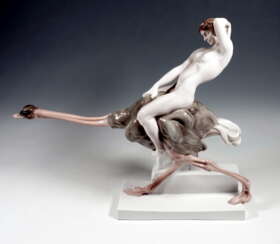
Ferdinand Liebermann's works include numerous sculptures of buildings, monuments and fountains, and he was also one of the most important figure designers for the Rosenthal manufactory.


Ferdinand Liebermann was a German sculptor.
Liebermann studied sculpture at the School of Arts and Crafts and at the Academy in Munich with Heinrich Wadere. After additional studies in Rome and Paris, he opened his studio in Munich in 1910 and was awarded the Grand Austrian State Medal in gold for a small bronze the same year. In 1926 he became professor of monumental and portrait sculpture in Munich.
Ferdinand Liebermann's works include numerous sculptures of buildings, monuments and fountains, and he was also one of the most important figure designers for the Rosenthal manufactory.


Rudolf Grossmann (German: Rudolf Grossmann, or Großmann), full name Rudolf Wilhelm Walther Grossmann, was a German painter, draftsman, illustrator and graphic artist.
Born into an artistic family, Grossmann began his education in painting and printmaking at the Düsseldorf Academy before continuing his studies in Paris with Lucien Simon and Pouleroz. Among his best-known works are various portrait drawings of celebrities, notably those published in the satirical periodical Simplicissimus; he was also known for his book illustrations. Grossmann began publishing his prints in 1905, and many major publishers in Germany and France commissioned his work. He later concentrated on figurative works and urban scenes, which showed the influence of Cézanne and Pasquin.
From 1928 until Hitler's Nazi Party came to power, Grossmann taught at the Berlin Royal School of Art and was a member of the Berlin Secession and the Deutsche Kunstlerbund. In 1934, his work, like that of many of his colleagues, was stigmatized as degenerate and confiscated by the Nazi government, and he was disbarred from practicing his profession. He soon left for Freiberg im Beisgau, where he died on November 28, 1941.


Rudolf Grossmann (German: Rudolf Grossmann, or Großmann), full name Rudolf Wilhelm Walther Grossmann, was a German painter, draftsman, illustrator and graphic artist.
Born into an artistic family, Grossmann began his education in painting and printmaking at the Düsseldorf Academy before continuing his studies in Paris with Lucien Simon and Pouleroz. Among his best-known works are various portrait drawings of celebrities, notably those published in the satirical periodical Simplicissimus; he was also known for his book illustrations. Grossmann began publishing his prints in 1905, and many major publishers in Germany and France commissioned his work. He later concentrated on figurative works and urban scenes, which showed the influence of Cézanne and Pasquin.
From 1928 until Hitler's Nazi Party came to power, Grossmann taught at the Berlin Royal School of Art and was a member of the Berlin Secession and the Deutsche Kunstlerbund. In 1934, his work, like that of many of his colleagues, was stigmatized as degenerate and confiscated by the Nazi government, and he was disbarred from practicing his profession. He soon left for Freiberg im Beisgau, where he died on November 28, 1941.


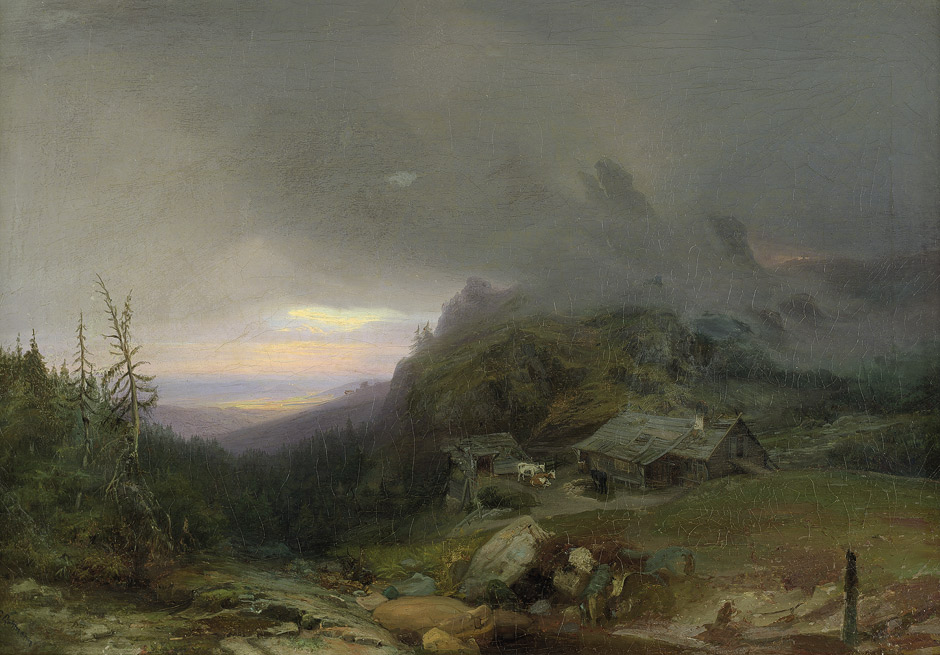
Leopold Rottmann was a German painter of the mid-nineteenth century. He is known as a landscape painter who worked in oil painting and watercolor.
Leopold Rottmann was a proponent of naturalistic and heroic-historical painting. He was the drawing teacher of the future King Ludwig II of Bavaria. Later commissioned by Ludwig, who was inspired by Richard Wagner, Rottmann created the artwork for the production of the composer's opera Lohengrin in 1861.
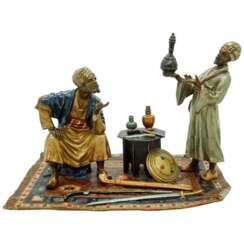

Josef Hoffmann, an Austrian architect and designer, is renowned for his influential contributions to early 20th-century design and architecture. As a founding member of the Vienna Secession and the Wiener Werkstätte, Josef Hoffmann's work is celebrated for its pioneering simplicity and functional elegance.
Josef Hoffmann's designs, which span furniture, decorative arts, and architecture, are distinguished by their minimalistic yet expressive style. His ability to blend aesthetics with functionality marked a significant departure from the ornate styles of the time, influencing modern design principles. Notable works include the Stoclet Palace in Brussels, a masterpiece that showcases his innovative approach to art and architecture.
His creations are preserved in prestigious museums worldwide, including the Museum of Modern Art (MoMA) and the Metropolitan Museum of Art, providing insight into his visionary approach to design. These institutions house collections of Hoffmann's furniture and decorative objects, reflecting his enduring impact on design and architecture.
For collectors and experts in art and antiques, Josef Hoffmann's work offers a study in the evolution of modern design. By subscribing to updates, enthusiasts can stay informed about exhibitions, sales, and academic research related to Josef Hoffmann, deepening their understanding of his contributions to the art and design world.
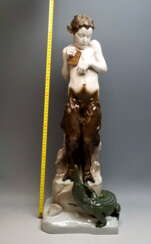

Karl Heinz Bohrmann was a German painter, graphic artist and engraver.


Man Ray, born Emmanuel Radnitzky, was an American visual artist who played a significant role in the Dada and Surrealist movements. His pioneering efforts in photography, alongside his work in painting and sculpture, have cemented his place as a major figure in modern art. Known for his innovative techniques and the ability to convey complex ideas through simple, striking visuals, Man Ray's contribution to the art world is profound.
Throughout his career, Man Ray was celebrated for his avant-garde approach and his ability to transcend traditional boundaries between different artistic mediums. His photography, characterized by experimental techniques such as solarization and rayographs (cameraless photographs), challenged conventional perceptions of photography as merely a means of representation. These artistic innovations made him a central figure in both Parisian and American art circles.
Man Ray's works are housed in some of the world's most prestigious museums and galleries, including the Museum of Modern Art in New York and the Centre Pompidou in Paris. His pieces, such as "Le Violon d'Ingres" and "Noire et Blanche," are iconic images that continue to influence artists today. His ability to blend the abstract with the realistic, and the humorous with the serious, has left a lasting legacy in the world of art.
For collectors and experts in art and antiques, the work of Man Ray offers a glimpse into the revolutionary changes that shaped the visual arts in the 20th century. His unique perspective and pioneering techniques continue to inspire and challenge those interested in the boundaries of creativity and expression.
If you're passionate about the avant-garde, or simply wish to explore the fascinating world of Man Ray further, sign up for our updates. You'll receive alerts on new product sales and auction events related to Man Ray, ensuring you never miss an opportunity to engage with the legacy of this extraordinary artist.


Man Ray, born Emmanuel Radnitzky, was an American visual artist who played a significant role in the Dada and Surrealist movements. His pioneering efforts in photography, alongside his work in painting and sculpture, have cemented his place as a major figure in modern art. Known for his innovative techniques and the ability to convey complex ideas through simple, striking visuals, Man Ray's contribution to the art world is profound.
Throughout his career, Man Ray was celebrated for his avant-garde approach and his ability to transcend traditional boundaries between different artistic mediums. His photography, characterized by experimental techniques such as solarization and rayographs (cameraless photographs), challenged conventional perceptions of photography as merely a means of representation. These artistic innovations made him a central figure in both Parisian and American art circles.
Man Ray's works are housed in some of the world's most prestigious museums and galleries, including the Museum of Modern Art in New York and the Centre Pompidou in Paris. His pieces, such as "Le Violon d'Ingres" and "Noire et Blanche," are iconic images that continue to influence artists today. His ability to blend the abstract with the realistic, and the humorous with the serious, has left a lasting legacy in the world of art.
For collectors and experts in art and antiques, the work of Man Ray offers a glimpse into the revolutionary changes that shaped the visual arts in the 20th century. His unique perspective and pioneering techniques continue to inspire and challenge those interested in the boundaries of creativity and expression.
If you're passionate about the avant-garde, or simply wish to explore the fascinating world of Man Ray further, sign up for our updates. You'll receive alerts on new product sales and auction events related to Man Ray, ensuring you never miss an opportunity to engage with the legacy of this extraordinary artist.


Man Ray, born Emmanuel Radnitzky, was an American visual artist who played a significant role in the Dada and Surrealist movements. His pioneering efforts in photography, alongside his work in painting and sculpture, have cemented his place as a major figure in modern art. Known for his innovative techniques and the ability to convey complex ideas through simple, striking visuals, Man Ray's contribution to the art world is profound.
Throughout his career, Man Ray was celebrated for his avant-garde approach and his ability to transcend traditional boundaries between different artistic mediums. His photography, characterized by experimental techniques such as solarization and rayographs (cameraless photographs), challenged conventional perceptions of photography as merely a means of representation. These artistic innovations made him a central figure in both Parisian and American art circles.
Man Ray's works are housed in some of the world's most prestigious museums and galleries, including the Museum of Modern Art in New York and the Centre Pompidou in Paris. His pieces, such as "Le Violon d'Ingres" and "Noire et Blanche," are iconic images that continue to influence artists today. His ability to blend the abstract with the realistic, and the humorous with the serious, has left a lasting legacy in the world of art.
For collectors and experts in art and antiques, the work of Man Ray offers a glimpse into the revolutionary changes that shaped the visual arts in the 20th century. His unique perspective and pioneering techniques continue to inspire and challenge those interested in the boundaries of creativity and expression.
If you're passionate about the avant-garde, or simply wish to explore the fascinating world of Man Ray further, sign up for our updates. You'll receive alerts on new product sales and auction events related to Man Ray, ensuring you never miss an opportunity to engage with the legacy of this extraordinary artist.


Man Ray, born Emmanuel Radnitzky, was an American visual artist who played a significant role in the Dada and Surrealist movements. His pioneering efforts in photography, alongside his work in painting and sculpture, have cemented his place as a major figure in modern art. Known for his innovative techniques and the ability to convey complex ideas through simple, striking visuals, Man Ray's contribution to the art world is profound.
Throughout his career, Man Ray was celebrated for his avant-garde approach and his ability to transcend traditional boundaries between different artistic mediums. His photography, characterized by experimental techniques such as solarization and rayographs (cameraless photographs), challenged conventional perceptions of photography as merely a means of representation. These artistic innovations made him a central figure in both Parisian and American art circles.
Man Ray's works are housed in some of the world's most prestigious museums and galleries, including the Museum of Modern Art in New York and the Centre Pompidou in Paris. His pieces, such as "Le Violon d'Ingres" and "Noire et Blanche," are iconic images that continue to influence artists today. His ability to blend the abstract with the realistic, and the humorous with the serious, has left a lasting legacy in the world of art.
For collectors and experts in art and antiques, the work of Man Ray offers a glimpse into the revolutionary changes that shaped the visual arts in the 20th century. His unique perspective and pioneering techniques continue to inspire and challenge those interested in the boundaries of creativity and expression.
If you're passionate about the avant-garde, or simply wish to explore the fascinating world of Man Ray further, sign up for our updates. You'll receive alerts on new product sales and auction events related to Man Ray, ensuring you never miss an opportunity to engage with the legacy of this extraordinary artist.


Man Ray, born Emmanuel Radnitzky, was an American visual artist who played a significant role in the Dada and Surrealist movements. His pioneering efforts in photography, alongside his work in painting and sculpture, have cemented his place as a major figure in modern art. Known for his innovative techniques and the ability to convey complex ideas through simple, striking visuals, Man Ray's contribution to the art world is profound.
Throughout his career, Man Ray was celebrated for his avant-garde approach and his ability to transcend traditional boundaries between different artistic mediums. His photography, characterized by experimental techniques such as solarization and rayographs (cameraless photographs), challenged conventional perceptions of photography as merely a means of representation. These artistic innovations made him a central figure in both Parisian and American art circles.
Man Ray's works are housed in some of the world's most prestigious museums and galleries, including the Museum of Modern Art in New York and the Centre Pompidou in Paris. His pieces, such as "Le Violon d'Ingres" and "Noire et Blanche," are iconic images that continue to influence artists today. His ability to blend the abstract with the realistic, and the humorous with the serious, has left a lasting legacy in the world of art.
For collectors and experts in art and antiques, the work of Man Ray offers a glimpse into the revolutionary changes that shaped the visual arts in the 20th century. His unique perspective and pioneering techniques continue to inspire and challenge those interested in the boundaries of creativity and expression.
If you're passionate about the avant-garde, or simply wish to explore the fascinating world of Man Ray further, sign up for our updates. You'll receive alerts on new product sales and auction events related to Man Ray, ensuring you never miss an opportunity to engage with the legacy of this extraordinary artist.


Wolfgang Tillmans is a German photographer. His diverse body of work is distinguished by observation of his surroundings and an ongoing investigation of the photographic medium’s foundations.
Tillmans was the first photographer – and also the first non-British person – to be awarded the Tate annual Turner Prize. He has also been awarded the Hasselblad Award, the Royal Photographic Society's Centenary Medal, the Royal Academy Summer Exhibition's Charles Wollaston Award, The Culture Prize of the German Society for Photography, and is an Academician of the Royal Academy of Arts, London.


Armand Pierre Fernandez, widely known by his mononym Arman, was a French-born American artist celebrated for his innovative contributions to the Nouveau Réalisme movement and his radical use of everyday objects in art. Born in Nice, France, on November 17, 1928, Arman's early exposure to art came from his father, an antiques dealer and amateur artist, which deeply influenced his later artistic endeavors.
Arman moved beyond traditional painting techniques early in his career, instead creating his signature "Accumulations" and "Poubelles" (trash) sculptures. These works involved assembling and compacting everyday items like watches, clocks, and even automobiles, embedding these objects in layers of concrete or encasing them in Plexiglas. One of his most notable large-scale works is "Long Term Parking," a 60-foot high sculpture made of concrete-encased cars, situated in Jouy-en-Josas, France.
His work is an essential bridge between European and American trends in Pop art and has been widely exhibited in major institutions like the Metropolitan Museum of Art in New York, the Tate Gallery in London, and the Centre Pompidou in Paris. Arman's innovative techniques and philosophical approach to materials challenged conventional categorizations of art and inspired future generations of artists.
For collectors and enthusiasts interested in staying updated on exhibitions and sales related to Arman's work, signing up for updates can provide essential insights and opportunities related to this influential artist. Join our community to ensure you don't miss out on new discoveries and auction events associated with Arman's legacy.


Friedrich Ahlers-Hestermann was a German painter and art writer from Hamburg. He was a member of the Hamburgische Künstlerclub of 1897, as well as of the Hamburg artist's workshop of 1832 and pupil of the Académie Matisse in Paris. After the First World War, he was a co-founder of the Hamburg Secession.


Hermann Groeber was a German painter who was known throughout Germany as a portraitist and landscape artist.
Hermann Groeber gained early success as a self-employed painter. He joined the German Association of Artists, and after Ludwig Schmid-Reutte was appointed to Karlsruhe, Groeber took over his class of nude acts, which soon enjoyed great popularity.