fisher &



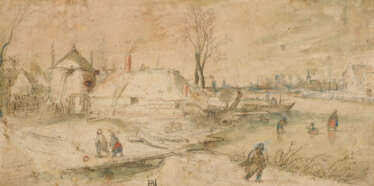

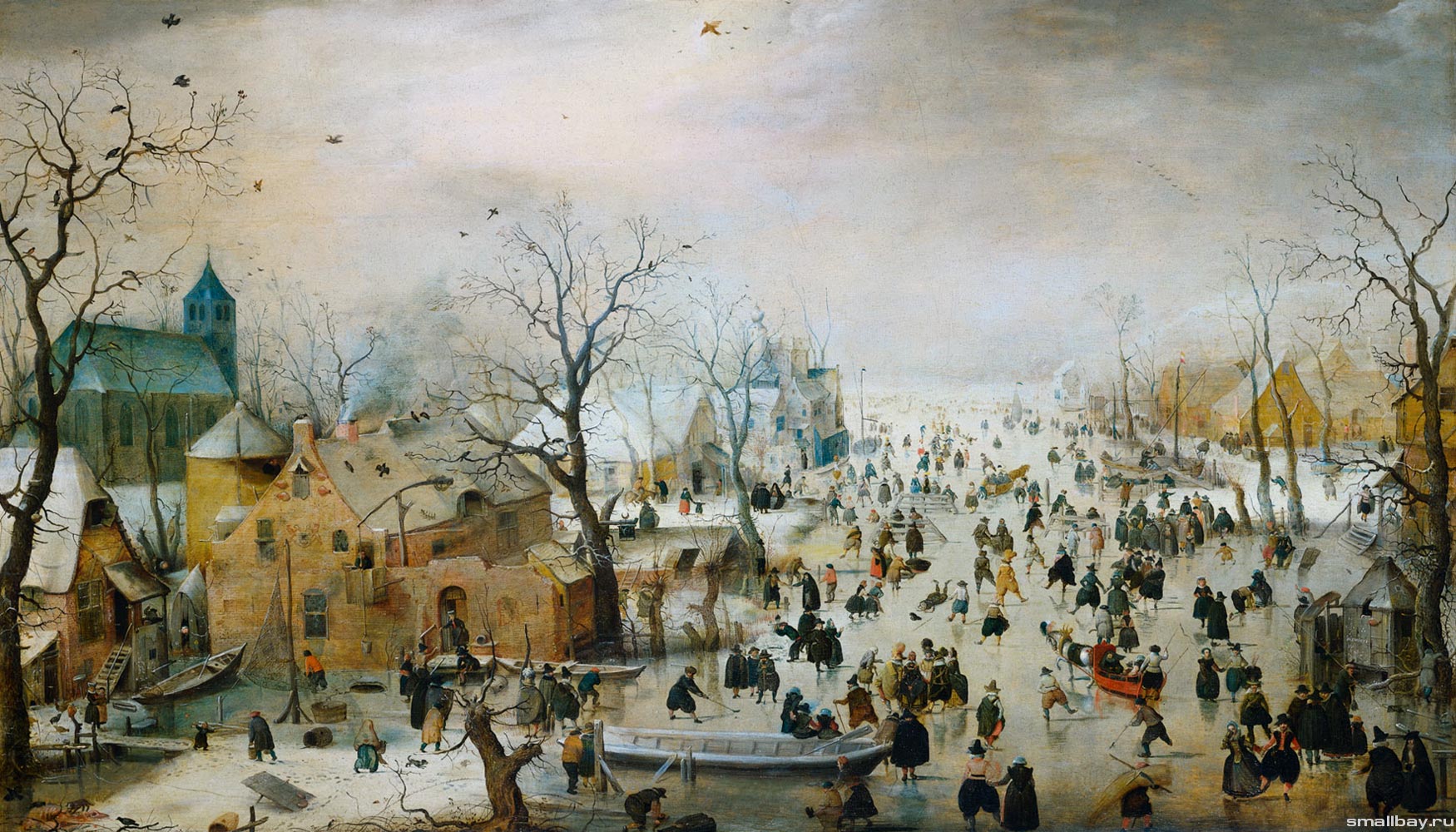
Hendrick Avercamp was a seminal Dutch painter during the Dutch Golden Age. He is celebrated as one of the earliest landscape painters of the 17th-century Dutch school, specializing in vibrant winter scenes of the Netherlands. His paintings are filled with colorful and lively depictions of people engaging in various activities against the backdrop of the Dutch winter landscape.
Educated by the Danish-born portrait painter Pieter Isaacsz, Hendrick Avercamp's work reflects a strong influence from the Flemish painting tradition, especially evident in the landscapes reminiscent of Pieter Bruegel the Elder. His technique of aerial perspective, where objects in the foreground are painted with richer colors than those in the distance, creates a remarkable impression of depth in his paintings.
Hendrick Avercamp's most ambitious and acclaimed work, 'Winter Landscape with Ice Skaters', painted around 1608, is a detailed panorama of human and animal activities during a harsh winter. This painting, along with others like 'Winter Landscape with a Frozen River and Figures' and 'Winter Landscape with Skates and People Playing Golf', showcase his knack for narrative, capturing various facets of 17th-century Dutch society enjoying the winter season.
Despite being mute and probably deaf, Hendrick Avercamp's keen observation skills are evident in his works, where he intricately portrays diverse classes engaging in various winter activities. He produced about a hundred paintings, many of which can be seen in the Rijksmuseum in Amsterdam and the Mauritshuis in The Hague. His work was also celebrated for its historical quality, providing a glimpse into the life of different societal levels in the Netherlands at that time.
For collectors and enthusiasts of art and antiques, Hendrick Avercamp's paintings offer a fascinating window into the Dutch Golden Age, with their vivid portrayal of life and activities in a winter setting. His works, characterized by meticulous detail and a cheerful narrative, remain an integral part of the conversation in the history of Dutch art.
To stay updated on the latest insights and collections related to Hendrick Avercamp's works, consider subscribing to our updates. Stay informed about new sales, exhibitions, and auction events featuring this master of Dutch winter landscapes.
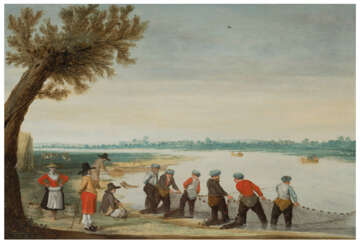

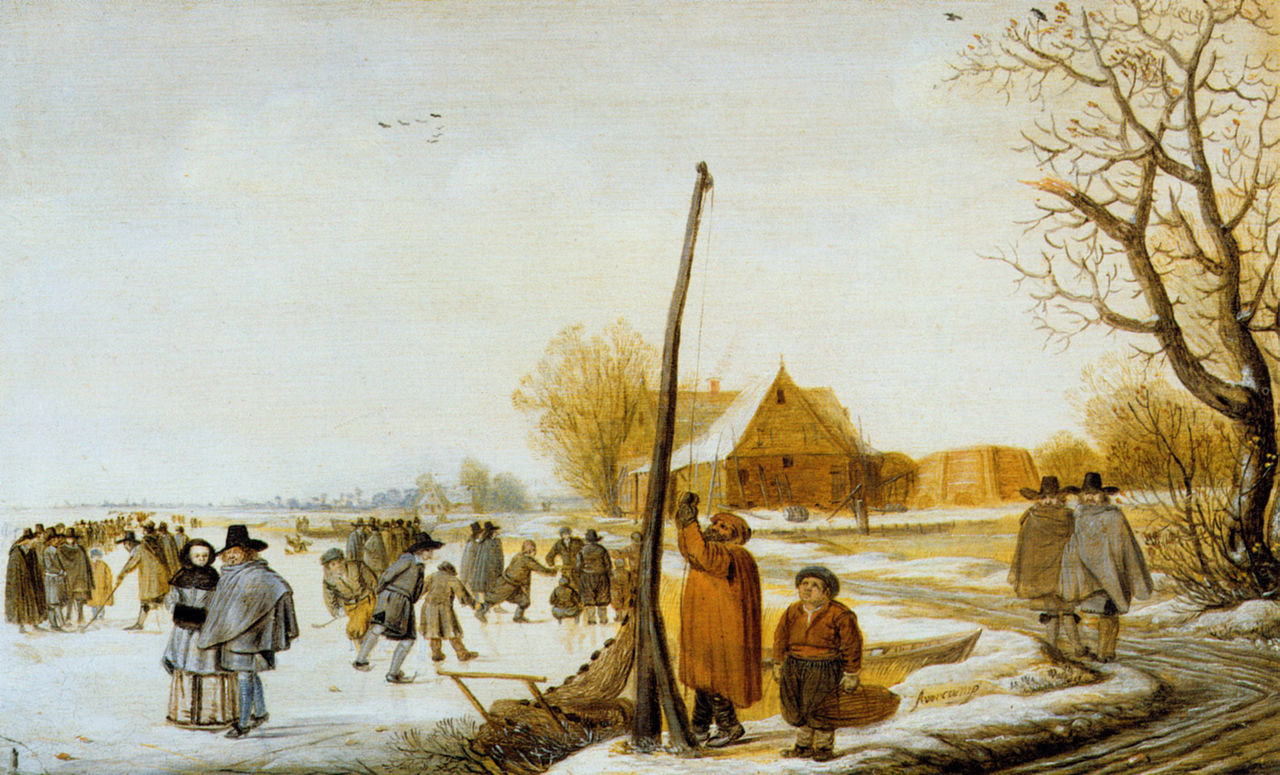
Barent Avercamp was a Dutch painter. He was taught by his uncle Hendrick Avercamp, who was also a painter. Barent primarily painted scenes depicting Netherlands in winter. He was a member of the Guild of Saint Luke, and traveled around the Netherlands including Zwolle and Zutphen for his settings and inspiration.
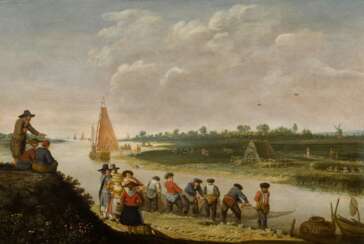

Barent Avercamp was a Dutch painter. He was taught by his uncle Hendrick Avercamp, who was also a painter. Barent primarily painted scenes depicting Netherlands in winter. He was a member of the Guild of Saint Luke, and traveled around the Netherlands including Zwolle and Zutphen for his settings and inspiration.
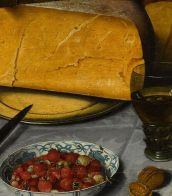



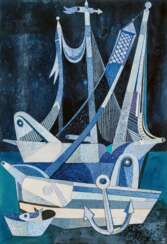

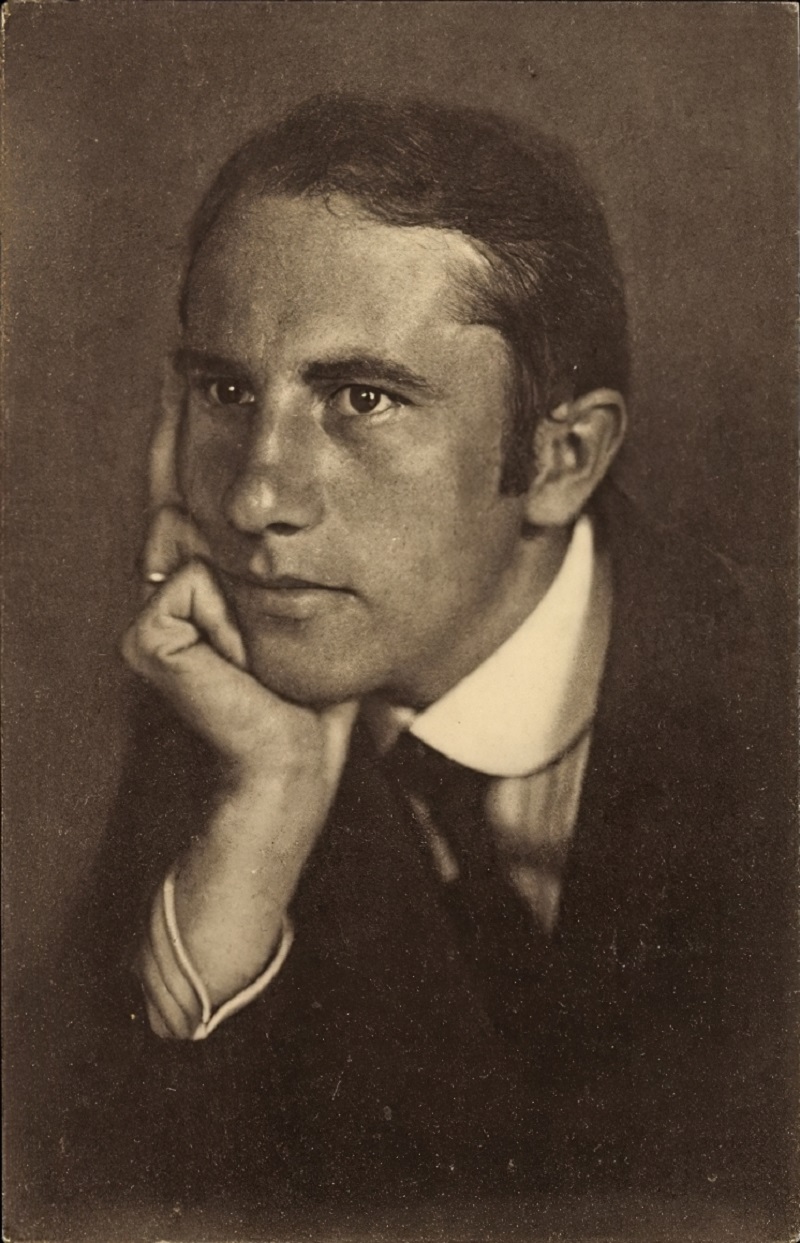
Heinrich Mathias Ernst Campendonk was a painter and graphic designer born in Germany who became a naturalized Dutch citizen.
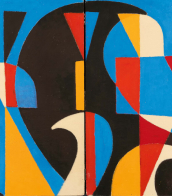
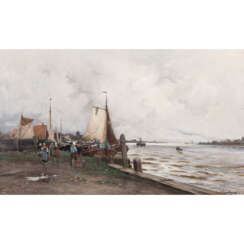

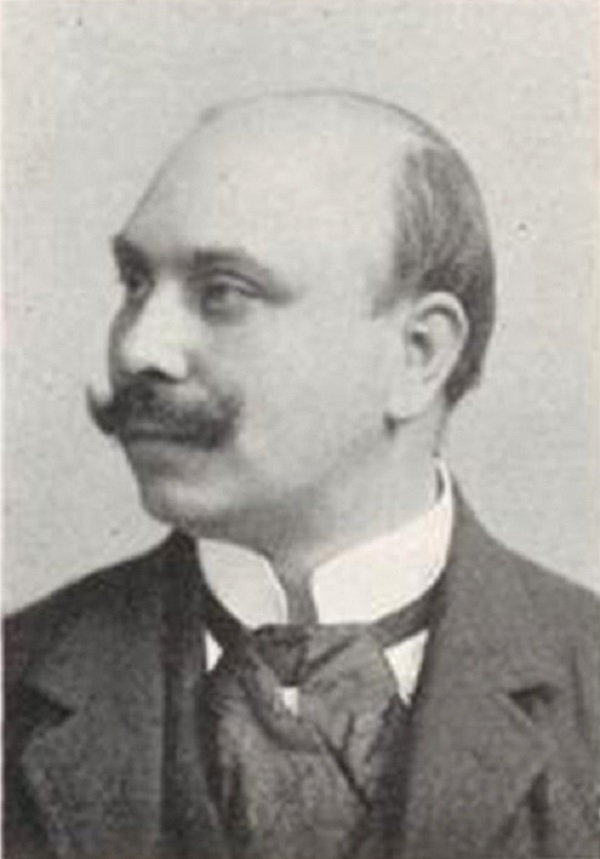
Eugen Kampf was a German painter; associated with the Düsseldorf school of painting. He specialized in rural and village scenes.
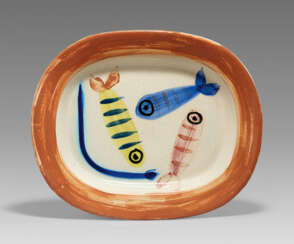

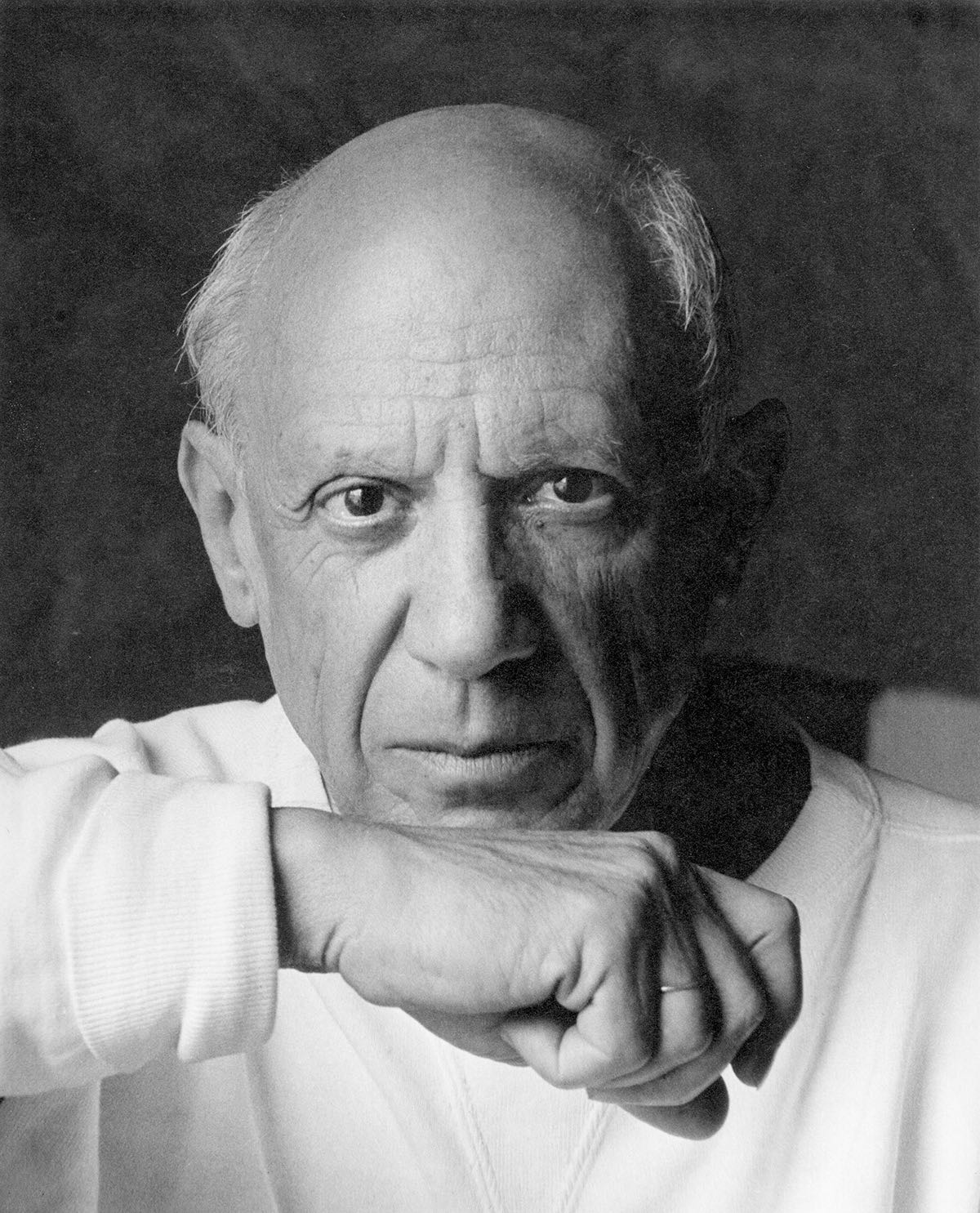
Pablo Ruiz Picasso, a Spanish artist renowned for his revolutionary contributions to the 20th-century art scene, is a figure that resonates profoundly with collectors and art experts. His unique blend of talents in painting, sculpture, printmaking, and ceramic art, infused with his time in France, positioned him as a pivotal character in modern art history.
Picasso's artistic journey was marked by distinct periods, each showcasing his evolving style and genius. His early years were characterized by the Blue Period (1901-1904), followed by the Rose Period (1904-1906), and then the African-influenced Period (1907-1909). Picasso's name is synonymous with Cubism, a movement he co-founded, which significantly altered artistic perspectives and methods. Works like "Les Demoiselles d'Avignon" (1907) and "Guernica" (1937) are emblematic of his cubist legacy, the latter being a poignant anti-war statement that remains influential.
His later years saw a return to more traditional styles, with neoclassical and surrealist influences becoming evident. Works from these phases reflect a deep engagement with mythological themes, as seen in "Faun with Stars" (1955), symbolizing his late-life romance with Jacqueline Roque, his second wife.
Picasso's prolific output and innovative spirit made him a legend in his own time, a status that only grew after his death. His works, housed in major museums and private collections worldwide, continue to captivate and inspire.
As a collector or expert in art and antiques, staying informed about Picasso's works, their auction events, and sales is essential. To stay updated on the latest developments and opportunities related to Pablo Picasso, sign up for our specialized updates. Rest assured, this subscription will focus solely on new product sales and auction events pertaining to Picasso's art, ensuring that you receive only the most relevant and valuable information.
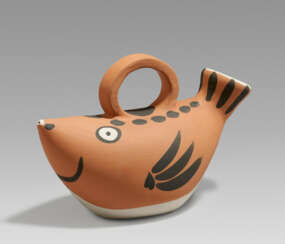

Pablo Ruiz Picasso, a Spanish artist renowned for his revolutionary contributions to the 20th-century art scene, is a figure that resonates profoundly with collectors and art experts. His unique blend of talents in painting, sculpture, printmaking, and ceramic art, infused with his time in France, positioned him as a pivotal character in modern art history.
Picasso's artistic journey was marked by distinct periods, each showcasing his evolving style and genius. His early years were characterized by the Blue Period (1901-1904), followed by the Rose Period (1904-1906), and then the African-influenced Period (1907-1909). Picasso's name is synonymous with Cubism, a movement he co-founded, which significantly altered artistic perspectives and methods. Works like "Les Demoiselles d'Avignon" (1907) and "Guernica" (1937) are emblematic of his cubist legacy, the latter being a poignant anti-war statement that remains influential.
His later years saw a return to more traditional styles, with neoclassical and surrealist influences becoming evident. Works from these phases reflect a deep engagement with mythological themes, as seen in "Faun with Stars" (1955), symbolizing his late-life romance with Jacqueline Roque, his second wife.
Picasso's prolific output and innovative spirit made him a legend in his own time, a status that only grew after his death. His works, housed in major museums and private collections worldwide, continue to captivate and inspire.
As a collector or expert in art and antiques, staying informed about Picasso's works, their auction events, and sales is essential. To stay updated on the latest developments and opportunities related to Pablo Picasso, sign up for our specialized updates. Rest assured, this subscription will focus solely on new product sales and auction events pertaining to Picasso's art, ensuring that you receive only the most relevant and valuable information.



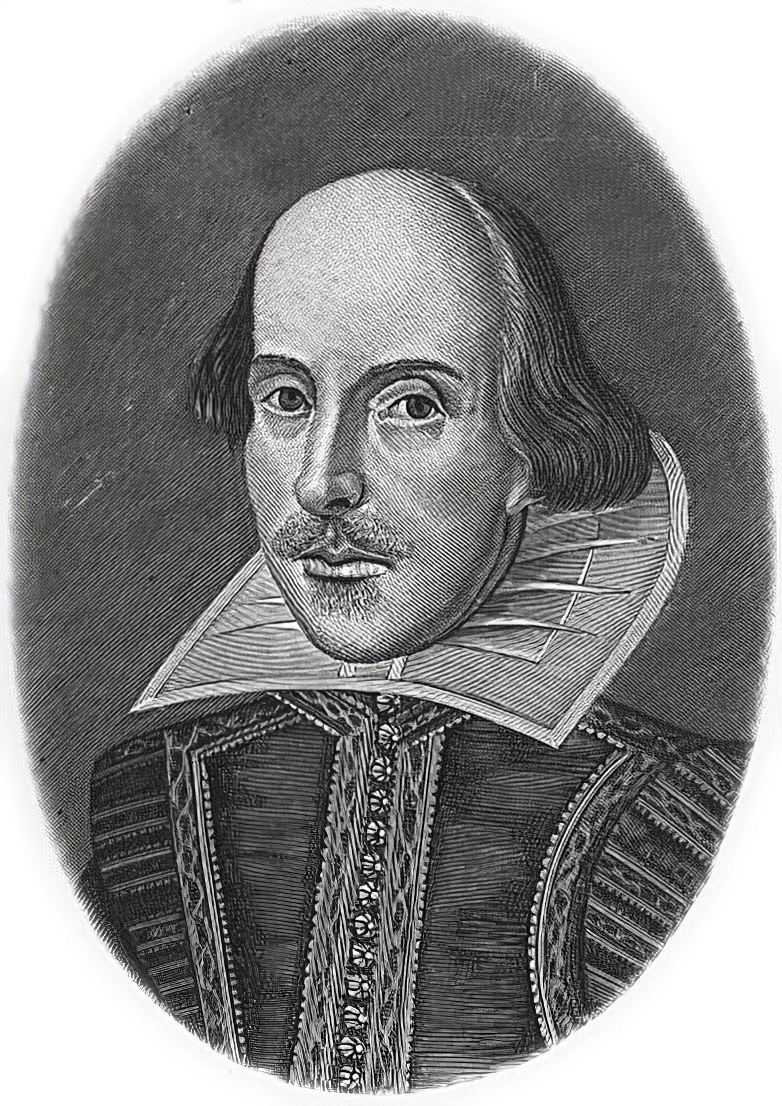
William Shakespeare was a British poet and playwright and writer.
William's father, John Shakespeare, was a merchant and official in Stratford. There are reports that he was a sailor for a time before joining a theater company in London. Beginning in the 1590s, Shakespeare began writing plays, and in 1593 he published a poem, Venus and Adonis, which became popular. He dedicated it to the Duke of Southampton, who was a philanthropist and patron of talent, and soon his business was booming.
From 1592 to 1600 Shakespeare wrote his dramas and romantic comedies "Richard III", "The Taming of the Shrew", "Romeo and Juliet", "A Midsummer Night's Dream" and "The Merchant of Venice", as well as the comedies "Much Ado About Nothing", "Twelfth Night" and the tragedy "Julius Caesar". The playwright's business was so successful that he even bought a large house in Stratford. In 1599, Shakespeare became one of the owners, playwright and actor of the new theater "Globe". In 1603 King James took Shakespeare's troupe under his direct patronage. In the mature period, the great playwright turned to tragedies, there were "Hamlet", "Othello", "King Lear", "Macbeth" and others.
Although in the 19th century researchers had some doubts about the authorship of many of these works, William Shakespeare is considered the greatest English playwright, one of the best playwrights in the world. His plays have been translated into all major languages and to this day form the basis of the world theatrical repertoire, most of them have been screened many times. According to the Guinness Book of Records, Shakespeare remains the world's best-selling playwright, and his plays and poems have sold more than 4 billion copies in the nearly 400 years since his death.























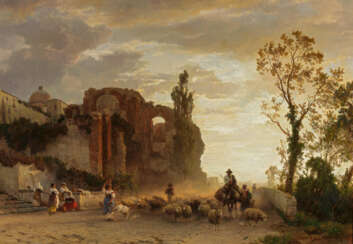

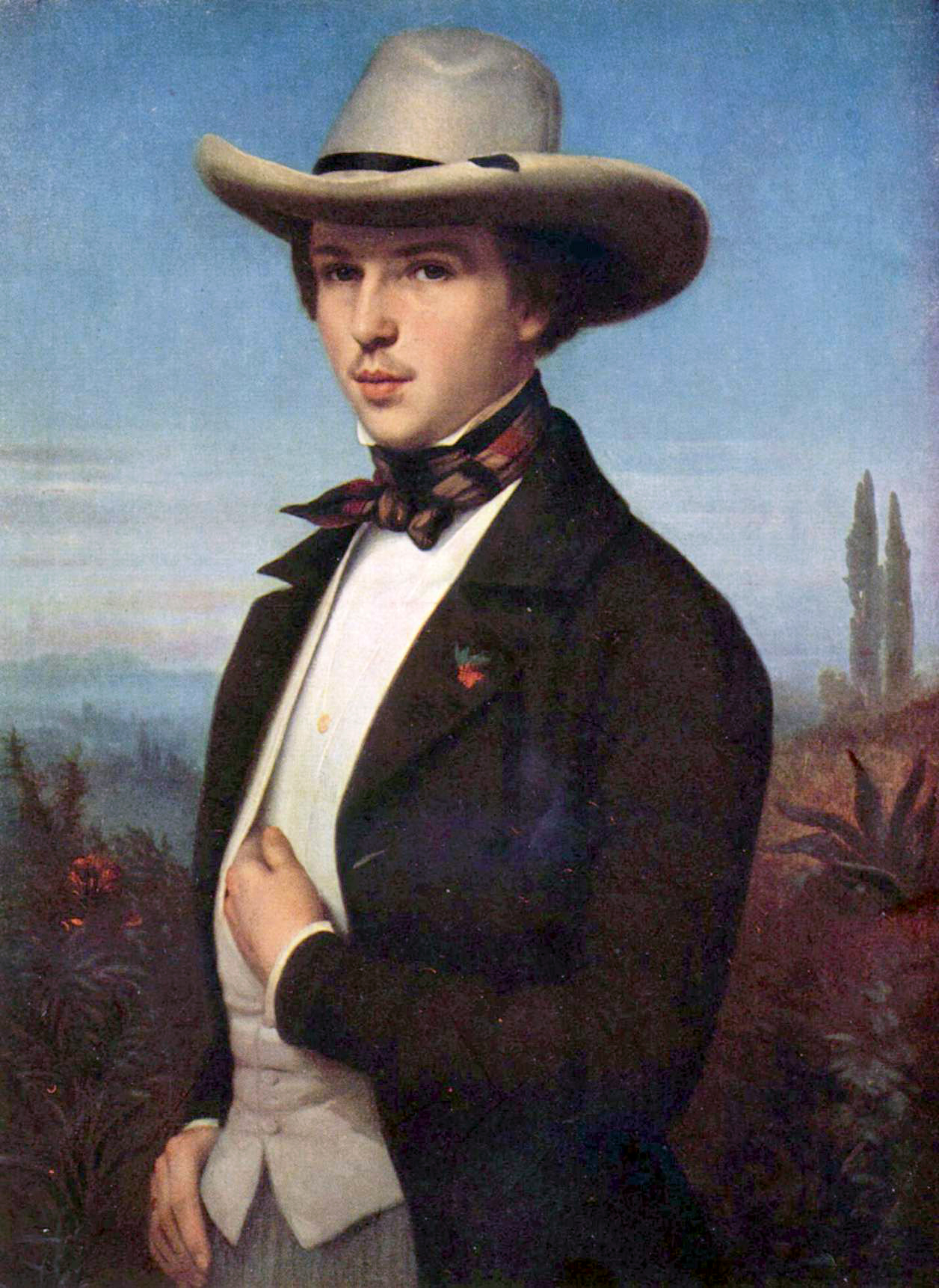
Oswald Achenbach was a German painter associated with the Düsseldorf school of painting. Though little known today, during his lifetime he was counted among the most important landscape painters of Europe. Through his teaching activities, he influenced the Kunstakademie Düsseldorf. His brother, Andreas Achenbach, who was twelve years older, was also among the most important German landscape painters of the 19th century. The two brothers were humorously called "the A and O of Landscapes" (a reference to their initials matching a common German reference to the Alpha and Omega).