

kirche äthi
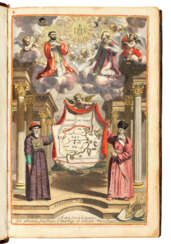

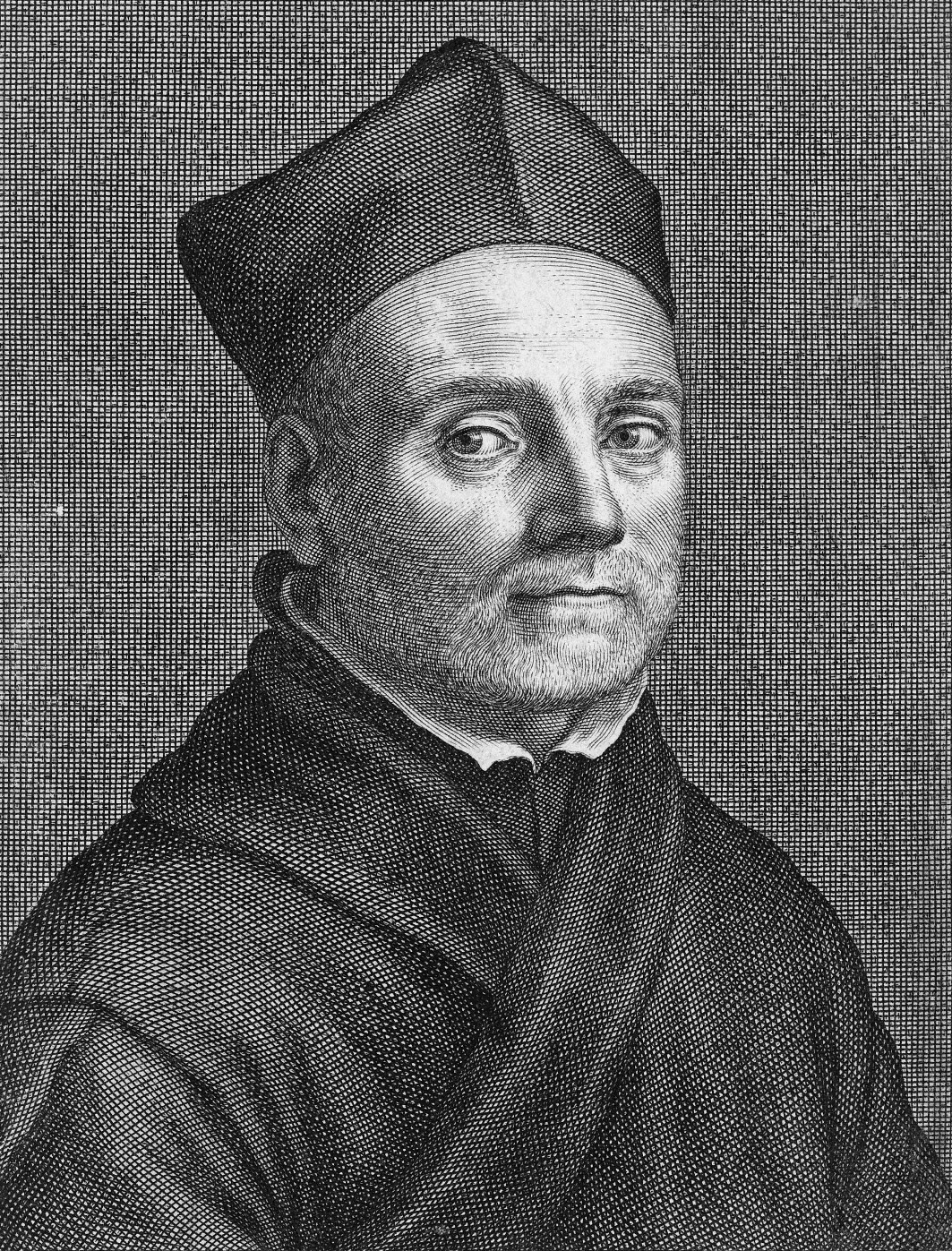
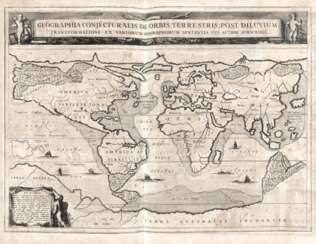
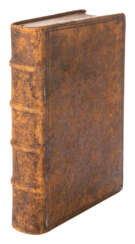
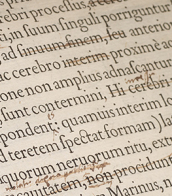
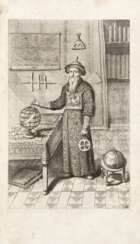
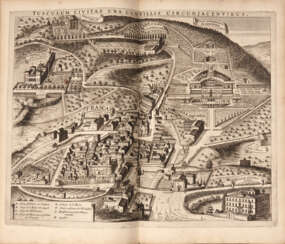
Athanasius Kircher was a German scholar, inventor, professor of mathematics and oriental studies, and a friar of the Jesuit order.
Kircher knew Greek and Hebrew, did scientific and humanities research in Germany, and was ordained in Mainz in 1628. During the Thirty Years' War he was forced to flee to Rome, where he remained for most of his life, serving as a kind of intellectual and information center for cultural and scientific information drawn not only from European sources but also from an extensive network of Jesuit missionaries. He was particularly interested in ancient Egypt and attempted to decipher hieroglyphics and other riddles. Kircher also compiled A Description of the Chinese Empire (1667), which was long one of the most influential books that shaped the European view of China.
A renowned polymath, Kircher conducted scholarly research in a variety of disciplines, including geography, astronomy, mathematics, languages, medicine, and music. He wrote some 44 books, and more than 2,000 of his manuscripts and letters have survived. He also assembled one of the first natural history collections.


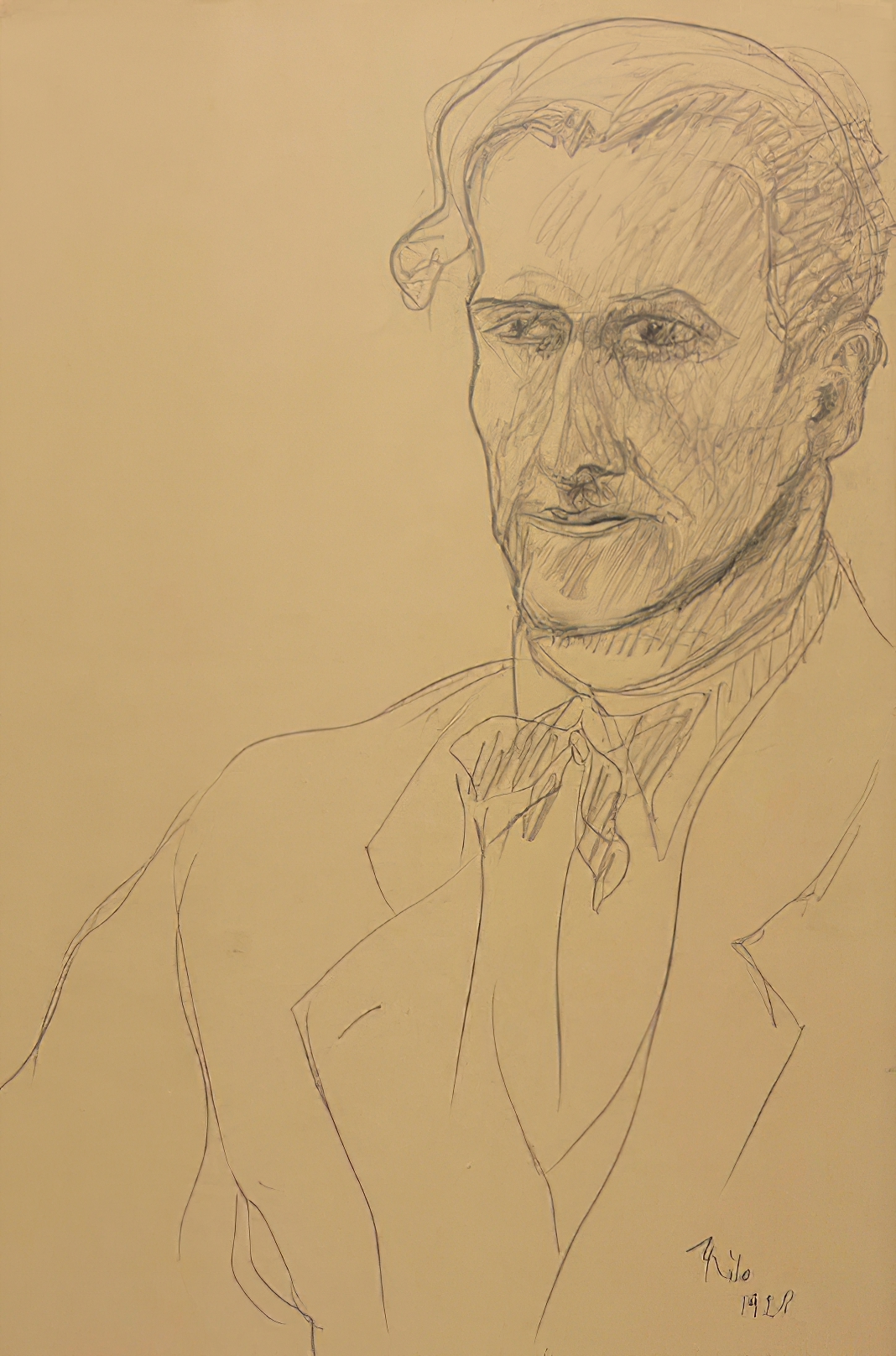
Thilo Friedrich Maatsch was a German artist and an exponent of abstract art, constructivism and concrete art.
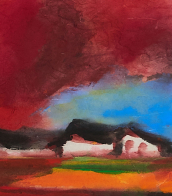


Thilo Friedrich Maatsch was a German artist and an exponent of abstract art, constructivism and concrete art.
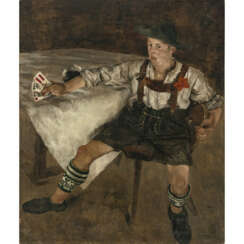


Paul Mathias Padua was a German painter. He felt committed to the tradition of Wilhelm Leibl, a realist who was highly esteemed by Adolf Hitler, and was extremely successful as an artist during the National Socialist era.
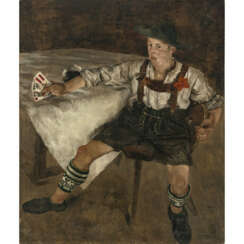

Paul Mathias Padua was a German painter. He felt committed to the tradition of Wilhelm Leibl, a realist who was highly esteemed by Adolf Hitler, and was extremely successful as an artist during the National Socialist era.
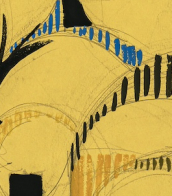
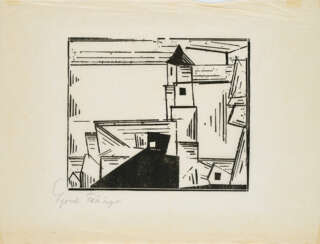

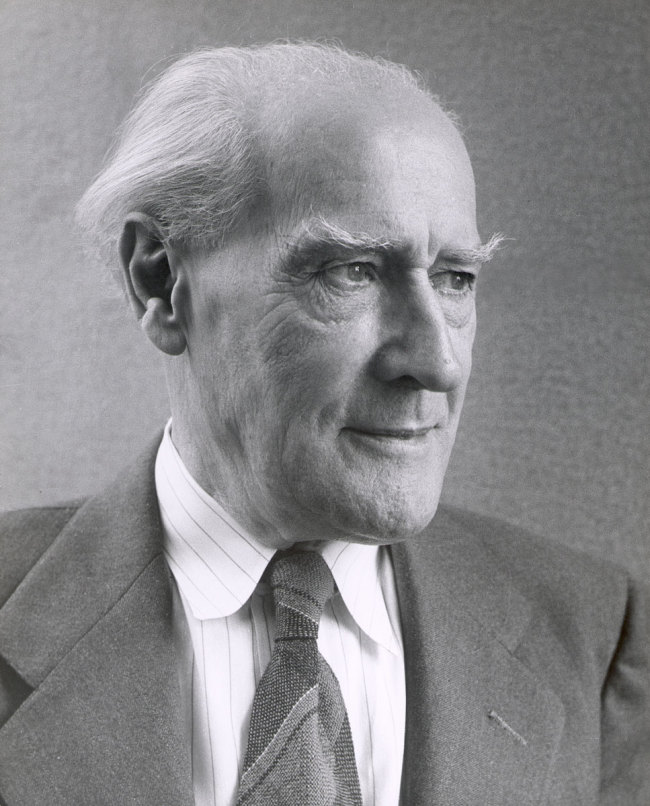
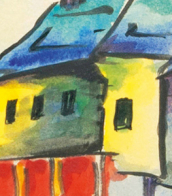
Lyonel Charles Adrian Feininger was an American-German artist renowned for his unique integration of Expressionism, Cubism, and Bauhaus principles. His body of work, which spans several critical decades in modernism's development, is celebrated for its distinctive blend of architectural and nautical motifs, articulated through planar shifts and jagged lines of Cubism, with a vibrant Orphist color palette.
Lyonel Feininger's journey as an artist began in earnest when he was 36, becoming a pivotal figure in various German expressionist groups and a founding member of the Bauhaus, where he led the printmaking workshop. His art, which also includes significant contributions to caricature and photography, explores the intricate relationship between humanity and industrialization, evident in his depictions of architectural and mechanized forms.
His work was subject to Nazi criticism, being labeled as "degenerate," which led to his return to the United States, where he continued to evolve his artistic style. Posthumously, Lyonel Feininger's art has been the focus of several retrospectives, and his pieces, like "Jesuits III," continue to fetch high figures at auctions, underscoring his lasting impact on the art world.
Notably, Lyonel Feininger's "Cathedral" woodcut, representing the Bauhaus's utopian vision, remains one of his most iconic works, symbolizing the integration of art and craftsmanship with its avant-garde yet traditional approach. His legacy is further carried by his sons, Andreas and T. Lux Feininger, who also made their marks in the arts.
For collectors and art and antiques experts, Feininger's work represents a fascinating intersection of various art movements and a testament to the enduring nature of expressive and innovative artistry. To stay updated on new product sales and auction events related to Lyonel Feininger, consider signing up for updates, ensuring you're informed about the latest opportunities to engage with his enduring legacy.
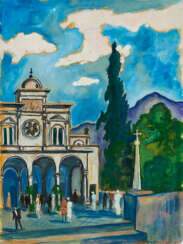

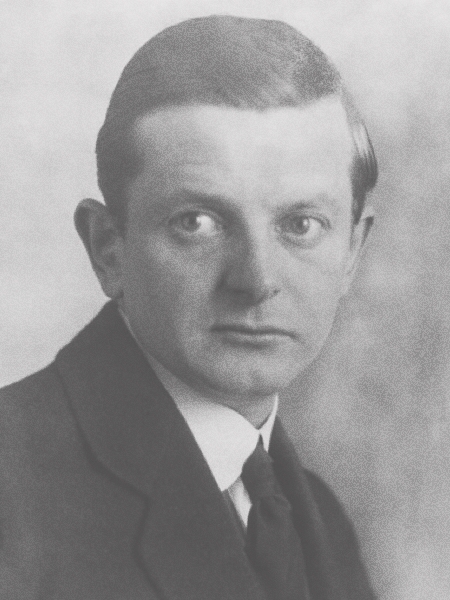
Franz Heckendorf was a German painter and graphic artist who was particularly successful during the Weimar Republic. During the National Socialist era, he was sentenced to ten years in prison after helping Berlin Jews threatened with deportation to extermination camps to escape to Switzerland.
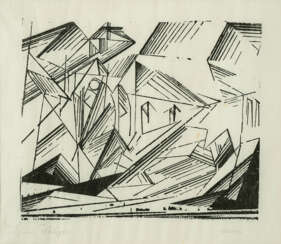

Lyonel Charles Adrian Feininger was an American-German artist renowned for his unique integration of Expressionism, Cubism, and Bauhaus principles. His body of work, which spans several critical decades in modernism's development, is celebrated for its distinctive blend of architectural and nautical motifs, articulated through planar shifts and jagged lines of Cubism, with a vibrant Orphist color palette.
Lyonel Feininger's journey as an artist began in earnest when he was 36, becoming a pivotal figure in various German expressionist groups and a founding member of the Bauhaus, where he led the printmaking workshop. His art, which also includes significant contributions to caricature and photography, explores the intricate relationship between humanity and industrialization, evident in his depictions of architectural and mechanized forms.
His work was subject to Nazi criticism, being labeled as "degenerate," which led to his return to the United States, where he continued to evolve his artistic style. Posthumously, Lyonel Feininger's art has been the focus of several retrospectives, and his pieces, like "Jesuits III," continue to fetch high figures at auctions, underscoring his lasting impact on the art world.
Notably, Lyonel Feininger's "Cathedral" woodcut, representing the Bauhaus's utopian vision, remains one of his most iconic works, symbolizing the integration of art and craftsmanship with its avant-garde yet traditional approach. His legacy is further carried by his sons, Andreas and T. Lux Feininger, who also made their marks in the arts.
For collectors and art and antiques experts, Feininger's work represents a fascinating intersection of various art movements and a testament to the enduring nature of expressive and innovative artistry. To stay updated on new product sales and auction events related to Lyonel Feininger, consider signing up for updates, ensuring you're informed about the latest opportunities to engage with his enduring legacy.





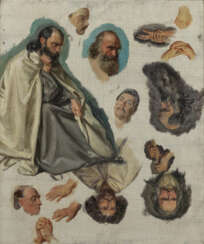

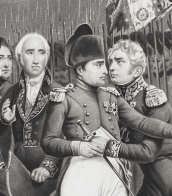

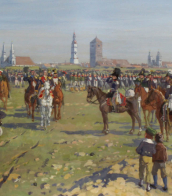


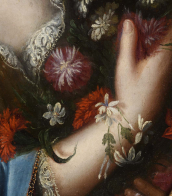


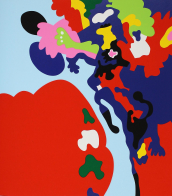









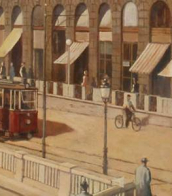


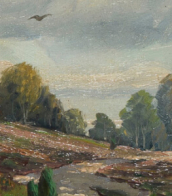


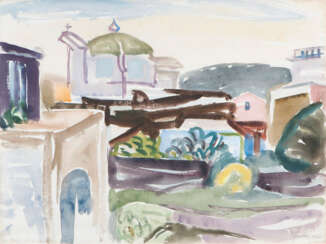

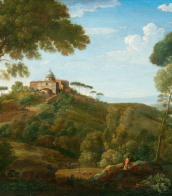






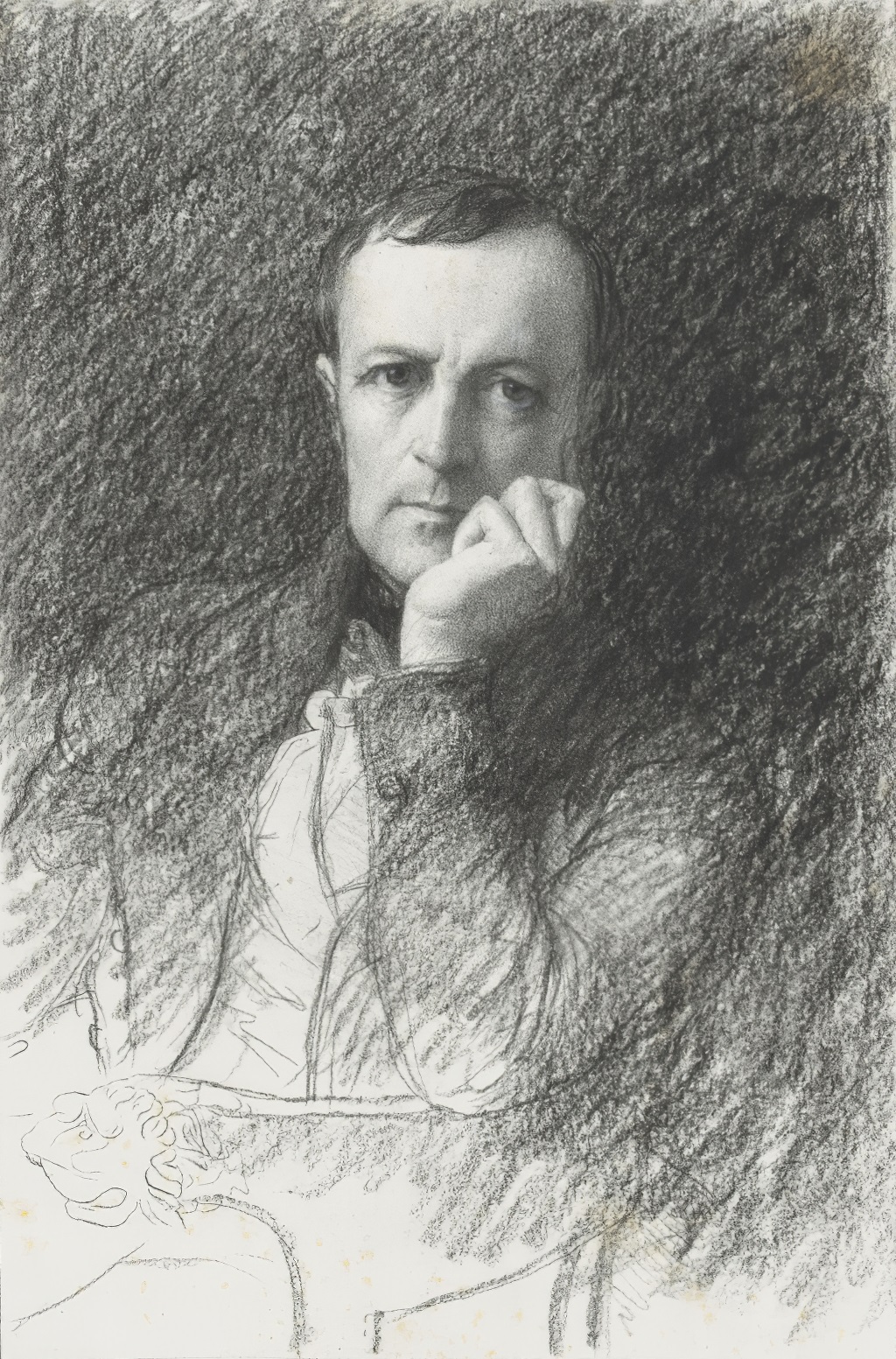
Paul Delaroche was renowned for his meticulously detailed historical scenes that captured both the essence and drama of bygone eras. Delaroche's work bridged the Neoclassical and Romantic movements, bringing to life figures and moments from both English and French history with a narrative intensity that resonated across Europe.
Paul Delaroche's education under the influential history painters Antoine-Jean Gros and Watelet instilled in him a profound understanding of historical accuracy and dramatic composition. His debut at the Paris Salon in 1822 marked the beginning of a highly successful career in which he received widespread acclaim, particularly for his poignant portrayal of "The Execution of Lady Jane Grey" in 1834, a piece that remains one of his most celebrated works.
Throughout his career, Paul Delaroche was committed to the educational aspect of art. In 1833, he became a professor at the École des Beaux-Arts in Paris, influencing a generation of artists with his emphasis on historical fidelity and narrative depth. His major works, like the grand mural "The Hemicycle," which he completed between 1837 and 1841, showcased his talent for orchestrating large-scale compositions that featured an array of historical figures.
Paul Delaroche's approach to history painting was characterized by a "philosophical analysis" of events, aiming to link historical truth with the nineteenth-century understanding of time and morality. His attention to detail and the emotional gravity of his subjects helped forge a visceral connection with viewers, making his works a staple in both public exhibitions and private collections.
For collectors and enthusiasts wishing to delve deeper into Delaroche's legacy or view his works, ongoing exhibitions and collections can be accessed through various art galleries and museums worldwide. To stay informed about such events and opportunities, consider signing up for updates focused on Paul Delaroche's works and their exhibition schedules.
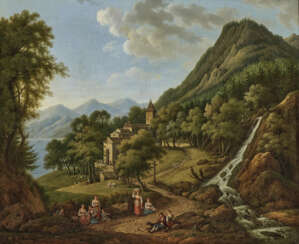




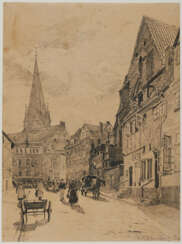

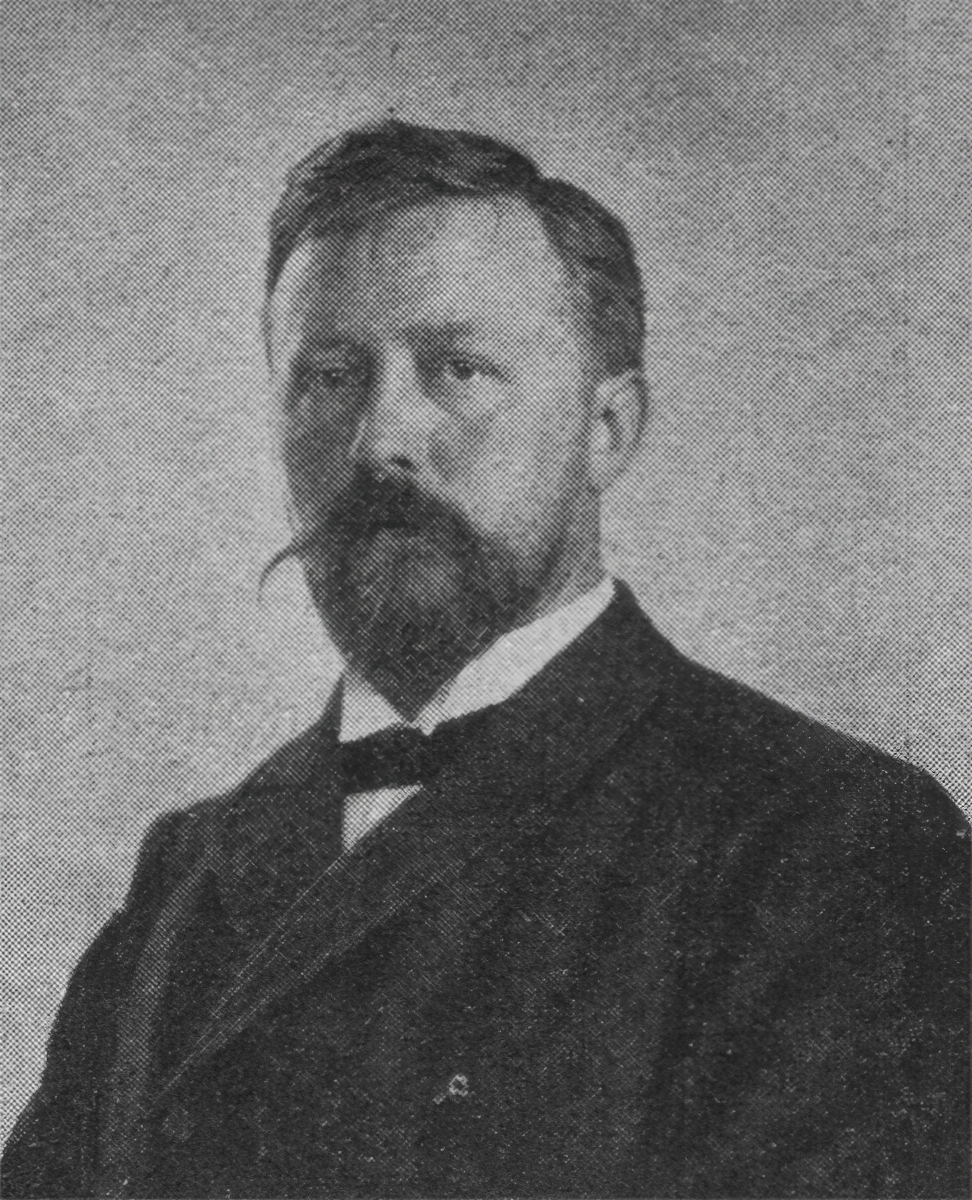
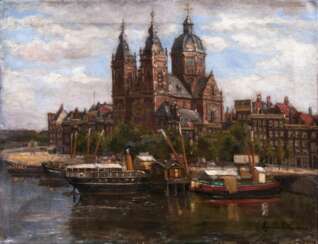
Friedrich Kallmorgen was a German Impressionist painter who specialized in landscapes and cityscapes.












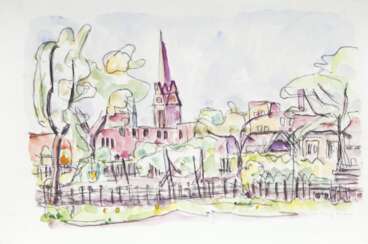

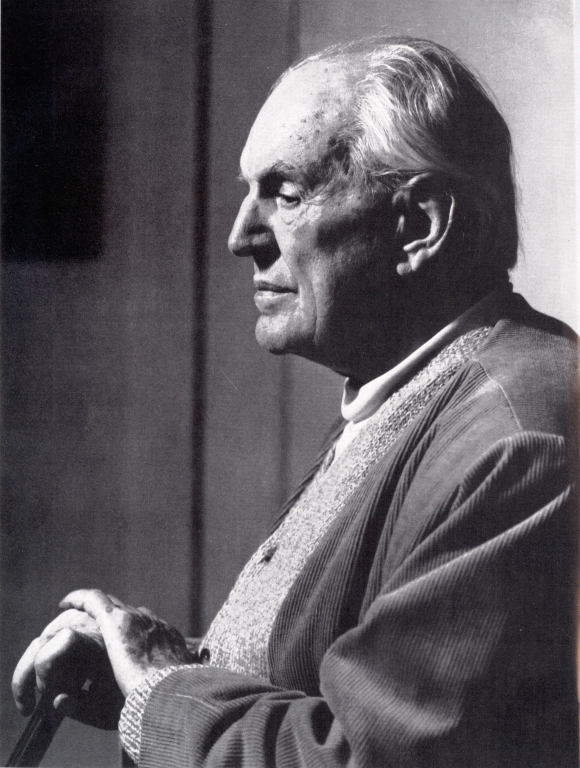
Ivo Hauptmann was a German painter. He was one of the founders of the artist groups Freie Secession (Berlin 1914) and Hamburgische Sezession (1919).
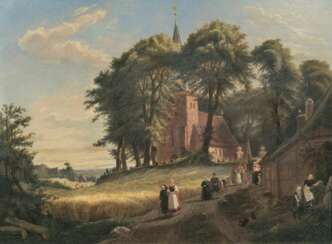

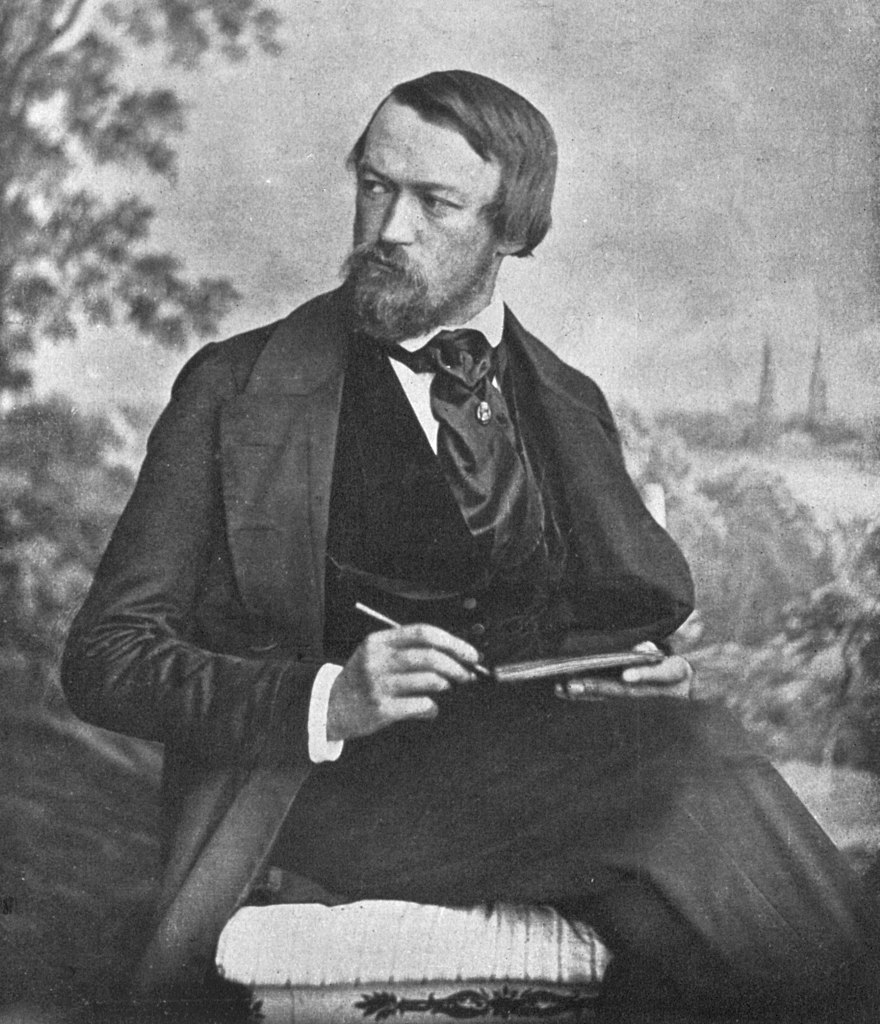
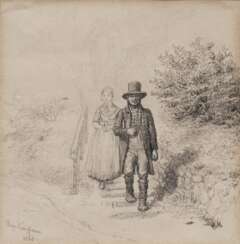

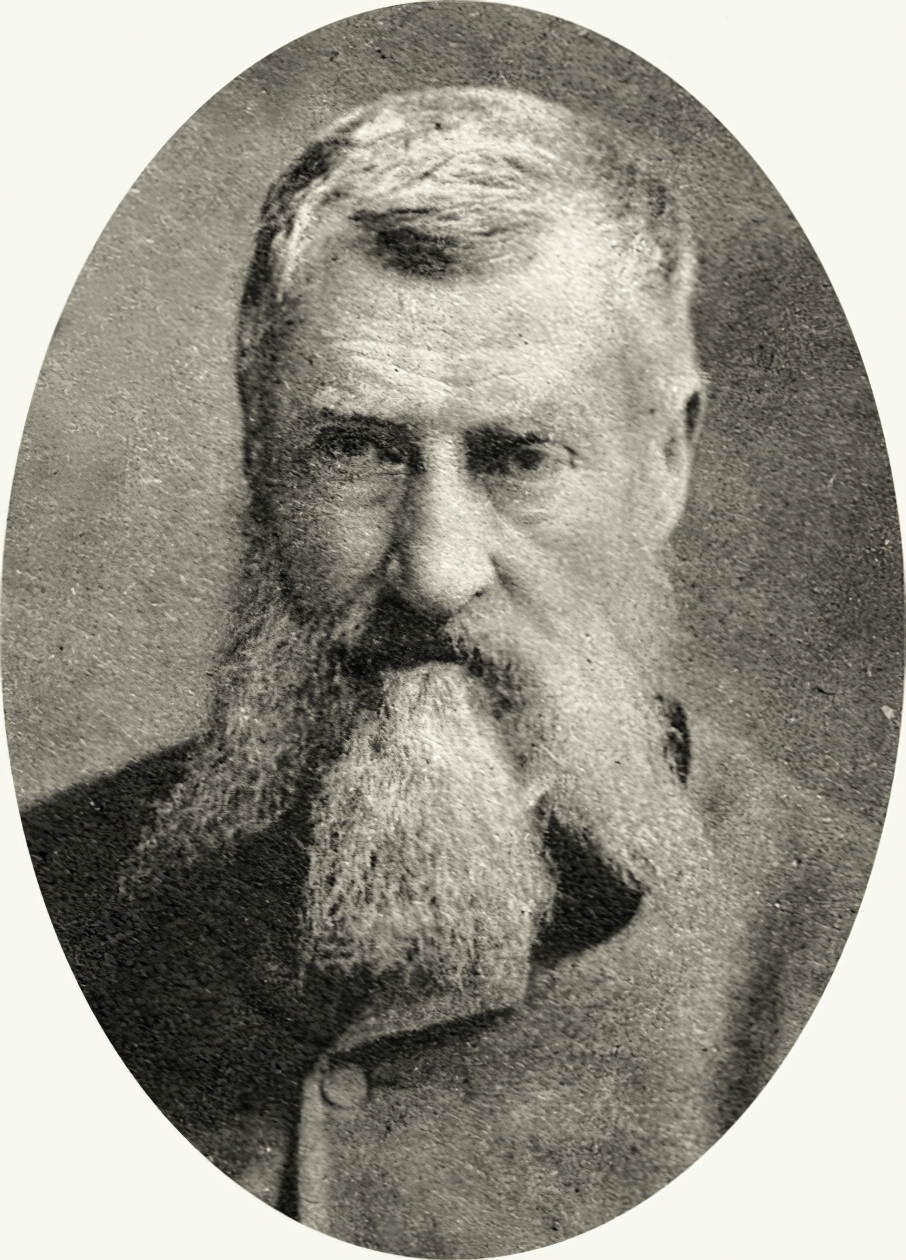
Hermann Kauffmann (the elder) was a German painter and lithographer, and one of the main representatives of the Hamburger Schule.







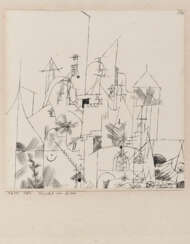

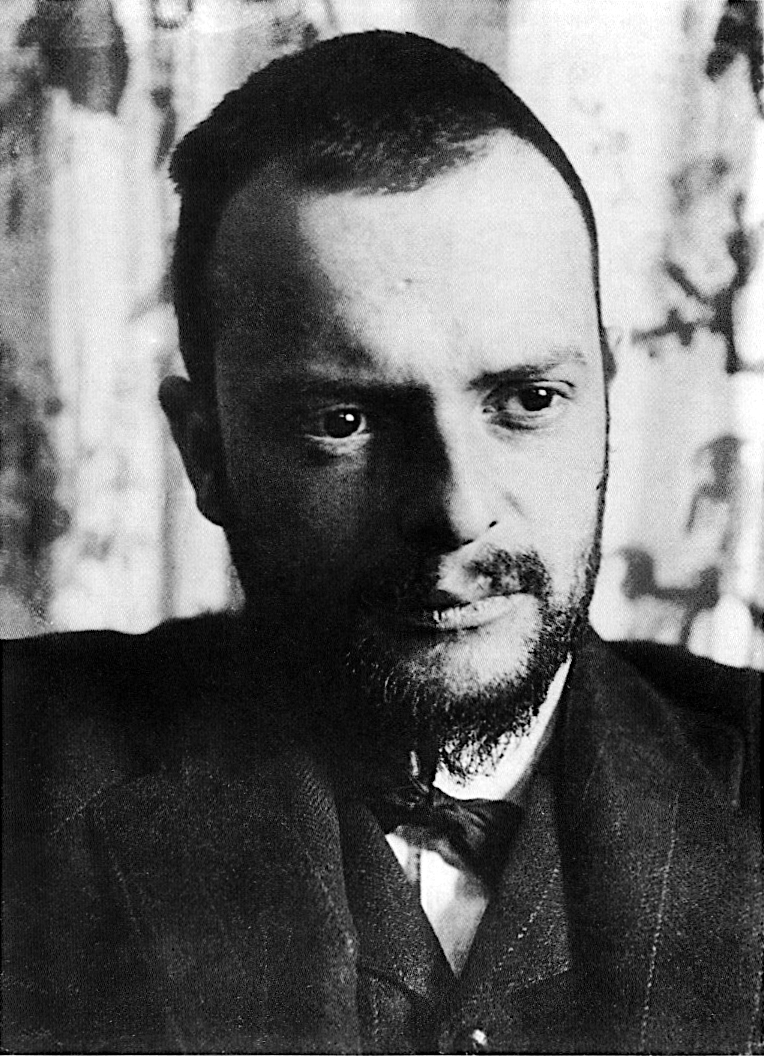
Paul Klee, a Swiss-born German artist, was renowned for his unique contribution to the art world, blending elements from expressionism, cubism, and surrealism. Born on December 18, 1879, in Münchenbuchsee, Switzerland, Klee was the second child of a German music teacher and a Swiss singer. Despite early musical talent, Klee pursued visual arts, influenced by a dissatisfaction with the state of modern music and a desire for creative freedom.
Klee's artistic journey began in earnest after he decided against a career in music, despite his exceptional skills with the violin. His education at the Academy of Fine Arts in Munich under the guidance of Heinrich Knirr and Franz von Stuck was crucial in shaping his artistic direction. Although he struggled with color initially, Klee later became a master of color theory, a transition marked by his transformative visit to Tunisia in 1914. This trip was a pivotal moment, leading Klee to declare, "Color and I are one. I am a painter".
Throughout his career, Klee's work was characterized by a profound sense of experimentation and innovation. He explored the boundaries of abstract art, drawing inspiration from his vast interests, including literature, music, and his own theories on art and aesthetics. His lectures on form and design theory at the Bauhaus, where he taught alongside luminaries like Wassily Kandinsky, are considered as seminal to modern art as Leonardo da Vinci's treatises were to the Renaissance.
Klee's art is celebrated for its intricacy, humor, and the ability to express complex themes through seemingly simplistic and childlike forms. His notable works, such as "Twittering Machine" (1922) and "Highway and Byways" (1928), showcase his skill in using color, shape, and line to evoke depth and emotion.
For collectors and art and antiques experts, Klee's legacy is a testament to the power of innovation and the search for personal expression within the avant-garde movements of the 20th century. His works, housed in prestigious museums and galleries around the world, continue to inspire and intrigue.
If you're passionate about art and wish to stay informed about new discoveries and sales related to Paul Klee's works, consider signing up for updates. This subscription will ensure you're alerted to upcoming auction events and product sales, allowing you to deepen your collection and appreciation of this remarkable artist's legacy.









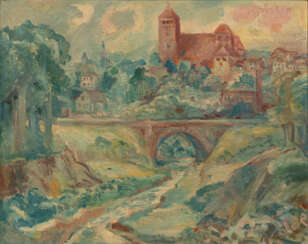

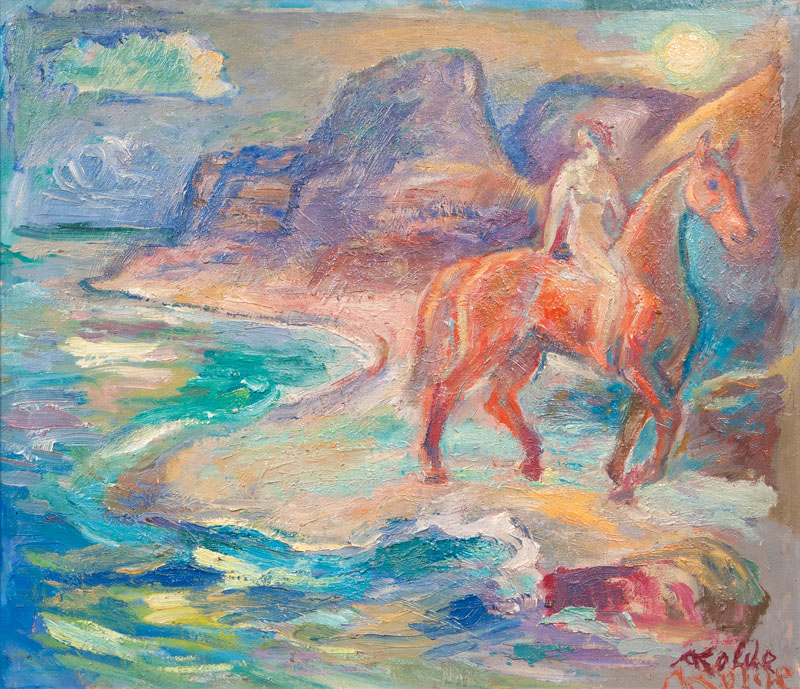
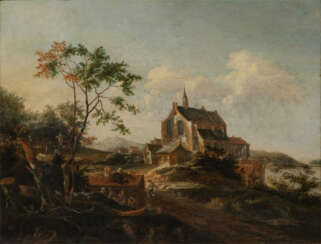

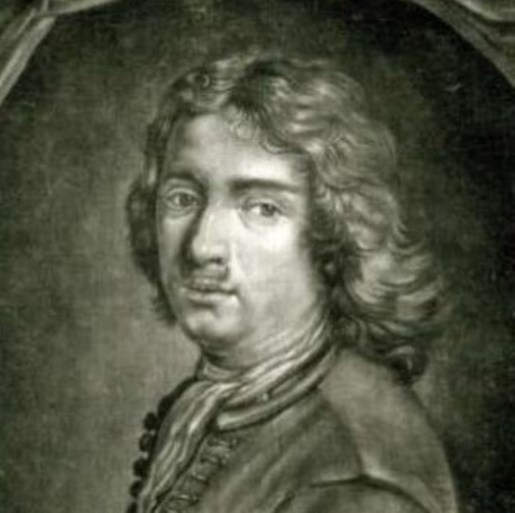


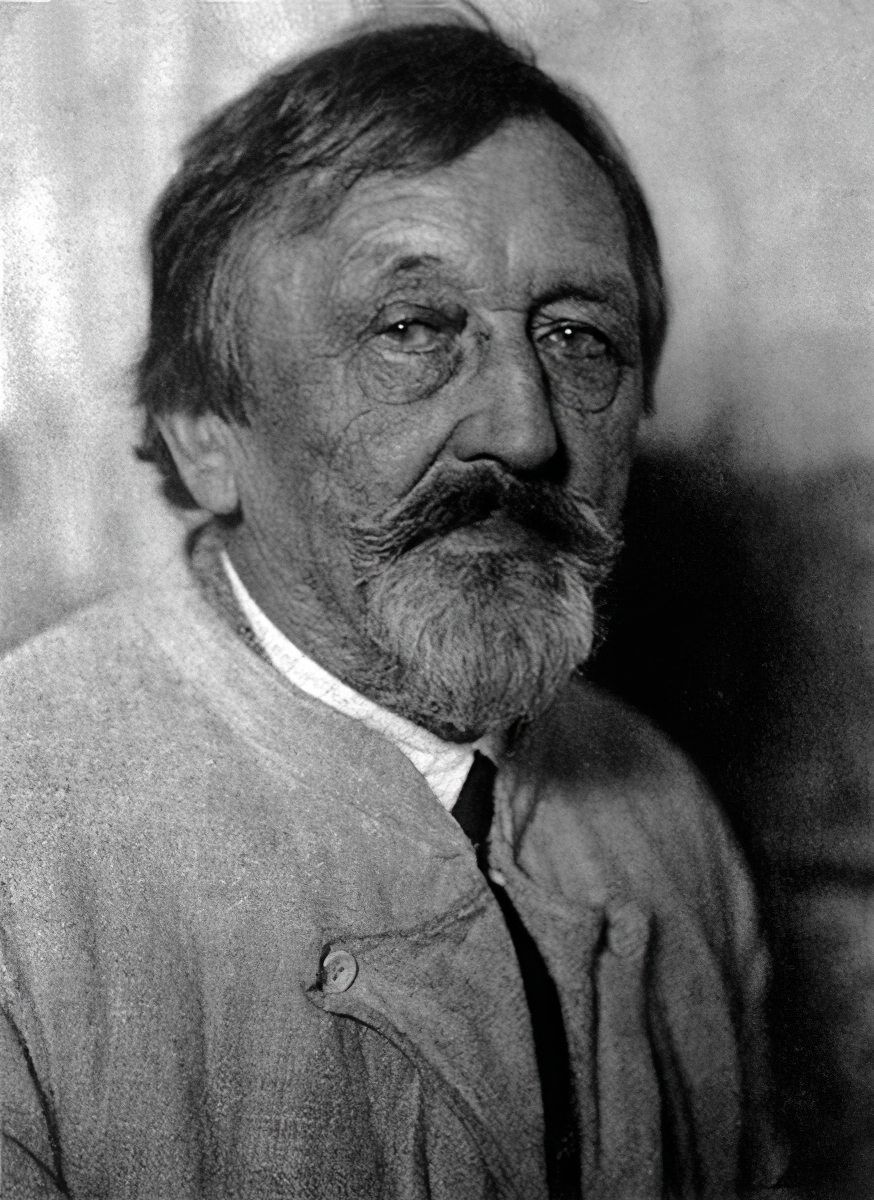
Christian Rohlfs was a German painter and printmaker, one of the important representatives of German expressionism.
