müller ger







Martin Kippenberger was a German artist known for his extremely prolific output in a wide range of styles and media, superfiction as well as his provocative, jocular and hard-drinking public persona.
Kippenberger was "widely regarded as one of the most talented German artists of his generation," according to Roberta Smith of the New York Times. He was at the center of a generation of German enfants terribles including Albert Oehlen, Markus Oehlen, Werner Büttner, Georg Herold, Dieter Göls, and Günther Förg.






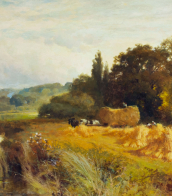



Gerhard Richter is a German visual artist. Richter has produced abstract as well as photorealistic paintings, and also photographs and glass pieces. He is widely regarded as one of the most important contemporary German artists and several of his works have set record prices at auction.
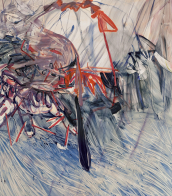
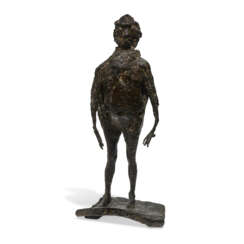

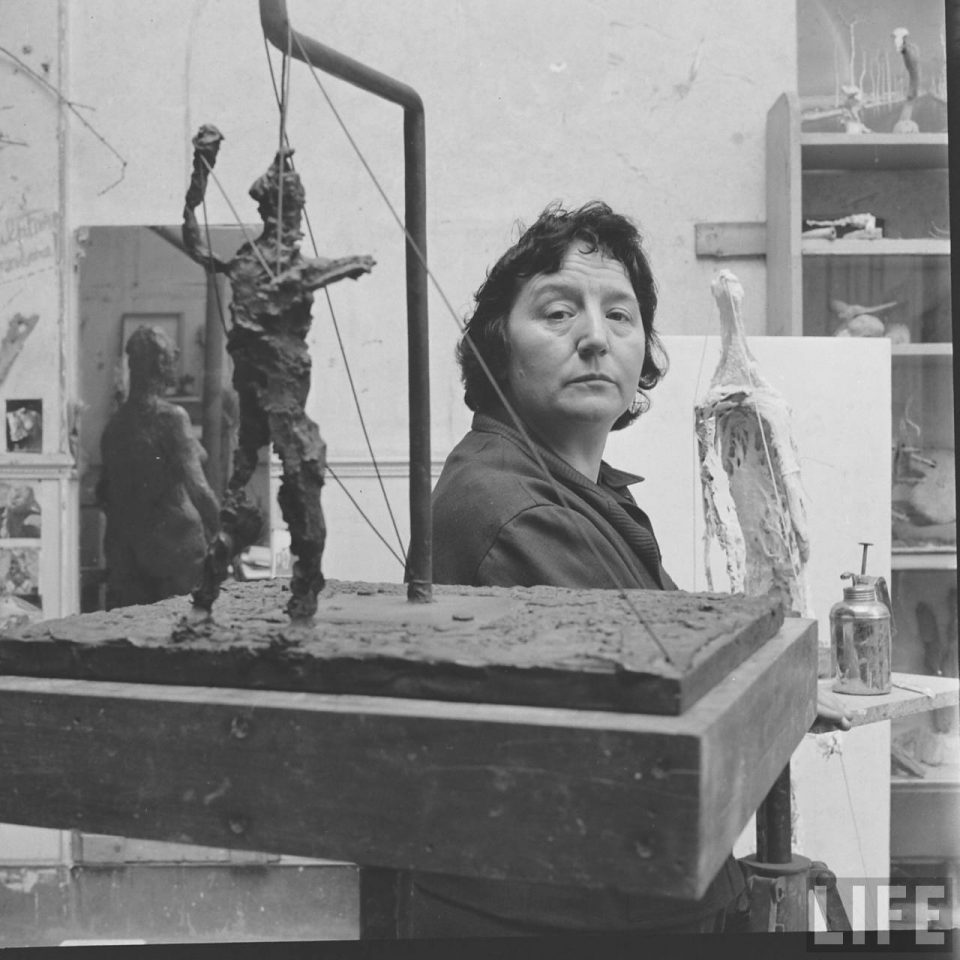
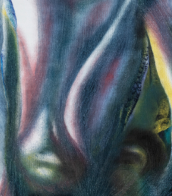


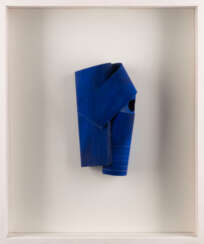

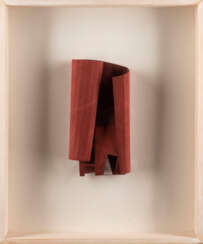




Thomas Müller is a German conceptual artist and graphic designer.
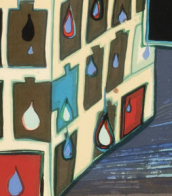
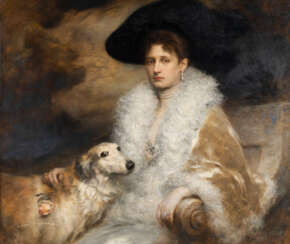

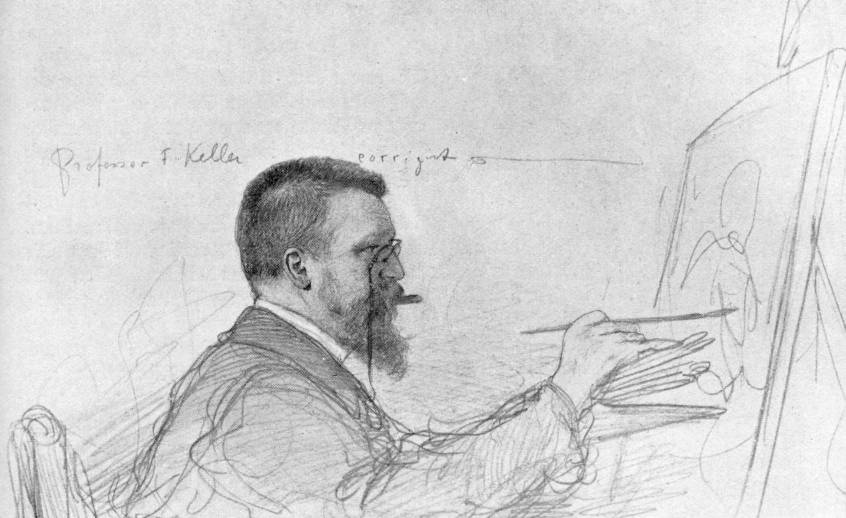
Ferdinand Keller was a German painter of the last third of the nineteenth and early twentieth centuries. He is known as a genre and historical painter as well as a teacher.
Keller earned his first major success in 1867 with his painting The Death of King Philip II of Spain. In his monumental works, he celebrated historical, dynastic, and cultural episodes in the history of Germany and Baden. One of his famous works is the painting "Apotheosis of Kaiser Wilhelm I", which was purchased by Kaiser Wilhelm II. Keller's works now grace the halls of theaters including the Baden State Theater and the Semper Opera in Dresden.
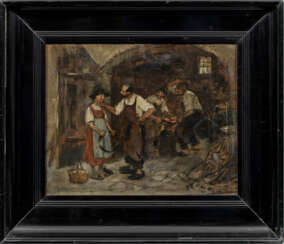

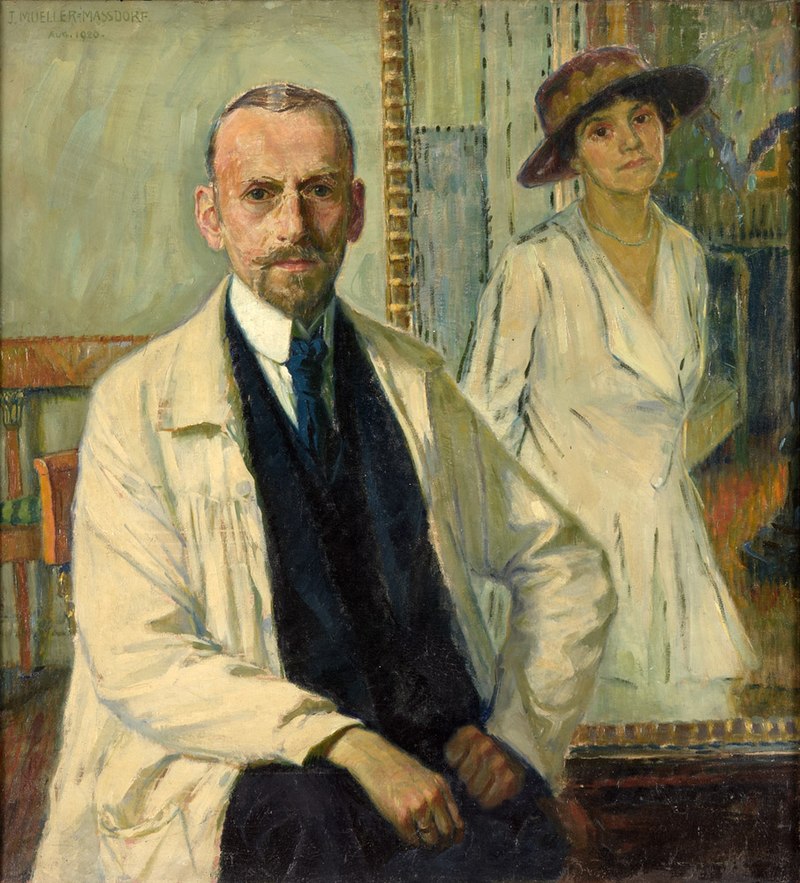
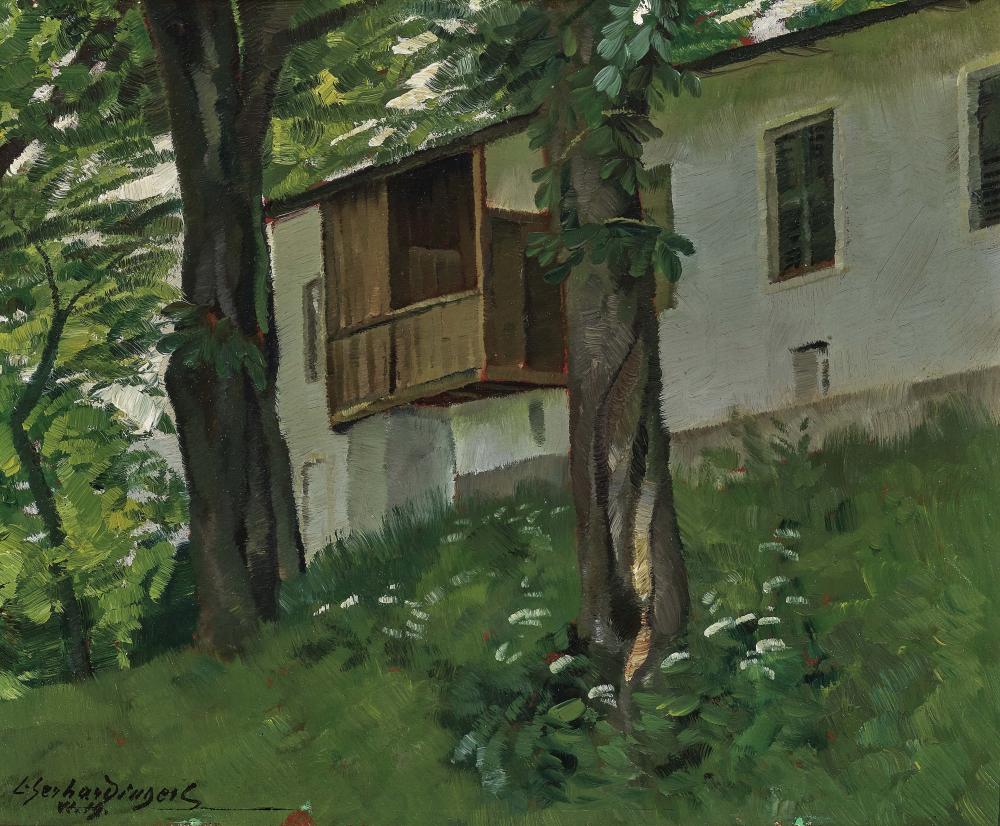
Julius Muller-Massdorf was a German portrait painter, genre painter, and illustrator.
He studied at the Düsseldorf Academy of Fine Arts and later became a professor. Muller-Massdorf painted interior, street, park, and beach scenes. He also worked as an illustrator for the press. In the later works of the artist there is a sense of the Impressionist trend.

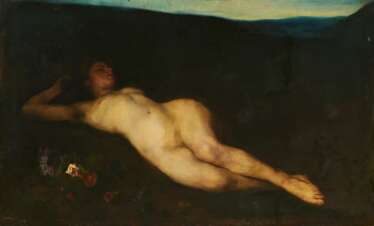

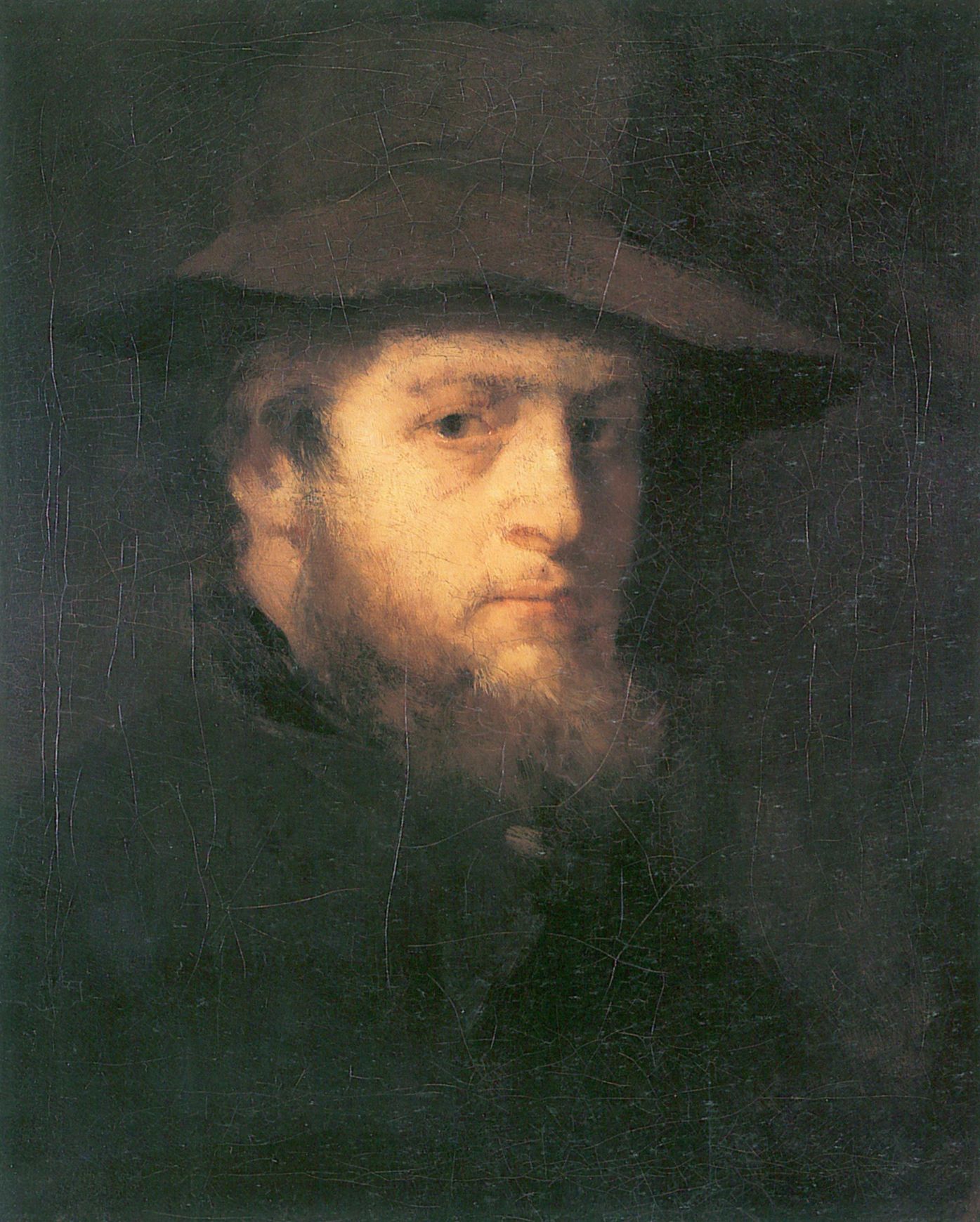
Victor Müller was a German historical painter. He studied painting in Antwerp and Paris.
Victor Müller painted on subjects drawn from mythology, medieval legends and poetry, distinguished by his noble idealism and especially by his brilliant colouring.
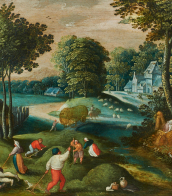


Gerhard Richter is a German visual artist. Richter has produced abstract as well as photorealistic paintings, and also photographs and glass pieces. He is widely regarded as one of the most important contemporary German artists and several of his works have set record prices at auction.
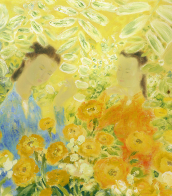

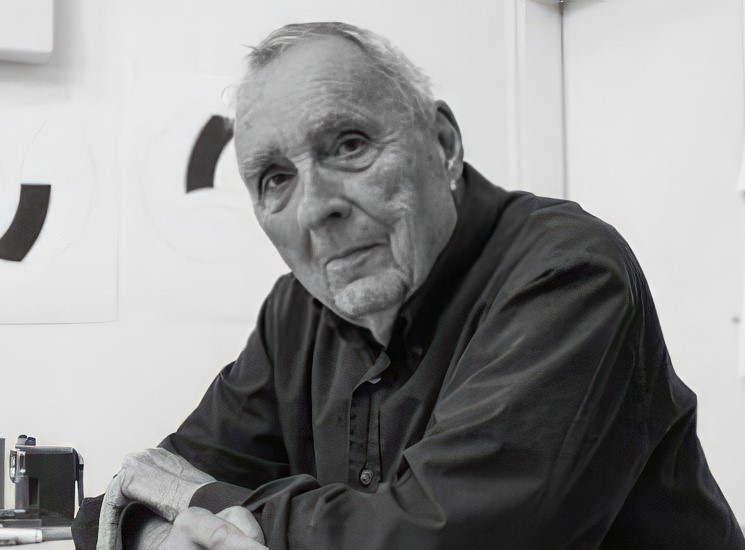
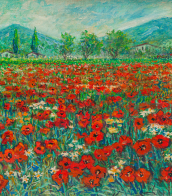
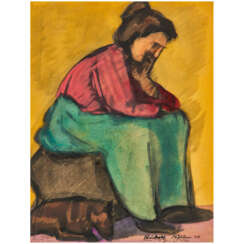

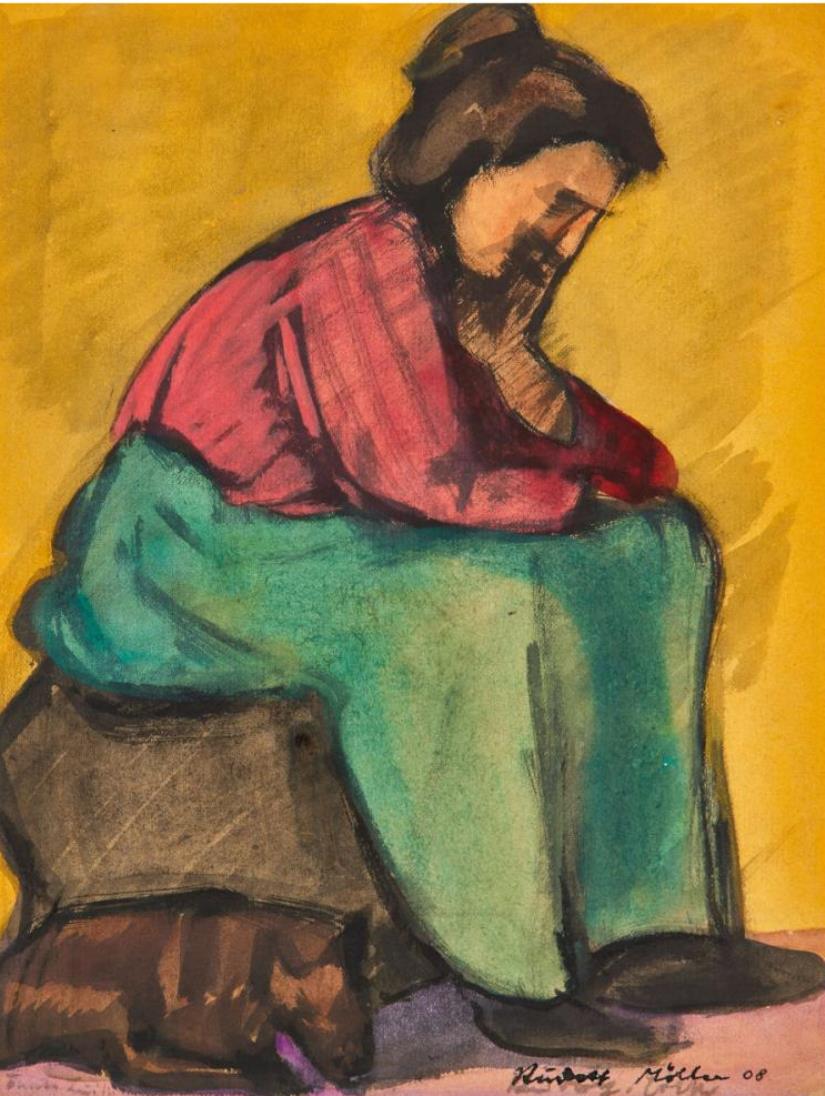



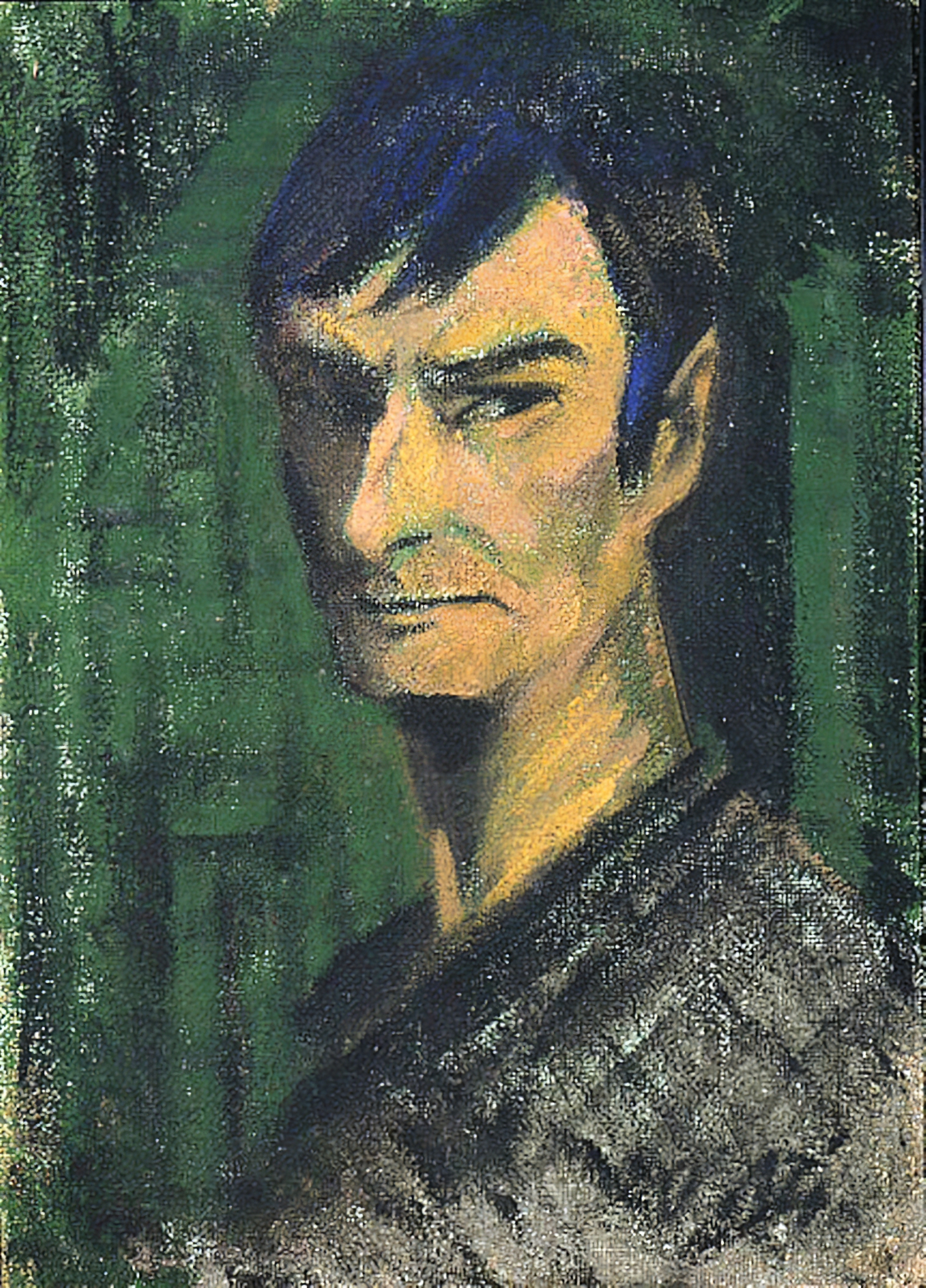
Otto Mueller was a German artist of the first third of the twentieth century. He is known as a painter, graphic artist and printmaker, a representative of German Expressionism, a member of the artists' group "Bridge".
Otto Mueller is considered one of the most lyrical German expressionist painters. His work reflected the unity of man and nature, characterized by simplification of forms, colors and contours. He became famous for his paintings of nude bodies and gypsy women, because of his fascination with which the artist was once nicknamed "Gypsy Mueller".
Mueller preferred to work in tempera on rough canvas, creating a matte surface. His artistic legacy includes 172 works, including lithographs, woodcuts and etchings.
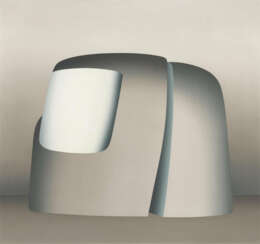

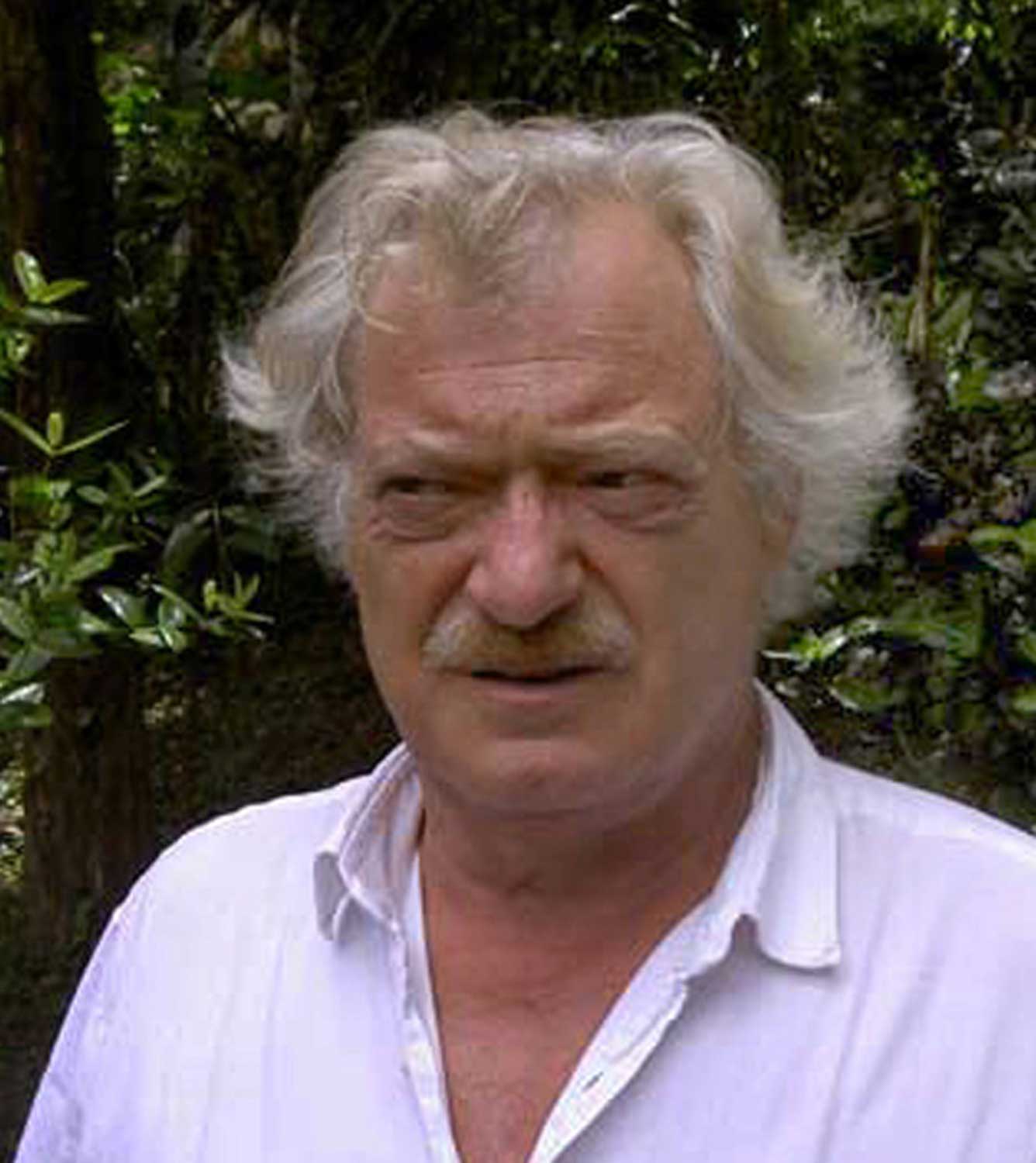
Lambert Maria Wintersberger was a German artist.
With other artists such as Markus Lüpertz, Karl Horst Hödicke, and Bernd Koberling, he helped found the Gallery "Großgörschen 35" in Berlin.
Lambert Maria Wintersberger was the laureate of the Centre Européen d'Actions Artistique Contemporaines in Strasbourg in 1992, and in 2005 and 2006, he was the guest artist at the Majolika Ceramic Factory in Karlsruhe.
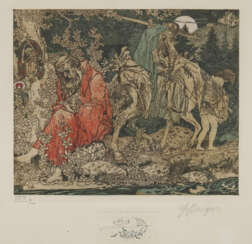

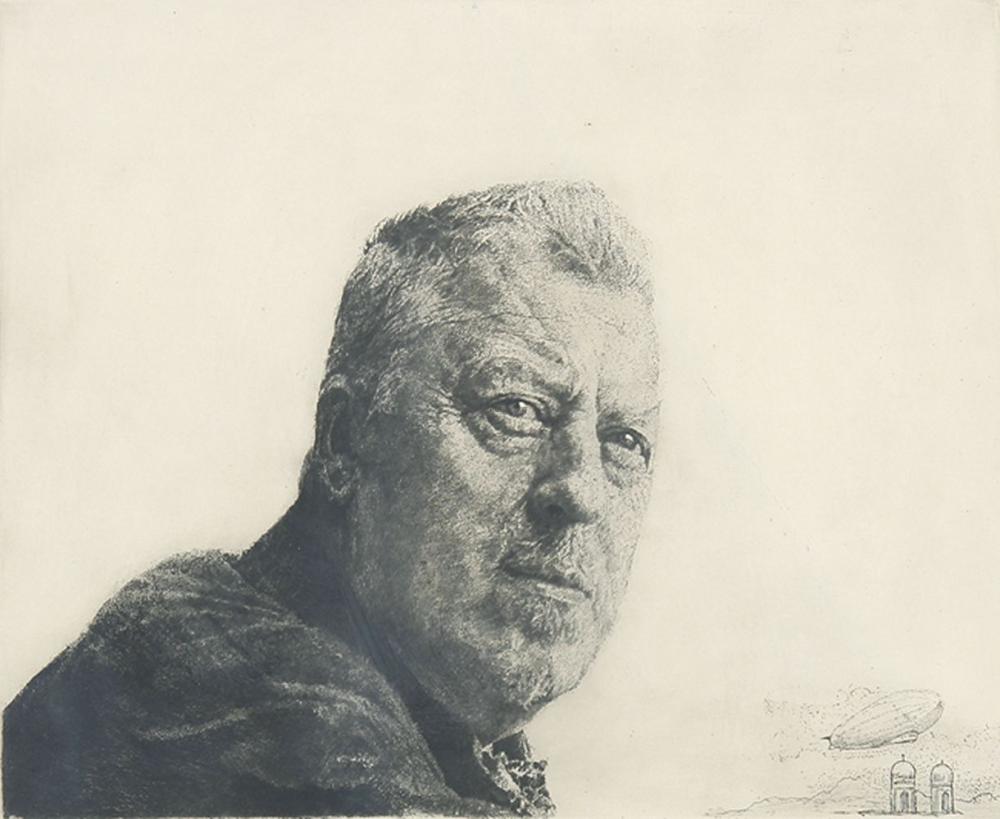
Ferdinand Staeger was a Czech-born German symbolist painter and graphic artist, illustrator and fabric designer.
Staeger studied at the School of Technical Design in Brno and then the School of Applied Arts in Prague, from 1908 he lived in Munich and collaborated with the magazine Jugend. He was a participant in the First World War, his war drawings are characterized by humanity. After the war he illustrated books by Gerhard Hauptmann, Josef von Eichendorff, Eduard Mörike and Adalbert Stifter with great success.
During the Third Reich, Staeger collaborated with the authorities by painting several propaganda pictures, for which he was awarded the title of professor. In 1943 he lost his home in Munich to Allied bombs and many works were lost.
After World War II, he painted in an impressionist style, creating paintings of mythical, mystical, symbolic and religious themes. Many works belong to the genre of "magic realism". Staeger is also known as a tapestry designer, master of etching and ex-libris, and was a member of the Association of German Artists. His wife Sidonie Springer (1878-1937) was also a painter and graphic artist.


Otto Mueller was a German artist of the first third of the twentieth century. He is known as a painter, graphic artist and printmaker, a representative of German Expressionism, a member of the artists' group "Bridge".
Otto Mueller is considered one of the most lyrical German expressionist painters. His work reflected the unity of man and nature, characterized by simplification of forms, colors and contours. He became famous for his paintings of nude bodies and gypsy women, because of his fascination with which the artist was once nicknamed "Gypsy Mueller".
Mueller preferred to work in tempera on rough canvas, creating a matte surface. His artistic legacy includes 172 works, including lithographs, woodcuts and etchings.
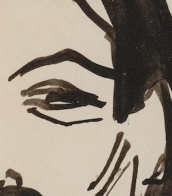
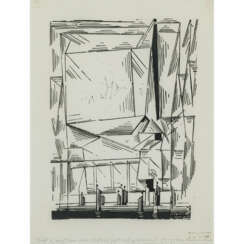

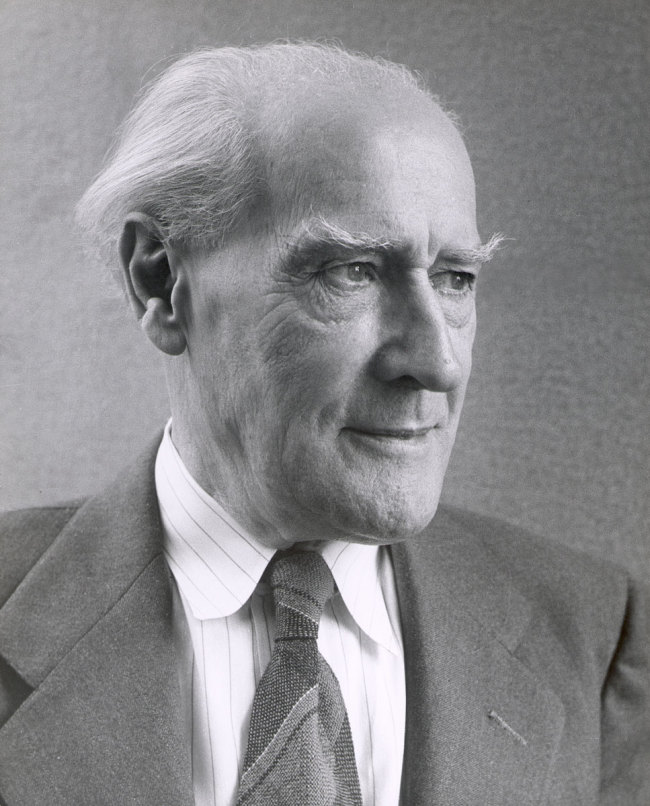
Lyonel Charles Adrian Feininger was an American-German artist renowned for his unique integration of Expressionism, Cubism, and Bauhaus principles. His body of work, which spans several critical decades in modernism's development, is celebrated for its distinctive blend of architectural and nautical motifs, articulated through planar shifts and jagged lines of Cubism, with a vibrant Orphist color palette.
Lyonel Feininger's journey as an artist began in earnest when he was 36, becoming a pivotal figure in various German expressionist groups and a founding member of the Bauhaus, where he led the printmaking workshop. His art, which also includes significant contributions to caricature and photography, explores the intricate relationship between humanity and industrialization, evident in his depictions of architectural and mechanized forms.
His work was subject to Nazi criticism, being labeled as "degenerate," which led to his return to the United States, where he continued to evolve his artistic style. Posthumously, Lyonel Feininger's art has been the focus of several retrospectives, and his pieces, like "Jesuits III," continue to fetch high figures at auctions, underscoring his lasting impact on the art world.
Notably, Lyonel Feininger's "Cathedral" woodcut, representing the Bauhaus's utopian vision, remains one of his most iconic works, symbolizing the integration of art and craftsmanship with its avant-garde yet traditional approach. His legacy is further carried by his sons, Andreas and T. Lux Feininger, who also made their marks in the arts.
For collectors and art and antiques experts, Feininger's work represents a fascinating intersection of various art movements and a testament to the enduring nature of expressive and innovative artistry. To stay updated on new product sales and auction events related to Lyonel Feininger, consider signing up for updates, ensuring you're informed about the latest opportunities to engage with his enduring legacy.
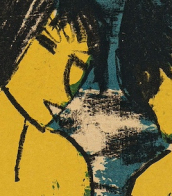


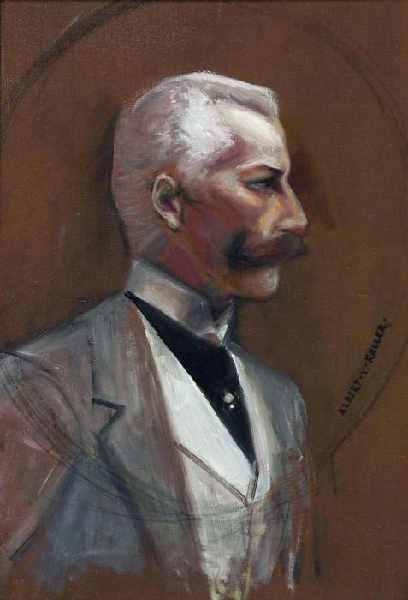
Albert von Keller was a German painter of Swiss ancestry, best known for his indoor scenes and portraits featuring female figures. Born on April 27, 1844, in Gais, Switzerland, he began his career by studying law at Ludwig Maximilian University, but his passion for art led him to the Academy of Fine Arts in Munich. His art journey took him through France and Italy, honing his style through various studio experiences.
Von Keller is recognized for his portraits depicting women in indoor environments, often shown in striking poses or engaging in activities. His later works took on supernatural, mystical, or religious themes. One of his notable achievements was co-founding the Munich Secession in 1892, where he served as vice president from 1904 to 1920.
Several of his works are housed in museums and galleries, such as "Irene von Keller with her son Balthasar" (1888), "The Pianist," and "Chopin" (1873). He also received the Knight's Cross of the Order of the Merit of the Bavarian Crown in 1878.
For collectors and art enthusiasts interested in learning more about Albert von Keller and his work, consider subscribing to updates to stay informed about new product sales and auction events related to this artist. These updates will help you track his artworks and any upcoming exhibitions.