new look
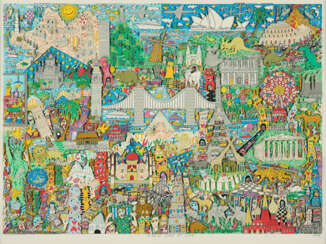


James Rizzi was a renowned American artist, celebrated for his vibrant and playful Pop Art style. Born in Brooklyn, New York, Rizzi's unique approach to art combined childlike whimsy with bold, animated creations. His 3D artworks, characterized by their intricate detail and lively city scenes, set him apart in the art world.
James Rizzi's artistic journey was marked by a series of notable achievements and contributions. He gained recognition in the late 1970s and early 1980s, showcasing his works at prestigious venues like the Brooklyn Museum and creating album covers and animations for the Tom Tom Club. His style evolved into creating 3D constructions, where he meticulously sketched scenes, added vibrant colors, and transformed them into three-dimensional art pieces. This method resulted in captivating prints that exuded a sense of movement and playfulness, drawing viewers into the energetic and diverse atmosphere of New York City.
Throughout his career, James Rizzi undertook various notable projects, including designing for the Montreux Jazz Festival, the FIFA World Cup, and the Olympics. His works were not only limited to canvases but also extended to designing cars for Volkswagen and contributing to charity projects. The "Happy Rizzi House" in Braunschweig, Germany, stands as a testament to his architectural creativity.
Art enthusiasts and collectors will find James Rizzi's work particularly intriguing due to his unique process and the joyous portrayal of urban life. His art is celebrated globally, and his influence remains significant in the Pop Art movement.
If you are a collector or an expert in art and antiques, and James Rizzi's work intrigues you, sign up for updates. Stay informed about new product sales and auction events related to James Rizzi without any pompous flair. Just the essential information, directly to your inbox.
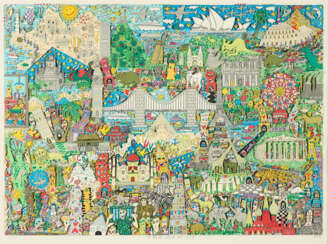

James Rizzi was a renowned American artist, celebrated for his vibrant and playful Pop Art style. Born in Brooklyn, New York, Rizzi's unique approach to art combined childlike whimsy with bold, animated creations. His 3D artworks, characterized by their intricate detail and lively city scenes, set him apart in the art world.
James Rizzi's artistic journey was marked by a series of notable achievements and contributions. He gained recognition in the late 1970s and early 1980s, showcasing his works at prestigious venues like the Brooklyn Museum and creating album covers and animations for the Tom Tom Club. His style evolved into creating 3D constructions, where he meticulously sketched scenes, added vibrant colors, and transformed them into three-dimensional art pieces. This method resulted in captivating prints that exuded a sense of movement and playfulness, drawing viewers into the energetic and diverse atmosphere of New York City.
Throughout his career, James Rizzi undertook various notable projects, including designing for the Montreux Jazz Festival, the FIFA World Cup, and the Olympics. His works were not only limited to canvases but also extended to designing cars for Volkswagen and contributing to charity projects. The "Happy Rizzi House" in Braunschweig, Germany, stands as a testament to his architectural creativity.
Art enthusiasts and collectors will find James Rizzi's work particularly intriguing due to his unique process and the joyous portrayal of urban life. His art is celebrated globally, and his influence remains significant in the Pop Art movement.
If you are a collector or an expert in art and antiques, and James Rizzi's work intrigues you, sign up for updates. Stay informed about new product sales and auction events related to James Rizzi without any pompous flair. Just the essential information, directly to your inbox.



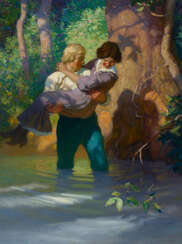

Newell Convers Wyeth, better known as N.C. Wyeth, was an American painter and illustrator, celebrated for his vivid and dramatic illustrations that brought to life classic literature for the Scribner’s Illustrated Classics series. Born on October 22, 1882, in Needham, Massachusetts, Wyeth displayed artistic talent from an early age, encouraged by his supportive mother. He trained under the tutelage of Howard Pyle, the "father of American illustration," who influenced him deeply, instilling a penchant for romanticism and historical accuracy in his work.
Wyeth’s illustrations for books like "Treasure Island," "The Last of the Mohicans," and "Robinson Crusoe" are among his most famous and have left a lasting legacy in the field of American illustration. His work was characterized by a robust, painterly style that effectively conveyed the adventure and emotion of the stories he illustrated. Beyond book illustrations, Wyeth also excelled in creating murals and was commissioned to paint for various public and private institutions, including banks and schools, depicting scenes that ranged from historical narratives to allegorical themes.
Despite his commercial success, Wyeth often expressed a desire to be recognized for his personal paintings, and he struggled with the commercial constraints of illustration. He explored a variety of artistic styles throughout his career, including Impressionism and Realism, and was an adept muralist as well as a studio artist. His legacy continues to influence artists and captivates art collectors and experts in the field, securing his place as a key figure in American art history.
For those interested in staying updated on exhibitions and sales related to N.C. Wyeth, consider signing up for updates focused on his works and related auction events.
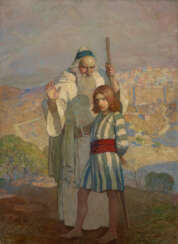

Newell Convers Wyeth, better known as N.C. Wyeth, was an American painter and illustrator, celebrated for his vivid and dramatic illustrations that brought to life classic literature for the Scribner’s Illustrated Classics series. Born on October 22, 1882, in Needham, Massachusetts, Wyeth displayed artistic talent from an early age, encouraged by his supportive mother. He trained under the tutelage of Howard Pyle, the "father of American illustration," who influenced him deeply, instilling a penchant for romanticism and historical accuracy in his work.
Wyeth’s illustrations for books like "Treasure Island," "The Last of the Mohicans," and "Robinson Crusoe" are among his most famous and have left a lasting legacy in the field of American illustration. His work was characterized by a robust, painterly style that effectively conveyed the adventure and emotion of the stories he illustrated. Beyond book illustrations, Wyeth also excelled in creating murals and was commissioned to paint for various public and private institutions, including banks and schools, depicting scenes that ranged from historical narratives to allegorical themes.
Despite his commercial success, Wyeth often expressed a desire to be recognized for his personal paintings, and he struggled with the commercial constraints of illustration. He explored a variety of artistic styles throughout his career, including Impressionism and Realism, and was an adept muralist as well as a studio artist. His legacy continues to influence artists and captivates art collectors and experts in the field, securing his place as a key figure in American art history.
For those interested in staying updated on exhibitions and sales related to N.C. Wyeth, consider signing up for updates focused on his works and related auction events.
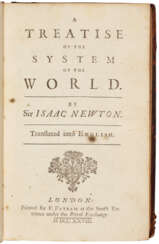

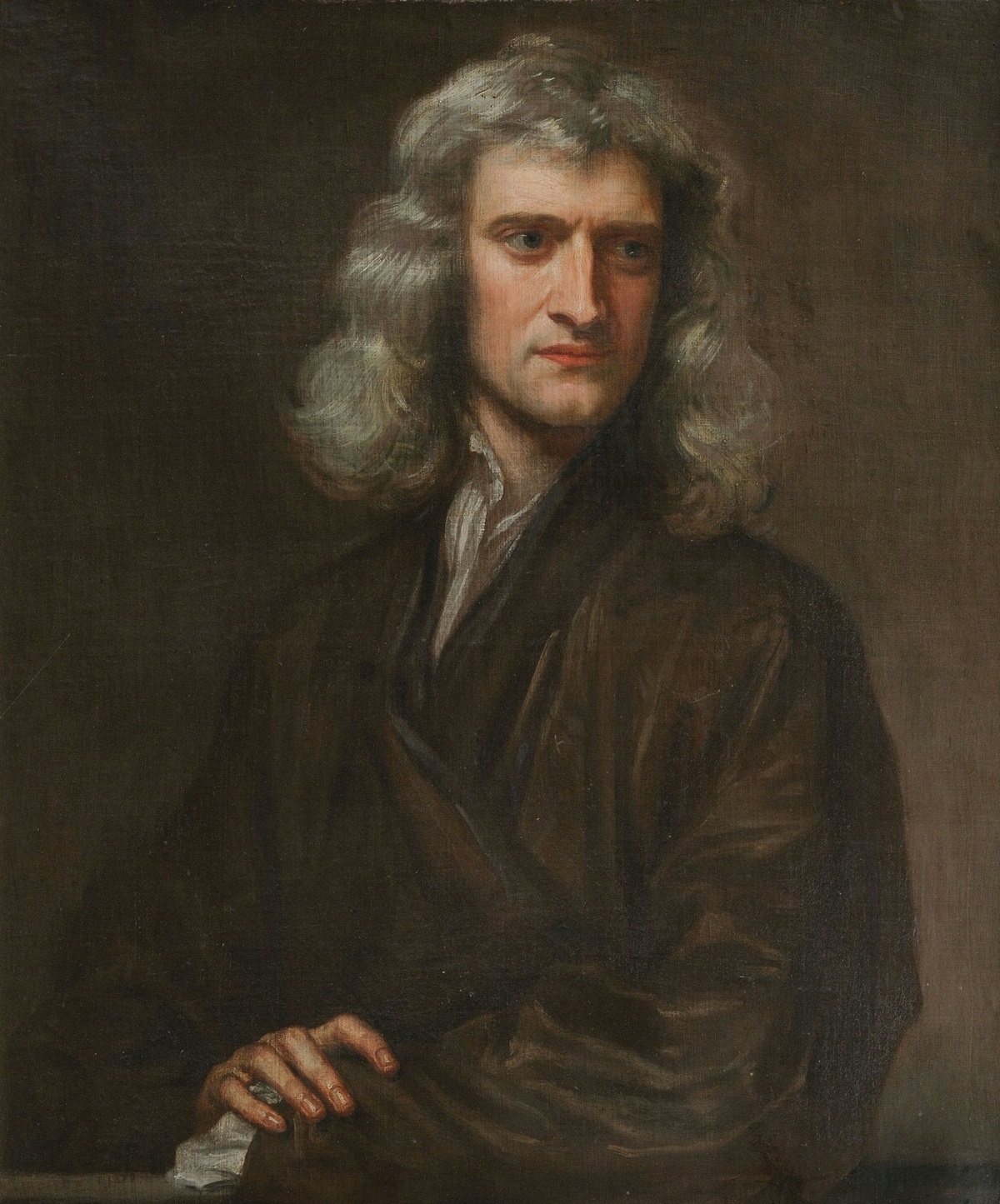
Isaac Newton was an English mathematician, physicist, astronomer, alchemist, theologian, and author (described in his time as a "natural philosopher"), widely recognised as one of the greatest mathematicians and physicists and among the most influential scientists of all time. He was a key figure in the philosophical revolution known as the Enlightenment. His book Philosophiæ Naturalis Principia Mathematica (Mathematical Principles of Natural Philosophy), first published in 1687, established classical mechanics. Newton also made seminal contributions to optics, and shares credit with German mathematician Gottfried Wilhelm Leibniz for developing infinitesimal calculus.
In the Principia, Newton formulated the laws of motion and universal gravitation that formed the dominant scientific viewpoint until it was superseded by the theory of relativity. Newton used his mathematical description of gravity to derive Kepler's laws of planetary motion, account for tides, the trajectories of comets, the precession of the equinoxes and other phenomena, eradicating doubt about the Solar System's heliocentricity. He demonstrated that the motion of objects on Earth and celestial bodies could be accounted for by the same principles. Newton's inference that the Earth is an oblate spheroid was later confirmed by the geodetic measurements of Maupertuis, La Condamine, and others, convincing most European scientists of the superiority of Newtonian mechanics over earlier systems.





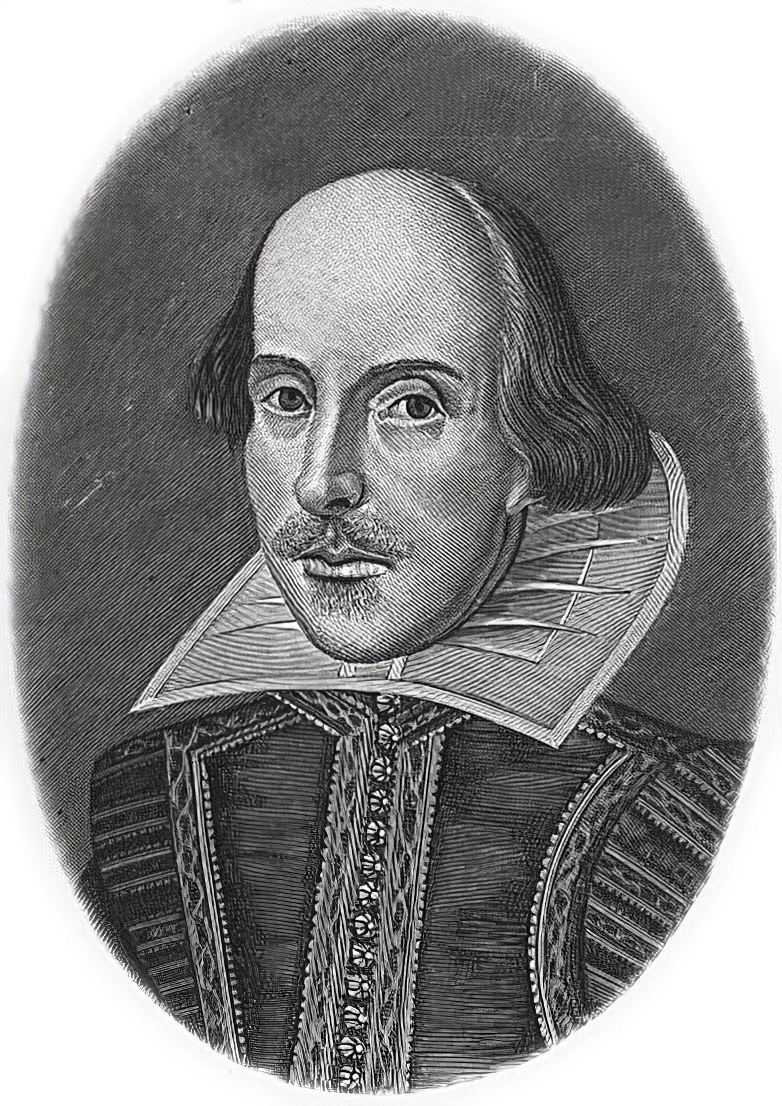
William Shakespeare was a British poet and playwright and writer.
William's father, John Shakespeare, was a merchant and official in Stratford. There are reports that he was a sailor for a time before joining a theater company in London. Beginning in the 1590s, Shakespeare began writing plays, and in 1593 he published a poem, Venus and Adonis, which became popular. He dedicated it to the Duke of Southampton, who was a philanthropist and patron of talent, and soon his business was booming.
From 1592 to 1600 Shakespeare wrote his dramas and romantic comedies "Richard III", "The Taming of the Shrew", "Romeo and Juliet", "A Midsummer Night's Dream" and "The Merchant of Venice", as well as the comedies "Much Ado About Nothing", "Twelfth Night" and the tragedy "Julius Caesar". The playwright's business was so successful that he even bought a large house in Stratford. In 1599, Shakespeare became one of the owners, playwright and actor of the new theater "Globe". In 1603 King James took Shakespeare's troupe under his direct patronage. In the mature period, the great playwright turned to tragedies, there were "Hamlet", "Othello", "King Lear", "Macbeth" and others.
Although in the 19th century researchers had some doubts about the authorship of many of these works, William Shakespeare is considered the greatest English playwright, one of the best playwrights in the world. His plays have been translated into all major languages and to this day form the basis of the world theatrical repertoire, most of them have been screened many times. According to the Guinness Book of Records, Shakespeare remains the world's best-selling playwright, and his plays and poems have sold more than 4 billion copies in the nearly 400 years since his death.

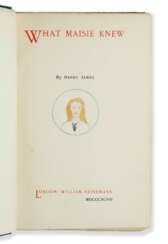

















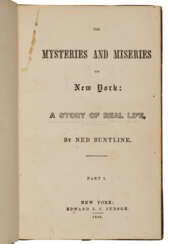

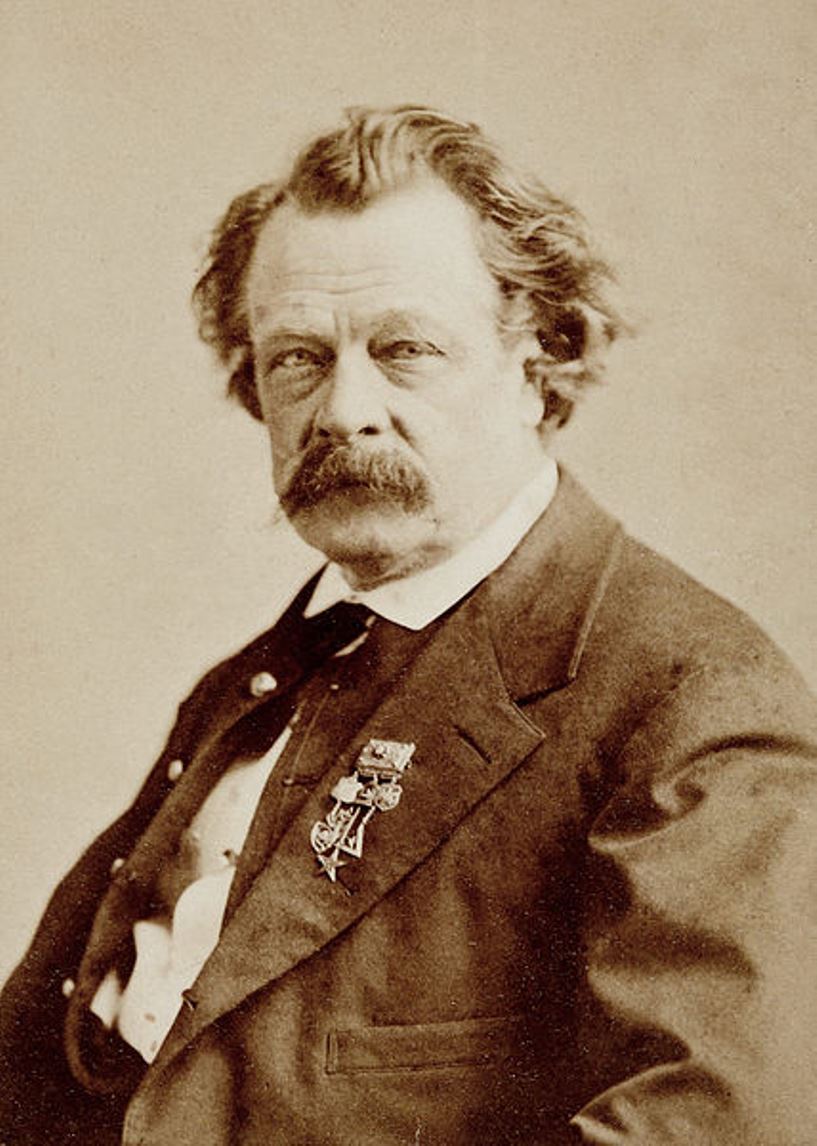
Edward Zane Carroll Judson Sr., known by his pen name Ned Buntline, is an American adventurer, journalist, and writer.
Edward Judson was characterized by hooligan antics from his youth, but always gravitated towards writing. He started to publish newspapers several times, but unsuccessfully, ran away from debts and shot in a duel because of his mistress, sat in prison for organizing a riot and became a successful scandalous reporter.
Judson invented a character named Buffalo Bill and wrote several novels featuring him. He also wrote a play, Scouts of the Plains (1872), based on his life. Judson also wrote hundreds of one-night novels and serials that were sensationalized stories of villainous heroes and violence. It was he who originated the so-called "dime novels" in the Western genre popular in the late nineteenth century.



James Rizzi was a renowned American artist, celebrated for his vibrant and playful Pop Art style. Born in Brooklyn, New York, Rizzi's unique approach to art combined childlike whimsy with bold, animated creations. His 3D artworks, characterized by their intricate detail and lively city scenes, set him apart in the art world.
James Rizzi's artistic journey was marked by a series of notable achievements and contributions. He gained recognition in the late 1970s and early 1980s, showcasing his works at prestigious venues like the Brooklyn Museum and creating album covers and animations for the Tom Tom Club. His style evolved into creating 3D constructions, where he meticulously sketched scenes, added vibrant colors, and transformed them into three-dimensional art pieces. This method resulted in captivating prints that exuded a sense of movement and playfulness, drawing viewers into the energetic and diverse atmosphere of New York City.
Throughout his career, James Rizzi undertook various notable projects, including designing for the Montreux Jazz Festival, the FIFA World Cup, and the Olympics. His works were not only limited to canvases but also extended to designing cars for Volkswagen and contributing to charity projects. The "Happy Rizzi House" in Braunschweig, Germany, stands as a testament to his architectural creativity.
Art enthusiasts and collectors will find James Rizzi's work particularly intriguing due to his unique process and the joyous portrayal of urban life. His art is celebrated globally, and his influence remains significant in the Pop Art movement.
If you are a collector or an expert in art and antiques, and James Rizzi's work intrigues you, sign up for updates. Stay informed about new product sales and auction events related to James Rizzi without any pompous flair. Just the essential information, directly to your inbox.
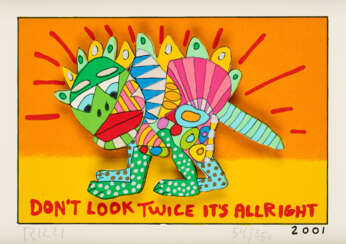

James Rizzi was a renowned American artist, celebrated for his vibrant and playful Pop Art style. Born in Brooklyn, New York, Rizzi's unique approach to art combined childlike whimsy with bold, animated creations. His 3D artworks, characterized by their intricate detail and lively city scenes, set him apart in the art world.
James Rizzi's artistic journey was marked by a series of notable achievements and contributions. He gained recognition in the late 1970s and early 1980s, showcasing his works at prestigious venues like the Brooklyn Museum and creating album covers and animations for the Tom Tom Club. His style evolved into creating 3D constructions, where he meticulously sketched scenes, added vibrant colors, and transformed them into three-dimensional art pieces. This method resulted in captivating prints that exuded a sense of movement and playfulness, drawing viewers into the energetic and diverse atmosphere of New York City.
Throughout his career, James Rizzi undertook various notable projects, including designing for the Montreux Jazz Festival, the FIFA World Cup, and the Olympics. His works were not only limited to canvases but also extended to designing cars for Volkswagen and contributing to charity projects. The "Happy Rizzi House" in Braunschweig, Germany, stands as a testament to his architectural creativity.
Art enthusiasts and collectors will find James Rizzi's work particularly intriguing due to his unique process and the joyous portrayal of urban life. His art is celebrated globally, and his influence remains significant in the Pop Art movement.
If you are a collector or an expert in art and antiques, and James Rizzi's work intrigues you, sign up for updates. Stay informed about new product sales and auction events related to James Rizzi without any pompous flair. Just the essential information, directly to your inbox.


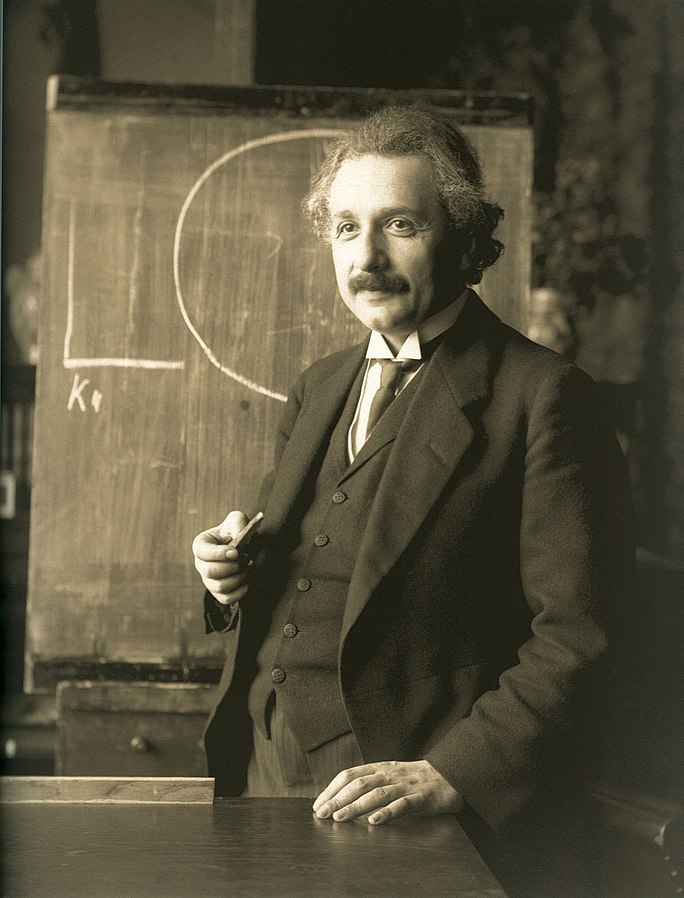
Albert Einstein was a German-born theoretical physicist, widely acknowledged to be one of the greatest and most influential physicists of all time. Einstein is best known for developing the theory of relativity, but he also made important contributions to the development of the theory of quantum mechanics. Relativity and quantum mechanics are together the two pillars of modern physics. His mass–energy equivalence formula E = mc2, which arises from relativity theory, has been dubbed "the world's most famous equation". His work is also known for its influence on the philosophy of science. He received the 1921 Nobel Prize in Physics "for his services to theoretical physics, and especially for his discovery of the law of the photoelectric effect", a pivotal step in the development of quantum theory. His intellectual achievements and originality resulted in "Einstein" becoming synonymous with "genius".
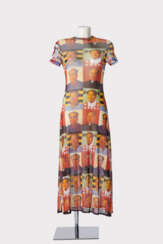

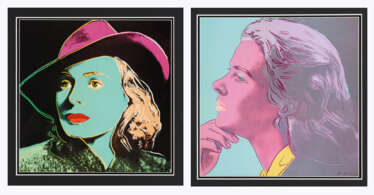

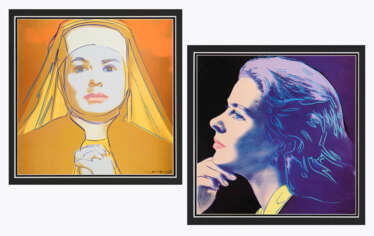

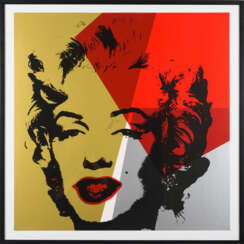

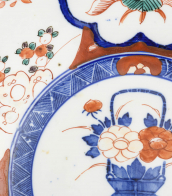



Friedensreich Regentag Dunkelbunt Hundertwasser was an Austrian visual artist and architect who also worked in the field of environmental protection.
Hundertwasser stood out as an opponent of "a straight line" and any standardization, expressing this concept in the field of building design. His best known work is the Hundertwasserhaus in Vienna, which has become a notable place of interest in the Austrian capital, characterised by imaginative vitality and uniqueness.
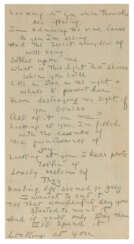



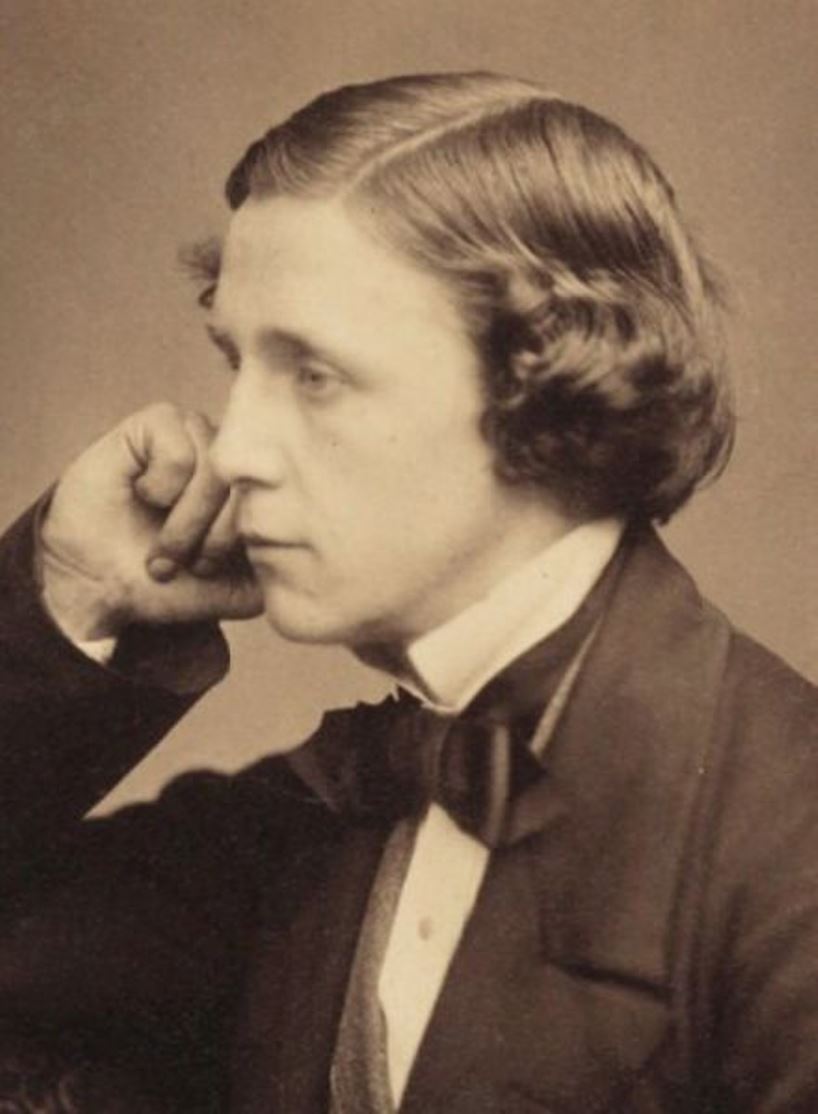
Lewis Carroll, real name Charles Lutwidge Dodgson, was a British writer and photographer, philosopher and logician, and professor of mathematics.
In 1851 Lewis entered one of the best colleges in Oxford - Christ Church. Showing an extraordinary aptitude for mathematics, soon he was able to give lectures himself, and for the next quarter of a century he was a professor of mathematics at Oxford. In parallel with his studies, the young man began to compose short stories and poems, publishing them under a pseudonym.
And then he wrote the famous "Alice's Adventures in Wonderland" (Alice's Adventures in Wonderland, 1865) and "Alice in Looking-Glass" (Through the Looking-Glass, and What Alice Found There, 1871). These books quickly became popular, they were translated into numerous languages, and then repeatedly screened. The prototype of the main character was four-year-old Alice Liddell, the daughter of the new dean of the college where Carroll taught. Lewis Carroll also wrote "The Knotty Story", a humorous poem "Hunting the Snark", "Mathematical Curiosities", "Sylvia and Bruno" and other books. Carroll himself considered his main work a slightly absurd novel-tale "Sylvia and Bruno" (1889-1893).
Under his real name, the writer-mathematician published scientific works on mathematics and logic, he also owns a number of popular books on entertaining mathematics. Lewis Carroll left Oxford only once - in 1867, visiting Russia as part of a delegation of the Anglican Church on the route St. Petersburg-Moscow-Nizhny Novgorod. This was Carroll's only overseas trip, and he described it in his Diary of a Trip to Russia 1867. Lewis Carroll was also a talented chess player and amateur inventor. Photography was also a big part of the writer's life.