règle de trois


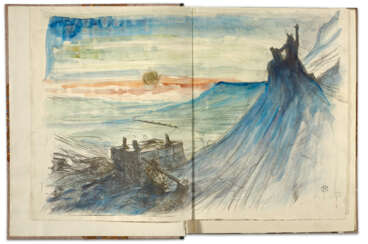

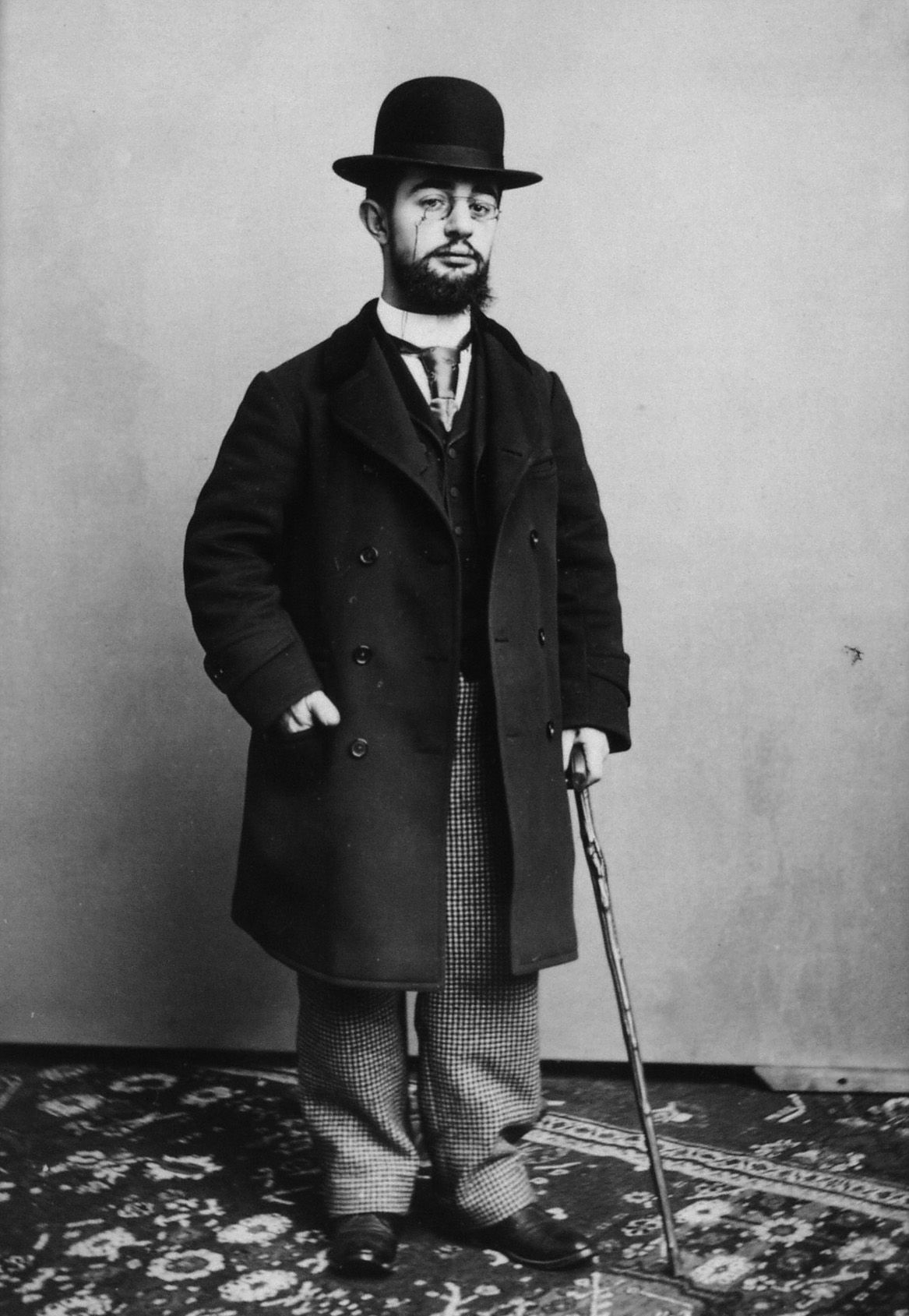
Henri de Toulouse-Lautrec was a distinguished French Post-Impressionist artist, renowned for his deep insights into Parisian nightlife and the world of entertainment in the 1890s. Born into an aristocratic family in Albi, France, Toulouse-Lautrec faced significant health challenges. He suffered from a rare condition, possibly pycnodysostosis, which stunted the growth of his legs following two fractures during his adolescence, leading to a notably short stature as an adult.
Despite his physical limitations, Toulouse-Lautrec immersed himself in art, becoming a key figure in the Post-Impressionist movement alongside artists like Paul Cézanne and Vincent van Gogh. He is particularly celebrated for his vibrant and expressive depictions of the bohemian lifestyle in late 19th-century Paris, often featuring scenes from brothels and nightlife venues. His unique style combined elements of Art Nouveau and lithography, as evidenced in famous works such as "Moulin Rouge: La Goulue" and "At the Moulin Rouge: The Dance".
Toulouse-Lautrec's work offers a window into the Parisian entertainment scene of his time, marked by a vivid use of color and a candid portrayal of his subjects. His ability to capture the essence of Parisian society, from dancers to prostitutes, in an era of great artistic and cultural dynamism, makes his work particularly valuable to art collectors and experts.
For those interested in the art and life of Henri de Toulouse-Lautrec, staying informed about sales and auction events is essential. Sign up for updates to receive the latest news on pieces by Toulouse-Lautrec available for purchase or auction. This subscription focuses exclusively on new product sales and auction events related to Toulouse-Lautrec, ensuring that enthusiasts and collectors don't miss out on any opportunity to acquire pieces from this iconic artist.

![[ÉTAT ET MENU GÉNÉRAL DE LA DÉPENSE].](/assets/image/picture_2735040/c5a9a/d83810beb9c5f3c8e2277956725aa38a1679526000jpg__fix_374_244.jpeg)
![[ÉTAT ET MENU GÉNÉRAL DE LA DÉPENSE].](https://veryimportantlot.com/assets/image/picture_2735040/c5a9a/d83810beb9c5f3c8e2277956725aa38a1679526000jpg__fix_374_244.jpeg)

![[ÉLIZABETH I, IMPÉRATRICE DE RUSSIE (1709-1761)]](/assets/image/picture_3601167/e4473/p5wns8y8w1wbu3dnrgqdcbs8o1h84zdtomuz67fdywriwpaxmfkkwwklmncwuts1700197817jpg__fix_374_244.jpeg)
![[ÉLIZABETH I, IMPÉRATRICE DE RUSSIE (1709-1761)]](https://veryimportantlot.com/assets/image/picture_3601167/e4473/p5wns8y8w1wbu3dnrgqdcbs8o1h84zdtomuz67fdywriwpaxmfkkwwklmncwuts1700197817jpg__fix_374_244.jpeg)
![[GRIMOD DE LA REYNIÈRE, Alexandre-Balthazar-Laurent (1758-1837)].](/assets/image/picture_2735026/028d2/0dfe0706bfeb59715d22c321b0e9f9ad1679526000jpg__fix_374_244.jpeg)
![[GRIMOD DE LA REYNIÈRE, Alexandre-Balthazar-Laurent (1758-1837)].](https://veryimportantlot.com/assets/image/picture_2735026/028d2/0dfe0706bfeb59715d22c321b0e9f9ad1679526000jpg__fix_374_244.jpeg)




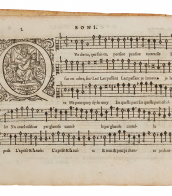
![[RONSARD, Pierre de (1524-1585)]. Les Plaisirs de la vie rustique – Le voyage d’Hercueil. [relié avec] BINET, Claude (15 ??-1600?). Les Plaisirs de la vie rustique et solitaire. Par Cl. Binet. [relié avec] RAPIN, Nicolas (1535-1608). Les Plaisir](/assets/image/picture_1320896/31555/8436297ffba22a66c0d33faa06ecfe941616454000jpg__fix_374_244.jpeg)
![[RONSARD, Pierre de (1524-1585)]. Les Plaisirs de la vie rustique – Le voyage d’Hercueil. [relié avec] BINET, Claude (15 ??-1600?). Les Plaisirs de la vie rustique et solitaire. Par Cl. Binet. [relié avec] RAPIN, Nicolas (1535-1608). Les Plaisir](https://veryimportantlot.com/assets/image/picture_1320896/31555/8436297ffba22a66c0d33faa06ecfe941616454000jpg__fix_374_244.jpeg)
![[BONNEFONS, Nicolas de].](/assets/image/picture_2734965/af265/ae3b79cdfe7a9afc615a5a102e1cc8031679526000jpg__fix_374_244.jpeg)
![[BONNEFONS, Nicolas de].](https://veryimportantlot.com/assets/image/picture_2734965/af265/ae3b79cdfe7a9afc615a5a102e1cc8031679526000jpg__fix_374_244.jpeg)




![[VERSAILLES]](/assets/image/picture_3567181/12321/88600636eca47f14d261db869247eb0a1700607600jpg__fix_374_244.jpeg)
![[VERSAILLES]](https://veryimportantlot.com/assets/image/picture_3567181/12321/88600636eca47f14d261db869247eb0a1700607600jpg__fix_374_244.jpeg)


.jpg)
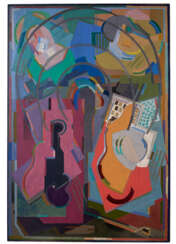
Albert Gleizes was a pioneering French artist, theoretician, and philosopher, renowned for his contributions to Cubism and his influence on the School of Paris. Born in Paris in 1881, Gleizes' artistic journey began in his late teens, inspired by Impressionism and later evolving through Post-Impressionist and Symbolist phases. His early work, such as "La Seine à Asnières" exhibited in 1902, showcases his initial foray into painting. Gleizes' commitment to developing art free from commercial constraints led him to co-found the Abbaye de Créteil, a self-supporting artist community, although it was short-lived due to financial difficulties.
Gleizes' exploration of Cubism began around 1910, in collaboration with artists like Jean Metzinger, with whom he wrote "Du Cubisme," the first major treatise on the movement. This period marked a significant shift in his style towards the geometric simplification of forms, a hallmark of Cubism. His works from this era, including "Portrait de Jacques Nayral" and "Landschaft bei Paris," exemplify his innovative approach to capturing the essence of subjects through cubist principles. Gleizes was also a member of the Section d'Or group, further establishing his role in the Cubist movement.
In addition to his painting, Gleizes was deeply involved in writing and promoting Cubism, influencing the acceptance and understanding of modern art globally, including his significant impact in New York. His later works, such as "Pour Contemplation," reflect a spiritual and theological depth, moving towards a synthesis of the physical and metaphysical. Gleizes' art is celebrated for its revolutionary approach to form and color, contributing significantly to the development of modern art. His works are held in prestigious collections worldwide, including the Tate Modern and the Musée des Beaux-Arts in Lyon.
For those intrigued by the revolutionary spirit and profound impact of Albert Gleizes on modern art, signing up for updates on new product sales and auction events related to his work offers a unique opportunity to connect with the legacy of this Cubist master. This subscription is an invaluable resource for collectors and experts in art and antiques, promising exclusive insights into the world of Albert Gleizes.



Albert Gleizes was a pioneering French artist, theoretician, and philosopher, renowned for his contributions to Cubism and his influence on the School of Paris. Born in Paris in 1881, Gleizes' artistic journey began in his late teens, inspired by Impressionism and later evolving through Post-Impressionist and Symbolist phases. His early work, such as "La Seine à Asnières" exhibited in 1902, showcases his initial foray into painting. Gleizes' commitment to developing art free from commercial constraints led him to co-found the Abbaye de Créteil, a self-supporting artist community, although it was short-lived due to financial difficulties.
Gleizes' exploration of Cubism began around 1910, in collaboration with artists like Jean Metzinger, with whom he wrote "Du Cubisme," the first major treatise on the movement. This period marked a significant shift in his style towards the geometric simplification of forms, a hallmark of Cubism. His works from this era, including "Portrait de Jacques Nayral" and "Landschaft bei Paris," exemplify his innovative approach to capturing the essence of subjects through cubist principles. Gleizes was also a member of the Section d'Or group, further establishing his role in the Cubist movement.
In addition to his painting, Gleizes was deeply involved in writing and promoting Cubism, influencing the acceptance and understanding of modern art globally, including his significant impact in New York. His later works, such as "Pour Contemplation," reflect a spiritual and theological depth, moving towards a synthesis of the physical and metaphysical. Gleizes' art is celebrated for its revolutionary approach to form and color, contributing significantly to the development of modern art. His works are held in prestigious collections worldwide, including the Tate Modern and the Musée des Beaux-Arts in Lyon.
For those intrigued by the revolutionary spirit and profound impact of Albert Gleizes on modern art, signing up for updates on new product sales and auction events related to his work offers a unique opportunity to connect with the legacy of this Cubist master. This subscription is an invaluable resource for collectors and experts in art and antiques, promising exclusive insights into the world of Albert Gleizes.





![[NOUVEL ALMANACH] – PÉRIGORD, A.B. de (pseud. de Horace-Napoléon RAISSON et Léonce THIESSÉ).](/assets/image/picture_2734580/b4a0a/97406373adf41090034cf53cda9cf4611679526000jpg__fix_374_244.jpeg)
![[NOUVEL ALMANACH] – PÉRIGORD, A.B. de (pseud. de Horace-Napoléon RAISSON et Léonce THIESSÉ).](https://veryimportantlot.com/assets/image/picture_2734580/b4a0a/97406373adf41090034cf53cda9cf4611679526000jpg__fix_374_244.jpeg)

![[L'ART DE BIEN TRAITER].](/assets/image/picture_2734449/8a9e9/a273232d066802027e83271970e9d0511679526000jpg__fix_374_244.jpeg)
![[L'ART DE BIEN TRAITER].](https://veryimportantlot.com/assets/image/picture_2734449/8a9e9/a273232d066802027e83271970e9d0511679526000jpg__fix_374_244.jpeg)