ulrich schröder


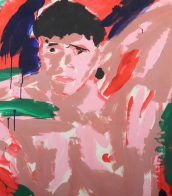
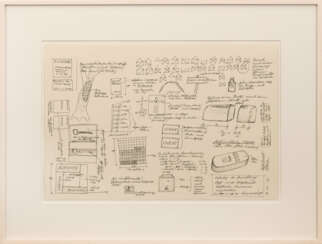

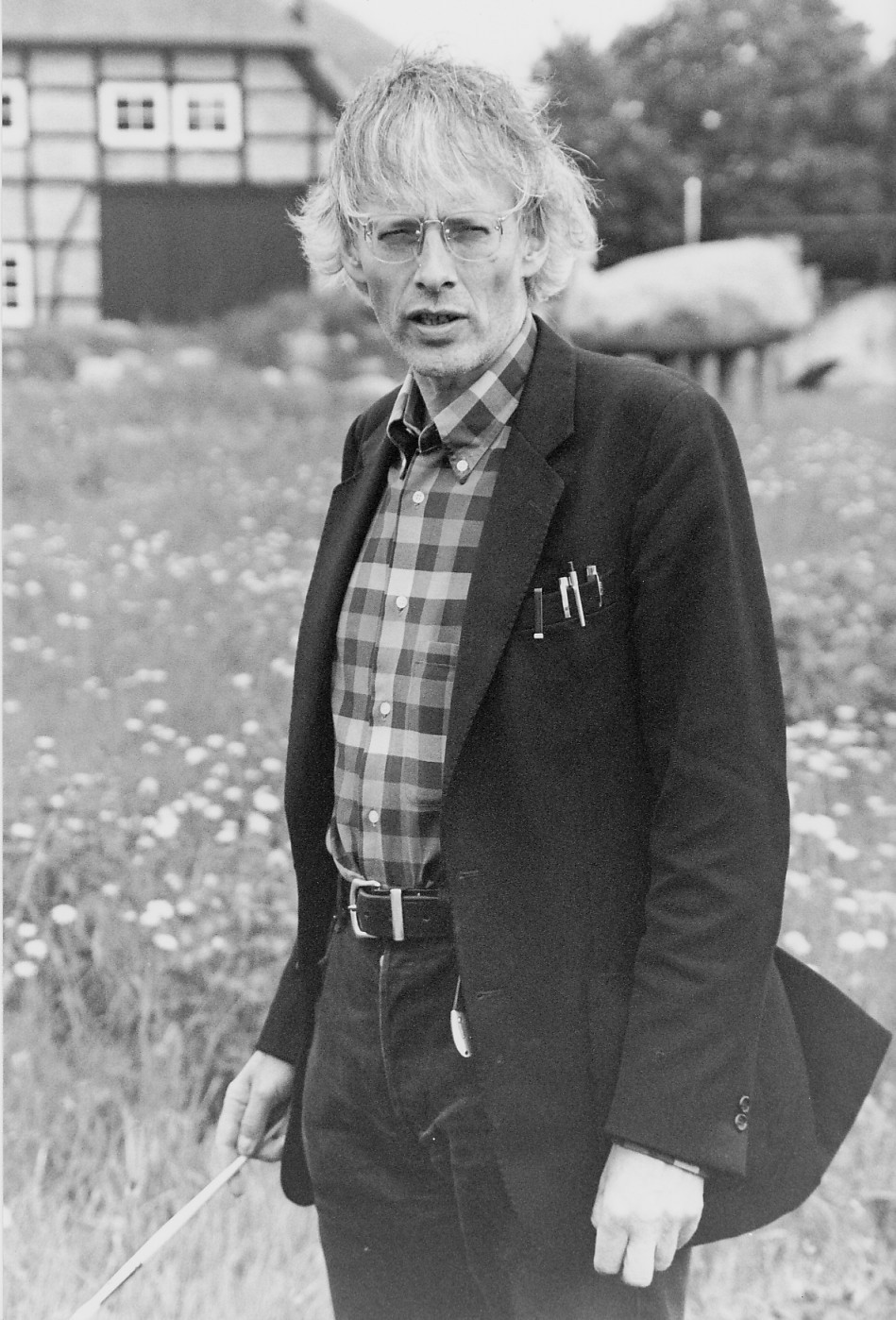
Timm Ulrichs is a German contemporary artist and sculptor, considered one of the most influential conceptualists, creates performances and is critically acclaimed.


Timm Ulrichs is a German contemporary artist and sculptor, considered one of the most influential conceptualists, creates performances and is critically acclaimed.


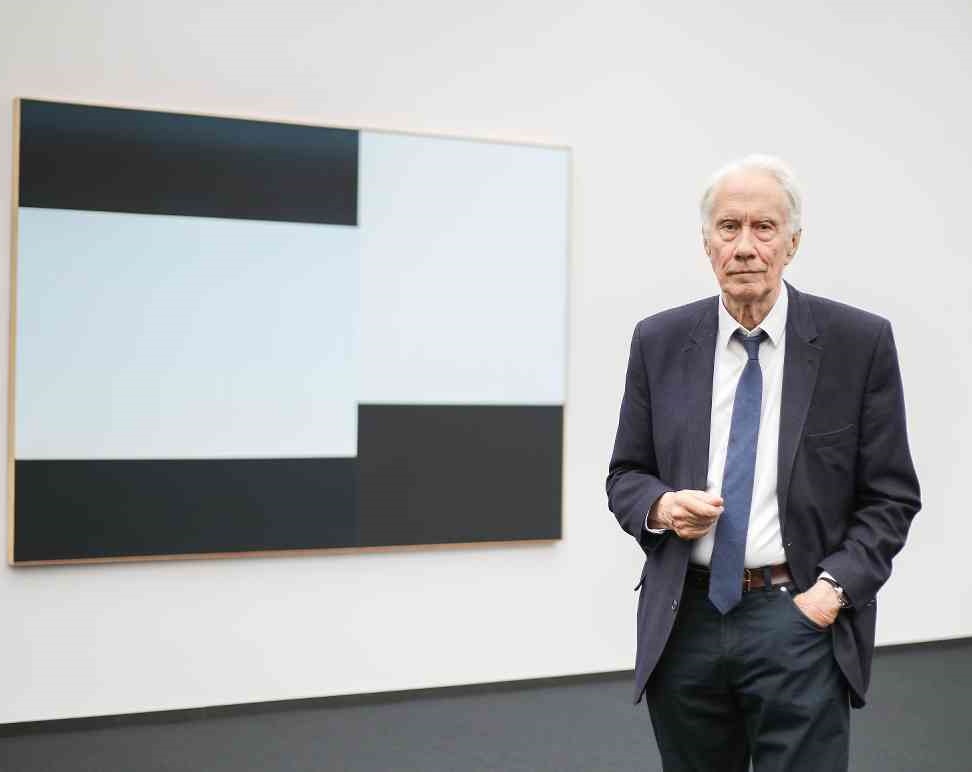
Ulrich Erben is a German painter. From 1980 to 2005, he was a Professor of Painting at the Kunstakademie Münster (University of Fine Arts Münster). He is known as a master of the color field style of abstract painting, closely related to abstract expressionism, in which he creates tension between a defined surface structure, his own method of applying paint to a canvas, and the relationship of various shades of white or color to each other in their placement as part of a composition on the flat plane of a canvas. In 1986 and 2008, he was awarded the Konrad-von-Soest Prize for Visual Arts by the Landschaftsverband Westfalen-Lippe (Landscape Society Westphalia-Lippe).


Ulrich Rückriem is a German sculptor known for his large-scale stone sculptures that are often displayed in public spaces. He studied at the Werkkunstschule Krefeld and the Kunstakademie Düsseldorf.
Rückriem's early work was influenced by the Minimalist movement, and he became known for creating abstract, geometric sculptures from raw stone blocks. He often works with granite, basalt, and other types of hard stone, using traditional carving techniques to shape and refine his forms.
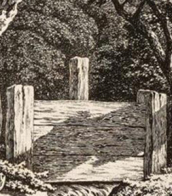
In the 1970s, Rückriem began creating large-scale public installations, including his "Stone Alignments" series, which consists of rows of standing stones that evoke ancient megaliths and other prehistoric monuments. His work often engages with the natural environment, creating a dialogue between the man-made and the organic.
Rückriem has exhibited his work in museums and galleries around the world, including the Tate Gallery in London, the Solomon R. Guggenheim Museum in New York, and the Kunstmuseum Bonn in Germany. He has also received numerous awards and honors for his contributions to the field of sculpture, including the International Sculpture Prize in 1987 and the Praemium Imperiale in 2010.


Ulrich Rückriem is a German sculptor known for his large-scale stone sculptures that are often displayed in public spaces. He studied at the Werkkunstschule Krefeld and the Kunstakademie Düsseldorf.
Rückriem's early work was influenced by the Minimalist movement, and he became known for creating abstract, geometric sculptures from raw stone blocks. He often works with granite, basalt, and other types of hard stone, using traditional carving techniques to shape and refine his forms.
In the 1970s, Rückriem began creating large-scale public installations, including his "Stone Alignments" series, which consists of rows of standing stones that evoke ancient megaliths and other prehistoric monuments. His work often engages with the natural environment, creating a dialogue between the man-made and the organic.
Rückriem has exhibited his work in museums and galleries around the world, including the Tate Gallery in London, the Solomon R. Guggenheim Museum in New York, and the Kunstmuseum Bonn in Germany. He has also received numerous awards and honors for his contributions to the field of sculpture, including the International Sculpture Prize in 1987 and the Praemium Imperiale in 2010.
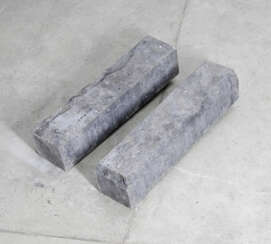

Ulrich Rückriem is a German sculptor known for his large-scale stone sculptures that are often displayed in public spaces. He studied at the Werkkunstschule Krefeld and the Kunstakademie Düsseldorf.
Rückriem's early work was influenced by the Minimalist movement, and he became known for creating abstract, geometric sculptures from raw stone blocks. He often works with granite, basalt, and other types of hard stone, using traditional carving techniques to shape and refine his forms.
In the 1970s, Rückriem began creating large-scale public installations, including his "Stone Alignments" series, which consists of rows of standing stones that evoke ancient megaliths and other prehistoric monuments. His work often engages with the natural environment, creating a dialogue between the man-made and the organic.
Rückriem has exhibited his work in museums and galleries around the world, including the Tate Gallery in London, the Solomon R. Guggenheim Museum in New York, and the Kunstmuseum Bonn in Germany. He has also received numerous awards and honors for his contributions to the field of sculpture, including the International Sculpture Prize in 1987 and the Praemium Imperiale in 2010.
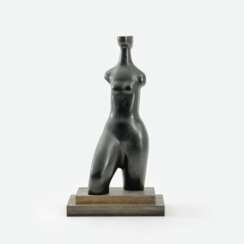

Ulrich Beier was a North German sculptor who enjoyed a considerable reputation in his region of Schleswig-Holstein and Hamburg. From 1945 to 1948 he studied sculpture in his hometown with Christian Brodersen, before continuing his studies in Hamburg with Richard Steffen, a pupil of Aristide Maillol.
Ulrich Bayer has been a member of Gruppe 56 since 1962.
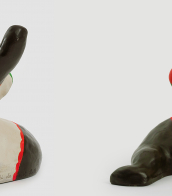
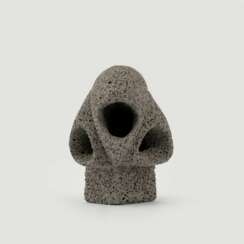

Ulrich Beier was a North German sculptor who enjoyed a considerable reputation in his region of Schleswig-Holstein and Hamburg. From 1945 to 1948 he studied sculpture in his hometown with Christian Brodersen, before continuing his studies in Hamburg with Richard Steffen, a pupil of Aristide Maillol.
Ulrich Bayer has been a member of Gruppe 56 since 1962.


Ulrich Beier was a North German sculptor who enjoyed a considerable reputation in his region of Schleswig-Holstein and Hamburg. From 1945 to 1948 he studied sculpture in his hometown with Christian Brodersen, before continuing his studies in Hamburg with Richard Steffen, a pupil of Aristide Maillol.
Ulrich Bayer has been a member of Gruppe 56 since 1962.


Ulrich Beier was a North German sculptor who enjoyed a considerable reputation in his region of Schleswig-Holstein and Hamburg. From 1945 to 1948 he studied sculpture in his hometown with Christian Brodersen, before continuing his studies in Hamburg with Richard Steffen, a pupil of Aristide Maillol.
Ulrich Bayer has been a member of Gruppe 56 since 1962.


Ulrich Erben is a German painter. From 1980 to 2005, he was a Professor of Painting at the Kunstakademie Münster (University of Fine Arts Münster). He is known as a master of the color field style of abstract painting, closely related to abstract expressionism, in which he creates tension between a defined surface structure, his own method of applying paint to a canvas, and the relationship of various shades of white or color to each other in their placement as part of a composition on the flat plane of a canvas. In 1986 and 2008, he was awarded the Konrad-von-Soest Prize for Visual Arts by the Landschaftsverband Westfalen-Lippe (Landscape Society Westphalia-Lippe).


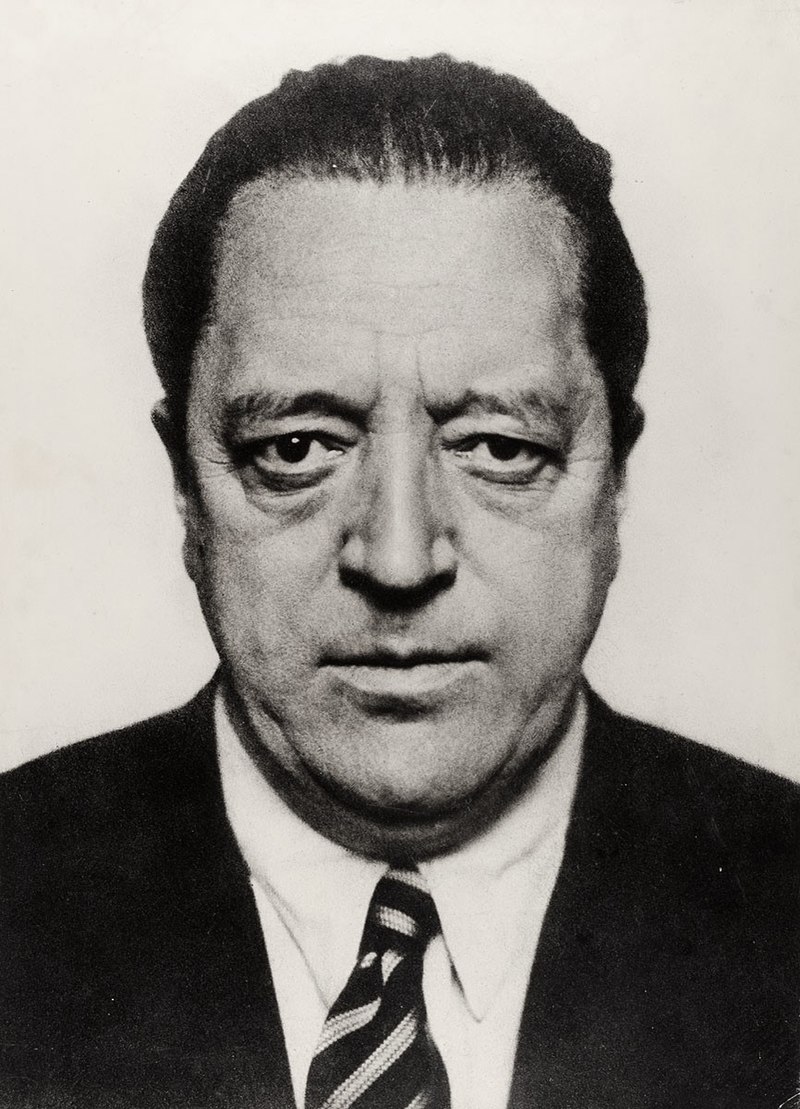
Ludwig Mies van der Rohe, born Maria Ludwig Michael Mies was a German-American architect and furniture designer. He was commonly referred to as Mies, his surname. Along with Alvar Aalto, Le Corbusier, Walter Gropius and Frank Lloyd Wright, he is regarded as one of the pioneers of modernist architecture.
In the 1930s, Mies was the last director of the Bauhaus, a ground-breaking school of modernist art, design and architecture. After Nazism's rise to power, with its strong opposition to modernism (leading to the closing of the Bauhaus itself), Mies emigrated to the United States. He accepted the position to head the architecture school at what is today the Illinois Institute of Technology in Chicago.
.jpg)
Jean Elysée Puiforcat was a French silversmith, sculptor and designer. Miller's Antiques Encyclopedia calls Puiforcat the «most important French Art Deco silversmith».
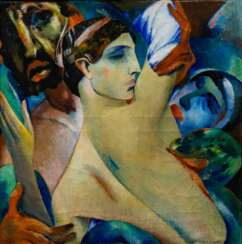

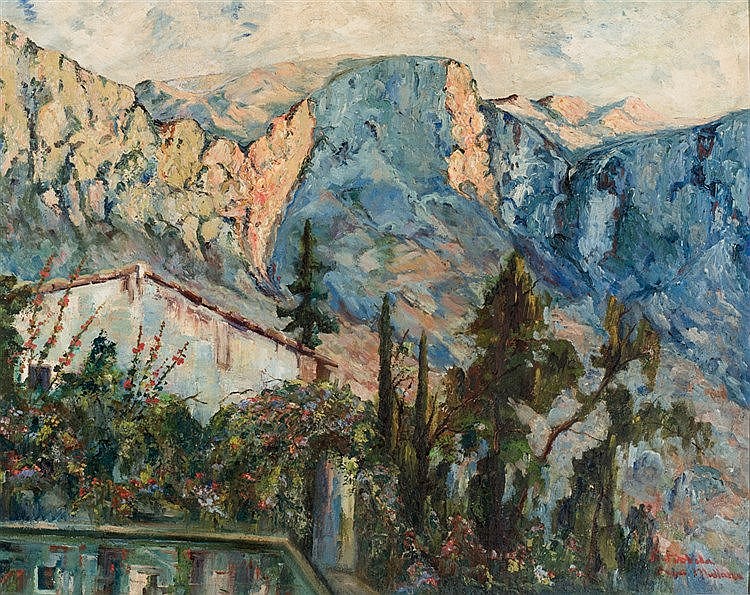
Ulrich Leman is a German artist of "Rhenish Expressionism.
He studied at the Düsseldorf Academy and joined the group of progressive artists "Das Junge Rheinland". In the late 1920s, Leman made his first trip to Mallorca and decided to stay there. The beauties of this Spanish island inspired him to create many paintings with views of nature, depicting the characters of the local people.