

Azerbaijan Contemporary art
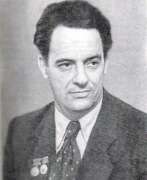

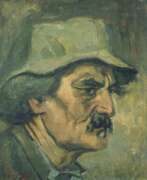

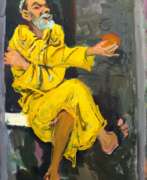

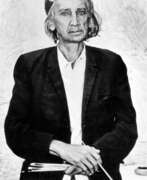

Sattar Bahlulzade (Russian: Саттар Бахлул оглы Бахлулзаде) was a 20th-century Azerbaijani Soviet landscape painter. He is known as a painter, graphic artist, landscape painter and caricaturist.
Bahlulzade created lyrical landscapes praising Azerbaijani nature, which were characterized by realism and detail. As a classical landscape painter he was especially famous for his second period of creativity (1940-1960). The artist's paintings were closely intertwined with the traditions of Azerbaijani art, and in the last years of his life the influence of Neo-Impressionism was manifested. Bahlulzade also created graphic works, including still lifes.
World museums preserve about 150 paintings and 30 graphic works by this artist.
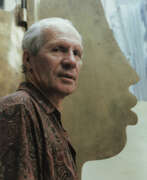

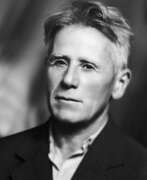

Gevork Vartanovich Kotyants (Russian: Геворк Вартанович Котьянц) was a Soviet and Russian artist of the second half of the twentieth century of Armenian origin. He is known as a painter, a representative of the Leningrad school.
Gevork Kotyants began his artistic career in 1948. His works cover various genres, including portraits, still lifes, landscapes and narrative compositions. The mid-1950s are marked by his particular devotion to decorative still life, in the work of which the master developed his own artistic style. He also created a small number of genre compositions and portraits, often using his family as models. In the 1990s, his works were successfully demonstrated at exhibitions and auctions of Russian painting in various countries, where they found their admirers.
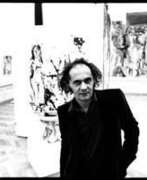

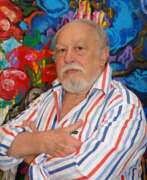

Togrul Farman oglu Narimanbekov (Russian: Тогрул Фарман оглы Нариманбеков) was a distinguished Azerbaijani painter and vocal artist, celebrated as a People's Artist of the USSR and Azerbaijan. Born in Baku in 1930, Narimanbekov's life was marked by the trials of his family during political repressions, which deeply influenced his artistic expressions. He studied monumental and decorative painting at the Lithuanian Institute of Fine Arts, launching a prolific career that spanned across various Soviet republics and European countries.
Narimanbekov's art is known for its vivid color palette and dynamic compositions, capturing the spirit and cultural essence of Azerbaijani life. His works are held in several prestigious collections globally, including the Museum of Modern Art in Germany and the Tretyakov Gallery in Russia. Notable pieces include "Caravanserail at Samarkand" and "Sunny Day," reflecting his mastery in portraying historical and everyday scenes with a lyrical quality.
For those interested in exploring the profound artistic contributions of Togrul Narimanbekov, and to stay updated on exhibitions and sales of his works, consider subscribing to updates on his legacy. This subscription will keep you informed about new discoveries, auction events, and available artworks related to Narimanbekov.
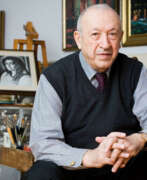

Tahir Salahov (Russian: Таир Теймурович Салахов) was an esteemed Soviet and Azerbaijani painter and draughtsman, celebrated for his pivotal role in the art world. Born in Baku, Azerbaijan, Salahov's journey into the arts commenced at the Azimzade Art College before advancing to the Surikov Moscow Art Institute. Early in his career, his work, particularly "The Shift is Over," garnered significant attention and acclaim, marking his prominence in the art scene.
Salahov's artistry is renowned for its embodiment of the "severe style," a movement within Soviet art in the 1960s that sought to provide a realistic, publicist view in contrast to the polished, idealized portrayal prevalent during the Stalin era. His masterpieces, notably portraits and scenes depicting the life of Baku oil workers, are lauded for their powerful expression and lack of idealization. Salahov's work underwent an evolution over the years, with his later pieces showcasing more peaceful, lyrical contemplations with evident Eastern influences, as seen in "Portrait of Grandson Dan." This transition is marked by smoother lines and a more sophisticated palette, highlighting his versatility and depth as an artist.
Salahov's contributions extended beyond his paintings; he was a key figure in several art academies and organizations worldwide, including the Artists' Union of the USSR and the Russian Academy of Arts. His achievements have been recognized with numerous awards, such as the People's Artist of the USSR and the Order "For Merit to the Fatherland." Salahov's legacy is cemented not only through his artworks but also through his significant impact on the cultural and artistic heritage of Azerbaijan and the broader Soviet and post-Soviet space.
For collectors and art enthusiasts, Salahov's work represents a crucial junction in the narrative of 20th-century art, bridging the gap between realism and the thematic, stylistic diversities of Soviet and Azerbaijani art. His paintings and drawings, many of which reside in prestigious museums, continue to inspire and captivate audiences worldwide.
If you're keen on exploring the life and works of Tahir Salahov further, consider signing up for updates. Subscribers will be alerted to new product sales and auction events related to Salahov's art, ensuring you stay informed about opportunities to engage with the legacy of this monumental artist.


Salam Abdul-Kasum oglu Salamzade (Russian: Салам Абдул-Касум оглы Саламзаде) was an Azerbaijani and Soviet artist of the twentieth century. He is known as a painter, graphic artist, landscape, portrait and genre painter.
Salamzade created a number of genre, paintings, portraits and landscapes depicting scenes of nature in Azerbaijan. He visited the Near and Middle East several times, resulting in paintings about the life and nature of eastern countries. In his early works, the artist used a decorative and generalized manner of depiction, then moved to a careful elaboration of forms. His works have been exhibited in several countries around the world.


