

Critics
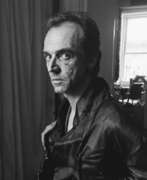

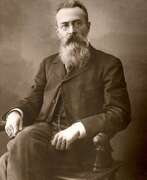

Nikolai Andreevich Rimskii-Korsakov (russian: Николай Андреевич Римский-Корсаков) was a Russian composer, teacher and conductor, music critic, and member of the Mighty Handful.
Originally from an old noble family, Rimskii-Korsakov studied piano from the age of six and by the age of nine was already trying to compose music. After graduating from the St. Petersburg Naval School, in 1862-1865 he was on a round-the-world voyage, during which he was made an officer. He participated in an expedition to the shores of North America, visited Great Britain, Spain, Norway. In 1873-1884 he worked as an inspector of military bands of the fleet.
During his studies at the school and during the expedition Nikolai Rimskii-Korsakov continued to study music. His acquaintance in 1861 with the composer Miliy Balakirev and his circle "The Mighty Handful", which included composers Caesar Cui, Modest Mussorgsky and Alexander Borodin, became the impetus for his work. Rimskii-Korsakov 's aesthetic views and worldview were formed under the influence of the "Mighty Handful" and its ideologist V. Stasov.
Nikolai Rimskii-Korsakov was very prolific, and almost all of his works are based on folk and classical Russian literature and melodies. He composed 15 operas, including The Pskovite Girl (1872), May Night (1879), The Snow Maiden (1881), Sadko (1896), The Tsar's Bride (1898), The Tale of Tsar Saltan (1900), Kashchey the Immortal (1902), The Tale of the Invisible City of Kitezh..." (1904), The Golden Cockerel (1907). Fragments from some operas have become the most performed in the world, among them "The Song of the Indian Guest" from "Sadko" and "The Flight of the Bumblebee" from "Saltan".
The composer's works also include three symphonies (the first of which he completed while sailing around the world), symphonic works, instrumental concertos, cantatas, chamber instrumental, vocal and sacred music. In 1886-1890 Rimskii-Korsakov conducted the "Russian Symphonic Concertos" in St. Petersburg, and in 1898 - in Moscow, at the same time he was also engaged in teaching. In 1871 he became a professor at the St. Petersburg Conservatory, where he taught classes in practical composition, instrumentation and orchestration.
As a teacher, Rimskii-Korsakov trained over 200 composers and musicians, including Alexander Glazunov, Mikhail Gnesin, Alexander Grechaninov, Anatoly Lyadov, Sergei Prokofiev, and Igor Stravinsky. He also published several textbooks on harmony and orchestration. Rimskii-Korsakov's work had a great influence on the development of Russian classical and foreign music.
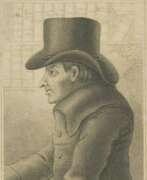

Joseph Ritson was a British antiquarian, critic, writer and editor.
He had a law degree, but preferred to study literary works. Ritson scrupulously searched for factual and other errors in authors to then publish them in his critical materials.
However, Joseph Ritson became famous as an editor of collections of ballads about Robin Hood and old folk literature. In their design they far surpassed anything that had previously appeared in the literary world, distinguished by authorial erudition and accuracy. Ritson also published collections of children's poems.
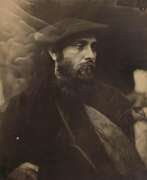

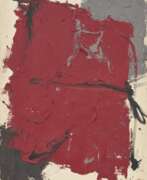

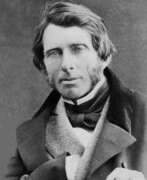

John Ruskin was an English philosopher, art historian, and polymath of the Victorian era, celebrated for his profound influence on art, architecture, and society. With a diverse array of interests ranging from geology to literature, John Ruskin's contributions to the cultural and intellectual fabric of the 19th century were unparalleled. His notable works include "Modern Painters," "The Seven Lamps of Architecture," and "The Stones of Venice," where he explored the deep connections between nature, art, and society. Ruskin's advocacy for the Pre-Raphaelites and his critical stance against industrialization's impact on art and architecture marked him as a pivotal figure in the Arts and Crafts Movement. His teachings inspired generations, including William Morris, to value craftsmanship over mass production, anticipating modern concerns with environmentalism and sustainability.
John Ruskin's early life, shaped by his parents' influence and his exposure to the art and religious fervor of his time, laid the foundation for his later views that championed a return to nature and the importance of truth in art. His critical writings, not just limited to art but extending to social criticism, embodied a vision for societal reform that emphasized ethics, aesthetics, and the human connection to the natural world. John Ruskin's legacy is reflected in his ability to inspire both contemporaries and future movements, highlighting his role as a visionary thinker whose ideas transcended the boundaries of his time.
For collectors and experts in art and antiques, John Ruskin's life and work offer a rich tapestry of insights into the Victorian era's cultural and aesthetic debates. His profound impact on art criticism, architectural theory, and social philosophy makes him a figure of enduring significance in the history of art and culture.
To stay informed about new product sales and auction events related to John Ruskin, sign up for updates. This subscription is a gateway to exploring the legacy and continued relevance of one of the most influential figures in the world of art and culture.