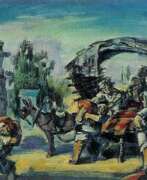
Anton Domenico Gabbiani was an Italian painter and decorator who designed the interiors of late Baroque palaces and churches.
Anton Domenico Gabbiani specialised in religious and historical subjects, often depicting scenes from the Bible, mythology and classical literature.
His paintings displayed a strong sense of composition, dynamic poses and an emphasis on emotional expression. Gabbiani was able to create impressive lighting effects and convey details of fabric and texture.

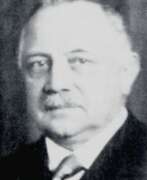

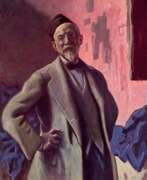

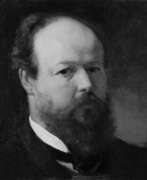

Alois Gabl, an Austrian painter and draftsman, came from a baker's family and taught himself drawing. He received a scholarship from the Prince-Bishop of Brixen, allowing him to attend the Munich Academy of Fine Arts. Initially focused on church painting, Gabl later shifted to historical and genre painting. He gained attention with his work "Haspinger, die Tiroler zum Kampfe anfeuernd." Gabl became a professor at the academy but had to resign due to illness.
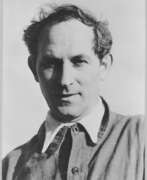

Naum Gabo, a pivotal figure in the evolution of twentieth-century sculpture, was a Russian-American artist renowned for his innovative approach to constructivism and kinetic art. Gabo's artistry transcended mere form to delve into the philosophical and spatial dynamics of sculpture, marking him as a pioneer in his field. He significantly influenced the avant-garde movements across Europe, particularly with his manifesto that challenged the concepts of Cubism and Futurism, advocating for art that embraced abstract reality and spiritual experience. His tenure at VKhUTEMAS, alongside notable contemporaries like Kandinsky and Rodchenko, was a testament to his influential role in post-Revolution Russian art.
Gabo's use of materials such as metal and glass was not just a stylistic choice but a profound exploration of volume and space without the reliance on mass, embodying the Constructivist ideology of functional art. His works, like "Column," showcased his interest in creating sculptures that resonated with intellectual and emotional appeal rather than just physical senses. This innovative approach to sculpture continued throughout his career, evident in his contributions to both the art and architectural domains, including his experimental architectural designs like the proposal for the Palace of the Soviets.
Throughout his life, Gabo's artistic journey was marked by a constant exploration of the interplay between space and time, evident in pieces such as "Spiral Theme" and his involvement in kinetic sculpture. His move across countries, from Russia to the United States, was reflective of his quest for new artistic contexts and his escape from political turmoil. Gabo's legacy is preserved in significant collections and museums worldwide, including the Museum of Modern Art (MoMA) in New York, where his works continue to inspire and captivate audiences.
For those intrigued by Naum Gabo's profound impact on modern sculpture and constructivism, signing up for updates can enrich your knowledge and keep you informed about upcoming sales and auction events featuring his work. This is an opportunity to explore the depths of Gabo's contributions to art and architecture, ensuring enthusiasts and collectors stay connected to his enduring legacy.
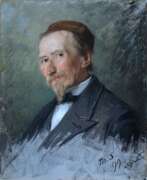

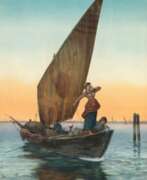

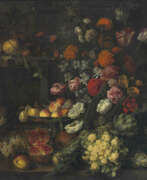

Guiliam Gabron, or Willem Gabron, was a Flemish Baroque still life painter, who worked in a wide range of genres including fruit pieces, vanitas still lifes, flower still lifes, game pieces and breakfast pieces. Gabron was also a gifted animalier and often included living animals in his still life scenes. He initially worked in a monochrome style but developed a more colourful palette after a long stay in Italy.
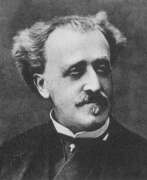

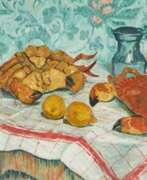

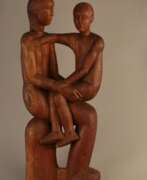

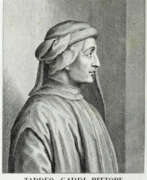

Taddeo Gaddi was a renowned medieval Italian painter and architect. He was a pupil and a most faithful follower of the illustrious Florentine master Giotto. Despite lacking Giotto’s comprehensive aesthetic vision, Gaddi emerged as the leading Florentine painter for three decades following his mentor's death.
Taddeo Gaddi’s most acclaimed work is the cycle of 'Stories of the Virgin' in the Baroncelli Chapel of the Basilica of Santa Croce in Florence, created between 1328 and 1338. This work is celebrated for its dynamism, pronounced foreshortening, dramatic effects of light, and an interest in narrative, showcasing his expertise in both painting and architectural elements. He is also credited with painting the cabinet tiles in the sacristy of the same church, now divided among several museums including the Galleria dell'Accademia in Florence, and museums in Munich and Berlin.
Taddeo Gaddi's style shows a clear influence from his master Giotto, yet he added his own experimentation, particularly in architectural backgrounds. His works, such as the ‘Madonna in Bern’, ‘Adoration of the Magi in Dijon’, and ‘Stories of Job’ in Pisa, demonstrate his mastery of Giotto's new style. He also contributed works like 'The Stigmatization of Saint Francis' to Harvard Art Museums, and 'Madonna del Parto' and 'Polyptych in Santa Felicita's sacristy' in Florence.
Taddeo Gaddi enjoyed a comfortable economic situation throughout his life, especially in his later years. He passed away in 1366 and was buried in Santa Croce, leaving behind a legacy as one of the most influential men in Florentine artistic culture. His work in the Basilica Santa Croce provides a canonical viewing of Gaddi’s style and his proficiency with color and light.
For collectors and experts in art and antiques, Taddeo Gaddi's works offer an important perspective on the transition from medieval to Renaissance art in Florence. His blend of Giotto's influence with his unique approach to color and narrative makes his works a valuable addition to any collection that values the rich history of Florentine art.
To stay updated on sales, exhibitions, and auction events related to Taddeo Gaddi's art, consider signing up for updates. This subscription will provide you with the latest information on acquiring pieces from this influential Florentine artist.


Barend Gael was a Dutch painter and graphic artist of the Dutch Golden Age of painting. He was a pupil of Philips Wouwerman.
Barend Gael was an accomplished painter of Italian landscapes and was known at the Guild of St. Luke's in Haarlem by 1642.
Gael's paintings are noted for their precise composition and use of light and shadow. He often used dark backgrounds to create a sense of depth and contrast, and skillfully used light to emphasise the texture and detail of figures.
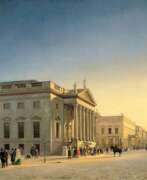

Johann Philipp Eduard Gaertner was a German painter of the second quarter of the 19th century, the Biedermeier era. He is known as a landscape painter, famous for his views of Berlin and other cities.
Eduard Gaertner created many architectural landscapes of Berlin, as well as St. Petersburg and Moscow during his travels to Russia. The value of these works is that they documented the appearance of the cities on the eve of the age of photography. Gaertner's painting style underwent a change after the death of King Friedrich Wilhelm III, his patron. In keeping with the cultural attitudes of Prussia's new ruler, the artist began to paint more romantic and idealized landscapes in which architecture played a decorative role.
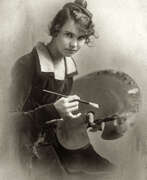

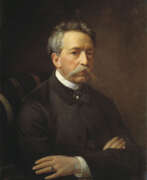

Prince Grigorii Grigorevich Gagarin (russian: Григорий Григорьевич Гагарин) was a Russian painter, illustrator, art researcher, and architect.
He was born into the family of a diplomat, Prince Grigorii Ivanovich Gagarin (1782-1837), who was soon sent to Italy to fulfill the duties of ambassador. Gagarin's house in Rome was the center of cultural life of the Russian diaspora, Alexander and Karl Brullov, Bruni, Shchedrin, Basin, Galberg were regular guests there.
Grigorii early showed a talent for painting, he took lessons from Brullov, after trips to the East he became fascinated by the art of Byzantium. Later, during his service in the Caucasus, he painted in this style the Sion Cathedral in Tiflis. Gagarin also successfully illustrated works of Russian writers, including Pushkin's poem "Ruslan and Lyudmila" and "The Tale of Tsar Saltan", in 1845 he published in Paris an album "Costumes of the peoples of the Caucasus" of 66 hand-colored lithographs.
In 1841 Gagarin was enlisted in the military service and participated in campaigns in the Caucasus. In addition to military duties, he worked a lot for the needs of the Caucasian cities. In Tiflis on his project was built a theater, he restored frescoes in the Sion Cathedral and in old Georgian monasteries.
In Russia, Gagarin's social circle included Zhukovsky, Pushkin, Odoyevsky. Grigorii Gagarin did a lot as vice-president of the Imperial Academy of Arts (1859-1872), trying to reform it in the spirit of the time, founded the Museum of Antiquities. In 1880, Gagarin was made an obra gofmeister of the court of His Imperial Majesty.
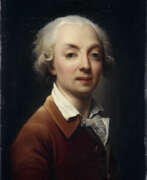

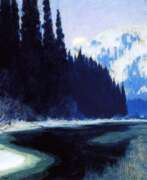




René Gaillard, a French artist of the 18th century, is recognized for his work in colored etching and engraving. His piece "Les Amans Surpris" (The Surprised Lovers), created after François Boucher, is an example of his craft and is housed within the collection of The Metropolitan Museum of Art. This work, a depiction of a romantic encounter, echoes the Rococo style prevalent during his time.
Gaillard's contributions to the world of French printmaking remain accessible and celebrated. His techniques and artistic choices, from the chosen subject matter to the subtleties of his engravings, offer a window into the rich artistic culture of 18th-century France.
For collectors and enthusiasts eager to explore the depths of Rococo printmaking, Gaillard’s works offer a unique glimpse into the past. The Met's Open Access policy allows for the public domain image of "Les Amans Surpris" to be freely used, inviting all to engage with Gaillard's legacy.


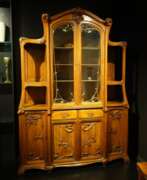

Eugène Gaillard was a French art nouveau industrial designer, architect and advocate of modern design. Gaillard abandoned a career in law for that of interior design and decoration. He was employed for some time by Siegfried Bing along with Georges de Feure and Edouard Colonna to work on his pavilion at the 1900 Paris Universal Exposition.


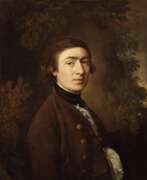

Thomas Gainsborough was an English painter, renowned for his mastery in both portraiture and landscape art, active during the 18th century. Born in Sudbury, Suffolk, Gainsborough displayed early artistic talent, which led him to London to study art seriously. He is often celebrated for his fluid and expressive brushwork and his innovative approach to portrait and landscape painting. Gainsborough was notably influenced by Dutch landscape paintings and the Rococo style, which is evident in his delicate and evocative use of color and light.
Thomas Gainsborough's career gained significant momentum when he moved to Bath, where he attracted a fashionable clientele. This period was marked by his creation of portraits that seamlessly integrated the sitters into lush, idyllic landscapes. Despite his success with portraits, Gainsborough preferred painting landscapes, often expressing a desire to escape the demands of portrait commissions to focus on these scenic representations.
Some of his most famous works include "The Blue Boy" and "Mr. and Mrs. Andrews." "The Blue Boy" is particularly noted for its vibrant blue costume and has been a hallmark of Gainsborough's style in capturing the personality and elegance of the youth. His works are held in high esteem and are part of collections across major museums globally, such as the National Gallery, Tate Britain, and the Huntington Library, to name a few.
For those interested in exploring Thomas Gainsborough's contributions to art, his paintings offer a glimpse into the social fabric and the natural beauty of 18th-century England, making him a pivotal figure in the English school of painting. His ability to convey character and atmosphere in his portraits and landscapes alike ensures his continued relevance and admiration in the art world today.
If you are keen on updates related to Thomas Gainsborough's art pieces, sales, and auctions, consider signing up for specialized newsletters or alerts that focus on his works and their presence in modern collections and sales events.
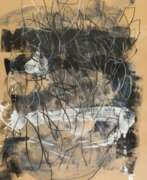

Christoph M. Gais is a German abstractionist painter and designer. He studied painting at the Academy of Fine Arts in Stuttgart and at the Hochschule für Kunst in Berlin, where he received his master's degree. Christoph M. Geiss's paintings are based on the tradition of gestural abstract painting. His work also includes several art projects in architecture, such as the design of the Louise Schroeder Hall at the Red City Hall in Berlin.


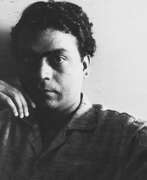


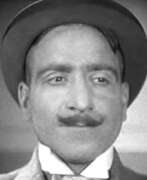


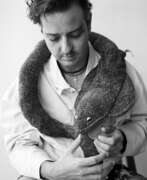

Julio Galán was a Mexican artist and architect. Galán was one of Latin America's neo-expressionist painters of the end of the last century and the beginning of this one. His paintings and collages are full of elements that usually represent his life.
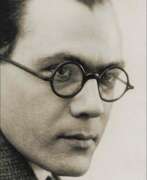



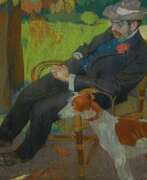




Ippolito Galantini was an Italian Baroque painter and religious figure. Known by the nicknames Il Capuccino and Il Prete Genovese.
Born in Florence, he was for a time a pupil of Stefaneschi, under whose influence he became a monk of the Capuchin order (hence the two nicknames by which he is known). He was sent as a missionary to India, where he spent several years, and on his return to Europe painted several paintings for the churches of his order. There is a self-portrait of him in the Uffizi Gallery in Florence.
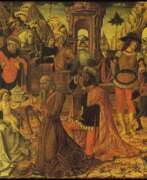

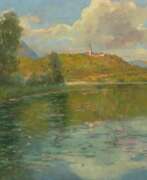

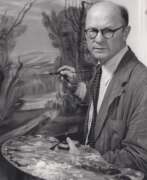

Adomas Galdikas was a Lithuanian painter, graphic artist, theatre artist and stage designer.
Adomas Galdikas painted landscapes, still lifes, portraits, abstract compositions. Author of prints, illustrated books. He created scenery for seventeen productions of the Kaunas State Theatre; among the most significant theatre works, apart from Kreve's Sharunas, is the opera Gražina by Jurgis Karnavičius (1933).
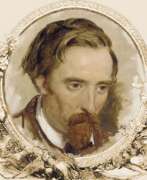

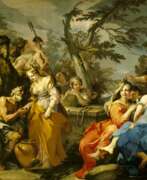


Giovanni Battista Galestruzzi was an Italian painter and etcher of the Baroque period. He was a pupil of the painter Francesco Furini, then moved to Rome, where he joined the Accademia di San Luca in 1652. He was an accomplished etcher and produced works for Leonardo Agostini’s book 'Le gemme antiche figurate' (1657–9). The Roman baroque painter and engraver Giovanni Francesco Venturini was probably his pupil.
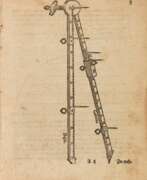

Georg Galgemair was a German mathematician and astrologer.
He was born into the family of the burgomaster of Donauwörth, was a pupil of Philip Apian, and then a master of mathematics at the University of Tübingen in 1585. After completing his studies, Galgemair began teaching at Lauingen in 1588.
His work on proportional circles led to the development of gnomonics. In the history of science, Galgemair is known for his works on mathematical instruments. As a calendar maker, he succeeded in 1606 in obtaining an imperial privilege for his calendars.
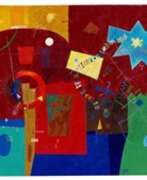



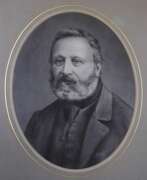

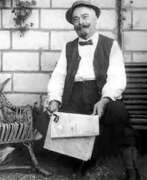

Eugène Galien-Laloue was a French artist. He was a populariser of street scenes, usually painted in autumn or winter.
His paintings of the early 1900s accurately represent the era in which he lived: a happy, bustling Paris, la Belle Époque, with horse-drawn carriages, trolley cars and its first omnibuses. Galien-Laloue's works are valued not only for their contribution to 20th-century art, but for the actual history, which they document. His work can be seen at the Musée des Beaux-Arts, Louvier; Musée des Beaux-Arts, La Rochelle; Mulhouse, France.
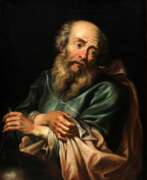

Galileo Galilei was an Italian naturalist, physicist, mechanic, astronomer, philosopher, and mathematician.
Using his own improved telescopes, Galileo Galilei observed the movements of the Moon, Earth's satellites, and the stars, making several breakthrough discoveries in astronomy. He was the first to see craters on the Moon, discovered sunspots and the rings of Saturn, and traced the phases of Venus. Galileo was a consistent and convinced supporter of the teachings of Copernicus and the heliocentric system of the world, for which he was subjected to the trial of the Inquisition.
Galileo is considered the founder of experimental and theoretical physics. He is also one of the founders of the principle of relativity in classical mechanics. Overall, the scientist had such a significant impact on the science of his time that he cannot be overemphasized.
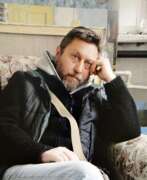

Azat Khaizovich Galimov is a contemporary Russian artist. Graduated from the Leningrad Higher School of Industrial Art named after V. Mukhina. Currently lives and works in St. Petersburg, a member of the Union of Artists of Russia, a member of the Petrovsky Academy of Sciences and Arts, a member of the Bulgarian Union of Artists. In 2007 he was included in the catalog "The Best Artists of Russia". An adherent of the realistic school of painting. Lots and lots of work. Makes numerous sketches and writes studies, traveling to different countries. He is especially good at urban landscapes. His works are in museums and private collections in different countries.
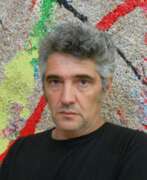

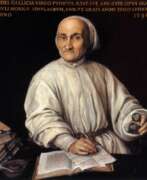


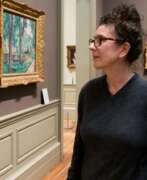

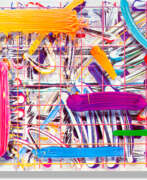


Ellen Gallagher is a contemporary American artist, painter, graphic artist, sculptor, and film maker.
Ellen Gallagher's work often explores issues of race, identity and transformation. From the beginning, the form and content of her work has been influenced by the work of Gertrude Stein, the Negro song tradition, science fiction, and advertising aimed at African Americans. Gallagher's work is appealing for its subtle aesthetics, social and political undertones, and mixture of historical realities with science fiction.
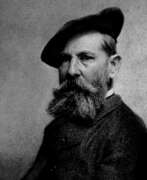

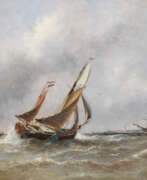

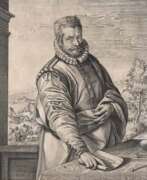

Philips Galle was a Dutch publisher, best known for publishing old master prints, which he also produced as designer and engraver. He is especially known for his reproductive engravings of paintings.
As a resident of Antwerp, Galle witnessed numerous events of the Eighty Years War, notably the siege and looting of the town in 1576 by the Spaniards, called "The Spanish Fury". This rather personal book, which was translated in several languages soon after its first publication, shows Galle as a peace-loving person who intended to stay far away from the political and military turmoil of his era.
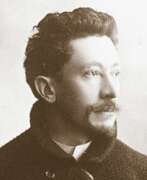

Emile Gallé was a French artist and designer who worked in glass, and is considered to be one of the major innovators in the French Art Nouveau movement. He was noted for his designs of Art Nouveau glass art and Art Nouveau furniture, and was a founder of the École de Nancy or Nancy School, a movement of design in the city of Nancy, France.
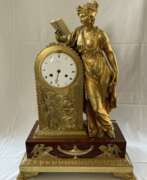

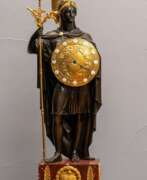

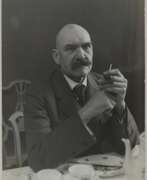

Akseli Gallen-Kallela, born Axel Waldemar Gallén, is a Finnish artist of Swedish descent.
He studied at the Académie Julian in Paris, traveled to Africa, and later designed flags, coats of arms and uniforms for the army of independent Finland.
Akseli Gallen-Kallela is a representative of Finnish National Romanticism and Northern Art Nouveau painting from 1880-1910. In his work he used symbolism and artistic techniques of Art Nouveau style. The unvarnished depiction of disease, suffering and social hardship was part of the naturalistic conception of art that Gallen-Kallela followed from the beginning of his career. He frequently painted the harshness of life, often with elements of Christian symbolism.
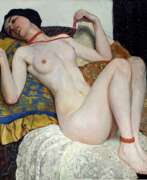

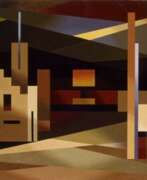


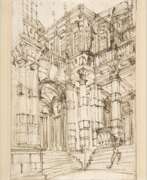

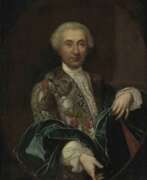

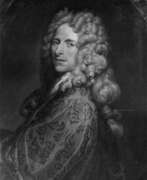

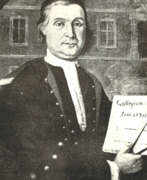

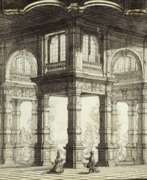


Steve Galloway is an American contemporary surrealist and conceptual artist. He graduated from the California Institute of Arts in 1974. Galloway was the recipient of a prestigious National Endowment for the Arts grant in 1987, as well as a Pollock-Krasner Grant in 2017. His original works in assemblage are in the permanent collections of the Contemporary Museum, Honolulu, Hawaii; the Franklin Mint, Philadelphia; the French National Collection (FRAC); and the Colas Foundation, France.
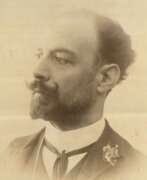




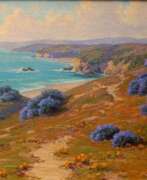

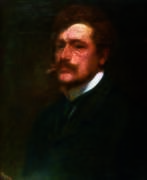

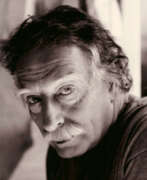

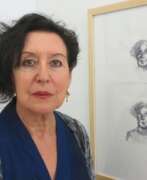

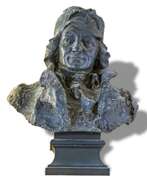





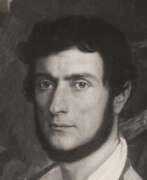

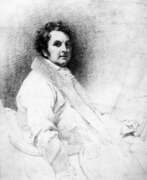





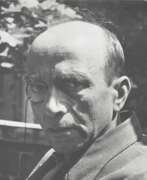

Paul Gangolf, real name Paul Löwy, was a German expressionist painter, lithographer, woodcarver and journalist.
Paul was born into a Jewish family, began his work with articles in magazines on political topics, using the pseudonym Gangolf, during the First World War he served in various troops.
The peak of Paul Gangolf's creative activity came in the 1920s, when he worked in lithography, published and exhibited in Berlin, London and Paris.
After the National Socialists came to power, he was arrested and taken to the Esterwegen concentration camp, where he was murdered. Already after his death, in 1937, as part of the "Degenerate Art" campaign, Gangolf's paintings were confiscated from museums in Nazi Germany and most were destroyed. Surviving works by the artist can be found at the Museum of Modern Art in New York and others.
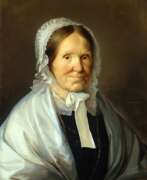

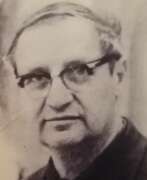


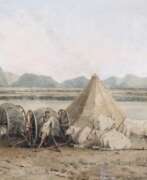

John Gantz was an Austrian-born architect, painter, surveyor and lithographer.
Gantz worked for the East India Company from about 1800 to 1803 as a draftsman and architect. A manuscript list of Madras residents dated March 1819 lists him as "Architect, originally from India". By 1827, Gantz had installed the first lithographic printing press in Madras, one of the first such printing presses in India. Gantz's drawings depict the bridges and architectural structures of the city, the inhabitants in their daily activities, modes of transportation, crafts and professions of Indians, he also painted picturesque landscapes of India.
Gantz had two sons, architect Justinian and Julius.
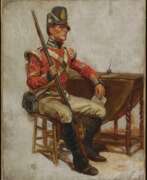

Emile Edwin Ganz is a Swiss-Belgian painter, specializing in the representation of horses and military scenes. In his early days, Ganz mainly drew military scenes, a genre that only a few 19th-century artists mastered. His masterpiece in the genre is The Attack of Scherpenheuvel, a report on the maneuvers of the grenadiers in 1894. In 1901 he entered the service of Princess Clémentine as a painter; he held this position until 1903. In 1903, he also brushed some of King Leopold II's horses. From that moment, he was no longer interested only in the horse itself, but in the regional draft horse, as well as in the people and the rural world: newspaper sellers, old horses in a depot, the harvest in the fields , beet harvest, landscape. Many of his designs for military uniforms were printed in color lithograph.
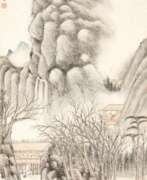

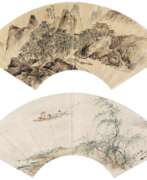


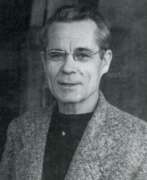

Taras Huriyovych Gaponenko (Russian: Тарас Гурьевич Гапоненко) was a prominent figure in Soviet art, distinguishing himself as both a passionate painter and a dedicated teacher. Born into a peasant family in 1906 in the Smolensk region, Gaponenko's early life was marked by hardship, including the loss of both parents at a young age. Despite these challenges, he demonstrated an unwavering commitment to his artistic education, which began in earnest when he enrolled at the VKhUTEMAS in Moscow in 1924. Under the tutelage of renowned artists such as Pavel Kuznetsov and Vladimir Favorsky, he honed his craft, eventually graduating in 1930 with the title of artist-painter.
Gaponenko's work vividly captures the spirit of the Soviet era, focusing particularly on themes of collective farm life, the Great Patriotic War, and the beauty of the Soviet landscape. His paintings, characterized by their deep emotional resonance and intricate depiction of Soviet life, earned him widespread acclaim. Notable works such as "At Dinner with Mothers" and "After the expulsion of the fascist invaders" received significant recognition, including a large gold medal at the World Exhibition in Paris and the USSR State Prize, respectively. His contributions to Soviet art are preserved in major collections, including the Tretyakov Gallery and the Russian Museum.
Beyond his achievements in painting, Gaponenko was deeply involved in the artistic community, contributing as a member of prestigious art associations and serving in significant roles within the Union of Artists of the USSR. His journey from a challenging childhood to becoming a People's Artist of the USSR is a testament to his resilience, talent, and the profound impact of his work on Soviet art.
For those passionate about the history of Soviet art and the legacy of its artists, Taras Huriyovych Gaponenko's story is both inspiring and enlightening. His life and work offer a window into the soul of an era, capturing the essence of its people and their struggles with remarkable depth and sensitivity. To stay updated on exhibitions and sales related to Gaponenko's art, sign up for updates and immerse yourself in the rich tapestry of Soviet cultural heritage.
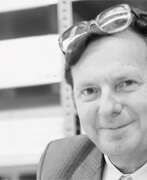

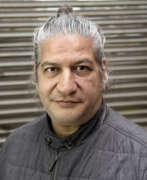





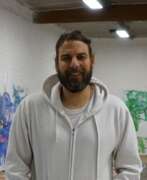

Aaron Garber-Maikovska is a contemporary artist. He is known for his multidisciplinary approach, which incorporates sculpture, performance, video, and installation art.
Garber-Maikovska's work often explores themes of power, violence, and the body. He has exhibited his work internationally, including at the Whitney Museum of American Art in New York, the Palais de Tokyo in Paris, and the Kunsthalle Basel in Switzerland.
Some of his notable works include "The Power and the Glory," a performance piece in which the artist dressed in a suit made of raw meat and recited a monologue about the nature of power, and "Shadow Boxing," a series of sculptures that depict fighters engaged in violent combat.
Garber-Maikovska is also a co-founder of the art collective Dear Reader, which explores the intersection of art and literature through exhibitions, readings, and other events.


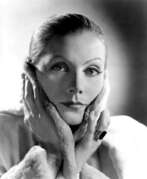

Greta Garbo, born Greta Lovisa Gustafsson, is a Swedish and American actress.
Greta was born into a poor family and early went to work - in a beauty salon, salesman, modeling for photos in local advertising magazines. And also studied at the drama school of the Royal Stockholm Drama Theater. The girl was noticed by agents, invited to a cameo in the movie "Peter the Tramp" and soon she became a star of silent movies in Sweden and Germany. In 1923, she changed her last name to Garbo. It was at this time that she caught the eye of Hollywood mogul Louis B. Mayer, who signed her to a one-year contract with MGM. Her first American film role was in Torrent (1926), followed by The Temptress (1926), which brought Garbo stardom.
Garbo was the highest paid actress of the pre-war era. Greta's talented and dramatic performance brought her worldwide fame and the title of one of the best actresses in Hollywood history. Anna Karenina and Mata Hari are two of the most significant roles of the actress. When the era of silent movies ended, a languid low voice with a slight hoarseness became a trademark of Garbo. For his contribution to the development of cinematography in 1954, Garbo was awarded an Oscar.
The life of Greta Garbo is still shrouded in mystery and myths. She was silent, preferred privacy and therefore was surrounded by an atmosphere of mystery. But under the outer facade of aloofness beat sensitive and passionate heart. Greta was a style icon of her time, she was imitated and envied by the stars of Hollywood.
After the outbreak of World War II in 1941, Greta Garbo never returned to the big movie, only sometimes playing occasional roles in small pictures. After the war, she returned to America and lived in seclusion in New York City for another 50 years. She did not give interviews, avoided reporters and went out on the street only when necessary and with dark glasses.