distemper paint







.jfif)
Camille Pissarro, a Danish-French artist, was a linchpin of the Impressionist and Neo-Impressionist movements. Born in 1830 on the island of St. Thomas, Pissarro's Jewish-Portuguese heritage and upbringing in the Danish West Indies infused his work with a unique perspective. He is celebrated for his depictions of rural and urban French life, particularly his landscapes that eschew artifice, highlighting the simple beauty of the natural world and the dignity of common people.
Pissarro's influence on the art world was profound. Not only was he a central figure in the Impressionist movement, helping to organize the collective's exhibitions, but he also mentored future Post-Impressionist masters like Cézanne, Gauguin, and van Gogh. His colleagues revered him for his wisdom, balance, and warmhearted nature. Pissarro's dedication to the Impressionist ethos was unparalleled; he was the only artist to exhibit in all eight Paris Impressionist exhibitions from 1874 to 1886.
Among his notable works, Pissarro's 'Hay Harvest at Eragny' (1887) exemplifies his shift towards Neo-Impressionism. This piece, housed at the Van Gogh Museum in Amsterdam, showcases his exploration of tonal values and pointillism. Another poignant work, 'Jeanne Holding a Fan', captures the fragile beauty of his young daughter during her illness, and is a testament to his ability to convey deep personal emotion through art. This work is displayed at The Ashmolean Museum in Oxford.
For art collectors and enthusiasts, Pissarro's works remain a testament to the transformative power of Impressionism and its impact on modern art. His paintings, characterized by their revolutionary depictions of everyday life and nature, continue to be celebrated in major museums around the world.
To stay informed about upcoming sales and auction events featuring works by Camille Pissarro, sign up for our updates. This subscription is an opportunity for collectors and art experts to connect with the enduring legacy of one of Impressionism's pivotal figures.
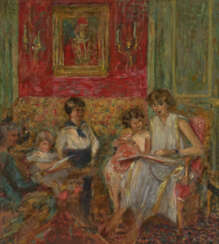

Jean-Édouard Vuillard was a French artist, celebrated for his role in the avant-garde group Les Nabis. Known for his decorative art and printmaking, Vuillard's work was heavily influenced by Japanese prints, which is evident in his unique style of flattened color planes and simplified forms. His paintings, often of interior scenes, are distinguished by their intimate and domestic subjects, displaying a keen sensitivity to the subtle dynamics of everyday life.
In the late 1880s, Vuillard joined Les Nabis, a group of artists who sought to break away from traditional artistic concepts. This association played a pivotal role in shaping his artistic philosophy. Vuillard’s early works, like "The Seamstresses" (1890) and "Child in an Orange Shawl" (1894–95), demonstrate his evolving style, marked by the use of vibrant colors and a distinct lack of perspective, aimed at exploring spatial relationships.
Vuillard's artistic journey included ventures into theater decoration and interior design. He designed stage sets and theater programs, notably for Lugné-Poe's Theatre de l’Oeuvre, and also worked on large-scale panel paintings for French patrons. His close collaboration with the Natanson brothers, founders of the cultural review La Revue Blanche, was significant in his career. This association brought him various commissions, including decorative works for private homes and public buildings.
Vuillard's art evolved over time, transitioning from his Nabis-style works to more naturalistic portraits in the 1920s and 1930s. Despite this shift, his focus remained on portraying the intricacies of domestic life, often featuring the people closest to him. Notable among his subjects were Misia Natanson, a prominent figure in the Parisian cultural scene, and Lucy Hessel, with whom Vuillard had a long-term relationship.
For art collectors and experts, Vuillard's works are a window into the intimate spaces of Parisian life at the turn of the century. His ability to transform everyday scenes into art makes his work particularly appealing. Pieces like "The Green Interior" (1891) and "Breakfast at Villerville" (1910) are exemplary of his style and are celebrated for their quiet yet profound depiction of ordinary life.
Vuillard's legacy lives on in galleries and museums worldwide. His work remains a testament to the power of domestic scenes in art, capturing the essence of the period with a unique blend of realism and abstraction.
For those interested in the subtle beauty of Vuillard's work, subscribing to our updates will ensure you stay informed about new sales and auction events featuring his art. Our updates are tailored for connoisseurs like you, providing insights into the world of art and antiques, with a focus on Vuillard's enduring legacy.



Jean-Édouard Vuillard was a French artist, celebrated for his role in the avant-garde group Les Nabis. Known for his decorative art and printmaking, Vuillard's work was heavily influenced by Japanese prints, which is evident in his unique style of flattened color planes and simplified forms. His paintings, often of interior scenes, are distinguished by their intimate and domestic subjects, displaying a keen sensitivity to the subtle dynamics of everyday life.
In the late 1880s, Vuillard joined Les Nabis, a group of artists who sought to break away from traditional artistic concepts. This association played a pivotal role in shaping his artistic philosophy. Vuillard’s early works, like "The Seamstresses" (1890) and "Child in an Orange Shawl" (1894–95), demonstrate his evolving style, marked by the use of vibrant colors and a distinct lack of perspective, aimed at exploring spatial relationships.
Vuillard's artistic journey included ventures into theater decoration and interior design. He designed stage sets and theater programs, notably for Lugné-Poe's Theatre de l’Oeuvre, and also worked on large-scale panel paintings for French patrons. His close collaboration with the Natanson brothers, founders of the cultural review La Revue Blanche, was significant in his career. This association brought him various commissions, including decorative works for private homes and public buildings.
Vuillard's art evolved over time, transitioning from his Nabis-style works to more naturalistic portraits in the 1920s and 1930s. Despite this shift, his focus remained on portraying the intricacies of domestic life, often featuring the people closest to him. Notable among his subjects were Misia Natanson, a prominent figure in the Parisian cultural scene, and Lucy Hessel, with whom Vuillard had a long-term relationship.
For art collectors and experts, Vuillard's works are a window into the intimate spaces of Parisian life at the turn of the century. His ability to transform everyday scenes into art makes his work particularly appealing. Pieces like "The Green Interior" (1891) and "Breakfast at Villerville" (1910) are exemplary of his style and are celebrated for their quiet yet profound depiction of ordinary life.
Vuillard's legacy lives on in galleries and museums worldwide. His work remains a testament to the power of domestic scenes in art, capturing the essence of the period with a unique blend of realism and abstraction.
For those interested in the subtle beauty of Vuillard's work, subscribing to our updates will ensure you stay informed about new sales and auction events featuring his art. Our updates are tailored for connoisseurs like you, providing insights into the world of art and antiques, with a focus on Vuillard's enduring legacy.
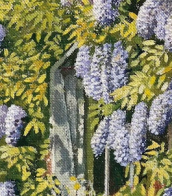


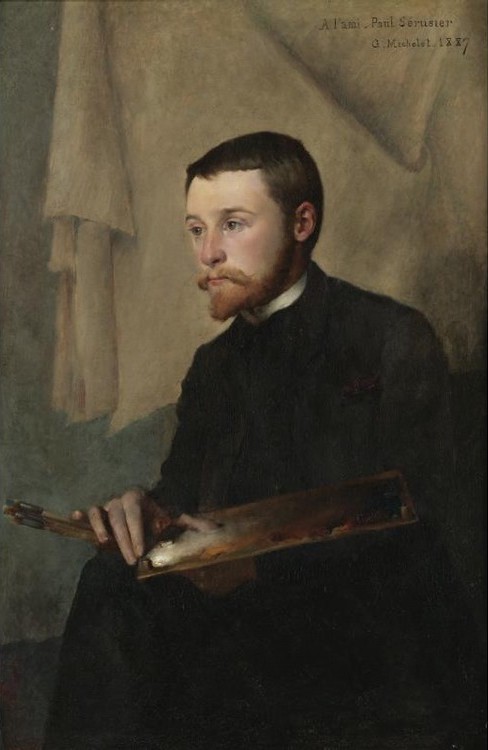
Paul Sérusier was a French Post-Impressionist painter and theorist, notable for his significant contributions to the art movement known as the Nabis. Born in Paris on November 9, 1864, Sérusier's work is characterized by its expressive use of color and pattern, inspired by the techniques of Paul Gauguin. He is best known for his exploration of color, sensation, and abstraction, particularly evident in works like "Le Talisman, the Aven River at the Bois d'Amour" (1888). This painting marks a departure from the Impressionists' more faithful representation of observed reality, focusing instead on translating sensations onto the canvas with vibrant brushstrokes and an emphasis on emotional expression over visual accuracy.
Sérusier's paintings often feature the landscapes and people of Brittany, notable for their contemplative mood achieved through firm contours and blocks of unmodulated color. His style evolved under the influence of Synthetism and Cloisonnism, favoring flattened forms and large swathes of color, as seen in "Farmhouse at le Pouldu" (1890). This approach reflects a decorative organization of objects, emphasizing the craft and execution of the scene.
Some of Sérusier's notable works are housed in prestigious museums such as the Musée d'Orsay in Paris, including "Portrait of Paul Ranson in Nabi Costume" (1890) and "Landscape" (1912). His legacy extends beyond his own artworks; he was a key figure in the formation of the Nabis movement, and his theoretical contributions have had a lasting impact on the art world.
For collectors and experts in art and antiques, Sérusier's work represents a unique blend of post-impressionist and symbolist styles, making his pieces highly valued both for their historical significance and their aesthetic appeal. To stay updated on new product sales and auction events related to Paul Sérusier, sign up for our updates. This subscription service is exclusively focused on providing information related to Sérusier's work, ensuring you remain informed about opportunities to acquire pieces by this influential artist.

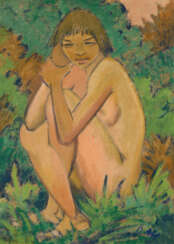

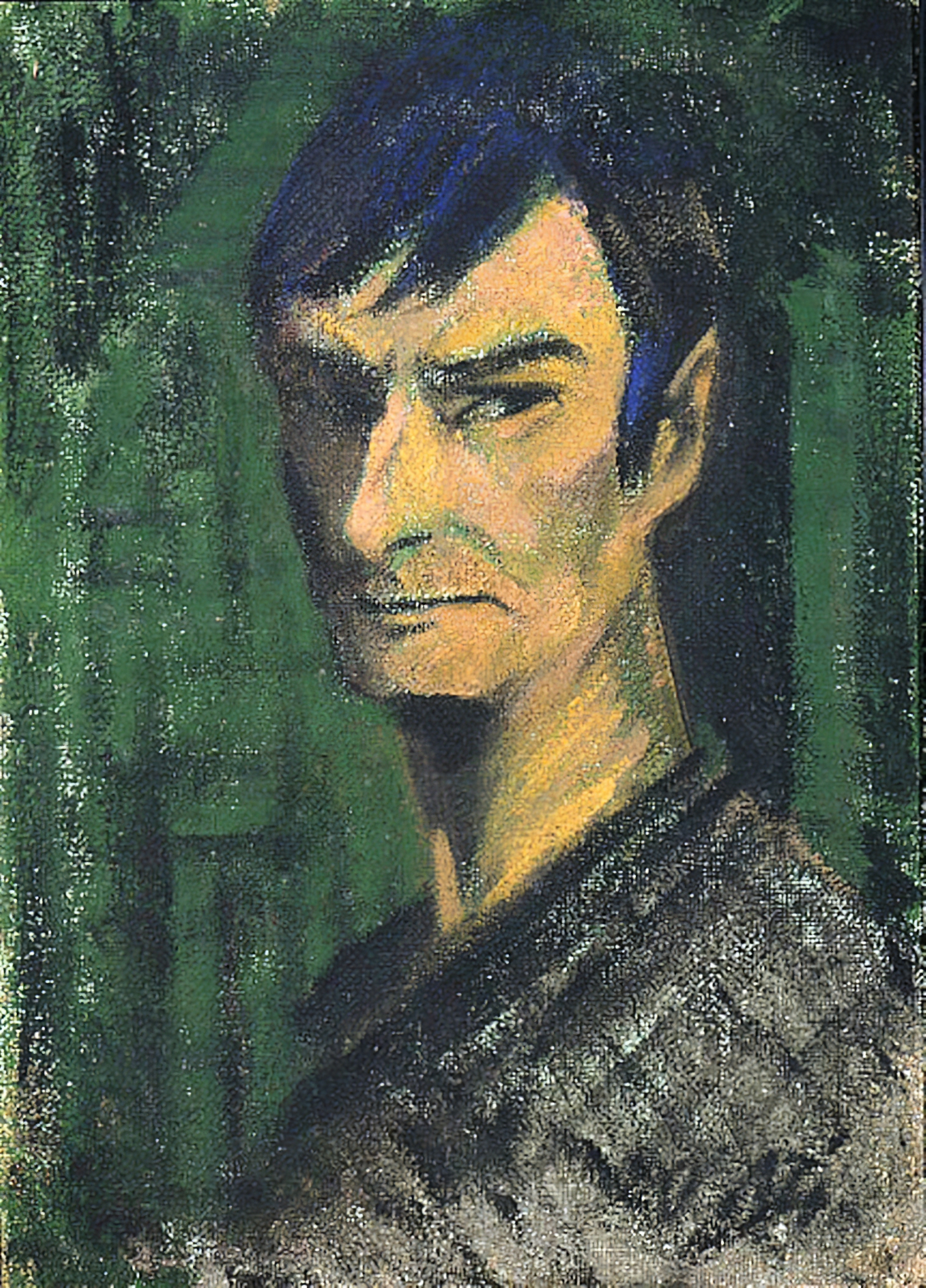
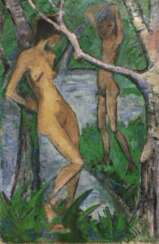
Otto Mueller was a German artist of the first third of the twentieth century. He is known as a painter, graphic artist and printmaker, a representative of German Expressionism, a member of the artists' group "Bridge".
Otto Mueller is considered one of the most lyrical German expressionist painters. His work reflected the unity of man and nature, characterized by simplification of forms, colors and contours. He became famous for his paintings of nude bodies and gypsy women, because of his fascination with which the artist was once nicknamed "Gypsy Mueller".
Mueller preferred to work in tempera on rough canvas, creating a matte surface. His artistic legacy includes 172 works, including lithographs, woodcuts and etchings.
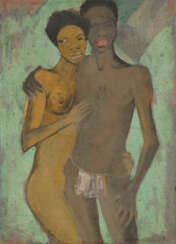

Otto Mueller was a German artist of the first third of the twentieth century. He is known as a painter, graphic artist and printmaker, a representative of German Expressionism, a member of the artists' group "Bridge".
Otto Mueller is considered one of the most lyrical German expressionist painters. His work reflected the unity of man and nature, characterized by simplification of forms, colors and contours. He became famous for his paintings of nude bodies and gypsy women, because of his fascination with which the artist was once nicknamed "Gypsy Mueller".
Mueller preferred to work in tempera on rough canvas, creating a matte surface. His artistic legacy includes 172 works, including lithographs, woodcuts and etchings.


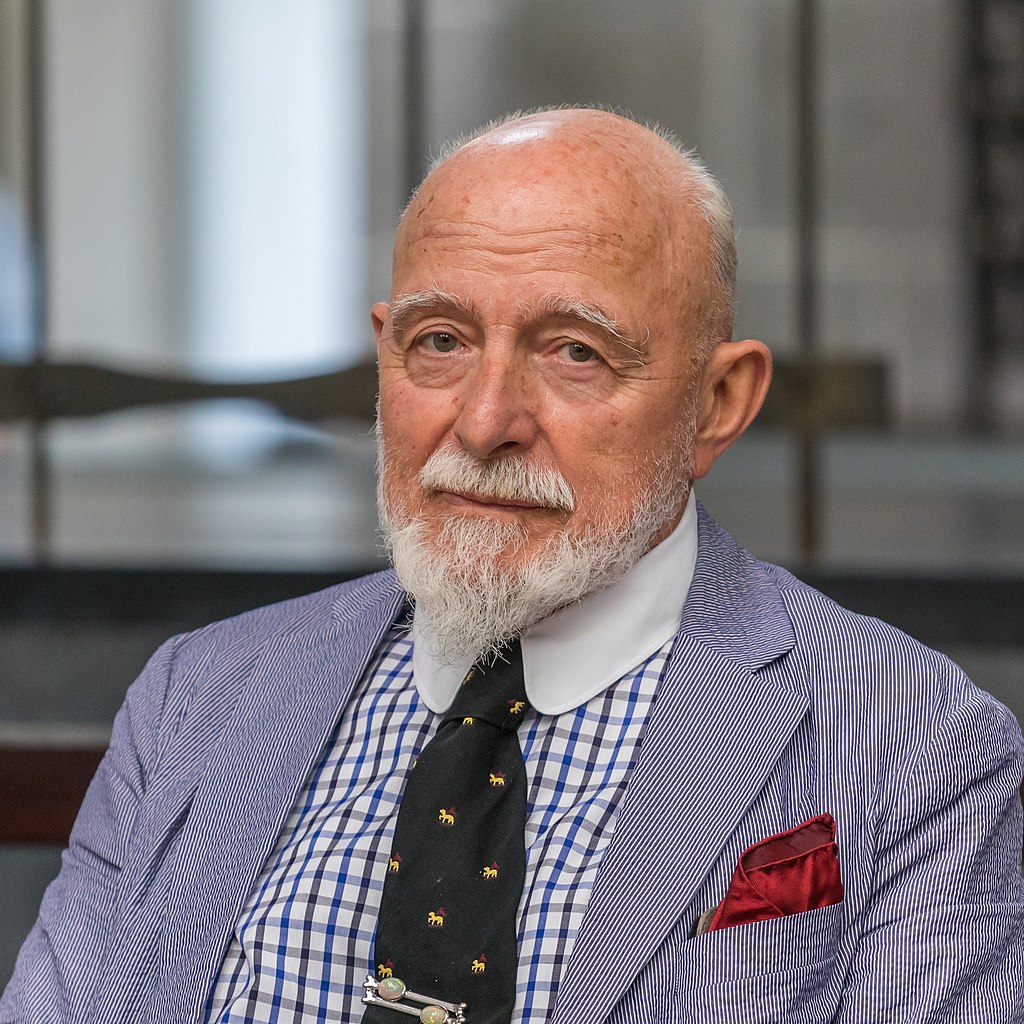
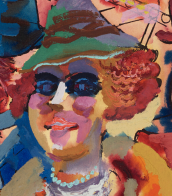
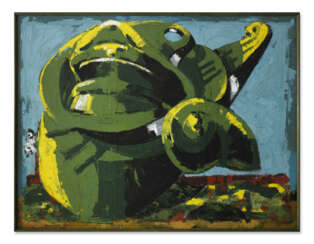
Markus Lüpertz is a German painter, sculptor, graphic artist, and writer. He also publishes a magazine, and plays jazz piano. He is one of the best-known German contemporary artists. His subjects are characterized by suggestive power and archaic monumentality. Lüpertz insists on capturing the object of representation with an archetypal statement of his existence. His art work is associated to neo-expressionism. Known for his eccentricity, German press has stylized him as a «painter prince».














Jean-Édouard Vuillard was a French artist, celebrated for his role in the avant-garde group Les Nabis. Known for his decorative art and printmaking, Vuillard's work was heavily influenced by Japanese prints, which is evident in his unique style of flattened color planes and simplified forms. His paintings, often of interior scenes, are distinguished by their intimate and domestic subjects, displaying a keen sensitivity to the subtle dynamics of everyday life.
In the late 1880s, Vuillard joined Les Nabis, a group of artists who sought to break away from traditional artistic concepts. This association played a pivotal role in shaping his artistic philosophy. Vuillard’s early works, like "The Seamstresses" (1890) and "Child in an Orange Shawl" (1894–95), demonstrate his evolving style, marked by the use of vibrant colors and a distinct lack of perspective, aimed at exploring spatial relationships.
Vuillard's artistic journey included ventures into theater decoration and interior design. He designed stage sets and theater programs, notably for Lugné-Poe's Theatre de l’Oeuvre, and also worked on large-scale panel paintings for French patrons. His close collaboration with the Natanson brothers, founders of the cultural review La Revue Blanche, was significant in his career. This association brought him various commissions, including decorative works for private homes and public buildings.
Vuillard's art evolved over time, transitioning from his Nabis-style works to more naturalistic portraits in the 1920s and 1930s. Despite this shift, his focus remained on portraying the intricacies of domestic life, often featuring the people closest to him. Notable among his subjects were Misia Natanson, a prominent figure in the Parisian cultural scene, and Lucy Hessel, with whom Vuillard had a long-term relationship.
For art collectors and experts, Vuillard's works are a window into the intimate spaces of Parisian life at the turn of the century. His ability to transform everyday scenes into art makes his work particularly appealing. Pieces like "The Green Interior" (1891) and "Breakfast at Villerville" (1910) are exemplary of his style and are celebrated for their quiet yet profound depiction of ordinary life.
Vuillard's legacy lives on in galleries and museums worldwide. His work remains a testament to the power of domestic scenes in art, capturing the essence of the period with a unique blend of realism and abstraction.
For those interested in the subtle beauty of Vuillard's work, subscribing to our updates will ensure you stay informed about new sales and auction events featuring his art. Our updates are tailored for connoisseurs like you, providing insights into the world of art and antiques, with a focus on Vuillard's enduring legacy.