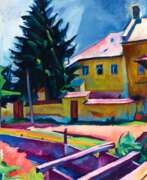
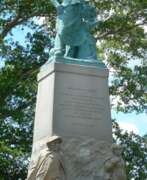
Romania
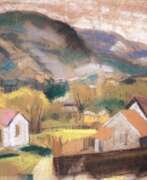

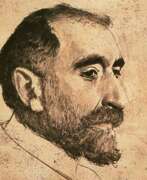

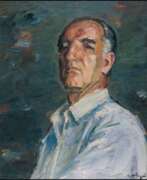




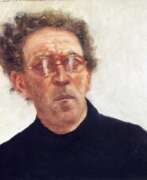

Avigdor Arikha (Hebrew: אביגדור אריכא) was a Romanian-born French–Israeli artist, printmaker and art historian.
Arikha painted directly from the subject in natural light only, using no preliminary drawing, finishing a painting, pastel, print, ink, or drawing in one session. His profound knowledge of art techniques and masterly draughtsmanship enabled him to abide by this principle of immediacy, partly inspired by Chinese brush painting.
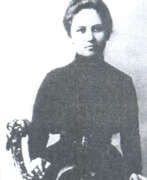

Lydia Ivanovna Arionescu-Baillayre (Russian: Лидия Ивановна Арионеско-Балльер) was an early twentieth-century Russian artist of Moldovan origin. She is known as a painter, a representative of Post-Impressionism and Neo-Impressionism.
Lydia Arionescu-Baillayre created still lifes and portraits. She was a member of the first St. Petersburg society of experimental and innovative artists "Union of Youth".
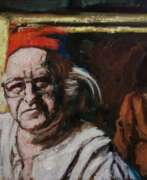

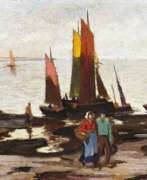

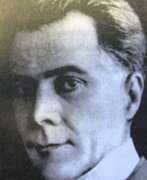

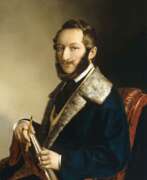

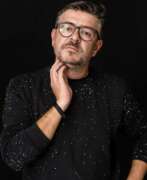

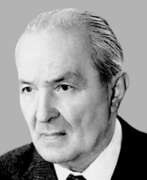

Vilmos-József Istvanovich Berets (Russian: Вильмош-Йожеф Иштванович Берец) was a Ukrainian Soviet artist of the second half of the twentieth century of Hungarian origin. He is known as a painter, graphic artist, teacher, and art historian.
Berets created works mainly in easel graphics, among his most outstanding works are watercolor landscapes. Since 1950 he actively participated in art exhibitions. He was also the author of articles on the theory of art, as well as studies on various artists, including the work of Transcarpathian artists, in the course of which the master collected extensive archival material on the history of the local school of painting.
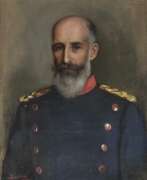


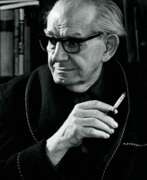

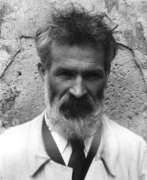

Constantin Brâncuși was a Romanian sculptor, painter, and photographer who made his career mainly in France, becoming one of the pivotal figures of modern sculpture and a pioneer of modernism. Born in 1876 in Hobița, Romania, Brâncuși displayed a talent for carving from a young age, a skill honed during his early life as a shepherd in the Carpathian Mountains. His work evolved from traditional forms to groundbreaking abstract sculptures that sought to capture the essence rather than the literal representation of his subjects.
After moving to Paris in 1904, Brâncuși's unique style began to take shape. He worked briefly in the studio of Auguste Rodin, but soon left to pursue his own vision, stating that "Nothing can grow under big trees." This decision marked the beginning of his pursuit to distill forms to their simplest essence, a philosophy that would define his career. Brâncuși's sculptures, such as "The Kiss" and "Bird in Space," are celebrated for their smooth, simplified forms that evoke the core of the subject matter with minimal detail. His work in wood, bronze, and marble often carried a serene, timeless quality, blending modernist aesthetics with a touch of his Romanian heritage.
Brâncuși's contributions to art were not limited to sculpture. He was also an accomplished photographer, using his camera to capture the spatial relationships and compositions of his studio and sculptures, an extension of his artistic vision. His works are held in high regard worldwide and are featured in prominent collections, such as the Museum of Modern Art in New York and the Tate in the United Kingdom.
The legal battle over "Bird in Space" in 1927 highlighted the challenges Brâncuși faced in having his work recognized as art by traditional standards. This case, which eventually ruled in his favor, established a precedent for modern art's recognition beyond traditional forms and representations.
For art collectors and experts, Brâncuși's oeuvre represents a bridge between the tactile craftsmanship of earlier periods and the conceptual, form-driven concerns of modern art. His legacy is a testament to the power of innovation, vision, and the enduring appeal of simplicity in form.
For those interested in the evolution of sculpture and the role of art in transcending cultural and temporal boundaries, Constantin Brâncuși's work offers profound insights. We invite you to sign up for updates on new product sales and auction events related to Brâncuși's work, ensuring you stay informed about opportunities to engage with the legacy of this pioneering artist.
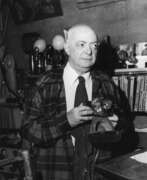

Brassaï, whose real name was Gyula Halász, was a Hungarian-French artist and photographer best known for his work documenting the streets of Paris during the 1920s and 1930s. He was one of the key figures of the Surrealist movement and his work continues to influence photographers and artists to this day.
Brassaï moved to Paris in the 1920s to pursue a career in art. He initially worked as a journalist and began taking photographs to accompany his articles. However, it was his nocturnal photographs of the city that would bring him international fame.
Brassaï's photographs of the streets of Paris at night captured the city's seedier side, including its prostitutes, bars, and cabarets. His work is known for its use of dramatic lighting and strong contrast, which helped to create a moody, evocative atmosphere.
In addition to his photography, Brassaï was also a talented painter and sculptor. He was a close friend of many of the leading artists and writers of the time, including Pablo Picasso, Salvador Dalí, and Henry Miller.
Brassaï's work has been exhibited in major museums and galleries around the world, and his photographs have been published in numerous books and magazines. He was one of the most influential photographers of the 20th century, and his legacy continues to inspire artists and photographers today.
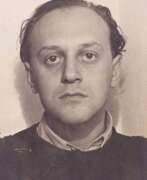

Victor Brauner was a Romanian Surrealist painter and sculptor. He was born in Piatra Neamț, Romania, and studied at the School of Fine Arts in Bucharest before moving to Paris in 1930.
Brauner's art was heavily influenced by his interest in the occult, and his work often featured mystical and dreamlike imagery. He was particularly interested in alchemy and mythology, and his paintings often included references to ancient symbols and esoteric traditions.
During World War II, Brauner was forced to flee Paris and spent time in Marseille and Casablanca before returning to the city in 1945. After the war, he became involved in the French Surrealist movement, and his work was featured in several exhibitions, including the Exposition Internationale du Surréalisme in 1947.
In addition to painting, Brauner also worked as a sculptor, and his sculptures often incorporated found objects and unconventional materials.
Today, Brauner is considered one of the most important figures of the Surrealist movement, and his work continues to be exhibited and studied around the world. His legacy has had a significant impact on the development of modern and contemporary art.


André Cadere is a Romanian and French conceptual artist.
Born in Warsaw, Poland, where his father was Romanian ambassador, Cadere emigrated to France in 1967. Living in Paris since 1971, along with Daniel Buren, Neale Toroni and François Morellet, he belongs to the most important figures of French minimalism and concept art of the 1970s. Cadere's work combines a simplified formal sculptural language with a conceptual approach that questions the workings of the art system, a combination that became important to a younger generation of artists in those years.
André Cadere is best known for his series of Barres de bois rond, multicolored wooden bars, begun in 1970 and continued for eight years until his death from cancer at the age of 44. The colors of the bars on these posts form a kind of code. His work not only challenged the traditional art-making practices of the time, but was also exhibited in unconventional places. It is known cases when he uninvited them at exhibitions of other artists, thus attracting attention to his work. For these shenanigans, the artist has been called "Stick Man." Although these works fall between abstract painting and minimalist sculpture, they have been an integral part of Cadere's performances and interventions.
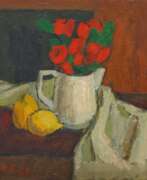


Marieta Cirulescu is a Romanian-German artist known for her abstract and conceptual paintings. She studied at the Academy of Fine Arts in Bucharest and at the Academy of Fine Arts in Nuremberg, Germany.
Cirulescu's work is characterised by calm colours and minimal compositions, often featuring repeating patterns and forms reminiscent of organic forms and structures found in nature. She is interested in the interplay of the organic and geometric, and her works often evoke a sense of movement and growth.
Cirulescu has exhibited her work extensively in Europe and the United States, including exhibitions at the Museum of Modern Art in Frankfurt, the Kunstmuseum Bonn and the New Museum in New York. She was also included in the Romanian pavilion at the 2013 Venice Biennale.
Cirulescu is the recipient of numerous awards and grants, including the Villa Romana Prize in 2004 and the Berlin Senate Fellowship in 2009. She currently lives and works in Berlin.


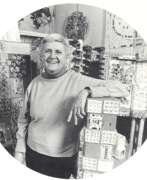

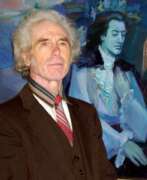

Stefan Ivanovich Florescu (Russian: Степан Иванович Флореску) was a Soviet and Moldovan artist of the second half of the twentieth and early twenty-first centuries. He is known as a painter, graphic artist and inventor who solved complex artistic problems using the methodology of the theory of inventive problem solving.
Starting in art at a young age, Stefan Florescu sought to develop not only his knowledge but also his skills as a portrait painter, exploring the complex aspects of human nature. His work encompassed various genres, including thematic compositions, landscapes, still lifes and portraits, as well as utilizing a variety of artistic and technical methods to create expressive images.
During his career, the master created more than 10,000 sketches, sketches, and sketches; about 250 graphic works; more than 390 pictorial compositions; and two sculptural projects.


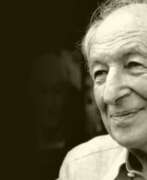

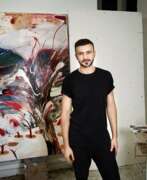

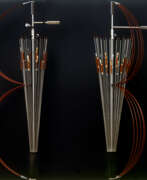

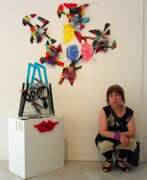

Elena Graure-Manta is a Romanian glass and porcelain artist based in Germany.
Elena studied under the glass and porcelain artist Clausenburg (Romania), at the Romanian Academy of Fine Arts, and worked as a designer for the Avrig glass manufactory. In her work, she takes objects from everyday life as a basis and, endowing them with her imagination, creates glass works of art from them. In this way Elena Graure-Manta created a series of glass shoes and handbags, and later glass "luxury cars". Graure-Manta's glass objects are very colorful and contain many details, making each piece unique and interesting.
From 1995-2005, the artist owned the Vitrumex glass manufactory in Romania and works in her own studio in Erftstadt, Germany, near Cologne.
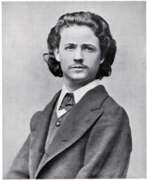

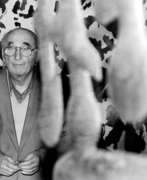

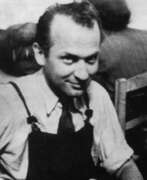

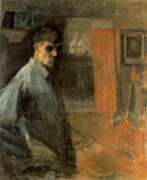

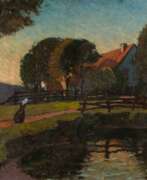

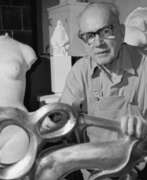

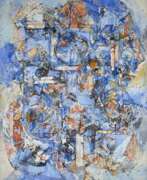


Marcel Janco was a Romanian-born Israeli artist and architect. He was one of the founding members of the Dada movement and a prominent figure in the European avant-garde.
Janco studied at the Academy of Fine Arts in Bucharest and later moved to Paris in 1919, where he became involved with the Dada movement. He co-founded the Dadaist journal "Contimporanul" and was a member of the Dada group in Zurich. In 1922, Janco moved to Israel and settled in Tel Aviv, where he became a leading figure in the city's avant-garde art scene.
Janco's work often combined abstract and figurative elements, and he experimented with a variety of media, including painting, sculpture, and collage. He was also a prolific architect and helped to design several important buildings in Israel, including the Habima Theater in Tel Aviv.
In addition to his work as an artist and architect, Janco was also a writer and educator. He founded the Ein Hod Artists' Village in Israel in 1953, and was a professor of art at the Bezalel Academy of Art and Design in Jerusalem from 1962 to 1974.
Janco's work has been exhibited in museums and galleries around the world, and he is widely considered one of the most important figures in the development of modern art in Israel.


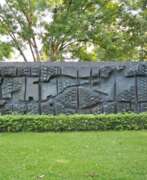






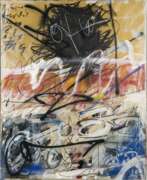

Andras Markos is a Romanian, Hungarian and German abstractionist, graphic designer and performance artist.
Andras studied fine arts at the Romanian Academy of Fine Arts, then worked for many years as a graphic designer, became a curator of medieval church art and a production designer for the Hungarian State Theater.
In 1980, Markos emigrated to Germany, also working in Vienna. By 1981, Andras' exhibitions had traveled throughout Europe and America, and he had established himself as an internationally renowned artist. He also founded several art galleries.
Markos' work is based on abstract expressionism and conceptual art. He often worked on thematic series and incorporated words and calligraphic ideas as well as collages into his images. Marcos worked in many techniques including painting on canvas and paper, lithography, silkscreen, etching and ceramics.


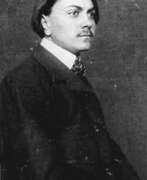


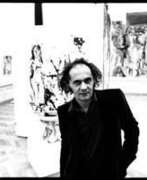

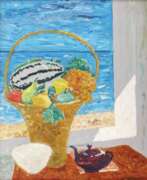

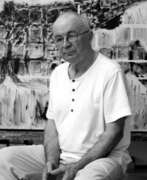

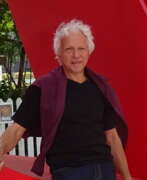


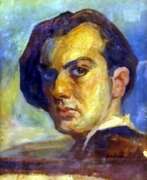

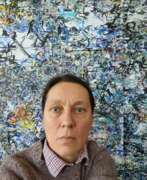

Anca Mureșan is a Romanian artist living and working in Bucharest and Düsseldorf.
Her style has a wide expressive palette, from post-impressionism to neo-Dadaist interventions or conceptualist concentrations.
Mureșan has developed a unique exhibition project, turning an entire gallery into a single painting. She painted entirely in the H'art Gallery, where she usually exhibits her work. The gallery space became a painting-the walls, the ceiling, the floor, the gallerist's office, the doors. Inspired by this achievement in Bucharest, Anca Mureșan suggests a similar endeavor in other galleries.


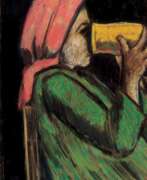

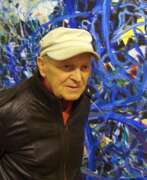

Romul Nuțiu was a Romanian artist, born on July 28, 1932, celebrated for his unwavering dedication to Abstract Expressionism. Known for his vibrant use of color and unique conceptual vision, Nutiu's work brought a refreshing dynamism to the Romanian art scene.
Educated at the Art Institute ‘Ion Andreescu’ in Cluj and later under the mentorship of Prof. Alexandru Ciucurencu in Bucharest, Nutiu's style evolved through his explorations in form and movement, often inspired by nature and water. Despite not working abroad, his international recognition soared from 2008 onwards, highlighting his impact on both national and global scales. As a teacher in Timisoara until his death in 2012, he influenced generations of artists with his innovative techniques and distinctive approach to abstract art.
Nutiu's artworks, which include paintings, sculptures, and installations, are a testament to his skill and artistic integrity. His creations, characterized by a balance of structure and improvisation, have been admired in exhibitions and collections worldwide, marking him as a preeminent figure in modern Romanian art.
For collectors and aficionados of art and antiques, Romul Nutiu's pieces offer a window into the soul of Romanian Abstract Expressionism. His works are not merely to be viewed; they are to be experienced, each piece a narrative of his unique artistic journey.
Embrace the legacy of Romul Nutiu by signing up for our updates, and discover the profound depths of his abstract expressions that continue to enchant the art world today.
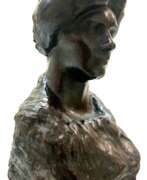


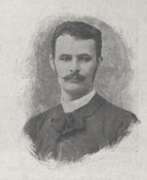

László Pataky was a painter from Austria-Hungary who specialized in rural genre scenes. He initially studied at the arts and crafts school in Budapest then after 1880, at the Academy of Fine Arts, Munich. In 1888, he was awarded a scholarship for his painting "The Messenger", which enabled him to study with Mihály Munkácsy. In addition to working in his studio, he helped him create his monumental painting, "Hungarian Conquest", for the Hungarian Parliament Building. He provided illustrations for numerous novels, including Marriage Without Love by Carmen Sylva, Giovanni Episcopo by Gabriele D'Annunzio, and The Soul of the Baron by Géza Gárdonyi. He also created gouache illustrations for the Vasárnapi Ujság (Sunday News), the Új Idők (New Times) and Magyar Salon (an illustrated monthly magazine).
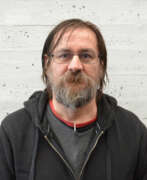

Dan Perjovschi is a Romanian artist, cartoonist and journalist living and working in Bucharest, Romania.
Dan Perjovschi blends drawing, comics and graffiti, commenting on current political, social and cultural issues, sometimes with a touch of black humor. He started working as a press illustrator back in the 1990s and has gained a lot of experience over the years. He plays an active role in the development of civil society in Romania, serving as editor of Revista 22, a cultural magazine, as well as producing his own publication, Gazeta Dana Perjovschi. Perjovschi's works are often printed and used during protests, as they reflect current social and civic issues.
In the last 10 years, in addition to drawing on paper, he has begun to use chalk and marker on the walls of buildings and exhibition spaces, drawing with great freedom even on the floor, walls and windows. In 2009, Dan Perjovschi created his first permanent exhibition at the Czech National Library of Technology in Prague. It consists of 200 monumental drawings on the concrete walls of the main atrium of the building. Dan Perjovschi is the winner of many international awards.


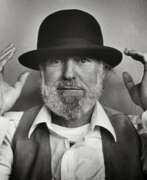

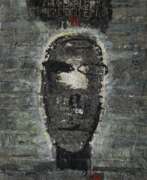


Magdalena Rădulescu was a Romanian modernist painter. Radulescu studied art in Munich and at the Académie de la Grande Chaumière in Paris. She had her first exhibitions at the Salon des Indépendants in Paris in 1929 and 1933. In the artists' quarter Montparnasse she met important modern artists, inspired by Marc Chagall. Apart from circus scenes, Radulescu painted with exuberance, energy, vitality and poetry real and imaginative pictorial worlds from Romanian folk life and culture, carnival and dance motifs.
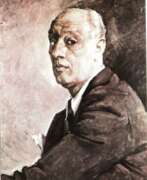

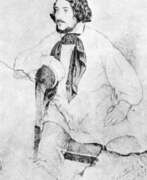

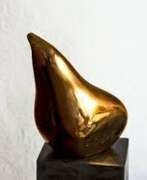


Reuven Rubin (Hebrew: ראובן רובין) was an Israeli modernist painter, one of the founders of Israeli painting.
Reuven Rubin's early works were influenced by European art movements such as Post-Impressionism and Fauvism. The artist often used bright colours and expressive brushwork. Over time, his style evolved to incorporate elements of cubism and abstraction, while maintaining a focus on depicting Jewish identity and connection to the land of Israel.
As one of the pioneering artists in Palestine, Reuven Rubin was instrumental in shaping the unique artistic identity of Israeli art. He was one of the founders of the Jerusalem House of Artists, a cultural institution that promoted art in the region. Rubin also served as director of the Tel Aviv Museum of Art.
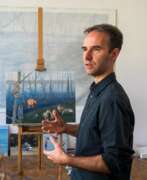

Serban Savu is a Romanian artist living and working in Cluj, Romania.
He is one of the main representatives of the so-called Cluj School of painting. Savu is known for his figurative paintings depicting the life of Romanians today: how people work and rest, go on dates, grieve and rejoice. The artist also depicts the consequences of the social and economic crisis in the country.
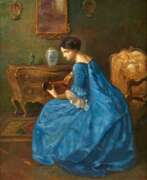


Serge Spitzer was an American artist of Romanian origin. He has worked in Jerusalem, New York and Berlin and is known for his installations, sculptures, photographs and videos.
Serge Spitzer studied at the National University of Art in Bucharest from 1969 to 1972 and then at the Bezalel Academy of Art and Design in Jerusalem from 1972 to 1974.
In his work, Spitzer has often explored the relationship between art and its context.
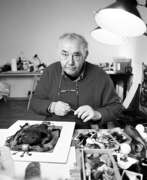

Daniel Spoerri was a Swiss artist of Romanian-Jewish descent, renowned for his contributions to the art world as a key figure in the Nouveau Réalisme (New Realism) movement. Born in Romania in 1930, Spoerri made significant strides in visual art, particularly in his development of "snare-pictures," a method where he captured a group of objects, such as table settings and the remnants of meals, in a state of apparent disorder yet meticulously fixed to the tabletop.
His works are celebrated for turning ordinary moments into a tableau of frozen time, capturing life's ephemeral qualities through the permanence of art. Notably, his piece "Tableau piège" involves the fixation of objects to a board or table, which is then displayed vertically, challenging traditional art display norms and viewer perceptions. This innovative approach allowed him to explore themes of consumption, waste, and the mundane, making the everyday profound.
Daniel Spoerri's art is housed in many esteemed institutions, including the Museum of Modern Art in New York and the Centre Georges Pompidou in Paris. His work continues to influence contemporary art, offering a unique perspective on the art of assemblage and the beauty in the banal.
For those interested in exploring more about Daniel Spoerri's life and works, or in keeping updated with sales and auction events related to his art, signing up for our updates is highly recommended. This subscription ensures you stay informed about the latest offerings and exhibitions featuring Spoerri's intriguing creations.
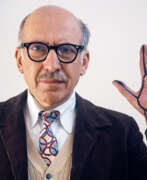


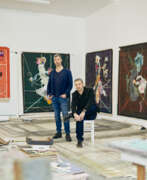


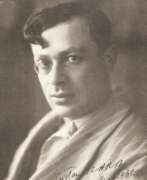

Tristan Tzara, originally named Sami (Samuel) Rosenstock, was a Romanian and French artist and writer best known as a founding figure of the Dada movement. Born in 1896 in Moinești, Romania, Tzara's influence extends across poetry, performance, and manifesto writing, marking him as a pivotal personality in 20th-century art and culture. His work challenged conventional norms and sought to disrupt the traditional boundaries of art, making him a central figure in the avant-garde community.
Dada, the movement with which Tzara is most closely associated, emerged as a reaction against the horrors of World War I, advocating for irrationality and anti-bourgeois protest. Tzara's contributions, including his manifestos, poetry, and performances, were instrumental in shaping Dada's legacy. His art and writings emphasized the importance of spontaneity and chaos, challenging the status quo and the very definition of art itself. Tzara's approach was not confined to a single medium; he explored poetry, playwriting, and critical theory, leaving a diverse and impactful body of work.
Though Tzara is not widely known for sculpture or painting in the traditional sense, his influence on these and other art forms is undeniable. His work and ideas laid the groundwork for later avant-garde movements, including Surrealism. While specific works of Tzara in museums or galleries were not detailed in the research, his legacy is preserved through the collections of major institutions worldwide, reflecting his enduring impact on the arts.
For collectors and experts in art and antiques, understanding Tzara's contributions provides insight into the radical shifts in culture and art in the early 20th century. His work remains a testament to the power of art to challenge, provoke, and transform. To stay informed about new product sales and auction events related to Tristan Tzara, sign up for our updates. This subscription ensures you're alerted to unique opportunities to engage with the history and legacy of a key figure in modern art.


Nicolae Vermont was a Romanian realist painter, graphic artist and muralist. He was noted for his wide range of subjects and his interest in social issues, and was an associate of the post-Impressionists Ştefan Luchian and Constantin Artachino, as well as a friend of the controversial art collector and political figure Alexandru Bogdan-Piteşti.
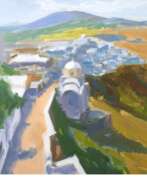


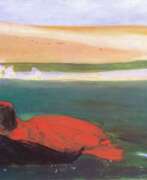


Mihály Zeller was a Hungarian painter. He hegan his studies in Budapest, at the predecessor of the Hungarian Academy of Fine Arts, after which he proceeded to continue studying in Munich and Berlin. He was a pupil at the School of Nagybánya in 1903. He visited Paris to study. He participated in group exhibitions.