

Composers Germany
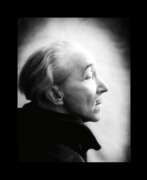

Hans Henning Otto Harry Baron von Voigt, best known by his nickname Alastair, was a German artist, composer, dancer, mime, poet, singer and translator. He is best known as an illustrator.
His drawings, which are often decadent in spirit and have the look of Art Nouveau, are influenced somewhat by the drawings of the English artist Aubrey Beardsley.
His drawings were in black and white ink, sometimes with one colour added. Alastair's illustrations show a strong influence from the Decadent movement in art and poetry that had begun decades earlier, with the "perverse and sinister" a recurring theme. Intricate decorative elements and fine detail are apparent in his works.
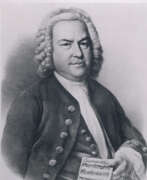

Johann Sebastian Bach was a German Baroque composer, Kapellmeister, organist and teacher.
Johann Sebastian Bach was the youngest child in the family of musician Johann Ambrosius Bach (1645-1695) and belonged to a large family of North German musicians whose dynasty he himself traced back to his great-great-grandfather Veit Bach, a Lutheran baker in the late 16th century. Johann was orphaned at an early age and was taken into care by his older brother, the organist Johann Christoph Bach. In August 1703 he was appointed official organist of the church in Arnstadt, then from 1714 he worked as Kapellmeister and concertmaster at the Weimar court, to which time his first compositions date. In 1736 he was appointed court composer to the King of Saxony, thus recognizing his merits as a composer and organist. While working as a concertmaster, Bach also mastered almost all the instruments in the orchestra.
In the last years of his life, Bach was nearly blind and living poorly, and his Baroque music was considered outdated as tastes changed. But in the 19th century, interest in Bach's works increased dramatically, and he became the favorite composer of many subsequent musicians. Johann Sebastian's sons Wilhelm Friedemann, Carl Philipp Emanuel and Johann Christian continued the family dynasty and also became musicians. And Johann Sebastian Bach himself was surrounded by students throughout his life.
Although his contemporaries admired Bach's playing on the harpsichord and organ, today it is his compositions that are considered some of the finest works of mature Baroque music. His most widely known works today include the Brandenburg Concertos, the Well-Tempered Clavier, the Masses in B minor, and many other masterpieces of church and instrumental music. Bach's rich legacy includes sacred and secular compositions, especially cantatas, organ pieces and concertos (Bach composed more than 1,000 musical works in all significant genres of his time, except opera), which influenced many later composers. Johann Sebastian Bach was able to encompass and unite the major styles, forms and national traditions developed in previous generations. Today he is considered one of the greatest composers of all time.
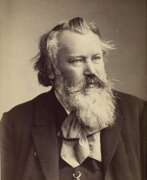

Johannes Brahms was a great German composer, conductor and pianist of the Romantic era.
Johannes showed a talent for music early on, learning to play the piano and earning a living from it; in 1850 he met the Hungarian violinist of Jewish origin Eduard Remenyi - from him he learned gypsy music, which often manifested itself in his later work.
In 1853, Brahms had a fateful encounter with the composer Robert Schumann. Schumann wrote an enthusiastic article about Brahms in a periodical, and from that moment the general public became aware of the young talent. In 1859 Brahms was appointed conductor of the women's choir in Hamburg, which gave him ample time for his own work. During this period he composed two Serenades for orchestra and a String Sextet in B flat major, and completed the Piano Concerto No 1 in D minor. A little later he settled in Vienna and directed the Singakademie choir.
In 1868 Brahms completed his most famous choral work, the German Requiem, which is still considered one of the most important works of 19th century choral music. The following year he composed two volumes of Hungarian Dances for piano duet - these were brilliant arrangements of gypsy melodies, their success was phenomenal, and they were performed all over the world.
For the rest of his life, Brahms never stopped composing works in a wide variety of genres: symphonies, concertos, chamber music, piano works, choral works, waltzes and songs. Brahms was a great master of the symphonic and sonata style of the second half of the nineteenth century, which placed him in the first ranks of German composers. He made his last concert appearance in March 1897, and died of cancer in Vienna in April.
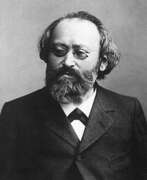

Max Bruch, full name Max Christian Friedrich Bruch, was a German composer and conductor, violinist and teacher of the late Romantic period.
Bruch studied with the composer and pianist Ferdinand Hiller (1853-1857), wrote a symphony at age 14, and won a scholarship that allowed him to study in Cologne. His first opera, Joke, Deceit and Revenge, was performed in 1858. He conducted orchestral and choral societies in Germany, England and Poland, and from 1890 to 1911 he was a professor at the Berlin Academy of Arts.
Bruch was an ambitious and prolific composer. His greatest success during his lifetime was his huge works for chorus and orchestra, Beautiful Ellen (1867) and Odysseus (1872). He was also the author of string concertos and pieces for violin and orchestra. His Violin Concerto No. 1 in G minor (1866) is one of the most popular Romantic violin concertos.
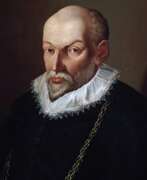

Orlando di Lasso (French: Roland de Lassus, Latin: Orlandus Lassus) was a Franco-Flemish composer and Kapellmeister of the late Renaissance.
In his youth Orlando had a good voice and sang in a choir, traveled in Italy and eventually began composing music himself. In 1563, Lasso was appointed Kapellmeister at the court of Duke Albrecht V and made his chapel professional, and his work earned Munich a reputation as one of the musical centers of Europe. Lasso also taught music and lived mainly in Bavaria.
Lasso was highly gifted, and is considered one of the most versatile and prolific composers in the history of music. He wrote some 1,350 (mostly vocal) compositions in all genres and forms contemporary to his time, of which some 1,200 were published during his lifetime. Lasso was a master of sacred music, but was equally adept at secular composition, spanning Italian, French, and German genres.
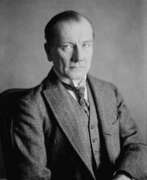

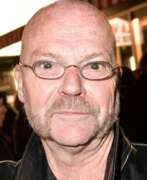

Wolfgang Flatz is a contemporary Austrian artist, stage designer, musician and composer. Currently lives and works in Munich, Germany.
After engaging with contemporary art movements such as Heppening and Viennese Actionism, Flatz creates works using a variety of media - painting, sculpture, performance, video, computer, film, photography, theatre, music, design and architecture. Subjects include voyeurism, the body, violence, aggression, pain, love, politics and audience interaction.
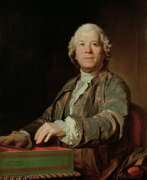

Christoph Willibald Gluck was a German classical composer and reformer of the opera genre.
Christoph showed a talent for music early on, playing violin and cello, leaving home and studying music with various teachers in Prague, Vienna and Milan. In 1741, Gluck had his first significant success with his first opera, Artasers, at the Milan theater. In 1745 Gluck, by then already well known as an opera composer, was invited to England, but in 1750 he settled in Vienna, where he lived for the rest of his life. While in Paris in 1773-79, he won the favor of Louis XVI's wife Marie Antoinette.
Christoph Gluck played a historic role in the formation of a new operatic style, becoming the main reformer in the transition from baroque to classical opera.
During his career, Christoph Gluck composed about 40 operas. Of these, his first "reformist" opera was Orpheus and Eurydice, staged in Vienna in 1762. Next were "Alceste" (1767), "Parida et Helena" (1770), "Iphigenia in Aulida" (1774), a French version of "Orpheus" (1774), and "Iphigenia in Tauris" (1779). He also wrote five ballets, of which Don Giovanni (1761) was one of the first successful action ballets.
Gluck spent the last eight years of his life in Vienna, continuing to work tirelessly. During these years he met several times with Wolfgang Mozart, who by then had already become a bright star.
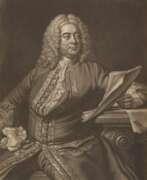

George Frideric Handel was a German-born English composer of the Baroque period.
After receiving a musical education, Handel worked briefly as an organist at the cathedral in Halle, then joined the violin section of the opera orchestra in Hamburg. After spending several years in Italy, he wrote many works there, including two operas. The style of Italian music permeated the composer's work throughout his life. Having become famous in Italy, in 1710 Handel was appointed Kapellmeister to the Elector of Hanover, the future King George I of England, and two years later he was already staging his operas in London.
In 1727 Handel became a British subject and was appointed composer to the Chapel Royal. In this capacity he wrote many musical works. From 1720 to 1728, operas at the Royal Theater in London were staged by the Royal Academy of Music, and Handel wrote the music for most of them.
In 1741, Handel wrote the most famous of his many oratorios, Messiah. Handel had a talent for musically portraying a human character in a single scene or aria - a gift he used with great dramatic power in his operas and oratorios. Although much of his music was vocal, Handel was also one of the recognized instrumental composers of the late Baroque era. Handel paid tribute to church music by composing many solemn hymns.
Handel's music has become an integral part of the national culture of England, and in Germany he is also honored as a major national composer.
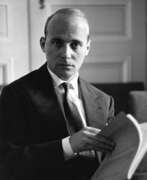

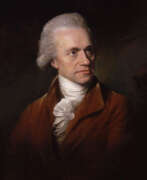

Frederick William Herschel (German: Friedrich Wilhelm Herschel) was a German-born British astronomer and composer. He frequently collaborated with his younger sister and fellow astronomer Caroline Herschel (1750–1848). Born in the Electorate of Hanover, William Herschel followed his father into the military band of Hanover, before emigrating to Great Britain in 1757 at the age of nineteen.
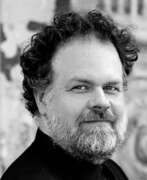

Jens Gerd Joneleit is a German abstractionist and composer who lives and works in Germany and the United States.
He studied art and music at the University of South Dakota and the University of Wisconsin-Madison, then returned to Germany.
His paintings and other visual works have been the subject of numerous gallery exhibitions of contemporary art in the United States and Europe.
As a composer, Jens Jonleit has written numerous compositions for orchestras, ensembles, and chamber groups in Europe and the United States. He is also known as a composer of music and theater works and opera.
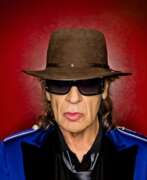

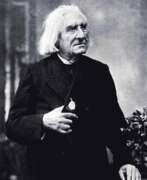

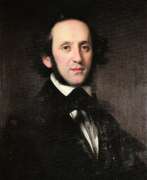

Felix Mendelssohn (full name Jakob Ludwig Felix Mendelssohn Bartholdy) was a German composer, pianist, conductor, teacher, and one of the greatest representatives of Romanticism in music.
Felix was born into a Jewish musical family that later converted to Christianity. He received a versatile education and already as a child wrote many musical compositions, including 5 operas, 11 symphonies for string orchestra, concertos, sonatas and fugues. Mendelssohn's first public performance took place in Berlin in 1818, when he was nine years old. In 1821 Mendelssohn was introduced to J.W. von Goethe, for whom he performed works by J.S. Bach and Mozart and to whom he dedicated his Piano Quartet No. 3 in B minor. A friendship developed between the famous wise poet and the 12-year-old musician.
A few years later, the talented musician began conducting in various orchestras in Europe, and became acquainted with Carl Weber. In England, where Mendelssohn visited very often, by the middle of the 19th century his music had become very popular, even with Queen Victoria he was the most favorite composer. He dedicated his Symphony No. 3 in A minor major (Scottish Symphony) to the Queen.
Among Mendelssohn's most famous works are A Midsummer Night's Dream (1826), the Italian Symphony (1833), a violin concerto (1844), two piano concertos (1831, 1837), the oratorio Elijah (1846) and several chamber pieces. The tradition of playing the "Wedding March" from A Midsummer Night's Dream in wedding processions dates back to its performance at the wedding of a royal princess in 1858, already after Mendelssohn's death.
In 1843, Mendelssohn founded a conservatory in Leipzig, where he taught composition with Schumann. Mendelssohn was one of the first great Romantic composers of the nineteenth century.
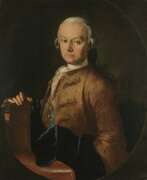

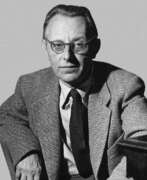

Carl Orff, full name Carl Heinrich Maria Orff, was a German composer, representative of expressionism in music, and teacher.
Orff studied at the Munich Academy of Music with composer Heinrich Kaminski, and later conducted in Munich, Mannheim, and Darmstadt. In 1937, he wrote the oratorio Carmina Burana, a staging with dance, based on a manuscript of medieval poems, which became one of the most popular choral works of the 20th century. Inspired, Orff later created several more operatic mysteries based on ancient Greek tragedies and medieval chants, Baroque theater, and Bavarian peasant life.
Orff's system of musical education for children, based largely on developing a sense of rhythm through group lessons and playing percussion instruments, became widespread. In 1924 in Munich he founded the School of Gymnastics, Dance and Music together with the German gymnast Dorothea Gunther. Orff believed that music, being the foundation, brought together movement, singing, playing and improvisation.
During the period of National Socialist rule in Germany, Carl Orff managed to survive quite well: he continued to compose music and teach. From 1950 to 1960, Carl Orff held the chair of musical composition at the Musikhochschule in Munich, and he received many state awards for his many years of activity.
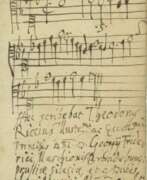

Teodoro Riccio was an Italian composer and Kapellmeister of the second half of the 16th century, who worked in Germany for most of his life.
Educated in church music, Riccio first worked as a Kapellmeister in the church of his hometown in Lombardy, where he composed his first madrigals. In 1575 he arrived at the court of Margrave Georg Friedrich of Ansbach-Brandenburg, to whom he dedicated a famous canon, and moved with the rest of the court musicians to Königsberg when the margrave became governor of the Duchy of Prussia in 1578. In 1585 Riccio was appointed Kapellmeister for life at the margrave's court.
Riccio's works are known mainly from printed sources, although several works survive in manuscripts in the Kremsmünster Abbey, the Koninklijke Bibliothek (Brussels), and the Nuremberg Archives.
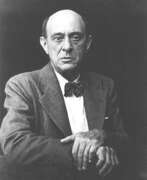

Arnold Schoenberg, real name Arnold Franz Walter Schönberg, was an Austrian and American composer, representative of musical expressionism, teacher, musicologist and conductor.
Schoenberg came from a Jewish family and began studying the violin at the age of eight and later the cello. While working as a bank clerk, he simultaneously studied composition with Alexander Zemlyansky (1871-1942) and soon wrote his first string quartet (1897) to acclaim. With the help of Richard Strauss, he obtained a teaching position in Berlin, and lived for a time in two cities. In 1904, Alban Berg and Anton Webern began studying with Schoenberg, and this largely determined their future artistic careers.
Around 1906, through much experimentation, Schoenberg came to the conclusion that tonality should be abandoned. He created new methods of music-making and composition involving atonality. In the subsequent period of "free atonality" from 1907 to 1916, he composed the monodrama "Reason", "Five Orchestral Pieces", "Pierrot Lunaire" and other works.
In 1933, due to the rise of National Socialism in Germany, Schoenberg was expelled from the country and emigrated to the USA, in 1941 he took American citizenship and taught at the University of California at Los Angeles until 1944. The works of this period demonstrate the composer's ever-increasing skill and freedom in the use of the 12-tone method.
Although Schoenberg was never accepted by the general public, he nevertheless had a significant influence on 20th century music, being the founder of the New Viennese School of Composition.


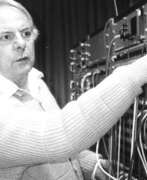

Karlheinz Stockhausen was a German innovative and avant-garde composer, conductor, and musical theorist.
Stockhausen studied at the State Academy of Music in Cologne and the University of Cologne, then in 1952 in Paris with composers Olivier Messiaen and Darius Millau. Returning to Cologne in 1953, he joined the electronic music studio West German Broadcasting (Westdeutscher Rundfunk), of which he was artistic director from 1963 to 1977. Stockhausen created his first electronic music piece in 1953.
In the mid-1950s Stockhausen studied phonetics, acoustics and information theory at the University of Bonn, all of which he used in his musical compositions. From 1953 he began teaching composition in Darmstadt and later organized seminars in Cologne. From 1971 to 1977 he was already professor of composition at the State Academy of Music in Cologne.
Stockhausen used both electronic and traditional instrumentation and supported his approach with rigorous theoretical reasoning and radical innovations in musical notation. He ensured that sounds were equally interesting regardless of the order in which they appeared; random decisions of musical order play an important role in many of his compositions.
Stockhausen lectured and gave concerts with his works throughout Europe and North America. As a creator and theorist of electronic and serial music, he had a significant influence on avant-garde composers of the 1950s and 1980s.
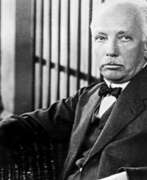

Richard Strauss, full name Richard Georg Strauss, was a German composer of the late Romantic era, a bright representative of German expressionism, and a conductor.
Richard received his first musical education from his father, a virtuoso French horn player at the Munich Opera. The boy was very musical and from the age of six began composing pieces. Growing up, Strauss led a successful career as a conductor of leading orchestras in Germany and Austria. In 1889 in Weimar he conducted the first performance of his symphonic poem Don Juan, which was received with triumph. Strauss was hailed by critics as Wagner's heir and from that moment his career as a composer began.
In 1904, with his singer wife Paulina Maria de Ana, who was an outstanding performer of his songs, Strauss made a concert tour of the United States.
Richard Strauss equally idolized Wolfgang Mozart and Richard Wagner, and much of his work grew out of this reverence. He excelled at writing works for large orchestra, but he was equally successful at subtlety in chamber music. The composer possessed unrivaled descriptive power and the ability to convey psychological detail. This was particularly evident in his operas Guntram, Salome, Elektra and others.
Together with Gustav Mahler, Richard Strauss represents the late flowering of German Romanticism, which combined innovative subtleties of orchestration with an innovative harmonic style.
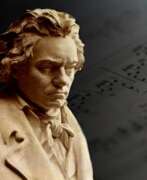

Ludwig van Beethoven was a German composer, pianist, and conductor, one of the most famous and celebrated composers in world history.
Beethoven showed an aptitude for music at a very early age; from the age of four his father began to teach him. Beethoven's early works - piano sonatas and symphonies - were composed under the strong influence of the music of the great classical composers Joseph Haydn and Wolfgang Amadeus Mozart. As Beethoven matured, however, he began to experiment with new forms and harmonic sequences, and his music became more complex and emotionally charged.
Unfortunately, at the height of his talent, Beethoven began to gradually lose his hearing, to the point of complete deafness by the end of his life. Despite this, he continued to compose and conduct, using special devices to feel the vibrations of the music.
Beethoven's work is considered pivotal in classical music and is a bridge between the classical and Romantic eras. His works vividly express a wide range of emotions, from triumph and joy to sadness and despair. Beethoven was also one of the first composers to include soloists and chorus in his symphonies. Beethoven's best-known works include nine symphonies, 32 piano sonatas, 16 string quartets and the heroic opera Fidelio. These and many other works have cemented Beethoven's place in music history as one of the greatest composers of all time. His music continues to be played and studied by musicians and music lovers around the world.
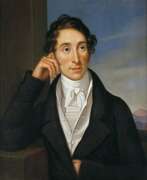

Carl Maria von Weber, full name Carl Maria Friedrich Ernst von Weber, was a German opera composer and conductor during the transition from classical to romantic music, pianist and music critic.
Weber was born into a musical and theatrical family, and his father cherished dreams of making him a second Mozart. The young Weber received his first appointment when he became the musical director of Duke Eugene of Württemberg, for whose private orchestra he wrote two symphonies, then he was secretary at the court of King Frederick I of Württemberg. At the same time he composed musical works, gaining experience and knowledge.
In 1813 Weber was appointed conductor of the opera in Prague, and four years later he was appointed director of the German opera in Dresden. Here he deployed his talents, taking on the entire job of preparing an opera production: he selected the repertoire, staff and actors; he handled the scenery, lighting and staging, as well as the orchestra and singers, taking special care to ensure that each performer fully understood the words and plot of each opera. The composer also found time to compose his own works.
During this period he created the opera The Free Rifleman (1821), where he was able to free German opera from French and Italian influences. The opera was first successfully staged in Berlin and then traveled throughout Europe. "The Free Rifleman" is the most popular German opera written to date, and it marked the beginning of German Romantic opera. Weber also wrote the operas Euryanthe (1823), Oberon (1826), and others.
Carl Weber composed many fugues, sonatas, concertos, and sacred music, and was also one of the significant piano virtuosos and music critics. From 1809 to 1818, he wrote a considerable number of reviews and quite incisive music criticisms. All his activities, music and critical writings promoted the ideals of Romanticism as an art in which feeling prevails over form and heart over head.
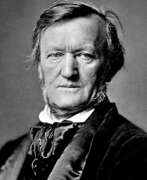

Wilhelm Richard Wagner was a German pioneering composer, conductor and opera reformer.
His first proper Symphony in C major was performed at the Leipzig Gewandhaus concerts in 1833. Wagner lived in a colony of poor German artists and made his living in music journalism. Nevertheless, in 1841 he wrote his first representative opera, The Flying Dutchman, based on the legend of a ship captain doomed to sail forever. In 1842 his Rienzi was triumphantly performed in Dresden, after which Wagner was appointed conductor of the court opera and held this position until 1849.
In 1848-49 Wagner became involved in the German Revolution, wrote a number of articles in support of it, and took an active part in the Dresden Uprising of 1849. When the uprising failed, he was forced to flee Germany. His subsequent years were occupied mainly with writing theoretical treatises on philosophy and music. Wagner held anti-Semitic and Nazi views. And reflecting on the future of music, he predicted the disappearance of opera as an artificial entertainment for the elite and the emergence of a new kind of musical stage work for the people, expressing the self-realization of free humanity. This new work was later called "musical drama."
By 1857 his style had been enriched with new interpretations, and Wagner had composed "Rheingold," "Die Walküre," and two acts of "Siegfried." By 1864, however, unwise financial habits had driven him into debt and ruin, and he was forced to flee from prison to Stuttgart. He was rescued by King Louis II, an ardent admirer of Wagner's work. Under his patronage for six years in Munich, the composer's operas were successfully staged. The King also practically ensured him a trouble-free life, thanks to his support Wagner built his own opera house (Bayreuther Festspielhaus), in which many new constructive ideas were realized. The premiere of "The Ring" and "Parsifal" took place here.
As a result of all Wagner's creative innovations and methods, a new kind of art emerged, the distinctive feature of which was a deep and complex symbolism, operating in three inseparable planes - dramatic, verbal and musical. He had a significant influence on European musical culture, especially on the development of opera and symphonic genres.
Richard Wagner's major works include The Flying Dutchman (1843), Tannhäuser (1845), Lohengrin (1850), Tristan und Isolde (1865), Parsifal (1882), and his great tetralogy, The Ring of the Nibelung (1869-76).