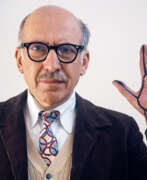
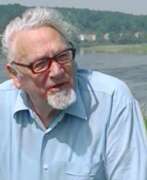
Draftsmen Post War Art
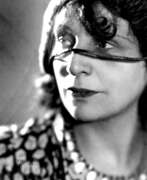

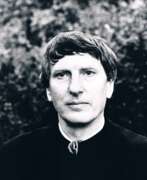

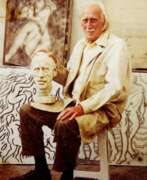

Harold Ambellan is an American painter and sculptor.
He studied sculpture and fine art in Buffalo before moving to New York City. The human figure is central to Harold Ambellan's work. He created monumental figures and drew extensively, leaving thousands of drawings. Ambellan was one of the participants in Roosevelt's Federal Art Project, which hired hundreds of artists during the Great Depression who collectively created more than 100,000 paintings and over 18,000 sculptures.
Ambellan remained committed to figuration in both his sculpture and painting. He was elected president of the Sculptors Guild of America in 1941, and that same year his work was exhibited in group shows at the Metropolitan Museum of Art in New York and the Academy of Fine Arts in Philadelphia.
In 1944, Ambellan participated in the liberation of Normandy as part of the U.S. Navy, then taught three-dimensional art at the Workshop School in New York City. In 1954, for political reasons, Ambellan moved to France and remained there for the rest of his life, working and exhibiting throughout Europe.
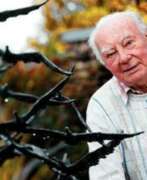

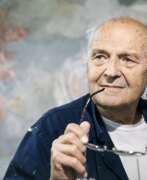

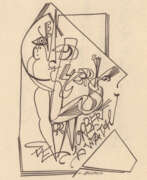

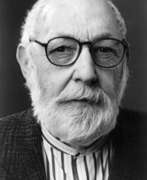

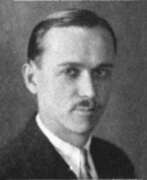

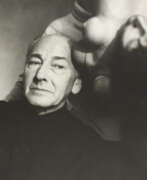

Hans Bellmer was a German graphic artist, sculptor, photographic artist, illustrator, and writer who spent most of his life in France.
In the 1930s Bellmer began working on the eroticized image of the deformed doll, contrasting it with the aesthetics of the "classical" body in Hitler's Germany. His graphic and literary explorations focus on the dismemberment and liberation of bodies. Bellmer's surrealist works are violent and provocative: they include puppet sculptures composed of the bodies of nude models, photographs, and prints.
In 1934, 18 photographs of dolls were published in the Parisian surrealist magazine Minotaur, and the Nazi regime declared Bellmer's art degenerate. In 1938, Bellmer emigrated to France.
After the end of the war, the artist continued his work, adding poetry to painting. He also authored illustrations for many works, particularly on erotic themes.
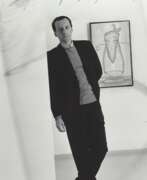

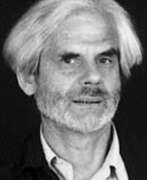


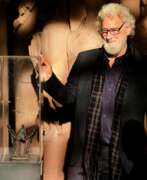

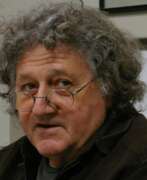

Bruno Bruni senior is an Italian lithographer, graphic artist, painter and sculptor. He became commercially successful in the 1970s. In 1977, he won the International Senefeld award for Lithography. He has since become one of the most successful Italian artists in Germany and one of Germany's best known lithographers.
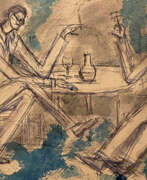

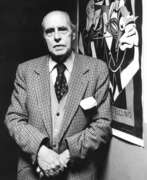


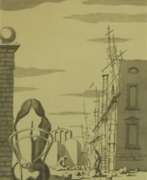

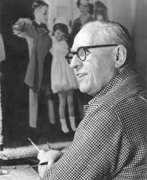

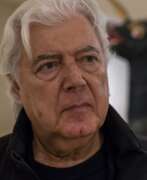

José de Guimarães, real name José Maria Fernandes Marques, is a contemporary Portuguese artist, a unique and inimitable figure in contemporary art. His training as an engineer, his approach as an anthropologist, his passion as a collector and his eye as an artist have for sixty years merged and intertwined to create a graphic and richly coloured language.
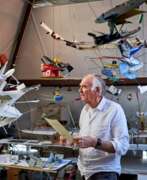

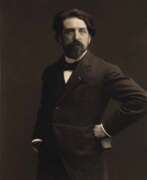

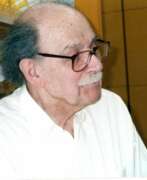

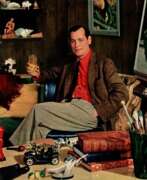


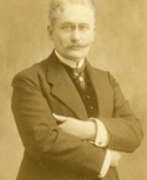

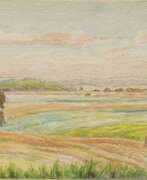

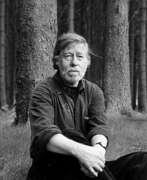

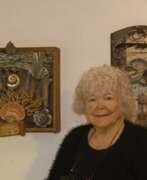

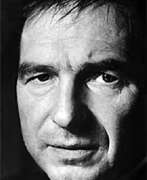

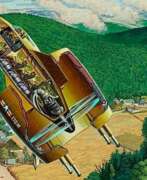

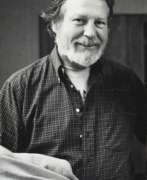

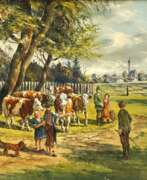

Alfred Fritzsching is a German artist known as Painter, graphic artist, draftsman, sculptor, commercial, commercial graphic artist. He began his training as a commercial graphic artist at the Blocherer School for Graphic and Advertising in Munich and worked as an advertising specialist. In 1970 Alfred Fritzsching became a member of Munich Artists 'cooperative and participated in exhibitions at the Haus der Kunst in Munich. From 1978, he worked as a freelance painter and also as board member and juror of the Munich Artists' Cooperative.
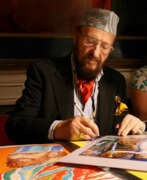

Ernst Fuchs was an Austrian painter, draftsman, printmaker, sculptor, architect, stage designer, composer, poet, and one of the founders of the Vienna School of Fantastic Realism. In 1972, he acquired the derelict Otto Wagner Villa in Hütteldorf, which he restored and transformed. The villa was inaugurated as the Ernst Fuchs Museum in 1988.
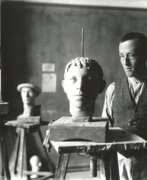

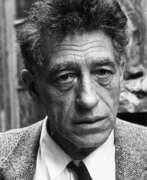

Alberto Giacometti was a Swiss sculptor, painter, draftsman, and printmaker, renowned for his distinctive elongated sculptures of solitary figures. Born in Borgonovo, Switzerland, in 1901, into a family of artists, Giacometti's talent was evident from an early age, encouraged by his father, Giovanni, a post-Impressionist painter, and his godfather, Cuno Amiet, a Fauvist painter. Moving to Paris in 1922 to study under the sculptor Antoine Bourdelle, Giacometti became a pivotal figure in Surrealism before focusing intensely on the human form, leading to his signature style of thin, elongated figures that evoke feelings of solitude and existential dread.
Giacometti's work spans several decades and various phases, including his early involvement with Surrealism and his later, more recognized existential and figurative sculptures. Notably, his sculptures, such as "Walking Man I" and "The Palace at 4 a.m.," reflect his unique view of reality and his relentless pursuit to capture the human essence. His approach was influenced by his associations with prominent figures of the art world, including Miró and Picasso, and intellectuals like Jean-Paul Sartre.
Despite facing challenges, including periods of self-doubt and the physical toll on his health, Giacometti's legacy as a master sculptor and artist remains influential. His works are celebrated worldwide and featured in major museums, such as the Museum of Modern Art in New York and the Tate Gallery in London, testament to his enduring impact on the art world.
Collectors and experts in art and antiques continue to revere Giacometti's work for its emotional depth and unique aesthetic. For those interested in the pioneering spirit of modern sculpture, Alberto Giacometti's oeuvre offers a profound exploration of the human condition and the artist's relentless pursuit of reality through art.
To stay updated on sales and auction events related to Alberto Giacometti's work, sign up for updates. This subscription is an excellent opportunity for collectors and enthusiasts to remain informed about new discoveries and opportunities related to Giacometti's enduring legacy.
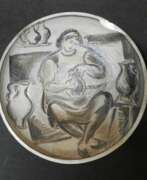


Herman Moiseyevich Gold (Russian: Герман Моисеевич Гольд) is a Soviet, Ukrainian and contemporary Israeli artist. He is known as a painter, draftsman, and watercolorist, renowned for his expressive style of painting.
Herman Gold is skilled in both oil painting and watercolor, and often gives his works a dramatic character. He is one of the few contemporary Jewish artists to be included in the legendary World Encyclopedia of Artists of All Time.
His works are in museums and galleries in many countries, including Russia, Ukraine, France, Greece, the United States and others.
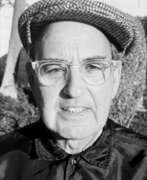

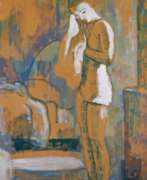

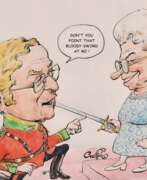


Mariann Grunder, or Susie Mariann Grunder, was a Swiss artist and sculptor. She created large wall reliefs with concrete elements. And her stone sculptures, which often deal with literary or mythological themes, combine elements of surrealism, abstraction and minimalism. Grunder has also done numerous drawings and prints.
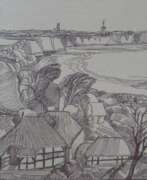

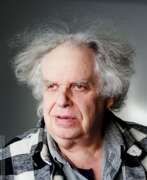


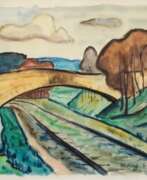

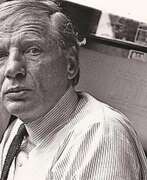

Rudolf Hausner was an Austrian painter, draughtsman, printmaker and sculptor. Hausner has been described as a "psychic realist" and "the first psychoanalytical painter".
A characteristic of his painting technique is the use of translucent ("glazing") resin oil paints in more than ten layers on top of each other over underpainting of acrylic paints, which gives the paint a special luminous depth. He also developed methods to create flawless transitions in pure oil painting without the use of an airbrush.
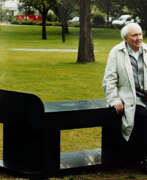

Erwin Heerich was a German artist.
Heerich emphasized that for him, "cardboard, like polystyrene, had no specifically aesthetic or historical connotations, the materials are value-neutral to the largest possible extent." Furthermore, the artist was not primarily "concerned with the manifestation of an art object, but with making an idea material in terms of a specific problem: how space can be presented and formed."
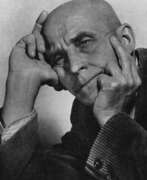

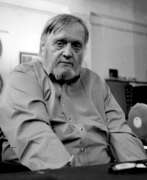

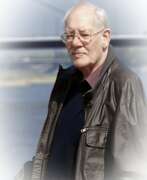

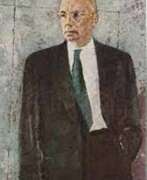

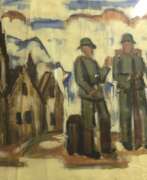

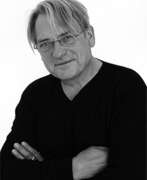


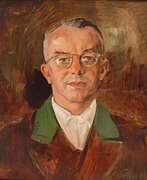

Peter Hirsch is a German painter, graphic artist and draftsman as a child private lessons in painting, apprenticeship as a lithographer, studied at the Munich Academy. He loaded exhibitions in the Munich Glass Palace and in the Kunstverein, ostracized as "degenerate" in Germany 1933-45 partly active in the USA, Canada, the Netherlands, Italy, England, France, Hungary and Switzerland, from 1944 temporarily relocated to the Schliersee, before 1930 -1969 lecturer at the Munich Adult Education Center.
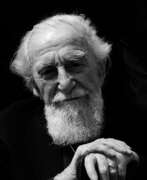

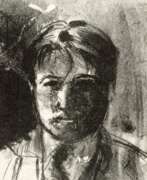

Søren Hjorth Nielsen was a Danish painter and illustrator. He is remembered for his paintings of the allotments and outskirts of Copenhagen and later for his landscapes of the Bramsnæs Vig area in northwestern Zealand. He was a professor of painting at the Royal Danish Academy of Fine Arts from 1957 to 1971.
His painting was essentially realistic, sometimes bordering on the grotesque. For a time he also worked as a portrait painter. His favourite subjects included the allotments and harbour districts of Copenhagen. His landscapes included summer scenes at Vester Åby on Funen and around Bramsnæs Vig on the west coast of Zealand; the houses and vegetation in the bottom half of the paintings contrasted with the stillness of the low-set horizon. In his later years, he painted a number of summer and winter scenes from his house at Tempelhuse to the south-east of Holbæk.
His work developed from Expressionism in his early years to participation in the renewal of Danish landscape painting. He was also active in etchings and woodcuts covering studies of models at the Academy, sketches during his travels or landscape depictions. He was also a keen draftsman, often producing crayon drawings as a basis for his oils.







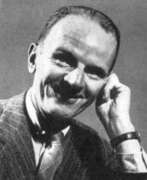

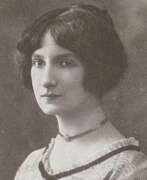

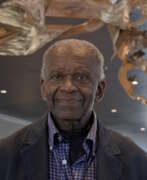

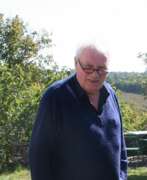

Rolf Iseli is a Swiss avant-garde artist living and working in Bern.
At the beginning of his artistic career, Iseli was a radical representative of Taschism and the Informel movement, and also painted in gesture technique. During his long life he has worked in different fields: painting, collage, drawing, lithography, drawing, plastic art, sculpture and art in architecture. Rolf Iseli is one of the most important representatives of the Swiss artistic avant-garde of the second half of the 20th century.









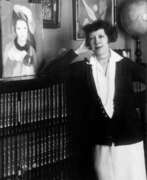

Marie Laurencin was a pivotal figure in the Parisian avant-garde, a French artist renowned for her distinct approach to painting. Unlike her contemporaries who embraced the bold facets of Cubism, Laurencin carved a niche for herself with a palette of soft pastels and a focus on ethereal female forms. Her work, embodying an enchanted, feminine world devoid of masculine presence, was revolutionary for its time, offering a sanctuary of female harmony that was both subtle and profound.
Laurencin's oeuvre extends beyond paintings to include watercolors, drawings, and prints, with notable works such as "Les jeunes filles" and "Portrait de Mademoiselle Chanel" finding homes in prestigious institutions like the Museum of Modern Art in New York and the Musée de l'Orangerie in Paris. Her legacy is further cemented by the Musée Marie Laurencin in Nagano, Japan, the only museum dedicated solely to a female painter, showcasing over 600 of her pieces.
Her approach diverged significantly from the norms of Cubism, incorporating a distinctly feminine aesthetic through the use of pastel colors and curvilinear forms. This unique style set her apart from peers and positioned her as one of the few female Cubist painters, alongside figures like Sonia Delaunay and Marie Vorobieff. Laurencin's artistry was not just an exploration of femininity but a celebration of it, challenging the dominant artistic narratives of her time.
The critique of Laurencin's work for its deliberate embrace of femininity and decorative qualities overlooks the radical essence of her aesthetic. Her paintings, characterized by serene and charming depictions of women, argue for a creative space where the feminine is not just visible but central. Works like "The Fan" and "Spanish Dancers" exemplify her ability to create intimate, self-sufficient worlds that engage the viewer in narratives of absence, longing, and female solidarity.
For collectors and experts in art and antiques, Laurencin's work offers a nuanced understanding of early 20th-century modern art movements through the lens of femininity. Her contributions to art history reflect a bold reimagining of the female form and the spaces women occupy, both in the physical and imaginative realms.
To stay informed about new product sales and auction events related to Marie Laurencin, sign up for updates. This subscription ensures you remain at the forefront of the latest developments and opportunities to acquire works by this groundbreaking artist.
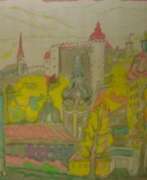

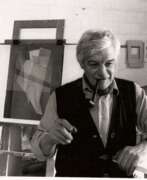

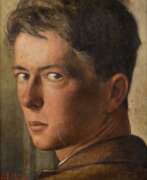

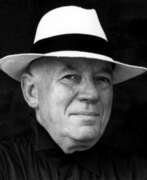

Horst Linn is a German sculptor and draftsman, teacher, living and working in Dortmund, Germany.
Horst was born into the family of sculptor Willi Linn and received his primary art education from his father. From 1956 Horst Linn studied at the Saarbrücken State School of Arts and Crafts and gradually honed his skills in different techniques.
Horst Linn's works are usually laconic, but the oblique folds of the sculptor's work obey the strict laws of constructivism. Whether it is the early folds of corrugated sheet iron or the later wall reliefs of folded aluminum steel or sheet metal, usually lacquered, all of his works are based on the principle of "less is more." As a spatial artist, he places works in urban, public and private spaces.
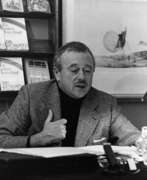

Roger Loewig was a German artist, illustrator and writer.
In addition to working as a teacher of Russian, German and history, Loewig independently practiced painting and drawing. In 1963, he organized an exhibition of his work, but was arrested on charges of "incitement endangering the state". Most of his paintings and literary texts were confiscated.
In 1972, he left for the Federal Republic of Germany, where he found recognition for his talent. Along with Günter Grass, Christoph Meckel and others, he joined the wide circle of "Berlin poets-artists", and Loewig's visual art became recognized as fantastic realism. Loewig's artworks and texts about war, flight, exile, and unfreedom placed him among the most important German artists of the postwar period.
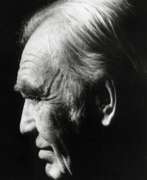

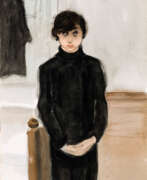

Jeanne Mammen was a twentieth-century German artist. She is known as a graphic artist and draftsman, a representative of modernism, a prominent figure in the artistic life of the Weimar Republic.
Jeanne Mammen developed an artistic style close to the New Materialism school. As she grew older, her work became more symbolic; after 1945, the artist moved towards abstractionism. She worked for fashion magazines, created movie posters, and illustrated erotic poetry. Mammen actively developed collage techniques, as well as creating portraits and caricatures, and sketching street types.
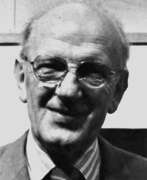

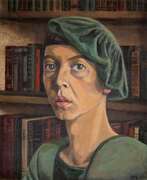


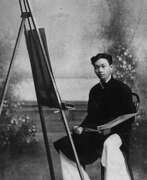

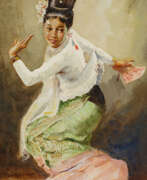

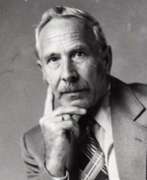

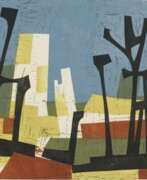

Hermann Ober was a German abstractionist painter and graphic designer.
During World War II he produced many landscape sketches and watercolors of battlefields, then studied at the Academy of Fine Arts in Munich.
Besides painting in the abstract style, Hermann Ober experimented for many years with materials and forms and developed his own relief printing technique. In 1951 he was one of the founders of the Salzburg Group.
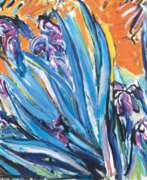

Wilhelm Ohm, full name Wilhelm Friedrich Hubert Ohm, was a German painter, draftsman, sculptor and architect.
Ohm trained in architecture and worked as a government architect and engineer, and studied sculpture and mural painting at the Prussian Academy of Fine Arts in Berlin. From 1923 to 1933 he was a member of the North German Artists' Association. In 1940 Wilhelm Ohm received a Bachelor's degree from the Technical University of Berlin on the colorful redesign of cities, through which he wanted to combine painting and architecture into a unified whole. This idea occupied him throughout his life.
Wilhelm Ohm's work of the 1920s can be stylistically categorized as New Objectivity and Surrealism. After World War II, trying to make up for lost time, he saturates his paintings with color and energy. His later works were done in a post-impressionist style. This applies to his landscapes, nature studies, floral bouquets and fruit compositions.
Wilhelm Ohm's son August Ohm, born in 1943, also became an artist.
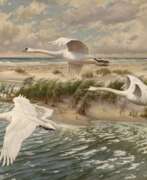

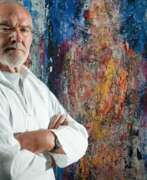


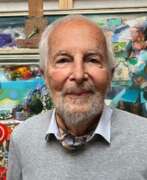

Antoine Piron-Meyer, also known as Agni, is a Swiss painter and sculptor.
He is one of the founders of the Vaisseau group, which is known for its murals in various countries, including Russia. As a teenager, Piron-Meyer was fascinated and inspired by the works of Hieronymus Bosch, whose motifs can be found in his work.
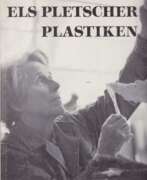

Elsa Pletscher, also called Els, is a Swiss sculptor, painter and draftsman.
Pletscher studied at an art academy in Paris and a sculpture studio in Zurich, and attended the Accademia della Porta Romana in Florence. Her work has received art prizes in Italy and Switzerland, and some of it is located in public spaces in those countries.
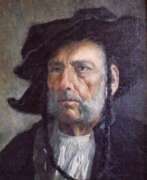

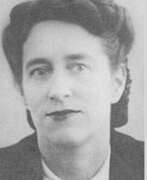

Edith Rimmington was a famous English surrealist painter, poet and photographer. From the beginning to the end of her career, Rimmington was deeply influenced by Salvador Dali. She had an inquisitive mind and boundless imagination and thus became a highly respected and central member of the British Surrealist group. Rimmington also worked with color photographs of coastal landscapes.


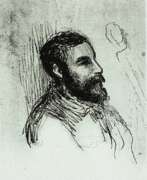

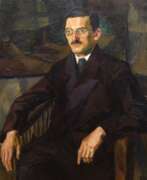

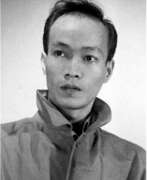

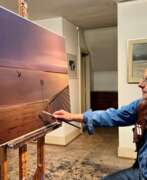


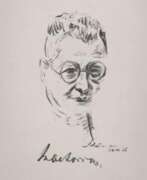

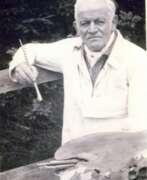


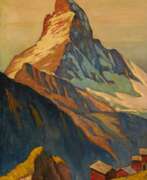


Günter Schöllkopf was a German draughtsman, graphic artist and painter. He drew his pictorial ideas primarily from the fields of world literature, music, history and politics. When he died at the age of 44, he left behind a body of work of about 1000 works.
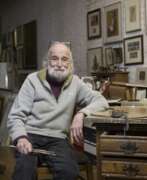

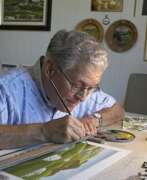
Burton Silverman, born in 1928 in New York City, is a distinguished American realist painter whose career spans over seven decades. His profound commitment to capturing the human condition has solidified his reputation as a leading figure in contemporary realism.
Early Life and Education
Silverman's artistic journey commenced at the age of 11 when he enrolled in children's classes at the Art Students League in New York. He later pursued higher education at Columbia University, graduating in 1949 with a major in Art History. His formative years were further enriched by studies at the Pratt Institute of Art. These experiences laid a robust foundation for his dual pursuits in fine art and illustration.
Artistic Career
Throughout his extensive career, Silverman has remained steadfast in his dedication to realism, even when abstract expressionism dominated the art scene. His oeuvre predominantly features portraits and figurative works that delve into the nuances of human emotions and everyday experiences. Notably, in 1956, he, alongside fellow artist Harvey Dinnerstein, traveled to Montgomery, Alabama, to document the Montgomery Bus Boycott. Their collection of over 90 drawings serves as a poignant visual record of this pivotal moment in the Civil Rights Movement.
Teaching and Influence
Beyond his personal artistic endeavors, Silverman has significantly contributed to art education. He has taught at esteemed institutions such as the Art Students League and the National Academy of Design. Moreover, he has conducted workshops and lectures across the United States, mentoring countless artists and influencing the trajectory of contemporary realist painting.
Notable Achievements
Silverman's work has been showcased in over 30 solo exhibitions in cities including New York, Boston, Philadelphia, and San Francisco. His paintings are part of numerous public collections, such as the Brooklyn Museum, the Philadelphia Museum of Art, and the Smithsonian National Portrait Gallery. Among his many accolades, he received the Gold Medal from the Portrait Society of America in 2004 and was inducted into the Society of Illustrators Hall of Fame in 2001.
Legacy and Recent Work
In October 2023, the Salmagundi Club in New York hosted a retrospective exhibition titled "Reflections: The Art of Burton Silverman," featuring 47 curated works spanning from 2001 to 2023. This exhibition provided a comprehensive look into his artistic evolution and enduring impact on the art world.
As of January 2025, at the age of 96, Burton Silverman continues to paint in his studio, producing both large-scale pieces and intimate portrayals of everyday moments. His unwavering dedication to realism and his insightful exploration of the human experience ensure his esteemed position in the annals of American art history.


David Roland Smith is an American sculptor and expressionist painter.
Smith became known as the creator of large-scale steel geometric sculptures in an abstract style inspired by the works of Picasso.
But Smith is also a prolific painter-drawer; he drew all his life, making hundreds of drawings a year. His subjects included various figures and landscapes, a series of nudes, and he also drew almost calligraphic signs with egg yolk, Chinese ink and brushes.




Joe Stefanelli, birth name Joseph J. Stefanelli, is an American abstractionist painter of the New York School.
After studying at the Philadelphia Museum School of Art and the Pennsylvania Academy of the Fine Arts from 1942 to 1946, Joe Stefanelli worked as a military illustrator in the service of the United States Army. In 1947, he enrolled at the Hans Hofmann School of Fine Arts in New York City. This art school, opened in 1934, was a major influence on the young artists of the New York School.
Stefanelli was an artist of the first generation of American Abstract Expressionists, whose members also included Willem de Kooning, Jackson Pollock, Adolph Gottlieb, Barnett Newman, Robert Motherwell, and others. Their influence and artistic innovation were recognized worldwide by the 1950s. The New York School of Abstract Expressionism became the leading art movement after World War II.
Joe Stefanelli held various teaching positions from 1960 to 1979, including at the University of California and Princeton University, New York University, Columbia University, Brooklyn College and Temple University in Rome. His work is represented in many museums and collections.