Educators United Kingdom
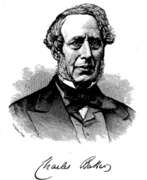

Charles Baker was a British educator, pioneer in deaf education, naturalist and artist.
He became known and honored in Great Britain for having developed the first school textbooks for deaf-blind children, including those based on drawing.
As a young man he became a teacher at the Edgbaston Institute for the Deaf and Dumb in Edgbaston, near Birmingham, and was faced with a complete lack of textbooks for such children. Baker had a passion for entomology, and began directing the attention of his older pupils to the various objects of natural history around them. As a result, in 1828, he authored a small volume of illustrations entitled British Butterflies: their differences, genera and species, with lithographic illustrations of each genus, comprising 33 species, drawn by the children of the Edgbaston School for the Deaf and Dumb."
Charles Baker worked as a teacher of the deaf and headmaster at Doncaster School for forty-five years. During this time he produced many specialized teaching guides and textbooks under the general title "Circle of Knowledge", which were used in Europe and Russia, as well as in China and Japan.
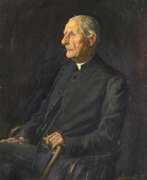

Sabine Baring-Gould was a Victorian British clergyman, poet, writer and folklorist.
He traveled extensively in Europe, studied at Clare College, Cambridge, was ordained in the Church of England in 1864, and was appointed vicar at Horbury. Baring-Gould was a polyglot and knew six languages. Despite his ministry, he had a serious interest in supernatural phenomena and in 1865 published a book called The Book of Werewolves.
In addition to this, Baring-Gould was interested in a wide range of subjects. His work is diverse and covered theology, history, poetry, hymns, fiction, biography, travel, social commentary, and folklore. Baring-Gould collected the folk songs of old English singers, personally visiting them and recording the words and music. In 1889 he published a collection of Songs of the West in four parts, of which he was proud, and also wrote several patriotic hymns.
Baring-Gould was a very prolific writer: during his life he wrote many novels, published short stories in periodicals, the popular "Curious Myths of the Middle Ages," and others, his bibliography numbering some 1,250 works.
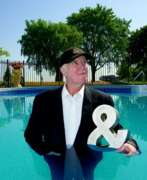

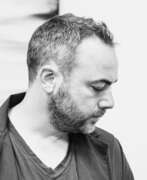

Walead Beshty is an American conceptual artist, photographer, sculptor and writer who lives and works in Los Angeles.
Born in London, Great Britain, he studied at Bard College and received a Master of Fine Arts degree from Yale University in 2002, and holds academic positions at universities across the United States.
Beschty is best known for his work in photography, but his creative interest spans a wide range, including sculpture, painting, installation and video. For example, in one of his popular works, the artist mails a series of glass windows of various sizes in cardboard boxes, and then displays the cracked and broken windows, damaged in transit, over the boxes in which they were packed.
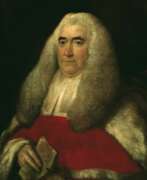

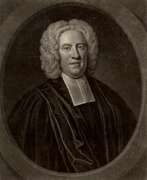

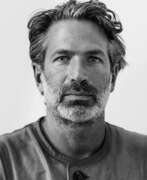


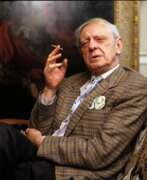

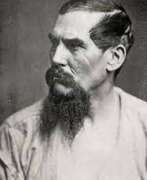

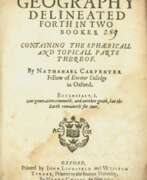

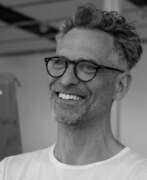

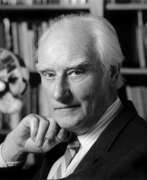

Francis Harry Compton Crick was a British molecular biologist, biophysicist and neuroscientist. He won the Nobel Prize in Physiology and Medicine in 1962.
During World War II he had to work on developments for the military, and in 1947 he turned to biology at the Strangeways Research Laboratory, University of Cambridge. In 1949 he moved to the University Medical Research Council at Cavendish Laboratories. Using X-ray diffraction studies of DNA by biophysicist Maurice Wilkins (1916-2004) and X-ray diffraction images taken by Rosalind Franklin, biophysicist James Watson and Crick were able to construct a molecular model consistent with the known physical and chemical properties of DNA.
This achievement became a cornerstone of genetics and was regarded as one of the most important discoveries of 20th century biology. In 1962, Francis Crick, along with James Watson and Maurice Wilkins, won the Nobel Prize in Physiology or Medicine for determining the molecular structure of deoxyribonucleic acid (DNA), the chemical ultimately responsible for the hereditary control of life functions.
From 1977 until the end of his life, Crick served as professor emeritus at the Salk Institute for Biological Studies in San Diego, California, where he conducted research on the neurological basis of consciousness. He also wrote several books. In 1991, Francis Crick received the Order of Merit.
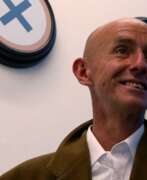

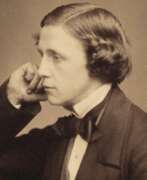

Lewis Carroll, real name Charles Lutwidge Dodgson, was a British writer and photographer, philosopher and logician, and professor of mathematics.
In 1851 Lewis entered one of the best colleges in Oxford - Christ Church. Showing an extraordinary aptitude for mathematics, soon he was able to give lectures himself, and for the next quarter of a century he was a professor of mathematics at Oxford. In parallel with his studies, the young man began to compose short stories and poems, publishing them under a pseudonym.
And then he wrote the famous "Alice's Adventures in Wonderland" (Alice's Adventures in Wonderland, 1865) and "Alice in Looking-Glass" (Through the Looking-Glass, and What Alice Found There, 1871). These books quickly became popular, they were translated into numerous languages, and then repeatedly screened. The prototype of the main character was four-year-old Alice Liddell, the daughter of the new dean of the college where Carroll taught. Lewis Carroll also wrote "The Knotty Story", a humorous poem "Hunting the Snark", "Mathematical Curiosities", "Sylvia and Bruno" and other books. Carroll himself considered his main work a slightly absurd novel-tale "Sylvia and Bruno" (1889-1893).
Under his real name, the writer-mathematician published scientific works on mathematics and logic, he also owns a number of popular books on entertaining mathematics. Lewis Carroll left Oxford only once - in 1867, visiting Russia as part of a delegation of the Anglican Church on the route St. Petersburg-Moscow-Nizhny Novgorod. This was Carroll's only overseas trip, and he described it in his Diary of a Trip to Russia 1867. Lewis Carroll was also a talented chess player and amateur inventor. Photography was also a big part of the writer's life.


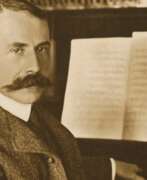

Edward William Elgar (Sir Edward William Elgar, 1st Baronet) was a British composer of the Romantic period.
The son of an organist, Elgar was a fine violinist, played the bassoon, and worked as a Kapellmeister and church organist. Then in Malvern, Worcestershire, he began composing music himself. He composed several major choral works, notably the oratorio The Light of Life (Lux Christi (1896,), and in 1898-99 he wrote the popular Enigma Variations for orchestra. Another major work followed in 1900, the oratorio The Dream of Gerontius, which is considered his masterpiece.
From 1905 to 1908 Elgar was the first Professor of Music at the University of Birmingham. During World War I, he periodically wrote patriotic works. His marches, introductions, symphonies, and concertos for strings are well known. Elgar's vibrant works contributed to the revival of English music in the 20th century during the transition from late Romanticism.



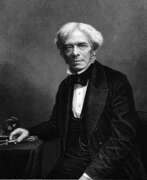

Michael Faraday was a British physicist and chemist, explorer and experimenter.
Faraday, because of his family's poverty, was unable to receive a formal education, but at the bookbinding shop in London where he worked, he read many books, including encyclopedias and textbooks on chemistry and physics. He persevered in self-education, attending hearings at the City Philosophical Society and later lectures by Sir Humphry Davy at the Royal Institution, who as a result took the able student on as an apprentice. In 1825 he replaced the seriously ill Davy in the management of the laboratory of the Royal Institution.
In 1833 Faraday was appointed to a research chair of chemistry created especially for him, where, among other achievements, the scientist liquefied various gases, including chlorine and carbon dioxide. His study of heating and lighting oils led to the discovery of benzene and other hydrocarbons, and he experimented extensively with various steel alloys and optical glasses. Faraday was an excellent experimentalist who presented his ideas in simple language. He is best known for his contributions to the understanding of electricity and electrochemistry. The concepts behind electromagnetic induction, diamagnetism, and electrolysis were some of his most important discoveries. His electromagnetic research formed the basis of the electromagnetic equations that James Clerk Maxwell developed in the 1850s and 1860s.
Between 1831 and 1855, Faraday read a series of 30 papers before the Royal Society, which were published in his three-volume Experimental Investigations in Electricity. His bibliography numbers some 500 printed articles. By 1844 he had been elected a member of some 70 scientific societies, including the St. Petersburg Academy of Sciences.
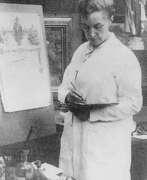

Eleanor Fortescue-Brickdale was a British Pre-Raphaelite painter, illustrator and stained glass artist.
At the age of 17, she enrolled at Crystal Palace School of Art and was later admitted to the Royal Academy of London and she initially worked with illustration. In 1897, Eleanor won a prize for her painting "Spring", which allowed her to begin work on her first large-scale oil painting, "The Pale Color of True Love". The painting was exhibited at the Royal Academy in 1899.
In 1902 Eleanor Fortescue-Brickdale was elected the first female member of the Institute of Oil Painters. She illustrated many books, including Tennyson's Royal Idylls in 1911. She taught at the Byam Shaw School of Art in Kensington. During the First World War, the artist designed posters for government departments and later several commemorative stained glass windows and a memorial in York Cathedral. In 1919 she became a member of the Royal Society of Watercolor Painters.


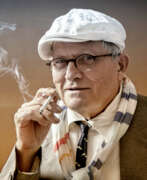

David Hockney, a British artist, has been a prominent figure in the art world for over six decades, renowned for his contributions to painting, drawing, printmaking, photography, and video art. His exploration of these mediums has made significant impacts on the Pop Art movement and beyond, making him one of the most influential artists of the 20th and 21st centuries. Hockney's work is celebrated for its vibrant color palette, emotional depth, and innovative use of technology in art.
One of Hockney's most distinctive features is his ability to blend traditional techniques with modern technology, notably in his iPad drawings and photographic collages. This fusion not only showcases his skillful adaptation to contemporary mediums but also highlights his ongoing quest to explore the nature of seeing and representation in art. Hockney's landscapes and portraits, characterized by their bright colors and meticulous detail, invite viewers to see the world through his unique perspective.
Significant works by Hockney, such as "A Bigger Splash" and "Portrait of an Artist (Pool with Two Figures)," are housed in major museums and galleries worldwide, attesting to his global influence and appeal. These pieces, among others, demonstrate Hockney's mastery over space, light, and narrative, securing his position as a pivotal figure in modern and contemporary art.
For collectors and experts in art and antiques, Hockney's oeuvre presents a fascinating study in the evolution of visual arts. His work not only offers insight into the artist's personal vision but also reflects broader cultural and technological shifts in society. As interest in Hockney's art continues to grow, keeping abreast of new sales and auction events becomes increasingly valuable.
To stay informed about the latest David Hockney sales and auction events, sign up for our updates. This subscription ensures that you receive timely notifications about new product sales and auction events related to David Hockney, offering unique opportunities for collectors and enthusiasts alike.


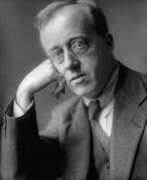

Gustav Holst, birth name Gustavus Theodore Von Holst, is an English composer and educator. Holst studied at the Royal College of Music in London, including playing the trombone, and for several years after graduation he earned a living as a trombonist in various orchestras. In 1905 he became a music teacher at St. Paul's Girls' School and later music director of Morley College, positions he retained throughout his life. A brilliant educator, Holst pioneered music education for women.
Holst's music is often built on English national folklore and has much in common with the work of composer and contemporary Vaughan Williams. However, he combines it with an international flavor based on the styles of Maurice Ravel, Igor Stravinsky, and other innovators, with a continuation of English Romanticism. This influence is reflected in Holst's most famous work, the orchestral suite The Planets. Also in the Hindu opera Savitri and other cosmopolitan works.
Holst's works also include the opera Sita, Hymn to Jesus for chorus and orchestra (1917); Ode to Death for chorus and orchestra (1919), the opera The Perfect Fool (1923), the Choral Symphony (1923-24), the Double Concerto for Two Violins and Orchestra (1929), and Hammersmith for Orchestra (1930).
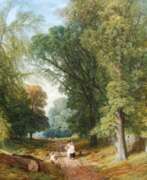

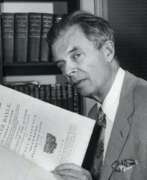


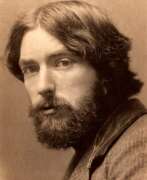

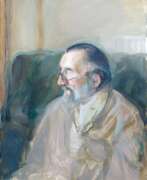

John Erhart Kashdan was an English painter, printmaker and teacher of Russian Jewish descent. He studied at the Royal Academy Schools and later exhibited in London and America before withdrawing from exhibiting around 1950 to focus on his teaching career. His work in the 1940s was influenced by Pablo Picasso, Juan Gris and Georges Braque. Post-war influences include Paul Klee and José Guadalupe Posada as well as contemporaries Robert Colquhoun and Robert MacBryde.


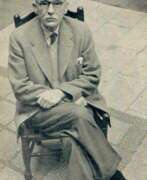

Bernard Leach, full name Bernard Howell Leach, is a British ceramics artist and teacher, considered the founder of the British school of pottery, bringing together East and West through him.
Because he spent most of his life in the Far East, imbibing a particular aesthetic, Bernard Leach's style is a combination of Western and Eastern art and philosophy. In particular, there is a marked influence of Korean, Japanese and Chinese ceramics, as well as traditional techniques from England and Germany. Leach viewed ceramics as a holistic combination of art, philosophy, design, and craft.
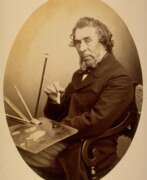

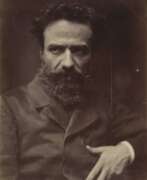

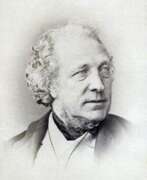


Charles Robert Leslie was a prominent British painter-painter and writer.
Leslie was born in London to American parents who returned to the United States when he was 5 years old, but at the age of 19 he came to England to study. While studying at the Royal Academy of Arts, he traveled throughout Europe and painted extensively. The subjects of his paintings were often based on the great plays of Shakespeare, the works of Irving and Scott. Leslie was talented and unusual in transforming scenes from famous plays into works of art: Sancho Panza and Don Quixote, Juliet, Petruccio, Florizel and other characters come to life on his canvases. Leslie also painted historical works for Queen Victoria, including The Princess's Christening, Queen Victoria in Coronation Dress.
In addition to painting, Leslie made a name for himself as an art writer not only in Europe but also in the United States. He lectured and wrote various English language textbooks and created the popular "Handbook for Young Artists."
In 1821 Leslie was elected a Fellow of the Royal Academy and five years later a full Royal Academician. Charles Robert's son, George Dunlop Leslie (1835-1921), was similarly an artist, producing elegant genre works.
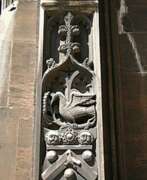

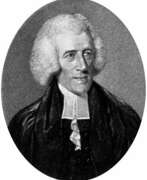


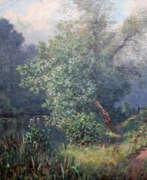

Charles Stephen Meachem is a British landscape painter, poster designer, illustrator and teacher. He studied at the Birmingham School of Art. Samples of his work are in the collections of Graysfield Art Centre and Tunbridge Wells Museum and Art Gallery.


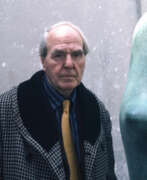

Henry Spencer Moore was an influential English sculptor and artist, renowned for his semi-abstract monumental bronze sculptures that have found homes around the world as public works of art. Born on July 30, 1898, in Castleford, Yorkshire, Moore showed early talent in art, but his journey towards becoming a sculptor was not straightforward. His experiences as a young teacher and a soldier in the First World War, where he was injured in a gas attack, significantly shaped his perspectives and artistic direction.
After the war, Moore pursued his passion for art, winning a scholarship to the Royal College of Art in London, where he began to experiment with modernist influences and direct carving techniques, moving away from the traditional Victorian style. His works, characterized by organic shapes and a blend of abstraction and figuration, were inspired by a wide range of sources, including primitive art, the human body, and the natural world.
Moore's sculptures are celebrated for their unique ability to blend form with space in the landscape, offering viewers a dynamic interaction with his works. His dedication to public art made his sculptures accessible to a wide audience, contributing to his status as one of the 20th century's most significant sculptors. Moore's legacy is preserved through the Henry Moore Foundation, which supports artists and promotes public appreciation of sculpture.
For collectors and experts in art and antiques, Moore's work remains a testament to the power of sculpture to evoke emotion and thought. His contributions to modern art and sculpture continue to inspire and influence artists around the world.
To stay informed about new exhibitions and opportunities to view Henry Spencer Moore's work, sign up for updates. This subscription will ensure you are alerted to new product sales and auction events related to Moore's influential body of work.
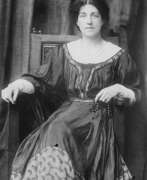

May Morris was an English artisan, embroidery designer, jeweller, socialist, and editor. She was the younger daughter of the Pre-Raphaelite artist and designer William Morris and his wife and artists' model, Jane Morris (née Burden).
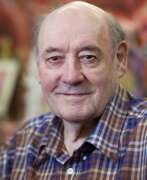

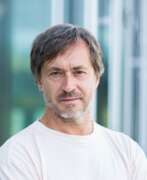

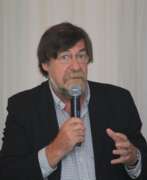

Nigel Osborne is a British composer, educator and humanitarian activist.
He studied composition at Oxford and in Warsaw. In Poland he co-founded one of the first live electronic performance groups in Eastern Europe and worked in the Experimental Studio of Polish Radio, beginning a special relationship with electroacoustic music throughout Europe.
Nigel Osborne works extensively in long-term collaborative projects, for example with the Vienna 20jh Ensemble, the London Symphonietta, the Nash Ensemble, the Scottish Chamber Orchestra and others. Theater productions have always been an important area for him. Among the major works for the theater is an interesting opera "Electrification of the Soviet Union". His series of musical and dance collaborations - "Apollo in Despair", "Wilderness", "Zanza", "Mythologies", and in opera and musical theater - "Hell's Angels", "Faust" and others are known.
Osborne's major orchestral works include Symphony 1 for the BBC Symphony Orchestra and Sun of Venice for the Philharmonic Orchestra. Osborne is a full-time professor at the University of Edinburgh and an advisor to War Child, the charity responsible for the humanitarian aid program in Bosnia and Herzegovina. He is generally known for his extensive charity work supporting children traumatized by war, particularly in the Balkans during the Bosnian War and in the Syrian conflict, using his own music therapy techniques.
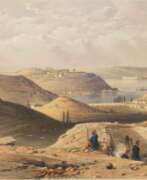

Charles Henry Owen was a British military artillery officer, professor and artist, and a Fellow of the Royal Academy.
Owen served with the Royal Artillery throughout the Crimean War of 1854-1855, including the Battle of Inkerman (November 5, 1854) and the siege and fall of Sevastopol. Charles Owen rose to the rank of Major General, serving as Professor of Artillery at the Royal Military Academy at Woolwich from 1858-1873. He was also a member of the Special Committee on Artillery Weapons and in 1873 wrote a manual, Principles and Practice of Modern Artillery.
Concurrently with his service, Owen was an artist and painted landscapes of the Crimea.
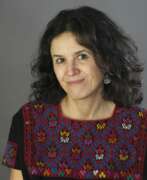

Hilda Paredes is a composer originally from Mexico, mainly living and working in London.
After studying at the Conservatory of Music in Mexico City, Hilda Paredes earned a Master of Arts degree at City University in London and a doctorate at the University of Manchester under the supervision of Professor John Casken. She has been living and working in London for some 40 years, but continues to be involved in the musical life of her native Mexico as a composer and teacher. Hilda has taught composition and lectured at the University of Manchester, the University of California San Diego, and the University of Buffalo.
Although there is evidence of the presence of Mexican art in her works, Hilda Paredes also draws inspiration from many composers and cultures from around the world. Her music has been critically acclaimed for its refinement of craftsmanship, dramatic power, and poetic approach. Hilda incorporates a wide range of electroacoustic elements into her works.
One of Paredes' most internationally acclaimed works is the chamber opera Harriet. It has been performed in Mexico, the UK, France and Belgium. For this work, Hilda was awarded the prestigious Ivors Composer Award 2019 (formerly British Composer Awards).
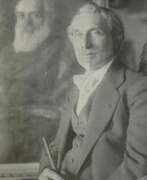

Leonid Osipovich Pasternak (Russian: Леонид Осипович Пастернак), a distinguished Russian painter, was celebrated for his significant contributions to art, especially his remarkable impressionist works. Born in Odessa, Pasternak's artistic journey led him to the prestigious Imperial Academy of Arts, reflecting his mastery and innovation in the realm of painting. His profound association with illustrious figures like Leo Tolstoy, for whom he created memorable illustrations, underscores his influence in Russian cultural circles. Pasternak's works, characterized by their vibrant expression and emotional depth, earned him accolades, including a medal at the World Fair in Paris in 1900. His dedication to teaching at the Moscow School of Painting, Sculpture and Architecture further solidified his legacy in art education.
Despite facing adversity, including a pivotal surgery in Berlin that led to his decision not to return to Russia amid political turmoil, Pasternak's resolve remained unshaken. His works continued to captivate audiences, as evidenced by his successful exhibitions in Europe and significant recognition, including his portrayal of Albert Einstein. The latter years of his life, spent in Oxford due to the Nazi regime's threat, were marked by personal loss but also by continued artistic production until his passing in 1945.
Leonid Osipovich Pasternak's art is held in high esteem, with pieces residing in prestigious museums and collections worldwide, including the Tretyakov Gallery, the Russian Museum, the Musee d'Orsay, and the Tate Gallery. His narrative extends beyond his paintings, encompassing his extensive correspondence and memoirs, which provide insight into his rich inner world and the historical context of his time. Posthumous exhibitions and publications, such as the comprehensive catalogue "The Russian Years, 1875-1921," have further cemented his place in the annals of art history, showcasing his enduring influence and the timeless appeal of his work.
For art collectors and enthusiasts eager to explore the rich tapestry of Russian Impressionism, the legacy of Leonid Osipovich Pasternak offers a compelling journey through the nuances of light, color, and emotion. Sign up for updates related to new product sales and auction events featuring Pasternak's works to deepen your appreciation and understanding of this pivotal artist's contributions to the world of art.
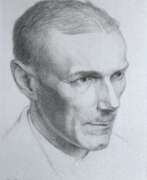



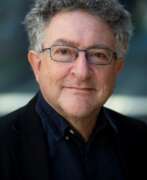

Robert Saxton, full name Robert Louis Alfred Saxton, is a British composer.
Born into a family of Jewish immigrants, Robert began composing music at the age of six and studied at Cambridge and Oxford Universities. Saxton has worked as Professor of Composition at Oxford University and as a Research Fellow in Music at Worcester College. Since 2013 he has been Composer of the Purcell School for Young Musicians Association and has been appointed an Honorary Fellow of the Royal Academy.
Robert Saxton works in a wide variety of genres. His recent works include the opera The Wandering Jew, song cycles, orchestral symphonic compositions and works for strings and piano.
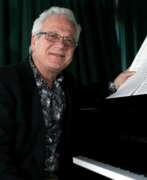

Thomas Simaku is an Albanian and British composer living and working in York.
Simaku graduated from the Albanian State Conservatory of Music in Tirana, before being appointed music director of the Palace of Culture of Permet in southern Albania. In 1991 Simaku moved to England, studied with David Blake at the University of York and earned a doctorate in composition.
Thomas Simaku rose to fame in 1995 when his work Epitaph for String Orchestra was selected by an international jury to participate in the ISCM World Music Days in Germany. It was the first time the music of an Albanian composer was included in this prestigious festival. His works then participated many times in various world music festivals.
In 2000, Simaku was granted British citizenship. He lives in York and teaches composition at the University of York.
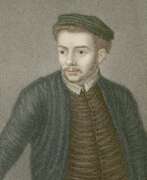

John Skelton was an English poet and writer of the Tudor period.
He was educated at the University of Cambridge, followed by degrees in rhetoric at Oxford, in the Netherlands, and at Cambridge. He was also a translator of ancient Greek and Roman authors. In 1488 Skelton was appointed court poet to Henry VII and then tutor to the Duke of York (later Henry VIII). In 1498 he took holy orders.
Skelton was known as a poet and satirist on both political and religious subjects. His best-known works include the moralizing play Magnyficence (1516), the humorous poem The Tunning of Elinor Rumming (1520), and numerous satirical poems in which he ridiculed both secular and ecclesiastical authorities. His reputation was confirmed by Erasmus of Rotterdam himself, who spoke highly flatteringly of Skelton.
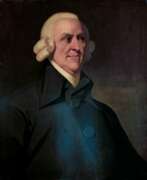

Adam Smith was a Scottish economist and philosopher, one of the founders of economic theory as a science.
After graduating from Balliol College at Oxford University, Smith in 1751 became Professor of Logic and then Professor of Moral Philosophy at the University of Glasgow. And at the same time worked on publishing some of his lectures. His book The Theory of Moral Sentiments was published in 1759. As a philosopher, he wrote on a wide range of subjects: moral philosophy, jurisprudence, rhetoric and literature, and the history of science. He was one of the leading figures of the Scottish Enlightenment. Adam Smith also studied the social forces that give rise to competition, trade, and markets. On his trip to France, he met François Kenet and the Physiocrats.
In late 1763, Smith was given the position of tutor to the young Duke of Buccleugh and resigned his professorship. He began to socialize extensively with the intellectuals of his day, aristocrats and scholars, members of the government and representatives of big commerce, and gradually moved from philosophy to economics.
Adam Smith published his most important work, An Inquiry into the Nature and Causes of the Wealth of Nations (abbreviated as The Wealth of Nations), in 1776. It was the first major exposition of the theory of free trade, where the author advocates individual liberty and the accumulation of wealth, while strongly advocating moral justice and duty to society. He describes a system of natural liberty and justice that seeks to raise the standard of living of the general population by equating higher wages with a healthier and more productive labor force. He proves his belief that the limits to growth are political, not economic, and outlines the principles that should guide lawmakers. Smith also lays out a history of economic theory, a historical analysis of the wealth of nations, including China, and predictions for the future.
"The Wealth of Nations" was the first and still remains the most important book on political economy. And Adam Smith himself is considered the founder of classical political economy; he introduced the term "the invisible hand of the market." Although he did not use the word "capitalism", he is called the father of modern capitalism.
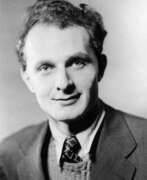

Stephen Harold Spender was an English poet, novelist and essayist whose work concentrated on themes of social injustice and the class struggle. He was appointed Poet Laureate Consultant in Poetry by the United States Library of Congress in 1965.


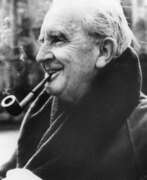

John Ronald Reuel Tolkien was a British writer and poet, translator, philologist, and linguist.
Tolkien wrote many works in the genre of magical fiction. He became world famous for his fantasy books The Hobbit (1937) and The Lord of the Rings (1954-55).
"The Hobbit" was published in 1937 with drawings by the author and proved so popular that the publisher asked him to write a sequel. The result, 17 years later, was Tolkien's masterpiece, "The Lord of the Rings," which was voted the best book of the 20th century. By the beginning of the 21st century, more than 50 million copies had been sold in 30 languages. The film version of "The Lord of the Rings" by New Zealand director Peter Jackson, released in three parts in 2001-2003, broke world viewing records.
Tolkien has been called the "father" of modern high fantasy literature.
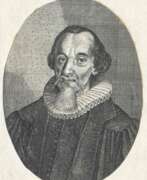

Immanuel Tremellius or Giovanni Emmanuele Tremellio was an Italian reformer, Hebraist, translator, and professor of Hebrew.
Born in Ferrara to a Jewish family, Tremellius was educated in Padua and converted to Catholicism in 1540, but converted to Protestantism a year later and had to move from place to place. He taught Hebrew at Srasburg, at Cambridge, and later became professor of Old Testament at Heidelberg, Germany (1561). He eventually found refuge at Sedan College, where he died.
Immanuel Tremellius' main literary work was a Latin translation of the Bible from Hebrew and Syriac. He also translated Calvin's Catechism into Hebrew and Greek (1551) and published Bucer's Commentary on Ephesians, based on lectures he had heard at Cambridge (1562), as well as an Aramaic and Syriac Grammar (1569).
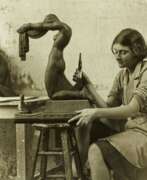

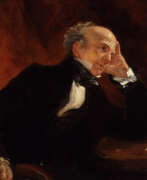

Thomas Uwins was a British painter and illustrator, and a Royal Academician.
Uwins was a versatile artist, painting portraits, genre scenes, landscapes in watercolor and oil, and book illustrations. Uwins taught, was a member of the Society of Old Watercolorists, and held a number of high-ranking artistic positions, including librarian of the Royal Academy, inspector of Queen Victoria's paintings, and curator of the National Gallery.




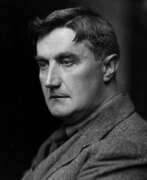

Ralph Vaughan Williams was a British composer, organist, conductor and teacher.
Vaughan Williams studied at the Royal College of Music and Trinity College, Cambridge, continued his studies in Berlin and Paris, and worked as a music editor for a magazine. After artillery service during the First World War, he became Professor of Composition at the Royal College of Music. All the while he was engaged in folkloristics, collecting English folk tunes and songs, which was reflected in his later work.
In addition to teaching and composing, Williams was active as a conductor, including the Bach and Handel Society choirs.
Vaughan Williams' legacy is extensive: he composed six operas, three ballets, nine symphonies including the London Symphony, cantatas and oratorios, works for piano, organ and chamber ensembles, arrangements of folk songs and many other works. Vaughan Williams managed to break away from German traditions and create a truly national, English tradition in the creation of classical music. He is one of the founders of the new English school of composition - the so-called "English musical renaissance".