Landscape painters Switzerland

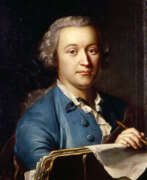

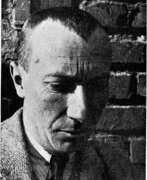

Jean Arp, born Hans Peter Wilhelm Arp, was a German and French poet, painter, graphic artist and sculptor. one of the founders of the Dada movement in Zurich.
Arp used abstract forms in his work and experimented with different materials such as wood, metal and stone. He was also known for his poetic works, in which he applied a method of randomly selecting words, called the "clutter method". Arp believed that this method helped him express his thoughts more precisely and originally. Arp's influence on the arts is still significant today.
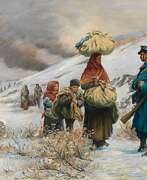

Rodolphe Auguste Bachelin was a Swiss landscape, history and portrait painter as well as a writer, historian and art critic.
He was interested in the Lombardy War of 1859 and in particular in the Franco-Prussian War of 1870 to 1871, which provided him with several subjects with its troop surge at Les Verrières. The Neuchâtel painter was greatly influenced by the writings of Rodolphe Töpffer and aspired to become a Swiss national painter.
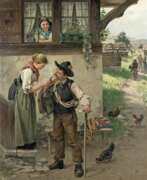

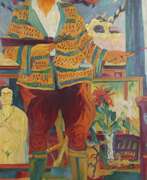

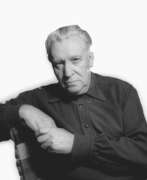

Edmond Bille was a Swiss artist. Bille engaged in intense and varied activity as painter, engraver, stained glass artist, journalist, writer, and politician. He is the creator of the stained glass windows around the altar of the Cathedral of Lausanne, capital of the Swiss canton of Vaud.



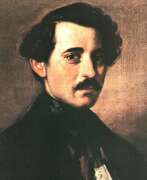

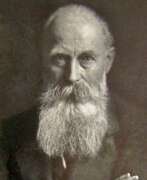

Eugen Felix Prosper Bracht was a German landscape painter.
A late Romanticist painter, Bracht was known for his moody landscapes and coastal scenes in North Germany, and began a sketching trip through Syria, Palestine and Egypt from 1880 to 1881. In 1882, he became a Professor of Landscape Painting at the Prussian Academy of Arts.
Later, Bracht became a representative of German Impressionism.
In 1901, he obtained a teaching position at the Dresden Academy of Fine Arts that he held until 1919.
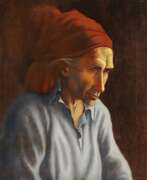

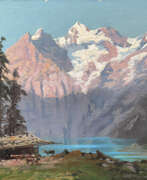


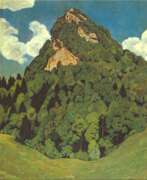

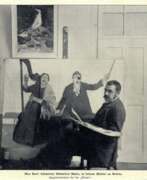


Louis Buvelot, born Abram-Louis Buvelot, was a Swiss landscape painter who lived 17 years in Brazil and following 5 years back in Switzerland stayed 23 years in Australia, where he influenced the Heidelberg School of painters. Buvelot is best known for his great contribution to Australian art. His works, mostly oil landscapes, are quite well regarded, but perhaps his impact was even greater as a tutor of several members of the Heidelberg School. His enthusiasm for plein air painting (that is, painting directly in the open air) was a key characteristic of those artists' work.
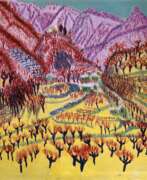


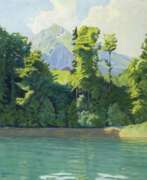

Plinio Colombi was a Swiss painter and graphic artist. For his paintings he often chose landscape motifs of the Lake Thun region and also painted still lifes. His works include prints, paintings, etchings, aquatints, lithographs, woodcuts, drawings, and posters.
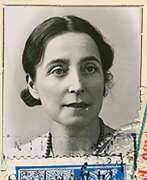

Margherita known as Mara Corradini was an Italian painter and illustrator. Daughter of an industrialist, she studied in Naples, Munich, at the Académie Julian in Paris, in Berlin as a pupil of Martin Brandenburg and then of Henry Luyten at the Institute of Fine Arts in Brasschaat. She obtained the Great Bronze Medal at the 34th International Exhibition of Fine Arts in Naples, as well as in 1912, a 1st class honorary diploma and a gold medal at the Academy of Weimar. In 1924, she won a new honorary diploma at the International Exhibition of Women's Portraits and in 1927 at the International Exhibition in Bordeaux. His paintings Dutch Landscapes and Low Tide were purchased by King Victor-Emmanuel III.


Jean Désiré Gustave Courbet was a French painter who led the Realism movement in 19th-century French painting. Committed to painting only what he could see, he rejected academic convention and the Romanticism of the previous generation of visual artists. His independence set an example that was important to later artists, such as the Impressionists and the Cubists. Courbet occupies an important place in 19th-century French painting as an innovator and as an artist willing to make bold social statements through his work.


François Diday was a Swiss landscape painter and art promoter.
During the 1840s, he received numerous medals at exhibitions in Switzerland. He also exhibited in Paris, Berlin, London and Brussels. In 1873, he was awarded a bronze medal at the Vienna World's Fair.




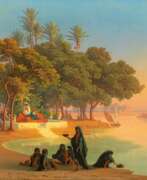

Johann Jakob Frey was a Swiss landscape painter.
Johann Jakob Frey travelled extensively in Italy, especially in and around Rome, making landscape sketches. In his studio he used these sketches to create paintings. He also traveled to Spain and Egypt to sketch for later works.
Frey's pictorial style is based on paintings by Josef Koch or Franz Horny. For example, they often feature a richly detailed foreground, which often shows elements such as winding paths or rivers drawing the viewer's attention away.


Ernst Frick was a Swiss painter. As far as can be ascertained, Frick began painting around 1917. He was taught by Arthur Segal in Ascona. Frick painted in charcoal, oil and watercolour. His preference was for nature and animals, but also working people. He was influenced by the artist group Der Blaue Reiter. In 1924 he was a founding member of the artists' association Der Grosse Bär. After the dissolution of the group Der Grosse Bär in 1941, he remained artistically active and joined newly formed Asconese artist groups.


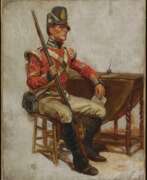

Emile Edwin Ganz is a Swiss-Belgian painter, specializing in the representation of horses and military scenes. In his early days, Ganz mainly drew military scenes, a genre that only a few 19th-century artists mastered. His masterpiece in the genre is The Attack of Scherpenheuvel, a report on the maneuvers of the grenadiers in 1894. In 1901 he entered the service of Princess Clémentine as a painter; he held this position until 1903. In 1903, he also brushed some of King Leopold II's horses. From that moment, he was no longer interested only in the horse itself, but in the regional draft horse, as well as in the people and the rural world: newspaper sellers, old horses in a depot, the harvest in the fields , beet harvest, landscape. Many of his designs for military uniforms were printed in color lithograph.
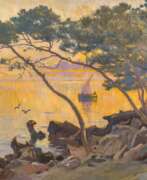

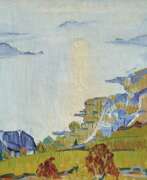


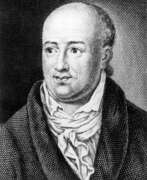

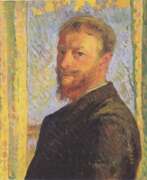


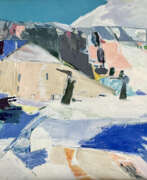

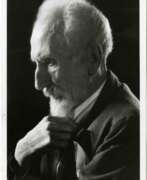

Albert Gos was a Swiss painter-painter, musician, and writer. A great admirer of high mountains, he called himself a "mountain painter. He mainly painted mountain views and landscapes. His favorite view is the Matterhorn in the Pennine Alps.


Max Gubler was a Swiss artist.
He experimented with various contemporary styles, until developing his own personal vivid style of landscape painting on Lipari. Later he turned to abstraction, but continued to use bright colours. In 1956 he did a series of pastel illustrations for Ernest Hemingway's The Old Man and the Sea. In his late works, darker colours predominate.
His work was shown in many galleries.
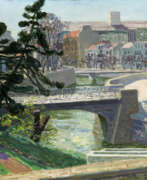

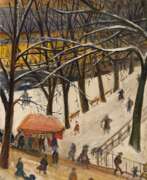



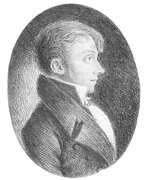

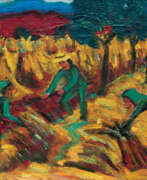

Walter Helbig is a German and Swiss painter, graphic designer and woodcarver. He works in Dresden on church paintings. Helbig participated in the founding and first exhibition of the "Neue Secession" in Berlin in 1910. Helbig took part in the first Modern Bund exhibition in 1911 in Lucerne and in the second, larger one, at the Kunsthaus in Zurich. In 1914, some painters from the vanished “Modern Bund”, including Helbig, took part in the first Dada exhibition at the Galerie Coray in Zurich. Helbig is also represented in the third Dada exhibition and contributes to the magazine Der Zeltweg 8 but does not participate in the activities of the Dadaists. In 1919, he was one of the signatories of the “manifesto of radical artists” 9 in Zurich, and joined the “November group” in Berlin. Helbig lived in Zurich from 1916 to 1924 and in 1916 became a member of the GSMBA (Society of Swiss Painters, Sculptors and Architects), in which he regularly participated. Since the First World War, his artistic work has turned to religious and mythical subjects. In 1924 Helbig, like many other artists, moved to Ascona due to the low cost of living and founded the movement Der Große Bär. During this time, Helbig painted landscapes, still lifes and portraits. Walter Helbig had his first major solo exhibition in Zurich in 1948 and became a member of the Association of German Artists in 1952. After the Second World War, he also followed the artistic currents of the time, abstract expressionism and experimented with informal art in the 1960s.
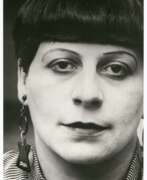


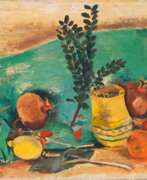

Albert Stefan Kohler was a Swiss painter, illustrator and sculptor. Albert Kohler mainly painted landscapes, figures and still lifes. Occasionally he also worked as a sculptor. In 1915 he exhibited his works for the first time in the Kunsthaus Zürich. Exhibitions followed later, e.g. in the Kunsthalle Bern, in the Kunsthaus Aargau, in the Hamburger Kunstverein and in the Museo Comunale d'Arte Moderna in Ascona.
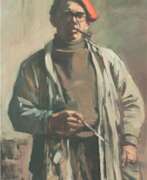

Hermann Kohlmann is a Swiss and German painter, sculptor and graphic artist. He painted landscapes, portraits and figures. Kohlmann studied at the Dresden Academy with Richard Müller and Max Feldbauer. In 1934 he received the Hugo Goepfert Prize. In 1937 he became known to the general public through an exhibition at the Dresden Art Salon Emil Richter. He also exhibited at the Great German Art Exhibitions in 1937 and 1938. After serving in the army and being in captivity, he again worked in Dresden. Many of his works show the reconstruction of the city. Kohlmann was a member of the Association of Visual Artists of the GDR. From 1970 to 1980 he worked as a restorer at the Museum of the History of the City of Dresden.


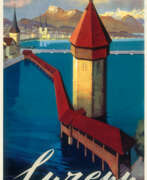


August Wilhelm Leu was a German landscape painter of the Romantic era. Most of his paintings are large format and depict scenes in Norway and the Alps. He studied painting under Johann Wilhelm Schirmer at the Düsseldorf Academy of Art.
August Wilhelm Loy's landscapes are characterized by a magnificent romantic conception of Alpine nature, masterful rendering, bright colours and well calculated light effects. Loy attached great importance to the particularly detailed design of the foreground.


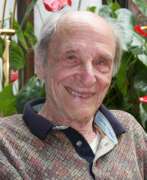


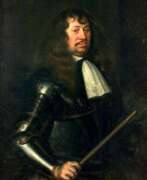

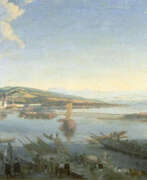

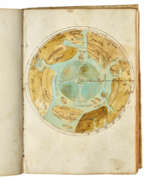
Conrad Meyer, a Swiss painter, engraver, and medallist, made significant contributions to the art world of his time. Initially a painter of portraits and landscapes, Meyer eventually shifted his focus to copper engraving, producing over a thousand works in his lifetime. Notable among his creations is the map of Switzerland by Conrad Gyger, which he produced in 1657, and his Planisphaerium Coeleste from 1681.
Conrad Meyer's artworks, such as "The Wild Man" (1649), "The Devil's Kitchen Visited by an Angel," and "Allegory of the Transience of Life" (1651), showcase his meticulous technique and are held in high regard, with several pieces housed in the Metropolitan Museum of Art. His work "Parable of the Ungrateful Servant" is part of the Philadelphia Museum of Art's collection, demonstrating his prowess in etching as well.
For art collectors and experts, Conrad Meyer's contributions to Swiss art and engraving offer valuable insights into the 17th-century European art scene, particularly in the context of Zurich. His legacy is encapsulated in the diverse range of subjects he explored, from detailed landscapes to intricate portraits and allegorical scenes, reflecting the cultural and artistic vibrancy of his era.
If you are an enthusiast or collector keen on Conrad Meyer's art, consider signing up for updates related to new sales and auction events concerning his works. This will ensure you stay informed about opportunities to acquire pieces connected to this notable Swiss artist.
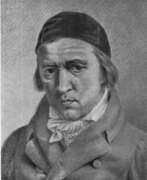

Johann Heinrich Meyer was a Swiss artist and art critic, renowned for his significant contributions to the art and culture of his time. Meyer, born in Stäfa, Switzerland, embarked on an artistic journey that led him to Italy, where he immersed himself in studying Roman sculpture and the works of Raphael. His path crossed with Johann Wolfgang von Goethe in 1787, marking the beginning of a lifelong collaboration and friendship.
Johann Heinrich Meyer's expertise in painting and art history found a prominent platform in Weimar, where he became a key figure at the Weimar Princely Free Drawing School. His involvement with Goethe extended to publishing the art journal Propyläen and managing the art collections at Schloss Weimar. His scholarly pursuits included contributions to Goethe's "Winckelmann and His Century" and a comprehensive History of Art, showcasing his deep engagement with the artistic discourse of his era.
For art collectors and experts, Johann Heinrich Meyer's legacy offers a fascinating glimpse into the intersection of art, culture, and intellectual camaraderie in 18th and 19th-century Europe. His works and scholarly contributions remain a testament to his profound influence on the art world and his pivotal role in the cultural milieu of Weimar.
Stay updated on upcoming sales and auction events featuring Johann Heinrich Meyer's works. Sign up now for exclusive insights and opportunities in the realm of art and antiques.
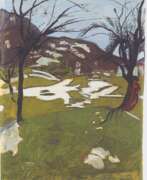

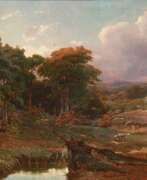

Carl Theodor Meyer-Basel is celebrated for his profound contributions to landscape painting. His journey into the arts commenced with schooling in Basel, followed by advanced studies at the Munich Academy of Fine Arts and under the mentorship of Alexander von Wagner. Meyer-Basel is particularly renowned for his plein air landscapes, often depicting serene settings around Munich and Lake Constance, typically eschewing human or animal figures to focus purely on nature's tranquility.
A pivotal figure in the Munich Secession movement, Carl Theodor Meyer-Basel's dedication to his craft is evident in his vibrant landscapes and substantial graphic work. He was also a founding member of the Verein für Original-Radierung in Munich, underscoring his influence in both the painting and graphic arts scenes of the time.
His artworks, which include a significant number of paintings and drawings, have found homes in numerous private and public collections, notably the Kunsthalle Basel and the Neue Pinakothek in Munich. These pieces reflect his unique ability to capture the essence of the landscapes he loved, offering viewers a glimpse into the scenic beauty of late 19th and early 20th-century Europe.
For collectors and enthusiasts of Swiss art, Carl Theodor Meyer-Basel's works represent a key component of the country's artistic heritage, celebrated for their peaceful simplicity and natural beauty. His legacy continues to inspire admiration for landscape art, serving as a testament to the enduring appeal of capturing nature's majesty on canvas.
If you're keen to explore more about Carl Theodor Meyer-Basel and perhaps add his work to your collection, signing up for updates can keep you informed about new sales and auction events related to this distinguished artist. This subscription is an excellent way for art collectors and enthusiasts to stay connected with the latest opportunities to cherish and own a piece of Swiss art history.
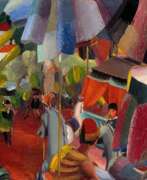

Louis René Moilliet is a Swiss painter, stained glass designer, and watercolorist. From his trips to Tunisia he brought back many urban sketches, portraits, landscapes painted in watercolor. In painting, Mouaillet adhered to expressionist and orphic styles.
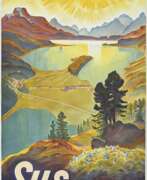

Carl Moos, otherwise Karl Franz Moos was a German and Swiss artist and illustrator, notable for his Art Deco travel and sporting posters, particularly of skiing. He trained in commercial art in Munich and worked as an illustrator for, among others, the Münchener Tagespresse. He also established himself as a creator of postcards and posters. He was a member of the Munich commercial artists' group Die Sechs, which aimed to improve the standing of advertising and poster graphics. His posters are highly sought after in the art market.
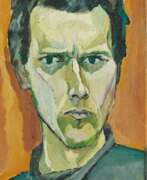

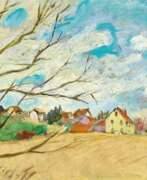


Friedrich Paul Nerly was a German landscape painter. He studied painting with his father, Friedrich Nerly, and at the Academy of Fine Arts in Venice with Professor Eugène de Blaas.
The main themes of Friedrich Paul Nerly's work were Italian port, beach and cityscapes (sunset in the Adriatic Sea, the White Grotto in Capri, the surf on the Amalfi coast, the beach between Ancona and Falconara).


Johann Jakob Neustück was a Swiss artist, celebrated for his contributions to the art world during the 19th century. His work, primarily focusing on landscapes, captures the essence of Swiss scenery with remarkable detail and emotion.
Johann Jakob Neustück's art is a testament to his skill and passion, offering viewers a glimpse into the picturesque landscapes of Switzerland. His paintings are known for their precision and the ability to transport the observer to the scene depicted. One of his notable works, "View into the Cloister of the Cathedral of Basel," exemplifies his mastery in landscape painting, showcasing his attention to detail and the serene beauty of Swiss architecture and nature.
Collectors and art enthusiasts admire Johann Jakob Neustück's works for their historical value and artistic merit. His paintings not only serve as beautiful artifacts but also as cultural treasures that offer insights into Swiss history and landscape artistry.
For those interested in the world of art and antiques, especially in the realm of landscape painting, Johann Jakob Neustück's creations are a source of inspiration and admiration. His works, which have been auctioned and celebrated, continue to enchant and captivate audiences, affirming his legacy in the art world.
For collectors and experts in art and antiques, staying informed about Johann Jakob Neustück's works is essential. By signing up for updates, you will receive notifications about new product sales and auction events related to Neustück's art, ensuring you never miss an opportunity to explore or acquire pieces of his enduring legacy.
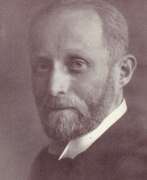

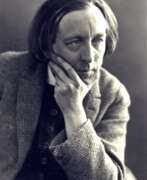

Charles-Clos Olsommer was a Swiss painter and draftsman of French descent. His favorite subjects were women's portraits and landscapes. He was a mystical and symbolic painter, and Olsommer's art echoed the Italian Early Renaissance, icon painting, and Art Nouveau aesthetics.



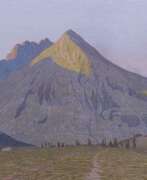

Alexandre Perrier was a Swiss landscape painter; mostly of Alpine mountain scenes. He also created a few portraits.
His early paintings use a Pointillistic technique, but his later ones show a broader brushstroke. He did not follow the general practice of painting en plein aire, preferring to make sketches on site and producing the canvases in his studio.
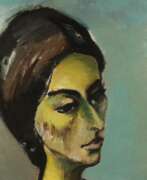

Edmund Georg Pielmann, a German painter, first encountered art through his grandmother, an art dealer. After training at the Academy of Fine Arts with Toni Stadler in Munich, he moved to Switzerland in 1957 and founded his own studio there.
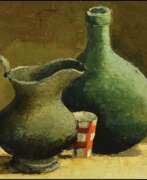


Constantin Polastri was a Swiss painter. He lived in Hombrechtikon (Switzerland) and Sanremo, Italy. His work includes oil paintings on canvas and wood, watercolours, drawings, lithographs and decorative works on furniture and walls. Influenced by Post-Impressionism and Fauvism, he painted gardens, landscapes, still lifes and nudes.


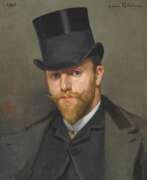

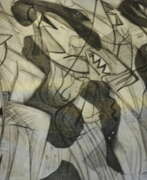


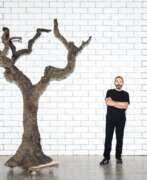

Ugo Rondinone is a Swiss-born artist widely recognized for his mastery of several different media — most prominently sculpture, drawing and painting, but also photography, architecture, video and sound installation — in the largely figurative works he has made for exhibitions in galleries, museums and outdoor public spaces around the world. He has never limited himself to a particular material, no more than he has to a single discipline. Lead, wood, wax, bronze, stained glass, ink, paint, soil and stone are all tools in a creative arsenal that the artist has employed to extend the Romantic tradition in works that are as sensitive to the passage of time as to the nuances of body language and the spoken word.


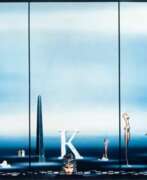

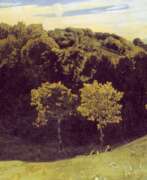


Johann Jakob Schalch was a Swiss painter. He was a contemporary of the Swiss painters Anton Graff, Jean Preudhomme, Angelica Kauffman, Jakob Emanuel Handmann, Johann Caspar Füssli. His son Johann Heinrich Füssli was also a noted painter.
Schalch was noted for his paintings of the Rheinfall in Schaffhausen, many of which were reproduced as engravings, making his name well-known.
The Museum zu Allerheiligen in Schaffhausen owns the largest collection of Schalch paintings and drawings.


August Wilhelm Ferdinand Schirmer was a notable German landscape artist whose contributions have earned him a distinctive place in art history. Initially painting flowers in a royal porcelain factory, Wilhelm Schirmer's artistic journey led him to the Berlin Academy under the mentorship of Friedrich Wilhelm Schadow. However, it was his time in Italy that profoundly influenced his artistic direction.
Wilhelm Schirmer's Italian sketches transcend mere landscape depiction; they are studied compositions that blend historic and poetic elements, aiming to provide a poetic interpretation of nature. His approach prioritized the conceptual over the technical, focusing on the embodiment of ideas, the interplay of light and color, and the overall harmony within his works. From 1839 to 1865, Wilhelm Schirmer shared his insights as a professor of landscape at the Berlin Academy, shaping future generations of artists.
His works, such as the classic sites and temples he painted on the Berlin Museum of Antiquities' walls, illustrate his endeavor to link art with historical and cultural contexts, adding depth and narrative to his landscapes. Wilhelm Schirmer's legacy is seen in how his art communicates with viewers, emphasizing the 'ideal' and 'subjective' aspects, and creating what German critics have described as 'constructional landscape' with inherent 'motive' and 'inner meaning'.
For art collectors and enthusiasts, understanding Wilhelm Schirmer's unique approach to landscape painting offers valuable insights into the 19th-century art movement and its evolution. His dedication to blending the aesthetic with the intellectual presents a compelling narrative that continues to resonate in the art community.
If you're intrigued by Wilhelm Schirmer's artistic philosophy and wish to stay informed about his works or related art auction events, consider subscribing to updates. This way, you can remain connected to the legacy of a painter who sought to merge the beauty of nature with the richness of human thought and historical context.
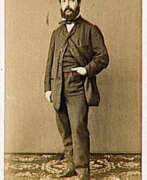

Karl Schlesinger was a Swiss-born German painter of the second half of the 19th century. He is known as a landscape painter and genre painter.
Schlesinger became famous for his historical and genre paintings. His works often combined genre elements with landscapes and skillful lighting. One of his significant works was the painting "Embarkation of Settlers on a Steamship Departing for America", created in Antwerp. From 1852 until his death, he lived in Düsseldorf, continuing to write expressive scenes. Schlesinger was a member of a number of artistic associations, including the Hamburg Artists' Club.


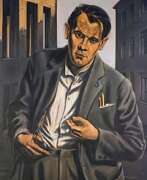

Walter Schulz-Matan was a German painter of magic realism. After training as a decorative painter, the Thuringian Walter Schulz-Matan led a life of wanderings across Europe. After military service and captivity in World War I, he lived in Munich from 1919, maintained his first studio in Munich-Schwabing from 1920 and worked as a stage painter for the "Neue Bühne". From 1930 he was one of the co-founders of the exhibition group 7 Munich painters. Schulz-Matan was also a member of the Neue Secession and the Deutscher Künstlerbund. In the New Objectivity art movement, Schulz-Matan developed his own artistic specificity in the Magic Realism movement. During the Second World War he worked as a war painter in France, then again as an artist in Munich.


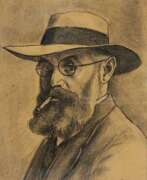

Traugott Senn was a Swiss landscape painter, considered an artistic pioneer of the Bernese Zeeland and an innovator of the French landscape of the time. In his younger years he belonged to the Bernese School. Landscapes of Bernese Zeeland constitute the greater part of Senn's paintings.


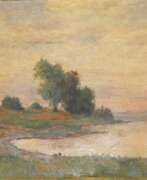

Karl (Carl) Spitz was an outstanding German landscape painter.
Karl Spitz's paintings, inspired by nature, were characterised by a colourful and expressive style. Specialising in depicting rural scenes, Spitz masterfully recreated the beauty and tranquillity of nature.
His work often reflected the subtlety of light and shadow, as well as the details of his surroundings.


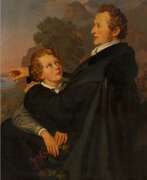

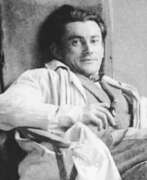

Marc Sigizmundovich Sterling (Russian: Марк Сигизмундович Стерлинг) was a multifaceted artist whose work spanned various genres and styles. His nationalities are diverse, reflecting affiliations with Germany, Russia, Ukraine, France, Switzerland, and the Russian Empire, showcasing a life lived across different cultures.
Marc Sterling's artistic endeavors included painting, engraving, and graphic art, with his talents extending to landscape and portrait painting. He was part of significant art movements and groups such as La Ruche, Salon d'Automne, and the School of Paris, indicating his active participation in dynamic artistic communities. His art, which embraced genres like flower still lifes, landscapes, and portraits, showcased a blend of Constructivism, Realism, and Synthetic Cubism, utilizing techniques ranging from engraving to oil painting.
For art collectors and experts, Marc Sterling's work offers a glimpse into the rich tapestry of 20th-century art, characterized by its diverse influences and innovative expressions. His contributions to the art world are reflected in his varied body of work, which continues to attract interest at art auctions and among collectors.
To delve deeper into the world of Marc Sigizmundovich Sterling and explore his creations, one can visit auction archives and collections that feature his work, providing insights into his artistic journey and the legacy he left behind in the realms of painting and graphic arts.
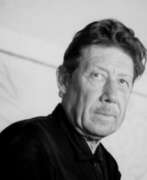


Edmond Jean-Baptiste Tschaggeny was a Belgian animal painter. Tschaggeny first studied privately together from 1834 to 1835 with Eugène Joseph Verboeckhoven, then from 1837 to 1838 at the Académie royale des Beaux-Arts de Bruxelles. He painted scenes with cattle and horses in the style of Verboeckhoven. The young shepherds accompanying the animals gave his works a sentimental touch. He is also known for portraits of purebred horses and bulls that have won a prize. He worked in Campine from 1846 and was one of the pioneers of the Campine painting school. He was a founding member of the Société royale belge des aquarellistes. In 1854 he was awarded the Knight's Cross of the Order of Leopold. Towards the end of his life he spent the winter months in Algeria, painting North African motifs. He illustrated anatomical books devoted to veterinary medicine.


Otto van Rees is an artist, Dutch citizen. He started his career in Paris, where he moved in October 1904. His first grand exhibition of 48 paintings was held in 1908 in Rotterdam at the Oldenzeel gallery. In 1912-1916 the art of Van Rees went through changes. His neo-impressionistic experiments to capture sunlight, depth and perspective in color were of the past. He was concentrating on volume and form. His work evolved from physic cubism to analytic cubism. Otto held the famous exposition of November 1915 at the gallery Tanner in Zürich. This exposition is now seen as the beginning of Dada in Zürich. Many public buildings in Holland: churches, railway station, courthouse, ministry, theatres were embellished by his mural paintings.
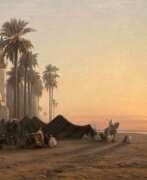

Louis-Auguste Veillon, a Swiss painter, initially focused on seascapes and mountain scenes before being influenced by Orientalist art. He studied in Paris, where he immersed himself in the works of the masters and developed a luminist style. Veillon traveled to Egypt multiple times, creating popular Orientalist landscapes featuring the Nile and the Dead Sea. He departed from the Romantic school, opting for a realistic approach with soft brushstrokes and pastel colors.