

Painters Avant-garde
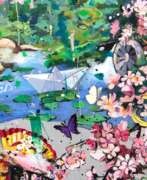

Angelo Accardi is a contemporary Italian artist. He grew up surrounded by both modern and traditional art. Although he studied fine art at the Art Academy of Naples, he never completed his training. Angelo Accardi illustrates surreal visions of everyday life under realistic backdrops of urban and natural landscapes. There is never a single meaning, but a whole story behind each painting. Ironic, striking, and playful, Accardi’s unique perspective and avant-garde style is a result of his diverse inspirations.
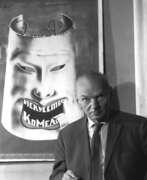

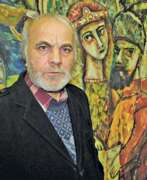

Vladimir Ivanovich Akulov (Russian: Владимир Иванович Акулов) is a Soviet and contemporary Belarusian artist. He is known as a painter, graphic artist and teacher, a representative of the second wave of Belarusian avant-garde.
Vladimir Akulov in his work has developed a unique style under the influence of expressionism, cubism, primitivism, fauvism. He is a master of portrait, landscape, still life, compositions with symbolic and allegorical subjects, illustrations of literary works. During his career the artist created several cycles of portraits, including those of famous people.
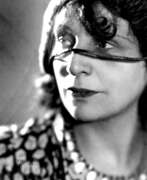

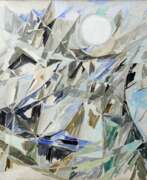

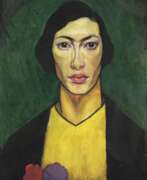

Nathan Isaiovych Altman (Russian: Натан Исаевич Альтман), a Ukrainian-born Russian and Soviet avant-garde artist, made significant contributions to Cubism, stage design, and book illustration. Born on December 22, 1889, in Vinnytsia, Ukraine, Altman's early education took place at the Odessa School of Art, followed by further studies at the Maria Vasilyeva Free Russian Academy in Paris. His diverse artistic talent extended across painting, sculpture, graphic art, and theatrical and cinema design, reflecting the dynamic spirit of the avant-garde movement.
Altman's work is recognized for its innovative approach to Cubism and for integrating avant-garde principles with traditional Jewish themes. This blend is evident in his Jewish graphic arts and his involvement in designing stage sets for the Habimah Theatre and the Jewish State Theatre in Moscow from 1920 to 1928. A notable period in his career was his participation in the Exposition Internationale des Arts Decoratifs et Industriels Modernes in Paris in 1925, showcasing his breadth in arts and design alongside contemporaries such as Aleksandra Ekster and Sonia Delaunay-Terk.
Altman's legacy is preserved in several prestigious collections, including the Museum of Russian Art in Erevan, Armenia, where his mixed technique works like "Still Life" are housed. His pieces reflect the avant-garde's fascination with abstract forms and bold experiments with color and composition. The Russian Museum's collection of Altman's work further highlights his versatility, featuring his self-portraits, the iconic "Portrait of Anna Akhmatova", and innovative designs for theatrical productions.
For collectors and experts in art and antiques, Altman's oeuvre offers a unique insight into the evolution of avant-garde art in the early 20th century. His works not only encapsulate the revolutionary spirit of the time but also embody the rich cultural interplay between Russian and Jewish artistic traditions.
To stay updated on Nathan Isaiovych Altman's art and to learn about new sales and auction events related to his work, signing up for updates is highly recommended. This subscription ensures you remain informed about opportunities to engage with the legacy of a pivotal figure in the avant-garde movement.
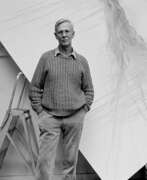

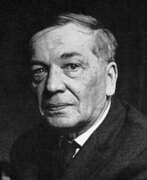

Mikhail Fedorovich Andrienko-Nechytailo (Russian: Михаил Фёдорович Андриенко-Нечитайло) was a Russian artist known for his contributions to the avant-garde movement. Born in 1894, he became renowned for his innovative approach to painting, stage design, and illustration. Andrienko-Nechytailo’s work is celebrated for its unique blend of Constructivism and Cubism, which set him apart from his contemporaries.
One of his special features was his ability to combine geometric forms with a vibrant color palette, creating visually striking compositions that challenged traditional artistic conventions. His works often explored themes of abstraction and the intersection of art and technology. His notable pieces are housed in prestigious collections, including the Tretyakov Gallery in Moscow and the Russian Museum in Saint Petersburg.
Collectors and art experts admire Andrienko-Nechytailo for his visionary approach and lasting impact on modern art. His legacy continues to influence contemporary artists and is a testament to his skill and creativity.
Sign up for updates on new product sales and auction events related to Mikhail Fedorovich Andrienko-Nechytailo. Stay informed about opportunities to add his remarkable works to your collection.
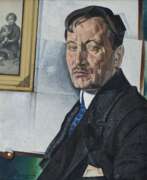

Yury Pavlovich Annenkov (Russian: Юрий Павлович Анненков) was a prominent Russian artist, renowned for his avant-garde book illustrations and portraits, as well as his work in theater and cinema. Born in 1889 in Petropavlovsk, Russian Empire, and passing away in 1974 in Paris, France, Annenkov's artistic journey was shaped by the tumultuous times he lived in. His work is celebrated for capturing the essence of an era marked by revolution and change, employing a style that is both dynamic and reflective of the Synthetism movement, emphasizing the synthetic essence of his subjects.
Annenkov's early years were spent in St. Petersburg, where he was influenced by prominent figures and movements of the time. He honed his skills in Paris, working in the studios of Maurice Denis and Félix Vallotton, and later, his talents led him to design iconic works for the Bolshevik government, such as the staging of "The Storming of the Winter Palace". His acclaimed book "Portraits," published in 1922, featured 80 pictures of key Russian art figures, showcasing his exceptional talent in capturing personalities through his art.
In 1924, Annenkov left Soviet Russia, eventually settling in Paris, where he continued to flourish as an artist, working on landscapes, female portraits, interiors, and achieving success in the film industry as a costume designer, notably receiving an Academy Award nomination for his work.
Among his notable works are "Dreams of a Provincial (Borovichi)," "Portrait of Elena Borisovna Annenkova," "June. Forest," "Portrait of Miron Abramovich Sherling," "Portrait of A.M. Gorky," and the "Illustration for the poem 'The Twelve' by A.A. Blok," each piece highlighting his ability to blend academic drawing with avant-garde techniques.
For collectors and art and antiques experts, Annenkov's works offer a glimpse into the rich tapestry of 20th-century Russian art, marked by its innovation, depth, and historical significance. His legacy continues to inspire and captivate audiences worldwide.
To stay updated on sales and auction events featuring Yury Pavlovich Annenkov's work, sign up for our newsletter. This subscription ensures you'll be the first to know about new product sales and auction events related to this remarkable artist.
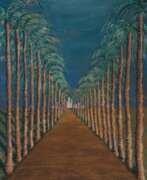

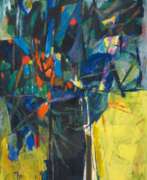

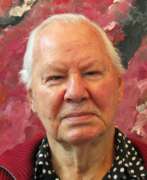

Armando, born Herman Dirk van Dodeweerd, was a Dutch painter, sculptor, poet, writer, violinist, actor, journalist, film, television and theater maker. Armando was his official name; his birth name, the pseudonym as he called it, no longer existed for him. He himself saw his work as «Gesamtkunstwerk», based on his experiences from the Second World War in the vicinity of Kamp Amersfoort.
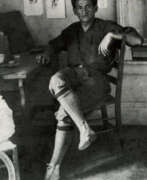

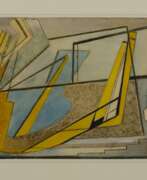


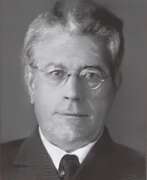

Vsevolod Grigorievich Averin (Russian: Всеволод Григорьевич Аверин) was a Ukrainian Soviet graphic artist and book illustrator. He was one of the most important Ukrainian animal painters of the first half of the 20th century, incorporating avant-garde techniques into his work.
Averin worked in book and easel graphics, especially lithography, as well as portrait and landscape painting. He illustrated many well-known works, including the Atlas of Human Anatomy and a novel by M. Twain. His work was characterised by an exquisite style and harmonious design, and his estate includes some 300 bindings, 3,000 illustrations and 90 posters.
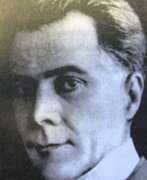

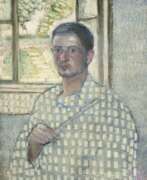

Vladimir Davidovich Baranov-Rossine (Russian: Владимир Давидович Баранов-Россине) was a master of the Russian avant-garde, a prolific painter, sculptor, and inventor, whose work significantly contributed to the Cubo-Futurism movement. Born on January 1, 1888, in Kherson, he was originally named Shulim Wolf Leib Baranov but is best known by his pseudonym, Daniel Rossine. His early artistic education took place in Odessa and then at the St. Petersburg Academy of Arts, laying the groundwork for his future as a revolutionary artist.
In 1910, Baranov-Rossine moved to Paris, a pivotal move that introduced him to the burgeoning European avant-garde scene. It was there, alongside other notable artists such as Marc Chagall, Osip Zadkine, Alexander Archipenko, and Chaim Soutine, that he became an inhabitant of the famous Parisian house "La Ruche." His innovative work, particularly the invention of the Optophonic Piano, which projected colors in sync with music, underscored his commitment to blending art and technology, a hallmark of his career.
Tragically, Baranov-Rossine's life was cut short when he was arrested by the Gestapo in 1943 and subsequently died in Auschwitz in 1944. Despite his untimely death, his legacy lives on through his contributions to modern art and technology. His works can be found in various museums and galleries, celebrated for their vibrant expression and avant-garde techniques that continue to inspire artists and collectors alike.
For those intrigued by Vladimir Davidovich Baranov-Rossine's pioneering work and its lasting impact on the art world, signing up for updates on new product sales and auction events related to this avant-garde master is highly recommended. This ensures enthusiasts and collectors are always informed about the latest opportunities to engage with Baranov-Rossine's remarkable legacy.
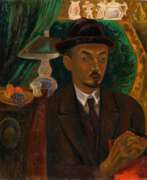


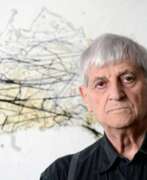

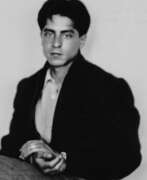

Mirko Basaldella is an Italian and American sculptor and artist.
Born into a creative family, he displayed his talent from a young age and participated in the Italian Biennale. In 1957 Basaldella moved to Cambridge, Massachusetts, and was elected a Fellow of the American Academy of Arts and Sciences in 1962.
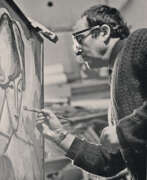

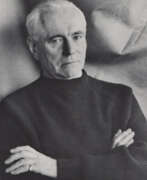

Marcel-Louis Baugniet was a Belgian painter, theorist, furniture designer, creator of posters, costumes and stage sets, and one of the main advocates of the concept of pure plasticity.
He studied painting at the Royal Academy of Fine Arts in Brussels, where he communicated with Paul Delvaux, René Magritte, Victor Servranck and Pierre-Louis Flouquet.
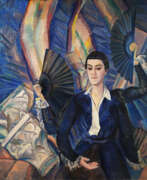

Elena Mikhailovna Bebutova (Russian: Елена Михайловна Бебутова) was a Russian and Soviet artist of the mid-twentieth century of Georgian-Armenian origin. She is known as a painter, graphic artist and scenographer.
Elena Bebutova evolved from a fascination with cubism and futurism in her early work to a more decorative and realistic style. In 1917, she began working on the decoration of performances in various theaters in Russia, and held a personal exhibition in Moscow in 1923. Returning to the USSR after business trips to Berlin and Paris, she became one of the founding members of the society "Four Arts". Her work in the theater was closely linked to the directing activities of her brother Valery Bebutova; their last collaboration was a production of Hamlet at the Vitebsk Belorussian Theater in 1946 and 1955.
Bebutova is also known as a model for portraits created by her husband Pavel Kuznetsov.
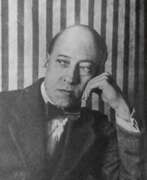

Vladimir Georgievich Bekhteev (Russian: Владимир Георгиевич Бехтеев) was a Russian artist and painter, born in 1878 and passing away in 1971. His journey into the art world led him from Russia to Munich on the advice of Sergei Jawlensky, where he was deeply influenced by the artistic and intellectual environment of the city, particularly through his connections with the Jawlensky household and the vibrant café culture. Bekhteev's early works, such as "Autumn Alley" (1905), showcase his assimilation of late Impressionist techniques and the influence of Van Gogh, reflecting a period of significant artistic development during his time in Germany.
Bekhteev's art gained recognition and was collected by prominent figures in the avant-garde art scene. His participation in exhibitions reflects a broad interest in various subjects, from landscapes to memories of Africa, demonstrating his versatility and curiosity as an artist. His works have been featured in international exhibitions and have fetched notable prices at auctions, indicating a continued interest and appreciation for his contributions to Russian and European art.
For collectors and experts in art and antiques, Bekhteev's works represent an intriguing intersection of Russian and European artistic movements in the early 20th century. His unique approach to color, form, and subject matter offers a distinctive perspective within the broader context of Impressionist and post-Impressionist art.
To stay updated on sales and auction events related to Vladimir Georgievich Bekhteev, signing up for updates is highly recommended. This subscription will ensure that enthusiasts and collectors are promptly informed of new opportunities to acquire pieces by this distinguished artist.
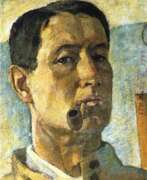

Veniamin Pavlovich Belkin (Russian: Вениамин Павлович Белкин), a distinguished Russian and Soviet artist, was born in 1884 and made significant contributions to the fields of painting, graphic arts, and teaching until his death in 1951. His extensive teaching career included positions at prestigious institutions such as the Higher Institute of Photos and Photo Equipment, the Baron A.L. Stieglitz Central School of Technical Drawing, Vhuteine, the State Architectural Institute, and the Leningrad Institute of Painting, Sculpture, and Architecture named after Ilya Repin. In 1955, a memorial exhibition in Leningrad posthumously honored his artistic legacy.
Belkin's artworks, characterized by their depth and artistic integrity, are held in high regard within major museum collections, including the State Tretyakov Gallery and the State Russian Museum, as well as various regional museums. His contributions to Russian art are celebrated for their historical and cultural significance, bridging the gap between pre-revolutionary and Soviet art.
For collectors and experts in art and antiques, Belkin's work represents an intriguing investment, embodying the rich tapestry of Russian history and culture. His legacy continues to inspire and influence contemporary art, making his pieces sought after by connoisseurs around the world.
Sign up for updates to stay informed about new product sales and auction events related to Veniamin Pavlovich Belkin, and enrich your collection with the works of one of Russia's most venerable artists.
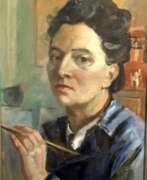

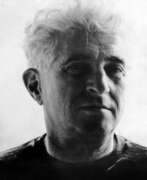

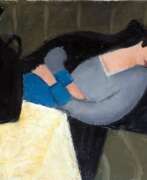

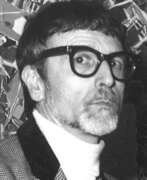

Roger Bezombes was a 20th century French painter, sculptor, medallist and designer. He studied in Paris at the École des Beaux-Arts and was greatly influenced by his friendship with Maurice Denis. Bezomb worked mainly as a painter, adopting Henri Matisse's rich colours in landscapes and figures, often based on observations of 'exotic' cultures, particularly those of the Mediterranean and North Africa.


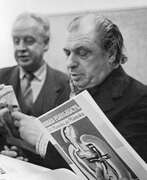

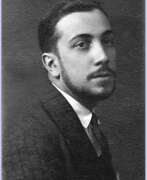

Boris Konstantinovich Bilinsky (Russian: Борис Константинович Билинский) was a Russian-born artist and designer, renowned for his significant contributions to set and costume design in theater, cinema, and ballet, as well as his accomplishments as a graphic artist. Bilinsky's career took him across Europe, from Russia to Germany, France, and eventually Italy, reflecting a life influenced by political and social upheavals of the early 20th century. His departure from Russia in 1920 marked the beginning of a prolific period in Berlin where he collaborated with prominent Russian emigre movie directors and theater companies. By 1923, Bilinsky had moved to Paris, becoming an integral part of the French cinema scene, notably designing posters and publicity material for the French release of Fritz Lang’s "Metropolis" in 1927, a commission that solidified his reputation as a leading cinema poster artist.
Bilinsky's creative vision extended beyond the cinema to the world of ballet and opera, where he made significant contributions, including designing for the Teatro alla Scala in Milan. His work for the "Follie viennesi" ballet in 1947, with music by Johann Strauss, showcased his ability to blend artistic freedom with the thematic requirements of the productions, employing vibrant colors and shapes that echoed the circular motion of a waltz.
Throughout his career, Bilinsky's versatility and talent were evident in the range of his work, from cinema posters to set and costume designs for prestigious theater productions. His legacy is preserved through collections and exhibitions, ensuring his artistic contributions continue to inspire and influence.
For collectors and experts in art and antiques, Boris Konstantinovich Bilinsky remains a figure of great interest due to the breadth of his work and the artistic prowess he displayed across various mediums. His contributions to the visual arts, particularly in the realm of set and costume design, cement his place in history as a versatile and innovative artist whose work transcends time and geographic boundaries.
Sign up for updates on Boris Konstantinovich Bilinsky to stay informed about new product sales, auctions, and exhibitions related to this remarkable artist. Your subscription will ensure you are the first to know about these exclusive events and opportunities.
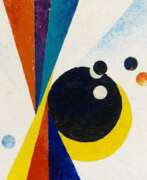

Joseph Binder, full name Joseph Friedrich Gustav Binder, was a German avant-garde painter, designer and graphic artist.
In the early 1930s, Joseph Binder worked on major brand commissions for Knorr, Reemtsma, Tekrum, Elida, Minera, Dujardin, Stella and Mercedes-Benz and earned fame as a style-defining industrial designer. In all, by the early 1960s, Binder had created more than 2,000 stamps and posters.
In painting, Binder favored cubism: geometrically stylized form is of great importance to the painter. He was also influenced by the Bauhaus school of art and the Blue Rider group.
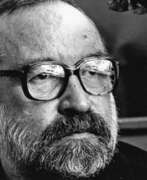


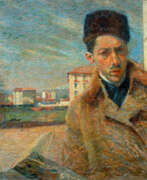

Umberto Boccioni was a famous Italian artist of the early 20th century, an avant-garde sculptor, the founder and inspirer of Futurism.
Umberto Boccioni made a great contribution to formation of philosophy and aesthetics of the movement. He was one of the creators of the Futurist Painting Manifesto and personally developed the Futurist Sculpture Manifesto.
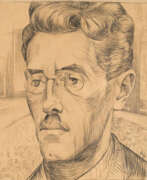

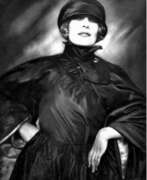

Kseniya Leonidovna Boguslavskaya (Russian: Ксения Леонидовна Богуславская) was a twentieth-century Russian artist who lived and worked in Germany and France for most of her career. She is known as a painter, graphic artist, theatrical artist and designer, and poetess.
Kseniya Boguslavskaya was a representative of the avant-garde school. She created semi-abstract cubo-futuristic compositions, including landscapes, still lifes, genre scenes, and images of interiors. In the same style, the artist drew sketches for articles of applied art. She also illustrated covers of publications and worked as a scenographer.
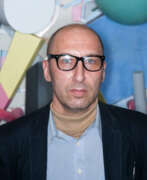

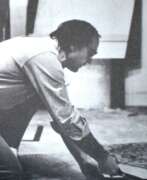

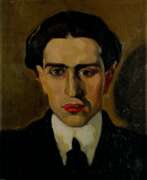

Aroldo Bonzagni is an Italian painter, draughtsman and illustrator. He studied at the Brera Academy in Milan.
Aroldo Bonzagni was friends with Umberto Boccioni and joined the Futurist group. His style was marked by expressionism and his drawings show a certain irony. He also does a number of erotic sketches, but privately intended for collectors.


Yves Brayer was a French painter and lithographer known for his landscapes, portraits and still lifes.
Brayer studied at the École Nationale Supérieure des Beaux-Arts in Paris and then in Rome. He was influenced by classical art and inspired by Mediterranean landscapes, which he often depicted in his paintings. He was also interested in the culture of ancient Greece, which influenced his work.
Brye's early work was inspired by the Cubist and Surrealist movements. He was a founding member of the Paris School, a group of artists working in the French capital in the mid-twentieth century. He was also a member of the French Academy of Fine Arts and a Knight of the Legion of Honour.
Bryeux's work has been exhibited in prestigious galleries and museums around the world, including the Louvre in Paris, the Museum of Modern Art in New York and the National Museum of Western Art in Tokyo. His paintings are in many private collections.
Over the course of his career, Brye has received numerous awards and honours, including the Grand Prix de Rome and the Prix de l'Institut de France. He is considered one of the most important French artists of the 20th century.
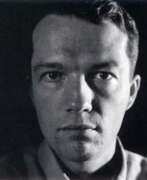

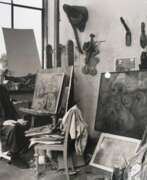

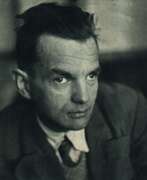


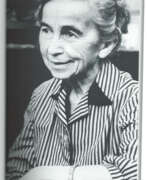

Varvara Dmitrievna Bubnova (Russian: Варвара Дмитриевна Бубнова) was a distinguished Russian painter, graphic artist, and pedagogue, celebrated for her mastery in lithography. Born into a noble family in St. Petersburg, she was deeply immersed in an atmosphere of poetry and music from an early age, which significantly influenced her artistic and intellectual development. Bubnova's education spanned from the Drawing School of the Society for the Encouragement of Arts to the St. Petersburg Academy of Arts, where she was an active member of the avant-garde group "Union of Youth" alongside prominent figures like Mayakovsky, Malevich, and Goncharova.
Her journey took a dramatic turn in 1923 when she moved to Japan, marking the beginning of a transformative period where she not only embraced Japanese art forms like suibokuga and Sumi-E ink drawing techniques but also significantly contributed to Japanese cultural life through her work and teachings. Her unique approach to art and education left a lasting impact on Japanese arts and culture. Among her notable works inspired by her experiences in Japan are "Young Violinist" (1942) and "Village Street. Japan" (1953), showcasing her fascination with Japanese life and aesthetics.
The later years of her life were spent in Sukhum, Abkhazia, where she continued to create vibrant and expressive works, demonstrating a remarkable adaptability and evolution of her artistic style throughout her life. Her works from this period, such as "Behind the Green Door" (1972), highlight her ongoing exploration of color and form. Bubnova's legacy extends beyond her artworks, as she played a crucial role in promoting Russian literature in Japan, contributing to a deeper understanding and appreciation of Russian culture among Japanese audiences.
Bubnova's artworks are part of major collections domestically and internationally, showcasing her diverse talent across various mediums and subjects. Her influence on both Russian and Japanese art scenes underscores her position as a bridge between cultures, celebrated for her artistic innovations and cross-cultural contributions.
For collectors and experts in art and antiques, Varvara Dmitrievna Bubnova's works represent a unique fusion of Russian avant-garde principles with Japanese artistic traditions, making her a fascinating figure whose pieces are a testament to a life spent transcending cultural boundaries. To stay updated on new sales and auction events related to Varvara Dmitrievna Bubnova's works, sign up for updates and immerse yourself in the legacy of this extraordinary artist who effortlessly blended the best of two worlds.
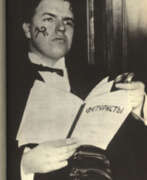

David Davidovich Burliuk (Russian: Давид Давидович Бурлюк), a pioneering figure of the Russian Futurist movement, was a Ukrainian poet, artist, and publicist, born in 1882 in Semirotovshchina, Kharkov, Ukraine, and died in 1967 on Long Island, N.Y., U.S. Known for his eclectic contributions that spanned poetry, painting, criticism, and publishing, Burliuk's work was instrumental in introducing the Russian avant-garde to Europe and the United States. Despite having a lesser volume of work in poetry and painting compared to his contemporaries, Burliuk's knack for discovering talent and promoting it was unparalleled. He was among the first to publish the works of Velimir Khlebnikov and to recognize the genius of Vladimir Mayakovsky, significantly contributing to their renown.
Burliuk's artistic journey was marked by his involvement with the Futurist and Neo-Primitivist movements. His early work, including an exhibition with the group Zveno ("The Link") in Kiev in 1908 and his participation in the Hylaea group, set the stage for his later achievements. He was a co-author of the influential Futurist manifesto "A Slap in the Face of Public Taste" in 1912, advocating for a break from traditional art forms and the embrace of modernity. Burliuk's commitment to Futurism was evident in his publishing endeavors and his collaborations with notable artists of the time.
In his later years, after emigrating to the United States in 1922, Burliuk continued to engage with the art world, contributing to pro-Soviet groups and publishing his works and those of his contemporaries. His efforts were recognized in several exhibitions, including a significant show at the Brooklyn Museum's 1926 International Exhibition of Modern Art. Despite facing challenges, such as being denied permission to visit his homeland by the Soviet government, Burliuk's influence remained steadfast. His legacy as a central figure in Russian Futurism and his contributions to the broader art movement are celebrated to this day.
To stay informed about updates and events related to David Davidovich Burliuk, including sales of his works and auction events, sign up for our newsletter. This subscription will ensure you're the first to know about new discoveries and opportunities to engage with Burliuk's enduring legacy.
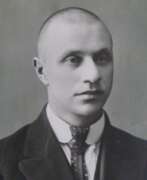

Vladimir Davydovych Burliuk (Russian: Владимир Давидович Бурлюк) was a Ukrainian avant-garde artist, known for his contributions as a Neo-Primitivist and Cubo-Futurist. Born on March 27, 1886, in the Russian Empire, Burliuk's work spanned various mediums, including painting and book illustration. His art is celebrated for its bold experimentation and pioneering spirit in the early 20th century avant-garde movement. Burliuk's life was tragically cut short when he died at the age of 32 during World War I in 1917.
Burliuk's artistic output is characterized by its innovative approach and his involvement in the avant-garde circles that radically transformed Russian art. His works were part of significant avant-garde exhibitions and movements, showcasing his commitment to pushing the boundaries of traditional art. Among his notable works are contributions to publications and exhibitions that captured the essence of the avant-garde, such as "Sadok Sudei (A Trap for Judges)" in 1910 and "Moloko kobylits (Milk of Mares)" in 1914. His art is recognized for its unique body of works, blending Cubism, Rayonism, and elements of Futurism, marked by stylistic unity and high valuation by connoisseurs.
Burliuk's legacy extends beyond his own creations; his involvement with key figures and movements of the time, including his brother David Burliuk, further emphasizes his role in shaping modern art. Despite his early death, Vladimir Burliuk's work remains a testament to the vibrancy and dynamism of the avant-garde movement, with his pieces held in high regard by collectors and experts alike.
For those interested in exploring the depths of avant-garde art, Burliuk's oeuvre offers a fascinating glimpse into the revolutionary spirit of early 20th-century artistic exploration. His contributions continue to inspire and intrigue art lovers, underscoring the lasting impact of his brief but impactful career.
Sign up for updates to stay informed about new product sales and auction events related to Vladimir Davydovych Burliuk, and immerse yourself in the world of avant-garde artistry that continues to resonate with collectors and art enthusiasts alike.
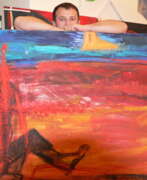


Servando Cabrera Moreno was a Cuban painter. A supporter of the Cuban Revolution, he created many paintings that depict the Cuban peasantry. Stylistically, his paintings are rooted in the tradition of vanguardia, and are especially indebted to the work of Carlos Enríquez Gómez.
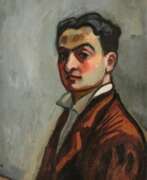

Charles Camoin, a French expressionist landscape painter, was a prominent figure associated with the Fauvism movement. Born in Marseille, France, on September 23, 1879, Camoin's journey into the art world began at a young age, leading him to Paris where he joined Gustave Moreau's class at the École des Beaux-Arts. It was here that he met Henri Matisse and other artists who would form the nucleus of the Fauve group, a circle known for their wild, expressionist-like use of color, which earned them the moniker "the wild beasts".
Camoin's art is celebrated for its vibrant color palette and expressive landscapes, a testament to his association with the Fauvists. Despite this, his work displayed a chromatic moderation, attributed to his intuitive and non-systematic approach to fauvism, setting him apart from his contemporaries. His masterpiece, the Portrait of Albert Marquet, epitomizes Camoin's unique style and is considered a pivotal piece of his oeuvre.
Throughout his career, Camoin's works were widely exhibited, earning him a place in major French collections, including the Musée d'Art Moderne de la ville de Paris and the Centre Georges Pompidou. Notably, his contributions to art were recognized with the Prix du Président de la République at the Biennale of Menton in 1955. His legacy includes a significant body of work that remains influential in the study of Fauvism and early 20th-century French art. Camoin passed away in Paris on May 20, 1965, leaving behind a rich legacy that continues to inspire art enthusiasts and collectors alike.
For collectors and experts in art and antiques, Camoin's work represents not only a pivotal moment in the evolution of modern art but also an opportunity to engage with the vibrant and emotive expressions of Fauvism. His paintings, characterized by a joyful and luminous use of color, offer a captivating glimpse into the artist's perception of the world around him.
If you're interested in staying updated on new discoveries, sales, and auction events related to Charles Camoin, signing up for updates can be a valuable resource. This ensures you're informed about the latest opportunities to acquire works by this remarkable artist, enhancing your collection with pieces that embody the spirit and innovation of early 20th-century art.
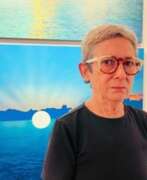

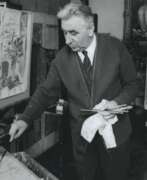

Jules Cavailles was a French painter.
He started as a technical draughtsman. In 1925 he enrolled at the Académie Julian and he began exhibiting at the various Parisian Salons from 1928 – the Société des Artistes Français, Société des Artistes Indépendants and Salon d'Automne. He was soon invited to participate at the Salon des Tuileries and in 1936 he organised the 14th exhibition of the Artistes de ce temps in the Petit-Palais. In the same year he received the prestigious Grant Blumenthal and he was soon awarded the commission to decorate the Pavilion of Languedoc for the Exposition Universelle. He was part of a group of artists called “La Realite Poetique”. His artistic style is characterised by the juxtaposition of pure colour, derived from an interpretation of fauvist painting which was less interested in the early Fauve artists’ search for intensity and dynamism than a simple expression of ‘joie de vivre’.
He worked in oils, gouache, and pastel, and his subject matter featured figures, portraits, nudes, still lifes, flowers, landscapes, and animals. His work is represented in many leading collections and museums, including the Modern Art Museum in Paris, and the museums in Toulouse, Albi, Marseilles, Chicago, and Helsinki.
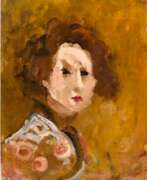

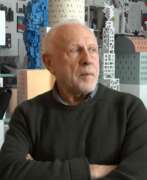

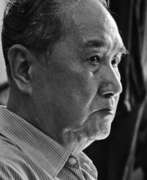

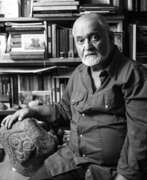

Vitaly Feodosyevich Chernobrisov (Russian: Виталий Феодосьевич Чернобрисов) was a Soviet and Belarusian artist of the last third of the twentieth and early twenty-first centuries. He is known as a painter, sculptor, teacher and public figure.
Vitaly Chernobrisov was an active member of the Leningrad artistic underground of the 1960s and 1970s and is considered a "patriarch" of the Belarusian avant-garde and an adherent of "intuitive" writing.
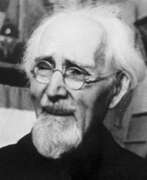

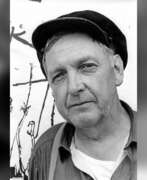

Ernst Stocker, better known as Coghuf, was a Swiss painter, draftsman and sculptor. He designed tapestries and stained glass windows.
Coghuf's work is characterised by abstract forms, bright colours and a sense of dynamic movement. Coghuf's work often conveys emotional depth and explores the relationship between form and space.
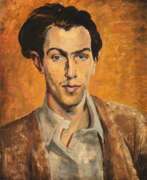


Joseph Cornell was an American visual artist and film-maker, one of the pioneers and most celebrated exponents of assemblage. Influenced by the Surrealists, he was also an avant-garde experimental filmmaker. He was largely self-taught in his artistic efforts, and improvised his own original style incorporating cast-off and discarded artifacts. He lived most of his life in relative physical isolation, caring for his mother and his disabled brother at home, but remained aware of and in contact with other contemporary artists.


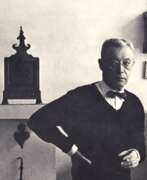


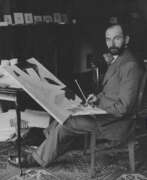

Jean-Joseph Crotti was a Swiss and French graphic artist and avant-garde painter.
Crotti studied at the Munich School of Applied Arts, then at the Académie Julian in Paris. He went from Impressionism to Fauvism, then he became interested in Art Nouveau, Cubism and finally Dadaism. With the outbreak of World War I, Crotti left New York, where he formed close friendships with Marcel Duchamp and Francis Picabia. In 1916, he returned to France. In the late 1930s, Crotti began using a new technique in glass painting called Gemmail.
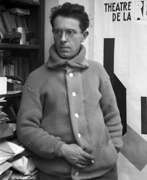

Joseph Csaky, a Hungarian avant-garde artist, sculptor, and graphic artist, is renowned for his pioneering contributions to the Cubist movement. Born in 1888, Csaky's journey into the art world was profoundly influenced by his discovery of Auguste Rodin's work, which paved the way for his mastery in sculptural techniques. His innovative approach is highlighted in his Cubist sculptures, where he skillfully integrated volumetric and spatial relationships, utilizing abstract architectonic forms and drawing inspiration from non-Western art such as Cycladic, Oceanic, and ancient Egyptian art.
Joseph Csaky's commitment to originality is evident in his personal artistic language, which he developed while being part of the vibrant Parisian art scene. His works, such as "Euterpe – Muse of Lyric Poetry" and "Imbrication de cônes," showcase his ability to translate Cubist principles into three-dimensional forms.
Art collectors and experts appreciate Joseph Csaky's contributions to modern sculpture, with his works being sought after in art galleries and auctions. His pieces like "Woman Raising her Hand" and "Figure, dite aussi Femme" not only reflect his artistic prowess but also his influence on subsequent art movements.
For those interested in the fusion of Cubism and sculpture, Joseph Csaky's oeuvre offers a profound insight into the evolution of modern art. To stay updated on new product sales and auction events related to Joseph Csaky, consider signing up for updates. This subscription will keep you informed about the latest developments and opportunities to engage with Csaky's enduring legacy.


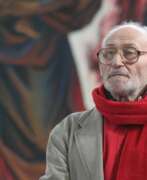

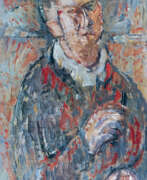

Cristoforo De Amicis was an Italian painter and teacher. He studied painting at the Accademia Albertina in Turin and Brera in Milan. He participated in many exhibitions organised in Milan, Paris, Zurich, Oslo, Stockholm, Munich and Buenos Aires.
Cristoforo De Amici's works can be found in Italian public museums of contemporary art and in numerous private collections.
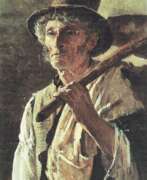

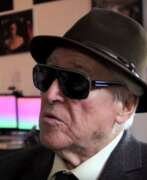

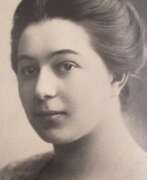

Sonia Delaunay-Terk (Russian: Соня Делоне-Терк) was a Russian-French painter and designer of Jewish descent. She received the name Sonia Terk, by which she is known, in 1890 after being adopted by her uncle. She is also called Sonia Delaunay in literature. She is considered a representative of geometric abstraction. Her artistic role models include Vincent van Gogh and Paul Gauguin. From 1912, she developed the so-called Orphism with her husband Robert Delaunay.
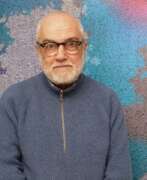


Jessica Stewart Dismorr was an English painter and illustrator. Dismorr participated in almost all of the avant-garde groups active in London between 1912 and 1937 and was one of the few English painters of the 1930s to work in a completely abstract manner. She was one of only two women members of the Vorticist movement and also exhibited with the Allied Artists Association, the Seven and Five Society and the London Group. She was the only female contributor to Group X and displayed abstract works at the 1937 Artists' International Association exhibition. Poems and illustrations by Dismorr appeared in several avant-garde publications including Blast, Rhythm and an edition of Axis.
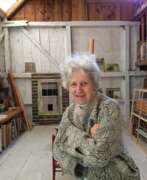

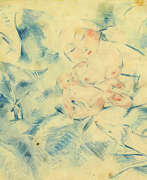

Jelena Dorotka Hoffmann, born Jelena Dorotka von Erenvall, was a Croatian Cubist artist.
Jelena Dorotka briefly studied painting and sculpture in Basel before moving to Paris. Here she met many leading figures in the world of painting, among them Henri Matisse, Marc Chagall, Pablo Picasso, Kees Van Dongen, Marie Laurensen). The artist was fluent in Italian, German, French and Spanish, as well as working as a translator and correspondent.
Elena Dorotka was famous for her extensive knowledge of art, and from time to time she was visited by artists and art historians who discussed fine art topics with her. She continued to paint, but for unknown reasons she destroyed most of her work.
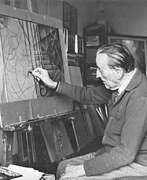

Gerardo Dottori was an Italian futurist painter who also belonged to the Novecento group.
Influenced by Giacomo Balla, Gerardo Dottori joined the futurist movement in 1911-1912. His works were part of the art competitions at the 1932 Summer Olympics and the 1936 Summer Olympics.
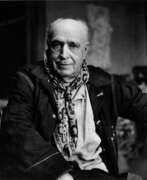

André Albert Marie Dunoyer de Segonzac was a French painter, graphic artist and illustrator known for his contribution to the Post-Impressionist and Fauvist movements.
Dunoyer de Segonzac's style was defined by his bold use of colour, his expressive brushwork, and his desire to capture the essence of the subject. In his work, he explored a variety of subjects, including landscapes, still lifes and scenes of everyday life. His paintings often displayed a sense of vitality and energy, with vibrant hues and dynamic compositions. The master often used intense hues to evoke an emotional response. His palette was characterised by a bold and expressive use of colour, giving his works a sense of vibrancy and dynamism.
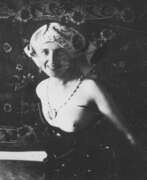

Sofya Isaakovna Dymshits-Tolstaya (Russian: Со́фья Исааковна Ды́мшиц-Толста́я) was a Russian avant-garde artist and graphic designer, whose life and work were intertwined with the tumultuous events of early 20th-century Russia. Born in St. Petersburg, she studied under Sergei Egornov, at Elizaveta Zvantseva's School of Drawing and Painting, and later in Paris under Jacques-Émile Blanche and Charles Guérin. Dymshits-Tolstaya contributed to exhibitions from 1912, marking her entry into the vibrant art scene of the time.
Dymshits-Tolstaya's work spans a range of subjects and styles, including propaganda posters and a series of portraits of women, which reflected the changing roles and perceptions of women in Soviet society. Her pieces like "Agitator Worker" (1931) and "Evdokia Fedotova, Chairwoman of the Second Congress of Collective Farm Shock Workers" (1935-1938) showcase her commitment to depicting the new Soviet woman, combining elements of realism with a keen sensitivity to the social dynamics of her era.
Throughout her career, Dymshits-Tolstaya was closely associated with key figures in Russian art and literature, including her marriage to Alexei Tolstoy and her involvement with Vladimir Tatlin, which positioned her at the heart of the avant-garde movement. Despite the personal and political challenges she faced, including the loss of her husband Herman Pesatti to the Gulag, Dymshits-Tolstaya's legacy as a pioneering artist remains significant. Her works are celebrated for their historical value and artistic merit, reflecting the complexities and contradictions of Soviet Russia.
For art collectors and enthusiasts, Dymshits-Tolstaya's work offers a unique window into the avant-garde movement and the socio-political landscape of early 20th-century Russia. Her contributions to art and her remarkable life story continue to inspire and captivate audiences around the world. To stay updated on new sales and auction events featuring Sofya Isaakovna Dymshits-Tolstaya's works, sign up for updates and explore the rich heritage of this exceptional artist.


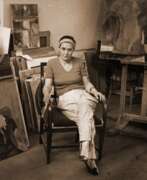

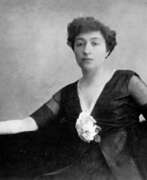

Aleksandra Aleksandrovna Ekster (Russian: Алекса́ндра Алекса́ндровна Эксте́р), a luminary of the Russian avant-garde, was a painter and designer whose work traversed the boundaries of Cubo-Futurism, Suprematism, and Constructivism, eventually influencing the Art Deco movement. Born in Białystok (then part of the Russian Empire, now Poland) and later splitting her life among Kiev, St. Petersburg, Moscow, Vienna, and Paris, Ekster played a pivotal role in bridging Russian and European artistic movements. Her innovative approach to art was characterized by dynamic movement, vibrant color contrasts, and geometric compositions, which were evident in her paintings, theater set and costume designs, and educational endeavors.
Ekster's studio became a hub for the intellectual and artistic elite, hosting figures like poets Anna Akhmatova and Osip Mandelstam, as well as painters Pablo Picasso and Georges Braque during her stays in Paris. Her involvement in significant art exhibitions, such as the Salon des Indépendants and the Salon de la Section d'Or in Paris, showcased her works alongside those of Jean Metzinger, Marcel Duchamp, and others, marking her as a key figure in the avant-garde community.
Beyond painting, Ekster's contributions to theater and design were profound. She worked on costume and set designs for Alexander Tairov's Chamber Theatre and participated in the revolutionary festivities' decoration in Kiev and Odessa. Ekster's pedagogical efforts included teaching at the Higher Artistic-Technical Workshop (VKhUTEMAS) in Moscow, fostering a new generation of avant-garde artists.
Ekster's work is housed in various international and private collections, reflecting her lasting impact on the art world. Her ability to integrate different genres and styles, along with her commitment to experimentation and innovation, made her one of the most influential women in the Russian avant-garde.
For those fascinated by the pioneering spirit of Aleksandra Aleksandrovna Ekster and the avant-garde movement, signing up for updates on new product sales and auction events related to her work is a compelling way to stay informed. This subscription ensures enthusiasts and collectors are always in the loop regarding opportunities to engage with Ekster's enduring legacy.
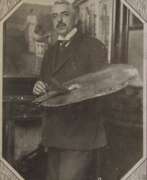

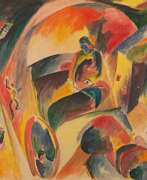

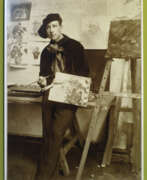

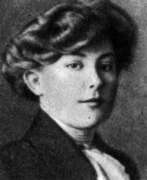

Vera Mikhailovna Ermolaeva (Russian: Ве́ра Миха́йловна Ермола́ева) was a Russian avant-garde artist, illustrator, and educator, renowned for her contributions to children's literature and modern art. Born in the village of Klyuchi, she emerged as a pivotal figure in the Russian avant-garde movement, known for her innovative approaches to book illustration and her role in shaping early 20th-century art education and theory.
Ermolaeva's career is marked by her significant involvement with the book-publishing studio "Today" (Segodnya) in Petrograd, where she, alongside other notable artists, produced hand-crafted picture books and lubki. Her illustrations for children's books, such as those written by Natan Vengrov and Alexander Vvedensky, reflect a unique blend of narrative and visual artistry, contributing to the development of a new genre of children's literature.
In addition to her illustration work, Ermolaeva's influence extended to art education. She played a crucial role at the Vitebsk Art School, inviting Kazimir Malevich to teach and eventually leading the institution. Her efforts alongside Malevich and others facilitated the formation of UNOVIS, a collective dedicated to exploring and promoting avant-garde art principles.
Ermolaeva's theoretical and practical work in the field of color theory at the State Institute of Artistic Culture (GINKHUK) further underscores her contributions to modern art. Her association with the "Association of Real Art" (Oberiu) and her involvement in creating avant-garde art circles highlight her commitment to exploring the intersections between art, theory, and society.
Her works, including "Still Life" and "The Concert. Composition on the Theme of Bernardino Licinio," are held in prestigious collections, such as the State Russian Museum, the State Tretyakov Gallery, the Pushkin Museum, the Museum of Modern Art (MoMA), and the Ludwig Museum, showcasing her enduring legacy in the art world.
For collectors and experts in art and antiques, Ermolaeva's story and creations offer a window into the vibrant world of the Russian avant-garde. Her dedication to art education, innovative approach to book illustration, and contributions to modern art theory make her a fascinating figure in the history of art.
To stay updated on new findings and auction events related to Vera Mikhailovna Ermolaeva's work, sign up for updates. This subscription will keep you informed about new product sales and auction events, allowing you to deepen your appreciation and understanding of this remarkable artist's legacy.
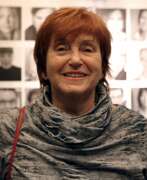

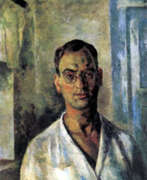

Robert Rafailovich Falk (Russian: Роберт Рафаилович Фальк) was a prominent Russian and Soviet avant-garde painter, born in Moscow in 1886. He is celebrated for his innovative contributions to the Jack of Diamonds group, emphasizing expressive volume and angular, saturated color spots in his works. Falk's artistic journey began at the Moscow School of Painting, Sculpture and Architecture, where he studied under notable artists like Konstantin Korovin and Valentin Serov, and further honed his skills in the studios of Konstantin Yuon and Ilya Mashkov.
Falk's style evolved significantly over his career, initially influenced by Paul Cézanne's approach to painting, which emphasized the sculptural form through the layering of paint. His early works are characterized by bright, contrasting colors and expressive contours, capturing physical and tangible elements in landscapes and still lifes. Falk's unique approach also involved a significant degree of form deformation to enhance emotional expressiveness, a technique that set his work apart from his contemporaries.
After spending a decade in Paris from 1928 to 1938, Falk's work underwent a transformation, favoring more subtle and holistic representations. This period was marked by a focus on the rich, musical qualities of color and light, which he applied to both landscapes and portraits. Upon his return to Moscow, Falk found himself increasingly isolated within the Soviet art scene, yet he continued to produce work that resonated with emotional depth and complexity until his death in 1958.
Falk's legacy includes numerous paintings housed in the New Tretyakov Art Museum in Moscow, demonstrating his lasting influence on both Russian and French modern art traditions. Collectors and art enthusiasts are invited to explore the nuanced and evocative works of Robert Rafailovich Falk, a bridge between early 20th-century modernism and the avant-garde movements that followed. Sign up for updates on new product sales and auction events related to Falk to deepen your appreciation and understanding of this pioneering artist's contributions.


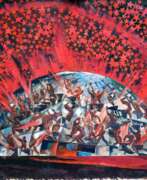

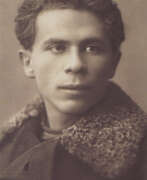

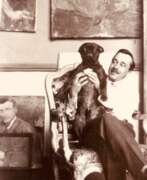

Serge Férat, born Count Sergei Nikolaevich Iastrebtsov (Russian: Сергей Николаевич Ястребцов), was a Russian and French avant-garde artist, painter, graphic artist and scenographer.
Sergei Iastrebtsov was born into a Moscow noble family, studied at the Kiev Art School, and in 1902 moved to Paris and entered the Académie Julian in Paris. In France, he first took the pseudonym Alexander Rudnev, and then began to sign his works with the name Serge Ferat. In the magazine Les Soirées de Paris he signed his publications with the pseudonym Jean Cérusse.
In 1910, Ferat began working on still lifes, combining the techniques of cubism with the warm colors of Russian folklore. Until the 1920s, Serge Fera painted in the style of Picasso's cubism, and on glass. Serge Ferat knew and was friends with many contemporary European artists, including Guillaume Apollinaire and Amedeo Modigliani. In the surrealist production of Apollinaire's play Mamelles de Tirésias (Théâtre René Mobel, Montmartre), he contributed to the set and costume design.
Ferat was engaged in book graphics and scenography, was a member of the group "Golden Section", and collaborated with the Russian magazine "Blow". In 1949 he took part in the design of the anthology Poetry of the Unrecognized, and in 1953 his works were exhibited at the Great Exhibition of Cubism at the Museum of Modern Art in Paris.
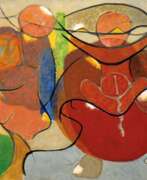

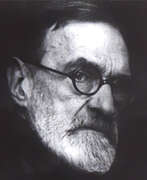

Pedro Figari was a Uruguayan painter, lawyer, writer, and politician. Although he did not begin the practice until his later years, he is best known as an early modernist painter who emphasized capturing the everyday aspects of life in his work. In most of his pieces, he attempts to capture the essence of his home by painting local customs that he had observed in his childhood.
Figari painted primarily from memory, a technique that gives his work a far more personal feeling. With his unique style, which involved painting without the intention to create an illusion, he, along with other prominent Latin-American artists such as Diego Rivera and Tarsila do Amaral, sparked a revolution of identity in the art world of Latin America.






Grigory Ivanovich Gavrilenko (Russian: Григорий Иванович Гавриленко) was a Ukrainian Soviet artist of the mid-twentieth century. He is known as a graphic artist and illustrator, a representative of Ukrainian avant-garde art, a "sixties" artist.
Grigory Gavrilenko became famous for his graphic works, including landscapes and portraits. His work included a variety of techniques and styles, from quick sketches to laconic drawings-formulas. The master also designed and illustrated many books, including folk tales. In the last years of his life, he worked extensively in color linocuts, creating prints and illustrations.
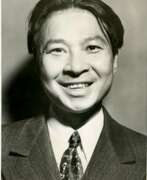

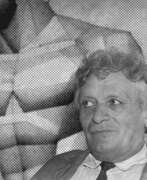

Valery Arutyunovich Geghamyan (Russian: Валерий Арутюнович Гегамян) was a Soviet and Ukrainian artist of the mid-twentieth century of Armenian origin. He is known as a painter, graphic artist and teacher.
Valeriy Geghamyan became famous for his monumental canvases, large thematic cycles and graphic series. He also created portraits, landscapes and still lifes. Since the early 1960s he lived and worked in Odessa and founded the art and graphic arts faculty at the Odessa Pedagogical Institute, where he taught for more than 20 years. The master raised many famous artists, some of whom are also teachers, passing on the experience of their teacher.
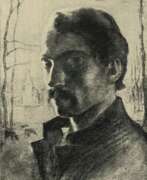

Robert Lvovich Genin (Russian: Роберт Львович Генин) was a Jewish-born artist of the first half of the twentieth century who worked in several countries, including the Russian Empire, Germany, France, Germany, Switzerland, and the USSR. He is known as a painter and graphic artist.
Robert Genin worked in a variety of genres including landscapes, portraits, genre compositions and nudes. He also did lithography, woodcuts and etching. His style evolved from Jugendstil and Symbolism in the early 1900s to Expressionism after the First World War. He later came to a kind of lyrical primitivism. The artist worked in both easel and monumental painting and was influenced by various artists.
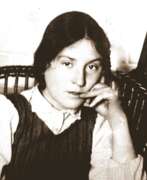

Nina Henrichovna Genke-Meller (Russian: Нина Генриховна Генке-Меллер) was a distinguished Ukrainian-Russian avant-garde artist, celebrated for her contributions as a Suprematist, Futurist, designer, graphic artist, and scenographer. Born on April 19, 1893, in Moscow, she emerged as a pivotal figure in the avant-garde movement, significantly influenced by the political and cultural upheavals of her time. Her multifaceted career took off after the October Revolution of 1917 when she actively participated in decorating the streets of Kyiv and Odesa for Revolution festivities alongside contemporaries like Aleksandra Ekster and Kliment Red'ko. Genke-Meller's artistic endeavors spanned various domains, including her role as a chief artist at the Golfstream futuristic publishing house, her pioneering work in graphic design, and her significant contributions to stage design, ceramics, and wallpaper manufacturing.
Her teaching stint at the All-Ukrainian State Center Studio from 1920 to 1924 marked a notable period in her career, where she influenced many through her artistic philosophies and practices. By 1924, Genke-Meller had moved to Moscow, further expanding her creative horizons as a stage designer and taking up roles in the decorative and applied arts. Her legacy includes a rich body of work that encapsulates the spirit of the avant-garde movement, with notable exhibitions showcasing her contributions to Ukrainian and Russian avant-garde art across various esteemed platforms like the National Art Museum of Ukraine, Villa Stuck in Munich, and The Ukrainian Museum in New York.
For collectors and experts in art and antiques, Nina Henrichovna Genke-Meller's works represent the revolutionary zeal of the avant-garde movement, offering a glimpse into the transformative power of art in the early 20th century. Her contributions continue to inspire and influence contemporary discussions on art and design, cementing her status as a key figure in the avant-garde narrative.
For those interested in exploring the profound impact and timeless appeal of Genke-Meller's art, signing up for updates related to her work offers an exclusive gateway to new product sales and auction events, providing collectors and enthusiasts with timely insights into the vibrant legacy of this avant-garde icon.
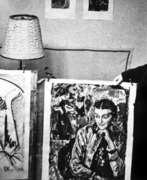


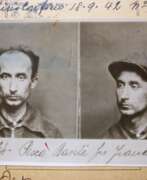

Giandante X, birth name Dante Pescò, was an Italian painter, sculptor, illustrator, poet and philosopher.
Giandante X's artistic style was characterised by abstraction and expressiveness. He used bold and bright colours, dynamic lines and textures to convey his artistic vision. His work often conveyed a sense of movement and energy, inviting viewers to emotionally and intellectually engage with the piece.
Throughout his artistic career, Jandante X addressed a wide range of themes and concepts. He drew inspiration from a variety of sources including mythology, spirituality and the human condition. His works often addressed existential questions, social issues, and the interaction between man and society.


Stefan Gierowski was a Polish painter and an avant garde artist of post-war Poland.
For many years he was a professor at the Academy of Fine Arts in Warsaw where he earned numerous distinctions. He abandoned representational and realist painting midway through the 1950s and devoted himself entirely to abstract and optical effects. Acknowledging the concreteness of materials and colors, the artist, by his own admission, is mostly intrigued by the dual nature of light, how light is enclosed within a painting and yet somehow escapes it. According to the artist, each painting has a structure and a framework based on physical laws until it leaves the studio and becomes an enigma, at the disposition of the viewer, who discerns its content through a combination of emotional response and introspection. His paintings hang in major galleries in both Europe and the United States and in many countries throughout the world.


Piero Gilardi is an Italian painter and decorator. A catalytic figure in the Arte Povera movement centred in Turin in the late 1960s, Gilardi's utopian and selfless commitment to the association of neo-avant-garde artists from Western Europe and North America made him one of the most influential artistic figures of the period.
Piero Gilardi became internationally renowned and witnessed the influence of Pop Art in Europe. An itinerant artist, theorist and organiser, he contributed to the birth of Arte Povera, especially working to establish relationships with other similar initiatives that were simultaneously taking place outside of Italy.
Much of Gilardi's later work is united by a theme or interaction between the work and the viewer. The master has devoted more than a decade to his most ambitious project, Parco Arte Vivente (Park of Living Art or PAV). A collaborative effort that grew out of Gilardi's design, the PAV is a monumental undertaking that has transformed an abandoned plot of land in the heart of Turin's working-class Lingotto district into a six-acre green space dedicated to public, environmental and artistic interests.


Gustav Gildemeister was a German artist, a representative of the avant-garde movements of the early twentieth century.
He studied art at the Dusseldorf Academy, painted portraits and mainly landscapes in the styles that were actively developing at that time: German Art Nouveau, French Pointillism and late Impressionism. The artist was drafted during World War I and died at the front.
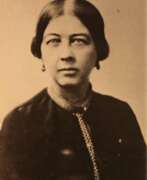

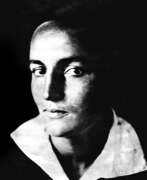

Tatyana Nikolayevna Glebova (Russian: Татьяна Николаевна Глебова) was a Soviet artist of the twentieth century. She is known as a painter, graphic artist, who left a rich creative heritage characterized by depth and diversity of themes and styles.
Tatyana Glebova in her work covered three main themes. The first is urban life, reflected through genre scenes describing street events and everyday life. The second is an interest in the inner nature of man, expressed in portraits and depictions of inner transformations. The third is mystical and religious themes including icons, symbolism and spiritual geometry. Her last works focused on nature and developed symbolism of color and form.
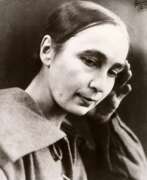

Natalia Sergeevna Goncharova (Russian: Ната́лья Серге́евна Гончаро́ва) was a pivotal Russian avant-garde artist, painter, costume designer, writer, illustrator, and set designer, celebrated for her groundbreaking contributions to several art movements including Rayonism, Futurism, and Cubism. Born in Russia in 1881, Goncharova's artistic journey was marked by her vibrant exploration of Eastern and Western traditions, making her a leading figure in Russian modernism before she relocated to Paris in 1921, where she continued her artistic endeavors until her death in 1962.
Goncharova's work was distinguished by her engagement with the avant-garde, notably through her involvement with movements and groups such as Jack of Diamonds, Donkey's Tail, and Der Blaue Reiter. Her innovative approach blended Primitivism with Russian folk art (luboks), iconography, and modern European styles, making her work highly influential and controversial in its time. For instance, her series "Mystical Images of War" showcased her unique method of merging contemporary events with traditional forms.
Her later years in Paris were characterized by a continued pursuit of innovation, as evidenced by her designs for ballet costumes and sets, further cementing her legacy in the art world. Goncharova's collaborations with notable figures such as her partner Mikhail Larionov and her contributions to the Ballets Russes highlight her versatile talent and enduring influence on both Russian and French avant-garde art scenes.
For collectors and experts in art and antiques, Goncharova's work offers a rich exploration of avant-garde movements and the blending of cultural traditions. Her bold experimentation and pioneering spirit make her pieces highly sought after in the art community.
To stay updated on new discoveries, sales, and auction events related to Natalia Sergeevna Goncharova, sign up for our newsletter. This subscription is your gateway to the latest in the world of avant-garde art, ensuring you're always informed about opportunities to add to your collection.
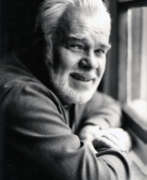

Vitaly Nikolaevich Goryaev (Russian: Виталий Николаевич Горяев) was a celebrated Soviet graphic artist, illustrator, painter, and caricaturist, born on April 14, 1910, in Tobolsk province, and passed away on April 12, 1982, in Moscow. He embarked on his artistic journey after his family moved to Chita in 1921, where he first published his drawings in the local newspaper. Goryaev's notable achievements include first-degree diplomas at the All-Union Contests "Best Books" for his illustrations to "The Adventures of Huckleberry Finn" and Gogol's "Petersburg Stories". His work was also internationally recognized, evidenced by a diploma II degree at the International Book Exhibition in Bratislava in 1967 for "Petersburg Stories", and in 1969, he was awarded the Gold Medal of the Czechoslovak Union of International Relations. Goryaev's illustrations spanned works by Russian classics like Pushkin, Gogol, and Dostoevsky, contributing significantly to the visual representation of these literary giants' works.
A laureate of the State Prize of the USSR (1967) for his contributions to illustrating Gogol's "Petersburg Stories", Goryaev was honored with the title of People's Artist of the RSFSR in 1976, and later, People's Artist of the USSR in 1981, marking his significant contributions to Soviet art. His legacy includes a profound impact on the illustration of literature, with his works being housed in prestigious collections such as the State Tretyakov Gallery, the Russian Museum, and the Pushkin Museum of Alexander Pushkin.
Goryaev's style was known for its expressive detail and ability to capture the essence of the literary works he illustrated, making his art an integral part of Soviet visual culture. His son, Sergei Vitalevich Goryaev, continues the artistic lineage as an artist, preserving the family's contribution to Russian art.
For collectors and experts in art and antiques, Goryaev's works represent a unique intersection of Soviet history, literature, and visual arts, offering a glimpse into the rich cultural tapestry of the era. His illustrations are not only important for their artistic value but also for their historical significance, embodying the spirit and challenges of Soviet society.
To stay updated on events, sales, and auctions related to Vitaly Nikolaevich Goryaev's work, sign up for updates. This subscription ensures you remain informed about opportunities to acquire pieces of this influential artist's legacy, highlighting moments when his works become available in the market.