

Classicism
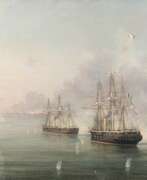

Antonio De Simone was an Italian marine painter.
He created many paintings depicting various ships at sea: frigates, yachts, sailing ships and steamships, in the storm and with the sails down. De Simone also painted historical battle scenes, such as his famous painting - "Bombardment of Alexandria", which is in the Royal Greenwich Museums.


Lemuel Francis Abbott was an English portrait painter. His most famous work is the portrait of Nelson, exhibited at the residence of the British Prime Minister.
During his artistic life Abbott created many portraits of famous people of the 18th century - naval officers, literati, officials, ladies of the world. He was one of the first to portray golfers.
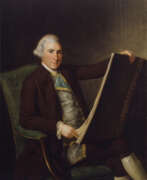

Robert Adam was a Scottish architect and interior designer, best known for his work during the Rococo and Neoclassical periods in Britain. He was born in 1728 in Kirkcauld, Scotland, and studied at the University of Edinburgh.
Adam began his career as an architect in 1754 and quickly became known for his innovative approaches to architecture and interior design. He developed his own style, which combined elements of rococo, classicism and antiquity.
He designed many buildings, including residences, palaces, churches, bridges and furniture. He also participated in designs for gardens and landscapes. One of Adam's best known projects is the Admiralty Building in London, built in the 1760s.
Adam was also known for his experiments with colour and form in interior design. He often used light colours, mirrors and mouldings to create larger and lighter spaces.
Robert Adam died in London in 1792, but his legacy continues to influence architecture and design in Britain and around the world.
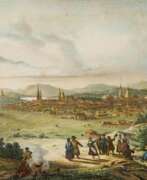

Jean-Victor Vincent Adam was a French painter and lithographer.
Adam came from a dynasty of artists and studied at the École des Beaux-Arts in Paris. He painted views of various cities, including Russian Kazan and Yekaterinburg, as well as battle scenes from Napoleon's military campaigns. Collections of images of French military costumes prepared by Adam were published. His genre paintings with hunting scenes and animals are also known.

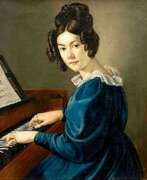

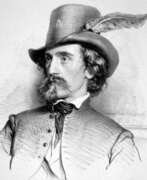

Joseph Matthäus Aigner was an Austrian portrait painter, who studied under Friedrich von Amerling and Carl Rahl. He painted portraits of Franz Joseph I of Austria and his wife Elizabeth, Franz Grillparzer, Friedrich Halm, Nikolaus Lenau, and Maximilian I of Mexico.
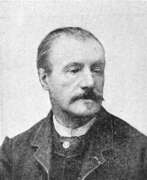

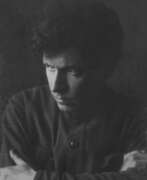

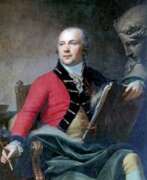

Ivan Akimovich Akimov (Russian: Иван Акимович Акимов) was a Russian painter celebrated for his contributions to the Classical and Neoclassical styles of art. Born into a family of a typographer for the Governing Senate, Akimov's journey into the arts began early when, after his father's death, he penned a heartfelt letter to the Imperial Academy of Arts. This letter secured his admission, marking the start of his lifelong association with the Academy, where he evolved from a student to its director.
Akimov's education at the Academy was marked by numerous awards, including gold medals for his artworks, showcasing his burgeoning talent in painting. His artistic journey took him to Italy on a fellowship, where, despite initial challenges, he found mentorship under Pompeo Battoni and was inspired by the Venetian masters. This period was instrumental in shaping his skills and artistic outlook.
Throughout his career, Akimov was revered not just for his artistic output but also for his contributions to art education and historiography in Russia. He played a pivotal role at the St. Petersburg Academy of Arts, ultimately serving as its director. Akimov's legacy extends beyond his paintings, through his influence on future generations of artists and his foundational work in Russian art historiography. Among his notable works are "Prometheus Making a Statue at the Command of Minerva" and "The Baptism of Princess Olga in Constantinople", which reflect his classical influences and historical interests.
For those interested in exploring Ivan Akimovich Akimov's works and legacy, signing up for updates on new product sales and auction events related to Akimov could provide valuable insights and opportunities to connect with his art. This subscription ensures you stay informed about the latest discoveries and offerings in the world of Russian classical painting.
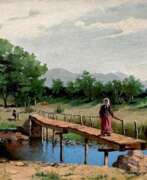

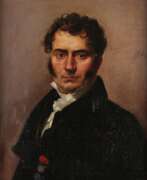

André-Joseph Allar was a French sculptor. He studied at the Schools of Fine Arts in Marseille and Paris with Eugène Guillaume, Antoine Laurent Dantan and Pierre-Jules Cavelier.
André-Joseph Allar is best known for his small works and architectural projects.
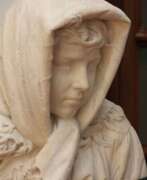





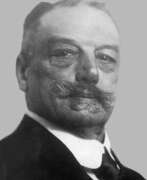

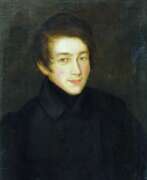

Nikolai Ivanovich Argunov (Russian: Николай Иванович Аргунов) was a Russian painter of the late 18th - the first third of the 19th centuries. He is known as a painter, graphic artist, miniaturist, representative of Russian classicism.
Nikolai Argunov is considered one of the greatest portrait painters of his time. His works are notable for their diversity, psychologism, objective approach to nature, devoid of classicist idealization and romantic heroization of the models.
The artist was a serf, was granted his freedom after the death of his master and became an academician of the Imperial Academy of Arts in St. Petersburg. He was a member of a dynasty of artists, the beginning of which began with his father Ivan Argunov.
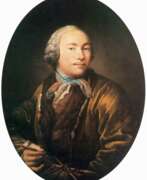

Ivan Petrovich Argunov (Russian: Иван Петрович Аргунов) was a distinguished Russian painter of the 18th century, celebrated for his significant contribution to portrait art. As a serf born into the Argunov family, who were established artists themselves, Ivan's talent was nurtured and supported by his patrons, leading to a unique position within the cultural and artistic hierarchies of his time. His specialization in portraiture allowed him to capture the essence of Russia's social elites, including members of the imperial family, as well as ordinary Russians, thereby providing a wide-ranging visual documentation of the era's societal strata.
Argunov's art is noted for its meticulous attention to detail, vibrant realism, and the emotional depth he brought to his subjects. His portraits are more than mere representations; they are intimate glimpses into the lives and characters of his sitters. Among his most famous works is the portrait of Princess Natalia Petrovna Golitsyna, showcased in the Tretyakov Gallery in Moscow. This particular piece stands out for its intricate portrayal of fabric textures and the detailed rendering of facial expressions, which have been lauded for their lifelike quality and depth.
Argunov's legacy extends beyond his artistic achievements; he played a pivotal role in shaping the course of Russian portraiture. His works are preserved in major museums and galleries across Russia, serving as a testament to his skill and the cultural richness of his time. For collectors and experts in art and antiques, Argunov's paintings are not just historical artifacts but are cherished for their aesthetic value and the insight they offer into 18th-century Russian culture.
We invite enthusiasts and collectors to stay connected with us for updates on new product sales and auction events related to Ivan Petrovich Argunov. By signing up, you will gain exclusive access to the finest pieces of Russian art and antiques, ensuring you never miss an opportunity to enrich your collection with works by one of Russia's most esteemed artists.
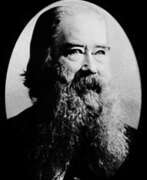

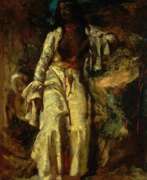

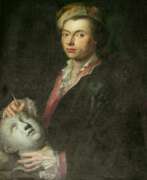

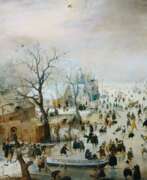

Hendrick Avercamp was a seminal Dutch painter during the Dutch Golden Age. He is celebrated as one of the earliest landscape painters of the 17th-century Dutch school, specializing in vibrant winter scenes of the Netherlands. His paintings are filled with colorful and lively depictions of people engaging in various activities against the backdrop of the Dutch winter landscape.
Educated by the Danish-born portrait painter Pieter Isaacsz, Hendrick Avercamp's work reflects a strong influence from the Flemish painting tradition, especially evident in the landscapes reminiscent of Pieter Bruegel the Elder. His technique of aerial perspective, where objects in the foreground are painted with richer colors than those in the distance, creates a remarkable impression of depth in his paintings.
Hendrick Avercamp's most ambitious and acclaimed work, 'Winter Landscape with Ice Skaters', painted around 1608, is a detailed panorama of human and animal activities during a harsh winter. This painting, along with others like 'Winter Landscape with a Frozen River and Figures' and 'Winter Landscape with Skates and People Playing Golf', showcase his knack for narrative, capturing various facets of 17th-century Dutch society enjoying the winter season.
Despite being mute and probably deaf, Hendrick Avercamp's keen observation skills are evident in his works, where he intricately portrays diverse classes engaging in various winter activities. He produced about a hundred paintings, many of which can be seen in the Rijksmuseum in Amsterdam and the Mauritshuis in The Hague. His work was also celebrated for its historical quality, providing a glimpse into the life of different societal levels in the Netherlands at that time.
For collectors and enthusiasts of art and antiques, Hendrick Avercamp's paintings offer a fascinating window into the Dutch Golden Age, with their vivid portrayal of life and activities in a winter setting. His works, characterized by meticulous detail and a cheerful narrative, remain an integral part of the conversation in the history of Dutch art.
To stay updated on the latest insights and collections related to Hendrick Avercamp's works, consider subscribing to our updates. Stay informed about new sales, exhibitions, and auction events featuring this master of Dutch winter landscapes.
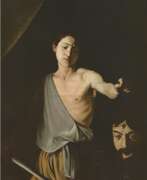

Matteo Baccelli was an Italian painter born in Lucca, Italy. He was a pupil of Pompeo Batoni and studied at the Accademia di Belle Arti di Firenze. He specialized in portrait painting and was a well-known artist in his time, receiving many commissions from members of the aristocracy and the church.
Baccelli's portraits are characterized by their realism and attention to detail, as well as their sensitive and subtle use of color. He was particularly skilled at capturing the character and personality of his subjects, and his paintings often convey a sense of psychological depth and complexity.
Baccelli's works can be found in various museums and private collections around the world, including the Uffizi Gallery in Florence, the Pinacoteca di Brera in Milan, and the Metropolitan Museum of Art in New York. He is considered an important figure in the history of Italian painting and a representative of the neoclassical style that dominated European art in the late 18th and early 19th centuries.
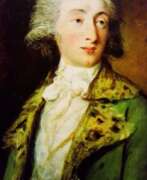

Carl Daniel David Friedrich Bach was a German artist of the late eighteenth and early nineteenth centuries, the Baroque period. He is known as a painter, graphic artist and printmaker.
Bach worked in the historical genre, was a portraitist, animalist, created canvases on allegorical subjects in the spirit of his era. In his works he combined elements of baroque and classicism. The artist often worked in the etching needle technique.
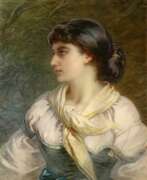

Guido Bach was a German portrait painter who focused mainly on watercolor painting. Bach traveled to Italy, Bohemia, and also visited Egypt. He created portraits and depictions of Italian village life, battle scenes, and images of North African Arab life.
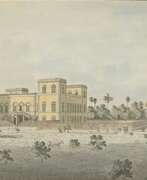

William Baillie was a British artist who lived and worked in India in the late 18th century.
He went to India in 1777 as a cadet in the Bengal Infantry and remained there for the rest of his life. After retiring, he published a newspaper in Calcutta, painted landscapes with views of the city and surrounding countryside, made engravings, and made topographical maps. In 1794, William Baillie published a set of hand-colored aquatints entitled Twelve Views of Calcutta.
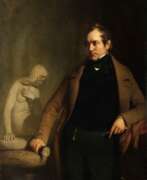

Edward Hodges Baily was a prolific English sculptor responsible for numerous public monuments, portrait busts, statues and exhibition pieces as well as works in silver. He carved friezes for both the Marble Arch and Buckingham Palace in London. His numerous statues of public figures include that of Horatio Nelson on top of Nelson's Column and Charles Grey, 2nd Earl Grey on Grey's Monument in Newcastle upon Tyne. Throughout his career Baily was responsible for creating a number of monuments and memorials for British churches and cathedrals, including several in St Paul's Cathedral.
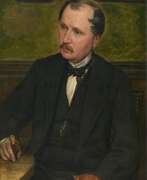

Alphonse Balat, full name Alphonse Hubert François Balat, was a Belgian architect.
He studied at the Academy of Namur and earned an architect's degree from the Academy of Antwerp in 1838. Balat's neo-Renaissance work soon came to the attention of the high nobility of Brussels, and he began to receive prestigious commissions.
In 1856, he built the city palace (Hotel) of the Marquis of Asch. After Leopold II ascended to the throne in 1865, Balat became his chief architect. He designed a number of projects for the luxurious reception areas of the Royal Palace of Belgium, such as the Throne Room, the Grand Staircase and the Grand Gallery. Alphonse Balat's most successful architectural project is considered to be the Lacuna Royal Greenhouses, where he pioneered the use of floral motifs, which later became the basis of the Art Nouveau style.
Alphonse Balat also built a large number of private residences during his career.


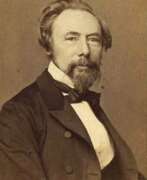

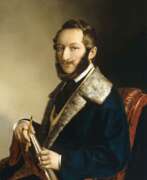


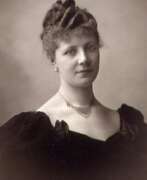


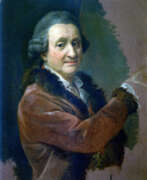

Pompeo Girolamo Battoni was an Italian painter who displayed a solid technical knowledge in his portrait work and in his numerous allegorical and mythological pictures. The high number of foreign visitors travelling throughout Italy and reaching Rome during their "Grand Tour" led the artist to specialize in portraits.
Batoni won international fame largely thanks to his customers, mostly British of noble origin, whom he portrayed, often with famous Italian landscapes in the background. Such Grand Tour portraits by Batoni were in British private collections, thus ensuring the genre's popularity in Great Britain. One generation later, Sir Joshua Reynolds would take up this tradition and become the leading English portrait painter. Although Batoni was considered the best Italian painter of his time, contemporary chronicles mention his rivalry with Anton Raphael Mengs.
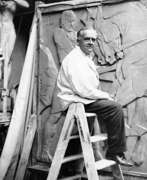

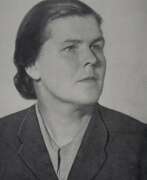

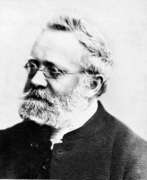

Peter Becker is a German landscape painter, engraver, and lithographer. In his many landscape works he romanticizes the German forest and enlivens it with historical characters. He also painted genre scenes and depicted city streets.
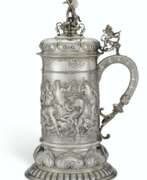


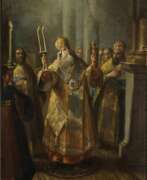

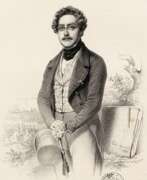

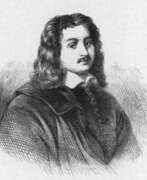

Nicolaes Pieterszoon Berchem was a highly esteemed and prolific Dutch Golden Age painter of pastoral landscapes, populated with mythological or biblical figures, but also of a number of allegories and genre pieces.
He was a member of the second generation of "Dutch Italianate landscape" painters. These were artists who travelled to Italy, or aspired to, in order to soak up the romanticism of the country, bringing home sketchbooks full of drawings of classical ruins and pastoral imagery. His paintings, of which he produced an immense number, (Hofstede de Groot claimed around 850, although many are misattributed), were in great demand, as were his 80 etchings and 500 drawings. His landscapes, painted in the Italian style of idealized rural scenes, with hills, mountains, cliffs and trees in a golden dawn are sought after. Berchem also painted inspired and attractive human and animal figures (staffage) in works of other artists, like Allaert van Everdingen, Jan Hackaert, Gerrit Dou, Meindert Hobbema and Willem Schellinks.


Albert Berg was a German landscape painter and museum director.
Berg was educated in diplomacy and law, and also studied painting and painted landscapes. From his travels to Constantinople, New Granada, Rhodes and Asia Minor, Berg brought back many sketches and notes and published them. He was also a member of the Prussian and German Customs Union's diplomatic expedition to Asia and the Pacific in 1859-1862. This resulted in the publication of a pictorial narrative entitled The Prussian Expedition to East Asia: Views of Japan, China and Siam. This historical work reproduces watercolors, oil paintings, and pen and ink drawings, mostly by Albert Berg. The sheets depict views and scenes of Yeddo, Yokahama, Ikegami, Nagasaki, Tientsin, Beijing, Hong Kong, Macau, Ayudhya and Bangkok, with explanations in German, French and English. The crew also included merchants, geographers and botanists, the draughtsman Wilhelm Heine, and the photographers Karl Bismarck and August Sachtler.
In 1880, Albert Berg was appointed the first director of the Silesian Museum of Fine Arts in Breslau and headed it until his death in 1884.
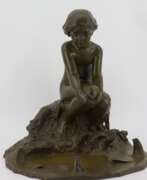

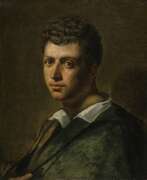

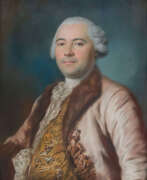


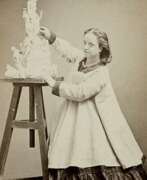

Hélène Bertaux, born Joséphine Charlotte Hélène Pilate, was a French painter and sculptor who achieved equal rights with men.
Hélène Pilate trained as a teenager in the workshop of her stepfather Pierre Hébert, where she modeled designs for watches, then regularly received commissions for small decorative bronze pieces. Aspiring to become a professional sculptor, she completed her studies with Augustin Dumont (1801-1884) in the academic tradition. The support of the imperial couple enabled her to become one of the few women to make a name for herself in the field of monumental sculpture: in 1864 she created the Fontaine Herbet for the Place Longueville in Amiens and during her career she received several prestigious commissions for religious and public buildings.
After achieving success and official recognition, Hélène Bertaux advocated for equality between men and women in the arts. In 1873, Hélène Bertaux opened her first sculpture studio, and in 1879, she opened another one with a sculpture school for women. Her students, including Clémence-Jeanne Eymard de Lanchâtre (1854-1894) and Jenny Weil (1851-1933), later won prizes at the Salon. The creation in 1881 of the Union of Women Painters and Sculptors, of which she was president from 1881 to 1894, marked a new step in her fight for gender equality in academic education. Hélène Bertaux became the first female member of the Salon jury and received a gold medal at the 1889 World's Fair.


Jean-Victor Bertin was a French landscape painter of the Classical period.
He graduated from the Royal Academy of Painting and Sculpture. His works were constantly exhibited in the halls of the Paris Salon.
Bertin was one of the pioneers of the practice of painting outdoors - plein air.


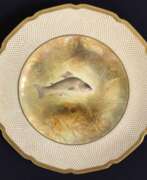

Joseph Birbeck I was a renowned English ceramic painter born in 1862. He was known for his exquisite work on bone china and porcelain, especially with designs that feature intricate fish, game birds, and landscapes. Birbeck's career highlights include his contributions to Royal Doulton and other renowned potteries in Staffordshire, England.
His artistry is well-regarded, with various hand-painted works sold at auction and featured in private collections. Some of his notable pieces include Royal Doulton bone china fish plates made for Tiffany & Co., New York, often hand-painted with intricate fish designs and signed "J. Birbeck, Sen."
Several works by Birbeck are highly valued by collectors and are found in prestigious auction houses and antiques marketplaces. If you're interested in collecting his works or learning more about them, you can find a range of his pieces, such as ornithological cabinet plates and decorative vases, at various auctions and antique dealers.
For those interested in exploring the art and history of Joseph Birbeck I, there are numerous platforms where you can track his pieces and find upcoming sales. Consider signing up for updates on upcoming sales and auction events focused on Birbeck's art. This subscription will keep you informed about new product releases, exclusive collectible items, and related news in the field of art and antiques.
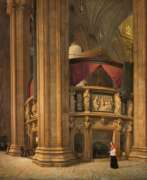

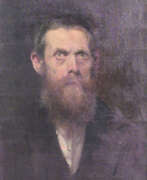

Eugène de Blaas was an Italian painter in the school known as Academic Classicism.
Eugene de Blaas' paintings were exhibited at the Royal Academy, Fine Art Society, New Gallery and Arthur Tooth and Sons Gallery in London, and also at the Walker Art Gallery in Liverpool.
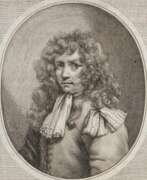

Thomas Blanchet, a distinguished French painter, sculptor, and architect, left an indelible mark on the Baroque era with his multifaceted talent. Blanchet's journey in art saw him transitioning from sculpture to painting under the guidance of Jacques Sarazin. His early years in Paris were enriched by the emerging Baroque influence and the Mannerism of the School of Fontainebleau, placing him among contemporaries like Simon Vouet.
Blanchet's formative years extended beyond French borders, as he ventured to Rome around 1645 to 1653. There, he immersed himself in the circle of Nicolas Poussin and visited the studios of Andrea Sacchi and Pietro da Cortona, earning high praise from Gianlorenzo Bernini. This period was marked by significant commissions, including works for Niccolò Guido di Bagno and the creation of engravings and mausoleums, notably in Venice for René de Voyer d'Argenson.
His repertoire was vast, encompassing classical themes, religious narratives, and architectural capriccios, as evidenced in works like "Time and Truth overcoming Envy and Discord" and "La Résurrection De Lazare". Blanchet's influence extended to Lyon, where he contributed to the city's cultural heritage through frescoes at the Collège de la Trinité, now Collège Ampère, and designed significant public and private spaces including the Palais de Roanne's grand chamber ceilings.
For collectors and experts in art and antiques, Thomas Blanchet's oeuvre represents a bridge between French and Italian Baroque, embodying the era's dramatic expressions and classical reverence. His works, found in both public spaces and museums, continue to be celebrated for their historical and artistic significance.
To stay informed about exhibitions, sales, and auctions related to Thomas Blanchet's works, signing up for our newsletter is recommended. This subscription ensures access to the latest insights and opportunities related to this Baroque master's enduring legacy.
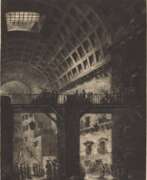

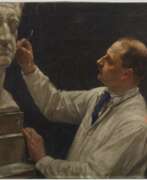

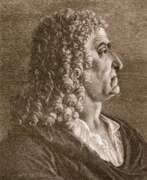

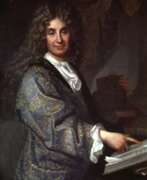

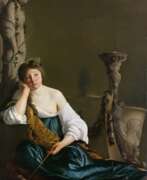

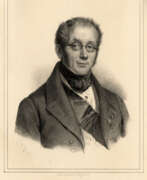

François Joseph Bosio was a French Neoclassical sculptor.
François Joseph Bosio was a pupil of the sculptor Augustin Pajou. With the support of the latter he made a study trip to Italy, where he studied statues by antique masters. He was also court sculptor to Kings Louis XVIII and Charles X.
At that time, he was favored by the French monarchs: Napoleon I decorated him with the Legion of Honor, Louis XVIII awarded him with the royal order of Saint Michail, he became an Institute of France member (in 1816) and in 1822, was granted the title of royal sculptor.
He was the director of the Academy of Fine Arts in Paris. The influence of Antonio Canova is noticeable in his sculptures.
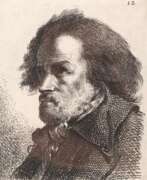

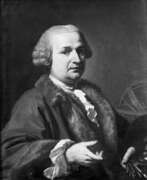

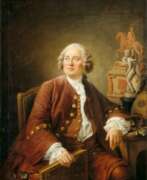

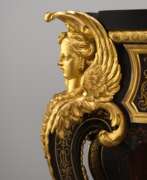

André-Charles Boulle, a French artist and cabinetmaker, was celebrated for his mastery in marquetry, a decorative technique involving inlaid veneers of wood, metal, and tortoiseshell. Born in Paris in 1642, Boulle's work defined luxury and sophistication in 17th and 18th-century French furniture, earning him the title of "Premier ébéniste du Roi" under Louis XIV. His contributions to art and culture extend beyond mere craftsmanship, embodying the opulence of the Louis XIV style and influencing European decorative arts profoundly.
Boulle's innovative techniques, particularly his unique use of marquetry, known as "Boulle work," involved intricate patterns of brass, pewter, and tortoiseshell, setting new standards for furniture design. This approach allowed him to create stunning visual effects, with his creations including clocks, cabinets, and tables that showcased both artistic flair and technical brilliance. His work, characterized by elaborate motifs and an exceptional blend of materials, is regarded as the epitome of Baroque artistry, blending sculpture, painting, and architecture into functional objects of beauty.
Several of Boulle's masterpieces are preserved in prestigious museums, such as the Louvre and the Palace of Versailles, where they continue to captivate visitors with their intricate details and historical significance. Notable works attributed to him, like the intricate coffers on stands and monumental cabinets housed in the J. Paul Getty Museum, reflect his role as a "painter in wood," celebrating French military victories and the grandeur of the Sun King's court. These pieces, never signed but attributed to him based on stylistic elements and historical records, highlight Boulle's innovative use of materials and his impact on the decorative arts.
For collectors and experts in art and antiques, André-Charles Boulle's work represents the zenith of French decorative arts. His legacy is not only in the beauty of his creations but also in the techniques he perfected, which continue to inspire contemporary designers and craftsmen. Those interested in the elegance and history of Boulle's work are encouraged to sign up for updates on new product sales and auction events related to this iconic artist. This subscription offers a unique opportunity to connect with the world of André-Charles Boulle, ensuring enthusiasts are informed of the latest discoveries and offerings that celebrate his enduring influence on culture, art, and design.
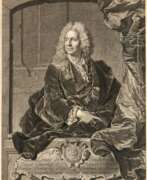


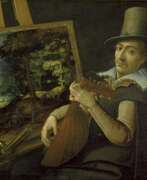

Paul Bril was a prominent Flemish painter, best known for his significant contributions to landscape painting. Born around 1554 in Antwerp, he later moved to Rome, where he became a central figure in the art scene, influencing the Italian and Northern European landscape painting traditions.
Paul Bril's early works were steeped in the Flemish manner, exhibiting a picturesque arrangement of landscape elements with dramatic contrasts of light and dark. His style evolved during his stay in Rome, influenced by the work of Annibale Carracci and Adam Elsheimer. By around 1605, Bril's compositions became more serene and classical, showcasing calmer transitions from foreground to background and embracing pastoral and mythological themes.
Paul Bril's contributions extended beyond his paintings. He was a respected figure in Rome's art community, becoming the first foreign director of the Accademia di San Luca in 1621. His patrons included some of the most influential families in Rome, and his work was sought after by collectors and fellow artists. Bril's influence was profound, impacting future generations of artists, including the Dutch Italianates and genre painters active in Rome.
His works can be found in prestigious galleries worldwide, illustrating his enduring legacy in the art world. For collectors and art and antiques experts, Paul Bril's work represents a significant period in the evolution of landscape painting, blending Flemish traditions with Italian classicism.
For those interested in exploring the captivating landscapes and historical significance of Paul Bril's art, staying informed about new product sales and auction events is essential. Signing up for updates can provide valuable insights and opportunities to acquire pieces associated with this influential artist.

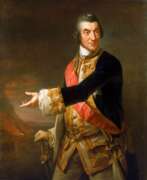

Richard Brompton was an esteemed English portrait painter, active during the mid to late 18th century. Born around 1734, Brompton honed his artistic skills under the mentorship of Benjamin Wilson and later, in Italy, with Raphael Mengs. His Italian sojourn also brought him under the patronage of the Earl of Northampton, leading to significant exposure and subsequent recognition back in England.
Brompton's mastery in portraiture gained him high-profile commissions and admittance to elite art circles, including the Presidency of the Society of Artists from 1779 to 1780. Some of his notable works include portraits of influential figures such as William Pitt, the 1st Earl of Chatham, and Admiral Sir Charles Saunders, which are preserved in prestigious locations like the National Maritime Museum and the National Portrait Gallery.
Later in his career, financial difficulties led him to St. Petersburg, Russia, where he served as the court painter to the Empress of Russia, enjoying considerable success before his death in 1783.
For those interested in the works and legacy of Richard Brompton, especially collectors and art experts, staying informed about upcoming auctions and exhibitions can be highly rewarding. To receive updates specifically about new product sales and auction events related to Richard Brompton, consider signing up. This subscription ensures you are well-informed of opportunities to acquire pieces linked to this distinguished artist.
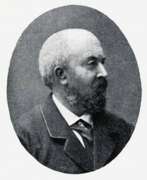

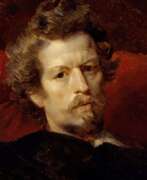

Karl Pavlovich Bryullov (Russian: Карл Па́влович Брюлло́в), a distinguished Russian artist, emerged as a pivotal figure in the world of 19th-century art, blending Western European Romanticism with his Russian heritage to create works that continue to captivate audiences today. His mastery in painting and architecture set him apart, making him a celebrated figure not just in Russia, but across Europe.
Bryullov's acclaim primarily stems from his remarkable ability to infuse his paintings with vibrant life and emotion, a testament to his profound understanding of human expression and the dramatic interplay of light and shadow. His most famous work, "The Last Day of Pompeii," exemplifies this skill, showcasing an epic narrative filled with vivid detail and emotional depth. This masterpiece, which is housed in the State Russian Museum in St. Petersburg, has garnered international praise for its innovative approach to historical painting, merging accuracy with dramatic storytelling.
Beyond "The Last Day of Pompeii," Bryullov's portfolio includes a range of subjects, from majestic portraits to serene landscapes, each bearing his signature blend of realism and romanticism. His works are featured in prestigious galleries worldwide, serving as a testament to his enduring influence on the art world. For collectors and experts in art and antiques, Bryullov's oeuvre offers a fascinating glimpse into the evolution of 19th-century European painting, marked by a unique intersection of culture, art, and history.
For those intrigued by the enduring legacy of Karl Pavlovich Bryullov and his contributions to painting and sculpture, we invite you to sign up for updates. Our subscription service provides exclusive alerts on new product sales and auction events related to this illustrious artist, ensuring that enthusiasts and collectors alike stay informed about opportunities to engage with Bryullov's remarkable works.


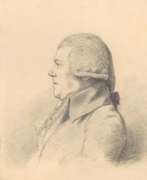

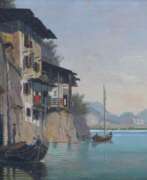


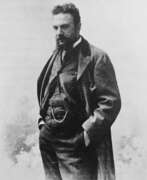

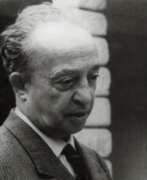

Tomaso Buzzi was an Italian architect and designer.
He also worked as a furniture and glass designer and wrote articles in Domus and Dedalo. Buzzi's slow departure from modernism accentuated after 1945, when he worked mainly as a private architect for the Italian aristocracy and the big bourgeoisie of the Volpi, Agnelli, etc.
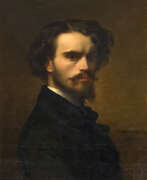

Alexandre Cabanel was a distinguished French painter, celebrated for his refined and idealized representations of classical and historical subjects. Born in Montpellier in 1823, he rose to prominence through his skillful integration of detail and romanticized aesthetics, typical of the academic art tradition of the 19th century.
Alexandre Cabanel's art was characterized by its exceptional polish and precision, qualities that earned him numerous accolades and the favor of important patrons, including Napoleon III. Perhaps his most renowned work, The Birth of Venus, epitomizes the lush idealism of his style. First showcased in the 1863 Salon, this painting captivated audiences and was promptly acquired by Napoleon III, underscoring Cabanel's central role in the artistic preferences of the Second Empire.
Throughout the 1860s, Alexandre Cabanel's influence expanded as he took on significant roles, such as a professorship at the École des Beaux-Arts, and his election to the Institut de France. His career was marked not only by his successful paintings but also by his active participation in the Paris Salons, where he often served as a jury member, advocating for traditional art standards against the emerging Impressionist movement.
Alexandre Cabanel was also a notable teacher, mentoring a generation of artists who would carry forward his academic principles. His workshop was a pivotal training ground for many who would become significant figures in their own right.
For collectors and art experts, Alexandre Cabanel's work remains a pinnacle of academic artistry, encapsulating the era's ideals of beauty and craftsmanship. To stay updated on exhibitions and auction events featuring Cabanel's works, consider signing up for specialized newsletters and alerts.
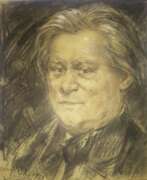

Louis-Alexandre Cabié was a French landscape painter.
He was inspired by charming views of the French provinces. He painted many landscapes of the Charente near Cognac, the banks of the Gironde, Royan, and the cliffs of Saint-Georges-de-Didon, as well as on the banks of the Weser. Cabié also painted his landscapes on vases at the Vieillard ceramics factory in Bordeaux.


Auguste Cadolle, full name Auguste Jean-Baptiste Cadolle, was a French landscape painter.
Cadolle became famous for his views of Moscow, Russia. He worked in the genre of urban landscape, in 1824-1844 he exhibited his works in the Paris Salon. In 1819-1825 Auguste Cadolle lived and worked in Moscow, where he created a large number of drawings and watercolors with views of the city. Returning to Paris, in 1825 he published his first work "Views of Moscow". His landscapes depict Moscow rebuilt after the fire of 1812 during Napoleon's invasion.
Cadolle created a number of unique views of Moscow, characterized by the accuracy of the cityscape and the smallest details, including characters' costumes, architectural details and even the weather. His works "Circular Panorama of Moscow with the Spasskaya Tower of the Kremlin" (1819-1823), "View of the Triumphal Arch in Moscow" (1820s) and others are impressive. Most of the works were printed in the famous French workshop of Gottfried Engelmann.
Four watercolors by the artist are kept in the State Historical Museum of Russia.
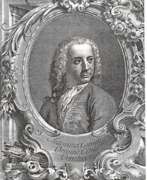

Canaletto, born Giovanni Antonio Canal, was an illustrious Italian painter celebrated for his masterful cityscapes, particularly of Venice and London. Emerging as a topographical painter after 1719, Canaletto became renowned for his detailed and atmospheric views, known as vedute, which captured the essence of Venice and London with a unique blend of accuracy and artistic embellishment. Despite using a camera obscura to achieve precision in his architectural details, Canaletto often infused his paintings with creative adjustments to enhance their appeal.
His early works, such as "The Stonemason's Yard," are particularly prized for their vivid portrayal of Venice's daily life and architectural beauty. Canaletto's paintings were highly sought after by English aristocrats during their Grand Tours, leading him to spend a significant period in England, where he continued to produce esteemed works capturing the English landscape and urban scenes.
Despite his international success, Canaletto's work was less appreciated in his native Venice during his lifetime, only gaining broader recognition and appreciation in later years. His legacy, however, has had a lasting impact on landscape painting, influencing future generations of artists.
If you're interested in staying updated on art exhibitions and auctions featuring Canaletto's work, consider signing up for newsletters from art galleries or auction houses that specialize in historical artworks. This way, you'll be informed about new sales and exhibition events related to Canaletto without any exaggerated language or promises.
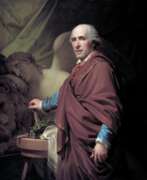

Antonio Canova was an Italian sculptor of the late 18th and early 19th centuries. He is known as a bright representative of neoclassicism in European fine art. Canova was a follower of traditions of artists of antiquity and Renaissance. Among admirers of his creativity there were many representatives of ruling dynasties of Europe.
Antonio Canova himself created more than 50 statues, and together with his assistants - about 180 works. He gained influential patrons and had a reputation as the most important European sculptor of his time. Among his customers was Napoleon Bonaparte, whose statue Canova carved from marble, depicting the emperor as Mars.
Most of Canova's works today decorate the expositions of the world's leading museums, such as the halls of the Louvre and the Hermitage.

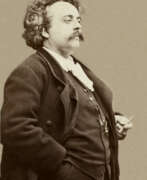

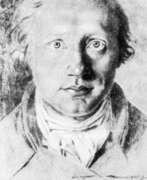

Asmus Jacob Carstens was a Danish-German painter of the late 18th century. He is known as a painter and draughtsman, a representative of classicism and romanticism.
Carstens produced famous narrative and historical paintings, including Plato's Symposium and The Battle of Rossbach, which brought him popularity. His famous huge painting The Fall of Angels, containing 200 figures, made him a professor at the Academy of Fine Arts in Berlin. Carstens preferred pencil, chalk and watercolor, and worked with fresco, rarely using oil. Most of his large-scale projects have been left unfinished or lost. Many of his surviving works exist as drawings.






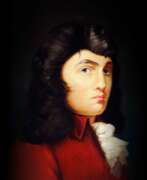

Thomas Chippendale was a cabinet-maker in London, designing furniture in the mid-Georgian, English Rococo, and Neoclassical styles. In 1754 he published a book of his designs in a trade catalogue titled The Gentleman and Cabinet Maker's Director — the most important collection of furniture designs published in England to that point which created a mass market for furniture—upon which success he became renowned. According to the Victoria and Albert Museum, «so influential were his designs, in Britain and throughout Europe and America, that "Chippendale" became a shorthand description for any furniture similar to his Director designs».
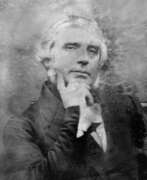

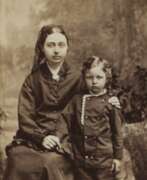

Anthonie Eleonore Christensen, better known as Anthonore Christensen, is a Danish floral artist.
Her first teachers were the painter-florist Emma Thomsen and then her mother, the painter Eleonora Tscherning (1817-1890), with whom Anthonore made a study trip to Germany, Italy, and Paris.
Anthonore Christensen's famous painting "Growing Anemones, Early Spring" was acquired by the Royal Collection of Paintings.
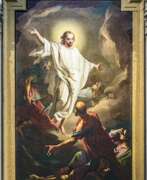

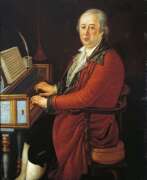

Domenico Cimarosa was an Italian opera composer of the Neapolitan school of the late 18th century.
For 11 years Cimarosa studied at the Conservatory of Santa Maria di Loreto. His first successful work was the comic opera Stravaganze del Conte, staged at the Teatro Fiorentini in Naples in 1772. It was followed by The Italian Woman in Londre (1778), which is still performed in Italy, and others. Cimarosa composed both serious and comic operas (more than 80 in all), which were staged in Rome, Naples, Florence, Vicenza, Milan and Turin.
In 1787, at the invitation of Catherine II, he traveled to Russia, replacing Giovanni Paisiello as court musician. He staged two operas in St. Petersburg, and in 1791 he traveled to Vienna at the invitation of Leopold II. There in 1792 Cimarosa staged his masterpiece, the opera The Secret Marriage, which made him famous. In 1793 he returned to Italy and composed many more works.
Cimarosa was a prolific and popular composer. His numerous operas are characterized by vivid imagery and rich comic content. He also wrote many choral works, including the cantata Maestro di cappella, a popular satire on modern opera rehearsal methods. His instrumental works include many sonatas for harpsichord and a concerto for two flutes.


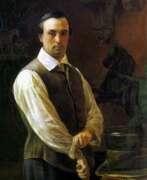

Peter Jakob Freiherr Clodt von Jürgensburg (Russian: Пётр Карлович Клодт фон Юргенсбург) was a Russian sculptor of Baltic German descent, renowned for his significant contributions to Russian monumental art during the reign of Nicholas I. Born on June 5, 1805, in Saint Petersburg, Clodt initially embarked on a military career before pursuing his artistic ambitions. He studied at the Imperial Academy of Arts in Saint Petersburg, where he honed his skills in horse sculpture, eventually earning acclaim from the Emperor himself.
Clodt's most celebrated works include the "Horse Tamers" sculptures on the Anichkov Bridge, unveiled in 1851, and the first monument to a poet in the Russian Empire, the statue of Ivan Krylov in the Summer Garden (1848-1855). His mastery in equestrian statues is evident in the Monument to Nicholas I on Saint Isaac's Square, notable for its technical innovation as the world's first equestrian statue supported solely by the horse's two rear legs. This piece, installed between 1856 and 1859, remains a historic achievement in sculptural engineering.
Clodt's works are celebrated for their dynamic representation and precision in detail, characteristics that have kept his legacy alive in the realms of Russian and European art. His sculptures can be viewed in various prominent locations across Saint Petersburg, serving as cultural landmarks that attract both art aficionados and general tourists.
For those interested in the history of Russian sculpture and the works of Peter Jakob Freiherr Clodt von Jürgensburg, staying updated on exhibitions and auctions can provide unique insights and opportunities. Sign up for updates on new product sales and auction events related to this master sculptor to ensure you don't miss out on valuable collectibles and exhibits.
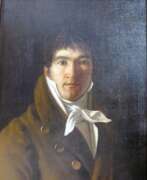

Léon Matthieu Cochereau was a French painter.
He had a great artistic talent since his youth, but died at the age of 24 on a boat trip in the Ionian Sea. Cochereau produced several paintings, the most famous of which is In David's Workshop, now part of the Louvre.


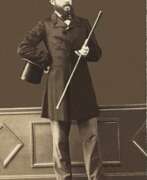

Charles Cordier, full name Charles Henri Joseph Cordier, was a French painter and innovative sculptor.
Charles Cordier studied in Paris at the École des Beaux-Arts and during his studies met a black sitter, a former slave, this meeting and predetermined his future creative life. In 1848, when slavery was officially abolished in all French colonies, Cordier exhibited his first plaster bust of a Sudanese man and received his first success.
For fifteen years, from 1851 to 1866, Cordier was the official sculptor of the Musée National d'Histoire Historique in Paris, creating a series of busts for the ethnographic gallery. Collecting images and types of various ethnic groups, the artist traveled extensively throughout Italy, Greece, Egypt, and Algeria, as well as France itself. Cordier's works are notable for their striking naturalism, and he also made spectacular use of the colors of various materials - marble of different shades, onyx and bronze, silvering and enamel.
Cordier openly defended the advanced for that time the idea of equality of all races. "Each race," he declared, "has its own special type of beauty. The most beautiful black man is not at all the one who looks more like a white man than anyone else."
Cordier also worked on the sculptural decoration of the Paris Opera House, the Louvre, and the Paris Town Hall. His son was the sculptor Henri Louis Cordier.
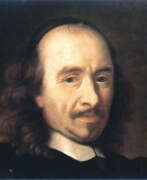


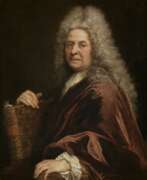

Antoine Coypel was a French painter, known for his versatile and eclectic style, which blended the French classical tradition with influences from Pieter Paul Rubens and the Roman Baroque. His career flourished thanks to his role as a court painter and his positions within the French art world, including his tenure as a professor and director at the Académie Royale.
Antoine Coypel's artistry was evident in his ability to infuse classical subjects with a vibrant color palette and dynamic compositions, reflecting a transition in French painting towards a lighter 18th-century style. His notable works include "Democritus" at the Louvre and "Susan accused of adultery" at the Museo del Prado, demonstrating his range from philosophical figures to biblical narratives. Beyond painting, Coypel was also a master draughtsman, with many of his drawings preserved at the Louvre, showcasing his skill in figure studies and preparatory sketches.
Antoine Coypel's legacy extends through his family, with his son Charles-Antoine and half-brother Noël-Nicolas also being recognized painters. His works are held in esteemed collections globally, from the Louvre in Paris to the Metropolitan Museum of Art in New York, and continue to be celebrated for their artistic merit and historical significance.
For collectors and art experts, understanding Antoine Coypel's contributions provides valuable insights into the evolution of French art and the interplay between classical influences and personal creativity.
If you're interested in staying informed about upcoming sales and auction events related to Antoine Coypel's works, sign up for updates to ensure you don't miss out on these exclusive opportunities.
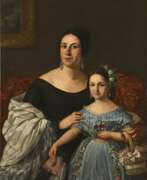

Antonio Gómez Cros was a Spanish painter, lithographer and decorator.
Antonio began studying painting at the Academy of Fine Arts of San Carlos in Valencia and completed his studies at the Royal Academy of Fine Arts of San Fernando. He was a representative of early romanticism with signs of classicism.
Antonio Gómez Cros specialized in historical scenes and was a recognized portrait painter. In 1846 he was appointed honorary chamber painter to Elizabeth II and painted several famous historical, battle and religious paintings in this position. The artist also painted walls and curtains in palaces and theaters.


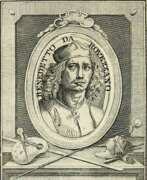



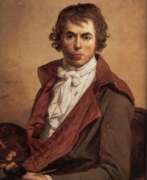

Jacques-Louis David, a preeminent French artist of the Neoclassical movement, made a profound impact on the art world with his compelling history paintings and portraiture. Born in Paris in 1748 into a prosperous family, David's early life was marked by tragedy and ambition. Despite losing his father at a young age and facing opposition from his family, his determination to pursue art led him to become a student of Joseph-Marie Vien and later, a notable figure in the French Academy in Rome. David's artistic journey was characterized by a rigorous classical education, culminating in winning the prestigious Prix de Rome in 1774, which allowed him to study the masterpieces of classical antiquity and the Renaissance in Italy.
David's work is renowned for its classical austerity, a response to the frivolous Rococo style that preceded him. His paintings, such as "The Oath of the Horatii," reflect a blend of classical themes with a modern sense of emotion and drama, resonating with the revolutionary spirit of his times. As the French Revolution unfolded, David aligned himself with its ideals, becoming an active supporter and using his art to serve political purposes. He was closely associated with leaders of the Revolution, including Maximilien Robespierre, and later became the official painter of Napoleon, contributing significantly to the iconography of the era.
Throughout his career, David had a significant influence on French art, not only through his own works but also as a teacher. His studio was a nurturing ground for the next generation of French painters, despite his reputation for being demanding. David's move to Brussels after the fall of Napoleon marked the final phase of his career, where he continued to paint until his death in 1825.
David's legacy extends beyond his contributions to Neoclassical art. He played a crucial role in the development of modern art history, blending classical ideals with contemporary themes, and influencing not only his contemporaries but also future generations of artists. His works, housed in museums around the world, continue to be studied and admired for their technical mastery and emotional depth.
For art collectors and experts, David's oeuvre offers a fascinating insight into a transformative period in art history, where the classical and the contemporary intersected to create a new visual language. His paintings not only depict historical and mythological scenes but also embody the ideals, struggles, and aspirations of his time.
For those interested in exploring the works of Jacques-Louis David and the impact of his art on the Neoclassical movement, updates on new product sales and auction events related to David's work can provide valuable opportunities to engage with his legacy. Signing up for updates ensures access to the latest information and events, offering a deeper understanding of this pivotal artist's contributions to art and culture.

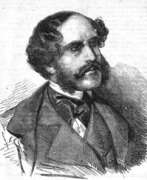



Guillaume De Groot is a Belgian sculptor.
He studied in the studio of sculptor Egid Melo, a pupil of Guillaume Gifs, as well as at the Brussels Academy. De Groot is the author of chandeliers, allegorical figures, bas-reliefs, statuettes and monumental works. He created many sculptures located in public spaces in Brussels and adorning historic buildings. His works can also be found in the Royal Museum of Fine Arts in Antwerp.