

England — Auction price


Damien Hirst is a seminal figure in contemporary art, well-known for his provocative and often controversial works that explore themes of death, rebirth, and the boundaries of art itself. As a leading member of the Young British Artists (YBAs) in the 1990s, Hirst catapulted to fame with his innovative approach to art that combines the techniques of installation, sculpture, and painting.
Damien Hirst's early career was marked by his organization of the pivotal "Freeze" exhibition in 1988, showcasing his and his peers' work, which caught the attention of influential art collectors. This period laid the groundwork for his signature works, including the 'Natural History' series, where animals such as sharks, sheep, and cows are preserved in formaldehyde, challenging viewers to confront the nature of existence and the inevitability of death.
Among Damien Hirst's most iconic pieces is "The Physical Impossibility of Death in the Mind of Someone Living," featuring a tiger shark suspended in formaldehyde, and "For the Love of God," a platinum cast of an 18th-century human skull encrusted with 8,601 flawless diamonds. These works exemplify Hirst's exploration of mortality and the commodification of art.
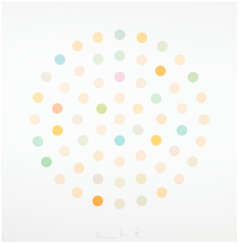
Damien Hirst's 'Spot Paintings' and 'Spin Paintings' further demonstrate his challenge to traditional notions of authorship and the creative process, often involving teams of assistants in their production. These series play with concepts of randomness, control, and the aesthetic joys of color and form, pushing the boundaries of painting as a medium.
In 2017, Hirst embarked on "Treasures from the Wreck of the Unbelievable," an ambitious project that filled Venetian museums with artifacts from a fictional ancient shipwreck. This project, blending reality and fiction, invited audiences to question the authenticity and value of art, showcasing Hirst's ongoing interest in storytelling and myth-making within the context of contemporary culture.
For collectors and experts in art and antiques, Damien Hirst represents a pivotal figure whose works challenge, provoke, and inspire. His ability to blur the lines between art, science, and commerce has left an indelible mark on the art world, making his pieces highly sought after by collectors around the globe.
Stay updated on Damien Hirst's latest projects, exhibitions, and sales by signing up for dedicated art newsletters. This subscription will ensure you're informed about new opportunities to engage with the work of one of the most influential artists of our time.




Damien Hirst is a seminal figure in contemporary art, well-known for his provocative and often controversial works that explore themes of death, rebirth, and the boundaries of art itself. As a leading member of the Young British Artists (YBAs) in the 1990s, Hirst catapulted to fame with his innovative approach to art that combines the techniques of installation, sculpture, and painting.
Damien Hirst's early career was marked by his organization of the pivotal "Freeze" exhibition in 1988, showcasing his and his peers' work, which caught the attention of influential art collectors. This period laid the groundwork for his signature works, including the 'Natural History' series, where animals such as sharks, sheep, and cows are preserved in formaldehyde, challenging viewers to confront the nature of existence and the inevitability of death.
Among Damien Hirst's most iconic pieces is "The Physical Impossibility of Death in the Mind of Someone Living," featuring a tiger shark suspended in formaldehyde, and "For the Love of God," a platinum cast of an 18th-century human skull encrusted with 8,601 flawless diamonds. These works exemplify Hirst's exploration of mortality and the commodification of art.
Damien Hirst's 'Spot Paintings' and 'Spin Paintings' further demonstrate his challenge to traditional notions of authorship and the creative process, often involving teams of assistants in their production. These series play with concepts of randomness, control, and the aesthetic joys of color and form, pushing the boundaries of painting as a medium.
In 2017, Hirst embarked on "Treasures from the Wreck of the Unbelievable," an ambitious project that filled Venetian museums with artifacts from a fictional ancient shipwreck. This project, blending reality and fiction, invited audiences to question the authenticity and value of art, showcasing Hirst's ongoing interest in storytelling and myth-making within the context of contemporary culture.
For collectors and experts in art and antiques, Damien Hirst represents a pivotal figure whose works challenge, provoke, and inspire. His ability to blur the lines between art, science, and commerce has left an indelible mark on the art world, making his pieces highly sought after by collectors around the globe.
Stay updated on Damien Hirst's latest projects, exhibitions, and sales by signing up for dedicated art newsletters. This subscription will ensure you're informed about new opportunities to engage with the work of one of the most influential artists of our time.



David Hockney, a British artist, has been a prominent figure in the art world for over six decades, renowned for his contributions to painting, drawing, printmaking, photography, and video art. His exploration of these mediums has made significant impacts on the Pop Art movement and beyond, making him one of the most influential artists of the 20th and 21st centuries. Hockney's work is celebrated for its vibrant color palette, emotional depth, and innovative use of technology in art.
One of Hockney's most distinctive features is his ability to blend traditional techniques with modern technology, notably in his iPad drawings and photographic collages. This fusion not only showcases his skillful adaptation to contemporary mediums but also highlights his ongoing quest to explore the nature of seeing and representation in art. Hockney's landscapes and portraits, characterized by their bright colors and meticulous detail, invite viewers to see the world through his unique perspective.
Significant works by Hockney, such as "A Bigger Splash" and "Portrait of an Artist (Pool with Two Figures)," are housed in major museums and galleries worldwide, attesting to his global influence and appeal. These pieces, among others, demonstrate Hockney's mastery over space, light, and narrative, securing his position as a pivotal figure in modern and contemporary art.
For collectors and experts in art and antiques, Hockney's oeuvre presents a fascinating study in the evolution of visual arts. His work not only offers insight into the artist's personal vision but also reflects broader cultural and technological shifts in society. As interest in Hockney's art continues to grow, keeping abreast of new sales and auction events becomes increasingly valuable.
To stay informed about the latest David Hockney sales and auction events, sign up for our updates. This subscription ensures that you receive timely notifications about new product sales and auction events related to David Hockney, offering unique opportunities for collectors and enthusiasts alike.


David Hockney, a British artist, has been a prominent figure in the art world for over six decades, renowned for his contributions to painting, drawing, printmaking, photography, and video art. His exploration of these mediums has made significant impacts on the Pop Art movement and beyond, making him one of the most influential artists of the 20th and 21st centuries. Hockney's work is celebrated for its vibrant color palette, emotional depth, and innovative use of technology in art.
One of Hockney's most distinctive features is his ability to blend traditional techniques with modern technology, notably in his iPad drawings and photographic collages. This fusion not only showcases his skillful adaptation to contemporary mediums but also highlights his ongoing quest to explore the nature of seeing and representation in art. Hockney's landscapes and portraits, characterized by their bright colors and meticulous detail, invite viewers to see the world through his unique perspective.
Significant works by Hockney, such as "A Bigger Splash" and "Portrait of an Artist (Pool with Two Figures)," are housed in major museums and galleries worldwide, attesting to his global influence and appeal. These pieces, among others, demonstrate Hockney's mastery over space, light, and narrative, securing his position as a pivotal figure in modern and contemporary art.
For collectors and experts in art and antiques, Hockney's oeuvre presents a fascinating study in the evolution of visual arts. His work not only offers insight into the artist's personal vision but also reflects broader cultural and technological shifts in society. As interest in Hockney's art continues to grow, keeping abreast of new sales and auction events becomes increasingly valuable.
To stay informed about the latest David Hockney sales and auction events, sign up for our updates. This subscription ensures that you receive timely notifications about new product sales and auction events related to David Hockney, offering unique opportunities for collectors and enthusiasts alike.



Lucian Michael Freud was a British painter and draughtsman, specialising in figurative art, and is known as one of the foremost 20th-century English portraitists. He was born in Berlin, the son of Jewish architect Ernst L. Freud and the grandson of Sigmund Freud. Freud got his first name "Lucian" from his mother in memory of the ancient writer Lucian of Samosata. His family moved to England in 1933 to escape the rise of Nazism. From 1942 to 1943 he attended Goldsmiths College, London. He served at sea with the British Merchant Navy during the Second World War.


Damien Hirst is a seminal figure in contemporary art, well-known for his provocative and often controversial works that explore themes of death, rebirth, and the boundaries of art itself. As a leading member of the Young British Artists (YBAs) in the 1990s, Hirst catapulted to fame with his innovative approach to art that combines the techniques of installation, sculpture, and painting.
Damien Hirst's early career was marked by his organization of the pivotal "Freeze" exhibition in 1988, showcasing his and his peers' work, which caught the attention of influential art collectors. This period laid the groundwork for his signature works, including the 'Natural History' series, where animals such as sharks, sheep, and cows are preserved in formaldehyde, challenging viewers to confront the nature of existence and the inevitability of death.
Among Damien Hirst's most iconic pieces is "The Physical Impossibility of Death in the Mind of Someone Living," featuring a tiger shark suspended in formaldehyde, and "For the Love of God," a platinum cast of an 18th-century human skull encrusted with 8,601 flawless diamonds. These works exemplify Hirst's exploration of mortality and the commodification of art.
Damien Hirst's 'Spot Paintings' and 'Spin Paintings' further demonstrate his challenge to traditional notions of authorship and the creative process, often involving teams of assistants in their production. These series play with concepts of randomness, control, and the aesthetic joys of color and form, pushing the boundaries of painting as a medium.
In 2017, Hirst embarked on "Treasures from the Wreck of the Unbelievable," an ambitious project that filled Venetian museums with artifacts from a fictional ancient shipwreck. This project, blending reality and fiction, invited audiences to question the authenticity and value of art, showcasing Hirst's ongoing interest in storytelling and myth-making within the context of contemporary culture.
For collectors and experts in art and antiques, Damien Hirst represents a pivotal figure whose works challenge, provoke, and inspire. His ability to blur the lines between art, science, and commerce has left an indelible mark on the art world, making his pieces highly sought after by collectors around the globe.
Stay updated on Damien Hirst's latest projects, exhibitions, and sales by signing up for dedicated art newsletters. This subscription will ensure you're informed about new opportunities to engage with the work of one of the most influential artists of our time.


David Hockney, a British artist, has been a prominent figure in the art world for over six decades, renowned for his contributions to painting, drawing, printmaking, photography, and video art. His exploration of these mediums has made significant impacts on the Pop Art movement and beyond, making him one of the most influential artists of the 20th and 21st centuries. Hockney's work is celebrated for its vibrant color palette, emotional depth, and innovative use of technology in art.
One of Hockney's most distinctive features is his ability to blend traditional techniques with modern technology, notably in his iPad drawings and photographic collages. This fusion not only showcases his skillful adaptation to contemporary mediums but also highlights his ongoing quest to explore the nature of seeing and representation in art. Hockney's landscapes and portraits, characterized by their bright colors and meticulous detail, invite viewers to see the world through his unique perspective.
Significant works by Hockney, such as "A Bigger Splash" and "Portrait of an Artist (Pool with Two Figures)," are housed in major museums and galleries worldwide, attesting to his global influence and appeal. These pieces, among others, demonstrate Hockney's mastery over space, light, and narrative, securing his position as a pivotal figure in modern and contemporary art.
For collectors and experts in art and antiques, Hockney's oeuvre presents a fascinating study in the evolution of visual arts. His work not only offers insight into the artist's personal vision but also reflects broader cultural and technological shifts in society. As interest in Hockney's art continues to grow, keeping abreast of new sales and auction events becomes increasingly valuable.
To stay informed about the latest David Hockney sales and auction events, sign up for our updates. This subscription ensures that you receive timely notifications about new product sales and auction events related to David Hockney, offering unique opportunities for collectors and enthusiasts alike.


Damien Hirst is a seminal figure in contemporary art, well-known for his provocative and often controversial works that explore themes of death, rebirth, and the boundaries of art itself. As a leading member of the Young British Artists (YBAs) in the 1990s, Hirst catapulted to fame with his innovative approach to art that combines the techniques of installation, sculpture, and painting.
Damien Hirst's early career was marked by his organization of the pivotal "Freeze" exhibition in 1988, showcasing his and his peers' work, which caught the attention of influential art collectors. This period laid the groundwork for his signature works, including the 'Natural History' series, where animals such as sharks, sheep, and cows are preserved in formaldehyde, challenging viewers to confront the nature of existence and the inevitability of death.
Among Damien Hirst's most iconic pieces is "The Physical Impossibility of Death in the Mind of Someone Living," featuring a tiger shark suspended in formaldehyde, and "For the Love of God," a platinum cast of an 18th-century human skull encrusted with 8,601 flawless diamonds. These works exemplify Hirst's exploration of mortality and the commodification of art.
Damien Hirst's 'Spot Paintings' and 'Spin Paintings' further demonstrate his challenge to traditional notions of authorship and the creative process, often involving teams of assistants in their production. These series play with concepts of randomness, control, and the aesthetic joys of color and form, pushing the boundaries of painting as a medium.
In 2017, Hirst embarked on "Treasures from the Wreck of the Unbelievable," an ambitious project that filled Venetian museums with artifacts from a fictional ancient shipwreck. This project, blending reality and fiction, invited audiences to question the authenticity and value of art, showcasing Hirst's ongoing interest in storytelling and myth-making within the context of contemporary culture.
For collectors and experts in art and antiques, Damien Hirst represents a pivotal figure whose works challenge, provoke, and inspire. His ability to blur the lines between art, science, and commerce has left an indelible mark on the art world, making his pieces highly sought after by collectors around the globe.
Stay updated on Damien Hirst's latest projects, exhibitions, and sales by signing up for dedicated art newsletters. This subscription will ensure you're informed about new opportunities to engage with the work of one of the most influential artists of our time.



Galileo Galilei was an Italian naturalist, physicist, mechanic, astronomer, philosopher, and mathematician.
Using his own improved telescopes, Galileo Galilei observed the movements of the Moon, Earth's satellites, and the stars, making several breakthrough discoveries in astronomy. He was the first to see craters on the Moon, discovered sunspots and the rings of Saturn, and traced the phases of Venus. Galileo was a consistent and convinced supporter of the teachings of Copernicus and the heliocentric system of the world, for which he was subjected to the trial of the Inquisition.
Galileo is considered the founder of experimental and theoretical physics. He is also one of the founders of the principle of relativity in classical mechanics. Overall, the scientist had such a significant impact on the science of his time that he cannot be overemphasized.


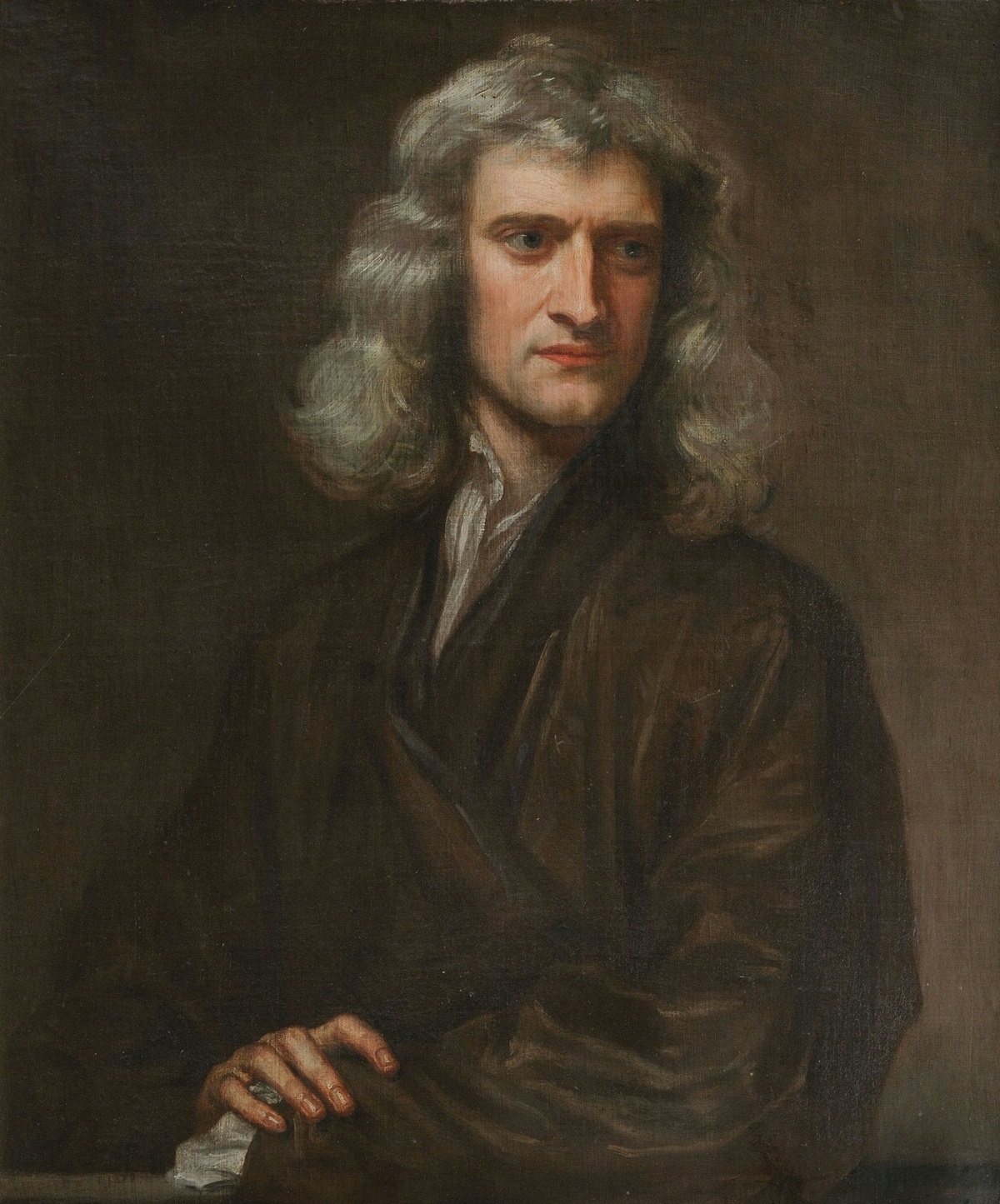
Isaac Newton was an English mathematician, physicist, astronomer, alchemist, theologian, and author (described in his time as a "natural philosopher"), widely recognised as one of the greatest mathematicians and physicists and among the most influential scientists of all time. He was a key figure in the philosophical revolution known as the Enlightenment. His book Philosophiæ Naturalis Principia Mathematica (Mathematical Principles of Natural Philosophy), first published in 1687, established classical mechanics. Newton also made seminal contributions to optics, and shares credit with German mathematician Gottfried Wilhelm Leibniz for developing infinitesimal calculus.
In the Principia, Newton formulated the laws of motion and universal gravitation that formed the dominant scientific viewpoint until it was superseded by the theory of relativity. Newton used his mathematical description of gravity to derive Kepler's laws of planetary motion, account for tides, the trajectories of comets, the precession of the equinoxes and other phenomena, eradicating doubt about the Solar System's heliocentricity. He demonstrated that the motion of objects on Earth and celestial bodies could be accounted for by the same principles. Newton's inference that the Earth is an oblate spheroid was later confirmed by the geodetic measurements of Maupertuis, La Condamine, and others, convincing most European scientists of the superiority of Newtonian mechanics over earlier systems.


